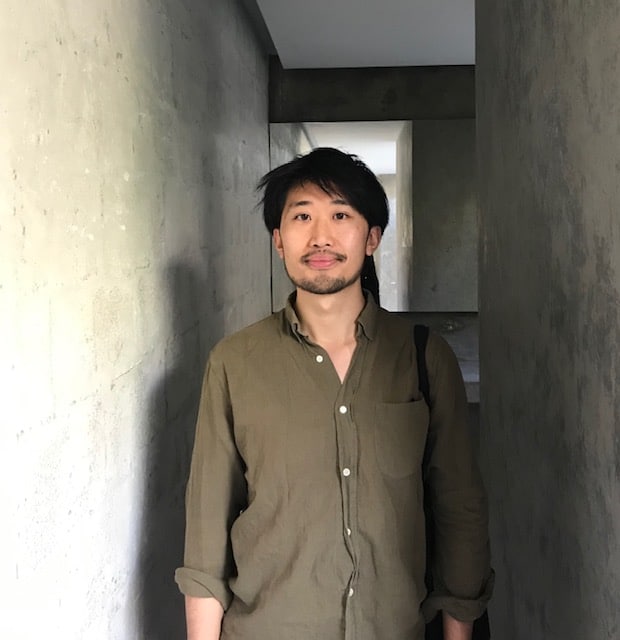
Kenneth Yu is an Assistant Professor in the Department of Classics at the University of Toronto, with additional affiliation to the Department for the Study of Religion. His research intersects Imperial Greek literature, ancient religious frameworks, and classical scholarship methodologies. University of Toronto (St. George Campus) Department of Classics & Department for the Study of Religion Academic rank: Assistant Professor Yu's scholarly focus spans three key areas: Analysis of Greek religious epistemology and its disciplinary history Commentary practices in antiquity across philosophical and literary texts Evolution of aetiological reasoning from Homeric hymns to Imperial ethnography His recent publications and projects include: Problems in Greek Religion: Constructing the Gods between Thauma and Philology (monograph) Co-edited volume The Oxford Handbook of Global Commentary (2020-25 SSHRC-funded) Titles in Ancient Greek Literature: Forms, Practices, and Theories (2022-25 SSHRC-funded) Yu has held distinguished fellowships at: Collège de France Hardt Foundation (Switzerland) Institute of Classical Studies (University of Leuven) Center for Hellenic Studies (2022-23) His academic credentials include: AB & PhD in Classics, University of Chicago
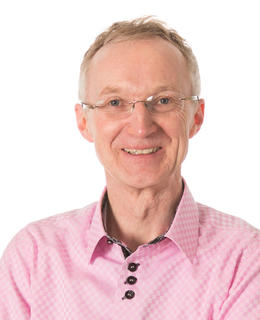
Maurizio Ramanzin is a Full Professor at the University of Padova , affiliated with the School of Animal Science and Department of Agronomy, Animals, Food and Natural Resources (DAFNAE) . His research focuses on Agricultural Sustainability , Environmental Impact Assessment , and Precision Livestock Farming . Academic Field : AGR/19 Email : maurizio.ramanzin@unipd.it Address : Agripolis - Viale dell'università, 16 - Legnaro (Padova) – ITALY His work explores the interactions between livestock systems and ecosystem services in mountainous regions, with emphasis on: Grazing Management and biodiversity conservation Life Cycle Assessment (LCA) of dairy and beef systems Climate Change Adaptation in Alpine ungulates Animal Welfare in small-scale farms Technological Tools (GPS, NIRS) for monitoring grazing behavior Key trends in his recent publications include: Quantifying environmental drivers of wolf predation on livestock Developing low-cost biologging systems for dairy cows Analyzing social-ecological trade-offs in mountain agriculture Assessing microbial dynamics in alpine soils
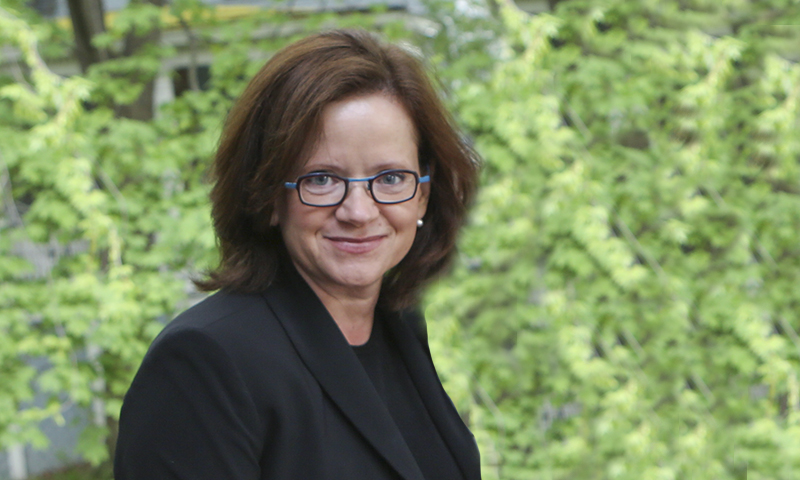
Danielle Li is the David Sarnoff Professor of Management of Technology and a Professor at the MIT Sloan School of Management, specializing in the Technological Innovation, Entrepreneurship, and Strategic Management academic group. She is also a Faculty Research Fellow at the National Bureau of Economic Research (NBER). Her academic journey includes an AB in mathematics and the history of science from Harvard College and a PhD in economics from MIT. Prior to joining MIT, she taught at Harvard Business School and the Kellogg School of Management. AB in Mathematics and History of Science, Harvard College PhD in Economics, MIT Professor Li's research focuses on the economics of innovation and labor economics, with particular emphasis on how organizations evaluate ideas, projects, and people. She investigates the intersection of technology and workplace dynamics, especially how AI impacts worker productivity, the nature of work, and career trajectories in AI-intensive environments. Her work examines how businesses implement AI tools and the resulting effects on workforce composition and skill requirements. Her publication portfolio reveals a consistent focus on innovation economics, labor market dynamics, and the organizational implications of technology. Recent work increasingly centers on AI's workplace impact, with her 2025 Quarterly Journal of Economics paper 'Generative AI at Work' demonstrating how AI assistance increases worker productivity by 15% on average, with differential effects across experience levels. Her research combines rigorous economic analysis with practical business implications, spanning pharmaceutical innovation, hiring practices, promotion decisions, and gender gaps in the workplace. Best Paper Prize: 2017 FIRCG Conference Best Paper Prize: 2018 CEPR Management, Organizations, and Entrepreneurship Conference Best Paper Prize: 2017 Red Rock Conference Best Paper Prize: 2018 LBS Summer Finance Symposium Best Paper Prize: 2019 American Economic Journal: Applied Economics Professor Li's research has been supported by significant grants and has influenced both academic discourse and business practice. Her work on AI in the workplace has informed executive education programs at MIT Sloan, including 'Making AI Work: Machine Intelligence for Business and Society' and 'Artificial Intelligence' courses. She actively engages with media and business leaders to translate research findings into practical insights, frequently appearing in the New York Times, Wall Street Journal, and Economist. Her research on gender promotion gaps and hiring practices has particular relevance for organizational human resource policies. Professor Li is deeply embedded in MIT's AI research ecosystem, collaborating with colleagues across Sloan and CSAIL. She contributes to MIT's AI Expert Spotlight series, focusing on how businesses should implement AI responsibly and effectively. Her work bridges economic theory with practical business applications, particularly in understanding how AI transforms work processes and organizational structures.
Christian Jacob is a Professor in the Department of Computer Science within the Faculty of Science at the University of Calgary . He holds a B.S. in Computer Science and a Doctor of Engineering Science from Erlangen University . His research focuses on nature-inspired algorithms, biocomputing, and agent-based simulations applied to biological systems and education. Key initiatives include the LINDSAY Virtual Human Project , which uses immersive virtual reality to explore human anatomy and physiology. He contributes to the university's strategic priorities in Digital Worlds and Health and Life initiatives. His work integrates evolutionary algorithms, cellular automata, and swarm intelligence into creative and medical applications. Notable achievements include the ASTech Award (2015) from Alberta Science and Technology. His projects emphasize interactive education through tools like LeukemiaSIM , Eukaryo , and the Giant Walkthrough Gut . Jacob also explores visualization techniques, such as evoVision3D and LifeBrush , to enhance scientific understanding. His research bridges computational methods with real-world applications in healthcare, architecture, and game design. Collaborative efforts include developing agent-based models for immune systems, nervous responses, and crowd behavior. Jacob's work spans interdisciplinary fields, blending computer science with biology, engineering, and the arts.
Elisabeth Gräb-Schmidt is a Senior Professor at the Eberhard Karls University of Tübingen, where she served as Professor of Systematic Theology and Director of the Institute for Ethics from 2010 to September 2024. She holds key roles in national ethics bodies, including the German Ethics Council (since 2018) and the Board of Trustees of the Max Planck Institute for Molecular Genetics (since 2024). Her academic career includes professorships at the University of Giessen (2002–2010) and directorship at the Institute for Philosophy of Religion in Frankfurt (2007–2009). She earned her doctorate (Dr. theol.) in 1992 after theological studies at Göttingen, Heidelberg, Berkeley, and Mainz (1975–1982), with ecclesiastical exams in 1982 and 1984. Her research bridges theology, ethics, and philosophy, focusing on: Foundations of ethics in science, technology, and bioethics Interdisciplinary dialogue between theology and natural sciences Religion theory and interreligious engagement Cultural hermeneutics and existential philosophy Her recent publications (2022–2024) address contemporary ethical challenges, including artificial intelligence in education, assisted suicide, religious pluralism, and feminist theology. Works exhibit strong interdisciplinary engagement with philosophy, political theory, and social ethics. Awards include the Schönthal-Preis (1982), DFG scholarships (1997–2000), and fellowships at the Max Weber Center (2013, 2016/17). She edits major theological journals ( Zeitschrift für Theologie und Kirche ; Zeitschrift für Evangelische Ethik ) and directs research networks like the European Science-Religion Dialogue (SR21) and the International Research Group on Democracy and Ethics.
Angus Carlyle is a Professor of Sound Arts Practice and Sound Landscape at the London College of Communication, part of the University of the Arts London. His research explores soundscapes, environmental acoustics, and interdisciplinary art practices. He holds degrees in Law (LLB, University of Hull), Political Theory (MA, University of Manchester), and a PhD in Political Theory/Philosophy (University of Manchester). Carlyle’s creative work bridges documentary and poetic registers through field recordings and collaborations, including projects like Air Pressure and Zawawa , which investigate sound in contested environments. He has authored/co-authored influential books such as On Listening (2013), In the Field (2013), and Sound Arts Now (2021). His teaching focuses on sound arts education, designing courses like The Politics of Noise and supervising over 50 student projects. He has secured major grants, including the Arctic Auditories project (2021–2024) and the Positive Soundscape Project (2006–2010), exploring soundscapes’ social and environmental impacts. Carlyle is a member of the Creative Research into Sound Arts Practice (CRiSAP) research centre. Key research interests include sonic ecology, post-natural soundscapes, and decolonial listening practices. His work frequently engages with anthropological, environmental, and political frameworks to critique and reimagine auditory environments.
Dr. Rebecca K. Ivic is a Professor and Associate Dean of Research at the University of Alabama's College of Communication & Information Sciences. She holds a PhD and MA in Health Communication from Purdue University. Her research bridges health communication, public health, and computational social science to address global health challenges such as vaccine promotion and health equity. She currently serves as Senior Editor of the Journal of Health Communication and Co-Secretariat Lead for the Nature Medicine Commission's Quality Health Information for All initiative. Dr. Ivic has secured over $1.6M in research funding and contributed to 60+ peer-reviewed publications. She leads institutional research strategies, including a pilot funding program and strategic plans to enhance faculty and student research support. Her work emphasizes digital health directions, global partnerships, and evidence-based health information systems. She collaborates with multidisciplinary teams and international organizations to advance health equity through strategic communication frameworks. Key contributions include special journal collections, grant review roles for NIH and NSF, and partnerships with the CUNY School of Public Health. Dr. Ivic's research spans computational social science methodologies, social media discourse analysis, and health campaign effectiveness. Her recent work explores algorithmic impacts on misinformation, community support dynamics in online health spaces, and environmental health communication through social media networks.
Alexander Refsum Jensenius is a Professor of Music Technology and Director of the RITMO Centre for Interdisciplinary Studies in Rhythm, Time and Motion at the University of Oslo. He also leads the fourMs Lab and co-founded the MishMash Centre for AI and Creativity. His work bridges musicology, psychology, and technology, focusing on embodied music cognition, human motion analysis, and creative applications of AI. Notably, he pioneered research on air guitar motion and human micromotion through projects like the Oslo Standstill Database . Educated at the University of Oslo (BA in Music and Mathematics, MA in Musicology) and Chalmers University of Technology (MSc in Applied IT), Jensenius holds a PhD in Music Technology from UiO. He has held visiting researcher roles at UC Berkeley, McGill University, and KTH. Leadership roles include Department of Musicology Head (2013–2016) and Steering Committee Chair for the International Conference on New Interfaces for Musical Expression (NIME, 2011–2022). Research interests span music-related body motion, AI in creative contexts, and open research practices. Key contributions include the Music Moves and Motion Capture MOOCs, the Musical Gestures Toolbox software, and monographs like Sound Actions and Sonic Design . His work emphasizes interdisciplinary collaboration, with projects addressing ventilation systems' acoustic properties and cell culture vibrational effects. Awards include the European Open Data Champion recognition. He advocates for open science and maintains extensive digital archives of research materials, emphasizing institutional web pages as critical research infrastructure.
Jodi Dean is Professor of Politics at Hobart and William Smith Colleges, where she has been a faculty member since 1993. She is affiliated with the Department of Politics within the School of Humanities and Social Sciences, and her scholarly work spans contemporary and modern political theory, communism, digital media, poststructuralism, psychoanalysis, feminist theory, and political responses to climate change. Institution: Hobart and William Smith Colleges Department: Politics Rank: Professor Email: jdean@hws.edu Dean’s research interests are deeply interdisciplinary, combining continental philosophy, media theory, and radical political critique. Her work critically engages with democracy, neoliberalism, digital culture, and the possibilities of collective political action in the 21st century. She is particularly known for retheorizing communism as a viable political horizon and analyzing the role of digital platforms in shaping contemporary subjectivities and publics. Her publications reveal a strong thematic focus on ideology, technology, and collective agency. From Blog Theory to Crowds and Party , her work traces the transformation of political engagement in networked societies. She frequently draws on Lacanian psychoanalysis and Marxist theory to critique liberal democratic frameworks and explore alternatives grounded in solidarity and emancipation. Jodi Dean is actively involved in the academic community as co-editor of the Digital Barricades book series (Pluto Press) and co-director of the Radical Critical Theory Circle. She was formerly co-editor of Theory and Event . She is a member of the American Political Science Association, the Association for the Study of Law, Culture, and the Humanities, and the Law and Society Association. Co-editor, Digital Barricades (book series, Pluto Press) Co-director, Radical Critical Theory Circle Former co-editor, Theory and Event She has also contributed to public intellectual life through lectures and engagements with activist projects such as The Natural History Museum in Stockholm. While no formal list of advisees is provided, her influence extends through her extensive publications and editorial roles. She holds a Ph.D. and M.A. from Columbia University and a B.A. from Princeton University.
Kersten Glandien is a lecturer in the theory, history, and practice of Sound Art at the Digital Music and Sound Arts course within the School of Art and Media at the University of Brighton. She has been teaching at the university since 2003 and also serves as the artistic director of the independent artist collective Sound Art Brighton , which she founded in 2017. Her work bridges academia, curation, and artistic practice, with a strong international presence through exhibitions, symposia, and radio programming. Her research interests span a wide and interconnected range of topics, including: Sound Art and its theoretical foundations Sound as nexus art and environmental sound art Sound in public and natural domains Sound and interaction, projection art Aesthetics from below and grassroots art practices Use of technology in contemporary arts The recent publications and research outputs reflect a consistent focus on the conceptual and experiential dimensions of sound art, curation, and relational sound practices. Her work often explores how sound functions in space, society, and perception, emphasizing interdisciplinary and community-oriented approaches. She has curated major events such as the Sound Art Brighton Festival (2022), Space Through Sound symposium in Bern (2015), and Radio Art in Britain & Germany concert series. Her scientific and artistic contributions include: Curatorial leadership in sound art festivals and exhibitions International invited talks and presentations Peer-reviewed publications in leading academic presses (e.g., Cambridge University Press) Radio program production and translation of academic texts Kersten Glandien supervises at PhD level and is actively involved in shaping the discourse around sound art through both academic and public-facing initiatives. She has no listed scientific awards in the provided text. She is associated with the Sound Art Brighton collective, which functions as a platform for interdisciplinary sound-based artistic research and public engagement.
Sal Hagen is a postdoctoral researcher at the Institute for Logic, Language and Computation (ILLC) at the University of Amsterdam, working within the Natural Language Processing & Digital Humanities group. His research focuses on the intersection of computational methods and cultural analysis, particularly examining online communities, political discourse, and meme culture. His educational background includes a Research Master's in Media Studies from the University of Amsterdam, for which he received the prestigious 2018 Internet Thesis Prize in the Internet & Social Sciences or Humanities category for his work "Here I Am, Praying to an Egyptian Frog: Exploring Political Fluidity on 4chan/pol/". He also won the Audience Award for his presentation at the ceremony. Hagen's research interests center on understanding the dynamics of online communities, with particular expertise in 4chan and related platforms. His work combines qualitative and quantitative approaches to analyze political discourse, far-right movements, and the evolution of memes across digital spaces. He examines how anonymity, platform architecture, and cultural context shape online interactions and political expression. His publication record demonstrates a consistent focus on tracing political movements through digital footprints, with particular attention to the interplay between platform-specific cultures and broader political trends. Hagen's work often bridges computational social science with cultural studies, creating methodologies that capture both the quantitative patterns and qualitative meanings of online discourse. Scientific Awards: 2018 Internet Thesis Prize (Internet & Social Sciences or Humanities category) Audience Award for presentation at Internet Thesis Prize ceremony Hagen has secured significant research funding, including an NWO PhD grant for humanities research running from 2019-2024. He has been involved in multiple research projects including the CAT4SMR project (2024), OILab (2017-present), and the ERC-funded ODYCCEUS project (2018-2019). As part of OILab (Online Intelligence Lab), Hagen contributes to research on online political subcultures, while his work on the CAT4SMR project focuses on stabilizing and developing tools for social media data collection and analysis. He is also the developer of the 4CAT Capture and Analysis Toolkit, which provides transparent and traceable methods for social media research.
Piers Gelly is an Assistant Professor in the Department of English at the University of Virginia, where he teaches Writing and Rhetoric courses. His work bridges creative writing, pedagogy, and social justice, with a focus on labor organizing and digital technologies. MFA in Fiction, University of Virginia (2019) BA in College of Letters, Wesleyan University (2013) His research explores intersections of generative AI in education, podcast production, labor studies, and collaborative authorship. He co-organizes the Writing With Sound speaker series, collaborating with experts like Avery Trufelman and Sarah Larson. Recent projects include curating a student-union collaboration exhibition at UVA’s Small Special Collections Library (2024) and investigating AI ethics in pedagogy. His publications span Literary Hub , The Point , and The Stinging Fly . Key grants include the Thrive Grant (2025), Learning Technology Incubator Grant (2024), and Active Archive Fellowship (2021). Thrive Grant (2025) Learning Technology Incubator Grant (2024) Active Archive Fellowship (2021) Henfield Prize for Fiction (2019) He collaborates extensively with labor unions in Charlottesville and mentors students through podcast projects and collective curatorial efforts.
Emma Spiro is an Associate Professor at the University of Washington Information School, with adjunct appointments in the Department of Sociology and Human Centered Design & Engineering. She co-founded the Center for an Informed Public (CIP) and directs the Social Media Lab (SoMeLab) and Data Science and Analytics Lab (DataLab). Her research focuses on online communication, misinformation dynamics, and network structures in both digital and physical contexts. Dr. Spiro’s work explores social networks and computational social science, analyzing how misinformation spreads during crises and elections. Her research has been funded by the National Science Foundation and Army Research Office, and published in top journals like PNAS, Social Networks, and Information, Communication & Society. She holds a Ph.D. in Sociology from UC Irvine and dual B.A.s in Applied Mathematics and Science, Technology & Society from Pomona College. As a Data Science Fellow at UW’s eScience Institute, she bridges technical and social science methodologies to study information integrity. Her affiliations include the UW Center for Statistics & the Social Sciences (CSSS) and the Center for Studies in Demography & Ecology (CSDE). She actively collaborates across disciplines to address strategic misinformation through labs, institutes, and multi-institutional initiatives like the Disinformation Summer Institute.
Andreas Weber is an Associate Professor at the University of Twente's Digital Society Institute , specializing in the Knowledge, Transformation & Society (KiTeS) research group . His work examines the long-term historical and global relationship between Science, Technology, and Society , with particular focus on colonial histories of natural history, chemistry, and sustainability , as well as computational technologies for contextualizing digitized archives . He leads the HAICu project (2023–2029) on digital cultural heritage and coordinates STS PhD training for the Netherlands Graduate Research School (2019–2024). MA & PhD in History (2005 & 2012), Leiden University Assistant Professor (2017–2023), University of Twente Andreas' research integrates digital humanities with colonial science history , emphasizing global histories of minerals , digital humanism , and AI's societal context . His 15 most recent publications (2016–2025) explore topics like colonial bias in natural history collections , FAIR data implementation , and semantic annotation of handwritten archives , spanning disciplines from history of science to computer science and museum studies . He has received 7 scientific awards , including multiple Best Teacher Awards (2020–2023) and the IEEE eScience Best Poster Award (2018). Andreas supervises PhD and postdoctoral projects while engaging in media commentary on colonial heritage issues and co-organizing international conferences like Hydrogen Pasts and Futures (2024).
Dr. Pasi Sihvonen serves as Docent in Ecology and Evolutionary Biology at the University of Helsinki, where he also holds the position of Director of the Zoology Unit at the Finnish Museum of Natural History. He supervises doctoral students in the Wildlife Biology Doctoral Programme and has directed numerous international research projects focused on geometrid moth systematics. His work combines molecular and morphological approaches to study one of the most diverse insect groups globally. Dr. Sihvonen's research focuses on the systematics and biodiversity of geometrid moths (Geometridae), a megadiverse insect radiation comprising approximately 24,000 species worldwide. His work emphasizes large-scale international collaborations that integrate molecular data with morphological analysis to understand evolutionary patterns. He is particularly known for his contributions to the landmark monograph series "Geometrid Moths of Europe" and advocates for digitization of natural history collections to provide open access to biodiversity data. His recent publications demonstrate a consistent focus on geometrid moth taxonomy, phylogenetics, and biogeography, with increasing incorporation of advanced technologies like micro-CT scanning for integrative taxonomy. His research spans diverse geographical regions including Europe, Africa, and South America, revealing patterns of diversification and adaptation across this globally distributed moth family. Dr. Sihvonen has received several prestigious awards recognizing his contributions to lepidopterology and taxonomy: Publication of the Year from the Lepidopterists' Society of Africa (2014) Lepidopterist of the Year in Finland from the Lepidopterological Society of Finland (2004, 2015) Risto Tuomikoski Prize for Taxonomist of the Year in Finland (2007) As a supervisor in the Doctoral Programme in Wildlife Biology, Dr. Sihvonen guides the next generation of taxonomists and evolutionary biologists. His grant portfolio includes significant international projects such as SYNTHESYS+ (2019-2023), BioMonitor4CAP (2022-2026), and BGE Europe (2024-2025), demonstrating his leadership in biodiversity research and monitoring initiatives across Europe. Dr. Sihvonen leads research teams at the Finnish Museum of Natural History's Zoology Unit, which maintains extensive insect collections that serve as critical resources for biodiversity research. His current projects focus on advanced biodiversity monitoring, pollinator conservation, and developing genomic resources for Finnish arthropods, positioning his work at the intersection of traditional taxonomy and modern conservation science.