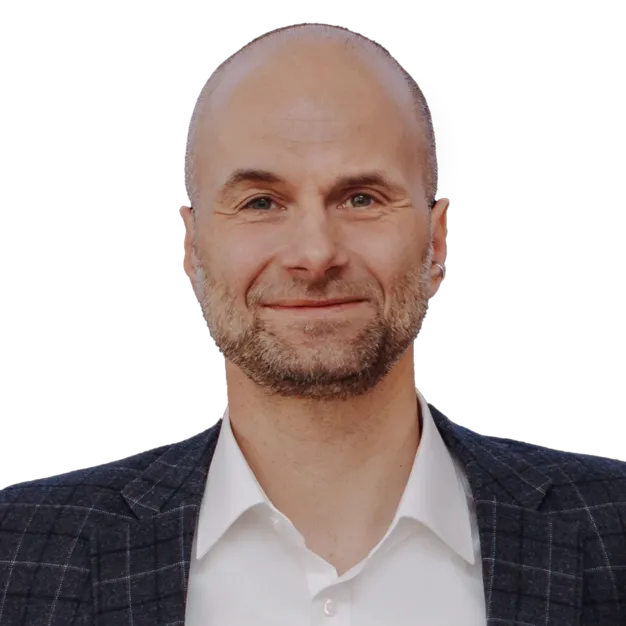
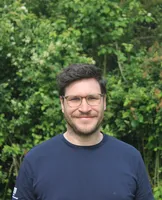
Sebastian Pfotenhauer is a Carl von Linde Professor for Innovation Research at Technical University of Munich (TUM) and Deputy Head of the STS Department. He specializes in the societal dimensions of innovation, including governance of emerging technologies, regional innovation cultures, and responsible innovation practices. His work bridges academic research and policy, with leadership roles in major initiatives like the €50M Munich Cluster for the Future of Mobility (MCube) and the EU-funded SCALINGS project on co-creation in innovation. He holds a PhD in Physics from the University of Jena and postdoctoral training at MIT and Harvard. Research interests include innovation policy, science governance, and the interplay between technology and societal change. Notable projects include comparative studies of innovation cultures, governance frameworks for AI and neurotechnology, and global partnerships in science and innovation. He advises governments and international bodies like the OECD and the German Engineers’ Association (VDI). Publications span journals like Research Policy , Social Studies of Science , and Nature Biotechnology , addressing topics from regulatory sandboxes to neurotechnology ethics. Awards include the Leading Technology Policy Fellowship (MIT) and NSF grants for studying complex international partnerships.
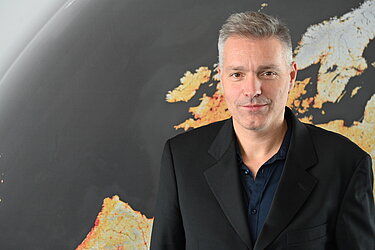
Prof. Dr. Johannes Sauer is a Professor at the Technical University of Munich (TUM), holding dual affiliations with the TUM School of Management and the TUM School of Life Sciences . His academic focus is on production and resource economics, with expertise in agricultural sustainability, policy evaluation, and circular economy strategies in Asia-Pacific and Latin America. Education: Bachelor’s/Master’s in Agricultural Economics from Universities of Tübingen, Hamburg, and Imperial College London. Doctorate (summa cum laude) in Agricultural Economics from the University of Bonn (2004). Research Interests: Prof. Sauer’s work spans productivity and resilience in agricultural systems, adoption of sustainable technologies, water resource valuation, and bioeconomic trends. He emphasizes smart technologies and circular economy applications in developing regions. His research employs econometric methods to analyze policy impacts and environmental-economic trade-offs. Key Trends in Publications: Recent articles highlight climate-smart agriculture, ICT adoption in rural China, and agroforestry’s role in reducing ecological-economic trade-offs. He explores behavioral drivers of policy participation and innovative tools like the IoFarm decision support system. Awards: 2021 Honorary Professorship at ANU OECD Fellow Awards (2010, 2016) Best Paper Awards (2008–2015) Consulting & Roles: OECD and Asian Development Bank consultant, ESRC Peer Review College member, and liaison lecturer for the German National Academic Foundation. He advises on agri-environmental policies and international development. Labs/Teams: Active in collaborative projects such as PONDERFUL Framework and IPM Popilia , focusing on nexus research and pest management strategies.
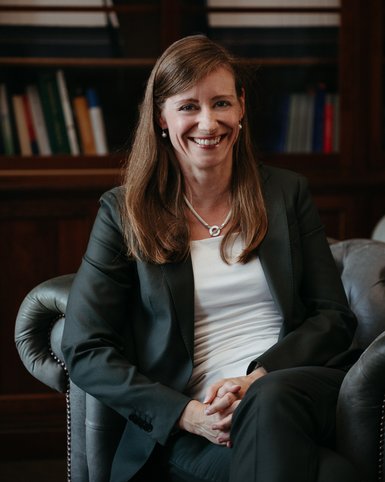
Dr. Stephanie Spahr is a Research Group Leader at the Leibniz Institute of Freshwater Ecology and Inland Fisheries (IGB) in Berlin, Germany, where she leads the Organic Contaminants research group within the Department of Ecohydrology and Biogeochemistry. Previously, she served as a Junior Research Group Leader at the University of Tübingen's Center for Applied Geoscience (2019-2021) and as a Postdoctoral Researcher at Stanford University's Department of Civil and Environmental Engineering (2016-2019). Dr. Spahr earned her PhD in Environmental Chemistry from the Swiss Federal Institute of Technology Lausanne (EPFL) and the Swiss Federal Institute of Aquatic Science and Technology (Eawag) in 2016. Her doctoral research focused on the formation of N-nitrosodimethylamine during water disinfection with chloramine. She completed her MSc in Geoecology at the University of Tübingen in 2012, with thesis work on carbon and nitrogen isotope analysis of benzotriazoles conducted at Eawag, and her BSc in Geoecology/Ecosystem Management at the same institution in 2010. Dr. Spahr's research focuses on trace organic contaminants in aquatic systems, with particular expertise in transformation processes of contaminants in natural and engineered systems, advanced oxidation processes for water treatment, urban blue-green infrastructure, and compound-specific isotope analysis. Her work bridges environmental chemistry, engineering, and ecology to address water quality challenges in urban and natural water systems. She employs advanced analytical techniques to track contaminant sources and transformation pathways, with a strong emphasis on practical applications for water treatment and environmental protection. Her recent publications demonstrate a strong focus on biochar-based water treatment technologies, particularly for stormwater management. She investigates how biochar amendments can remove trace organic contaminants from urban runoff, with recent work examining persulfate activation mechanisms, the role of chloride in reactive species formation, and the performance of engineered media filters under dynamic conditions. Her research also extends to understanding contaminant transport in rivers, the ecological impacts of pollutants, and developing analytical methods for environmental monitoring. The interdisciplinary nature of her work connects chemical processes with ecological outcomes. Outstanding Review Paper Award 2023 in Environmental Science: Water Research & Technology Selected for the Falling Walls Female Science Talents Intensive Track 2023 Selected mentee in the Leibniz Mentoring Programme 2022-2023 Best poster award (1st prize) at the Wasser 2022 of the Water Chemistry Society Selected fellow in the Postdoc Academy for Transformational Leadership 2020-2022 (Robert Bosch Stiftung) Selected fellow in the Athene Program for early female career researchers at the University of Tübingen, 2020-2021 As a Research Group Leader, Dr. Spahr supervises multiple research projects including 'POllution in UrbaN ponds, eco-evolutionary Dynamics, and Ecosystem Resilience (POUNDER)', 'Dynamic hyporheic zone', 'NYMPHE', and the 'Incident-related special investigation programme for the environmental disaster in the Oder River'. She serves on the Executive Board of the German Water Chemistry Society and heads its Expert Committee on 'Oxidative Processes'. Her collaborative work spans numerous institutions across Germany and internationally, addressing critical water quality challenges through interdisciplinary approaches. Dr. Spahr leads the Organic Contaminants research group at IGB Berlin, which focuses on understanding the fate and treatment of organic pollutants in water systems. Her team employs advanced analytical techniques including compound-specific isotope analysis to track contaminant sources and transformation pathways. The group collaborates extensively with other departments at IGB and with international partners on projects addressing urban water challenges and ecological impacts of pollution. Current research emphasizes innovative water treatment technologies, particularly biochar-based systems for stormwater management, and investigating the complex interactions between contaminants, aquatic ecosystems, and human activities.
Dr. Theresa Jedd is an Environmental Policy Specialist and Post-Doctoral Research Associate at the Department of Environmental and Climate Policy , Technische Universität München , since 2019. Previously, she worked at the National Drought Mitigation Center (University of Nebraska-Lincoln, 2015-2019) and the Natural Resource Ecology Laboratory (Colorado State University, 2015). Her work spans drought policy analysis, transboundary conservation, and participatory governance methods across diverse regions including Montana, Nebraska, and the Middle East/North Africa. Current Affiliation: Technische Universität München (2019-present) Prior Roles: University of Nebraska-Lincoln (2015-2019), Colorado State University (2015) Research Focus: Combines qualitative methods (interviews, focus groups, workshops) with physical drought indicators to analyze policy frameworks at multiple governance levels (local, national, international). Key themes include: Climate risk governance Water allocation mechanisms Drought early warning systems Transboundary environmental policy Civil society engagement Ethics of environmental crises Publication Trends: Recent work highlights polycentric governance challenges, drought resilience limitations, and participatory monitoring approaches. Her research spans environmental policy, water resource management, and climate adaptation.
John Van Reenen holds the Ronald Coase School Professorship at the London School of Economics (LSE), serves as a Digital Fellow at MIT, and directs the Programme for Innovation and Diffusion (POID). His primary academic affiliation remains with LSE where he maintains an active research profile with publications extending into 2025. Van Reenen's research centers on innovation economics, labor markets, and productivity with deep expertise in management practices and firm dynamics. His work examines resource misallocation effects in developing economies like Mexico, structural transformation impacts on labor concentration, and spillover mechanisms from superstar firms. Key contributions span industrial organization, development economics, and technology policy, often utilizing firm-level data to analyze innovation diffusion and organizational resilience. Recent publications (2021-2025) reveal consistent focus on management-productivity linkages, structural economic transformation, and innovation systems. His research increasingly addresses climate-related business resilience, military innovation dynamics, and cross-border spillovers from foreign direct investment. Methodologically, he combines rigorous econometric approaches with subjective expectation data and firm-to-firm transaction analysis. Major recognitions include: 2009 Yrjö Jahnsson Award (European equivalent of Bates Clark Medal) 2014 European Investment Bank Prize for Excellence in Economic and Social Research 2017 Order of the British Empire (OBE) 2022 Honorary Foreign Membership in the American Economic Association No specific student advising or grant information appears in the source material, though his POID leadership implies research coordination responsibilities. As Director of the Programme for Innovation and Diffusion, Van Reenen oversees a research initiative investigating innovation drivers and diffusion mechanisms across global firms and economies, fostering collaboration between LSE, MIT, and international policy institutions.
Dr. Jing Wang is a Professor in the Department of Bioinformatics at Southern Medical University's School of Medicine, with extensive research at the intersection of artificial intelligence and biomedical applications. Her work demonstrates strong cross-disciplinary collaboration across medical institutions, engineering departments, and computer science research groups. Her primary research interests include Artificial Intelligence in Healthcare , Biomedical Engineering , and Traditional Chinese Medicine Informatics , with recent publications showing particular expertise in medical imaging analysis, diagnostic assistance systems, and clinical decision support. Her work spans both theoretical algorithm development and practical clinical implementations. Analysis of her 15 most recent publications (2025-2026) reveals a strong trend toward clinically applicable AI systems, with approximately 60% of publications focused on medical diagnostics and treatment support systems. The remaining publications demonstrate expertise in industrial applications of computer vision and fundamental AI research. Her work shows consistent collaboration with both domestic Chinese institutions and international research groups. Notable scientific contributions include: Development of 'Tianyi', a traditional Chinese medicine language model for clinical practice Innovations in bionic soft robotics for rehabilitation assistance Novel approaches to medical image analysis for cancer diagnostics Her research program appears well-funded with consistent publication output across high-impact journals in biomedical engineering, AI, and medical informatics. Current work suggests strong emphasis on translating AI research into clinical practice, particularly in diagnostic support systems and rehabilitation technology.
Meeyoung Cha is a Professor at KAIST and Scientific Director of the Max Planck Institute for Security and Privacy (MPI-SP) in Bochum, Germany. Her research focuses on Data Science for Humanity, encompassing computational social science, misinformation dynamics, and human-machine interaction. She holds a PhD in Computer Science from KAIST (2008) and previously served as Chief Investigator at the Institute for Basic Science and Visiting Professor at Facebook. Her work addresses societal challenges such as poverty mapping, fraud detection, and AI ethics. Key achievements include best paper awards and recognition like the Hong Jin-Ki Creator Award (2024) and Test-of-Time Awards (ACM IMC 2022, AAAI ICWSM 2020). Research interests span AI ethics, social media analysis, and interdisciplinary applications of machine learning. Notable projects include modeling climate risks via satellite imagery and analyzing chatbot interactions' societal impacts. She leads the MPI-SP's Data Science for Humanity Group, mentoring over 20 students across PhD and postdoc programs. Education: PhD in Computer Science (KAIST, 2008) Affiliations: MPI-SP (Germany), KAIST Key Awards: Hong Jin-Ki Creator Award, Korean Young Information Scientist Award, Test-of-Time Awards Her publications bridge computational methods with societal issues, including climate modeling, protein engineering, and algorithmic fairness. Current projects explore geospatial AI for economic development and ethical AI design frameworks.
Prof. Dr. Heiko Paulheim is a Professor of Data Science and currently serves as University Vice President at the University of Mannheim. He leads the Data and Web Science Group (DWS), which focuses on Web Data Mining, Knowledge Graphs, and Semantic Web technologies. His research group contributes to open source knowledge graphs like DBpedia and develops new knowledge graphs such as WebIsALOD and DBkWik. As of October 1, 2024, he has limited teaching capacity due to his vice presidential duties. Prof. Paulheim's research interests span Knowledge Graphs, Semantic Web, Web Data Mining, Machine Learning, and Natural Language Processing. His work particularly focuses on knowledge graph refinement, embedding techniques (notably RDF2vec), and applications in various domains including news recommendation, biomedical informatics, and environmental monitoring. His group develops practical tools like the RapidMiner Linked Open Data Extension and RDF2vec for knowledge graph applications. His recent publications demonstrate a strong focus on knowledge graph embeddings, with particular attention to RDF2vec variants, applications in news recommendation systems, biomedical data integration, and spatio-temporal knowledge graphs for environmental monitoring. His work bridges theoretical advances in knowledge representation with practical applications across multiple domains. Among his notable achievements are a nomination for the Best Paper Award at CAiSE 2025 and securing an Open Science Grant for the SpatialBenchRAG project. His research has significant impact in both academic and industrial contexts, with multiple papers accepted at top conferences like ISWC and ESWC. Prof. Paulheim has supervised numerous PhD students including Alexander Brinkmann and Michael Schlechtinger, and has led several research projects including the DFG Project Mine@LOD, State of BW Project SyKoW², and BMBF Project DS4DM. His group maintains strong industry connections with partners like SAP AG, Daimler AG, and IDS.
Dr. Benedikt Aumeier is a Research Fellow and head of the working group "Advanced Water Treatment" at the Chair of Urban Water Management, Department of Civil, Geo and Environmental Engineering, TUM School of Engineering and Design at the Technical University of Munich since 2023. Previously, he served as a Post-Doc and Working Group Leader at the Institute of Urban Water Management, RWTH Aachen University from 2020-2023. Dr. Aumeier holds a Dr.-Ing. from the Chair of Chemical Process Engineering at RWTH Aachen University (2020), an M.Sc. in Management and Technology of Water and Wastewater from the University of Duisburg-Essen (2011-2013), and a B.Sc. in Chemical Engineering from the Technical University of Munich (2007-2011). His research focuses on advanced water treatment processes for direct and indirect water reuse, drinking water treatment, and wastewater treatment. Key areas include adsorption/sorption, membrane filtration, advanced oxidation processes, and disinfection. He investigates competitive adsorption in aqueous media, novel sorbent regeneration methods, membrane fouling countermeasures, and process modeling. His work addresses removal of persistent and mobile organic contaminants including PFAS, as well as microorganism elimination. Dr. Aumeier's publications demonstrate a strong trend toward addressing emerging water quality challenges, particularly concerning persistent organic pollutants and advanced treatment technologies. His research spans fundamental studies on adsorption mechanisms to practical applications for water reuse and decentralized treatment systems, with increasing focus on PFAS removal and compliance with regulatory frameworks. Mitglied im Fachausschuss "Persistente-Mobile-Toxische (PMT) Stoffe" der Wasserchemischen Gesellschaft, Gesellschaft Deutscher Chemiker (GDCh) Mitarbeit an DWA M1200 Teil 2 "Wasserwiederverwendung für landwirtschaftliche und urbane Zwecke in Deutschland" At TUM, Dr. Aumeier teaches courses including "Natural processing methods," "Advanced Water Treatment Engineering and Reuse," and "Industrial wastewater treatment and reuse," demonstrating his commitment to educating the next generation of water professionals. He leads the "Advanced Water Treatment" working group, which focuses on developing and applying innovative water treatment technologies to address contemporary water quality challenges under changing climate conditions.
Ann Bostrom is a Professor at the Daniel J. Evans School of Public Policy and Governance, University of Washington. Previously, she served as Associate Dean for Research at Georgia Tech's Ivan Allen College of Liberal Arts (1992-2007) and co-directed the National Science Foundation's Decision Risk and Management Science Program (1999-2001). Her work bridges environmental policy, risk communication, and decision-making under uncertainty. Education: Ph.D. in Public Policy Analysis (Carnegie Mellon University), M.B.A. (Western Washington University), B.A. in English (University of Washington), Postdoctoral studies in Engineering and Public Policy (Carnegie Mellon) and Cognitive Survey Methodology (Bureau of Labor Statistics) Bostrom's research focuses on risk perception , environmental policy , and decision-making under uncertainty , particularly in climate change, natural disasters, and science communication. She has pioneered mental models approaches to risk assessment and contributed to understanding public attitudes toward carbon emissions, weather hazards, and astronaut health risks. Her scientific awards include the 2020 Distinguished Educator Award and 1997 Chauncey Starr Award (both from the Society for Risk Analysis), and fellowships from AAAS, WSAS, and SRA. She has received research funding from the National Science Foundation, EPA, and NIH. Bostrom leads or co-leads multiple NSF-funded initiatives, including the Cascadia Coastlines and Peoples Hazards Research Hub and the NSF AI Institute for Trustworthy AI in Weather, Climate, and Coastal Oceanography (AI2ES) . She serves on advisory committees for AAAS, Washington State Academy of Sciences, National Renewable Energy Laboratory, and NCAR's Mesoscale & Microscale Meteorology Lab.
Prof. Dr. Hannes Taubenböck holds the Chair of Global Urbanization and Remote Sensing at the Julius-Maximilians University of Würzburg (Faculty of Philosophy, Institute of Geography and Geology) since 2022 and collaborates with the German Aerospace Center (DLR). His research bridges remote sensing with urban geography, focusing on: Global urbanization patterns and structural analysis Informal settlements (slums/refugee camps) Climate change and natural hazard vulnerability Migration dynamics via remote sensing and social media He obtained his PhD (2008) and habilitation (2019) at JMU Würzburg, preceded by geography studies at LMU Munich (1999-2004). His recent publications analyze: Climate impacts on African agriculture Urban permeability and walkability Border region disparities Heat exposure modeling Methodologically, he specializes in: Deep learning for earth observation Multi-modal data fusion Urban pattern classification Building stock analysis His work informs policy applications in: EU cohesion programs Disaster risk reduction Environmental justice Urban sustainability
Prof. Dr. Julia Rieck is a Full Professor of Business Administration at the University of Hildesheim , leading the Department of Business Administration and Operations Research within the Faculty of Mathematics, Natural Sciences, Economics and Computer Science. As Dean of the Faculty , she oversees academic programs, quality management, and research initiatives. Her roles include academic advising for the Business Information Systems (B.Sc./M.Sc.) programs and active participation in examination boards and quality committees. Education: PhD in Political Science (Dr. rer. pol.) with summa cum laude (2008), Habilitation at Clausthal University of Technology (2014), and studies in Business Mathematics (Diploma, University of Hamburg, 2003) and Mathematics (Georg-August-University Göttingen, 2000). Research: Focuses on Operations Research , Supply Chain Management , Project Planning , and Logistics . Her work integrates mathematical modeling , machine learning , and real-world applications , particularly in disaster response , dynamic transportation , and sustainable e-commerce . Projects: Leads third-party funded initiatives like "IT für die sorgende Gesellschaft" (AI in healthcare/social sectors) and contributes to the HULLS real-lab (AI in aging societies). Collaborates with regional companies (e.g., Youco, ADITUS) and institutions (HAWK, University of Hannover). Teaching: Emphasizes practical application through case studies, industry partnerships, and the IT-Speed Dating event for student-company connections. Her courses cover project resource planning , logistics , and digital transformation . Labs & Teams: Active in the Institute of Business Administration & Business Information Systems , contributing to the KET Kompetenzwerkstatt (entrepreneurship support) and interdisciplinary teams in AI and sustainability research.
PD Dr. Ansgar Schanbacher serves as a Research Fellow at the Institute for Regional Historical Research, University of Göttingen, specializing in environmental and urban history of Early Modern Central Europe and the Netherlands. His work examines resource management and hazard responses in cities like Braunschweig, Würzburg, and Utrecht through interdisciplinary environmental history frameworks. His academic formation includes a Dr. phil. from Göttingen University (2011-2015) on Potato Blight and Famine in Northwestern Germany (1845-1848), completed within the Research Training Group Interdisciplinary Environmental History. Earlier, he earned an M.A. in History, Economy, and Polish Language/Literature from Leipzig University and Lublin's Catholic University (2003-2010), followed by freelance translation work (2009-2011). Schanbacher's research centers on Environmental History, Urban History (17th-19th centuries), History of Science, and Eastern European History. His scholarship reveals how early modern cities navigated ecological challenges through municipal policies, technological adaptations, and social coping mechanisms, with particular attention to waste management, fire prevention, food crises, and horticulture across German and Dutch urban contexts. His 15 most recent publications demonstrate consistent focus on urban environmental resilience, showing evolution from specific hazard case studies (fires, earthquakes) toward broader sustainability frameworks. Key trends include comparative analysis of municipal responses, interdisciplinary methodology bridging history and environmental science, and contextualization of historical practices within modern sustainability discourse. His scientific recognition includes: Prize of the Historical Commission for Lower Saxony and Bremen (2016) DFG Scholarship at Göttingen University (2011-2014) DAAD Scholarship for Poznań/Kraków (2008) Grant leadership includes Scientific Coordination of 'Sustainability as Argument' (2016-2020) and a 2016 Graduate School of Humanities research grant. He actively disseminates research through the 'Stadtgeschichten' urban history blog (co-editor), 'Epidemien in der frühneuzeitlichen Stadt' podcast series, and public lectures on Central European urban environments. Current affiliations include the European Society for Environmental History and European Association for Urban History, with contributions to the Portal zur Geschichte and Frauenstift Gandersheim projects. Based at Göttingen University's Heinrich-Düker-Weg campus, he maintains active scholarly engagement through editorial work, conference presentations, and interdisciplinary collaborations exploring historical dimensions of urban sustainability.
Pascal Hitzler is a University Distinguished Professor and holds the endowed Lloyd T. Smith Creativity in Engineering Chair at Kansas State University's Department of Computer Science, Carl R. Ice College of Engineering. He directs the Center for Artificial Intelligence and Data Science (CAIDS) and the Institute for Digital Agriculture and Advanced Analytics (ID3A). Previously, he held roles at Wright State University, Karlsruhe Institute of Technology, and TU Dresden. His research focuses on neuro-symbolic AI, semantic web technologies, knowledge graphs, and ontology engineering. Education: PhD in Mathematics (2001, University College Cork), Diplom in Mathematics (1998, University of Tübingen). Academic achievements include over 400 publications, founding editor roles for journals like Neurosymbolic Artificial Intelligence , and leadership in organizations like the Neural-Symbolic Learning and Reasoning Association. Research interests include AI explainability, knowledge representation, and interdisciplinary applications of semantic technologies. He leads the DaSe Lab for Data Semantics, advancing projects like the KnowWhereGraph and Enslaved.org Hub Knowledge Graph. His work bridges symbolic AI with neural networks, emphasizing practical applications in agriculture, environmental science, and historical data preservation. Grants and collaborations span academic, industrial, and international partners. He has advised numerous students and researchers, contributing to both theoretical advancements and real-world semantic systems deployments.
Professor Julia Hartmann serves as the Chair of Sustainability Management at EBS Business School, part of EBS Universität für Wirtschaft und Recht in Oestrich-Winkel, Germany. Her research focuses on climate change mitigation, energy transition strategies, sustainable supply chain resilience, and ESG compliance. She leads a team supported by industry partners like Procter & Gamble and Tetra Pak, emphasizing practical applications of sustainability theory. Her work bridges data analytics (machine learning, natural language processing) with business strategies, published in top journals such as Journal of International Business Studies and Journal of Business Ethics . Hartmann teaches courses on strategic CSR, environmental management, and empirical data techniques, advising companies on ESG leadership and future readiness. Her recent work examines oil and gas industry transitions, supply chain liability, and pandemic resilience. She actively engages with media (TV, podcasts) to discuss sustainability challenges, contributing to public discourse on energy policy and corporate responsibility. Education & Career: While formal academic qualifications are not explicitly listed, her extensive publication record and professorial role indicate advanced doctoral training in business administration or related fields. She has held leadership roles at EBS since assuming the chair position. Research Interests: Her work spans three core areas: 1) Sustainable supply chain design and resilience, 2) Energy transition pathways for industries, and 3) Quantitative methods for measuring ESG impacts. She explores how media attention, legal frameworks, and consumer behavior shape corporate sustainability outcomes. Awards & Recognition: While no specific awards are cited, her peer-reviewed publications and industry partnerships reflect scholarly and practical impact. She was an invited speaker at major conferences like EurOMA 2024 and Arthur D Little CEO Insights Conference. Grants & Collaboration: Partnerships with Procter & Gamble and Tetra Pak support applied research initiatives. Her lab focuses on bridging academic insights with industry implementation through joint projects and executive education programs. Labs/Teams: The Chair of Sustainability Management serves as her primary research hub, hosting interdisciplinary projects on supply chain governance, climate policy, and digital sustainability tools.