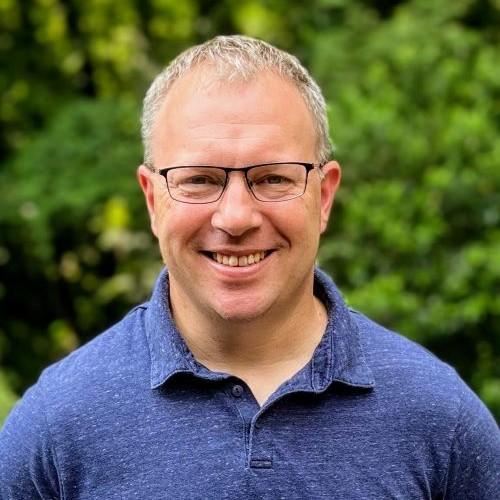
Carol Frost, PhD, is an Assistant Professor in the Department of Renewable Resources at the University of Alberta's Faculty of Agricultural, Life and Environmental Sciences. Her research focuses on arthropod community ecology, particularly biodiversity conservation and the impacts of human activities on ecological functions. She holds a PhD in Ecology from the University of Canterbury (2014), an MSc in Entomology from McGill University (2009), and a BSc in Animal Biology from the University of Alberta (2006). Her work spans three key areas: (1) identifying low-cost industrial/urban modifications for biodiversity conservation, (2) advancing ecological network approaches to predict community dynamics, and (3) documenting Alberta's arthropod biodiversity. Recent studies include analyzing pollinator networks, habitat edge effects, and agricultural landscape impacts on hoverflies and canola crops. Frost teaches courses such as Principles of Managing Natural Diversity (REN R 364/765), Exploratory Data Analysis (REN R 581), and Statistical Methods for Environmental Sciences (REN R 582). Her research outputs emphasize ecosystem resilience, keystone species roles, and multitrophic interactions, with a focus on applied conservation solutions.
Susan Dudley is a Professor in the Department of Biology at McMaster University, where she has established herself as a leading researcher in plant ecology and physiology. Her work spans multiple areas including plant-plant interactions, kin recognition mechanisms in plants, and pollinator ecology, with significant contributions to understanding how plants interact with their environment and with each other. Ph.D. in Ecology and Evolution from University of Chicago (1991) M.Sc. in Biology from McGill University (1984) B.Sc. in Biology from McGill University (1981) Dr. Dudley's research primarily focuses on plant social behavior, particularly kin recognition and cooperation among plants. Her groundbreaking work has demonstrated that plants can recognize their relatives and modify their growth patterns accordingly, challenging traditional views of plant behavior. She also investigates pollinator ecology, with recent research on wild bees including the unusual case of snail shell-nesting bees. Her interdisciplinary approach combines field observations, controlled experiments, and molecular techniques to address fundamental questions in plant ecology. Her publication record shows consistent productivity with a focus on plant social interactions over the past 15 years. The research trends reveal an evolution from basic studies on kin recognition mechanisms to applications in conservation biology and sustainable agriculture. Her recent work connects plant social behavior with broader ecological concerns including invasive species management, pollinator conservation, and forest ecosystem dynamics. As an educator, Dr. Dudley teaches Ecological Statistics (BIOLOGY 707), Applied Statistics for Biology (BIOLOGY 3SA3), Field Methods in Ecology (BIOLOGY 3JJ3), and Plant Biodiversity and Biotechnology (BIOLOGY 2D03). Her teaching spans both undergraduate and graduate levels, emphasizing practical field and statistical skills essential for modern ecological research. Her research has received significant attention in both academic and public spheres, with multiple publications picked up by news outlets, referenced in Wikipedia pages, and shared across social media platforms. The collaborative nature of her work is evident from her co-author network, which includes researchers across various biological disciplines.
Jessica Forrest is an Associate Professor in the Department of Biology at the University of Ottawa, affiliated with the Faculty of Science. Her research focuses on evolutionary ecology, particularly plant-pollinator interactions, climate change impacts on pollinators, and the ecological consequences of phenological shifts. She studies native bees, their interactions with plants, and how agricultural practices can benefit from native bee ecology. Her work spans field studies in natural and agricultural landscapes, emphasizing pollinator conservation and climate adaptation. Notable projects include investigations into bee nesting habitat enhancement in orchards, the effects of drought on alpine bees, and the role of floral traits in pollinator attraction. Research Themes: Pollination ecology, climate change biology, bee behavior, and agricultural sustainability. Labs/Teams: Leads the Forrest Lab at the University of Ottawa, involving graduate and undergraduate students in field and lab-based studies. Her recent work highlights the importance of Asteraceae pollen in protecting mason bees from brood parasites and the complex effects of temperature on bee reproductive success in high-elevation habitats. Students advised include Lydia, Michelle, Natasha, Roisin, Tovah, and others, with projects ranging from bee cognition to agricultural pollination systems. The Forrest Lab collaborates widely, addressing applied and theoretical questions in pollinator ecology.
Professor James Cook is a Theme Leader for Plants, Animals and Interactions at the Hawkesbury Institute for the Environment (HIE) at Western Sydney University. He holds the academic rank of Professor and leads research focused on ecology, evolution, and symbiosis, with particular emphasis on pollination systems and insect ecology. Professor Cook received his BA in Zoology from Oxford University and his PhD in Evolutionary Biology from Imperial College London. His previous academic appointments include positions at La Trobe University, Imperial College London, and the University of Reading. Professor Cook's research interests lie at the intersection of ecology, evolution, and symbiosis , with particular emphasis on pollination systems and insect-microbe interactions . His work spans multiple scales from molecular to ecosystem levels, investigating how species interactions shape biological communities. He is particularly renowned for his expertise in fig-pollinator mutualisms and stingless bee biology . His research integrates field studies, laboratory experiments, and molecular approaches to address fundamental questions in evolutionary ecology while also addressing applied challenges in agricultural pollination and conservation biology . Analysis of Professor Cook's recent publications reveals a strong focus on pollination ecology and insect-microbe symbioses . His work spans both fundamental research on evolutionary processes and applied studies addressing agricultural challenges. A significant portion of his recent work examines stingless bees as potential managed pollinators for Australian horticulture, alongside investigations into alternative pollinators beyond honey bees. His research increasingly incorporates molecular methods to understand microbial communities and their impacts on host biology. There's also a growing emphasis on climate change impacts on pollination systems and the development of resilient pollination strategies for future agricultural systems. Natural Environment Research Council (NERC, UK) College Member (2007-2010) Royal Entomological Society Symbiosis Special Interest Group Convenor (2005-2012) Editorial Board Member, Journal of Evolutionary Biology (2005-2008) NERC Advanced Research Fellow (1998-2003) SERC Research Fellow (1993-1995) Royal 1851 Commission Research Fellow (1991-1993) Australian Entomological Society Conservation Committee Member (2017-present) Invited collaboration with Professor Wan-Jin Liao's group at Beijing Normal University Professor Cook currently leads multiple significant research projects focused on pollination services for Australian horticulture. His grant portfolio includes projects on stingless bee husbandry , alternative pollinators including flies, and pollinator health . He collaborates extensively with researchers across Australia and internationally, with projects spanning from basic research on fig-wasp mutualisms to applied studies on crop pollination. Professor Cook has authored over 70 research articles and six book chapters, demonstrating sustained research productivity throughout his career. Professor Cook's research involves extensive field, laboratory, and glasshouse work, with a strong emphasis on molecular methods. His work connects with collaborators across Australia, India, China, France, the UK, and the USA, creating a robust international research network focused on pollination ecology and insect symbioses. His leadership in the Plants, Animals and Interactions research theme at HIE provides a framework for integrating fundamental ecological research with practical applications for sustainable agriculture and conservation.
Steven Frank is a Professor in the Department of Entomology and Plant Pathology at North Carolina State University's College of Agriculture and Life Sciences. His work focuses on integrated pest management (IPM) in urban and nursery horticultural systems, with expertise in insect pest biology, biological control, and sustainable landscaping practices. Department: Entomology and Plant Pathology Key Research Areas: Urban entomology, IPM strategies, invasive species ecology, scale insect management His research explores how urbanization affects arthropod communities, particularly through studies on mealybugs , scale insects , and ambrosia beetles . Recent publications examine climate change analogs in urban environments, pesticide safety, and habitat-specific pest calendars for ornamental plants. Article trends show strong emphasis on urban pest dynamics , greenhouse management , and ornamental crop protection . Keywords cluster around invasive species , biological control , and climate change impacts , with subfields including pollinator conservation , chemical application methods , and tree stress physiology .
Prof. Dr. Anita Kirmer is Acting Professor of Vegetation Science at Anhalt University of Applied Sciences (Hochschule Anhalt), Department 1: Agriculture, Nutritional Science and Landscape Development, Bernburg campus, Germany. Since 2019 she has also been a Privatdozentin (private lecturer) at TU Berlin . Her career combines research, teaching and applied restoration practice focused on biodiversity enhancement in farmland, ecological restoration of grasslands and post-mining landscapes, and climate-adapted land management. Education & Career Path 1994 – Diploma Biology, University of Hohenheim 2003 – Dr. rer. nat. (Geobotany), Martin-Luther-University Halle-Wittenberg 2017 – Habilitation & Venia legendi in Applied Biodiversity Research, TU Berlin 2021-present – Acting Professor of Vegetation Science, Hochschule Anhalt Research Focus Prof. Kirmer’s work centres on restoring biodiversity in degraded ecosystems , especially: Long-term experiments on species-rich field margins and wildflower strips in intensive farmland. Developing best-practice methods for restoring open habitats (grasslands, fringes, post-mining slopes). Climate-change adaptation strategies in viticulture and grassland management. Knowledge transfer between science and practice for green-sector professionals. Research Funding & Projects She currently leads or co-leads numerous large, externally funded projects: AgriRestore (DFG, 2024-2029) – ecosystem restoration across scales for biodiversity & climate resilience. Grassworks (BMBF, 2021-2024) – multi-region assessment of successful grassland restoration concepts. LIFE VineAdapt (EU LIFE, 2020-2025) – sustainable viticulture adapting to climate change. TEAM#UP & TRAIN#ER (Erasmus+, 2022-2027) – vocational excellence in ecological restoration training. Further projects funded by DBU, ELER, BMBF, EU Interreg, etc. Scientific Output & Recognition Prof. Kirmer has authored >100 peer-reviewed publications, co-edited international handbooks (e.g., Guidelines for Native Seed Production and Grassland Restoration , Cambridge Scholars), and published practical guides widely used by practitioners. She is active in the Society for Ecological Restoration (SER) and the Ecological Society of Germany (GfÖ). Laboratories & Collaborations She heads activities within the KAT Competence Center LIFE SCIENCES at Hochschule Anhalt and collaborates with >30 national and international partners (e.g., TU München, Leuphana Lüneburg, Thünen Institute, Universities of Alicante & Greifswald, NINA Norway, Czech Academy of Sciences).
Dr. Steven M. Carr is Professor of Biology at Memorial University of Newfoundland with a cross-appointment in Population Genetics to the Faculty of Medicine and affiliations with the Department of Computer Science. His research laboratory focuses on molecular and genome evolution within vertebrate species, with particular expertise in phylogeographic analysis using complete mitochondrial DNA genomes. Dr. Carr earned his BSc in Biology from California Polytechnic State University (1975), followed by a CPhil (1978) and PhD (1983) in Genetics from the University of California, Berkeley. His research methodology combines traditional molecular genetics with computational approaches, including Monte Carlo simulations and neural network analysis of genomic data. His primary research areas include: phylogeographic genomics of fisheries and wildlife populations (Atlantic Cod, Wolffish, Harp Seals, Newfoundland Caribou); biogeographic evolution of cods and pollocks; population genomic structure of Newfoundland's founding human populations; and development of novel biotechnologies including DNA sequencing microarrays. His work bridges evolutionary biology, conservation genetics, and computational genomics. Analysis of Dr. Carr's publication record reveals a clear progression from traditional phylogeographic studies toward increasingly sophisticated genomic analyses incorporating machine learning techniques. His recent work on honey bee evolution challenges established hypotheses about their biogeographic origins, while his research on ancient DNA lineages connects Newfoundland's Indigenous history with contemporary populations. Genome Editor's Choice Award, April 2020 Genome Editor's Choice Award, August 2018 Dr. Carr has successfully mentored numerous graduate students through PhD, MSc, and honors thesis programs, with research topics spanning conservation genetics, population genomics, and computational biology. His teaching portfolio includes Principles of Genetics (Biol 2250), Advanced Genetics (Biol 4241), Principles of Biotechnology (Biol 3950), and Evolutionary Genetics (Biol 4250), where he integrates theoretical concepts with practical genomic applications. The Carr Lab operates at the intersection of biology, computer science, and statistics, maintaining active collaborations with fisheries scientists, wildlife biologists, and medical researchers to address complex questions in evolutionary genomics and conservation biology.
Jim Rivers is an Associate Professor of Wildlife Ecology at Oregon State University's College of Forestry, affiliated with the Department of Forest Engineering, Resources & Management. He leads the Forest Animal Ecology Lab and serves as a Graduate Major Advisor. His work focuses on conservation biology, disturbance ecology, and wildlife ecology in forested ecosystems. Education: B.S. (Honors), 1997, University of Massachusetts M.S., 1999, Kansas State University Ph.D., 2008, University of California, Santa Barbara Research Interests: Ecology and conservation of native pollinators Wildlife conservation in managed forests Disturbance ecology, including wildfire and logging impacts Pyrodiversity and species responses to fire Ecological restoration strategies Publications highlight his work on forest pollinators, post-fire ecosystems, and climate-driven ecological changes. He advises six graduate students and collaborates widely on interdisciplinary projects linking forestry practices with biodiversity conservation. Labs/Teams: Director of the Forest Animal Ecology Lab, which investigates wildlife-forest dynamics and applied conservation strategies.
Scott Lukas is an Associate Professor in the Department of Horticulture at Oregon State University (OSU), holding the Endowed Professorship for Northwest Berry Production and Management. He leads the Berry Program at the North Willamette Research and Extension Center (NWREC) and collaborates with USDA-ARS on cooperative breeding programs. His roles include research, Extension, and teaching focused on berry crop physiology, production systems, and sustainable agriculture. Education: Ph.D. (2015), M.S. (2011), and B.S. (2007) in Horticulture-related fields from the University of Hawaii at Manoa and University of Nevada, Reno. Research Interests: berry crop management (blueberries, strawberries, raspberries), soil health, pest management, irrigation optimization, and agroecology. He emphasizes sustainable practices and has contributed to the development of new berry cultivars like ‘Cascade Legacy’ red raspberry and ‘Thunderhead’ blackberry. Awards and Recognition: Includes the Outstanding Extension Publication Award (2023) and Early Career Scholar Award (2020) from professional societies. His work spans peer-reviewed articles, Extension publications, and collaborative grant-funded projects. Grants: Agricultural Research Foundation, USDA-ARS, Oregon Raspberry & Blackberry Commission. Labs/Teams: North Willamette Research and Extension Center (NWREC), OSU Small Fruits Research Program. Outreach: Develops Extension guides on berry cultivation, soil health, and pest management, including enterprise budgets for hemp and berry crops.
Robert Coulson is a Professor in the Department of Entomology at Texas A&M University, serving as Director of the Knowledge Engineering Laboratory (KEL). He holds academic appointments within the College of Agriculture & Life Sciences and is affiliated with Texas A&M AgriLife Research and Extension. His expertise spans Forest Entomology, Insect Ecology, Landscape Ecology, and Landscape-use Management. Education: B.S. Biology, Furman University M.S. Entomology, University of Georgia Ph.D. Entomology, University of Georgia Post-Doctorate, Institute of Ecology, University of Georgia Research Focus: Dr. Coulson’s transdisciplinary research addresses ecological and landscape-scale challenges, including insect impacts on forests, prairies, and urban environments. He co-founded the Knowledge Engineering Laboratory to integrate computer applications with ecological science, focusing on decision support systems for environmental management. Key areas include monarch butterfly conservation, roadkill modeling, and invasive species management (e.g., hemlock woolly adelgid). Awards & Recognition: Former Student Association Faculty Achievement Award for Research Award of Merit from Texas Forestry Association A. D. Hopkins Award (Southern Forest Insect Work Conference) J. E. Bussart Award and Fellow of Entomological Society of America Teaching & Publications: Teaches undergraduate forest protection and graduate landscape ecology courses. Authored textbooks Forest Entomology (1984) and Basic Landscape Ecology (2010). Secured $10.5M in research funding, with a Google Scholar h-index of 42 and 133 citations. Labs & Collaborations: Directs the Knowledge Engineering Laboratory (KEL), which develops computational tools for environmental problem-solving. Collaborates on projects involving GIS, ecological modeling, and conservation planning.
University of Illinois Urbana-ChampaignUnited States
Adam Gregory Dolezal is an Associate Professor in Entomology at the University of Illinois Urbana-Champaign and an affiliate at the Carl R. Woese Institute for Genomic Biology. His research focuses on understanding how environmental stressors—such as nutrition, pesticides, pathogens, and landscape composition—affect honey bees and wild bees in agroecosystems. He employs interdisciplinary approaches including genomics, landscape ecology, and physiology to study pollinator health and decline drivers. Education: PhD (2012, Arizona State University) and B.S. (2006, University of Illinois Urbana-Champaign). Honors include the Insects Young Investigator Award (2022) and recognition as an excellent instructor (2019). Research interests emphasize viral infections, pesticide impacts, and dietary influences on bee health. His work highlights interactions between multiple stressors and their cumulative effects. Recent studies explore solutions like agrivoltaic systems and native vegetation integration to mitigate agricultural pressures. Awards include the Insects Young Investigator Award and teaching excellence. His lab focuses on applied research to improve pollinator resilience, with collaborations in conservation biology and sustainable agriculture.
Jennifer A Berry serves as an Adjunct Professor in the Department of Entomology within the College of Agricultural & Environmental Sciences at the University of Georgia. With over 25 years of experience as the Apicultural Research Professional and Lab Manager for the UGA Honey Bee Program, she maintains a prominent role in both research and education. She teaches the UGA Entomology course 'Bees, Beekeeping and Pollinator Conservation' following her recent completion of a PhD in Entomology. Her educational background includes: PhD, 2024, University of Georgia, Entomology M.S., 2000, University of Georgia, Entomology B.S., 1997, University of Georgia, Entomology Berry's research spans honey bee health, queen breeding, pesticide effects on beneficial insects, and integrated pest management techniques for varroa mites and small hive beetles. Her work extends to pollinator conservation through habitat restoration and identifying optimal plantings for non-traditional horticultural landscapes. She has published extensively on practical beekeeping topics, with recent articles focusing on seasonal management, pest control, and international beekeeping practices. Her publications reveal a consistent focus on practical apicultural solutions, with particular emphasis on sustainable pest management and educational outreach. The trend shows increasing attention to social aspects of beekeeping, including prison rehabilitation programs and international education initiatives. Berry has made significant contributions to community engagement through multiple high-impact initiatives: Founding the Georgia Beekeeping Prison Program, certifying over 200 inmates through the UGA Master Beekeeper Program International volunteer work teaching beekeeping to women and teens in Central and South America Extensive public education on pollinator importance and native habitat restoration Regular column in Bee Culture magazine since 2005 with over 50 published articles As Lab Manager for the UGA Honey Bee Program, she oversees research operations while actively participating in field studies on queen breeding, pesticide effects, and IPM techniques. Her international speaking engagements reach diverse audiences from local beekeeping associations to international conferences, making her a prominent figure in both academic and practical apiculture circles.
Neal Williams is a Professor of Entomology at the University of California, Davis, leading a research group focused on pollination biology, bee ecology, and conservation. His work integrates field studies, modeling, and collaboration to address how global change, land use, and environmental stressors impact pollinators and their ecosystems. As Principal Investigator (PI), he oversees a diverse team of graduate students, postdocs, and technicians, fostering interdisciplinary approaches to pollinator conservation and agricultural sustainability. Research Interests: Williams' lab explores pollinator-plant interactions, bumble bee and solitary bee ecology, effects of climate change on pollinator communities, and strategies for restoring pollinator habitats in agricultural landscapes. Key projects include quantifying bee responses to habitat fragmentation, evaluating wildflower plantings for pollinator support, and assessing competition between managed and native bees. Lab Contributions: The lab has published extensively on topics like bumble bee habitat use, pesticide impacts, and the benefits of floral resource diversity. Notable achievements include identifying optimal plant mixes for pollinator conservation and revealing how honeybee competition displaces native species. Collaborations span institutions like Tufts University and the Xerces Society, emphasizing applied conservation outcomes. Education & Outreach: Williams actively engages in outreach through guides like the Streamlined Bee Monitoring Protocol , promoting practical strategies for land managers. His lab supports both academic training and community education, emphasizing diversity and equity in STEM.
Meg Krawchuk is an Associate Professor in the Department of Forest Ecosystems & Society at Oregon State University’s College of Forestry. Her research integrates landscape ecology, fire ecology, biogeography, and conservation science to study ecological disturbances, particularly wildland fire dynamics, across local to global scales. Education: Ph.D. (2007) and Post-doctoral Fellow (2011) from the University of Alberta and University of California, Berkeley Courses Taught: FES 341 Forest Ecology, FES 440/540 Wildland Fire Ecology Her lab, the Landscape Fire and Conservation Science Research Group, investigates the biotic and abiotic conditions shaping fire distribution, post-fire ecological outcomes, and human-cultural drivers of fire regimes. She serves as a Graduate Major Advisor and has mentored students including Jennifer Drake, Aatreyee Nath, and Sven Rodne. Recent publications highlight her focus on fire refugia, ecosystem resilience, invasive species interactions, and climate change impacts. Articles explore topics like delayed canopy loss, beetle communities in post-fire forests, and fire severity modeling using multi-sensor data.
Dr. Eric Lonsdorf is an Assistant Professor at Emory University and Senior Fellow at the Natural Capital Project. He holds a BA in Biology from Carleton College (1996) and PhD in Ecology and Evolution from University of Minnesota (2004). His applied research integrates ecosystem service valuation into land management decisions using quantitative methods spanning agricultural and urban systems. Research focuses on sustainable agriculture practices, urban green infrastructure planning, pollinator conservation, and equitable nature-based solutions. Recent publications examine socioeconomic dimensions of urban greenspaces, pollinator habitat in renewable energy facilities, and pesticide risk modeling. Key research trends include spatial analysis of environmental justice in urban planning, multi-functional landscape design for biodiversity conservation, and policy-relevant models bridging ecological and economic systems across geographic scales. Articles demonstrate consistent focus on practical applications for conservation decision-making.