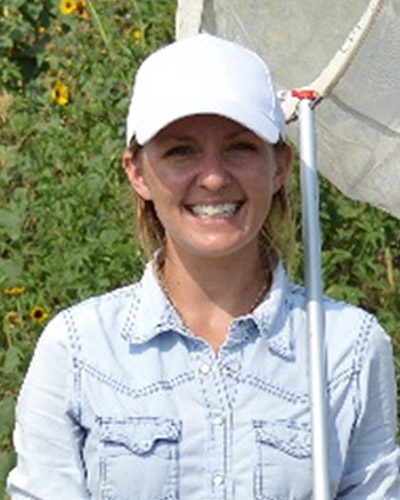
Dr. Eric Lonsdorf is an Assistant Professor at Emory University and Senior Fellow at the Natural Capital Project. He holds a BA in Biology from Carleton College (1996) and PhD in Ecology and Evolution from University of Minnesota (2004). His applied research integrates ecosystem service valuation into land management decisions using quantitative methods spanning agricultural and urban systems. Research focuses on sustainable agriculture practices, urban green infrastructure planning, pollinator conservation, and equitable nature-based solutions. Recent publications examine socioeconomic dimensions of urban greenspaces, pollinator habitat in renewable energy facilities, and pesticide risk modeling. Key research trends include spatial analysis of environmental justice in urban planning, multi-functional landscape design for biodiversity conservation, and policy-relevant models bridging ecological and economic systems across geographic scales. Articles demonstrate consistent focus on practical applications for conservation decision-making.
Christina Grozinger is a Professor in the Department of Entomology at Pennsylvania State University and serves as the Director of the Huck Institutes of the Life Sciences. Her research integrates genomics, molecular biology, and ecology to understand social behavior, chemical communication, and health in honey bees and other pollinators. She leads a highly collaborative and interdisciplinary research program focused on improving pollinator conservation and management. Her research interests include: Genomic and molecular basis of social behavior in insects Chemical communication and pheromone signaling in honey bees Host-parasite interactions and immune responses in pollinators Landscape genomics and environmental stress responses Pollinator conservation and sustainable beekeeping practices The recent articles (2024–2025) reflect a strong focus on applying cutting-edge molecular tools—such as transcriptomics, DNA metabarcoding, and machine learning—to address urgent conservation challenges. Themes include climate change impacts on bee fertility, viral infections in insect hosts, landscape-level pathogen dynamics, and the use of citizen science for monitoring firefly populations. Her work bridges fundamental biology with applied solutions for pollinator decline. Scientific awards and recognitions include: Distinguished Professor at Pennsylvania State University Publius Vergilius Maro Professor of Entomology Appointment to the National Academies Committee on Insect Declines Dr. Grozinger leads major research initiatives, including Scialog grants on environmental impacts on animal behavior, and advises numerous graduate students and postdoctoral researchers. She has secured significant funding for interdisciplinary projects, such as those combining ecological modeling with decision support systems for land managers. Her leadership extends to directing the Huck Institutes, where she fosters innovation across life sciences. She is actively involved in science communication and education, including courses on pollinator conservation that assess cognitive impacts on students. She leads research teams focusing on: The Grozinger Lab at Penn State, which studies molecular mechanisms of social behavior Interdisciplinary collaborations in landscape ecology, genomics, and conservation Citizen science and machine learning applications in pollinator monitoring Development of spatial decision support tools for ecological management
Gaetana Mazzeo is an Associate Professor of General and Applied Entomology at the Department of Agriculture, Food and Environment, University of Catania. She specializes in Apidology, integrated pest management, and biodiversity conservation, with a focus on pollinators, citrus pests, and anthophilous insects. Her research spans ecological studies in natural and anthropogenic environments, pesticide side effects on natural enemies, and conservation of the Sicilian honeybee subspecies Apis mellifera siciliana . Education: PhD in Agricultural Entomology (1994, University of Naples); Laurea in Agriculture (1986, University of Catania). Roles: President of Food Science and Technology degree course (2023–present), Deputy Director of Department of Agriculture, Food and Environment (2014–2018), Deputy Director of Phytosanitary Sciences and Technologies (2008–2010). Research Projects: APESLOW (reintroduction of native honeybee subspecies), BEENET (environmental monitoring with bees), DI.OL (pest control in olive crops), FAIR/PHOCUS (scale insect management in Mediterranean forests). Her work addresses ecological challenges in citrus and olive crops, urban green spaces, and protected natural areas, documented in over 160 publications. She collaborates with scientific societies such as AISASP-IUSSI and Entomology Italian Society, and is affiliated with the Accademia dei Georgofili and CUTGANA.
Dr. David Crowder is a Professor in the Department of Entomology at Washington State University (WSU), where he leads the Crowder Laboratory. His research bridges basic and applied ecology, focusing on arthropod community dynamics in agricultural systems, biodiversity conservation, and sustainable pest management strategies. Education: Ph.D., Entomology, University of Arizona (2008) M.S., Natural Resources and Environmental Sciences, University of Illinois (2004) B.S., Natural Resources and Environmental Sciences, University of Illinois (2003) Research Interests center on understanding how landscape diversity , invasive species , and vector-borne pathogens shape insect communities. His work advances biological control , organic farming practices , and pollinator conservation , with applications for agroecosystem resilience . Google Scholar highlights his 2025 studies on: Biological control of vector-borne plant pathogens Ecological niche modeling for invasive pests Soil rhizobia-plant-insect interactions Bee community responses to farm management Current projects include recruiting PhD students in Entomology and Molecular Plant Sciences , with fieldwork and lab experiments across the Pacific Northwest. Collaborations span plant-insect-pathogen dynamics, pollination networks , and insecticide resistance management .
Myles H.M. Menz is a researcher at James Cook University (JCU) with a focus on insect ecology, conservation biology, and technological applications in ecological monitoring. His work spans diverse topics including insect migration patterns, pollination dynamics, and the impacts of environmental stressors like pesticides and light pollution. He collaborates internationally on projects involving radar entomology, animal-borne sensors, and ecological genetics. Key research interests include the migration strategies of insects such as hoverflies, moths, and dragonflies, as well as conservation challenges facing endangered species like the orchid Caladenia xanthochila. His studies often integrate cutting-edge technologies (e.g., radar tracking, genomic analysis) to understand ecological processes at both individual and community levels. Notable contributions include demonstrating how hoverflies use sun compass navigation during autumn migration and revealing how insecticide exposure alters gene expression in honeybees. Menz also emphasizes interdisciplinary approaches, such as developing global databases for metacommunity ecology and advocating for landscape-scale ecosystem restoration frameworks. His work bridges applied and theoretical ecology, addressing critical issues like pollinator decline, urban biodiversity, and the ecological consequences of human activities.
Professor Maria Ignatieva is a leading academic in Landscape Architecture at the UWA Design School, University of Western Australia. Her expertise spans urban biodiversity, green infrastructure, and ecological design, with a focus on transforming urban landscapes into climate-resilient, biodiverse spaces. She holds dual professorial roles at UWA and previously at the Swedish University of Agricultural Sciences (2010–2018). Her research integrates transdisciplinary approaches to address global challenges like climate change, emphasizing nature-based solutions. Key projects include the LAWN Project (Australia/Sweden) exploring sustainable lawn alternatives and leading the URBIO Network promoting urban biodiversity research. Research Interests: Urban biodiversity conservation, ecological design frameworks, cultural history of gardens, and sustainable urban green infrastructure. Her work bridges academic research with practical applications through projects like Perth’s biophilic city model and Beijing-Perth green corridor studies. Funding & Grants: Over $300k in principal investigator grants, including UWA’s Lawn Project (2022–2025), FABLE Collaboration for biophilic cities (2018–2019), and Swedish FORMAS-funded lawn alternatives research (2013–2017). Awards: 2024 IFLA President’s Award, Green Flag Award (2017), and UWA Teaching Excellence Award (2021). Collaborations: Global networks like URBIO and partnerships with institutions in China, Russia, and Vietnam. Her teaching emphasizes evidence-based design, and she actively promotes biodiversity education through workshops and international conferences.
Monika Kriechbaum is an Associate Professor at the Institute of Integrative Nature Conservation Research, University of Natural Resources and Life Sciences, Vienna (BOKU). Her work focuses on biodiversity conservation, plant-pollinator interactions, and sustainable land management. She has contributed extensively to studies on vineyard ecosystems, endangered species like Gentianella bohemica and Colchicum autumnale , and urban ecology projects. Her research integrates field ecology, molecular techniques (e.g., DNA metabarcoding), and spectroscopy (FT-IR) to analyze plant-animal interactions and inform conservation strategies. She collaborates across Europe on projects examining how agricultural practices affect biodiversity and ecosystem services. Recent publications highlight her expertise in applying FT-IR spectroscopy to wildlife diet analysis and evaluating the role of green infrastructure (e.g., vineyard margins, urban transport corridors) in supporting pollinators. Her work bridges ecological research with practical conservation measures. Community Services: Organizer of 'Beweidung von Trockenlebensräumen als Maßnahme in der Naturschutzpraxis' (2007)
Jessica Beckham, Ph.D. serves as a Professor in the Department of Environmental Science and Ecology within the College of Sciences at the University of Texas at San Antonio (UTSA). Her academic background includes a Ph.D. in Environmental Science, M.S. in Biology from the University of North Texas, and a B.S. in Biology from the University of Texas at Austin. At UTSA, she teaches courses in Entomology, Environmental Systems, and Environmental Zoology, bringing her research expertise directly into the classroom. Dr. Beckham's research focuses on the conservation of native pollinators, particularly bumble bees in Texas. Her work addresses critical questions about how these important pollinators persist in increasingly urbanized landscapes. She has led multiple research projects examining the distribution, taxonomy, and ecological requirements of declining bumble bee species including Bombus sonorus and Bombus pensylvanicus , both designated as Species of Greatest Conservation Need by the Texas Parks and Wildlife Department. Her publication record shows a consistent focus on bumble bee conservation across multiple dimensions - from genetic analysis of populations to urban habitat utilization and climate change impacts. The research demonstrates an evolving trajectory from basic distribution mapping toward more complex questions about species relationships, conservation genetics, and future climate scenarios. Her work bridges fundamental science with practical conservation applications. Dr. Beckham has been actively engaged in public outreach, presenting her research at numerous community events, workshops, and conferences throughout Texas. She has collaborated with various organizations including the City of Denton, Lake Lewisville Environmental Learning Area, community gardens, and conservation groups to advance understanding of bumble bee ecology and conservation needs. Her research program has been supported by grants from the Texas Parks & Wildlife Department, including State Wildlife Grants. She has mentored students in field research and involved the public through citizen science initiatives, creating a reporting system for bumble bee sightings that engages community members in conservation efforts. Dr. Beckham has established herself as a key resource for bumble bee identification and conservation in Texas, developing educational materials and identification guides that serve researchers, conservationists, and the general public interested in native pollinators.
Signe Danler is a Senior Instructor I in the Department of Horticulture at Oregon State University (OSU). She plays a pivotal role in the OSU Extension Master Gardener Program by developing and teaching the online training course. Her expertise lies in home horticulture, ecological landscaping, and urban forestry, which she applies to create educational modules for home gardeners. She also offers landscape design services for both residential and commercial clients, focusing on regenerative gardening and landscaping practices. University: Oregon State University School: College of Agricultural Sciences Department: Department of Horticulture Academic Rank: Senior Lecturer Research Interests: Signe's work centers on the practical application of horticultural principles to enhance urban environments. Her research focuses on the intersection of horticulture and ecological sustainability, particularly in the context of urban and suburban landscapes. She emphasizes the importance of native plants in supporting pollinator populations and promoting biodiversity within urban settings. Her research also explores the economic, social, and ecological benefits of incorporating sustainable practices into landscape design. Outreach and Publications: Signe's publications primarily focus on practical applications of horticultural science, particularly concerning pollinator conservation, pest management, and sustainable landscaping. Her work includes the 'Solve Pest Problems' website and publications concerning native plant selection for bee-friendly gardens and enhancing landscapes to protect pollinators. Scientific Awards: Silver Award Winner: Technical Publication, Association for Communication Excellence (April 14, 2023) Silver Award, Technical Publication, Association for Communication Excellence (April 2021) Ask An Expert Question of the Year, OSU Extension (December 5, 2018) Contact: signe.danler@oregonstate.edu
Daniel Montesinos Torres is a Senior Research Fellow at the College of Science and Engineering at James Cook University (JCU), stationed at the Australian Tropical Herbarium . His research focuses on the evolutionary ecology of invasive plants, particularly their rapid adaptation to new environments through biogeographic, reproductive, and seed ecology studies. He holds a Ph.D. in Plant Biology from CSIC/Universitat de València (2007). Research Interests: Invasive Plant Ecology: Studies plant invasions as natural experiments to understand local adaptation and community responses. Biogeography: Examines how invasive and non-invasive species’ distributions reveal evolutionary patterns. Reproductive Biology: Explores reproductive barriers and trait inheritance in invasive species. Seed Ecology: Investigates seed dynamics to improve invasive species management. Professional Roles: Editor-in-Chief of Web Ecology (since 2013). Member of the Wet Tropics Management Authority Scientific Advisory Committee (2023–2026). Former Secretary of the Portuguese Ecological Society (2017–2018). Grants & Projects: Leads initiatives like Weed ID workshops for Rangers (2024–2025) and manages the Northern Australia Plant Biosecurity Facility . Current research students study tropical savanna dynamics and plant-animal interactions. Awards: Marie Curie Fellow (2012). Teaching: Taught Biological Invasions in 2023 and mentors students in plant evolutionary ecology and conservation. Labs/Teams: Based at the Australian Tropical Herbarium, collaborating on global plant invasion research.
Diane Thomson is a Professor of Biology and Associate Professor of Environmental Science at Claremont Colleges, affiliated with the Keck Science Department. Her research integrates population and community ecology, conservation biology, and ecological modeling to address critical environmental challenges such as biological invasions, climate change, and pollinator decline. Education: Ph.D. in Ecology and Evolutionary Biology from the University of California, Santa Cruz; M.Phil. in Ecology from Cambridge University; B.S. in Ecology and Evolutionary Biology from the University of Arizona. Thomson's research focuses on population modeling, invasion ecology, and plant-pollinator interactions. She investigates how invasive species like exotic grasses affect native plant communities, uses mathematical models to assess extinction risks of rare species, and studies the interplay between pollinator competition and plant reproductive success. Her work often addresses conservation strategies across diverse ecosystems, including California grasslands and island habitats. Her lab at Pitzer and Scripps Colleges examines projects such as interactions between native annual plants and invasive grasses at the Bernard Field Station, effects of climate change on California Channel Island flora, and shifts in pollination biology due to habitat fragmentation. She encourages students without prior research experience to join her lab, offering opportunities in data analysis through her half-credit course, Biol 119: Advanced Data Analysis , during fall semesters.
Sarah Page Lawson, PhD, is an Assistant Professor in the Department of Biological Sciences at Quinnipiac University, where she has taught since 2019. She holds a BS in Biology from the University of New Mexico and a PhD in Biological Sciences (Ecology and Evolution) from Vanderbilt University. Following doctoral studies, she completed a National Science Foundation Postdoctoral Research Fellowship at the University of New Hampshire. Her research focuses on two primary domains: pollinator ecology (examining nutritional landscapes, floral resource impacts, and physiological responses in native bees) and social evolution (investigating ecological predictors of social behavior transitions in animals). Her work integrates field studies with experimental approaches to address conservation challenges and behavioral mechanisms. Publications demonstrate strong emphasis on native pollinator systems, particularly carpenter bees ( Ceratina calcarata ), with recurring themes in conservation biology, behavioral ecology, and nutritional physiology. Recent work shows expanded focus on neuroethological mechanisms (biogenic amines) and applied conservation (pollinator garden efficacy). Awards: National Science Foundation Postdoctoral Research Fellowship (2014-2018) She mentors multiple students in independent research projects, with advised work presented at regional and national conferences including the Eastern Colleges Science Conference and Entomological Society of America meetings. Current courses include Ecology and Biodiversity, Conservation Biology, Evolution, and Introduction to Environmental Studies. Leads the Lawson Lab specializing in pollinator health and social behavior research, with active field projects including pollinator garden installations and population monitoring initiatives at Quinnipiac.
Dr. Jack Hassett is a Lecturer in the Department of Applied Science at the Faculty of Applied Sciences and Technology. His research focuses on agricultural and biological sciences, particularly honey bee ecology and population genetics. Research Interests: Specializes in studying honey bee colonies, genetic purity of Apis mellifera mellifera, microsatellite analysis, and ecological conservation of bee populations. Publications: Active in publishing high-impact studies on honey bee biodiversity and colony health trends. Collaborations: Works with international researchers on bee conservation projects.
Prof. Dr. Goran Mirjanić is an Associate Professor at the Faculty of Agriculture, University of Banja Luka. He works in the Department of Fisheries, Beekeeping and Non-Conventional Animal Production, where he focuses on beekeeping research and education. His academic position was elected on December 26, 2019. Dr. Mirjanić teaches several courses including Bee Nutrition (MAP:S-I-09), Bee Products (MAP:S-I-10), Control of Production of Domestic and Farmed Animals (MAP:S-I-14), Beekeeping 2 (MAP:S:O-09), and Non-Conventional Animal Production (OAP07NAP). Beekeeping as his primary scientific field Honeybee genetics and morphometrics Bee nutrition and feeding Honey quality analysis Pollen analysis and characterization Heavy metal contamination in bee products Application of bees in explosive detection Dr. Mirjanić's recent research demonstrates a strong focus on the morphometric analysis of Carniolan honeybees across different regions, examination of honey quality parameters, and investigation of environmental factors affecting bee products. His work spans both fundamental apiculture research and practical applications for beekeepers. His research has appeared in journals such as BMC Genomics, Environmental Science and Pollution Research, and Agro-knowledge Journal, reflecting the interdisciplinary nature of his work that bridges agricultural science, environmental studies, and genetics. Genomic diversity studies of native honeybee populations Analysis of heavy metal content in honey and pollen Physicochemical characterization of regional honey varieties Development of methods for bee venom collection Applications of bee behavior for security purposes
Professor Ewa Trzaskowska is affiliated with the John Paul II Catholic University of Lublin (KUL) as a faculty member in the Department of Landscape Shaping and Design within the Faculty of Natural and Technical Sciences . Her work focuses on urban landscape architecture, biodiversity preservation, and sustainable development of green spaces. Education: Not explicitly detailed in provided texts Research: Urban greenery optimization, invasive species impact on biodiversity, climate-resilient design, cemetery ecology Publications: 15+ peer-reviewed articles (2010-2021) exploring landscape homogenization, green infrastructure benefits, and ecological design principles Her research demonstrates consistent focus on urban ecology and sustainable landscape planning , with particular emphasis on synantropic vegetation , pedestrian route aesthetics , and rainwater management in residential areas. She pioneered innovative approaches through projects like "Bee in the City" and "Pocket Gardens" , addressing both ecological and social dimensions of urban spaces. Scientific Recognition: KEN Medal (2018) Silver Medal for Long-Term Service (2015) KUL Rector's Team Awards As Dean and scientific publication editor-in-chief , she has significantly shaped academic discourse in landscape architecture through editorial leadership in Krajobrazy Lublina series. Her practical work includes collaborations with Lublin Housing Cooperative and participation in national expert teams addressing urban climate challenges.