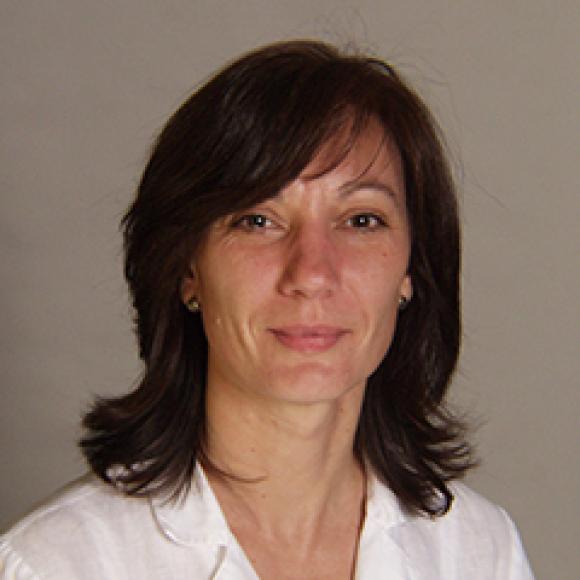
Prof. Dr. Ewa Dąbrowska holds the Alexander von Humboldt Professorship in the Chair of Language and Cognition at Friedrich-Alexander University Erlangen-Nürnberg. Her research spans cognitive linguistics, language acquisition, and individual differences in linguistic knowledge. Research Interests : Formulaic language in L1 acquisition and adult language processing The nature of linguistic generalizations through chunk-based grammar Individual differences in grammatical and lexical knowledge among native and L2 speakers Intersections of literacy, language structure, and cognitive fluency Scientific Awards & Funding : Alexander von Humboldt Foundation grant for a 5-year project on individual differences AHRC-funded corpus-experimental study on complex syntactic constructions Team Members : Dr. Miguel Llompart Garcia, Elodie Winckel, Ashley Blake, Magdalena Grose-Hodge, Panagiotis Kenanidis, Leonarda Prela, Richenda Wright.
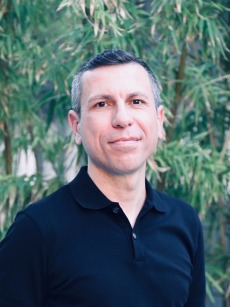
Dr. Mattia Zingaretti is a Lecturer in Applied Linguistics and TESOL at York St John University, affiliated with the School of Education, Language and Psychology. His research focuses on bilingualism, second language acquisition, and first language attrition, with notable contributions to understanding hate speech perception in bilingual speakers. He holds a PhD from the University of Edinburgh and is a Fellow of Advance HE. Education: BA in English and German (Sapienza University of Rome), MSc in English Language (University of Edinburgh), PhD in Linguistics (Edinburgh), and PGCert in Academic Practice (Edinburgh). Professional roles include Research and Knowledge Exchange Lead at the Community Language School and membership in organizations like Bilingualism Matters and BAAL. Research highlights include studies on L1 attrition mechanisms, cognitive effects of intensive language learning, and multilingualism in education. His work bridges academia and public engagement, with outputs in journals like Language at Work and collaborations on projects like the TEAM initiative. Teaching involves modules on multilingualism, TESOL foundations, and language acquisition. Awards include recognition for teaching excellence and contributions to educational outreach.
Anamaria Bentea is a Research Fellow at the University of Konstanz's Department of Linguistics and Zukunftskolleg. Her work focuses on language acquisition and processing in monolingual and bilingual speakers, particularly in Romance languages like Romanian and French. She investigates how grammatical knowledge is represented and used in native and non-native languages, with a special emphasis on heritage language development in multilingual contexts. She holds a PhD in Linguistics from the University of Geneva (2016) and has held visiting research positions at the University of Maryland (2013-2014). Prior to Konstanz, she was a postdoctoral researcher at the University of Reading's Psycholinguistics and Neurolinguistics Lab, exploring Romanian-English bilingual children’s acquisition of complex syntax. Her research employs behavioral and eye-tracking methods to study real-time language processing, with key projects including the Marie Curie-funded ProHeritageSpeakers initiative (2021-2023) examining Romanian heritage language use in Germany. Her work addresses topics like bilingualism effects on theory of mind, syntactic processing in child heritage speakers, and the role of working memory in language comprehension. Major awards include the Marie Curie Fellowship. Her contributions span over 30 publications on relative clause acquisition, wh-dependencies, and cross-linguistic syntax development. She has led projects combining experimental linguistics with educational implications for multilingual populations.
Dr. Dorit Kaufman is a Professor at Stony Brook University , specializing in language attrition, bilingualism, and TESOL pedagogy. She holds a Ph.D. from SUNY Stony Brook (1991) and has over three decades of global teaching experience. Her research explores native language attrition in immigrant children, literacy development, and constructivist pedagogy. Educational Background: Ph.D. in Linguistics/Education, SUNY Stony Brook, 1991 Extensive coursework in sociolinguistics and language acquisition Research Interests: Focuses on sociolinguistic and psycholinguistic aspects of language attrition, bilingual narrative development, and pedagogical strategies for heritage language preservation. Her work bridges theory and practice in TESOL, emphasizing content-based instruction and reflective teaching practices. Awards & Recognition: 2001 New York State R. Neal Appleby Award for Teacher Education 2002 SUNY Chancellor's Excellence in Teaching Award Grants & Leadership: Led Stony Brook's teacher education programs (2001-2017) through three NCATE accreditations Secured federal grants for programs like Project MORE and TEPA (FIPSE) Directed initiatives on diversity and interdisciplinary collaboration Professional Contributions: Authored/co-edited key texts including Content-Based Instruction in Higher Education (2002) and Professional Development of International Teaching Assistants (2006). Served on national accreditation boards and global TESOL committees.
Antonella Sorace is a Professor of Developmental Linguistics at the University of Edinburgh's School of Philosophy, Psychology and Language Sciences, with an Honorary Professorship at University College London. She holds prestigious fellowships from the British Academy, Royal Society of Edinburgh, and American Association for the Advancement of Science. Her work bridges linguistics, psychology, and cognitive science, focusing on bilingualism across the lifespan, language acquisition, and the cognitive benefits of multilingualism. She pioneered the use of Magnitude Estimation in linguistic research and founded Bilingualism Matters, a global network promoting evidence-based language policies. Sorace has supervised over 40 PhD students and led major grants from ESRC, AHRC, and the EU. Her research explores bilingualism's impact on autism, heritage language attrition, and the interplay between syntax and pragmatics. Education: Laurea (University of Rome), MA (University of Southern California), PhD (University of Edinburgh) Affiliations: Visiting professorships at Utrecht, Trondheim, Max Planck Institute for Psycholinguistics, Johns Hopkins University, and others Research Interests: Bilingualism's effects on cognition, language attrition in adults, child bilingual acquisition, and experimental methods in linguistics. Her work highlights bilingualism's cognitive advantages and challenges stereotypes about 'native speaker' competence. She has quantified how bilingualism influences pragmatic reasoning and executive control, with special attention to neurodivergent populations like autistic individuals. Grants & Projects: Current and past grants include ERASMUS+ (2021-23), SSHRC (2019-22), and EU's 'Advancing the European Multilingual Experience' (2014-2019). Projects investigate bilingualism in autism, heritage language maintenance, and hate speech perception. She co-led studies on Gaelic medium education's cognitive benefits and the impact of intensive language learning. Awards: Beltane Fellowship for Public Engagement (2007-08), ESRC Knowledge Transfer Grant (2007-08) Bilingualism Matters: As founder and director, she created a global network providing accessible science communication about multilingualism. The organization advises schools, health services, and policymakers, with branches in 25+ countries. Sorace advocates for bilingualism's societal value through media outreach, including hundreds of lectures and interviews worldwide.
Ji Young Kim is an Assistant Professor in the Department of Spanish and Portuguese at UCLA's College of Letters and Science, specializing in heritage language phonology. Her research examines Spanish heritage speakers in the United States, focusing on perception and production of speech sounds amid language shift to English. Her primary research interests include heritage language phonology, bilingual speech perception, phonetic variation in heritage speakers, and the intersection of Latine/x/a/o identity with language attitudes. She investigates how extra-linguistic factors influence phonological development in heritage speakers, particularly examining the elusive 'heritage accent' through prosodic and segmental analysis. Her publication trends reveal deep engagement with heritage speaker phonetics across multiple dimensions: prosodic features (lexical stress, uptalk, focus marking), segmental production (trills, taps, palatal obstruents), and methodological innovations in linguistic landscape analysis. Recent work increasingly incorporates individual differences (autism quotient scores) and sociolinguistic frameworks to explain variation. Kim teaches graduate courses including SPAN202A Phonology, SPAN209 Spanish Dialectology, and multiple heritage language phonology seminars, alongside undergraduate courses on Spanish varieties and linguistic landscapes.
Man Ki Theodora Lee is a Researcher at the Department of English Language and Communication within the School of Creative Arts at the University of Hertfordshire. Her academic journey includes a PhD in Linguistics from the University of York (2015), an MA in Psycholinguistics from the same institution (2010), and a BA in Linguistics and Language Technology from City University of Hong Kong (2008). Education: PhD (Linguistics, York, 2015), MA (Psycholinguistics, York, 2010), BA (City University Hong Kong, 2008) Her research focuses on syntax-semantics interface in Cantonese, second language acquisition, bilingualism, and phonetic perception. Her work explores topics like neg-wh quantifiers, comparative grammar of Chinese dialects, and multilingualism in early childhood. She has published extensively on Cantonese syntax, L2 acquisition barriers, and cross-linguistic interference effects. Her articles analyze morphological structures in Hakka and Cantonese, investigate OPC sensitivity in Spanish learners, and examine multilingual vocabulary development. Despite no explicitly listed awards, her prolific output since 2011 demonstrates significant academic contribution to formal linguistics and applied language studies. She has advised no listed students but has conducted research on adult interlanguage in Cantonese-English bilinguals and Korean-Spanish learners. Her work intersects with language policy through studies on multicultural education's impact on multilingualism.
Alicia S. Menendez is a Research Associate Professor at the University of Chicago Harris School of Public Policy and Principal Research Scientist at NORC, specializing in development economics with field experience across Africa and South Asia. Her work bridges rigorous impact evaluation and practical policy design for education and health interventions. Her academic credentials include a Ph.D. in Economics from Boston University. Prior to joining UChicago, she served as a lecturer at Princeton University's Woodrow Wilson School and researcher at its Development Studies Program. Menendez's research centers on education quality in developing contexts, particularly early-grade literacy through innovations like SMS-based parental engagement in Zambia and leveled reading materials in Liberia. She concurrently investigates gender dynamics using participatory methods like body mapping and storytelling games with adolescents in India, examining menstruation challenges, mobility restrictions, and norm internalization. Her methodological expertise spans randomized control trials, benchmarking studies, and mixed-methods approaches. Her publication portfolio reveals consistent thematic focus: 70% of recent work addresses education (primarily early reading), 25% health/gender issues, and 5% labor markets. Geographically, 45% focuses on South Asia (India/Nepal), 35% Sub-Saharan Africa (Zambia/Uganda), and 20% multi-country analyses. Methodologically, 60% employs quantitative RCTs, 30% qualitative techniques, and 10% mixed methods. No scientific awards were specified in source materials. While Menendez has led major evaluations like Read Liberia (640 schools, 57,600 students) and SMS Zambia (9-month national rollout), the text indicates no formal student advising. Her work consistently involves cross-institutional collaboration with NORC, IDP Foundation, and local governments. Her NORC affiliation enables large-scale field operations across developing countries, with recent projects implementing community outreach components, teacher coaching systems, and mobile-based parental engagement tools. Current work emphasizes cost-effectiveness analysis for national policy scaling, particularly in literacy interventions.
Lynda Yates is a Professor in the Department of Linguistics at Macquarie University. She holds the role of Honorary Professor and currently serves as Associate Dean International for her faculty. Her research focuses on adult language acquisition, intercultural pragmatics, and language learning in migration contexts, particularly for internationally trained professionals such as medical graduates adapting to Australian work environments. Her work bridges applied linguistics with practical educational implications. Yates has led multiple research projects, including investigations into test preparation practices for English language exams, the communicative needs of migrant workers, and the Multilingualism Research Centre. She has authored over 60 publications, contributing to fields like workplace communication, language policy, and pronunciation instruction. Her h-index of 34 reflects her significant scholarly impact. Her recent work emphasizes intercultural communication challenges in higher education and healthcare contexts. She advocates for pedagogical strategies that enhance pragmatic competence and professional identity, especially for non-native speakers in critical roles. Her contributions extend to policy development in language education through projects like the Adult Migrant English Program (AMEP) longitudinal studies. Research Interests: Intercultural communication, medical language use, pronunciation teaching, and teacher professional development Key Projects: Investigating Test Preparation Practices (2018–), Multilingualism Research Centre (2019–2022) Grants: Supported by organizations including British Council and IDP:IELTS Australia Yates’ research often highlights the intersection of language, culture, and professional practice, with a focus on empowering multilingual communities through effective communication strategies.
Robert McColl Millar is a Professor of Linguistics and Scottish Language at the University of Aberdeen's School of Language, Literature, Music and Visual Culture. His research focuses on the interface between Gaelic and Scots, lexical attrition, rapid language change, language policy, standardization processes, and the sociology of language. PhD in English Historical Linguistics (University of London, 1991) MA in English Language and Literature (University of Glasgow, 1987) He has authored influential books including System Collapse, System Rebirth (2000), Contact: The Interaction of Closely Related Linguistic Varieties (2016), and A History of the Scots Language (2023). His editorial roles include Scottish Language , and he co-edits the Edinburgh Studies in the Language of Scotland series. His recent publications, such as Linguistic Contact and Language Change (2024) and Trask's Historical Linguistics (2023), explore phonological shifts, creole genesis, and comparative methods. Supervising over 25 doctoral theses, his work spans language teaching, contact, and 18th-century Scottish linguistic practices.
Manuela Frontera is a Research Fellow at the University of Urbino Carlo Bo and a Contract Professor at the University of International Studies of Rome (UNINT) for the Languages for Interpreting and Translation program. Her research focuses on language contact, sociophonetics, and L2 acquisition, with projects funded by the Calabria Region and the Marie Skłodowska-Curie Actions (MSCA). She holds a PhD in Politics, Culture, and Development from the University of Calabria (2017) and has extensive teaching experience across multiple universities in Italy and Argentina. PhD: University of Calabria (2017) Master's: Modern Languages and Literatures (110/110 cum laude, 2013) Bachelor's: Linguistic Mediation (110/110 cum laude, 2010) Her research explores Italian-Argentinian dialects, forensic linguistics, and heritage language maintenance. Notable projects include the Roots of Memory initiative studying Calabrian diaspora communities in Argentina and the STOA project at the University of Urbino. She has published extensively on sociolinguistic phenomena, phonetic attrition, and migratory language dynamics. Awards include the Franco Ferrero Award (2021) for best conference paper and an Erasmus+ scholarship (2023). She is affiliated with the Italian Association of Voice Sciences (AISV), Society of Italian Linguistics (SLI), and Marie Curie Alumni Association (MCAA).
Professor Cécile De Cat is a leading academic in the field of linguistics at the University of Leeds , where she holds the position of Professor of Linguistics in the School of Languages, Cultures and Societies within the Faculty of Arts, Humanities and Cultures . She has been a key figure in interdisciplinary language research, notably serving as the former director of Language@Leeds and currently as the Speech and Language lead at the Centre for Applied Education Research in Bradford. From 2019 to 2024, she was an adjunct professor at the Arctic University of Norway, reflecting her international influence. Her research spans a wide range of topics in language acquisition, bilingualism, and pragmatics. Key areas include: Individual differences in language development and maintenance Quantification of bilingual experience (via the Q-BEx tool) Assessment of pragmatic and syntactic competence in children and adolescents Cross-linguistic influences in advanced L2 speakers Information structure and discourse competence Application of advanced statistical and data science methods (especially using R) Her recent publications reveal a strong trend toward interdisciplinary, policy-relevant research, particularly in educational and justice contexts. Projects like Q-BEx and Justice to Youth Language Needs demonstrate a commitment to translating linguistic research into practical tools for educators, clinicians, and policymakers. Her work increasingly integrates causal inference, psychometrics, and citizen science methodologies. She has secured funding from major bodies including the ESRC, AHRC, Leverhulme Trust, and COST. Her leadership in large-scale, cross-national projects underscores her role as a central figure in contemporary applied linguistics. Professional Memberships: Editorial Board, Journal of Child Language Editorial Board, Studies in Bilingualism (SiBil) series (Benjamins) Member, International Association for the Study of Child Language (IASCL) Member, Linguistics Association of Great Britain (LAGB) She actively supervises PhD students and welcomes interdisciplinary collaborations. Her advising spans experimental syntax, heritage language acquisition, and bilingual cognitive development. She has led numerous funded research initiatives and fosters partnerships across academia, education, and public policy sectors. She is also involved in innovative teaching, particularly in data science applications for linguistics. She leads or participates in several research groups including Language Acquisition , Multilingualism , Formal Linguistics , and Language at Leeds , contributing to a vibrant research ecosystem.
Mario Vayra is an Alma Mater Professor at the University of Bologna specializing in phonetics, phonology, and language acquisition. His research spans prosodic development in children, heritage language maintenance among immigrant populations, and cross-linguistic speech perception. His primary research interests focus on prosody , phonological development , and sociophonetic variation , particularly examining lexical stress acquisition in preschoolers and sound maintenance patterns in Italo-Australian communities. His work frequently investigates the phonetic-phonological interface through experimental studies of coarticulation, vowel reduction, and consonant production across languages. Analysis of his 15 most recent publications reveals a strong emphasis on heritage language preservation (particularly Veneto dialect among Australian immigrants), child language development (lexical prominence emergence), and cross-linguistic perception (non-native consonant processing). His methodological approach combines acoustic analysis with articulatory phonology frameworks. Vayra maintains extensive collaborations through Cinzia Avesani's Lab at the Institute of Cognitive Sciences and Technologies (ISTC), with notable co-authorship spanning Italian-Australian sociolinguistic projects and longitudinal studies of speech disorders.
Amy Schafer is a Professor in the Department of Linguistics at the University of Hawaiʻi at Mānoa. Her research focuses on psycholinguistics, spoken language processing, and the interplay between prosody/intonation and information structure (e.g., given, new, and focused information). She investigates these phenomena across adult, child, native, non-native, and bilingual populations, primarily in English, Korean, Japanese, and Austronesian languages. Education: PhD, University of Massachusetts–Amherst Her research extends to field psycholinguistics, particularly through the HALA Project, which examines early signs of language endangerment and attrition in heritage speakers. She co-founded the College of LLL’s Language Analysis and Experimentation Laboratories (LAE Labs) in 2001, providing facilities for experimental tasks like eye-tracking and discourse processing. Currently, she explores prosody, event structure, and referential processing in Japanese- and Korean-speaking English learners. Professor Schafer teaches courses such as LING 412 (Introduction to Psycholinguistics), LING 640Y (Graduate Psycholinguistics), LING 632 (Experimental Methods), and seminars on psycholinguistics and eye-tracking methods.
Miquel Simonet is a Professor in the Department of Spanish and Portuguese at the University of Arizona, affiliated with the College of Humanities (COH). He holds a PhD in Romance Linguistics from the University of Illinois at Urbana-Champaign (2008) and has been at the University of Arizona since 2008, advancing to Associate Professor in 2015 and full Professor in 2023. His research focuses on experimental phonology, particularly bilingual and second-language phonological competence, and phonetic/phonological variation in Iberian Romance languages. He has directed 11 PhD dissertations and currently advises 6 doctoral students, emphasizing coursework in statistics, linguistics, and psycholinguistics for prospective advisees. Prof. Simonet serves as Associate Editor of the Journal of Phonetics (2022–2027) and editorial board member of Second Language Research and Laboratory Phonology . He previously chaired the Cognitive Dimensions concentration in the Second Language Acquisition and Teaching (SLAT) program and served as Director of Graduate Studies in Spanish & Portuguese (2019–2022). His current teaching includes SPAN 340 – The Sounds of Spanish and SPAN 360 – Introduction to the Linguistic Analysis of Spanish . His research interests emphasize the interplay between phonetics and psycholinguistics, investigating how bilinguals mentally represent sounds and sound patterns. He explores phonetic variation in Catalan, Spanish, and Portuguese, especially in sociolinguistic and contact contexts. Recent work examines perceptual sensitivity to stress in L2 learners and phonetic drift in bilingual speakers. Prof. Simonet has authored over 50 peer-reviewed articles and book chapters, with a focus on experimental methodologies. Until further notice, he is not accepting new PhD advisees, urging prospective students to consult other faculty in Hispanic Linguistics. Professional service includes roles as COH IRB Liaison and member of the Department of Linguistics graduate faculty. His personal background includes native Catalan fluency from Majorca and interests in literature, photography, and landscape studies.

/prod01/yorksjacuk/media/content-assets/staff-profile-images/d9bb06ee-2a34-464a-a6db-32b06347b3ab.jpg)