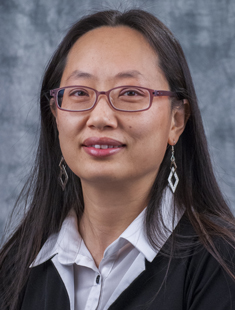
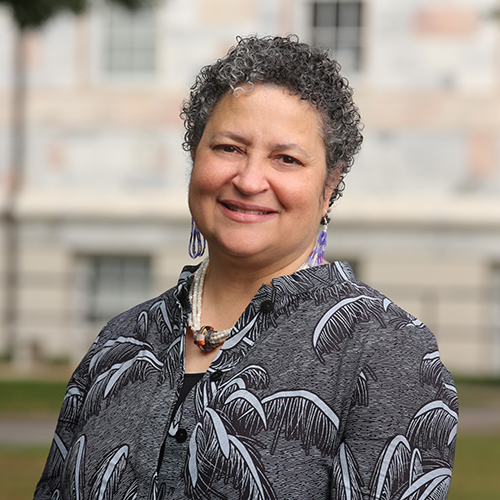
Hye-Chung Kum is a Professor in the Department of Health Policy & Management at Texas A&M University, where she pioneers Population Informatics to transform digital data into evidence-based health policy solutions. Her work bridges computer science, public health, and social work to address critical data challenges in healthcare systems. Education: PhD, University of North Carolina at Chapel Hill (UNC-CH), 2004 MSW (Master of Social Work), UNC-CH, School of Social Work, 1998 MS, UNC-CH, Department of Computer Science, 1997 BS, Yonsei University, Seoul, Korea, Department of Computer Science, 1995 Research Vision: Dr. Kum develops privacy-preserving human-computer hybrid systems for cleaning and integrating chaotic real-world data (e.g., EHRs, administrative records). Her Population Informatics framework enables ethical large-scale analysis while addressing data genocide in marginalized communities through innovations like the Secure Decoupled Linkage (SDLink) system. Publication Trends: Recent work (2024-2025) reveals three dominant threads: (1) Mental health service utilization dynamics during/post-pandemic, (2) Racial/ethnic disparities in emergency department use and cancer outcomes, and (3) Ethical data sharing frameworks for vulnerable populations. Her Texas-focused studies on Medicaid payment models and AI-driven record linkage demonstrate practical policy applications. Research Infrastructure: As director of the Population Informatics Lab, she leads cross-disciplinary teams developing Privacy-by-Design tools that balance public health needs with data sovereignty—particularly for American Indian and Alaska Native communities. Her grant-funded work consistently addresses Medicaid transformation and healthcare cost drivers through secondary data analytics.
Nikitas Karanikolas serves as Professor in the Department of Informatics and Computer Engineering at the University of West Attica since March 2018, following a distinguished career progression from Assistant Professor (2004) to Associate Professor (2010) and Professor (2014) at the Technological Educational Institute of Athens. His professional trajectory includes significant roles as Systems Head of TEI Athens Library (1996-1997) and Chief of Informatics at Aretaieio University Hospital (1997-2004), alongside leadership positions in the Greek Computer Society as Board Member (2004-2006) and Secretary General (2006-2008). His academic foundation includes: Bachelor's in Statistics and Informatics from Athens University of Economics and Business (1988) PhD in Applied Informatics from Athens University of Economics and Business (1994) with thesis "Technological and Linguistic approaches in Natural Language Understanding" Dr. Karanikolas maintains an exceptionally broad research portfolio spanning Natural Language Processing , Computational Linguistics , Medical Informatics , and Green Energy systems. His work consistently bridges theoretical computational frameworks with practical healthcare applications, particularly evident in recent dementia care technologies and Greek language processing systems. The interdisciplinary nature of his research connects computational phonology with medical diagnostics and e-government applications. Analysis of his 15 most recent publications reveals a pronounced shift toward AI-driven healthcare solutions (particularly dementia patient monitoring), multilingual NLP systems (Greek and Polish), and urban safety applications . His work demonstrates consistent methodology development in ontological representations and multimodal fusion techniques, with increasing emphasis on real-world clinical and governmental implementations since 2023. No scientific awards were documented in the source materials. With 16 journal papers, 68 conference publications, and six authoritative Greek university textbooks, Dr. Karanikolas maintains an active research trajectory. His advising capacity is evidenced through extensive publication mentorship, particularly in medical informatics and NLP projects. While specific grant details are unavailable, his hospital information system implementations and textbook authorship suggest successful research funding acquisition. Current research activities focus on multimodal aggression prediction systems for dementia care, Greek language ontological frameworks, and urban navigation safety applications, primarily conducted through the University of West Attica's informatics infrastructure.
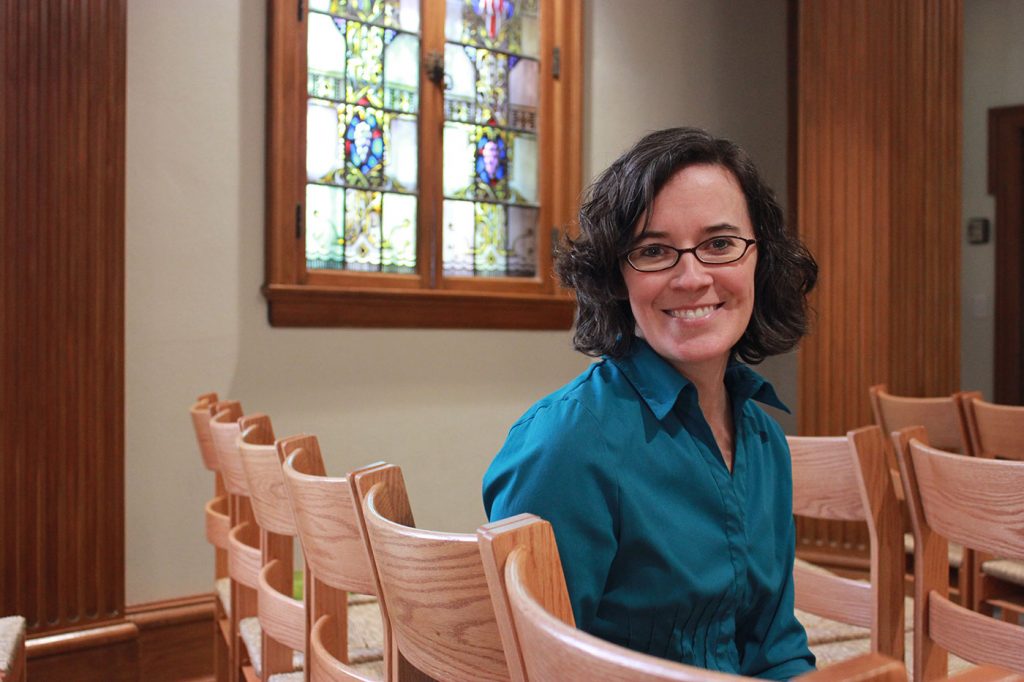
Elizabeth O'Donnell Gandolfo is the Associate Dean for Academic Affairs and Earley Associate Professor of Catholic and Latin American Studies at Wake Forest School of Divinity. Her work bridges Catholic theology with contemporary social issues, focusing on vulnerability, ecological degradation, and decolonial studies. She earned a BA from Saint Joseph’s University, MTS from the University of Notre Dame, and PhD from Emory University. Her research emphasizes decolonial theology through Latin American contexts, eco-theological responses to environmental crises, and maternal spirituality. Key works include Ecomartyrdom in the Americas (2023) and Re-membering the Reign of God (2022). She has received the College Theology Society’s Best Article Award (2013) for her work on breastfeeding and theology. Teaches courses on liberation theologies, eco-theology, and Latin American Christianity. Active in academic societies: American Academy of Religion, College Theology Society, Catholic Theological Society of America. Publications span over 15 years, addressing intersectional topics like racism, capitalism, and gender in ecological ethics. Her interdisciplinary approach integrates theology with social justice activism, particularly advocating for environmental defenders in Latin America. Gandolfo’s scholarship challenges colonial structures while offering constructive theological frameworks for systemic change.
David Martinez is a Professor of American Indian Studies and Transborder Studies at Arizona State University (ASU), with a joint appointment in both departments. He holds a Ph.D. in Philosophy from SUNY Stony Brook, an M.A. in American Indian Studies from the University of Arizona, and a B.A. in Philosophy from the University of Rhode Island. His research focuses on American Indian intellectual history, art aesthetics, and border studies, particularly concerning Indigenous nations impacted by the US-Mexico border. Martinez directs the Institute for Transborder Indigenous Nations (ITIN), housed in the School of Transborder Studies. His work spans books like Dakota Philosopher: Charles Eastman and American Indian Thought (2009) and Life of the Indigenous Mind: Vine Deloria Jr and the Birth of the Red Power Movement (2019), alongside numerous articles in journals such as American Indian Quarterly and Journal of Arizona History . His recent research includes studies on O'odham environmental ethics, border impacts on Indigenous communities, and the role of Indigenous intellectuals in resistance movements. Martinez has served on numerous academic and community boards, including the Provost Native American Advisory Council and the Labriola Book Award committee. He teaches courses on Indigenous spiritualities, border societies, and contemporary Indigenous issues. His interdisciplinary approach bridges philosophy, history, and anthropology to center Indigenous knowledge systems.
Daniel Hernández is a Postdoctoral Researcher at the Institute for Artificial Intelligence (KI) under the Cluster of Excellence IntCDC at the University of Stuttgart. He is part of the Analytic Computing group within the Institute for Parallel and Distributed Systems (IPVS). His work focuses on Semantic Web technologies , particularly SPARQL , RDF , and knowledge graph applications in interdisciplinary design workflows . Research Trends : His publications (2015–2025) emphasize semantic query processing , provenance computation , and interoperability between architectural data and knowledge graphs . Key innovations include the eSPARQL language for epistemic queries, NPCS for native provenance in SPARQL, and BHoM to bhOWL for integrating building data with ontologies. Teaching & Collaborations : He has held teaching roles at the University of Stuttgart ( Human-Computer Interaction with Knowledge Graphs ), University of Aalborg ( Group Supervisor ), and University of Chile ( Lecturer for The Web of Data ). Collaborations span institutions like Buro Happold , TU Wien , and INRIA , with publications in journals like Proceedings of the VLDB Endowment and conferences such as WWW and ISWC .
Lars Kirkhusmo Pharo is a Professor of Religion and Ethics at Nord University since 2018. He holds appointments as Research Associate at Harvard University (2009), Research Partner at Max-Planck-Institut für Wissenschaftsgeschichte (2015), and Affiliated Scholar at the University of Oslo's Faculty of Theology (2017). His research focuses on languages, literacy, semiotics, and the history of ideas in the Americas and Europe, with a particular emphasis on indigenous knowledge systems, applied ethics, and political structures of indigenous peoples. Pharo's work bridges disciplines including anthropology, religious studies, and historical linguistics. He explores topics such as Mesoamerican calendrical systems, indigenous political philosophies (e.g., the Haudenosaunee Confederacy), and the ethical debates of colonial encounters like the Valladolid Council (1550–1551). His publications analyze concepts of human dignity, missionary translation politics, and the sociopolitical role of ritual practices in pre-Columbian societies. Key Research Themes : Indigenous legal and political systems Cultural translation and semiotics Colonial ethics and human rights Mesoamerican ritual and time philosophy Recent Publications Trends : Focus on autochthonous Latin American religions (2023) Analysis of indigenous concepts of freedom and governance (2014–2019) Interdisciplinary studies on colonial linguistic and religious policies His collaborative work includes co-authoring studies on Sami demographics (2023) and contributing to encyclopedic entries on missionary organizations like Wycliffe Bible Translators (2020). While no awards are explicitly listed, his extensive academic network reflects international recognition in his fields.
Gabe Horn is a distinguished author, educator, and lecturer renowned for his contributions to Native American studies, children's literature, and environmental writing. His works have been formally adopted in educational systems across the United States and Canada, including selection by the California State Board of Education and Manitoba Department of Education. Horn has served as a keynote speaker and workshop leader at numerous colleges, universities, and national conferences since 1990, focusing on Indigenous philosophy and ecological perspectives. Horn's research explores the intersection of Native American spirituality, cultural identity, and humanity's relationship with the natural world. His seminal works like Ceremony: In the Circle of Life and the Native American Book series examine traditional knowledge systems, ceremonial practices, and the preservation of indigenous wisdom through accessible educational frameworks. These publications consistently bridge academic scholarship with practical classroom applications in social studies and multicultural education. Analysis of Horn's 30-year publication history reveals an evolution from poetic explorations of Native American themes toward comprehensive educational resources addressing cultural preservation and environmental ethics. His later works increasingly integrate spiritual philosophy with contemporary ecological concerns, demonstrating a lifelong commitment to making indigenous perspectives accessible to diverse audiences while maintaining scholarly rigor. Horn's significant recognition includes: Four-time listing in Who's Who Among America's Teachers Distinguished Service Award from Florida Spacecoast Writers Guild (1996) Distinguished Alumni Award from University of South Florida (2002) Kennedy Center Honored Book award for The Great Change (2004) National Council of Social Studies Best Children's Trade Award (1983) Phi Theta Kappa Honor Society induction (1994) Featured presenter at University of South Florida Library (2005) Though specific advisees aren't documented, Horn's educational impact manifests through widely adopted textbooks and his role as a workshop leader for educators nationwide. His project "Ghosts of the Land" received funding from the Florida Humanities Council, reflecting institutional support for his culturally significant work. Horn's legacy centers on translating complex indigenous philosophies into engaging educational materials that foster cross-cultural understanding. While not affiliated with a formal research laboratory, Horn's collaborative network includes contributions to edited volumes with prominent figures like Jane Goodall and presentations at venues including CBS Sunday Morning and the Kennedy Center, establishing him within a broader ecosystem of indigenous scholars and environmental advocates.
Michael Amundson serves as Professor in the Department of History at Northern Arizona University, where he focuses on the environmental and cultural dynamics of the American West. His academic work bridges historical analysis with visual documentation methodologies, particularly through rephotography projects examining landscape transformation across Western landscapes. His primary research domains include Environmental History , History of the American West , Nuclear History , History of Photography , Mining History , and Indigenous History . Amundson's scholarship consistently investigates how resource extraction, particularly uranium mining, has reshaped both physical environments and cultural narratives across Navajo Country and other Western regions. His work demonstrates particular expertise in visual methodologies for documenting environmental change and the cultural construction of Western landscapes. Analysis of his recent publications reveals sustained engagement with uranium mining legacies, atomic community development, and rephotography as historical tools. His scholarship shows methodological innovation through comparative analysis of Arizona's deserts with Martian landscapes and systematic cataloging of Western-themed audio recordings. The thematic threads connecting his work include environmental justice concerns, visual culture analysis, and the political dimensions of landscape representation in the American West. No scientific awards were documented in available sources. Information regarding student advising activities, research grants, laboratory facilities, or collaborative research teams was not present in the provided materials. His professional focus appears centered on independent scholarship and publication within his specialized historical domains.
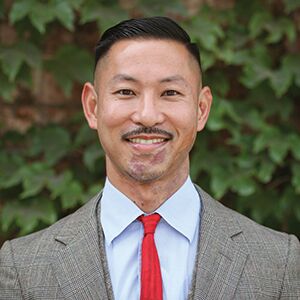
Jih-Fei Cheng is Associate Professor and Chair of the Department of Feminist, Gender, and Sexuality Studies at Scripps College, where he teaches and researches at the intersection of science, media, surveillance, and social movements. He holds a PhD in American Studies and Ethnicity with an emphasis in Visual Studies from the University of Southern California, an MA in Asian American Studies from UCLA, and a BA in Communication from UC San Diego. His interdisciplinary scholarship engages feminist, queer, and decolonial theories to analyze the political economies of virology, global health, and racial capitalism. His research centers on the historical and transnational entanglements of science, empire, and social justice. Key areas include the institutionalization of queer politics, the geopolitics of HIV/AIDS, and the racialized foundations of virology. His co-edited volume AIDS and the Distribution of Crises (Duke UP, 2020) rethinks the pandemic as a network of overlapping crises shaped by colonialism and neoliberalism. He is currently working on a book project titled Materialist Virology , which historicizes virology within Euro-American empire. Cheng’s recent publications span journals such as History and Technology , Radical History Review , and GLQ , with 2025 articles on financial contagion and reservoirs signaling his continued engagement with interdisciplinary frameworks linking finance, disease, and history. His work often collaborates with artists and activists, exemplified by writings on Candice Lin’s art and co-organized dialogues on care and intravention during the pandemic. He has been recognized with multiple awards, including the Lavender Graduation Award (2023, 2016), Professional Development Grants (2019–2020, 2016–2017), and fellowships from USC and the American Antiquarian Society. His teaching and service reflect a deep commitment to LGBTQIA inclusion, racial justice, and community-based scholarship. Lavender Graduation Award for providing safe and inclusive spaces for LGBTQIA students, Queer Resource Center, The Claremont Colleges (2023) Professional Development Networks Grant at The Claremont Colleges (2019–2020) Diversity Teaching Award Nominee, The Claremont Colleges (2018) EnviroLab Asia Research and Conference Award (2017–2018) Lavender Graduation Award (2016) Professional Development Networks Grant (2016–2017) Research Fellow, Summer Institute for the Center for Historic American Visual Culture, American Antiquarian Society (2014) Visual Studies Summer Research Award, USC (2014) New Directions Fellow, USC Center for Feminist Research (2011–2012) Tritia Toyota Fellowship (2001–2002) Cheng has advised and collaborated with numerous scholars and activists, though no formal advisees are listed. His work is deeply rooted in community engagement, having previously worked in HIV/AIDS social services and served on the Board of Directors at the HIV League. He was managing editor of American Quarterly (2010–2013) and has taught at UCLA and Hunter College. His research is supported by interdisciplinary networks and collaborative projects, including digital humanities initiatives and art-theory praxis. He is involved in multiple collaborative research and publishing projects, often working with artists like Candice Lin and scholars such as Alexandra Juhasz and Nishant Shahani. His recent special issue on 'Reservoirs' brings together scholars from anthropology, media studies, and philosophy to rethink historical and ecological crises. His lab-like collaborative environments include feminist media praxis collectives and interdisciplinary workshops on crisis, care, and decolonial knowledge.
Malinda Maynor Lowery is the Cahoon Family Professor of American History at Emory University, specializing in Indigenous history of the US South. Previously affiliated with UNC-Chapel Hill and Harvard University, she holds a PhD in History from UNC-Chapel Hill (2005) and an MA in Documentary Film from Stanford University (1997). Her work bridges academia and media, focusing on Lumbee tribal identity, race relations, and oral history. Key research interests include Lumbee history from colonial times to modern federal recognition struggles, Jim Crow-era racial dynamics, and Black-Indigenous relations. Her award-winning book Lumbee Indians in the Jim Crow South (2010) redefined understanding of tribal nation-building. Current projects explore shared Black-Indigenous histories with the Smithsonian Institution. As a documentary filmmaker, she produced Peabody Award-winning A Chef’s Life and Emmy-nominated Private Violence . Awards include the 2010 Best First Book Prize in Native American Studies. She advises graduate student Jessica Locklear and has received grants from Mellon Foundation, NEH, and Ford Foundation.
Barbara E. Mundy is a Professor of Art History and holds the Martha and Donald Robertson Chair in Latin American Art at Tulane University's Newcomb Art Department within the School of Liberal Arts. She earned her Ph.D. from Yale University. Her research focuses on colonial Latin America, particularly Mexico/New Spain, examining Indigenous-settler interactions, cartography, urban history, and the history of the book. She has held prestigious fellowships including the 2021-22 Kislak Chair at the Library of Congress and contributed to major projects like Vistas: Visual Culture in Spanish America (1520-1820). Research Interests: Indigenous mapping traditions, decolonization methodologies, Nahuatl language studies, and digital humanities. Notable Works: The Death of Aztec Tenochtitlan (prize-winning), The Mapping of New Spain , and forthcoming Rock, Paper, Scissors . Her work bridges art history with ethnohistory and material culture, emphasizing Indigenous agency in colonial contexts. Mundy serves on editorial boards for The Americas and is a past president of the American Society for Ethnohistory.
Nirwan Ansari is a Distinguished Professor in the Department of Electrical and Computer Engineering at New Jersey Institute of Technology (NJIT). His research focuses on cutting-edge advancements in 6G networks , wireless charging , machine learning , and Internet of Things (IoT) . He has contributed extensively to AI-driven network optimization and sustainable energy solutions for next-generation communication systems. Ph.D., Electrical Engineering, Purdue University (1988) M.S., Electrical Engineering, University of Michigan-Ann Arbor (1983) B.S., Electrical Engineering, NJIT (1982) His recent work explores AI-native network slicing , UAV-assisted edge computing , and holographic communication . Publications highlight synergies between terrestrial and non-terrestrial networks , digital twin integration, and energy-efficient IoT systems . He serves as an Honorary Chair and contributes to major conferences like IEEE INFOCOM and IWCMC.
Kai Pyle is an Assistant Professor of Gender & Women's Studies at the University of Wisconsin-Madison. Their research focuses on queer Indigenous history, literature, language, and art, particularly among Anishinaabe and Métis communities. They are a Red River Métis and Sault Ste. Marie Ojibwe descendant, emphasizing ancestral legacies in contemporary queer and trans Indigenous studies. Pyle is actively involved in Michif and Ojibwe language revitalization and collaborates with the Black and Indigenous Feminist Futures Institute to address intersecting histories of Black and Native peoples in the Americas.
Jean Dennison is an Associate Professor of American Indian Studies at the University of Washington and Co-Director of the Center for American Indian and Indigenous Studies. Her research focuses on Indigenous sovereignty, governance, and decolonization, particularly through the lens of the Osage Nation. She explores how Indigenous nations navigate settler colonialism in areas like citizenship, governance, and resource management. Her academic contributions include the book Colonial Entanglement: Constituting a Twenty-First-Century Osage Nation (2012), which examines national revitalization efforts. Her work emphasizes intergenerational knowledge transfer, participatory research methodologies, and institutional reform within academia. Recent articles highlight strategic relations of the Osage Nation, Indigenous futurism, and decolonizing educational spaces. Key themes across her publications include sovereignty struggles, Indigenous nation-building, and the intersection of gender and power. She advocates for transformative academic practices that center Indigenous knowledge systems and empower marginalized communities through participatory research frameworks.
Juho Leinonen is an Academy Research Fellow at Aalto University's Department of Computer Science, Finland, specializing in AI-enhanced computing education. His work focuses on leveraging large language models (LLMs) to transform programming instruction through personalized learning analytics and educational technology. Education Background: PhD in Computer Science, University of Helsinki (2019) Docent (Adjunct Professor) in Computer Science, University of Helsinki Postdoctoral research at The University of Auckland, Aalto University, and University of Helsinki Research Focus: Leinonen's work centers on three interconnected pillars: (1) developing fine-grained learning analytics to decode student programming behavior; (2) applying LLMs to create adaptive educational tools for diverse learners; and (3) implementing learnersourcing strategies for scalable resource generation. His research particularly addresses challenges in multilingual programming education and responsible AI integration, with emphasis on non-native English speakers and novice programmers. Publication Trends: Recent publications (2024-2025) reveal a concentrated exploration of generative AI in computing education, with 85% focused on LLM applications. Key themes include synthetic data generation for educational research, multilingual prompting systems, and ethical frameworks for AI feedback. His work demonstrates both practical implementations (e.g., autocompletion quizzes) and critical analyses of AI limitations in educational contexts. Awards & Recognition: ACE2024 Best Paper Award for LLM-generated worked examples study UKICER 2023 Best Paper Award for achievement goals research ACE 2023 Best Practitioner Paper ICER 2022 Best Paper Award for programming exercise generation SIGCSE TS 2022 Best Paper in Computing Education Research ACE 2021 Best Paper Award for contextualized problem descriptions Research Leadership: As principal investigator of the Academy of Finland-funded project 'Advanced Student Modeling and Tailored LLMs for Personalized Learning', Leinonen supervises PhD students and postdocs while leading international collaborations with institutions including The University of Auckland and University of Helsinki. His grant portfolio focuses on ethical AI deployment in education and cross-cultural computing pedagogy. Collaborative Networks: He maintains active partnerships with leading computing education researchers like Paul Denny (Auckland), Arto Hellas (Aalto), and Andrew Luxton-Reilly (Auckland), evidenced by 90% co-authored publications. His work appears consistently in top venues including ACM SIGCSE, ICER, and ACE conferences.