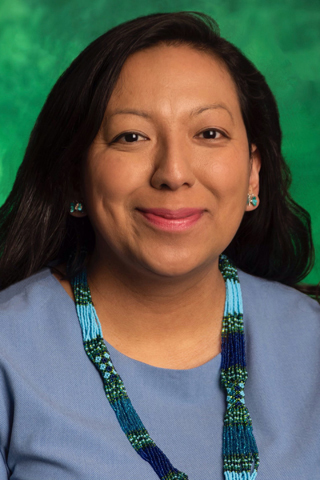
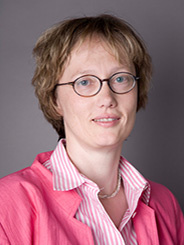
Beth Piatote is an Associate Professor of English and Comparative Literature at the University of California, Berkeley. She holds a PhD in Modern Thought and Literature from Stanford University and is an enrolled member of the Confederated Tribes of the Colville Reservation (Nez Perce). Her work bridges scholarly and creative realms, focusing on Indigenous literature, law, language revitalization, and cultural studies. Education: PhD in Modern Thought and Literature (Stanford University). Research interests include Native American legal systems, Nez Perce language preservation, global Indigenous literatures, and creative writing. She co-founded and chairs Berkeley’s Designated Emphasis in Indigenous Language Revitalization and directs the Arts Research Center, where she leads the Indigenous Poetics Lab. Her publications include Domestic Subjects: Gender, Citizenship, and Law in Native American Literature (2013) and the short story collection The Beadworkers (2019), which received multiple literary recognitions. Her plays Antíkoni and Tricksters, Unite! explore Indigenous narratives through performance. Awards include MLA honorable mentions, PEN/Bingham Prize longlistings, and a 2020 Playwrights Retreat win. Current projects involve a scholarly monograph on sensory representations of Indigenous law and creative works in poetry and essays.
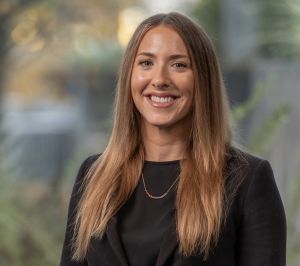
Maile Arvin is a Kanaka Maoli feminist scholar and Assistant Professor at the Department of Ethnic Studies, University of Hawaiʻi at Mānoa. Her research and teaching focus on Indigenous relationships to land, histories of race and settler colonialism in Hawaiʻi, Oceania, and the United States. Previously, she was faculty in History and Gender Studies at the University of Utah and founding director of the Center for Pasifika Indigenous Knowledges. PhD in Ethnic Studies, University of California San Diego (2013) MA in Ethnic Studies, University of California San Diego (2009) BA in English, Swarthmore College (2005) Her research examines: Colonial production of racial categories, particularly Polynesians as an 'almost white race' in historical social science History of incarceration of Native Hawaiian children in government institutions (1865–1960s) Intersection of settler colonialism and Indigenous feminisms Critique of eugenics and genomic studies in the Pacific Community-engaged memorialization projects in Hawaiʻi Recent scholarly trends include analyses of Indigenous sovereignty, critiques of settler colonial whiteness, and interdisciplinary studies of race-gender dynamics. Arvin's publications explore Polynesian racialization, decolonial feminism, and the socioeconomic impacts of colonial institutions. NEH Chair's Grant for Nā Lei Poina ʻOle ACLS Digital Justice Seed Grant Arvin leads Nā Lei Poina ʻOle (Beloved Children Never Forgotten), a community history project about reformatories and industrial schools in Hawaiʻi. In collaboration with Kawela Farrant and the North Shore Community Land Trust, this project uses archival and oral histories to confront the legacy of child incarceration. She also critiques the nonprofit-industrial complex's role in limiting Indigenous sovereignty.
Jennifer Gómez Menjívar is Professor and Director of the M.A. in Media Industries and Critical Cultural Studies at the University of North Texas. Her research examines historical and ethno-linguistic movements influencing text production, circulation, and reception across print media, screen cultures, and digital communities. With over 18 years of teaching experience, she previously held positions at international organizations including the UNECE and UNDP. Her scholarly interests span media linguistics, film adaptation, digital activism, hemispheric animation histories, Indigenous sovereignty media, and Spanish-language media. Her publications demonstrate interdisciplinary work bridging media studies, cultural history, and postcolonial theory. Her extensive publication record includes books such as Tropical Tongues: Language Ideologies, Endangerment, and Minority Languages in Belize (2018) and Black in Print: Plotting the Coordinates of Blackness in Central America (2023), as well as co-edited volumes on Indigenous technology and hemispheric Blackness. She received a Senior Research Fellowship at Freie University Berlin for her upcoming work on Indigenous sovereignty media. Gómez Menjívar teaches courses including Introduction to Graduate Studies in Media Arts, Women in Film, and Global Media. She also mentors students in critical media analysis and serves as faculty advisor for media research projects.
Ann D. Braude is a Senior Lecturer on American Religious History and Director of the Women's Studies in Religion Program at Harvard Divinity School (HDS), affiliated with Harvard University. She joined HDS in 1998 after roles at Carleton College and Macalester College. Her work emphasizes inclusive religious narratives, particularly exploring intersections of gender, spirituality, and social movements. Key research areas include 19th-century Spiritualism, Indigenous religious perspectives, and modern abstract art's relationship to spirituality. Braude holds an AB from Vassar College, MA from the University of Chicago, and PhD from Yale University. Her research has produced influential works like Radical Spirits (2008) and Sisters and Saints (2007), which examine women's roles in shaping religious history. She organized pivotal conferences such as the 2005 celebration of women at HDS and curated the bicentennial exhibition Faces of Divinity (2016). Her current projects include studying gender dynamics in abstract painting and Native American religious frameworks through a biennial speakers series. Braude’s courses focus on American religious history, feminist theology, and Indigenous religious studies. Her articles and public engagement reflect a commitment to bridging academic research with broader societal conversations about religion, gender, and culture. She maintains active roles in both Harvard Divinity School and the broader academic community, contributing to interdisciplinary dialogues on pluralism and religious diversity.
Wendy Gay Pearson serves as Associate Professor in the Department of Gender, Sexuality, and Women's Studies at Western University. Her academic work spans multiple interdisciplinary fields with a particular focus on identity, citizenship, and belonging through the lenses of gender and sexuality. Professor Pearson's research interests encompass gender and sexuality studies, queer theory, feminist theory, critical race theory, and cultural studies. She approaches these topics through postmodernist and postcolonial theoretical frameworks, with emerging intersectional approaches to race, ethnicity, and diaspora. Her work specifically investigates these issues within science fiction, Canadian literature and film, and Indigenous film, examining connections between seemingly disparate areas such as analyzing Eden Robinson's Monkey Beach through both science fiction and Indigenous studies perspectives. Professor Pearson's scholarly output demonstrates a clear trajectory toward increasingly intersectional analyses, particularly in the most recent publications that bridge Indigenous studies with gender and sexuality frameworks. Her work consistently explores how science fiction functions as a space for imagining alternative gender and sexual possibilities, while simultaneously examining how Canadian cultural production engages with queer identities. The publications reveal a growing emphasis on Indigenous perspectives in film and literature, with multiple forthcoming 2024 contributions to the Routledge Handbook of Indigenous Film . As evidenced by her extensive editorial work including The Routledge Companion to Gender and Science Fiction (2023) and Reverse Shots: Indigenous Film and Media in an International Context (2014), Professor Pearson has established herself as a significant contributor to scholarly conversations at the intersection of gender studies and speculative fiction. Her book Zero Patience (2011) with Susan Knabe demonstrates long-standing engagement with queer cinema. Professor Pearson's academic supervision extends across multiple disciplines, reflecting her interdisciplinary approach. Her work has been supported through various academic channels that enable her to explore connections between Indigenous film, queer Canadian culture, and science fiction, though specific grant details are not provided in the available information. Her research methodology combines close textual analysis with theoretical frameworks from queer studies, feminist theory, and critical race theory, creating innovative approaches to understanding how cultural texts negotiate complex identity formations. This integrative approach is particularly evident in her examination of works by authors like Hiromi Goto, Nalo Hopkinson, and Larissa Lai, where she simultaneously considers sexuality, gender, race, and science fiction elements.
Ashley Cordes (Coquille/KōKwel) serves as an Assistant Professor of Indigenous Media in Environmental Studies and Data Science at the University of Oregon's College of Arts and Sciences. She is also a recent American Council of Learned Societies Fellow whose research bridges Indigenous science and technology studies, digital media, and environmental/place-based studies. Her educational background includes a PhD in Media Studies with an outside area in Native American Studies from the University of Oregon (2019), an MA in Communication from Hawaii Pacific University (2012), and a BA in Communication with a Journalism Certificate from Loyola Marymount University (2010). Cordes' research centers on how Indigenous culture and technology producers leverage digital media, emerging technologies, and discourse to advance Tribal sovereignty, cultural revitalization, and the resurgence of Indigenous knowledge systems. Her work specifically examines AI, blockchain, and cryptocurrency through Indigenous epistemologies, challenging dominant narratives about technological progress and financial systems. She has published in journals such as Cultural Studies >Critical Methodologies , Journal of International and Intercultural Communication , and Feminist Media Studies , and is the author of Indigenous Currencies: Leaving Some for the Rest in the Digital Age (MIT Press). Her recent publications reveal a consistent focus on decolonial approaches to technology, with particular attention to Indigenous data sovereignty, environmental justice, and alternative economic systems. The trajectory of her work shows increasing engagement with AI ethics from Indigenous perspectives, culminating in her contributions to the Indigenous Protocol and Artificial Intelligence position paper. American Council of Learned Societies Fellow Contributor to Indigenous Protocols and Artificial Intelligence Working Group Cordes actively mentors doctoral students in Indigenous digital media and participates in multiple research collectives including Abundant Intelligences, CHoRUS Network (focusing on ethical data gathering in Indigenous contexts), Indigenous Protocols and Artificial Intelligence, and the Climate Resilience Taskforce. Her community-engaged work includes the Storying on the Coquille River project, which addresses climate change impacts on salmon populations through digital humanities approaches. She maintains strong connections to her Coquille Nation community, serving on the Climate Resilience Taskforce and as Chair of the Culture and Education Committee, ensuring her academic work remains grounded in community needs and Indigenous knowledge systems.
Nizar F. Hermes serves as Associate Professor and Department Chair in the Department of Middle Eastern and South Asian Studies at the University of Virginia, concurrently holding the position of Director of Graduate Studies. His office is located in 141 New Cabell Hall, with Spring 2025 office hours held Tuesdays from 12:00-3:00 PM. He maintains dual professional email contacts through the university system. His academic foundation includes: PhD in Comparative Literature, University of Toronto Dr. Hermes' research program centers on North African and Mediterranean literary traditions, with deep specialization in premodern Arabic-Islamic cultural production. His work investigates poetic representations of urban spaces, cross-cultural encounters between the Islamic world and Europe, and the transmission of literary heritage across the Mediterranean. Particular attention is given to Maghribī poetic imagination, elegiac traditions, and the intersection of literature with food history and refugee experiences. His methodological approach combines close textual analysis with historical contextualization to reveal continuities in Arab literary consciousness. Analysis of his recent publications (2014-2025) reveals three dominant scholarly trajectories: 1) The literary reconstruction of North African cities through poetic elegies, 2) Cross-cultural encounters documented in Arabic travel literature and folk poetry, and 3) The representation of European 'others' in medieval Arabic texts. His 2024 monograph 'Of Lost Cities' synthesizes these threads while his edited volume 'The City in Arabic Literature' (2018) establishes foundational frameworks for urban studies in Arabic literary criticism. No scientific awards or fellowships were documented in the source materials. While his role as Director of Graduate Studies indicates active mentorship responsibilities, specific student advisees and grant funding details were not provided in the available documentation. His scholarly output demonstrates sustained engagement with graduate education through publications on teaching methodologies for Arabic humanistic literature. No dedicated research laboratories or formal collaborative teams were referenced, though his co-edited volumes and multi-author publications suggest active participation in scholarly communities focused on Mediterranean studies and comparative literature.
Steven G. Kellman is a Professor of English at the University of Texas at San Antonio (UTSA), where he has taught since 1976. A leading scholar in comparative literature and literary translingualism, he was UTSA's first Ashbel Smith Professor (1995-2000) and has received numerous accolades including the National Book Critics Circle Balakian Citation and the New York Society Library Award for Biography. His academic foundation includes: Ph.D. in Comparative Literature, University of California at Berkeley (1972) M.A. in Comparative Literature, University of California at Berkeley (1969) B.A. in English & General Literature, State University of New York at Binghamton (1967) Kellman's research focuses on comparative literature, modern and contemporary literature, prose fiction, literary translingualism, film, and biography. He pioneered the study of writers who create in non-native languages, examining how linguistic displacement fuels creativity and shapes identity across cultural boundaries. His work bridges literary analysis with cultural history, particularly in American literature and biography. His recent publications demonstrate sustained engagement with translingualism, pandemic-era literary interpretation, and biographical recovery of marginalized voices. Articles from 2022-2025 reveal consistent thematic threads: re-examining classic texts like Camus' The Plague through contemporary crises, analyzing translingual writing as spiritual practice, and recovering erased narratives in literary partnerships. Honors include the National Book Critics Circle Nona Balakian Citation (2006), New York Society Library Award for Biography (2006), and Gemini Ink Literary Excellence Award (2008). Additional distinctions: UTSA COLFA Researcher of the Year Award (2019-2020) McGinnis-Ritchie Award for Nonfiction (2008) San Antonio Public Library Foundation Arts and Letters Award (2005) Two UTSA President's Distinguished Achievement Awards in Research Excellence (1990-91, 2005-2006) Kellman has secured prestigious fellowships including the Fulbright Distinguished Chair at Sofia University and Harvard's John E. Sawyer Fellowship. He served four terms on the National Book Critics Circle board and edits Brill's Literary Multilingualism series, demonstrating sustained commitment to advancing literary scholarship through editorial leadership and institutional service.
Sunny Stalter-Pace serves as the Hargis Professor of American Literature in Auburn University's College of Liberal Arts, English Department. A specialist in modernist performance, literature, and urban space, she authored Imitation Artist: Gertrude Hoffmann's Life in Vaudeville and Dance (2020) and is currently completing a cultural history of the New York Hippodrome. Her work bridges academic research with public engagement through blogs, interviews, and collaborations with institutions like the Library of Congress. Her educational foundation includes: Ph.D. in English, Rutgers University (2007) M.A. in English, Rutgers University (2003) B.A. in English and French, Loyola University Chicago (1997), magna cum laude Stalter-Pace's research interrogates intersections of mobility, gender, and performance in 20th-century American culture. She examines how vaudeville, subway systems, and theatrical spectacles shaped public identity, with particular attention to women's experiences and spatial politics. Her methodology combines literary analysis, archival research, and visual studies to reveal how imitation and movement function as cultural forces. Current projects explore aquatic performances at the New York Hippodrome and the legacy of vaudeville producer Gertrude Hoffmann. Her 15 most recent publications demonstrate an evolving trajectory from subway systems ( Underground Movements , 2013) toward aquatic spectacles and vaudeville legacies, consistently centered on New York City's infrastructure. This body of work establishes mobility studies as a critical lens for understanding modernism, revealing how transportation networks and performance venues structured social interactions. Her interdisciplinary approach connects theater history, gender studies, and urban theory to uncover marginalized narratives in American cultural production. Key recognitions include: Harry Ransom Center Fellowship (2020) New York Public Library Short-Term Research Fellowship (2020) Alabama Humanities Foundation Grant (2014) College of Liberal Arts Excellence in Teaching Award nomination (2011) Multiple research fellowships from 2003-2017 Stalter-Pace has secured substantial funding for archival research through fellowships from the NEH, MLA, and university grants. She serves on Biographer’s International Organization's program committee and curated the 'Common Grounds' exhibition at Auburn's Jule Collins Smith Museum. Her teaching innovations include the first-year seminar 'Thinking Through the Arts' and courses on contemporary drama that integrate Hamilton into American literature pedagogy. As Book Review Editor for Transfers: Interdisciplinary Journal of Mobility Studies , she shaped scholarly discourse in mobility studies. Through her Hippodrome research blog and collaborations with the New York Public Library, Stalter-Pace transforms specialized scholarship into accessible public history. Her Library of Congress presentation on Albertina Rasch and the Hippodrome exemplifies her commitment to bridging academic research with community engagement, while ongoing interviews and blog posts extend her work beyond traditional academic boundaries.
Wendy Laura Belcher is a Professor of African literature at Princeton University, holding a joint appointment in the Department of African American Studies and the Department of Comparative Literature. She specializes in early African literature, medieval studies, and postcolonial thought, with a focus on Ethiopian and Ghanaian intellectual traditions. Her work bridges global literary history and decolonial critique, emphasizing Africa’s role in shaping global cultural narratives. Belcher earned her PhD in English Literature from UCLA, alongside MA degrees in African Studies and Urban Planning, and a BA in English Literature from Mount Holyoke College. Her research includes groundbreaking translations of Ethiopian texts, such as The Life and Struggles of Our Mother Walatta Petros , and projects like the Princeton Ethiopian Miracles of Mary (PEMM) digital humanities initiative, supported by NEH grants. Her research interests span African literature’s global influence, early African philosophical texts, and the Kebra Nagast ’s impact on modern movements like Rastafarianism. She co-leads the Black Queen of Sheba project, exploring medieval African ideas in global culture. Belcher is also renowned for her best-selling guide Writing Your Journal Article in Twelve Weeks , aiding academics worldwide in publishing success. Belcher’s awards include the Fulbright Scholarship, SSEMW’s Best Scholarly Edition award, and the Paul Hair Award. Her work appears in journals like Eighteenth-Century Fiction and Research in African Literatures , with peer-reviewed chapters in volumes on African Christian biography and global medievalism. She collaborates with scholars like Michael Kleiner and Ralph Lee on translations and digital humanities projects. Her teaching and research challenge Eurocentric narratives, emphasizing Africa’s rich textual heritage and its contributions to global literature.
Natalia Molina is a Distinguished Professor and Dean’s Professor of American Studies and Ethnicity at the University of Southern California, where she is a leading scholar in U.S. history, Latinx studies, immigration, race, and public health. She is Vice President and President-Elect (2028) of the Organization of American Historians and a 2020 MacArthur Fellow, recognized for her transformative work on racial formation. Her education includes a B.A. in History and Women’s Studies from UCLA, and an M.A. and Ph.D. in U.S. History from the University of Michigan, Ann Arbor. Molina’s research centers on the interconnected histories of race, place, gender, and citizenship. She is best known for her theory of racial scripts , which explains how racial categories are constructed relationally across groups and time. Her work spans public health history, foodways, and immigrant placemaking, with a deep commitment to community-centered storytelling and public engagement. Her recent publications explore Latinx cultural identity through food, sports, and media, reflecting a shift toward personal and public narratives that connect historical scholarship with contemporary life. Her books have received numerous accolades, including a James Beard Award nomination and the PROSE Award finalist status. MacArthur Fellowship (2020) James Beard Award Media Nominee (2023) PROSE Awards Finalist (2023) Pacific Coast Branch of the AHA’s Norris & Carol Hundley Award Susanne M. Glasscock Humanities Book Prize LA Times Essential Book New York Times Best Books About California Molina is a dedicated mentor and public intellectual, having advised university diversity initiatives and served on the boards of the Huntington Library and the Library of Congress Scholars Council. She has held leadership roles at UC San Diego, including Associate Vice Chancellor for Faculty Diversity and Equity. Her current research focuses on the immigrant workers who built and sustained the Huntington Library, reclaiming their overlooked contributions. She is also a Distinguished Lecturer for the Organization of American Historians and has been a fellow at the Huntington Library and the National Endowment for the Humanities. Her public writing in outlets like the Los Angeles Times , Washington Post , and Inside Higher Ed demonstrates her commitment to bridging academic scholarship with broader societal conversations.
Eugene Buckley is an Associate Professor of Linguistics at the University of Pennsylvania , affiliated with the School of Arts & Sciences and the Department of Linguistics . His research focuses on formal phonology, metrical and syllable structure, and the interplay between phonology and morphology. He also explores phonetic and functional explanations in phonological theory, the representation of spoken language categories in writing systems, and specializes in Native American (Kashaya, Alsea), Ethio-Semitic (Tigrinya), and Manam linguistics. Education: Ph.D., University of California, Berkeley (1992) Buckley has taught courses such as Phonology I/II , Writing Systems , and Structure of Kashaya . His current research centers on Kashaya, a Native American language of northern California. Contact: gene@ling.upenn.edu | Office: 330C, 3401 Walnut Street | Office Hours: By appointment.
Prof. Dr. Heike Bungert is a leading scholar in North American History at the Westfälische Wilhelms-Universität Münster , focusing on ethnic migration, cultural history, and civil religion. Habilitation (2004) and Doctorate (1995) from German institutions Extensive teaching career since 2000, including visiting roles at UC Berkeley and Columbia University Her research bridges: German-American identity formation through festivals and cultural practices Transnational university history and academic networks Civil religion in US patriotic holidays Native American representation in film and collective memory Key article trends: 19th-20th century German migration patterns Academic institutions in transnational contexts Civil religion analysis in political rituals Historiography of indigenous peoples Scientific Honors : Heisenberg Fellowship (DFG, 2005) DAAD and DFG research fellowships Stuart L. Bernath Prize (1995) As a supervisor , she has guided doctoral research on topics like: Russian-American periodicals Symbolic communication in colonial legislatures Evangelical responses to immigration
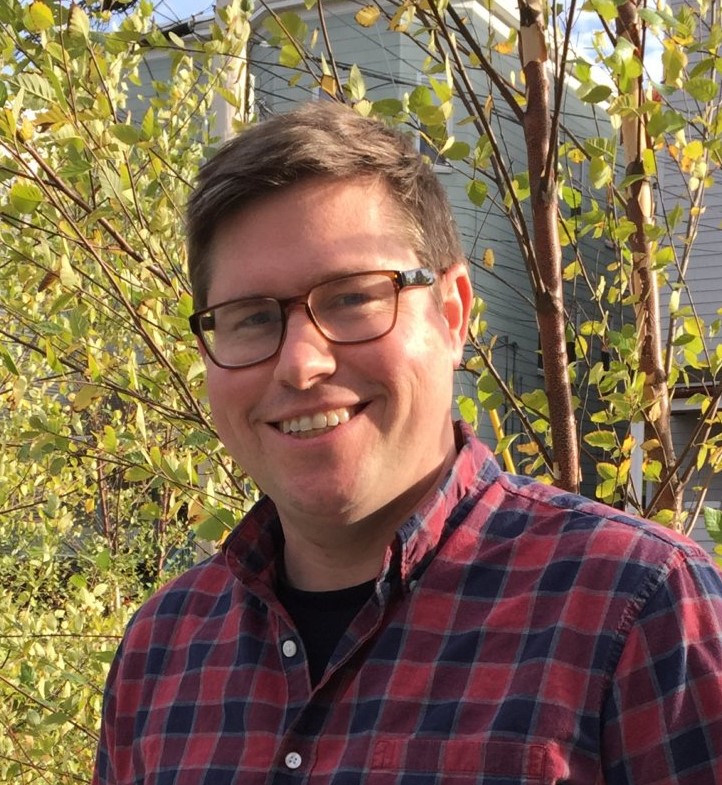
Dr. Robert Lee is an Associate Professor of History at the University of Cambridge, focusing on 19th-century Indigenous dispossession and US state formation. His current research examines the St. Louis Superintendency’s role in treaty negotiations and territorial expansion. Previously, he held a junior fellowship at Harvard Society of Fellows and a PhD from UC Berkeley. He is currently on leave until June 2025. Education: PhD in History (UC Berkeley), MA in American Studies (University of Heidelberg), BA in History and Economics (Columbia University). Research integrates GIS spatial analysis with archival work, highlighted by the Land-Grab Universities project, which revealed Indigenous land funding university endowments. This project received awards for digital history and investigative journalism, including the George Polk Award. Ongoing work explores treaty systems’ impact on American West development. His work has been supported by the NEH, Pulitzer Center, and US Department of Education. Awards include the Binkley-Stephenson Award and Organization of American Historians honors. He collaborates with journalists and institutions via landgrabu.org , a public geodatabase. Teaching focuses on early American history (Paper 22) and supervises MPhil students in American History. His lab teams include digital humanities collaborators like Tristan Ahtone and Margaret Pearce.
Professor Jonathan Murray is a Personal Chair of Film Theory, History, and Criticism at the School of Design , University of Edinburgh . As a renowned scholar in Scottish and British cinemas, he co-edits the Journal of British Cinema and Television and contributes to Cineaste . Active in film festivals as a host and curator, he has influenced both academic and public engagement with cinema. PhD and MA in Film and Television Studies and Scottish History, University of Glasgow Research Interests : Jonathan specializes in contemporary Scottish and British cinemas, focusing on cultural identity, adaptation, and espionage themes. His work bridges academic criticism with public discourse, emphasizing animation, documentary, and historical analysis. He explores intersections of film with popular music, design, and societal narratives. Article Trends : His recent publications highlight European cinematic duality, American adaptations, and Scottish cultural heritage. Themes span from Martin Scorsese’s ethical storytelling to Agnieszka Holland’s political narratives and Scottish film’s evolution from Whisky Galore! to Trainspotting . Scientific Awards : 2016 BAFTSS Best Monograph Award 2017 BAFTSS Best Journal Article Award (Shortlisted) 2018 BAFTSS Best Journal Article Award 2019 BAFTSS Best Journal Article Award Supervision : He supervises PhD students Dan Castro and Nelson Correia. His editorial leadership and festival involvement underscore his commitment to advancing film scholarship and practice.