Monika Gabryś-Sławińska is a Professor at the Department of Polish Literary History , part of the Faculty of Languages, Literatures and Cultures at the University of Maria Curie-Skłodowska (UMCS). Her research spans 19th- and 20th-century Polish literature , focusing on Stefan Żeromski , historical journalism , text editing , voice emission , and museology . MA in Polish Philology (1998, UMCS) PhD in Literary Studies (2007, UMCS) Habilitation in Literary Studies (2016, UMCS) Her research interests include political commentary in historical press , media's role in cultural identity , and sociolinguistic trends . She has edited over 29 academic volumes and authored 5 monographs. Scientific awards: Bronze Cross of Merit KEN Medals (Bronze, Silver) 8 Rector's Awards (UMCS) Lublin Mayor's Medal (2019) She has participated in 5 research grants , organized 35 academic conferences , and contributed extensively to Annales UMCS as a scientific editor.
Professor Agnieszka Zabłocka-Kos is a faculty member at the Institute of Art History, University of Wrocław, specializing in Central European architectural history and urbanism. Her work focuses on 19th-20th century architecture, with particular emphasis on Wrocław/Breslau, including post-war reconstruction, national identity construction, and sacred space design. Professor, University of Wrocław Specialist in 19th-20th century Central European architecture Director of postdoctoral internships (NCN FUGA III) Recipient of multiple Rector's awards for research and teaching Research Themes: Urban development in Central Europe, political architecture in Poland/Germany, sacred architecture of the 19th century, post-war modernism, industrial architecture revitalization. Her students have produced award-winning theses on topics like Wrocław urban blocks, Silesian architects, and post-industrial adaptations. Scientific Contributions: Notable works include the edited volume Architecture in the 'long' 19th century (2019), multiple articles on Breslau's architectural conflicts, and international projects on Central European sacred architecture. She has supervised 33 master's and 5 doctoral theses, with several student works published as books. Dettloff Prize for dissertation (1992) Rector's awards for research and didactic achievements International projects with universities in Berlin, Freiburg, and Leipzig Advisor for Wrocław's Monument Office and City Development Bureau Her teaching integrates interdisciplinary approaches, linking art history with political, economic, and social contexts. She promotes student research popularization through conferences, exhibitions, and publications.
Piotr Głogowski is a researcher at the Institute of History, University of Wrocław, specializing in ancient epigraphy and Near Eastern studies. His work bridges the Hellenistic, Roman, and Persian periods, with a focus on the Levant and Phoenicia. Education: BA & MA in History and Classical Philology (University of Wrocław, 2012-2015); Erasmus exchanges at Bilkent University (2013/2014, 2016/2017); PhD in History (University of Wrocław, 2021). Research areas include ancient epigraphic cultures, Phoenician identity, Achaemenid Persia, and Greco-Persian military dynamics. His publications analyze inscriptions as cultural markers and explore historical narratives in Diodorus. Notable grants: Principal investigator for the National Science Center's Preludium project (2021-2024) on Near Eastern epigraphic culture, and internal grants for studies on Phoenician regional identity and Cappadocian politics. Scientific Awards: Gerda Henkel Foundation Scholarship (2020)
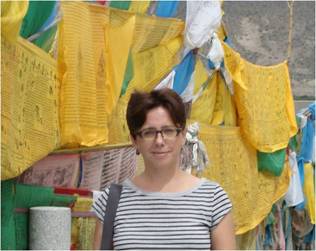
Joanna Grela is a Professor at the Department of Comparative Civilization Studies within the Faculty of Philosophy at Jagiellonian University (UJ) in Kraków, Poland. She holds habilitation in cultural studies (2016, SWPS University, Warsaw), a doctorate in religious studies (2004, Jagiellonian University), and is a certified Tibetologist (2000, INALCO, Paris). Her academic credentials also include an MA in philosophy (1996, Jagiellonian University) and postgraduate studies in gender (2009, Jagiellonian University). Her educational background includes: 2004: PhD in Humanities in religious studies, Jagiellonian University 2000: Diplôme Unilingue de Langue et Civilization Orientales de Tibétain, Institut National des Langues et Civilizations Orientales (INALCO), Paris 1996: Master of Philosophy, Jagiellonian University 2009: Postgraduate studies in gender, Jagiellonian University Professor Grela's research focuses on Tibetan, Himalayan, and Mongolian cultures, with particular emphasis on pre-Buddhist cults and their contemporary representations in popular culture, societal transformations, Tibetan ethnic and cultural identity, cultural stereotypes, and the comparative anthropology of Buddhism. Her work bridges religious studies, cultural anthropology, and Tibetan studies, examining both historical traditions and their modern adaptations. She has made significant contributions to understanding how traditional Buddhist practices interact with contemporary social contexts, digital technologies, and global cultural flows. Her scholarly output reveals consistent engagement with Tibetan religious culture, Buddhist textual traditions, and the adaptation of Buddhist practices in modern contexts. She has extensively explored the relationship between pre-Buddhist traditions and contemporary religious practices, the role of deities in Tibetan Buddhism, and the transformation of Buddhist thought in different cultural settings including Thailand and Poland. Her more recent work addresses how Buddhism is adapting to digital environments and contemporary social challenges. Her notable achievements include: 2017: Pro Arte Docendi Award from the Rector of Jagiellonian University Multiple teaching awards (2011/12, 2012/13, 2014/15) Membership in the International Association of Buddhist Universities (IABU) Collaboration with the Centre d'Etudes Himalayennes CNRS Professor Grela has led significant research projects including 'The impact of secularization and schooling on socio-religious relations between ritual specialists and the lay community in the Rebkong region' (2018-2020) and 'The Common Buddhist Text Project' (2009-2016). Her work demonstrates a strong commitment to both scholarly research and teaching excellence, with numerous publications spanning academic journals, edited volumes, and encyclopedia entries. She maintains active international collaboration and has presented her research at conferences across Europe and Asia.
Przemysław Kordos is a Professor at the University of Warsaw , affiliated with the Faculty of Liberal Arts , where he serves as Coordinator for the Development of the Modern Greek Philology Program . He holds two PhDs in Humanities (2007, 2019) and was awarded the Loukis Papaphilippou Seat of Advancement in Modern Greek scholarship. Education: MA in Ethnology and Cultural Anthropology (University of Warsaw, 2001) MS in Sociology (University of Warsaw, 2002) PhD in Humanities (University of Warsaw, 2007) Second PhD in Humanities (University of Warsaw, 2019) His research interests span: Contemporary Modern Greek and Cypriot literature Polish-Greek cultural relations (philhellenism) Social and ethnographic issues in Greece and Cyprus Travel literature analysis Fantasy literature's cultural implications His scientific work reveals a focus on linguistic assimilation in foreign language learning (via fMRI studies), historical parallels between Polish and Greek independence movements, and critical analyses of Cypriot folk culture's politicization. Key scientific awards include: Loukis Papaphilippou Seat (University of Warsaw) Internships at EKPA and IKY (Greece) Scholarships at IMXA (Greece) and MUNI (Czech Republic) His academic contributions include cataloging 60+ Polish travel accounts to Greece, analyzing the shift from travel literature to tourism discourse, and examining the Hellene-Romios dichotomy's role in modern Greek identity construction.
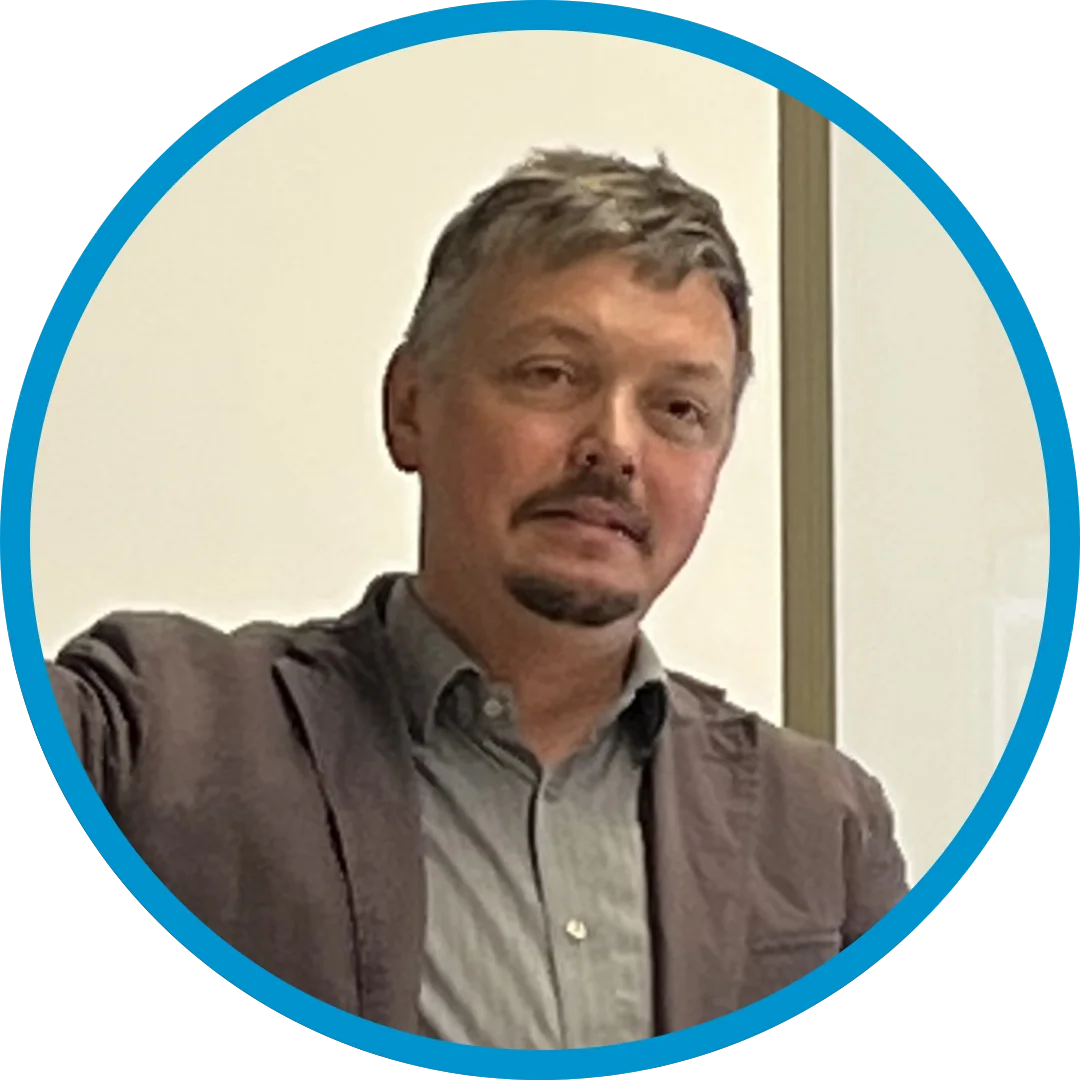
Jerzy Gorzelik is an Associate Professor at the Institute of Arts Studies within the Faculty of Humanities at the University of Silesia in Katowice. He holds a doctorate from the University of Wrocław and graduated from Jagiellonian University. His academic work centers on art history with a focus on Central European art, particularly in Upper Silesia from the 16th to the 20th centuries. His research explores the intersections of art, national and confessional identities, cultural heritage, and collective memory. He investigates how artistic expressions have been used in the discursive construction of imagined communities, especially in contested borderlands like Upper Silesia. His interests include wooden and industrial architecture, sacred art, museum practices, and the role of art in nationalist narratives. The recent publications highlight a consistent focus on heritage discourse, national identity formation, and the symbolic use of architecture and sculpture in Central Europe. His work analyzes how nationalisms—Polish, German, and Silesian—have instrumentalized art and heritage to legitimize political claims and shape regional identity. Themes such as the postcolonial critique of museum curation, the historiography of art history, and the interplay between Catholicism and nationalism recur across his scholarly output. Jerzy Gorzelik is actively engaged in public outreach, having conducted lectures, workshops, and educational projects on Silesian art history in collaboration with institutions such as the House of Polish-German Cooperation and the Foundation Dom Modernisty. He has also contributed to academic discourse through platforms like ResearchGate, Academia.edu, and Google Scholar, and maintains an ORCID profile (0000-0001-6405-9835).
Dr. Sabina Owsianowska is a Lecturer at the Faculty of Tourism and Recreation , University School of Physical Education in Cracow , Poland. She has been actively involved in teaching Polish and international students since 2006, particularly through the LLP-Erasmus program. MA in Tourism Studies (University School of Physical Education in Cracow, 2001) PhD in Humanities (University School of Physical Education in Cracow, 2005) Her research focuses on tourism anthropology , examining tourism as a cultural and social phenomenon , with special interest in: Socio-cultural dimensions of leisure Gender issues in tourism Media influence on tourism Semiotics of tourist experiences Cultural and heritage tourism Her academic contributions include: Co-editor of Anthropology of Tourism in Central and Eastern Europe (Rowman & Littlefield, 2018) Editorial board member of Folia Turistica journal since 2014 Co-editor of multiple thematic issues in tourism anthropology Dr. Owsianowska has: Published 9 book chapters Contributed to refereed journals and conference proceedings Authored critical reviews of contemporary tourism research Key collaborative projects include work with: Dr. Marek Banaszkiewicz Prof. Nelson Graburn Prof. Maria Della Lucia Dr. Elena Giudici
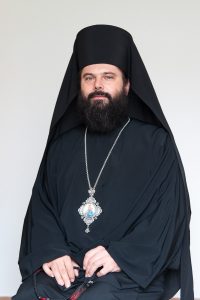
His Excellency Bishop Andrzej Borkowski (born 1974) is a Polish Orthodox hierarch, theologian, and historian. He serves as Bishop of Supraśl and Vicar of the Białystok-Gdańsk Diocese since 2017. Since 2012, he has been an Assistant Professor at the Department of Orthodox Theology, University of Białystok, where he teaches courses on Byzantine civilization, monasticism, and liturgical history. Education: Habilitacja (2017), University of Białystok PhD in Theological Sciences (2009), University of Athens Master of Theology (2005, University of Athens; 2001, Christian Theological Academy in Warsaw) Greek language studies (2001-2002), University of Athens Research Interests: Specializes in the history of Eastern patriarchates in post-Byzantine Poland-Lithuania, Orthodox autocephaly movements (1919-1927), Union of Brest controversies, monasticism, canon law, and Byzantine-Balkan cultural influences in Poland. His work examines liturgical reforms, interfaith dialogues, and diplomatic exchanges between Orthodox churches and European powers. Academic Contributions: Authored three monographs and over 40 articles on Orthodox Church-state relations, including Patriarchaty Wschodu w dziejach Rzeczypospolitej (2014) and Między Konstantynopolem a Moskwą (2015). His research spans 16th-20th century Orthodox history in Poland, Ukraine, and the Balkans. Scientific Awards: Rektor's Award (2013), University of Białystok Leadership Roles: Promotes Orthodox theological education through international conferences, expert teams for heritage restoration, and supervision of theological licentiate theses. Currently chairs expert commissions for monastery renovations and participates in Pan-Orthodox Council initiatives.
Stanislaw Moniuszko Academy of Music in GdańskPoland
Dr hab. Andrzej Wojciechowski is an Associate Professor at the Stanisław Moniuszko Academy of Music in Gdańsk , affiliated with the Department II – Instrumental . As a certified violinist and postdoctoral scholar, he specializes in Polish violin music, chamber ensembles, and 20th-century compositions. Graduated with distinction from the Academy of Music in Gdańsk (1998), studying under Prof. Krystyna Jurecka Collaborates with orchestras like the Polish Baltic Philharmonic and Sopot Chamber Philharmonic Co-created concert projects with artists such as Jan Stanienda and Krzysztof Penderecki His research interests span Polish musicology, violin pedagogy, and interdisciplinary artistic education. He has edited publications with "Eufonium" and promoted Polish music through recordings like Violin Works by Roman Maciejewski (2011) and The Work of Gdańsk Composers (2015). His scientific awards include: Medal of the National Education Commission (2009) Individual Award for contributions to artistic education (2012) Honorary Medal 'For Merit to Polish Culture' (2014, 2015) Rector's Award, 3rd degree (2014, 2016) Wojciechowski has taught over 50 graduates, many of whom have won music competitions, and leads the Academic Chamber Orchestra as concertmaster and conductor. His work bridges performance, education, and preservation of Polish musical heritage.
Stanislaw Moniuszko Academy of Music in GdańskPoland
Sławomir Bronk is a Professor at the Stanisław Moniuszko Academy of Music in Gdańsk, specializing in choral conducting, church music, and early music performance. He holds a doctorate from the Academy of Music in Kraków (2011) and a postdoctoral degree from Gdańsk (2019). He founded the Discantus Chamber Choir (2006), which has achieved international acclaim, and directs the Schola Cantorum ensemble at his institution. His research focuses on Kashubian folklore, Gregorian chant semiology (studied in Italy), and early music interpretation. Notable achievements include winning the Gregorian chant category at the 65th Concorso Polifonico Guido d'Arezzo and the Malta International Choir Festival (2017). He has premiered works such as Anna Rocławska-Musiałczyk's Kashubian Stabat Mater and performed in major festivals like the International Bach Festival in Świdnica. As a countertenor, he specializes in Baroque oratorios with ensembles like the Wrocław Baroque Orchestra and the Early Music Ensemble Diletto. His compositions often blend traditional Kashubian texts with contemporary choral techniques.
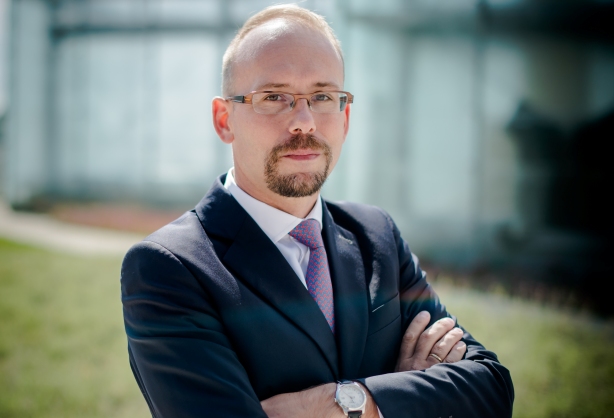
Prof. Tomasz Torbus is an Associate Professor at the University of Gdańsk's Faculty of History, Institute of Art History. His research focuses on medieval and early modern architecture in Central Eastern Europe, particularly Teutonic Order castles, Jagiellonian dynasty residences, and post-1945 monument reconstruction. He has directed the Institute of Art History since 2010. Fields of Interest: Medieval Architecture, Early Modern Architecture, Teutonic Order Studies, Nationalism in Art, Post-War Reconstruction Key Projects: Jagiellonian Residences Project (1990-1997), Saxon-Polish Union Architecture (2006-2011), Mannerist/Baroque Public Architecture Research His publications include monographs on Teutonic castles and collaborations on Polish-German cultural history. Current work includes synthesizing research on Golden Age public architecture through archival analysis. Contact: t.torbus@ug.edu.pl | Office: Room 52, Faculty of History
Dr. Anna Rogos-Hebda is an Assistant Professor at the Faculty of English, Adam Mickiewicz University in Poznań, Poland. She is actively involved in research and teaching in the fields of cognitive and historical linguistics, with a strong emphasis on diachronic semantics, emotion terminology, and corpus-based analysis. Faculty of English, Adam Mickiewicz University Researcher in Cognitive and Historical Linguistics Active contributor to international academic conferences Her research interests center on the language of emotions , conceptual metaphor theory , and the diachronic development of abstract categories in English and Polish. She employs corpus linguistics and cognitive semantics to investigate semantic change, particularly in Middle and Late Modern English. Her work explores how emotions such as hope, belief, and hate are linguistically encoded and evolve over time. The recent articles reflect a consistent focus on diachronic cognitive linguistics , with themes including semantic change in emotion terms , conceptualization of social categories (e.g., beggars, refugees, immigrants), and political and ideological discourse . Her methodology is predominantly corpus-based, often involving quantitative and multivariate analysis of lexical usage across time and cultures. She has not been awarded any formal scientific prizes or fellowships mentioned in the text. Dr. Rogos-Hebda has served as an assistant editor for Studia Anglica Posnaniensia (2001–2010) and has been actively involved in organizing academic events such as the History of English Language in Poznań (HEL-P) and Figurative Thought and Language (FTL) conferences. She has received research support through scholarships from the University of Helsinki and Otto Friedrich Universität, Bamberg, as well as a conference grant from the Foundation for Polish Science. She is a member of several professional organizations, including Societas Linguistica Europea (SLE), Polish Association for the Study of English (PASE), International Society for the Linguistics of English (ISLE), and The Philological Society (TPS). She regularly presents her work at major international conferences and contributes to collaborative research projects, particularly with scholars like Małgorzata Fabiszak and Karolina Krawczak-Glynn.
Michał Kłosiński is an Associate Professor in the Institute of Literary Studies at the Faculty of Humanities, University of Silesia in Katowice, Poland. He holds a habilitation in Literary Studies / Game Studies and is recognized as a professor at the University of Silesia. He is an active member of the Utopian Studies Society and The Society for Utopian Studies, and a signatory to the Declaration on Research Assessment (DORA). His academic journey includes participation in the Paris Critical Theory Program during his doctoral studies. His research interests lie at the intersection of Game studies, utopian studies, science fiction studies, literary theory, philosophy, and biopolitics . He employs hermeneutical and postphenomenological approaches to analyze digital games, focusing on representation, simulacra, quasi-objects, and critiques of capitalism. His recent work investigates the mediation of power and control in digital games, particularly through the lens of biopolitics. His recent publications and research demonstrate a strong trend toward interpreting video games as complex cultural texts that reflect and critique contemporary socio-political realities. He examines how games like Disco Elysium , Cyberpunk 2077 , and Frostpunk engage with themes of subjectivity, ideology, trauma, and utopian/dystopian visions. His work often draws on the philosophies of Paul Ricoeur, Jean Baudrillard, Michel Foucault, and Roberto Esposito. OPUS grant from the National Science Centre for "Mapping the Biopolitics of Games" (2022) Research grant "Baudrillard – Theory – Literature" from the National Science Centre (2011-2014) He has supervised and edited several collective works, including Dyskursy gier wideo (2019) and More After More (2016). He is also engaged in academic outreach, maintaining a personal YouTube channel to popularize his research. His laboratory or research team is implicitly centered around his work in the Institute of Literary Studies, where he fosters interdisciplinary research connecting literary theory with game studies and philosophy. His projects often involve the analysis of narrative structures, ideological underpinnings, and philosophical concepts within digital games.
Dr. hab. Jolanta Szymkowska-Bartyzel, prof. UJ, is a Full Professor at Jagiellonian University's Faculty of International and Political Studies, specializing in American Studies and Polish Diaspora Research. She holds positions as the Erasmus PLUS Programme Coordinator and member of the Discipline Council for Cultural and Religious Studies, as well as the Faculty Electoral Commission. Education: Graduate in Film Studies from Jagiellonian University Doctoral dissertation on American myths and cultural motifs in television advertising Research Interests: Americanization and anti-Americanism American popular culture's impact in Poland Intercultural dialogue and transnational identity Cultural diplomacy and media analysis Key Contributions: Co-organized the American Dream exhibition at Kraków's National Museum (2009) Authored monographs like Our Imagined America (2015) and The American Myth - the Polish Consumer (2006) Presented globally at conferences in Hungary, Czech Republic, Malta, and Portugal Grants & Projects: Principal investigator in NCN-funded projects on transatlantic relations and cultural differences Coordinated international exchange programs with Radboud University and Universität Duisburg-Essen Labs/Teams: Active in the Institute of American Studies and Polish Diaspora’s research groups focusing on transnational cultural dynamics and media studies.
Prof. Dr. hab. Marzena Górecka is a Full Professor at the Department of German-Language Literature and Culture , Faculty of Humanities , John Paul II Catholic University of Lublin . Her academic career includes habilitation (2006), Erasmus teaching assignments at the University of Freiburg (Switzerland), and leadership of the INTERREG III C project Language Bridges (2004-2006). Education: University of Lublin (Humanities), University of Zurich (Germanic Philology), University of Perugia (Italian Studies) Degree: Licentiata Philosophiae (1995), Doctorate in German Medieval Literature (1999) Research Focus: German medieval mysticism (Mechthild von Magdeburg, Hildegard von Bingen), Swiss German-language literature of the 20th century (Meinrad Inglin, Albin Zollinger), and literary translation theory with emphasis on Joseph Ratzinger/Benedict XVI's Opera Omnia . She explores mystical anthropology, cultural boundaries, and the interplay between theology and literature. Recent Trends: Analysis of postmodern literary spirituality, translation challenges of theological texts, and cultural memory in European border regions. Her 2023 publications examine educational crises through religious pedagogy and contemporary social critique in Swiss literature. Key Awards: Feniks National Literary Award (2014, 2013), Ministerial Individual Scholarship (MEiN), Landes&Gyr Foundation Research Stipend (Switzerland) Academic Service: Active in international research (SNSF Berlin evaluation), editorial leadership for Opera Omnia Ratzinger , and conference organization on European values and migration. She serves on the Polish Ministerial Expert Panel for academic promotions.