
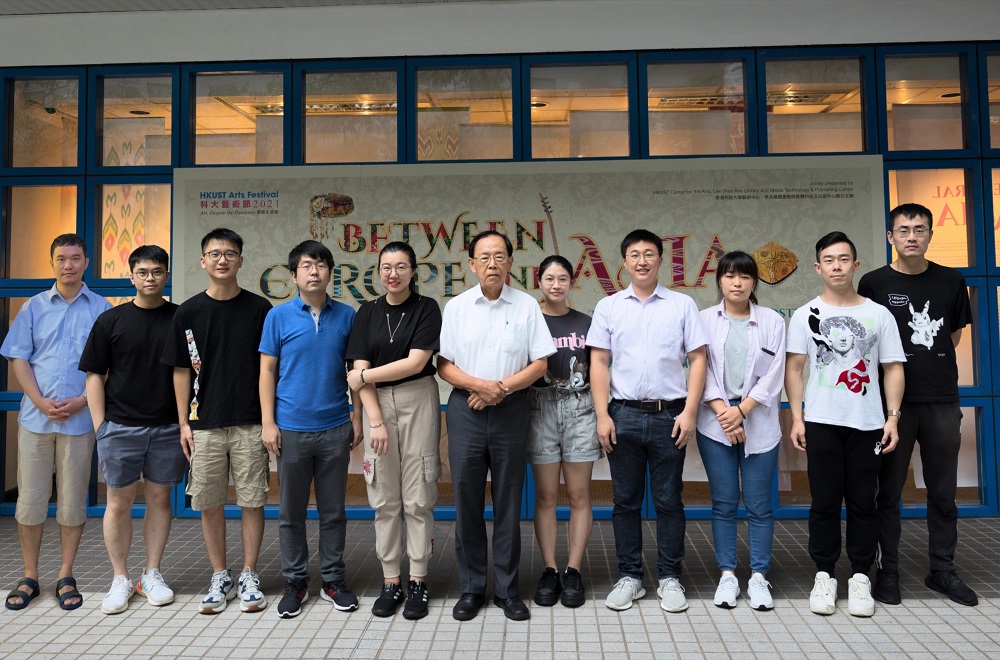
Dr. Ping Sheng is Chair Professor of Nanoscience and Professor of Physics at the Hong Kong University of Science and Technology (HKUST). A pioneer in acoustic metamaterials, he established the conceptual foundation for locally resonant sonic materials and developed innovative metamaterial absorbers. His research encompasses wave-matter interactions across phononic, photonic and electronic systems, with seminal contributions to acoustic metamaterials, carbon nanostructure superconductivity, and electrorheological fluids. Current work focuses on broadband absorption technologies for underwater and microwave applications. Dr. Sheng has received the Brillouin Medal, Rolf Landauer Medal, and Bloch Prize for his transformative contributions. He co-founded Acoustic Metamaterials Group (AMG), enabling commercial applications of metamaterial technologies.
جستجوی استاد راهنمای دانشگاهی
برای مسیر پژوهشیتان، استاد راهنما، استاد دانشگاه و پژوهشگر مناسب را پیدا کنید و با آنها ارتباط بگیرید.
نمایش ۱-۱۵ از ۲۷ استاد راهنما
اطلاعات پروفایلها از صفحات عمومی دانشگاهها گرفته شده و ممکن است بهروز نباشد.

Dr. Daniel Lanzillotti-Kimura is a CNRS Researcher at the Centre de Nanosciences et de Nanotechnologies (C2N), Université Paris-Saclay, and holds an ERC Starting Grant. His work focuses on nanophononics—studying acoustic phonon interactions with photons, electrons, and other phonons at the nanoscale, with applications in quantum technologies and optoelectronics. Education: PhD in Physics (2009), Instituto Balseiro (Argentina) and Université Paris VI (France) His research emphasizes engineering nanomechanical structures to control light-matter interactions in classical and quantum regimes. Key methodologies include ultrafast laser spectroscopy and sol-gel fabrication of mesoporous materials. Recent publications highlight innovations in hypersound manipulation via elliptical micropillars and mesoporous thin films. His team explores topological phononic devices and chiral acoustoplasmonics, pushing boundaries in nanoscale acoustic dynamics. Scientific Awards: ERC Starting Grant Advising the recipient of the Dylan Cattiaux Thesis Award (Anne Rodriguez, 2023) Dr. Kimura collaborates across institutions, including Universidad Nacional de San Martin (Argentina), and leads projects at the intersection of nanotechnology, quantum physics, and materials science.
Thomas Brunetمشاهده پروفایل
پژوهشگر
Thomas Brunet is a researcher at the University of Bordeaux, specializing in physical acoustics and functional materials for acoustics. His work spans ultrasound physics, material characterization, and advanced modeling/simulation techniques. Key collaborations with research groups: APY (Physical Acoustics) , Functional Materials for Acoustics , and GCE (Civil and Environmental Engineering) . Focus areas: acoustic metamaterials , Anderson localization , contactless micromanipulation , and viscoelastic wave propagation . His publications (over 30 in the last decade) demonstrate expertise in ultrasonic imaging, nanophononics, and multiphysics problems involving mechanical, thermal, and fluid interactions. Collaborative projects include DuMAS (Sustainability of Materials) , IMC (Mechanical Engineering) , and MPI (Materials-Procedes-Interactions) initiatives. No formal awards or student advising details are publicly available in the provided data.

Gwenaelle Vaudel is a CNRS research engineer affiliated with the Institute of Molecules and Materials of Le Mans (IMMM) at Le Mans University. She specializes in optics and laser physics, serving as Platform Manager for the Femtosecond Laser platform and Head of the NOVA team (Nano-Optics, Vibration, and Acoustics). Her roles include managing laser safety and representing ITA-BIATSS on the scientific council. Research focus: Ultrafast optoacoustic phenomena, coherent phonons, multiferroic materials, and nanoscale acoustic wave dynamics. Recent publications (2014–2021) explore THz acoustics, nonlinear effects in nanomaterials, and light-driven energy transport in solids. Active in scientific outreach, participating in Researchers' Night and creating educational videos (e.g., Mans Day 2019). Collaborates on picosecond ultrasonics, plasmonics, and structural phase transitions in advanced materials.
- Optics
- Laser Physics
- Ultrafast Acoustics
- +۴ مورد دیگر
Laurent MORAمشاهده پروفایل
پژوهشگر
Laurent MORA is a Researcher at the University of Bordeaux, actively affiliated with the TREFLE research group (focusing on Energy Fluid Transfers and Energy/Environmental Efficiency of Buildings) and the APY group (specializing in Physical Acoustics, Ultrasound, and Materials). His interdisciplinary work bridges engineering and material science through experimental and computational approaches. His research centers on Acoustics and Ultrasonics , with critical contributions to Material Characterization , Wave Propagation in Complex Media , and Contactless Micromanipulation . He investigates opto-acoustics, nanophononics, biophononics, and functional acoustic materials, while advancing energy efficiency in building systems through the E3BUS initiative. His methodologies integrate modeling, simulation, and experimental validation across scales. Dr. MORA operates within TREFLE's E3BUS framework and APY's material-focused teams, utilizing university infrastructure including CND platforms, microscopy facilities, and computational clusters. Though supervision details aren't specified, his groups host ongoing theses and post-doctoral projects in fluid dynamics, acoustics, and sustainable materials. His work connects to broader initiatives like ANR projects, PEPR programs, and European collaborations in energy and environmental engineering.
- Acoustics
- Ultrasonics
- Material Characterization
- +۴ مورد دیگر
Christophe Bacon is a Researcher at the University of Bordeaux affiliated with the APY research group (Physical Acoustics, Ultrasound & Materials), focusing on advanced acoustics and materials science interfaces. His core research areas include: Physical Acoustics Ultrasound Materials Science Material Characterization Ultrasonic Imaging Modeling and Simulation Opto-Acoustics Nanophononics Biophononics Dr. Bacon's work centers on developing non-destructive evaluation methodologies, studying acoustic wave propagation in complex anisotropic materials, and pioneering contactless micromanipulation techniques. His research directly contributes to the DuMAS project (Sustainability of Materials, Assemblies and Structures) and fatigue analysis of structural components, with applications spanning functional acoustic materials to biomedical systems. As an active member of the APY group, he participates in supervising doctoral theses and post-doctoral research within the University of Bordeaux's research ecosystem.
- Physical Acoustics
- Ultrasound
- Materials Science
- +۶ مورد دیگر
Mathieu Renierمشاهده پروفایل
پژوهشگر
Mathieu Renier is a researcher at the University of Bordeaux, specializing in physical acoustics, ultrasound, and materials science. His work focuses on material characterization, ultrasonic imaging, modeling and simulation, opto-acoustics, nanophononics, and biophononics. He investigates elastic wave propagation in structured anisotropic materials and contributes to sustainability and durability studies of materials and structures. Key Research Areas: Non-Destructive Testing of materials Multiscale modeling of heterogeneous materials Mechanics of corrosion and hydrogen effects Renier is affiliated with interdisciplinary research groups such as GCE (Civil and Environmental Engineering), IMC (Mechanical Engineering and Design), and TREFLE (Transfers Fluids Energetics). He collaborates on projects spanning ANR, PEPR, CARNOT, regional, European, and other initiatives.
- Physical Acoustics
- Ultrasound
- Materials Science
- +۱۱ مورد دیگر
Diego Bareschمشاهده پروفایل
پژوهشگر
Diego Baresch is a researcher at the University of Bordeaux specializing in Physical Acoustics and Functional Materials for Acoustics . His work focuses on contactless micromanipulation using acoustic waves, ultrasonic imaging, and modeling of complex wave propagation. Key research areas: Opto-acoustics, Nanophononics, Picosecond Biophononics Projects: ANR, PEPR, CARNOT, European collaborations Techniques: Acoustic trapping, Radiation force, Wavefront engineering His recent articles (2013-2025) demonstrate expertise in acoustical tweezers , microbubble dynamics , and spin-orbital angular momentum conversion . Publications address challenges in soft solid rheology, particle manipulation, and wave propagation in complex media. The work spans biomedical applications (e.g., targeted drug delivery) and fundamental wave physics. Diego contributes to multidisciplinary teams including DYNAMICS Mechanics, corrosion, hydrogen and Multiscale Modeling and Behavior of Heterogeneous Materials . He is active in the Cluster of Platforms I2M , working on metrology and characterization technologies.
MALLEJAC Matthieu is a researcher affiliated with the University of Bordeaux, focusing on physical acoustics and functional materials for acoustic applications. He is part of the GCE (Civil and Environmental Engineering) department, specifically contributing to research groups such as 3MAH (Multiscale Modeling and Behavior of Heterogeneous Materials) and the non-destructive evaluation (NDE) axis. Research Areas: Physical Acoustics, Functional Materials for Acoustics, Ultrasound, Material Characterization, Ultrasonic Imaging, and Multiscale Modeling of Heterogeneous Materials Projects: Involved in ANR, PEPR, CARNOT, and European projects related to material sustainability, fatigue, and structural reliability Labs: Collaborates with platforms like GHYGA (Geophysics, Hydrogeology, Geotechnics), CND (Non-Destructive Testing) labs, and advanced simulation clusters
Mejdi Azaiezمشاهده پروفایل
پژوهشگر
Mejdi Azaiez is a Researcher at the University of Bordeaux, affiliated with the TREFLE - Energy Fluid Transfers department. His work focuses on advanced simulations and numerical modeling for fluids and engineering, with research areas spanning material characterization, ultrasonic imaging, and contactless micromanipulation using acoustic waves. Key research areas include nanophononics , picosecond biophononics , and acoustic wave propagation in complex media . He contributes to projects such as DuMAS (Durability of Materials) and 3MAH (Multiscale Modeling of Heterogeneous Materials). His expertise extends to nondestructive testing methodologies , probabilistic approaches , and material valorization . He utilizes tools like Notus (CFD) , FedOO (Mechanical Solids) , and Simcoon (Constitutive Laws) . His research involves collaborations in porous media characterization , thermophysical properties , and solid mechanics . Email: azaiez@u-bordeaux.fr
Fouzia ACHCHAQمشاهده پروفایل
پژوهشگر
Fouzia ACHCHAQ is a research team member at the Institute of Mechanical Engineering (I2M) of the University of Bordeaux, France, specializing in physical acoustics and ultrasound applications within the TREFLE research department (Energy Fluid Transfers). Her work integrates experimental and computational approaches to advance non-destructive evaluation methodologies and material characterization techniques. Her research spans fundamental and applied acoustics, with primary focus on ultrasonic imaging, material characterization in complex media, and wave propagation phenomena. Key specialties include nanophononics for nanostructure analysis, biophononics for biomedical applications, opto-acoustics for hybrid imaging systems, and contactless micromanipulation using acoustic radiation forces. She investigates elastic wave behavior in structured anisotropic materials and develops functional materials for acoustic applications, contributing to both theoretical modeling and practical instrumentation. As an active researcher, Dr. ACHCHAQ supervises doctoral candidates and postdoctoral fellows within I2M's collaborative framework. The institute provides access to advanced facilities including non-destructive testing platforms (thermal, mechanical, civil engineering), microscopy suites (electron microscopy, tomography, dimensional analysis), and specialized labs for porous media characterization and acoustic wave manipulation. Her work aligns with I2M's strategic axes in non-destructive evaluation, uncertainty quantification, and sustainable materials development.
- Acoustics
- Ultrasonics
- Material Characterization
- +۷ مورد دیگر
Robin Kromerمشاهده پروفایل
پژوهشگر
Robin Kromer is a Researcher at the University of Bordeaux actively contributing to multiple interdisciplinary research groups including MPI (Materials-Processes-Interactions), APY (Physical Acoustics Ultrasound & Materials), DuMAS (Sustainability of Materials, Assemblies and Structures), and GCE (Civil and Environmental Engineering). His work integrates experimental and computational methodologies across materials science, acoustics, and civil engineering domains. His research focuses on Acoustics and Ultrasonics (material characterization, ultrasonic imaging, opto-acoustics, nanophononics, and contactless micromanipulation) and Materials Science (fatigue, durability, sustainability of materials/structures). Additional expertise includes Non-Destructive Evaluation methodologies, Computational Mechanics for heterogeneous materials modeling, and Civil Engineering applications involving cracking, damage mechanisms, and soil-water interactions. His work bridges theoretical modeling with practical engineering solutions. Kromer collaborates extensively across the university's research ecosystem on projects related to elastic wave propagation in anisotropic materials, probabilistic reliability assessment, and advanced numerical simulations for fluid engineering. No information is available regarding students, grants, or scientific awards.
Philippe Lagiere is a Researcher at the University of Bordeaux, affiliated with the I2M laboratory (Institute of Mechanical Engineering and Control) through dual membership in the TREFLE (Transfers, Fluids, Energetics) and APY (Physical Acoustics, Ultrasound & Materials) research groups. His work bridges energy systems, acoustics, and advanced materials characterization within France's prominent engineering research ecosystem. His research focuses on physical acoustics and ultrasound applications, including material characterization, ultrasonic imaging, and modeling of complex systems. Key specialties involve opto-acoustics, nanophononics, biophononics, and energy fluid transfers for building efficiency. He investigates elastic wave propagation in structured anisotropic materials and contactless micromanipulation with acoustic waves, contributing to non-destructive evaluation methodologies and complex media analysis. As an active member of TREFLE's E3BUS team (Energy and Environmental Efficiency of Buildings) and APY's advanced acoustics initiatives, Lagiere participates in interdisciplinary projects spanning environmental engineering, material science, and wave physics. His laboratory work leverages I2M's specialized platforms for porous media characterization, ultrasonic testing, and multi-scale modeling to address industrial and environmental challenges.
Jérémie Mayorمشاهده پروفایل
پژوهشگر
Jérémie Mayor is a researcher at the University of Bordeaux's Institute of Mechanics and Engineering (I2M), specializing in acoustics and material characterization within the APY (Physical Acoustics) research group. His work bridges theoretical modeling and experimental applications in wave propagation phenomena. His core research focuses on: Functional Materials for Acoustics Acoustic Waves in Complex Media Contactless Micromanipulation with Acoustic Waves Elastic Wave Propagation in structured anisotropic materials Nanophononics and Biophononics applications Mayor contributes to advanced ultrasonic imaging techniques and material characterization methodologies, with particular emphasis on multi-scale wave behavior from picosecond phenomena to macroscopic applications. His research integrates modeling and simulation frameworks to address challenges in structured materials and biological systems, while exploring opto-acoustic interactions and contactless manipulation technologies for innovative engineering solutions. Within I2M's research ecosystem, Mayor collaborates across multiple platforms including TREFLE (Energy Fluid Transfers) and GCE (Civil and Environmental Engineering) groups, leveraging shared infrastructure like the CND-END characterization facilities and Porous Media platforms for comprehensive material analysis.
Ravi Pantمشاهده پروفایل
دانشیار
Ravi Pant is an Associate Professor in the Department of Physics at the Indian Institute of Science Education and Research Thiruvananthapuram (IISER TVM), where he conducts cutting-edge research in photonics and quantum optics. His academic journey began with a B.Sc. (Hons.) in Physics from the University of Delhi in 1995, followed by an M.Sc. in Physics in 1997, and an M.Tech in Optoelectronics and Optical Communications from the Indian Institute of Technology, Delhi in 1998. He completed his PhD in Photonics and Quantum Optics from the College of Optical Sciences at the University of Arizona, Tucson in 2009. PhD Photonics and Quantum Optics, College of Optical Sciences, University of Arizona, Tucson (2009) M. Tech. Optoelectronics and Optical Communications, Indian Institute of Technology, Delhi (1998) M. Sc. Physics, University of Delhi (1997) B. Sc. (Hons.) Physics, University of Delhi (1995) Dr. Pant's research focuses on nanophononics, stimulated Brillouin/Raman scattering, opto-mechanical interactions, slow-light phenomena, nonlinear optical devices, and soliton self-frequency shift. His work bridges fundamental physics with practical applications in microwave photonics and optical signal processing. He has made significant contributions to the field of on-chip stimulated Brillouin scattering, with numerous publications in high-impact journals. His research has evolved from fundamental studies of slow-light systems to practical implementations of microwave photonic filters and signal processing devices. Analysis of Dr. Pant's publication record reveals a strong focus on microwave photonics applications of stimulated Brillouin scattering, with particular emphasis on developing chip-based solutions for RF signal processing. His work demonstrates progression from basic research on slow-light phenomena to practical implementations of narrowband microwave photonic filters, high-rejection notch filters, and frequency combs. A notable trend is his increasing focus on mid-IR photonics (2μm wavelength region) and the development of novel devices using silica nanowires and specialty fibers. AUD 370,000 postdoctoral fellowship (Grant DP1096838) from the Australian Research Council (ARC) (2010-2013) USD 40,000 AOARD grant (Grant FA23861114030) from the US Air Force (2011-2012) (PIs: Ravi Pant and Benjamin J. Eggleton) Dr. Pant has received significant research funding to support his work, including a substantial Australian Postdoctoral Fellowship from the ARC and a collaborative grant from the US Air Force. His research group at IISER TVM focuses on developing novel photonic devices for microwave signal processing applications, with particular expertise in stimulated Brillouin scattering phenomena in integrated photonic platforms. The group maintains strong international collaborations, particularly with researchers at the University of Sydney and other institutions involved in the CUDOS (Centre for Ultrahigh bandwidth Devices for Optical Systems) research center.
- Photonics
- Quantum Optics
- Microwave Photonics
- +۵ مورد دیگر