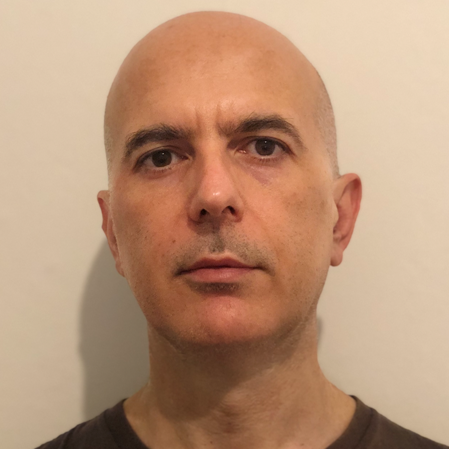
Mehdi Abdollahi is an Associate Professor at Chalmers University of Technology's Department of Food and Nutrition Science. His research focuses on alternative proteins, food biotechnology, and plant-based hybrid foods, with emphasis on sustainable utilization of food side streams, legumes, cereals, and microalgae as future protein sources. Develops pH-shift technology and ultrasound-assisted methods for protein extraction Specializes in hybrid food engineering via fermentation and biorefinery Works on 3D food printing and high-moisture extrusion for food analogs Researches collagen and biobased food packaging materials His work includes >100 peer-reviewed publications, 4 book chapters, and 3 patents. Current projects involve collaborations with Arla Foods, Lantmännen, and Nordic Seafarm, addressing sustainable seafood systems and plant-protein hybridization. 2024 Bertebos Prize recipient 2025: Recognized among Sweden's Top 101 Sustainability Figures Mentors 7 PhD students and 3 postdocs while collaborating with European institutions like Kristianstad University and Ankara University. His group explores biorefinery strategies, hybrid food functionality, and innovative packaging solutions.
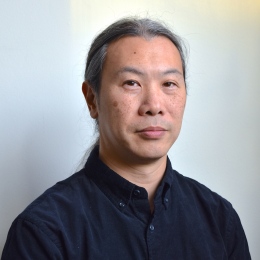
Cheuk Wai Tai is a Senior Staff Researcher at Stockholm University's Department of Environmental and Materials Chemistry since 2009. He manages the transmission electron microscopes and sample preparation equipment at the Electron Microscopy Center and serves as Section Editor for the Journal of Electronic Materials. His work focuses on quantitative structure characterization in functional materials research, particularly within nanoscience and nanotechnology contexts. Education: Ph.D. in Applied Physics, The Hong Kong Polytechnic University, 2004 M.Phil. in Applied Physics, The Hong Kong Polytechnic University, 2001 M.Sc. in Physics, The Chinese University of Hong Kong, 1998 B.Sc. (Hons) in Engineering Physics, The Hong Kong Polytechnic University, 1997 Dip. in Mechanical Engineering (Computer Aided Engineering), Institute of Vocational Education (formerly Haking Wong Technical Institute), Hong Kong, 1992 His research centers on structure-property relationships in functional materials through advanced electron microscopy techniques. Current specializations include Pair Distribution Function (ePDF) & Diffuse Scattering, Energy Materials characterization, and EM sample preparation methodology development. The group maintains strong focus on translating structural data into functional performance metrics for nanomaterials. Recent publications (2013-2019) demonstrate consistent emphasis on electron microscopy applications for energy storage materials (batteries, photocatalysts) and functional ceramics. Key trends include structural disorder analysis in piezoelectrics, development of quantitative TEM methods like SUePDF, and nanoscale characterization of electrocatalyst surface phases. His work bridges materials chemistry with advanced imaging techniques. Scientific recognition includes: Fellow of The Royal Microscopical Society (U.K.) Senior Member of IEEE Marie Curie Fellowship (2007-2009) from European Commission Sir Edward Youde Memorial Fellowship (2003/2004) from Hong Kong S.A.R. Government He teaches Solid State Chemistry (KZ7003) and leads Introduction to Analytical Electron Microscopy (KZ8009), having previously taught Advanced Transmission Electron Microscopy (KZ8010) before 2011. Major grants supporting his work include: "Quantitative structural characterisation using 3D electron-based pair distribution function" (Swedish Research Council) "A Multidimensional Toolkit for Modern Electron Microscopy" (Swedish Foundation for Strategic Research) "Mitigating Ni-rich Li-ion cathode side-reactions" (Swedish Energy Agency, Co-applicant) He leads the Cheuk-Wai Tai group within Stockholm University's chemistry department and oversees operations at the Electron Microscopy Center, where his team develops and applies advanced characterization techniques for functional materials research.
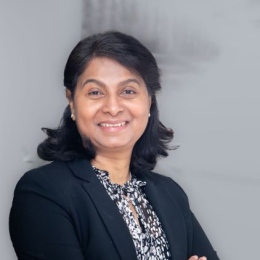
Aji Mathew is a Professor at the Department of Materials and Environmental Chemistry, Stockholm University. He holds a PhD in polymer chemistry from Mahatma Gandhi University (2001) and conducted postdoctoral research at CERMAV (Grenoble, France) and NTNU (Trondheim, Norway). His academic career includes roles as an assistant professor (2007–2011) and associate professor (2011–2015) at Luleå University of Technology before becoming an associate professor (2015) and subsequently a professor (2017) at Stockholm University. His research focuses on bio-based nanocomposites and sustainable materials, particularly nanocellulose and its applications in environmental remediation, advanced materials, and circular economy solutions. His group, the Aji Mathew Group , specializes in designing bio-based materials for diverse applications, including water treatment, 3D printing, and biomedical uses. Key projects involve upcycling textile waste, developing eco-friendly composites, and creating functional hydrogels. His work bridges fundamental polymer chemistry with practical sustainability challenges. Publications highlight innovations like nanocellulose-based foams, zeolitic frameworks for water purification, and bio-based coatings. While no awards are explicitly mentioned, his extensive peer-reviewed contributions reflect significant scholarly impact. His research emphasizes scalability and real-world applicability, addressing global environmental and material science challenges.
Paul Erhart is a Professor in Condensed Matter and Materials Theory at the Department of Physics, Chalmers University. He received his PhD from Technische Universität Darmstadt in 2006, followed by postdoctoral and staff positions at Lawrence Livermore National Laboratory from 2007, before joining Chalmers in 2011. His research bridges computational physics, materials science, and machine learning to tackle fundamental problems in materials design and characterization. Dr. Erhart's research focuses on computational materials science with particular emphasis on condensed matter physics, nanomaterials, and quantum materials. His work spans from developing computational methods like machine-learned potentials (GPUMD, neuroevolution potentials) to studying fundamental phenomena in perovskites, 2D materials, thermal transport, and plasmonics. He has pioneered approaches connecting simulation with experimental techniques through correlation functions and has made significant contributions to understanding phase transitions, defect physics, and electronic structure in complex materials systems. Analysis of his recent publications reveals a strong trend toward integrating machine learning with traditional computational physics methods. His work increasingly focuses on developing and applying neuroevolution potentials to study thermal properties, phase transitions, and optical phenomena in materials. There's also a clear emphasis on connecting computational results with experimental observations, particularly in neutron scattering, Raman spectroscopy, and plasmonic sensing applications. His research spans fundamental materials physics to applied areas like hydrogen sensing and sustainable materials development. Dr. Erhart has contributed to numerous software packages essential to the computational materials science community, including WulffPack for Wulff constructions, Dynasor for extracting dynamical structure factors, calorine for neuroevolution potential models, and ICET for alloy cluster expansions. His collaborative work spans multiple institutions and disciplines, reflecting the interdisciplinary nature of modern materials research. His contributions to understanding perovskite materials, thermal transport phenomena, and plasmonic systems have established him as a leading researcher in computational materials science.
Peter Oppeneer is a Professor in the Materials Theory group within the Department of Physics and Astronomy at Uppsala University, Sweden. His research program focuses on theoretical condensed matter physics with emphasis on ultrafast phenomena and magnetic materials. His research interests span femtosecond magnetism, ultrafast spin and orbital currents, out-of-equilibrium magnon and phonon dynamics, unconventional superconductivity, multipolar and hidden order parameters, and orbitronics. The group develops both analytical theories and numerical simulation codes, combining ab initio methods with model Hamiltonian approaches. Key research thrusts include ultrafast demagnetization mechanisms, spin-crossover materials, molecular spintronics, and topological quantum states in magnetic materials. Analysis of recent publications reveals strong focus on altermagnetism, terahertz spin dynamics, Dirac semimetals, and laser-induced phase transitions. The group's work bridges fundamental quantum theory with applications in next-generation spintronic devices and ultrafast magnetic switching technologies. Collaborative activities include work with experimental groups on ultrafast spectroscopy, X-ray magnetic circular dichroism, and terahertz emission studies. The group maintains active collaborations across Europe and internationally, particularly in the areas of femtosecond magnetism and topological materials. Research infrastructure includes development of specialized computational codes for Eliashberg theory, dynamical mean field theory, and ultrafast spin dynamics simulations. The group contributes to major international facilities including synchrotron and free-electron laser sources for time-resolved studies.
Yu Xia is a Post Doc at the Department of Chemistry, Stockholm University, Sweden. He is affiliated with the Tom Willhammar Research Group, focusing on advanced electron microscopy and diffraction techniques for structural characterization of materials. PhD (2019–2023) from a joint program between the University of Birmingham (UK) and the Southern University of Science and Technology (China). Research emphasizes fabrication of metallic nanoparticles with non-equilibrium structures and shapes using gas-phase condensation and thermal shock methods. Specializes in scanning transmission electron microscopy (STEM), in-situ heating experiments, and electron energy loss spectroscopy (EELS) for nanoparticle analysis. Current work prioritizes 4DSTEM imaging for electron beam-sensitive materials and Python-based post-processing of electron microscopy datasets. Yu Xia's research spans Materials Science , Nanotechnology , and Electrocatalysis , with applications in photocatalytic hydrogen evolution , graphene composites , and advanced electron microscopy techniques . His work often integrates computational image processing with structural characterization to optimize material properties. Publications highlight innovations in heterostructure engineering , metallic alloy catalysts , and electron beam-sensitive material imaging . No scientific awards are explicitly mentioned in the provided text. Yu Xia's technical expertise includes Python scripting for image analysis, in-situ electron microscopy , and multifunctional graphene-based materials .
Libo Chen is an Assistant Professor at Uppsala University's Department of Electrical Engineering; Solid State Electronics. His work focuses on neuromorphic tactile systems, bioinspired e-skin, and self-powered transducers. Research Interests : Neuromorphic engineering for tactile feedback Stretchable and self-healing electronics Energy harvesting for bioinspired systems Triboelectric transducers and sensors Surface chemistry of mesoporous materials Publication Trends : Over the past five years, Chen has published in interdisciplinary areas spanning Materials Science , Neuroengineering , and Chemical Physics , with a focus on tactile systems, self-healing materials, and hybrid energy applications. Labs & Teams : He is affiliated with Uppsala University's Ångström Laboratory, a hub for advanced materials and electronics research.
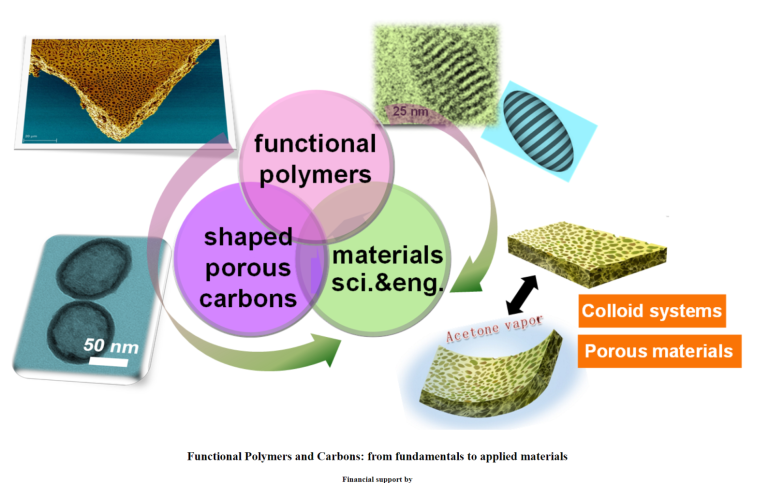
Jiayin Yuan is a Professor of Materials Chemistry at Stockholm University, Department of Chemistry. He leads the Jiayin Yuan Research Group, focusing on functional polymers and carbons for environmental and energy applications. His work emphasizes sustainable materials, including porous polymers, carbon membranes, and energy storage systems. He holds an ERC Consolidator Grant (2022) and previously an ERC Starting Grant (2014), and directs the Stockholm Material Hub. His research spans CO2 capture, catalysis, and nanomaterials for renewable energy. He has held academic positions at Clarkson University (USA) and the Max Planck Institute (Germany), with a PhD from Germany (2009). Education: Bachelor's in Chemistry, Shanghai Jiao Tong University (2002) Master's in Chemistry, Germany (2004) PhD in Chemistry, Germany (2009) Research Interests: Synthesis of functional polymers, carbon materials, and their applications in environmental sustainability and energy. Current projects include CO2 capture via porous liquids, biomass-derived fertilizers, and bijel membranes for energy storage. Grants & Awards: ERC Consolidator Grant (2022) ERC Starting Grant (2014) Wallenberg Academy Fellow (2018) Advising & Labs: Supervises multiple PhD students and postdocs. His group collaborates on advanced materials for energy and environmental challenges. The Stockholm Material Hub (stockholmmaterial.com) fosters interdisciplinary research in materials science.
Joachim Oberhammer is a Professor in Microwave and THz Microsystems at KTH Royal Institute of Technology in Stockholm, Sweden. He leads research in radio-frequency/microwave/terahertz micro-electromechanical systems (MEMS) and has held academic roles since 2005. His work includes pioneering advancements in THz communication, sub-THz radar concepts, and MEMS-based components. Oberhammer has been awarded the 2023 Young Engineer Award by the European Microwave Association and holds multiple grants, including an ERC Consolidator Grant (2013) and SSF framework grants (2014–2025). He has authored over 200 peer-reviewed publications and holds four patents in MEMS and THz technology. Education: M.Sc. in Electrical Engineering (Graz University of Technology, 2000), Ph.D. in Microwave Engineering (KTH, 2004). Postdoctoral research at Nanyang Technological University (2004) and Kyoto University (2008). Guest professorships at Universidad Carlos III de Madrid (2019–2020) and NASA-JPL (2014). Research focuses on MEMS fabrication, THz systems integration, and radar technologies. Key projects include the EU-funded M3TERA and Car2TERA projects, and leadership in SSF framework grants for electronics research. He coordinates the EU RIA projects TeraMeasure and TESLA, advancing terahertz applications. Teaching responsibilities include MSc and PhD courses in MEMS engineering, radar systems, and integrated circuits. His lab develops high-performance THz components, including waveguide switches, antennas, and filters, with applications in communication, sensing, and aerospace.
Stefano Markidis is a Professor of Computer Science at KTH Royal Institute of Technology, affiliated with the School of Electrical Engineering and Computer Science and the Digital Futures Faculty. He holds a Ph.D. from the University of Illinois at Urbana-Champaign and an MS from Politecnico di Torino. His research focuses on high-performance computing systems, including supercomputers and quantum computers, with expertise in plasma simulations, quantum algorithms, and scalable computational frameworks. Markidis leads the development of the Neko framework for high-fidelity computational fluid dynamics and the iPIC3D particle-in-cell code for plasma physics. He teaches courses such as Quantum Computing for Computer Scientists, High-Performance Computing, and Applied GPU Programming. His work addresses exascale computing challenges, including optimizing algorithms for GPUs, quantum systems, and distributed architectures. Key research interests include: Parallel Programming Models and HPC Frameworks Quantum Computing Applications in Scientific Simulations Physics-Informed Machine Learning Exascale System Optimization Turbulence Modeling and Plasma Dynamics His publications span over 100 articles in journals like Journal of Computational Physics and Scientific Reports , focusing on topics such as scalable CFD, quantum neural networks, and plasma simulation techniques. He has advised numerous students in these areas. Markidis collaborates with institutions like Los Alamos National Laboratory and RISE Research Institutes of Sweden through the Digital Futures initiative, aiming to solve societal challenges via digital technologies.
Marika Edoff is a Professor in Solid State Electronics specializing in solar cells at Uppsala University. She leads the Thin Film Solar Cell group at the Ångström Solar Center and has held a 50% pro-dean appointment (2014-2018). Her research focuses on Cu(In,Ga)Se2 (CIGS)-based thin film solar cells, including physical deposition methods, alkali-metal doping, and nanostructured passivation strategies. Education : PhD in Solid State Electronics (KTH 1997), Master in Electrical Engineering (KTH 1990) Professional Experience : Full Professor (2012-), Senior Lecturer (2006-2012), Spin-off company founder (Solibro AB) Recent publications highlight her work on rear contact passivation , light management architectures , and wide-gap CIGS solar cells with efficiency breakthroughs (23.6%). Collaborations span institutions in Belgium, Portugal, France, and Slovenia. Scientific Awards : Member, Swedish Research Council Board (2019-2024) Project Leader, EU Horizon Projects (ARCIGS-M, SITA) Coordinator, Ångström Thin Film Solar Center She supervises PhD students including Dorothea Ledinek and Olivier Donzel-Gargand , and has contributed to thermally integrated PV-water splitting and industrial-scale CIGS module development .
Johan Liu is a Full Professor in Electronics Production at Chalmers University of Technology, Sweden, and leads the Electronics Materials and Systems Laboratory within the Department of Microtechnology and Nanoscience. He is a member of the Royal Swedish Academy of Engineering Sciences and an IEEE Fellow, with over 500 publications and 75 patents in nanoelectronics and thermal management. Education: Master's and Ph.D. in Materials Science from the Royal Institute of Technology (KTH), Sweden His research focuses on graphene-based thermal interface materials, carbon nanotubes for 3D integration, and advanced packaging solutions. Recent work includes laser-induced graphene films, nano-soldering techniques, and biomedical nanoscaffolds. His publications span high-impact journals like Nature Communications , Advanced Materials , and IEEE Transactions , with recent trends emphasizing thermal conductivity enhancement, composite materials, and nanofluids. Johan has received prestigious awards including the IEEE Exceptional Technical Achievement Award and IEEE CPMT Best Paper Award. He has secured funding from the National Science Foundation (NSF), Swedish Board for Strategic Research (SSF), Vinnova, and EU Horizon 2020 programs. His lab specializes in scalable graphene synthesis, CNT array engineering, and reliability testing of nanomaterials in electronics.
Professor Klas Tybrandt leads the Soft Electronics group at Linköping University's Laboratory of Organic Electronics (LOE), focusing on stretchable materials and bioelectronics integration with the human body. He holds a Master's (2007) and PhD (2012) from LiU, followed by postdoctoral research at ETH Zurich (2013-2014). Promoted to Professor in 2024, he oversees the Wallenberg Wood Science Center (WWSC), WISE, and AFM initiatives. His work spans Stretchable batteries Neural interfaces Organic thermoelectrics and has earned awards like the ERC Consolidator Grant (2023) and Wallenberg Academy Fellow (2022). His research emphasizes sustainable materials and energy harvesting. Education: PhD in Organic Bioelectronics (LiU, 2012) ETH Zurich Postdoc (2013-2014) Research interests include soft electronics and biohybrid systems , with breakthroughs in gold nanowire electrodes and stretchable electrofluid batteries . Over 70 peer-reviewed articles and 7 patents underscore his contributions to organic electronics. Grants & Funding: ERC Consolidator Grant (€2M) Wallenberg Academy Fellowship (SEK 36M) Labs/Teams: Head of Soft Electronics group (LOE), active in WWSC and WISE consortia.
Eleni Stavrinidou serves as Senior Associate Professor and Head of Unit at Linköping University's Department of Science and Technology within the Faculty of Science and Engineering. She is Principal Investigator at the Electronic Plants research group within the Laboratory of Organic Electronics (LOE), where she leads groundbreaking research at the intersection of plant biology and electronics. Her educational background includes: Bachelor's degree in Physics (2008) from Aristotle University of Thessaloniki, Greece Master's degree in Nanotechnology (2010) from Aristotle University of Thessaloniki, Greece PhD in Microelectronics (2014) from École Nationale Supérieure des Mines de Saint-Étienne, France Stavrinidou's research focuses on developing bioelectronic devices for plant science with applications in sustainable food production and enhancing plant resistance to environmental stress. Her work explores the integration of electronic circuits within living plants, creating what she terms 'Electronic Plants.' She envisions technologies that enable new discoveries in plant biology while developing next-generation biohybrid systems that combine living and artificial components. Her research spans plant physiology, organic electronics, energy storage in biological systems, and sustainable technological concepts that harness nature's own processes. Her publications demonstrate a clear trend toward developing practical applications of plant bioelectronics, with recent work focusing on energy harvesting from plant motion, glucose-sensitive biohybrid roots, and molecular delivery systems within plants. These studies bridge plant science, materials engineering, and sustainable technology development. Notable scientific recognition includes: ERC Starting Grant (2021) Tage Erlander Prize for Natural Sciences and Technology (2023) L'ORÉAL-UNESCO For Women in Science prize (2019) Future Research Leaders grant from Swedish Foundation for Strategic Research (2020) Marie Skłodowska-Curie Fellowship (2016) Stavrinidou has secured significant research funding including a Swedish Research Council Starting Grant, an EU FET-OPEN grant (which she coordinated), and the ERC Starting Grant for her 4D-PhytoHybrid project. Her research group has developed innovative technologies such as implantable organic electronic ion pumps for hormone delivery in plants, electrically conductive 'soil' for hydroponics, and methods for storing energy in plant roots. She collaborates extensively with the Umeå Plant Science Center and participates in the EU's Horizon 2020 program through the HyPhOE initiative. As leader of the Electronic Plants group at the Laboratory of Organic Electronics, Stavrinidou directs research that follows two main avenues: incorporating electronic circuits into plants for energy storage applications, and developing bioelectronic devices to influence plant functions for greater environmental stress resistance. Her team has achieved notable breakthroughs including creating electronic circuits within rose vascular systems and developing methods to store energy in living bean plants.
Feng Gao is a Professor of Optoelectronics at the Department of Physics, Chemistry and Biology (IFM), Linköping University, and leads the Electronic and Photonic Materials (EFM) division. He is affiliated with the Faculty of Science and Engineering (Institute of Technology) and conducts interdisciplinary research at the intersection of physics, chemistry, and materials science. His work focuses on organic semiconductors and metal halide perovskites for sustainable energy technologies. His research interests include: Organic and perovskite solar cells with high efficiency and recyclability Perovskite LEDs for next-generation lighting and displays Electrically pumped perovskite lasers Flexible and lead-free perovskite materials for X-ray detection and information storage Sustainable materials design with full lifecycle consideration His recent publications reveal a strong focus on improving device stability, reducing environmental impact, and enhancing energy conversion efficiency in optoelectronic systems. Trends in his work show a shift toward circular economy principles, green manufacturing, and multifunctional materials. His research has been published in top journals including Nature , Science , Nature Energy , and Advanced Materials . Scientific awards received: Göran Gustafsson Prize in Physics ERC Consolidator and Starting Grants Wallenberg Scholar (2024) SSF Future Research Leader (2020) Tage Erlander Prize (2020) Wallenberg Academy Fellow (2017) Lisa Meitner Grant for Israel-Swedish Collaboration Feng Gao has secured significant research funding from the European Research Council (ERC), the Knut and Alice Wallenberg Foundation (SEK 31 million for flexible X-ray technology), Swedish Research Council (VR), Swedish Energy Agency, FORMAS, Vinnova, and Marie Skłodowska-Curie Actions. He actively mentors PhD and postdoctoral researchers, including Max Karlsson and Huotian Zhang, and fosters international collaborations with institutions such as the University of Cambridge, Oxford, and Zhejiang University. His group emphasizes both scientific excellence and career development, supporting exchanges with leading global labs. He leads a dynamic research team within the Advanced Functional Materials (AFM) environment at IFM, working on groundbreaking projects such as fully recyclable solar cells, touch-sensitive LED displays, and perovskite-based random number generators for quantum communication. The group is also building new experimental infrastructure, including advanced labs for optoelectronic materials synthesis and characterization.