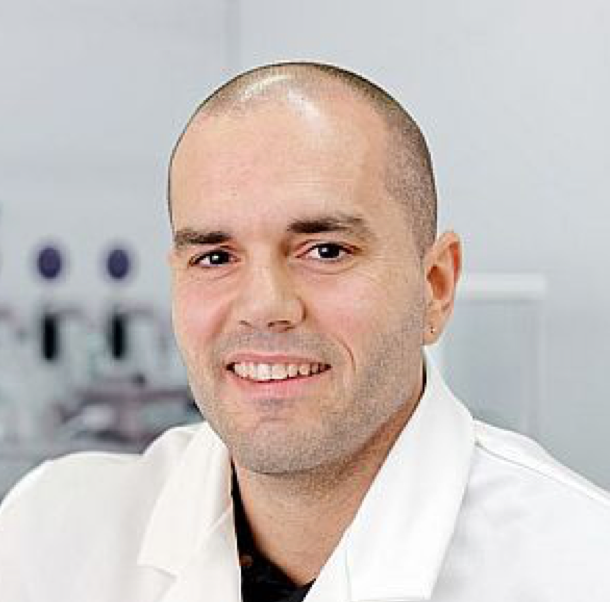
Dr. Rajesh Bera is a Research Fellow at ICFO's Functional Optoelectronic Nanomaterials group specializing in quantum-confined nanostructures. His research examines ultrafast carrier dynamics, excitonic properties, and optoelectronic applications of nanomaterials including quantum dots, nanoplatelets, and hybrid nanostructures. Current investigations focus on intraband transitions in doped nanocrystals, orientation-dependent excitonic behavior in 2D materials, and charge transfer mechanisms in heterostructure devices. Work bridges fundamental photophysics with applications in photodetection, sensing, and energy conversion. Recent publications demonstrate expertise in time-resolved spectroscopy of quantum materials, nanomaterial synthesis via colloidal chemistry, and rational design of optoelectronic devices. Continually develops novel characterization methods to probe ultrafast processes at nanoscale interfaces.
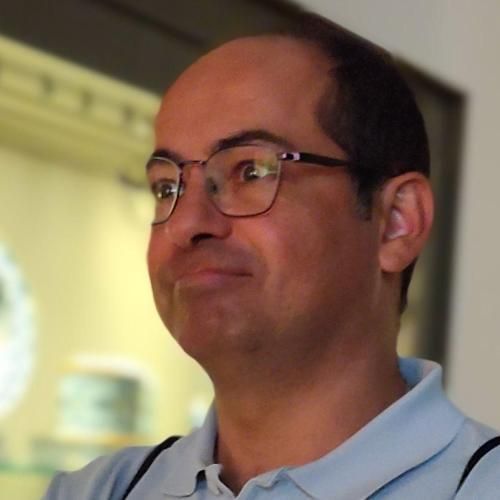
Prof. Josep Puigmartí-Luis is a Research Professor at the University of Barcelona (UB) since 2020, following an ERC Starting Grant in 2015 and an ICREA Research Professorship in 2019. He holds a master’s in Chemistry and Food Engineering from IQS (2003) and a PhD in Materials Science from ICMAB. His research focuses on functional materials synthesis, microfluidic technologies, and self-assembly processes, with applications in nanotechnology and biomedical engineering. Key awards include the Premi Antoni de Martí (2009), St. Jordi Award (2006), and ETH Fellowship (2008). His group, ChemInFlow, develops magnetic microrobots and piezoelectric catalytic systems for targeted therapies and environmental remediation. Educations: PhD in Materials Science, Institut de Ciència de Materials de Barcelona (ICMAB) Master in Chemistry and Food Engineering, Institut Químic de Sarrià (IQS), 2003 Research Interests: Synthesis of functional materials in solution/surfaces, microfluidic technologies, non-equilibrium assemblies, magnetic microrobotics, and piezoelectric catalysis. Articles Trends: Recent work emphasizes microfluidics-driven material synthesis, magnetic microrobot navigation, and piezoelectric catalysis for biomedical and environmental applications. Key themes include nanoreactors, targeted drug delivery, and functional MOF/COF materials. Awards: Premi Antoni de Martí i Franquès de Ciències Químiques (2009) ERC Starting Grant (2015) Rising Star Award (IEEE 3M-NANO 2023) Grants & Labs: ERC Starting Grant (2015), ICREA Professorship (2019). The ChemInFlow Group pioneers interdisciplinary approaches in materials synthesis and robotics, with collaborations spanning Europe and Asia. Labs/Teams: Leads the ChemInFlow Group at UB, focusing on microfluidic technologies and biomedical microrobotics.
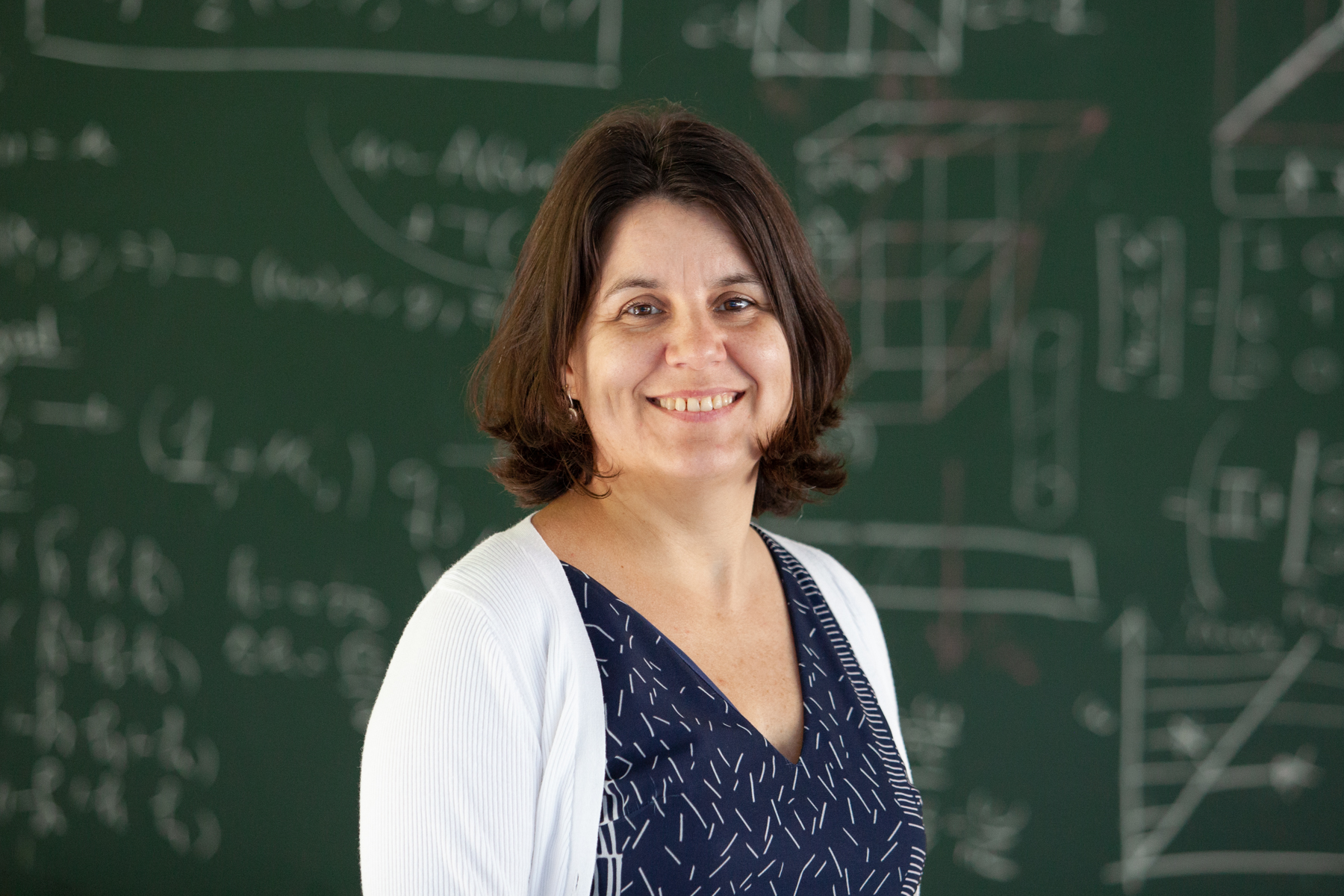
Maria Pau Ginebra Molins is a Professor in the Department of Materials Science and Engineering at the Barcelona East School of Engineering (EEBE), Polytechnic University of Catalonia (UPC). She leads the BBT Research Group focused on Biomaterials, Biomechanics and Tissue Engineering and is affiliated with the Institute of Research and Innovation in Health. Her educational background, while not explicitly detailed in the provided text, reflects extensive expertise in materials science with a specialization in biomaterials, evidenced by her substantial research portfolio spanning over three decades. Professor Ginebra Molins' research spans biomaterials development, bone tissue engineering, and advanced manufacturing techniques. Her work focuses on calcium phosphate-based materials, 3D printing technologies for bone scaffolds, hydrogel systems, and surface modifications of biomaterials to enhance biological responses. She has pioneered approaches in vat photopolymerization, direct ink writing, and the development of stimuli-responsive biomaterials. Analysis of her recent publications (2024-2025) reveals a strong emphasis on translational research with clinical applications. Her work bridges fundamental materials science with practical medical solutions, particularly in bone regeneration, dental implants, and antimicrobial biomaterials. The publications demonstrate expertise in advanced characterization techniques, including spectroscopy and nanoindentation for biomaterial evaluation. Multiple competitive R&D projects including CEX2023-001300-M Maria Maetzu Centre Ciència i Enginyeria Multiescala 17 documented awards and recognitions Leadership in the Inspiring the next generation of innovators project Patents related to 3D-printed bone grafts Professor Ginebra Molins actively supervises doctoral students, with Johansson, L. completing a thesis on 3D-printed biomimetic bone grafts. Her research group (BBT) collaborates extensively with industry and clinical partners to translate laboratory findings into medical applications. She participates in numerous competitive research projects funded by national and European programs, demonstrating the high impact and relevance of her work in the biomaterials field.
Catalan Institute of Nanoscience and Nanotechnology (ICN2)Spain
Arben Merkoçi is an ICREA Research Professor and leader of the NanoBioelectronics and Biosensors Group at the Catalan Institute of Nanoscience and Nanotechnology (ICN2). He holds a PhD in ion-selective electrodes from the University of Tirana (Albania) and has held research positions at institutions including the Polytechnic University of Budapest, University of Ioannina, and New Mexico State University. His research focuses on integrating biological molecules with micro/nanostructures to design advanced biosensors, with applications in healthcare and environmental monitoring. Education: PhD in Analytical Chemistry (University of Tirana, 1992) Roles: Co-Editor-in-Chief of Biosensors and Bioelectronics , member of the Academy of Sciences of Albania Research interests include nanomaterial-based biosensors (e.g., graphene, MXenes, quantum dots), point-of-care diagnostics, and sensor fabrication technologies. He has pioneered innovations in inkjet-printed sensors, wearable devices, and CRISPR-integrated biosensing. His group collaborates globally to advance nanobiosensor applications in clinical and environmental settings. Over 350 publications (H-index 91) and 40 supervised PhD theses highlight his contributions. He co-founded GraphenicaLab (graphene patterning) and PaperDrop (clinical diagnostics). Active in grant acquisition and policy, he shaped Spain’s first nanoscience undergraduate program at the Universitat Autònoma de Barcelona.
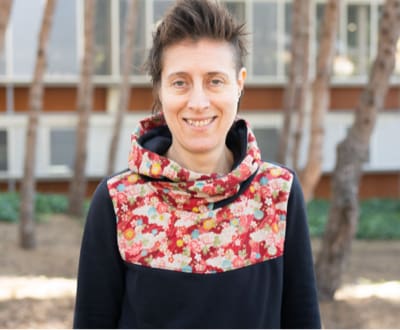
Dr. Elisabet Romero is a Group Leader at the Institute of Chemical Research of Catalonia (ICIQ) , where she leads research in bio-inspired solar energy conversion . Her work focuses on designing chromophore-protein assemblies capable of efficiently converting sunlight into electrochemical energy, mimicking natural photosynthesis. She is supported by prestigious grants, including an ERC Starting Grant and a Marie Curie Fellowship . Education: PhD in Biophysics, VU Amsterdam (2011) Master’s in Chemistry, Institute of Advanced Chemistry of Catalonia BSc in Chemistry (Physical Chemistry specialization), University of Barcelona (2003) Research Interests: Dr. Romero’s research lies at the intersection of physical chemistry, photophysics, and sustainable energy . She investigates the quantum mechanical principles underlying energy and electron transfer in photosynthetic systems, applying this knowledge to engineer artificial systems for solar fuel production. Her group uses ultrafast spectroscopy techniques like transient absorption and 2D electronic spectroscopy to probe femtosecond-scale dynamics. Publications & Research Trends: Her recent publications reflect a strong trend in de novo protein design for artificial light harvesting , excitonic coupling in chromophore systems , and quantum effects in biological energy transfer . Collaborative work with leading institutions highlights her role in advancing synthetic biology and quantum bio-inspired materials. Scientific Awards: European Research Council (ERC) Starting Grant Marie Curie Fellowship Advising and Grants: Dr. Romero mentors a dynamic team of PhD students, postdoctoral researchers, and master’s students . Her group has secured competitive funding from the ERC, Severo Ochoa Programme, and Marie Skłodowska-Curie Actions , supporting innovative research in renewable energy technologies. Labs and Teams: Her laboratory at ICIQ is equipped with state-of-the-art ultrafast spectroscopy facilities. The team fosters a collaborative and inclusive environment, combining rigorous scientific inquiry with social engagement and cultural exchange.
Olga Martin Cadiz is an Associate Professor at the University Carlos III of Madrid, affiliated with the Academic Department of Materials Science and Engineering and Chemical Engineering. She is a member of the Polymers and Composites research group, associated with the Álvaro Alonso Barba Institute of Chemistry and Materials Technology. Her research focuses on polymer composites, nanotechnology, and functional materials for food packaging and industrial applications. Key areas include antibacterial materials, environmental sustainability, and the use of nanomaterials like graphene oxide, carbon nanotubes, and MXene to enhance material properties. Recent publications highlight advancements in active food packaging , metal-polymer hybrids , and catalytic nanomaterials . Her work integrates nanotechnology for biocidal properties, flame retardancy, and catalytic applications. Notable Scientific Awards: Patent: Material compuesto antimicrobiano (2023) Patent: Nanocompuestos de sales dobles de cobre (2021) She supervises research projects on polymer-based antimicrobial materials and has participated in grants from institutions like the Spanish State Research Agency (AEI), Airbus Operations, and the Ministry of Science and Innovation.
Katherine Villa is a Group Leader at the Institute of Chemical Research of Catalonia (ICIQ), where she leads cutting-edge research in light-driven systems for energy, health, and environmental applications. Her work bridges chemistry, materials science, and nanotechnology, focusing on nanostructured photocatalysts and self-propelled micro/nanorobots. PhD in Chemistry from Autonomous University of Barcelona Former senior scientist at Center for Advanced Functional Nanorobots, Prague Current research group leader at ICIQ, Tarragona, Spain Her research interests center on photocatalysis, nanomaterials, renewable energy, and environmental remediation . She designs nanostructured materials for solar fuel generation and develops photoactive micromotors for water purification and biomedical applications. Her work aligns with EU Sustainable Development Goals, particularly in clean energy and environmental protection. The recent publications highlight a strong trend in functional micro/nanorobots , gas-phase CO2 conversion , and advanced photocatalytic systems . These works span from fundamental charge transport studies to real-world applications in pollution removal and green hydrogen production. Scientific awards and honors include: ERC Starting Grant (2022) BBVA Leonardo Grant in Basic Sciences (2023) RSEQ Young Investigator Award – Group Leader (2023) Member, Young Academy of Spain (2023) BIST Mother of Science Award (2021) Member, Early Career Editorial Board, Applied Catalysis B She actively mentors a diverse team of PhD and master's students , and her group receives substantial funding from the European Research Council (ERC) , Horizon Europe , Marie Skłodowska-Curie Actions , and Spanish national programs such as Juan de la Cierva and FPI . She is also involved in outreach, training workshops for grant applications, and public science communication. Her research group operates within a collaborative ecosystem at ICIQ, leveraging advanced scientific core facilities for material characterization, synthesis, and analysis. Projects like PhotoSwim , TherMotors , and PhotoClean reflect the interdisciplinary and innovative nature of her lab.
Gonzalo Barluenga Badiola is a Professor at the Department of Architecture within the School of Architecture at the University of Alcalá. His research focuses on advanced construction materials, including 3D-printable mortars, self-healing concrete, phase change materials (PCM), and nanomaterials for sustainable architecture. He leads the 'Promarq' research group, specializing in architectural projects and building materials. He holds a Ph.D. from the Universidad Politécnica de Madrid (2002), with a thesis on joint systems in facade construction. His research interests emphasize material innovation for energy efficiency, structural health monitoring, and environmental adaptation. Key areas include bio-based composites, thermal/acoustic mortar properties, and the integration of nanotechnology into construction materials. Recent work explores post-fire self-healing mechanisms, PCM-enhanced mortars, and additive manufacturing applications. His publications (2023–2025) highlight advancements in 3D-printed cement-lime mortars, nano-modified self-compacting concretes, and fiber-reinforced composites. He investigates rheological properties of materials at early stages and their structural performance. No scientific awards are explicitly mentioned, but his work is widely cited in sustainable construction and materials science. Grants and collaborations are inferred from his research output, though specific funding details are not provided here. His lab, 'Promarq,' likely focuses on experimental and numerical analysis of building materials. No student advising records are listed in the provided data.
Prof. Valerio Pruneri is an ICREA Professor and Group Leader at the Institute of Photonic Sciences (ICFO), holding the Corning Inc. Chair in Optoelectronics. He leads a research group focused on quantum optics, nanophotonics, and biomedical imaging. His academic background includes a PhD in Laser Physics from the University of Southampton (UK). Research interests span quantum communication technologies, plasmonic sensors, and nanomaterials for optical applications. Recent advancements include work on quantum key distribution systems, graphene-based devices, and super-sensitive phase imaging techniques. Articles highlight innovations in quantum-enhanced imaging, integrated photonic circuits, and hyperbolic metamaterials. His team collaborates on EU projects like NANO-GLASS ITN and FLIGHT, with a strong emphasis on translational research. Over 50 students and researchers are advised, many funded by national and international grants (e.g., Agencia Estatal de Investigación, CELLEX Foundation). Key lab facilities include state-of-the-art cleanrooms and optical characterization tools.
Ignacio Insua López is a Ramón y Cajal researcher at the University of Santiago de Compostela (Spain), affiliated with the Department of Pharmacology, Pharmacy and Pharmaceutical Technology within the Faculty of Pharmacy. He leads research in the ID-FARMA group, focusing on drug delivery systems and supramolecular peptide nanomaterials. His work is conducted at the Research Center in Biological Chemistry and Molecular Materials (CIQUS) and the Strategic Grouping in Materials (AEMAT). Dr. Insua López holds a PhD from the University of Birmingham (UK), awarded in 2017 for his thesis on polyion complex nanoparticles for antimicrobial delivery. His research interests span peptide-based nanomaterials, self-assembly processes, and biomimetic systems, with applications in antimicrobial materials and drug delivery. His lab (insualab.com) explores supramolecular chemistry, coacervates, and functional nanostructures. His recent publications highlight advancements in peptide amphiphile design, fluorescent nanoparticles, and biomaterials with environmental responsiveness. Collaborations include studies on fungal symbionts and enzyme-responsive drug carriers. Despite no explicit awards listed, his prolific output reflects recognition in supramolecular and pharmaceutical research.
María Belén Montero Rodríguez is a Professor in the Department of Physics and Earth Sciences at the Faculty of Sciences, University of A Coruña (UDC), Spain. Her work integrates applied physics with advanced polymer materials, focusing on sustainability, recycling, and functional applications in food packaging and engineering. She teaches across diverse programs including Nanoscience, Textile Technology, Industrial Design, and Environmental Management. Her research interests center on sustainable polymer systems , including biopolymers, mechanical recycling, waste valorization, rheology, nanocomposites, hybrid polymers (especially epoxy and POSS), fracture mechanics, and active packaging for food preservation. She is a key member of the Grupo de Polímeros , contributing to both fundamental and applied research. The recent publications reflect a strong trend in green materials science , with emphasis on biodegradable composites, microencapsulation of bioactive compounds, recycling of polymers, and development of hybrid nanomaterials. Her work bridges polymer chemistry, materials engineering, and environmental sustainability, often targeting industrial applications in packaging, electronics, and construction. Scientific Awards: No awards explicitly mentioned in the provided text. She actively supervises final-year and master's students, with thesis topics focusing on biopolymers, active packaging, and nanocomposite development. She participates in multiple funded research projects from national (AEI), regional (Xunta de Galicia), and European (European Commission) agencies, indicating sustained grant support. Her collaborations span institutions in Spain and internationally, often with researchers such as Luis Barral, Maite Rico, and Rebeca Bouza. She is involved in various research groups and conferences, contributing to the broader polymer science community. Laboratories and Research Teams: She is a core member of the Grupo de Polímeros at UDC, Ferrol campus, where experimental work on polymer synthesis, processing, and characterization is conducted. The group focuses on applied polymer research with industrial and environmental relevance.
Prof. Fabienne Barroso Bujans is an Ikerbasque Research Professor at the Donostia International Physics Center (DIPC) and the Materials Physics Center (CFM) in San Sebastián, Spain. Her research group focuses on topological polymers, cyclic polymer synthesis, and their applications in nanodevices and graphene-based hybrid materials. She leads a multidisciplinary team exploring polymer confinement, functionalization, and biomedical applications. Her work emphasizes the synthesis of cyclic polymers using novel methodologies like zwitterionic ring-opening polymerization (ZROP) with B(C6F5)3 catalysts. Key areas include understanding polymer dynamics under confinement, developing luminescent polymer-ruthenium complexes, and creating nanomaterials for energy and biomedical uses. She has supervised numerous students, including PhD candidates and visiting researchers supported by grants like 'Woman for Africa.' Recent research highlights include the 2024 study on glycidol polymerization kinetics and the 2022 work on macrocyclic polymer applications. Her group has pioneered methods to isolate and characterize cyclic polymers using UPLC-MS/MS and dielectric spectroscopy. She actively recruits interns and postdocs, emphasizing organic chemistry and polymer science expertise. Founded research group in 2016 Collaborations with international institutions (e.g., Nnamdi Azikiwe University, Beni-Suef University) Key facilities: DIPC labs in Donostia
Dr. Paul Pistor is an Associate Professor at the Universidad Pablo de Olavide , affiliated with the Department of Physical, Chemical and Natural Systems and the Center for Nanoscience and Sustainable Technologies (CNATS) . His research focuses on the physics and materials science of solar cells, particularly perovskite and kesterite thin films. Research areas include Photovoltaic materials engineering Thin film stability and degradation Crystallography of photovoltaic compounds Advanced characterization techniques Email: ppis@upo.es
Prof. J.R. Galán-Mascarós leads the research group at ICIQ, focusing on sustainable materials and electrocatalysis for energy and chemical transformations. His work addresses decarbonization challenges across microscopic reactivity and engineering solutions for device implementation. Research interests include developing advanced materials for energy storage (e.g., artificial leaf systems), molecular memory devices, and chiral-functionalized catalysts. His team’s multidisciplinary approach combines materials science, electrochemistry, and chemical engineering. Key contributions include high-efficiency artificial leaf devices and molecular memory systems. Current projects involve CO₂ conversion technologies and magnetic-field-enhanced catalysis. Funding includes major grants like INHYTECH (metal nitrides applications) and BREATH-CO₂ (carbon mitigation strategies). The group actively collaborates with institutions like the University of Rovira i Virgili and industry partners. Prof. Galán-Mascarós oversees a diverse team of PhD students and visiting researchers, emphasizing innovation and interdisciplinary training.
Cristina García Pérez is a Researcher (PhD Student) at IMDEA Nanociencia, affiliated with the Quantum Devices and Photonics Group. Her work focuses on advancing quantum technologies and photonics applications within nanoscale systems. Research Interests: Her primary areas include quantum device development, photonics engineering, and nanomaterial characterization. She explores interdisciplinary topics at the intersection of quantum physics and nanotechnology. Labs/Teams: Active member of the Quantum Devices and Photonics Group, leveraging IMDEA’s advanced nanofabrication and characterization facilities.