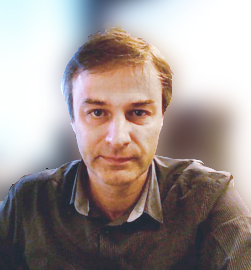
Dr. rer. nat. Stefan Lankes is an academic researcher at the Chair of Automation of Complex Power Systems, RWTH Aachen University's Faculty of Electrical Engineering and Information Technology. His work focuses on operating systems, high-performance computing (HPC), cloud computing, and lightweight virtualization techniques for embedded and real-time systems. Stefan holds a PhD in Electrical Engineering (2003) for his dissertation on real-time distributed platforms. His career spans roles from Scientific Assistant (1998-2004) to Academic Director (since 2019), with key contributions to HPC infrastructure and simulation environments. Research highlights include Rust-based OS development ( HermitCore unikernel ), GPU virtualization in distributed systems, and energy-efficient embedded computing paradigms. He pioneered the FlippedOS digital teaching platform using virtual workstations for operating systems education. Scientific awards include the 2016 Digital Teaching Fellowship and the 2021 RWTH Lecturer distinction. His publications cover topics from NUMA memory management to real-time CORBA protocols, with recent works addressing unikernel security and CUDA virtualization. Stefan leads simulation infrastructure and HPC virtualization projects, with affiliations to the E.ON Energy Research Center and involvement in European workshops like Euro-Par. His work bridges system software innovation with practical applications in energy systems and supercomputing.
Mats Brorsson is a Professor at the Division of Software and Computer Systems , KTH Royal Institute of Technology. His research spans multiple areas of computer architecture and parallel computing, with a focus on system software, energy-aware architectures, and performance debugging tools. He is actively involved in projects like the PaPP ARTEMIS collaboration and coordinates the KTH-SICS Scalable Computing Systems initiative. Research Interests : Mats Brorsson's work primarily addresses parallel computing , task-based programming models (e.g., OpenMP), and energy-efficient computer architectures . He has made significant contributions to NUMA system optimization , work-stealing schedulers , and runtime systems for high-performance computing. Professional Activities : Mats Brorsson serves as coordinator for the PaPP ARTEMIS project and is a member of the KTH-SICS Collaboration in Scalable Computing Systems. His publications reflect deep engagement with task scheduling , cache coherence protocols , and adaptive resource management for parallel systems.
Hans-Wolfgang Loidl is an Associate Professor at the School of Mathematical and Computer Sciences, Heriot-Watt University, Edinburgh. His primary research areas include functional programming, parallel computation, program analysis, symbolic computation, and high-performance machine learning with applications in embedded systems, FinTech, and health informatics. He leads the dependable systems group and serves as Senior Programme Director for Computer Science, chairing the Undergraduate Board of Studies and leading the 2025 Academic Review. Member of dependable systems group Coordinated SICSA MultiCore Challenge Hosted 2nd International Summer School on Advances in Programming Languages in 2014 He designs and implements programming languages for easy-to-use parallelism (Glasgow Parallel Haskell, Glasgow Distributed Haskell, mobile Haskell) and focuses on formal guarantees for resource bounds. Recent expansions include computer security (Secrious project EP/T017511/1) via serious games, high-performance machine learning for FinTech (BA grant + industry PhD), and Brain-Computer Interfaces (EPSRC proposal). His research output spans 1999–2025, including 64 peer-reviewed publications and 5 datasets. Notable works include articles on parallel Haskell dialects (PAEAN), NUMA performance analysis, unikernel benchmarking, and playful learning exercises for security education. He offers PhD projects in functional programming, parallel programming, and high-performance machine learning applications. His teaching vision emphasizes strategic focus in software engineering education, with courses on industrial programming, hardware-software interfaces, and parallel/distributed technology.
Juan Diego Torres García is a postdoctoral researcher at KU Leuven's Numerical Analysis and Applied Mathematics (NUMA) unit, specializing in control theory and time-delay systems. His work focuses on delay-based controllers and stability analysis of dynamical systems. PhD in Control and Systems Science, University of Paris-Saclay PhD in Electrical Engineering, Autonomous University of San Luis Potosí (UASLP) MSc in Electrical Engineering, UASLP BSc in Electronics Engineering, UASLP General Engineering, École Centrale de Lyon (exchange) His research spans the design of low-order controllers for time-delay systems, addressing stability challenges and singularities in implementation. Publications highlight applications in PD-controller delay-difference approximations, spectral abscissa optimization for non-minimum phase systems, and switched delay systems analysis. Scientific contributions include: 2024: Stability analysis for linear systems with rapidly varying delays (Automatica) 2024: Delay-difference approximations of PD-controllers (IJRNC) 2024: Stabilization of non-minimum phase systems via PI controllers (IEEE Access) 2023: Derivative action implementation via delay-difference approximations (ECC) Torres García's work combines theoretical analysis with practical applications in control engineering, emphasizing robustness and performance in systems with inherent delays.
Prof. Dr. Alfons Kemper is a Full Professor of Computer Science at Technische Universität München (TUM), leading the Chair of Database Systems (Computer Science III) within the School of Computation, Information and Technology. He has held academic roles since 1984, including Dean of the Faculty of Computer Science at TUM (2006–2010) and Head of the Department of Computer Science at TUM since 2022. His research focuses on optimizing database systems for distributed and main-memory environments, with contributions to query optimization, transaction management, and hybrid OLTP/OLAP systems. Education: M.Sc. (1981), Ph.D. (1984) from USC Los Angeles; Habilitation (1991) from Karlsruhe Institute of Technology. Research Interests: Main-memory database systems, distributed database architectures, query optimization techniques, and hardware-aware database designs. His work emphasizes leveraging modern hardware (e.g., HTM) and addressing data explosion challenges in both enterprise and scientific applications. Awards: ACM Fellow (2022), ICDE Ten-Year Influential Paper Award (2021), Fellow of GI (2016). Major publications include the seminal textbook Database Systems: An Introduction (10th ed., 2016) and foundational work on HyPer, a hybrid main-memory database system. Leadership: Organized VLDB 2017 in Munich, served as PC co-chair for ICDE 2017. Active in academic governance, including roles at the Free University of Bozen-Bolzano and TUM's Bavarian Elite Master Program in Software Engineering.
Walid G. Aref is a Professor at Purdue University, West Lafayette, USA, specializing in database systems, spatial data processing, and big data technologies. His work focuses on adaptive indexing, LSM trees, and graph data systems. 2025: Research on skiplists, GTX graph systems, and BMTree indexing 2024: Contributions to trajectory indexing and HTAP-optimized data systems 2023: Editorial roles in ACM Transactions on Spatial Algorithms and Systems His research spans scalable spatial-keyword query processing, distributed streaming systems, and hardware-aware database optimization. Notable collaborations include Ahmed R. Mahmood and Mourad Ouzzani. Recent publications highlight trends in machine learning for indexing , NUMA-aware optimization , and multi-dimensional data structures . He has no listed scientific awards in this dataset. Walid actively contributes to transactional graph systems , load balancing , and spatiotemporal data management , with a 2021 IEEE Transactions paper on attack-resilient load balancing.
Prof. Gael Thomas is a Professor at Telecom SudParis, focusing on distributed systems, operating systems, and high-performance computing. His work emphasizes virtualization, concurrency control, and secure execution environments. He has contributed extensively to projects like VMKit, I-JVM, and J-NVM, addressing challenges in garbage collection, system scalability, and trusted computing. His research interests include: Virtualization techniques for improved system isolation Optimizing garbage collectors for multicore architectures Trusted execution environments using SGX and HTM Performance analysis of MPI/OpenMP applications Notable contributions: Developed PALLAS trace format for HPC analysis (2025) Created NVCache for NVMM-based I/O optimization (2021) Pioneered secure code partitioning techniques (2023-2024) His work has been presented at top conferences including EuroSys, Middleware, and DSN.
Dr. Eishi Arima is a researcher at the Chair of Computer Architecture and Parallel Systems within the Department of Informatics at the Technical University of Munich (TUM). His work focuses on cutting-edge computer architecture and high-performance computing systems, with particular expertise in power-aware computing, resource management, and heterogeneous systems. He actively contributes to numerous international conferences and collaborative research projects addressing challenges in modern computing infrastructure. Dr. Arima's research spans multiple critical areas in computer architecture including memory and storage systems, performance modeling and optimization, hardware/software codesign, and processor microarchitectures. His work demonstrates particular strength in addressing energy efficiency challenges in high-performance computing environments, with numerous publications on power capping, resource partitioning, and sustainable computing approaches. His research bridges theoretical concepts with practical implementations, often incorporating machine learning techniques to optimize system performance under various constraints. Analysis of Dr. Arima's publication record reveals a strong focus on addressing the energy efficiency challenges in modern computing systems. His work consistently targets the intersection of hardware architecture and system-level resource management, with particular emphasis on heterogeneous computing platforms combining CPUs, GPUs, and emerging memory technologies. Over time, his research has evolved from traditional cache and memory system optimizations toward more holistic approaches incorporating machine learning for resource management in power-constrained environments. Recent publications demonstrate increasing attention to sustainability aspects of computing, reflecting broader industry trends toward greener computing solutions. Dr. Arima has served in various organizational capacities for major international conferences including as Program Committee member for SC, IPDPS, and Cluster conferences, and as Program Co-Chair for ACM CF'20. His journal review activities span multiple prestigious publications including IEEE TPDS and Elsevier FGCS. This extensive service demonstrates his recognition as a respected member of the international computer architecture research community. Dr. Arima has mentored numerous students through bachelor's theses, master's theses, and guided research projects. His students have produced research on topics including reinforcement learning for resource management, job scheduling optimization, memory system improvements, and power-aware computing techniques. Several student projects have resulted in publications at reputable conferences, indicating the high quality of research conducted under his supervision. His mentoring covers both theoretical aspects of computer architecture and practical implementation challenges in real-world systems. Dr. Arima is actively involved in multiple research projects including SEANERGYS (EuroHPC), PlasmaPEPS, OpenCUBE, DaREXA-F, ScalNEXT, PDexa, MUNIQC-ATOMS, BB-KI_Chips, QuaST, and Q-DESSI. These projects address various aspects of high-performance computing, from energy efficiency to quantum computing integration. His work contributes to the development of next-generation computing infrastructure that balances performance requirements with sustainability concerns.
Lucas C. Wilcox is a Professor in the Department of Applied Mathematics at the Naval Postgraduate School. His research focuses on scientific computation, particularly in the numerical solution of partial differential equations with emphasis on wave propagation and uncertainty quantification using high-order methods. He is active in developing scalable algorithms for adaptive mesh refinement and parallel computing.
Brice Goglin is a Researcher at Inria and leads the TADaaM Inria team at the Inria Bordeaux - Sud-Ouest Research Centre. He is affiliated with the Laboratoire Bordelais de Recherche en Informatique (LaBRI) and the University of Bordeaux. His primary research focuses on modeling hierarchical and multicore platforms, I/O in NUMA systems, high-performance communication, and memory management for parallel architectures. University of Bordeaux Inria Bordeaux - Sud-Ouest Research Centre LaBRI (CNRS UMR 5800) Satanas Team Research Interests : His work centers on optimizing hardware locality in high-performance computing (HPC) through tools like hwloc and KNEM . He explores memory migration, cache-aware models, and communication strategies for NUMA and heterogeneous architectures, collaborating with institutions like AMD, Intel, Oak Ridge National Lab, and RWTH Aachen University. Major projects include the H2M ANR-DFG and TEXTAROSSA European initiatives. Scientific Awards : He received the 2024 Inria – Académie des sciences – Dassault Systèmes Innovation Award for his contributions to HPC software. His paper on adaptive MPI multirail tuning won the Best Paper Award at EuroMPI 2010. Advising & Collaborative Work : He supervises PhD students such as Méline Trochon, Charles Goedefroit, and Clément Gavoille. His software projects, including hwloc (which helps systems like Frontier achieve exaflop performance), are widely recognized. He actively participates in program committees for conferences like SuperComputing, EuroMPI, and ISC, and contributes to the Open MPI consortium alongside Intel, Cisco, and AMD.
Abhishek Bhattacharjee is the A. Bartlett Giamatti Professor of Computer Science at Yale University. His work spans computer architecture, operating systems, and brain-computer interfaces (BCIs), with groundbreaking contributions to memory address translation and neurotechnology. He leads a research group developing full-stack systems like HALO and SCALO for brain-machine integration. Education : Ph.D., Princeton University; B.Eng., McGill University His research focuses on: Memory address translation optimizations Brain-computer interface architectures Virtual memory systems Heterogeneous memory management Low-power accelerators for neural interfaces Recent publications emphasize scalable memory systems for BCIs, TLB behavior analysis, and fiduciary AI integration with neurotechnology. His work has been adopted by AMD, NVIDIA, RISC-V, and Linux kernel. Scientific Awards & Honors : ACM SIGARCH Maurice Wilkes Award, 2023 Best Paper Award, ISCA '23 Distinguished Paper Award, ASPLOS '23 NSF CAREER Award, 2013 Yale Dylan Hixon Prize for Teaching, 2025 He has advised students now at NVIDIA, AMD, and Huawei, and teaches courses like Computer Architecture and Systems Programming . His group collaborates with Princeton Neuroscience Institute and industry leaders in AI/memory systems.
Eduard Ayguade Parra is a Full Professor in the Department of Computer Architecture at the Universitat Politècnica de Catalunya (UPC), Faculty of Computer Science of Barcelona (FIB). He is a leading researcher in the UPC PM - Programming Models group and maintains a significant affiliation with the Barcelona Supercomputing Center (BSC-CNS), a premier national supercomputing facility. His primary research interests lie in High-Performance Computing (HPC) , with a deep focus on parallel and distributed architectures , programming models (especially task-based models like OmpSs), multicore and multiprocessor systems , and compilers for high-performance architectures . His work bridges hardware and software to optimize performance for complex computational problems. The trends in his recent publications highlight a sustained and evolving research program. He is actively advancing task-based programming for distributed memory and hybrid systems, exploring FPGA acceleration for key HPC kernels like SpMV, and innovating in memory system design, including active compute memory and hybrid memory object placement. His research also extends into applying AI techniques to hardware reliability and creating high-quality datasets for computer vision evaluation. HiPEAC Paper Award 2024 Professor Ayguade has been instrumental in securing and leading numerous competitive and non-competitive R&D+i projects, often funded by national and European programs. He has advised a significant number of doctoral students, whose theses cover topics such as task-based programming, FPGA acceleration, HPC compilers, and machine learning for systems. His collaborations are extensive, with frequent co-authorship with prominent figures at UPC and BSC-CNS, such as Jesús Labarta and Mateo Valero. His research has led to advancements in runtime systems, compiler technology, and FPGA-based acceleration. He is a core member of the UPC PM - Programming Models research group and his work is deeply integrated with the resources and mission of the Barcelona Supercomputing Center (BSC-CNS), one of Europe's leading institutions in supercomputing.
Pierre Sens is a Professor at Sorbonne University , where he leads the DELYS group (formerly Regal) – a joint research team with Inria Paris. His work focuses on distributed systems and fault tolerance , with applications to cloud computing , dynamic networks , and large-scale data storage . He has served on program committees for major conferences like DISC, ICDCS, and IPDPS, and as General Chair for SBAC and EDCC. PhD in Computer Science (1994) and HDR (2000) from Paris 6 University (UPMC) Advisor to 22 PhD theses since 1999, including recent work on secure DNS architectures and dynamic group maintenance Over 140 publications in journals and conferences, with recent contributions to stream processing, federated learning, and Byzantine fault tolerance His research explores failure detection in asynchronous networks , resilient distributed algorithms , and adaptive resource management in volatile environments. Key themes include causal broadcast , leader election in MANETs , and predictive replication models . He has developed protocols like Stab-FD (cooperative failure detection) and OMAHA (message aggregation for phase-based algorithms), with applications to cloud systems, edge networks, and peer-to-peer infrastructures. His scientific contributions span theoretical work (e.g., weakest failure detectors for Byzantine systems) and practical implementations (e.g., Pastis file system for peer-to-peer networks). He emphasizes dynamic adaptation in mobile and heterogeneous systems, addressing challenges in distributed mutual exclusion , NUMA virtualization , and video streaming optimization . Collaborations with teams in France, Brazil, and India further highlight his international impact.
Christos Kotselidis is an Associate Professor at the University of Manchester's School of Computer Science and serves as Chief Engineer at Pierer Innovation (previously mentioned as KTM Innovation). He leads the TornadoVM project, a groundbreaking Java Virtual Machine for heterogeneous hardware acceleration. His work bridges academia and industry, focusing on hardware/software co-design for virtual machines and embedded systems. His research spans chip design, micro-architecture, compilers, virtual machines, and garbage collection. Dr. Kotselidis has pioneered work in heterogeneous computing, particularly in accelerating Java applications on GPUs, FPGAs, and RISC-V architectures. His team's recent development of GPULlama3.java demonstrates the practical application of his research in bringing LLM inference to pure Java with GPU acceleration. His publications show a consistent focus on bridging hardware capabilities with managed runtime systems. The research trajectory reveals increasing sophistication in handling memory hierarchies, parallelism, and cross-architecture execution. His work has significant implications for high-performance computing, AI acceleration, and sustainable computing practices. Dr. Kotselidis actively contributes to the academic community as a program committee member for conferences like ISMM and as an organizer for workshops including VMIL and MoreVMs. He's also involved in EU-funded projects like AERO and DARE, which focus on European processor initiatives and software ecosystems. As project lead for TornadoVM, he mentors a research team at Manchester including Michalis Papadimitriou, Mary Xekalaki, and Thanos Stratikopoulos. His lab (Beehive Lab) develops open-source tools that are widely used in both academic and industrial settings for heterogeneous computing.
Numa Dancause is a Professor in the Department of Neuroscience at the Université de Montréal, affiliated with the Faculty of Medicine. His research focuses on understanding post-stroke motor recovery, cortical plasticity, and the development of neuroprosthetic technologies. He leads multiple research initiatives, including the CIRCA (Interdisciplinary Research Center on the Brain and Learning) and collaborates on projects funded by agencies such as the Canadian Institutes of Health Research (CIHR) and the Natural Sciences and Engineering Research Council (NSERC). Education details are not explicitly provided, but his academic trajectory is evident through his extensive publication record and leadership in neuroscience. His research emphasizes the role of cortical reorganization in motor recovery, particularly the contribution of contralesional and ipsilesional hemispheres following ischemic lesions. He has supervised numerous graduate students, including Ian Moreau-Debord and Boris Touvykine, whose theses address topics like cortical interactions and neuroprosthetic interventions. Key research themes include the use of transcranial magnetic stimulation (TMS), functional ultrasound imaging, and Bayesian optimization for personalized neurostimulation protocols. His work bridges basic neuroscience with clinical applications, aiming to improve stroke rehabilitation through advanced technologies. Notable grants include leadership roles in the UNIQUE initiative (Neurosciences and Artificial Intelligence Québec consortium), CanStim (Canadian Neurostimulation Platform), and infrastructure projects for neurophysiological research facilities. Collaborations span institutions like the CRIR (Rehabilitation Research Institute) and involve interdisciplinary teams in both academia and industry. Labs and teams include the CIRCA and the Dancause Lab, focused on motor system recovery post-stroke. Future work emphasizes adaptive neuroprosthetics, AI-driven stimulation protocols, and translational research to accelerate clinical applications.





.jpg)