Junpeng Zhan is an Assistant Professor in the Department of Renewable Energy Engineering at the Inamori School of Engineering, Alfred University. He earned his B.S. and Ph.D. in Electrical Engineering from Zhejiang University (2009, 2014). His research focuses on quantum computing, smart grid technologies, and optimization methods, with a particular interest in solving NP-complete problems using hybrid quantum-classical algorithms like the Variational Quantum Search. He has held positions at Brookhaven National Laboratory and the University of Saskatchewan. Education: B.S. (Electrical Engineering, Zhejiang University, 2009), Ph.D. (Electrical Engineering, Zhejiang University, 2014). Research interests include quantum algorithms, machine learning applications in power systems, and renewable energy integration. Current grants include NSF-funded work on variational quantum algorithms for power system simulation and ISO-New England-funded projects on quantum computing for unit commitment. Teaching includes courses like Power System Operation and Python for Power Systems Research. He is an Associate Editor of IET Generation, Transmission & Distribution and has authored over 50 publications.
Jed Yang is an Associate Professor of Mathematics and Computer Science at Bethel University, located in St. Paul, Minnesota. He joined the university in 2018 and is affiliated with the Department of Mathematics & Computer Science within the College of Arts and Sciences. His research focuses on computational complexity, combinatorics, decidability, discrete geometry, and tiling problems. Education: B.S. in Mathematics, California Institute of Technology (2008) Ph.D. in Mathematics, University of California, Los Angeles (UCLA), under advisor Igor Pak (2013) Research Interests: Yang investigates theoretical computer science and discrete mathematics, particularly exploring the boundaries of computationally feasible problems (computational complexity), combinatorial structures, and geometric tiling patterns. His work often intersects graph theory, algorithm design, and formal verification. Teaching: Yang has taught a variety of courses including Introduction to Proofs, Discrete Mathematics, Algorithms and Data Structures, Computability and Complexity, and Programming Languages. Recent courses include MAT 242, COS 341, and COS 100 (Interim 2022). Professional Contributions: His publications span NP-complete problems in planar graphs, undecidability in tiling, and geometric algorithms. He maintains an active research agenda with a focus on interdisciplinary connections between mathematics and computer science.
Ali Skaf is an Associate Professor at CESI LINEACT, affiliated with the Engineering and Numerical Tools Research team. His research focuses on scheduling problems, supply chain resilience, multi-objective optimization, and port logistics. He holds a PhD in Automatics from Belfort Montbéliard University of Technology (2020) and a Master's in Computer Science from the Lebanese-French University (2012). His educational activities span Computer Science, Operational Research, and Mathematics across engineering cycles and preparatory courses. Skaf's work emphasizes port terminal operations, including quay crane scheduling, yard truck coordination, and mixed-integer programming models for container handling. His recent publications (2018–2022) highlight contributions to NP-completeness analysis of scheduling problems and optimization algorithms for maritime logistics. His research integrates exact methods, heuristics, and computational complexity analysis to enhance supply chain efficiency. No scientific awards are explicitly mentioned, though his active publication record reflects ongoing scholarly engagement. His advising and grants details are not documented here, but his team's focus on numerical tools and engineering applications suggests collaborative projects in industrial automation and logistics systems. Labs/Teams: Member of the Engineering and Numerical Tools Research team at CESI LINEACT, focusing on applied operational research and port logistics solutions.
Yoshio Okamoto is a Professor at the Department of Computer and Network Engineering, Graduate School of Informatics and Engineering, at The University of Electro-Communications in Tokyo, Japan. He has held this position since April 2017, after serving as an Associate Professor at the same institution from April 2012 to March 2017. Prior to his appointment at the University of Electro-Communications, he held academic positions at Tokyo Institute of Technology, Japan Advanced Institute of Science and Technology, and Toyohashi University of Technology. His educational background includes: Bachelor of Systems Science from The University of Tokyo (1999) Master of Systems Science from The University of Tokyo (2001) Doctor of Theoretical Science from ETH Zurich (2005) Professor Okamoto's research spans several interconnected areas in theoretical computer science and discrete mathematics. His primary interests include Discrete and Computational Geometry, Graph Algorithms, Combinatorial Optimization and Polyhedral Combinatorics, Discrete Mathematics and Combinatorics, and Game Theory. His work often explores the interplay between these fields, developing theoretical foundations with practical algorithmic implications. He has made significant contributions to understanding the structural properties of geometric and combinatorial objects, as well as designing efficient algorithms for related problems. His recent publications demonstrate a continued focus on fundamental problems in discrete mathematics and theoretical computer science, with increasing applications in quantum computing, fair division, and reconfiguration problems. His work often appears in top-tier journals such as ACM Transactions on Algorithms, Algorithmica, and Theoretical Computer Science, reflecting his standing in the theoretical computer science community. Professor Okamoto has received several prestigious awards recognizing his contributions to the field: IPSJ-CS Outstanding Achievement and Contribution Award (January 2024) Research Award from The Operations Research Society of Japan (September 2020) Best Review Paper Award (with colleagues) from Japan Society for Software and Technology (September 2014) Research Encourage Award from The Operations Research Society of Japan (September 2012) 8th EATCS/LA Presentation Award (February 2010) Editors' Choice 2003 from Discrete Applied Mathematics (September 2004) As an educator, Professor Okamoto has taught numerous courses at The University of Electro-Communications since 2012, including Discrete Mathematics, Graphs and Networks, Discrete Mathematical Engineering, and Foundations of Discrete Optimization. He has served as an editor for multiple prestigious journals including Graphs and Combinatorics (Managing Editor since 2020), Acta Informatica, Journal of Computational Geometry, and Journal of Graph Algorithms and Applications. His extensive service on program committees for major conferences in theoretical computer science demonstrates his active engagement with the research community. Professor Okamoto leads a research laboratory at The University of Electro-Communications, where his team explores fundamental questions in discrete mathematics and theoretical computer science. The lab maintains strong connections with researchers worldwide, as evidenced by his numerous international collaborations. His research has been supported through various channels, including Japan Society for the Promotion of Science grants, and he has served as a reviewer for international funding agencies including the Swiss National Science Foundation and The Netherlands Organization for Scientific Research.
Erik Demaine is a Professor at the Massachusetts Institute of Technology (MIT), holding positions in the Department of Electrical Engineering and Computer Science (EECS) within the School of Engineering. He is also affiliated with the Computer Science and Artificial Intelligence Laboratory (CSAIL) and the Theory of Computation (TOC) group. His research focuses on algorithms, computational geometry, data structures, complexity theory, discrete mathematics, and interdisciplinary areas like biology (protein folding) and computational archaeology. He is renowned for his interdisciplinary work, blending mathematics, computer science, and art. Notable contributions include the Carpenter's Rule Theorem, which proves planar linkages can be straightened without intersection, and foundational work on folding and unfolding problems. His collaborative approaches, including 'supercollaboration,' emphasize open problems and interdisciplinary methods. He has been featured in documentaries such as NOVA's The Origami Revolution and authored influential books like Geometric Folding Algorithms and Games, Puzzles, and Computation . Awards: MacArthur Fellowship (2003) Tetris Master Key Projects: Curved-crease sculptures in MoMA's permanent collection Virtual Glass software for glass design Origami-based computational models Demaine's work bridges academia and art, with notable exhibitions at the Museum of Modern Art (MoMA) and collaborative projects with his father, Martin Demaine. His research often explores playful yet rigorous computational challenges, reflecting his belief in the interplay between theory and creativity.
Maria F. Pacheco is an Associate Professor at the Technology and Management School of the Polytechnic Institute of Bragança. With a Ph.D. from the University of Aveiro, her mathematical research focuses on Graph Theory and Combinatorial Optimization, particularly NP-complete problems involving perfect matchings and Hamiltonian cycles. She leads pedagogical innovation through projects like MathE and imath.pixel-online.org, developing clustering algorithms to analyze student behavior and optimize question difficulty levels. Dr. Pacheco coordinates the STEP project to enhance STEM research capacity and directs initiatives promoting educational inclusion, including the Mentoring Academy Project and Drop-In@IPB 2.0 for student retention. Her interdisciplinary work includes LiDAR-based rehabilitation assessment systems and occupational safety prediction models. She serves on institutional committees for equality and diversity while maintaining research collaborations through CIDMA (University of Aveiro) and CeDRI (IPB).
Wolfgang Mulzer is a Professor in the Department of Computer Science at Freie Universität Berlin, within the Faculty of Mathematics and Computer Science. He leads the Theoretical Computer Science research group (AG Theoretische Informatik) and holds a PhD from Princeton University (2010), advised by Bernard Chazelle. His research focuses on computational geometry, algorithms, and discrete mathematics, with notable contributions to geometric algorithms, data structures, and combinatorial optimization. Education: PhD in Computer Science, Princeton University (2010) Advisor: Bernard Chazelle Research Interests: Mulzer's work spans theoretical computer science with an emphasis on computational geometry. Key areas include geometric algorithms (e.g., Voronoi diagrams, Fréchet distance), dynamic graph algorithms (e.g., disk graphs, connectivity problems), and algorithmic complexity. His research also addresses discrete geometry challenges like Tverberg theorems and geometric intersection graphs. Grants & Labs: Leading the Theoretical Computer Science group at FU Berlin Active in collaborative projects on geometric algorithms and algorithmic foundations Professional Activities: Mulzer has authored or co-authored over 100 peer-reviewed papers, with work appearing in top venues like Discrete & Computational Geometry , SIAM Journal on Computing , and Algorithmica . His research bridges theoretical foundations with practical algorithm design.
Leroy Nicholas Chew is a PostDoc Researcher and FWF Projektassistent at the Vienna University of Technology (TU Wien). He is affiliated with the Department of Algorithms and Complexity within the Faculty of Informatics. His roles include contributing to research projects such as QBFPC (2022–2025), Overcoming Intractability in the Knowledge Compilation Map, and REVEAL-AI (2020–2024). These projects reflect his focus on advancing theoretical computer science and automated reasoning methodologies. While specific educational details are not explicitly provided in the text, Leroy Nicholas Chew holds a PhD, as indicated by his role listing. His current position suggests a strong background in computer science and theoretical foundations, consistent with his research activities. His research interests span several key areas in theoretical computer science, including proof complexity, quantified Boolean formulas (QBF), automated reasoning, and knowledge compilation. He explores the hardness of computational problems in logical frameworks, such as analyzing resolution and CDCL proof systems, developing optimal dual proof systems for answer set programming (ASP), and investigating model counting techniques. His work often bridges foundational theory with practical applications in formal verification and algorithm design. Recent publications (2024) highlight advancements in circuits and proofs, model counting, and ASP-QRAT proof systems. Earlier work (2016–2022) addressed QBF resolution calculi, dependency schemes, and certification challenges. These trends underscore his specialization in formal methods and computational logic. No scientific awards are explicitly mentioned in the provided text. In addition to his research, Chew is involved in multiple funded projects. These include the FWF-supported QBFPC (2022–2025), which examines QBF proofs and certificates, and the REVEAL-AI project (2020–2024), focusing on overcoming intractability in knowledge compilation. While specific grant details beyond project funding are not mentioned, his participation underscores his role in collaborative, grant-funded research initiatives. No formal advisees are listed. Chew is part of the Algorithms and Complexity department at TU Wien, collaborating on projects that emphasize proof systems, formal verification, and algorithmic foundations. His work integrates theoretical insights with practical computational methods.
Johan Hastad is a Full Professor in Computer Science at the Royal Institute of Technology (KTH), where he has been a faculty member since 1986. His research focuses on complexity theory, cryptography, and approximation of NP-hard optimization problems. Prior to KTH, he held an Associate Professor position at the same institution (1988–1992) and completed a postdoctoral fellowship at the Massachusetts Institute of Technology (MIT) in 1986. Ph.D. in Mathematics from MIT (1986) Hastad's work has profoundly influenced theoretical computer science, particularly in foundational areas like computational complexity and cryptographic algorithms. His research on approximating NP-hard optimization problems has addressed critical challenges in algorithm design and hardness of approximation. Scientific Awards: ACM Doctoral Dissertation Award (1986) Chester Carlson's research prize (1990) Gödel Prize (1994, 2011) Invited speaker at the International Congress of Mathematicians (1998) Göran Gustafsson prize in mathematics (1999) Member of the Royal Swedish Academy of Sciences (2001) Plenary speaker at the European Congress of Mathematics (2004) Knuth Prize (2018) for foundational contributions to computer science Hastad has also served on the board of the School of Computer Science and Communication at KTH (2005–2011), demonstrating his leadership in academic governance.
Joonas Ilmavirta is an Associate Professor in the Department of Mathematics and Statistics at the University of Jyväskylä, affiliated with the Faculty of Mathematics and Science. He is part of the Centre of Excellence of Inverse Modelling and Imaging (2018–2025) and contributes to the Inverse Problems research group, focusing on mathematical frameworks for indirect measurements. His work intersects applied and pure mathematics, with applications in geophysics, material science, and astrophysics. Research interests include inverse problems, geometric analysis, and tomography. Key areas are the reconstruction of structures from boundary measurements (e.g., seismic imaging, elasticity tomography), spectral rigidity of manifolds, and quantum computing algorithms for inverse problems on graphs. He explores theoretical foundations and practical implementations of indirect measurement techniques, emphasizing stability, uniqueness, and computational methods. Notable contributions include studies on Finsler geometry, anisotropic elasticity, and low-regularity manifolds. His work addresses challenges in geophysical imaging, such as determining Earth’s internal structure or gas giant compositions using seismic or gravitational data. Collaborative projects involve the FAME Flagship initiative, advancing sensing, imaging, and modeling through inverse problem methodologies. Publications emphasize geometric tomography, ray transforms, and mathematical physics, with a focus on rigorous analysis and interdisciplinary applications. He engages with both theoretical developments and computational tools, bridging pure mathematics with real-world inverse problem solutions.
Laura Sanità is an Associate Professor in the Department of Computing Sciences at Bocconi University, Milan, Italy. Previously, she held positions at TU Eindhoven (2020–2022) and the University of Waterloo, Canada, where she was an Assistant Professor (2012–2017) and later Associate Professor (2017–2020). She earned a Bachelor’s and Master’s in Management Engineering from Università di Roma Tor Vergata (2003–2005), followed by a PhD in Operations Research from Università Sapienza di Roma (2009). Her postdoctoral work (2009–2011) was at EPFL’s Discrete Optimization Group. Her research focuses on Combinatorial Optimization , Approximation Algorithms , Network Design , and Algorithmic Game Theory . Key contributions include advancements in node connectivity augmentation, graph stabilization, and polytope diameter analysis. She has received prestigious awards such as the NWO-VIDI Award (Netherlands), NSERC Discovery Accelerator Supplements, and the Early Researcher Award (Ontario). Laura co-organizes the Bocconi Theory Day (May 2024) and serves on program committees for conferences like SODA, ESA, and IPCO. She is an Associate Editor for Mathematical Programming , Mathematics of Operations Research , and Operations Research Letters . Current advisees include PhD students Sean Kafer, Dylan Hyatt-Denesik, and Lucy Verbeck. Her work bridges theoretical foundations and practical applications, with notable publications in Mathematical Programming , SIAM Journal on Optimization , and Operations Research . Recent projects explore stabilization of capacitated matching games and iterative randomized rounding techniques for combinatorial problems.
Bettina Klinz is an Associate Professor at the Department of Mathematics, Technische Universität Graz (TU Graz), Austria, since March 2000. She holds a Diplom-Ingenieur (M.Sc.) in Technical Mathematics and a Dr. techn. (Ph.D.) from TU Graz, completed in 1989 and 1993 respectively. She obtained her Habilitation in Applied Mathematics in 1999, focusing on well-solvable classes of hard combinatorial optimization problems. Her research interests include combinatorial optimization, network flow problems, graph algorithms, and the design of efficient algorithms. She has supervised numerous diploma/master theses and PhD students, covering topics such as hospital layout optimization, nurse scheduling, and second shortest path problems. Teaching responsibilities include courses like Combinatorial Optimization 1 and 2, and she maintains active course materials. She emphasizes practical skills through problem-solving exercises and exams. Her work is also reflected in her contributions to online resources and academic link lists on mathematical programming and combinatorial optimization.
Selçuk Köse is a Full Professor in the Department of Electrical and Computer Engineering at the University of Rochester. Previously, he held positions at the University of South Florida as an Assistant Professor (2012-2018) and Associate Professor (2018-2019). He earned his B.Sc. from Bilkent University (2006), M.S. and Ph.D. from the University of Rochester (2008 and 2012, respectively). His research focuses on hardware security (side-channel attacks, fault injection, PUFs), on-chip power delivery, cryogenic electronics, graphene nanoribbon transistors, and nature-inspired computing (e.g., Ising machines). He has received prestigious awards including the NSF CAREER Award (2014) and Cisco Research Awards (2015–2017). His recent work emphasizes security in quantum computing interfaces, power delivery networks, and covert channel mitigation. Research funding comes from NSF, DARPA, DoE, and industry partners. He serves as an associate editor for IEEE and Springer journals.
Marc-Antoine Weisser is a researcher with a focus on network optimization, algorithm design, and graph theory. His work spans telecommunications, electrical networks, and computational complexity. He has contributed to studies on inter-domain network hierarchies, optical network optimization, and combinatorial problems such as Steiner trees and bin packing. Weisser's research often involves developing polynomial and approximation algorithms for real-world network challenges. Key research areas: Network topology analysis, algorithmic design for resource allocation, and optimization in electrical/optical networks His publications highlight contributions to congestion avoidance mechanisms, optical ring networks, and inter-domain routing architectures. Weisser collaborates frequently with institutions like the University of ... [university name missing in source text].
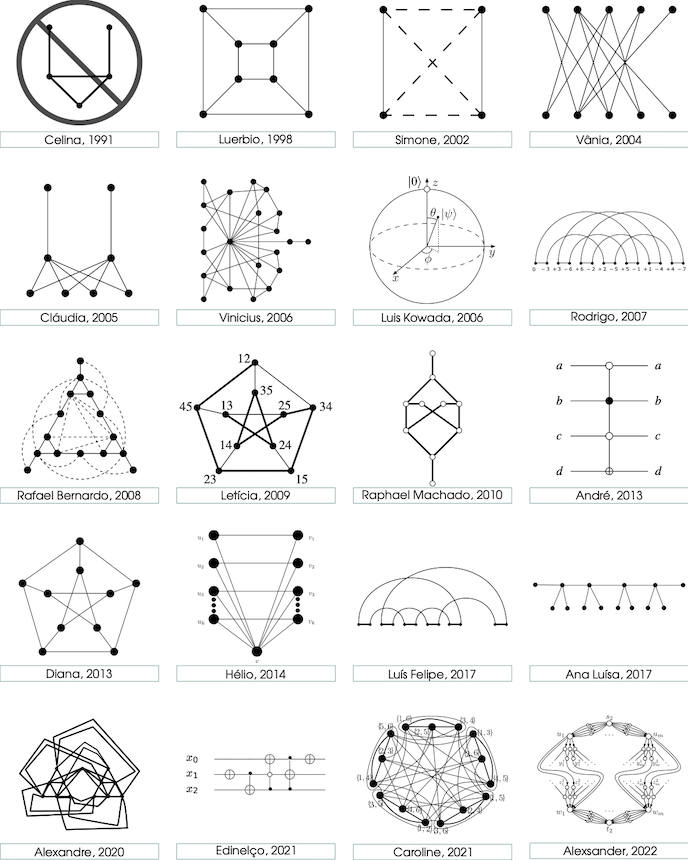
Celina Miraglia Herrera de Figueiredo is a full Professor at the Systems Engineering and Computer Science Program (PESC) of COPPE, the Alberto Luiz Coimbra Institute for Graduate Studies and Research in Engineering at the Federal University of Rio de Janeiro (UFRJ). She holds a PhD in systems and computer engineering from UFRJ and a postdoctoral degree from the University of Waterloo, Canada. She is a CNPq Level 1A Research Fellow and a FAPERJ Cientista do Nosso Estado awardee, and leads the algorithms and combinatorics research group at COPPE/UFRJ. University: Federal University of Rio de Janeiro School: Alberto Luiz Coimbra Institute for Graduate Studies and Research in Engineering Department: Systems Engineering and Computer Science Program Academic Rank: Professor Email: celina@cos.ufrj.br Her research centers on theoretical computer science, with a focus on graph theory, algorithms, computational complexity, and combinatorial optimization. She has made significant contributions to the understanding of graph classes such as perfect graphs and snarks, algorithm design, and computational complexity. Her work is grounded in the Mathematics Subject Classification codes 05-XX (Combinatorics), 68-XX (Computer Science), and 90-XX (Operations Research). The most recent publications indicate a strong trend in analyzing the computational complexity of graph problems (e.g., MaxCut, Steiner Tree, total coloring) on structured graph classes such as interval, permutation, and path graphs. Her work frequently involves proving NP-completeness results, developing parameterized algorithms, and studying graph invariants like pebbling numbers and chromatic numbers. She consistently publishes in high-quality journals such as Discrete Mathematics , Discrete Applied Mathematics , and RAIRO Operations Research . Giulio Massarani Award for Academic Merit (2006) COPPE Fifty Years Award (2013) CNPq Research Fellowship (Level 1A) FAPERJ Cientista do Nosso Estado Member of the Brazilian Academy of Sciences (2023) Celina has advised numerous students, including Raphael Machado, Vinícius de Sá, Alexsander Melo, and Ana Silva, and has secured significant research funding from CNPq and FAPERJ. She is deeply involved in the academic community, serving on the editorial boards of RAIRO Theoretical Informatics and Applications, Bulletin of the Brazilian Mathematical Society, and Matemática Contemporânea. She has also been a key organizer and committee member for major international conferences such as LAGOS, WG, LATIN, and FCT, reflecting her leadership in the fields of algorithms and combinatorics. She coordinates the Center of Excellence in Randomized, Quantum, and Approximative Algorithms and has been a driving force in promoting women in science, serving on the jury of the L'Oréal–UNESCO–ABC Program for Women in Science. Her Erdős number is 2, highlighting her extensive collaborative network in mathematics and computer science.