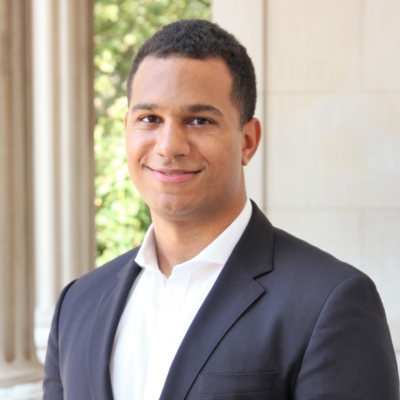
Julian Nyarko is Professor of Law at Stanford Law School and Associate Director of Stanford's Institute for Human-Centered Artificial Intelligence (HAI). He applies computational methods to study contract law, algorithmic fairness, and empirical legal questions. His research develops AI tools for contract analysis and evaluates bias in legal algorithms, with work published in Science Advances, PNAS, and leading law journals. Professor Nyarko teaches Contracts, Learning from Evidence, and policy practicums on algorithmic decision-making. He directs the Law and Policy Lab, where students tackle real-world problems like pretrial detention bias and philanthropic fund management. His courses emphasize empirical methods and computational approaches to legal analysis. Current research includes developing benchmarks for legal reasoning in large language models (LegalBench), analyzing racial bias as a multi-stage problem in criminal justice, and studying contractual evolution in M&A agreements. He leads projects on equitable algorithm design and impact investing. HAI Hoffman-Yee Grant: Data in the Age of Generative AI (2024) Arnold Ventures Grant: Algorithmic Masking in Prosecutorial Decisions (2023) NSF Grant: Privacy in Software Systems (2022)
Brian Patterson is an Associate Professor in the BerbeeWalsh Department of Emergency Medicine at the University of Wisconsin – Madison, with tenure. He holds additional roles as Physician Administrative Director for Clinical AI at UW Health and Medical Informatics Director for Predictive Analytics and Clinical Decision Support. His work focuses on integrating artificial intelligence and predictive analytics into healthcare systems to enhance patient care and operational efficiency. Dr. Patterson collaborates across disciplines, including the Wisconsin School of Business, College of Engineering, and Department of Biostatistics & Medical Informatics. His research interests center on clinical informatics and geriatric emergency medicine, particularly leveraging routine clinical data to improve care for older adults. Key projects include automated risk scoring for fall prevention post-emergency visits and developing AI-driven interventions to reduce hospital readmissions. He leads the Emergency Care Systems Lab, advancing innovations in emergency department workflows and patient outcomes. Education: Undergraduate at Pennsylvania State University; Medical and Graduate Degrees from Northwestern University Feinberg School of Medicine. Administrative Roles: Clinical AI Strategy Development, Predictive Analytics Leadership. Key Awards: Fellow of the American Medical Informatics Association (2025), UW Health Physician Excellence Award (2025). His funded research includes AHRQ grants for fall prevention interventions and NIA support for dementia care initiatives. Dr. Patterson’s publications span AI applications in healthcare, emergency department outcomes, and geriatric care innovations. He actively engages in policy and governance frameworks for clinical AI deployment to ensure equitable and safe implementation.
Prof. Carsten Lanquillon is a Research Professor at Heilbronn University, specializing in Language Technologies and Cognitive Assistance Systems within the Department of Business Informatics. He leads the Center for Industrial AI (iAI), a Carl Zeiss Foundation-funded initiative addressing AI implementation challenges for medium-sized enterprises. His expertise spans Business Intelligence, Data Science, Machine Learning, and Conversational AI with a focus on applying AI in industrial production processes. Key research areas include cognitive assistance systems, anomaly detection, and ethical AI frameworks. His work bridges academia and industry through collaborative projects like the iAI Center, which promotes sustainable AI adoption in regional manufacturing. Research emphasizes practical solutions for AI integration, including secure large language model adaptation, generative AI applications, and hybrid intelligence systems combining human and machine capabilities. Recent efforts explore explainable AI, digital twin integration, and user transparency in industrial contexts. Lanquillon's contributions include process models for data science projects and frameworks for knowledge-grounded NLP systems. He actively publishes on topics ranging from energy-efficient deep learning to interactive quality analysis tools in automotive industries. His research often combines technical innovation with user-centric design principles to ensure practical applicability.
Sandra Carberry is a Professor in the Department of Computer and Information Sciences at the University of Delaware with a joint appointment in Linguistics. Her research integrates artificial intelligence, natural language processing, and user modeling to develop intelligent systems for digital libraries, medical decision support, and educational applications. She leads the NLP/AI laboratory and teaches core AI and data mining courses. Her primary research focuses include: Intelligent Interfaces : Developing systems that recognize user goals and generate tailored responses through advanced user modeling Digital Libraries : Pioneering methods to extract meaning from information graphics using perceptual effort analysis and Bayesian reasoning Medical Informatics : Creating TraumaCASE for generating clinical training scenarios and improving trauma care decision support Educational Systems : Building adaptive medical tutoring systems that dynamically adjust case complexity Dialogue Systems : Advancing transformation-based learning for dialogue act recognition and cooperative response generation Her publication trend (2002-2007) reveals a strategic shift toward information graphics understanding, where she established that 61% of graphics convey unique information not present in text. This work combines cognitive psychology with machine learning to recognize graphic intentions through perceptual effort metrics and communicative signals, significantly advancing digital library capabilities. Key recognitions include: James Chen 2006 Award for Best Paper (UMUAI Journal) Best Paper Award at Diagrams Conference (2006) Springer Best Paper Award at User Modeling Conference (2007) Funded by NSF grant IIS-0534948, her digital libraries project demonstrates strong grant acquisition capability. Her extensive co-authorship with junior researchers indicates active mentorship, though formal student lists aren't published. University service includes departmental committees and professional activities documented in her vita. She directs the NLP/AI laboratory, which maintains active research in natural language processing, artificial intelligence applications, and multimodal information systems, with current work extending graphic understanding to complex visual representations.
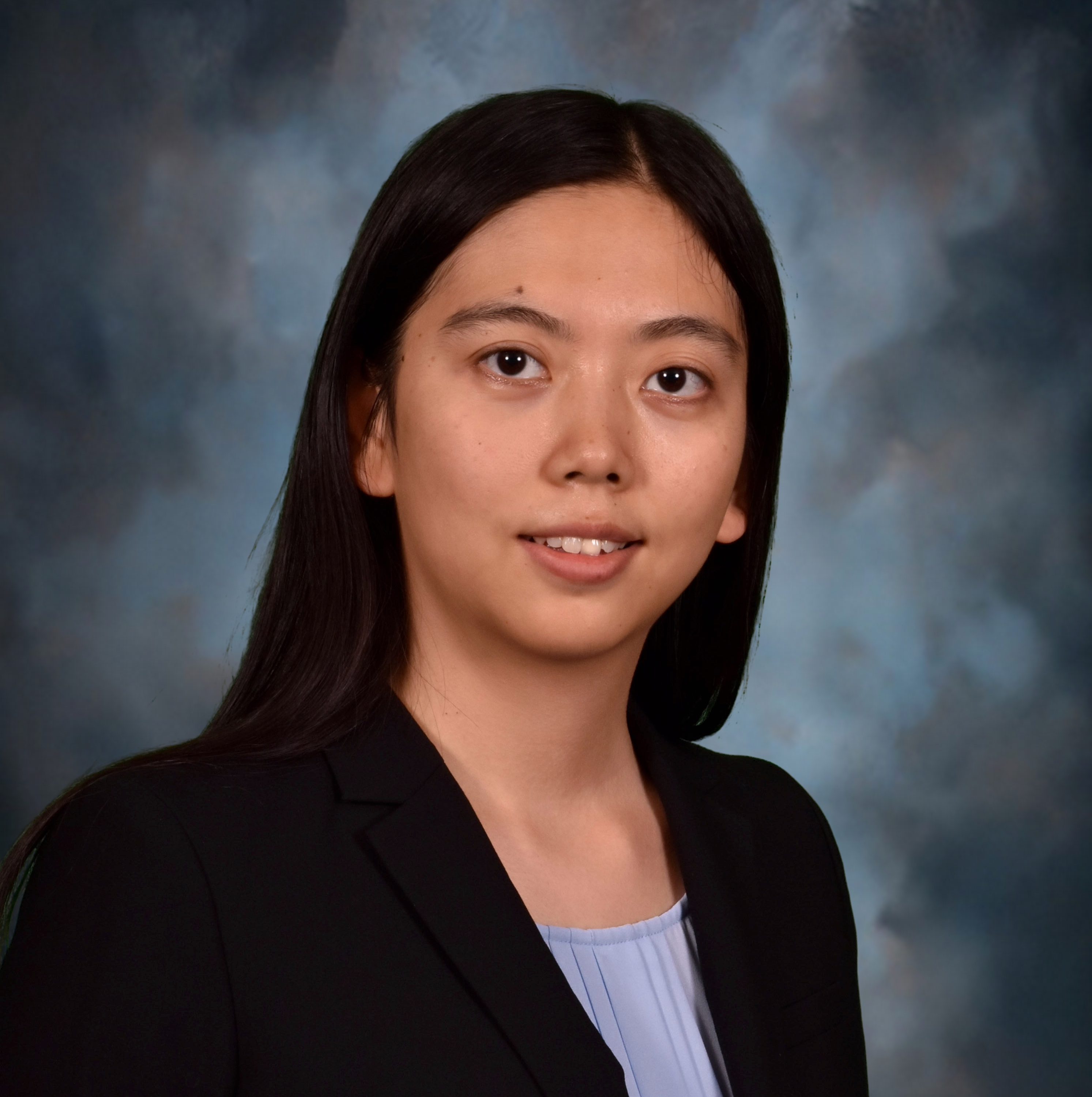
Xuan Wang is an Assistant Professor in the Department of Computer Science at Virginia Tech, affiliated with the Sanghani Center for Artificial Intelligence and Data Analytics. She holds a Ph.D. in Computer Science from the University of Illinois at Urbana-Champaign (UIUC), with additional M.S. degrees in Statistics and Biochemistry from UIUC, and a B.S. in Biological Science from Tsinghua University. Her research focuses on Natural Language Processing (NLP), Data Mining, AI for Sciences, and AI for Healthcare, emphasizing applications in complex reasoning with LLMs, multi-modal science foundation models, and healthcare informatics. Her work has been recognized through awards including the Nvidia Academic Grant (2025), Cisco Research Award (2025), and NSF NAIRR Pilot Award (2024-2025). She has organized workshops at ACL, VL/HCC, and ICDM, and serves on program committees for top conferences like NeurIPS, EMNLP, and KDD. Xuan's research spans scientific text mining (e.g., knowledge extraction from biomedical literature), multi-agent LLM systems for clinical triage, and foundational models for multi-omics data analysis. Her lab actively collaborates with institutions like Children’s National Hospital and the Fralin Biomedical Research Institute, with funding from NSF, CCI, and industry partners. Education: Ph.D. in Computer Science, UIUC (2022) M.S. in Statistics, UIUC (2017) M.S. in Biochemistry, UIUC (2015) B.S. in Biological Science, Tsinghua University (2013) Grants & Awards: NVIDIA Academic Grant (2025) – Small LLM Agent Systems Cisco Research Award (2025) – Complex Reasoning with LLMs NSF NAIRR Pilot (2024-2025) – Multi-omics Analysis Lab & Teams: Wang Lab focuses on AI-driven biomedical research, including single-cell omics analysis, brain signal interpretation, and LLM-based scientific discovery. Collaborations include the Virginia Tech Presidential Postdoctoral Fellowship program and industry initiatives like the Amazon + VT Center for Efficient ML.
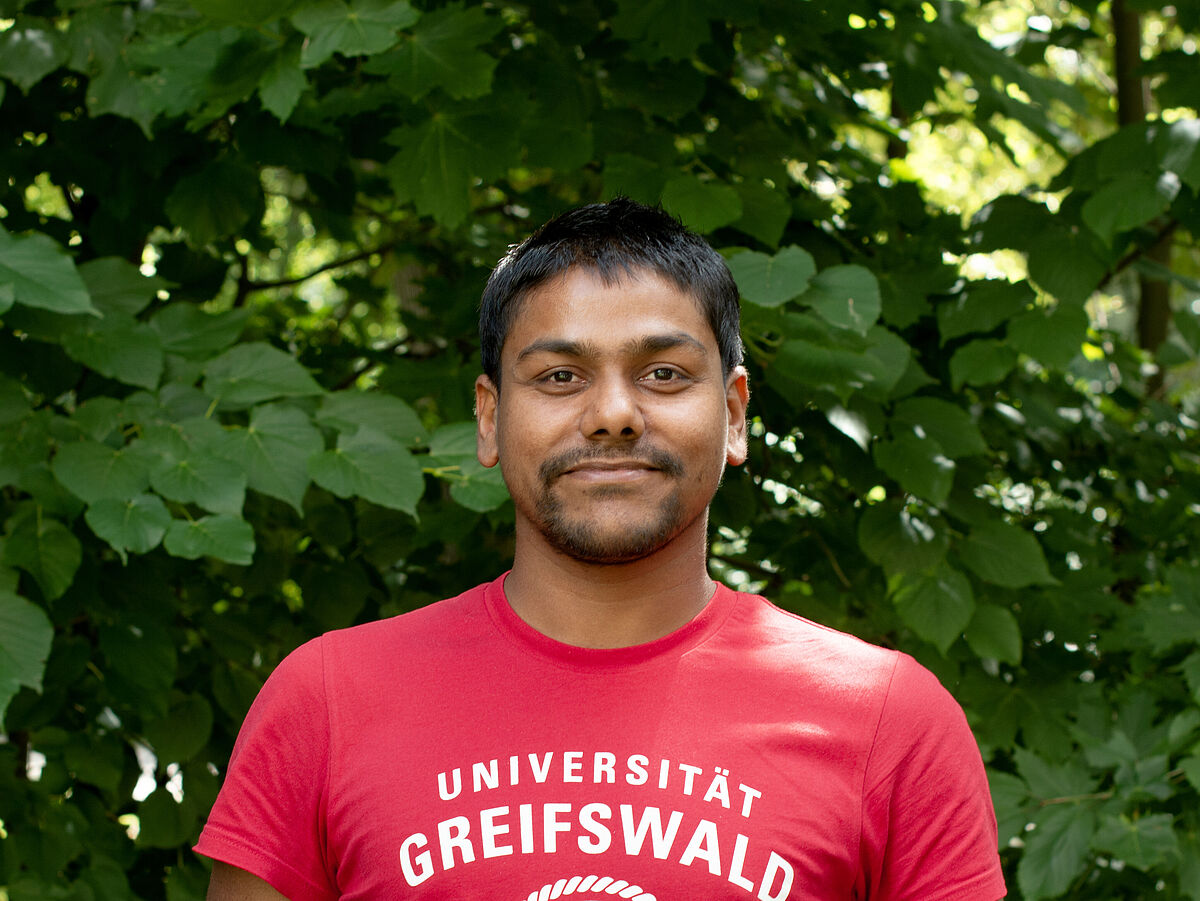
Dipendra Yadav is a scientific researcher and PhD student at the Institute of Data Science, University of Greifswald, Germany, working under Prof. Dr.-Ing Kristina Yordanova since January 2023. His research focuses on natural language processing with expertise in transfer learning, multilinguality, and domain adaptation for low-resource languages, alongside innovative work on symbolic reasoning for explainability in large language models. Yadav holds an M.Sc. in Electrical Engineering from the University of Rostock (2020). Prior to his current role, he worked as a data science student assistant at Market Logic Software in Berlin and completed an NLP internship/Master's thesis at PlanetAI GmbH, where he continued as a software engineer. His research spans critical NLP challenges including cross-lingual transfer for languages like Nepali and Hindi, domain adaptation in resource-constrained environments, and enhancing LLM explainability through symbolic reasoning integration. He also investigates AI safety dimensions such as dangerous capability evaluation and situational awareness in large language models. Recent publications reveal strong trends in low-resource language processing through cross-lingual transfer techniques, domain-specific NLP applications (particularly in dementia research), and safety evaluations of large language models. His work consistently addresses real-world data challenges while advancing methodologies for underrepresented languages. No scientific awards are currently documented. Yadav has not taken formal advising roles for students. His research operates within the Institute of Data Science's framework, which emphasizes interdisciplinary applications in healthcare and language technologies through collaborative projects like ARDUOUS.
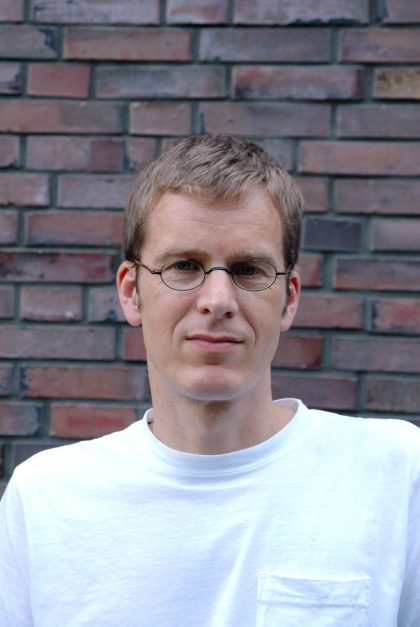
Michael Strube is an Honorary Professor at the Department of Computational Linguistics at Heidelberg University and leads the Natural Language Processing (NLP) Group at HITS (Heidelberg Institute for Theoretical Studies) in Germany. He has been with HITS (previously EML Research and European Media Laboratory) since 2003 and became an Honorary Professor at Heidelberg University in 2010. He is also a Fellow of the Association for Computational Linguistics (2019). Dr. Strube received his PhD from the Computational Linguistics Department at the University of Freiburg in December 1996 under the supervision of Udo Hahn. Between 1997 and 1999, he was a postdoctoral fellow at the Institute for Research in Cognitive Science at the University of Pennsylvania, Philadelphia. Michael Strube's research focuses on semantics and discourse pragmatics, graph-based methods for text representation and analysis, extraction of world knowledge from Wikipedia for computational linguistics, and development of methods to synchronize multilingual content. His work spans coreference resolution, discourse processing, text summarization, entity linking, and natural language generation. He has made significant contributions to coherence modeling, anaphora resolution, and the application of geometric deep learning in NLP. His recent publications demonstrate strong trends in discourse processing, coreference resolution, and the application of geometric approaches to NLP problems. Strube has pioneered work in hyperbolic space for entity typing and graph embeddings, while maintaining his foundational work in discourse and coherence. His research bridges theoretical linguistics with practical NLP applications across multiple languages. Dr. Strube has received several prestigious awards, including: Fellow of the Association for Computational Linguistics (2019) Best Paper Award for "Fine-grained entity typing in hyperbolic space" (2019) Honorable Mention for the IJCAI-JAIR best paper prize 2010 for "Knowledge Derived from Wikipedia for Computing Semantic Relatedness" Professor Strube has advised numerous PhD students who have gone on to successful careers in academia and industry. His current PhD students include Yi Fan, Wei Liu, Haixia Chai, Mehwish Fatima, and Sungho Jeon, working on topics such as discourse structure, discourse relations, coreference resolution, and cross-lingual summarization. His former students include Federico Lopez, Benjamin Heinzerling, Mohsen Mesgar, and Nafise Moosavi, who now hold positions at institutions like Argo AI, RIKEN, Bosch Center for AI, and the University of Sheffield. As group leader of the NLP Group at HITS, Strube oversees a team focused on advancing natural language processing through research in discourse analysis, coreference resolution, text generation, and knowledge extraction. The group has been involved in numerous collaborative projects and has made significant contributions to the field through publications, shared tasks, and community building via workshops and conferences.
Dietrich Klakow is a prominent researcher at Saarland University in Saarbrücken, Germany, with an extensive publication record spanning from 1997 to 2025. His work primarily focuses on natural language processing, speech recognition, and machine learning with significant contributions to multilingual models and African language processing. His research interests span a wide range of topics within computational linguistics and artificial intelligence. Klakow has made substantial contributions to Natural Language Processing , particularly in multilingual contexts and low-resource languages. His work on African language technologies has been particularly impactful, developing resources and models for languages that are often neglected in mainstream NLP research. He has also conducted significant research in speech recognition , transformer models , and computational linguistics , with a focus on practical applications and theoretical foundations. Klakow's recent publications demonstrate a strong focus on large language models, their capabilities, limitations, and applications across diverse linguistic contexts. His work spans both theoretical investigations of model architectures and practical applications addressing real-world challenges in language technology. His collaborative work spans numerous international partnerships, particularly with researchers working on African language technologies and multilingual NLP systems.
Deniz Yuret is a Professor in the Department of Computer Engineering at Koç University , Istanbul, and the founding director of the KUIS AI Center . Previously, he spent 12 years at the MIT AI Lab and co-founded Inquira, Inc. His research focuses on Natural Language Processing and Machine Learning , with significant contributions in dependency parsing , language modeling , grounded language learning , and character-level NLP . He has pioneered frameworks like Knet , a deep learning library in Julia, and AutoGrad.jl for automatic differentiation. Deniz's academic work spans neural architectures for language-robot interaction, transfer learning in low-resource NMT, and context embeddings for grammatical category acquisition. His recent publications emphasize transformer models , multimodal systems , and efficient language modeling . He has supervised multiple graduate students, including Emre Can Açıkgöz (PhD, UIUC), Onur Kuru (M.S. 2016), Saman Zia (M.S. 2016), and Osman Baskaya (M.S. 2015). His projects include the TUBITAK 1001 (2016-2018) and ReGROUND (2015-2018) in collaboration with international institutions.
Dr. Kyle Martin is a Lecturer in the School of Computing, Engineering & Technology at Robert Gordon University (RGU), where he works in the Artificial Intelligence & Reasoning Research Group. He completed his PhD in 2021, after having been hired as a full-time lecturer and researcher in 2019. His academic focus centers on making AI systems more transparent and explainable, with applications across multiple sectors including digital health (with partners Jiva and Walk With Path), fintech (Sticklr), and horizon scanning (Citizen Advice Scotland). Dr. Martin's primary research interests include: Case-Based Reasoning Deep Metric Learning Explainability in AI systems Applied Machine Learning across various domains His recent publications (2023-2025) demonstrate a strong focus on explainable AI, particularly in developing case-based reasoning approaches to enhance the transparency of machine learning systems. He has published extensively on counterfactual explanations, legal question-answering systems, and automated essay grading, with 48 research outputs spanning multiple publication types. His work often bridges theoretical AI concepts with practical applications in real-world domains where understanding AI decision-making is critical. Dr. Martin is actively involved in research funding and supervision: Co-investigator on the iSee project (European consortium) focused on personalized explanation experiences Available for PhD supervision in Case-Based Reasoning, Deep Learning, Explainability, and Applied Machine Learning Program committee member for ICCBR and SGAI conferences Organizer of international workshops on Case-Based Reasoning and Deep Learning As a member of the Artificial Intelligence & Reasoning Research Group at RGU, Dr. Martin contributes to advancing reasoning capabilities in AI systems and developing practical applications of these technologies. His research has resulted in multiple publications in prestigious venues including ECAI, ICCBR, and Knowledge-Based Systems, demonstrating his growing impact in the AI research community.