Pere Pau Vázquez Alcocer is an Associate Professor in the Department of Computer Science at Universitat Politècnica de Catalunya (UPC), affiliated with the ViRVIG research group and the School of Informatics (FIB). With a PhD in Software from UPC (2003), he specializes in Scientific Visualization , Data Visualization , and Virtual Reality applications. His work bridges Computer Graphics with Medical Data Visualization and Molecular Visualization , emphasizing AI applications to visualization . His research spans two decades, focusing on Interactive volume rendering VR-based biomedical analysis Perceptual optimization in visualizations Urban mobility data modeling with recent publications in Computer Graphics Forum , IEEE CG&A , and arXiv on AI-driven visualization frameworks and molecular interaction techniques. His 15 most recent publications (2025-2023) demonstrate trends in AI integration for data visualization, immersive analytics for biomedical applications, and optimization of rendering techniques on mobile and VR platforms, with keywords spanning Computer Science , Neuroscience , and Urban Planning . Awarded the Best PhD thesis (2003) and Best Paper at international conferences, he has supervised 8 PhD students including Pedro Hermosilla (now Assistant Professor at TU Wien) and Jesús Díaz (now Associate Professor at Universitat de Vic). Teaching for over 20 years at UPC across five schools, he currently leads courses in Data Visualization , Scientific Visualization , and Virtual Reality .
Luke Gessler is an Assistant Professor in the Department of Linguistics at Indiana University, with adjunct appointments in Computer Science, Cognitive Science, and Middle Eastern Languages and Cultures. His research bridges computational linguistics and endangered language documentation, focusing on developing tools and methodologies for low-resource natural language processing (NLP). He previously held a postdoctoral position with the NALA Group at the University of Colorado Boulder and earned his Ph.D. in computational linguistics from Georgetown University, where he collaborated with the Corpling Lab and NERT. His primary research interests include: Low-resource NLP Language resource development NLP-capable language documentation systems Multilingual and cross-lingual modeling Efficient training of language models for under-resourced languages His recent publications (2019–2025) show a strong focus on addressing the performance gap between high- and low-resource languages through innovative algorithmic and infrastructural solutions. Key themes include domain adaptation in machine translation, morphological segmentation with translation assistance, multilingual evaluation frameworks (e.g., PrOnto), and the development of shared software infrastructures to integrate documentary linguistics with NLP. His work often involves multilayer annotation, human-in-the-loop systems, and model efficiency improvements such as in MicroBERT. Luke Gessler is also the webmaster of langdoc.net , a discussion forum for language documentation and technology, underscoring his commitment to community engagement and open scholarship. He actively contributes to major NLP venues including ACL, COLING, LREC, and CoNLL. Scientific Contributions and Collaborations: Developed MicroBERT for efficient training of monolingual BERTs in low-resource settings. Co-created Xposition , a multilingual database of adpositional semantics. Contributed to AMALGUM , a balanced, multilayer English web corpus. Active collaborator with researchers such as Amir Zeldes, Nathan Schneider, and Katharina von der Wense. He advises no listed students in the provided data, but his work has clear implications for training and mentoring in interdisciplinary computational linguistics. He has not received any explicitly mentioned scientific awards, but his consistent publication record in top venues reflects significant scholarly impact. His lab or research team is not explicitly named, but his affiliations with the Corpling Lab, NALA Group, and langdoc.net suggest participation in collaborative, community-driven research environments.
Michael Strube is an Honorary Professor at the Department of Computational Linguistics at Heidelberg University and leads the Natural Language Processing (NLP) Group at HITS (Heidelberg Institute for Theoretical Studies) in Germany. He has been with HITS (previously EML Research and European Media Laboratory) since 2003 and became an Honorary Professor at Heidelberg University in 2010. He is also a Fellow of the Association for Computational Linguistics (2019). Dr. Strube received his PhD from the Computational Linguistics Department at the University of Freiburg in December 1996 under the supervision of Udo Hahn. Between 1997 and 1999, he was a postdoctoral fellow at the Institute for Research in Cognitive Science at the University of Pennsylvania, Philadelphia. Michael Strube's research focuses on semantics and discourse pragmatics, graph-based methods for text representation and analysis, extraction of world knowledge from Wikipedia for computational linguistics, and development of methods to synchronize multilingual content. His work spans coreference resolution, discourse processing, text summarization, entity linking, and natural language generation. He has made significant contributions to coherence modeling, anaphora resolution, and the application of geometric deep learning in NLP. His recent publications demonstrate strong trends in discourse processing, coreference resolution, and the application of geometric approaches to NLP problems. Strube has pioneered work in hyperbolic space for entity typing and graph embeddings, while maintaining his foundational work in discourse and coherence. His research bridges theoretical linguistics with practical NLP applications across multiple languages. Dr. Strube has received several prestigious awards, including: Fellow of the Association for Computational Linguistics (2019) Best Paper Award for "Fine-grained entity typing in hyperbolic space" (2019) Honorable Mention for the IJCAI-JAIR best paper prize 2010 for "Knowledge Derived from Wikipedia for Computing Semantic Relatedness" Professor Strube has advised numerous PhD students who have gone on to successful careers in academia and industry. His current PhD students include Yi Fan, Wei Liu, Haixia Chai, Mehwish Fatima, and Sungho Jeon, working on topics such as discourse structure, discourse relations, coreference resolution, and cross-lingual summarization. His former students include Federico Lopez, Benjamin Heinzerling, Mohsen Mesgar, and Nafise Moosavi, who now hold positions at institutions like Argo AI, RIKEN, Bosch Center for AI, and the University of Sheffield. As group leader of the NLP Group at HITS, Strube oversees a team focused on advancing natural language processing through research in discourse analysis, coreference resolution, text generation, and knowledge extraction. The group has been involved in numerous collaborative projects and has made significant contributions to the field through publications, shared tasks, and community building via workshops and conferences.
Benjamin Van Durme is an Associate Professor in the Department of Computer Science at Johns Hopkins University's Whiting School of Engineering, with secondary appointments as Senior Research Scientist at the Human Language Technology Center of Excellence (HLTCOE) and affiliation with the Center for Language and Speech Processing (CLSP). He leads Natural Language Understanding research at HLTCOE and serves as research lead at Microsoft Semantic Machines. His educational background includes B.S. and B.A. (2001), M.S. in Language Technologies (2004), M.S. in Computer Science (2006), and Ph.D. (2009), all from the University of Rochester. Van Durme's research spans multiple facets of artificial intelligence with primary focus on natural language processing, computational semantics, and information seeking systems. His work addresses fundamental challenges in machine learning, reasoning agents, multimodal understanding, factuality, and legal reasoning. Current projects include Decomp.io for decompositional semantics, IterX for structured information extraction, Nellie and Treewise for neuro-symbolic reasoning, and MultiVENT for event detection in videos. Analysis of his recent publications reveals a strong emphasis on improving large language models through context compression, safety alignment, and multilingual capabilities. His work bridges theoretical advances in NLP with practical applications in legal reasoning, scientific communication, and information retrieval systems. Van Durme actively collaborates across multiple institutions and leads research efforts that address critical challenges in AI safety, factuality verification, and efficient reasoning systems. His lab produces work that spans from foundational ML methods to cognitive science applications, with particular attention to creating models that can extract structured information, make logical inferences, and handle uncertainty in multilingual contexts.
Matthew R. Gormley is an Associate Professor at Carnegie Mellon University , affiliated with the School of Computer Science and the Machine Learning Department . He also serves as an affiliate of the Language Technologies Institute and directs the ML Minor/Concentration program. Research interests include Natural language processing for dialogue systems Summarization (multi-document and long-document) NLP applied to medical text analysis Low-resource language and domain adaptation Syntactic and semantic parsing Autoregressive and approximation-aware machine learning Computationally efficient models His work spans both theoretical and applied domains, focusing on unsupervised learning and multilinguality. Recent publications highlight advancements in long-context modeling, data contamination taxonomies, and medical summarization. His collaborations with prominent researchers like Graham Neubig, Jason Eisner, and Thomas Schaaf demonstrate his interdisciplinary approach. Scientific contributions include Developing novel training methods for conditional random fields Advancing neural finite-state transducers Building concrete NLP pipelines for Chinese Creating annotated datasets like Annotated Gigaword Teaching roles at CMU include co-instructing 10-301/10-601 Introduction to Machine Learning and 10-423/10-623 Generative AI . He has mentored numerous PhD and Master's students in areas such as multilingual NLP, medical text analysis, and structured data processing.
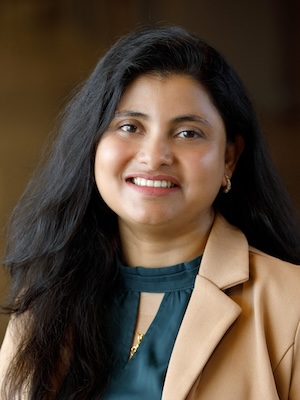
Jinie Pak serves as a Clinical Associate Professor in the Department of Computer and Information Sciences within Towson University's Fisher College of Science and Mathematics. Her academic credentials include a Ph.D. (2014) and M.S. (2007) in Information Systems from the University of Maryland Baltimore County, with current contact through office YR-468 and email jpak@towson.edu. Education: Ph.D., Information Systems, College of Engineering and Information Technology, University of Maryland Baltimore County, 2014 M.S., Information Systems, College of Engineering and Information Technology, University of Maryland Baltimore County, 2007 Her research program integrates computer science with psychological and sociological frameworks to advance deception detection in computer-mediated communication (CMC). Specializing in Intelligence and Security Informatics, she investigates both social structural behaviors (network patterns, linguistic cues) and psychophysiological indicators (gaze behavior, eye movements) through natural language processing and machine learning. Additional expertise spans Computational Linguistics, Human-Computer Interaction, and Computer Supported Cooperative Work with applications in health informatics. Publication analysis reveals two dominant research trajectories: (1) Health Informatics innovations including patient-centered personal health records, chronic disease management frameworks, and ontology-based health capability models; and (2) Security Informatics contributions to deception detection through structural network analysis and physiological indicators in online environments. Her interdisciplinary approach consistently bridges theoretical foundations with practical system implementations. Scientific Recognition: Best paper nominee at 10th Workshop on eBusiness (WeB 2011) Best poster award at 17th Americas Conference on Information Systems (AMCIS 2011) Professional service includes co-reviewing for IEEE Intelligence Security Informatics, International Journal of e-adoption, and Association of Information Systems publications. While no student advising or grant details appear in current documentation, her active conference participation and journal contributions demonstrate ongoing scholarly engagement. Current research focuses on automating structural deception detection through advanced NLP and machine learning techniques applied to diverse online communication contexts.
Mohit Iyyer is an Associate Professor of Computer Science at the University of Maryland, College Park, with an affiliate appointment in the University of Maryland Institute for Advanced Computer Studies (UMIACS). He leads research in the Computational Linguistics and Information Processing (CLIP) Lab, focusing on natural language processing and machine learning. Previously, he was an associate professor at UMass CS, a Young Investigator at AI2, and completed his PhD at UMD CS. Dr. Iyyer's research spans multiple critical areas in NLP and AI, with particular emphasis on improving instruction following in large language models, evaluating long-form and multilingual text generation, supporting creative writing through human-LLM collaboration systems, and enhancing the robustness of AI-generated text detectors against adversarial attacks. His work addresses fundamental challenges in language model capabilities, including long-context understanding, multilingual processing, and the evaluation of complex language generation tasks. His recent publications demonstrate a strong trend toward addressing the practical challenges of deploying large language models in real-world scenarios. Key themes include the development of robust evaluation frameworks for long-form text generation, techniques for improving model instruction following capabilities, methods for detecting AI-generated content, and tools for supporting creative writing tasks. His research bridges theoretical advances with practical applications across multiple domains. Samsung AI Researcher of the Year award (2022) NSF CAREER award (2021) Distinguished Paper award at CCS 2023 Outstanding paper award at EACL 2023 Best long paper at NAACL 2018 (for ELMo) Dr. Iyyer has advised numerous PhD students who have gone on to successful careers in both academia and industry, including positions at Google DeepMind, Microsoft, Virginia Tech, and Cornell. His research has been supported by significant grants, notably the NSF CAREER award for his work on interactive storytelling. He actively collaborates with researchers across institutions and regularly presents his work at leading AI and NLP conferences worldwide. He leads the Computational Linguistics and Information Processing (CLIP) Lab at the University of Maryland, which focuses on cutting-edge research in natural language processing. The lab has developed innovative approaches to language model evaluation, instruction following, creative writing assistance, and AI-generated text detection. Current projects include developing benchmarks for computer-using web agents, improving long-context language model capabilities, and exploring culturally-aware multilingual question answering systems.
Frank Rudzicz is a Professor at the University of Toronto with appointments in the Faculty of Medicine and Department of Computer Science. His research bridges machine learning, natural language processing, and healthcare applications, with a particular focus on developing AI solutions for medical diagnostics, surgical assistance, and patient care. He leads several research initiatives in medical AI and collaborates extensively with clinicians and healthcare institutions. Rudzicz's research interests span multiple critical areas in healthcare AI. He has pioneered work in speech-based detection of neurological conditions including Alzheimer's and Parkinson's diseases, developing algorithms that analyze linguistic patterns to identify early signs of cognitive decline. His work in surgical AI has led to systems that provide real-time decision support during operations and analyze surgical performance. He also investigates ethical AI implementation in healthcare, addressing privacy concerns and developing frameworks for trustworthy clinical AI systems. More recently, his research has expanded into large language models for medical applications, focusing on privacy preservation, fairness, and explainability in clinical contexts. His publication record shows a clear evolution from foundational work in speech processing and dysarthria recognition toward increasingly sophisticated medical AI applications. Early work focused on improving speech recognition for impaired speakers, which naturally led to applications in neurological disorder detection. Over the past decade, his research has expanded to encompass broader healthcare applications, with recent work heavily featuring transformer models, multimodal data integration, and ethical considerations in medical AI deployment. His current research demonstrates strong emphasis on practical implementation challenges including model security, privacy preservation, and clinical integration of AI systems. Rudzicz has received recognition for his work, including best paper awards at major conferences like ICLR 2025. His research has been supported by numerous grants focusing on AI in healthcare, though specific grant details aren't provided in the available text. He has mentored numerous graduate students who have gone on to contribute significantly to medical AI research. As a leader in medical AI, Rudzicz contributes to major collaborative efforts including the Delphi consensus statement for digital surgery. His work frequently appears in top-tier AI and medical journals, demonstrating his ability to bridge the technical and clinical domains. Through his research group at the University of Toronto, he continues to advance the frontier of AI applications in healthcare while addressing the practical and ethical challenges of implementing these technologies in real clinical settings.
Marcos Fernández Pichel is an Assistant Professor at the Department of Electronics and Computing, affiliated with the Higher Technical School of Engineering at the University of Santiago de Compostela. He holds a Doctorate from the same institution (2023) with a thesis focused on technologies for analyzing health-related online content credibility. His research focuses on health information credibility assessment, natural language processing (NLP), and misinformation detection. He collaborates with the Singular Center for Research in Intelligent Technologies (CiTIUS) and has developed systems like Depressmind for mental health surveillance on social media, and Social Minder for detecting pandemic-related misinformation. His work has been recognized by the Royal Galician Academy of Sciences' award for best young researcher article (2022). Key projects include analysis of search engine performance for health queries, LLM-based depression symptom assessment, and risk communication strategies for radon gas. He has contributed to TREC Health Misinformation Track competitions (2021-2022), demonstrating expertise in retrieval systems and misinformation detection methodologies. Pichel's research often bridges computational linguistics with public health applications, emphasizing real-time monitoring of dynamic web sources (e.g., eXtream system). His work frequently involves semi-supervised learning techniques and ethical considerations in AI-driven health communication systems.
Wallapak Tavanapong is a Professor at Iowa State University, specializing in Data Sciences, Applied Machine Learning, and Multimedia Systems. His work integrates computational techniques with medical imaging and political science applications. He leads research in automated quality assessment for colonoscopy procedures and interpretable AI models for healthcare diagnostics. Research focuses on improving medical imaging analysis through machine learning, including real-time feedback systems during colonoscopies and developing datasets like IDCIA for cellular image analysis. He has pioneered methods for handling class imbalance in medical image classification and leveraging social media data for policy agenda analysis. His recent articles emphasize interpretable AI (e.g., CountXplain), confusion-based training strategies, and visual concept-based active learning. His work bridges technical innovation with clinical and policy applications, addressing challenges in healthcare quality and data-driven decision-making. No scientific awards are explicitly listed in the provided materials. His research has been applied in multi-center clinical trials for colonoscopy improvement and has contributed to advancements in endoscopic procedure monitoring systems.
Ehsan Shareghi Nojehdeh is an Assistant Professor in the Department of Data Science and Artificial Intelligence at Monash University and an affiliated lecturer at the University of Cambridge. He leads a research team focused on predictive models for language (text and speech), with a background in postdoctoral work at Cambridge and prior roles at UCL. His research interests include probing and augmenting Large Language Models (LLMs), reasoning in legal contexts, safety of multimodal models, speech/text translation, and self-supervised learning. Education: PhD in Computer Science (Scalable Non-Markovian Sequential Modelling) from Monash University (2017). Professional roles include Deputy Course Director for the Master of AI program at Monash, service on academic committees (ECA Committee, 2022–2023), and senior reviewing roles at major conferences (ACL2025, EMNLP2023). He teaches units like FIT5217 Natural Language Processing and FIT5212 Data Analysis for Semi-structured Data. Key projects include a Paul Ramsay Foundation-funded study on media narratives around disadvantage in Australia (2022–2023). His work addresses UN SDGs through advancing education and AI ethics. Research collaborations span global institutions, with a focus on knowledge-intensive tasks like biomedical domain applications, graph-to-text generation, and generative model disentanglement. Publications emphasize safety, multimodal capabilities, and logical reasoning with LLMs, with recent work appearing in ACL, EMNLP, and NAACL venues. His team investigates LLM shortcomings, including alignment with human judgment, speech-specific vulnerabilities, and tool-based reasoning strategies.
Souvika Sarkar is an Assistant Professor at the School of Computing within the College of Engineering at Wichita State University. Her research focuses on enhancing AI and data science accessibility through interdisciplinary work at the intersection of Natural Language Processing (NLP), Information Retrieval (IR), and AI. She aims to develop context-aware and scalable AI systems capable of semantic understanding of natural language, particularly for broader societal benefit. Dr. Sarkar holds a Ph.D. from Auburn University, where she was honored with prestigious awards including the 100+ Women Strong Outstanding Departmental Annual Graduate Award and Auburn University’s Outstanding Doctoral Student Award. She also earned a master’s in software engineering from Jadavpur University. Prior to academia, she worked as an IT Analyst at Tata Consultancy Services, managing Microsoft SharePoint migrations and enterprise process workflows. Her research interests span NLP applications in education, multilingual AI systems, and ethical AI practices. Notable projects include developing conversational frameworks for K-12 physics education and analyzing annotator bias in hate speech detection systems. She has also explored deploying NLP models on embedded devices to address computational constraints. Publications highlight her work on digital twin security, LLM-driven meta-review systems, and Bangla language processing. Her industry experience bridges academic research with real-world enterprise solutions, reflecting a commitment to practical AI applications.
Dimitra Gkatzia is an Associate Professor at the School of Computing Engineering and the Built Environment at Edinburgh Napier University. She holds a PhD in Computer Science from Heriot-Watt University (2015) and an MSc in Artificial Intelligence (Distinction, top student) from the same institution, along with a BSc (Hons) in Digital Systems from the University of Piraeus, Greece. Her research focuses on Natural Language Generation (NLG) for low-resource domains/languages , emphasizing commonsense capabilities in human-robot interaction (HRI) systems. She pioneers privacy-preserving NLP methods and advocates for ethical AI innovation . Her work spans uncertain data presentation , multimodal communication , and career decision-making interfaces for youth. Recent publications highlight her expertise in participatory design for social impact, context-aware dialogue systems grounded in documents, and robustness against poisoning attacks in low-resource NLP. She leads the Natural Language Processing Group at Edinburgh Napier and co-leads the SICSA AI Theme (2021–present), fostering interdisciplinary collaborations. Best paper award at INLG 2021 Keynote speaker at INLG 2022 Fellow of the Higher Education Academy Current projects include Natural Language Generation for Low-resource Domains (EPSRC), CiViL: Commonsense and Visually Enhanced NLG (EPSRC), and Blockchain-based Privacy-Preserving Cybersecurity . She supervises PhD candidates in areas like Fake News Detection and Edge NLP Applications .
Yulan He is an active researcher in Natural Language Processing and Computational Linguistics with numerous publications in top-tier conferences including ACL, EMNLP, and COLING from 2023-2025. Their work spans both theoretical advancements in Large Language Model architectures and practical applications in healthcare, social media analysis, and information retrieval. Research interests focus on Large Language Model optimization , including improving faithfulness in rationale generation, enhancing reasoning capabilities, personalizing outputs to user preferences, and optimizing computational efficiency. Significant contributions include frameworks for debiasing opinion summarization, improving depression detection in clinical interviews, and developing methods for Theory-of-Mind reasoning in LLMs. Their work addresses critical challenges in LLM reliability, interpretability, and efficiency. Analysis of recent publications reveals consistent focus on bridging the gap between theoretical LLM capabilities and practical applications , with particular attention to healthcare contexts, social media analysis, and complex reasoning tasks. Their research demonstrates how to make LLMs more reliable, efficient, and aligned with human needs across diverse domains. Scientific contributions include: Novel frameworks for LLM faithfulness and reasoning (Drift, EnigmaToM) Efficient inference methods (SCOPE, PECAN) Bias mitigation techniques (LASS, Rehearse With User) Personalization approaches (PROPER) Healthcare applications (Explainable Depression Detection) As evidenced by senior authorship positions across numerous publications, Yulan He leads research projects and likely supervises graduate students in NLP research. Their work demonstrates strong technical expertise combined with practical problem-solving approaches to real-world NLP challenges.
Sujian Li is an active researcher in computational linguistics and natural language processing, with recent contributions to advanced large language model applications. Their work spans multiple critical areas including hierarchical memory frameworks for Wikipedia generation, self-refining entity grounding systems, and long-context embedding model extensions. Key Research Areas: Continual learning in NLP, multimodal reasoning, cross-lingual knowledge transfer, and factual consistency evaluation. Notable Methods: MOG framework for structured generation, ISR self-refinement scheme, LongAttn token-level analysis, and IPR step-level process refinement. Article Trends show a focus on improving LLM robustness through adversarial training, enhancing coherence via discourse-level graph modeling, and developing benchmarks like WIKIGENBENCH for real-world evaluation. Their research also addresses knowledge integration in biomedical multilingual models (KBioXLM) and mathematical parsing via tree-structured decoding. Collaborations include leading researchers like Yifan Song, Dawei Zhu, and Wenhao Wu across institutions and projects.