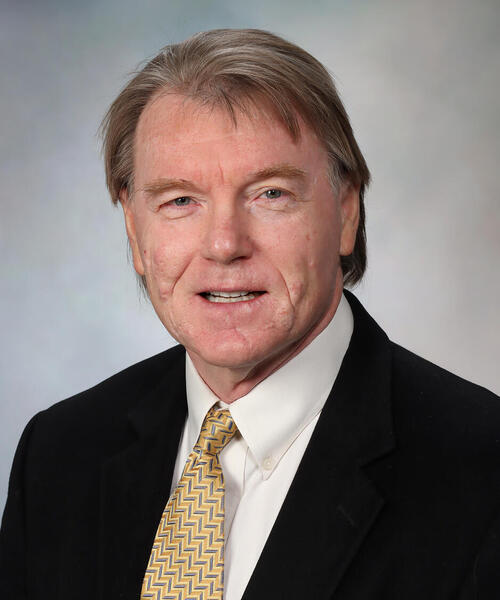
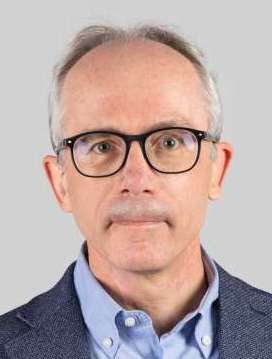
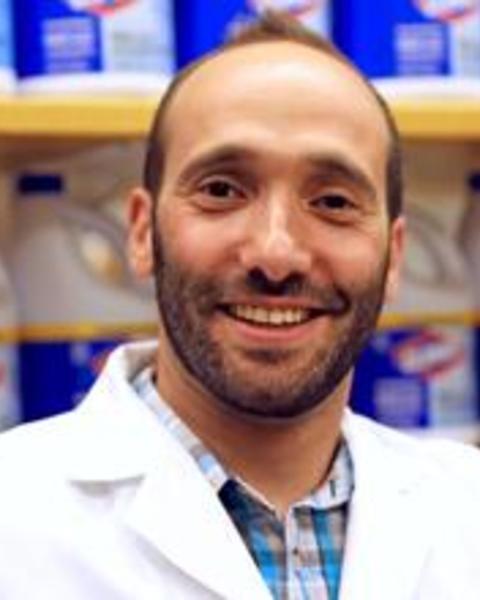
Federica Tomao is an Associate Professor at the Department of Maternal, Child and Urological Sciences within Sapienza University of Rome. She actively teaches and supervises courses in Medicine and Surgery , Nursing , and Midwifery programs across multiple institutions. Current faculty member with academic rank Teaching roles in 6th, 3rd, and 2nd year courses Specialized in gynecologic oncology Research Focus : Her work spans ovarian cancer, breast cancer, and endometrial cancer, emphasizing chemotherapy optimization, precision medicine, and radiomics. Notably, she contributes to understanding PARP inhibitors, immune checkpoint therapies, and fertility preservation techniques in cancer survivors. Recent Publications highlight advancements in sarcopenia analysis, BRCA testing, and radiogenomic nomograms. These studies demonstrate her commitment to bridging imaging and molecular data for improved cancer management. Email : federica.tomao@uniroma1.it
Alexis Battle is an Associate Professor at Johns Hopkins University with appointments in Biomedical Engineering , Computer Science , and Genetic Medicine (secondary). She directs the Malone Center for Engineering in Healthcare and serves as Deputy Director of the Data Science and AI Institute . Educated at Stanford University (PhD in Computer Science, 2013), Battle transitioned to academia after leadership roles at Google. Research Focus: Battle’s work bridges genomics and machine learning , emphasizing the impact of genetic variation on human health. Her lab develops tools like Watershed to predict functional effects of rare variants, aiming to enhance rare disease diagnosis. Key themes include non-coding DNA analysis , personalized genomics , and systems biology , with applications in cardiovascular disease and neurodegenerative disorders . Publications & Awards: Over 60 peer-reviewed articles in journals like Nature , Science , and Genome Biology , with recent emphasis on single-cell transcriptomics , multiomics integration , and telomere biology . Recipient of the President’s Frontier Award (2022), Microsoft Investigator Fellowship (2019), and Searle Scholar (2016). Scientific Awards: 2022 President’s Frontier Award 2019 Microsoft Investigator Fellowship 2019 Johns Hopkins Discovery Award 2017 Johns Hopkins Catalyst Award 2016 Searle Scholar Advising & Funding: Mentors 11 PhD students, 3 undergraduates, and postdoctoral fellows. Her research is funded by NIH, Searle Scholars, and institutional grants. The Battle Lab collaborates on projects like the GTEx Consortium , focusing on gene regulation and clinical genomics .
Bernhard J. Berger is a Lecturer in the Department of Computer Engineering at the Institute of Embedded Systems, Hamburg University of Technology (TUHH). His research focuses on software security, static code analysis, machine learning, optimization, and research data management. He has held significant roles such as Program Committee member for ICPC 2025 and MSR 2025, and has received awards including the Best Reviewer Award (ICPC 2023) and Best Engineering Paper Award (SCAM 2019). His work spans interdisciplinary applications including maritime systems security, GPU-accelerated AI, and evolutionary algorithms. Recent studies emphasize AI-driven security tools (e.g., ML-SAST) and domain-specific language approaches to optimization (EvoAl). He has contributed to over 30 peer-reviewed publications, with notable work in IEEE Transactions on Software Engineering and Science of Computer Programming. Berger collaborates closely with industry through DAAD review committees and serves on artifact evaluation boards for ISSTA and ARES conferences. Education: Doctoral Thesis (2022), Diploma in Computer Science (2007) Key Projects: ArchSec tool suite, Threat Modeling Frameworks, Bauhaus static analysis methodology Lab Affiliation: Embedded Systems Design Group His advisory roles include Deputy of TUHH's Election Verification Committee and Session Chair at IEEE Congress on Evolutionary Computation 2023. Current research trends integrate machine learning with static analysis for automated vulnerability detection, while also exploring explainable AI techniques for neural network optimization.
Shasha Chong is an Assistant Professor of Chemistry at the California Institute of Technology and a Ronald and JoAnne Willens Scholar. She earned her B.S. from the University of Science & Technology of China (2008) and Ph.D. from Harvard University (2014). Her research bridges chemistry, physics, and biology to investigate the molecular mechanisms of cellular processes, focusing on intrinsically disordered regions (IDRs) in transcription proteins. Research Focus: IDRs in transcriptional regulation, cancer biology, liquid-liquid phase separation, and single-molecule imaging techniques. Grants & Awards: CCE Innovation Award (2024), ALSF Innovation Grant, Mallinckrodt Research Grant, Margaret E. Early Medical Research Trust Grant. Collaborations: Caltech-City of Hope Biomedical Research Initiative Grant (2025). Teaching: Co-instructor for courses like Biochemistry Laboratory (Ch 11) and Advanced Topics in Biochemistry (BMB/Bi/Ch 174). Labs & Teams: Leads the Chong Laboratory at Caltech, focusing on interdisciplinary approaches combining single-molecule imaging, genome editing, and bioinformatics.
Sishuai Gong is an Assistant Professor in the Department of Computer Science at the University of North Carolina at Chapel Hill, focusing on system reliability and security. His research bridges machine learning, software engineering, and computer architecture to address challenges in large-scale software systems. Education : Ph.D. in Computer Science from Purdue University (2025), B.S. in Computer Science from the University of Science and Technology of China (2019). Research Interests : System reliability and security, kernel concurrency testing, verified security modules, and machine learning for systems. He develops interdisciplinary techniques to identify and mitigate functional interference bugs in OS virtualization and latency-sensitive applications. Scientific Awards : Jay Lepreau Best Paper Award at OSDI (2024) Google Cloud Research Innovator (2024) Bilsland Dissertation Fellowship at Purdue (2024) Teaching : Offering COMP 790: Reliable and Secure Systems (Fall 2025) with a focus on empirical studies, static/dynamic analysis, and machine learning for systems. Course grading includes paper presentations (30%), class participation (30%), and research projects (40%).
Kathryn Roeder is the UPMC University Professor of Statistics and Life Sciences at Carnegie Mellon University (CMU), affiliated with the Dietrich College of Humanities and Social Sciences and the Departments of Statistics & Data Science and Computational Biology. Her research focuses on developing statistical methods for genetic and genomic data, particularly in identifying autism risk genes and analyzing single-cell multi-omic data. She earned her Ph.D. in Statistics from Penn State University and has been at CMU since 1994, previously serving as Vice Provost for Faculty (2015–2019). Education: Ph.D. in Statistics, Penn State University (1988) B.S. in Wildlife Resources, University of Idaho (1982) Research Interests: Her work integrates modern statistical techniques (high-dimensional statistics, machine learning, networks) to study complex diseases like autism and schizophrenia. Recent efforts include tools for analyzing single-cell RNA-seq and proteomic data, such as UNICORN, DAWN, and SCEPTRE. Key Awards: COPSS Distinguished Achievement Award (2020) National Academy of Sciences Member (2019) COPSS Presidents’ Award (1997) AAAS Fellow (2020) Advising & Grants: She has advised over 20 Ph.D. students, many contributing to landmark studies in autism genetics. Her grants include NIH funding for projects like the Autism Sequencing Consortium. Current research teams focus on computational biology and statistical genetics. Labs & Collaborations: Her lab develops software tools (e.g., TADA, MIND) and collaborates with the Autism Sequencing Consortium and iPSYCH-BROAD Consortium on large-scale genomic studies.
Professor Carlo Pappone is a Full Professor of Cardiology at Vita-Salute San Raffaele University (since 2019) and Director of the Arrhythmology Department at IRCCS Policlinico San Donato Hospital (since 2015). He has held previous academic/clinical leadership roles at IRCCS San Raffaele Hospital (2000-2010), Villa Maria Cecilia Hospital (2010-2015), and University of Naples Federico II (1990-2000). With 212 publications in top journals like NEJM, JAMA, and Circulation, he has made significant contributions to cardiac arrhythmia research. Current Positions Vita-Salute San Raffaele University (2019-present): Full Professor of Cardiology IRCCS Policlinico San Donato Hospital (2015-present): Director of Arrhythmology Department Previous Roles University of Naples Federico II (1990-2000) University of Michigan Ann Harbor (1990-2000) IRCCS San Raffaele Hospital (2000-2010) Villa Maria Cecilia Hospital (2010-2015) Research Focus: Specializing in cardiovascular diseases, his work spans atrial fibrillation ablation techniques, Brugada syndrome pathogenesis, heart failure device therapy, and ion channel disorders. His H-index of 53 and 18,407 citations reflect his substantial academic impact. Notable Scientific Contributions Author of 44 patents Principal Investigator in 14 clinical trials (clinicaltrials.gov) Developed circumferential pulmonary vein ablation technique Innovator in biventricular pacing systems for heart failure Pioneered research on non-excitatory current for cardiac contractility Scientific Recognition Awarded as Elite Reviewer of JACC (2005) Editorial Board Member of 6 leading journals Reviewer for NEJM, JAMA, Lancet, and Nature Medicine Education Medical Doctorate: University of Naples Federico II
Caroline Lemieux is an Assistant Professor at the Department of Computer Science, University of British Columbia (UBC), with research focused on advancing software correctness, security, and performance through innovative testing and synthesis techniques. Her work bridges Programming Languages and Software Engineering , particularly in fuzz testing, specification mining, and program synthesis. PhD from University of California, Berkeley (2021), advised by Koushik Sen Postdoctoral researcher at Microsoft Research, NYC (2021-2022) Key contributions: FuzzFactory , CodaMOSA , Arvada , and Gauss Her research integrates machine learning with traditional testing methods, exemplified by projects like RLCheck (reinforcement learning for test generation) and AutoPandas (neural synthesis for dataframes). Recent publications analyze generator-based fuzzing challenges and propose hybrid strategies combining coverage feedback with AI-driven insights. Scientific Awards : ACM/SIGSOFT Best Paper Award (ESEC/FSE 2019) ACM/SIGSOFT Tool Demonstration Award (ISSTA 2019) ACM/SIGSOFT Distinguished Artifact Award (ISSTA 2019) NSERC Postgraduate Scholarship-Doctoral (PGS D) UBC Governor General's Silver Medal (2016) Teaching roles include: 2025W2: CPSC 539L - Topics in Programming Languages 2024W2: CPSC 410 - Advanced Software Engineering 2023W2: CPSC 410 (with Alex Summers) She supervises graduate and undergraduate researchers working on projects like ExploTest (automated unit test generation) and GRIMOIRE (grammar extraction from pseudo-rules). Her research team collaborates with institutions including Microsoft Research, Google, and academic partners in systems security and AI-driven testing.
Ardalan Amiri Sani is an Associate Professor in the Computer Science Department at the University of California, Irvine (UCI), affiliated with the Donald Bren School of Information & Computer Sciences. He leads the Trustworthy Systems Lab (TrussLab), focusing on secure and reliable mobile systems, operating systems, and virtualization. His research bridges mobile computing, security, and OS design, addressing challenges in I/O devices, kernel hardening, and verifiable provenance. Education: Ph.D. and M.Sc. from Rice University (ECE), B.Sc. from Sharif University of Technology. Awards include the NSF CAREER Award, Google ASPIRE Award, and UCI Dean's Mid-Career Research Award. He has advised numerous graduate and undergraduate students, many of whom now work in academia and industry. Research highlights include Tabellion (secure legal contracts on mobile devices), ProvCam (verifiable video provenance), and work on minimizing smartphone TCBs via hardware isolation. His grants include NSF funding for OS kernel security and NSA support for provenance systems. Education: Ph.D., Electrical and Computer Engineering, Rice University, 2014 B.Sc., Electrical Engineering, Sharif University of Technology Grants: $500K NSF Award (with UCR) for OS kernel security (2020) NSF SaTC Award for GPU security in browsers Google ASPIRE Award for Android system call filtering Labs/Teams: Trustworthy Systems Lab (TrussLab), collaborating with industry partners like Intel and Broadcom.
Juan Zhai is an Assistant Professor in the Manning College of Information and Computer Sciences (CICS) at the University of Massachusetts Amherst. She co-directs the Laboratory for Advanced Software Engineering Research (LASER) and is a member of the UMass NLP group. Her research advances software engineering through automated techniques for building high-quality systems with emphasis on behavioral specifications, AI safety, and trustworthy AI. Her work addresses the fundamental challenge of aligning software behavior with intended specifications through two main directions: automated specification synthesis (translating natural language comments to formal specifications via tools like C2S and LLMCup) and defect detection/repair (developing frameworks for AI system testing, bias mitigation, and training diagnostics). Her vision integrates these into end-to-end assurance systems that continuously validate, repair, and audit evolving software in dynamic environments. Recent publications (2024-2025) reveal dominant trends at the software engineering/AI intersection: formal specification synthesis for IoT and code generation, comment maintenance using LLMs, deep learning framework testing (DevMuT, Citadel), bias detection in LLMs, and automated training repair (AutoTrainer, DREAM). These contributions appear in top venues including ICSE, FSE, ASE, ISSTA, and ACL. Professor Zhai currently advises PhD student Gehao Zhang (focusing on Software Engineering and AI Safety) and actively recruits new PhD/Master's students. Her LASER lab develops practical tools for specification inference, LLM-driven synthesis, and trustworthy AI, while collaborating with the UMass NLP group on language-centric software analysis. The LASER lab, co-directed by Zhai, pioneers techniques for behavioral specification enforcement across traditional and AI-powered systems. Key projects include CPC for bidirectional code-comment analysis, ModelMeta for deep learning framework testing, and frameworks for bias mitigation across the ML lifecycle. The lab emphasizes practical, scalable tools that enhance correctness, robustness, and fairness in critical AI applications.
Dr. John A. Copland III is a Professor of Cancer Biology and Biochemistry & Molecular Biology at Mayo Clinic in Jacksonville, Florida. He leads the Cancer Biology and Translational Research Laboratory, focusing on molecular mechanisms of carcinogenesis, tumor progression, and development of targeted cancer therapies. Education: PhD in Physiology & Endocrinology (Medical College of Georgia), MS in Endocrinology (Medical College of Georgia), BS in Chemistry (Columbus College), with postdoctoral training at University of Texas Medical Branch. Research interests center on: Identifying tumor suppressor genes (e.g., RhoB, TBR3, GATA3) and oncogenes (e.g., FOXO3a, SCD1, NPTX2). Developing patient-derived xenografts and live cell models for personalized medicine. Designing SCD1 inhibitors via in silico modeling for clinical trials. Recent publications highlight his work on SCD1 inhibition in leukemia and thyroid cancer ImmunoPET imaging of thyroid tumors CRISPR-identified drug synergies in cholangiocarcinoma Patient-specific combination therapies using xenograft models
Thomas Bäck is a Professor at the Leiden Institute of Advanced Computer Science (LIACS) , Leiden University , Netherlands, and a member of the interdisciplinary programme Society, Artificial Intelligence and Life Sciences (SAILS) . His academic career spans roles at Leiden University (1996–present) and leadership positions at the Center for Applied Systems Analysis in Dortmund (1994–2000). Education : Diplom-Informatiker (Computer Science), Technische Universität Dortmund (1990) Dr. rer. nat. (Computer Science), Technische Universität Dortmund (1994) Research Interests : Dr. Bäck specializes in evolutionary computation , machine learning , and their applications in sustainable smart industry and healthcare . Recent work focuses on integrating large language models (LLMs) and quantum computing into optimization frameworks, with projects like CIMPLO (predictive maintenance), ECOLE (experience-based optimization), and SAPPAO (airline operations optimization). Scientific Contributions : His 526+ publications cover evolutionary algorithms, quantum optimization, and LLM-driven design, with recent trends including: Quantum computing (e.g., quantum approximate optimization, quantum advantage challenges) LLM integration (e.g., hyperparameter tuning, mutation control, code evolution graphs) Healthcare and industry (e.g., predictive maintenance, anomaly detection, melt quality prediction) Algorithm benchmarking (e.g., IOHprofiler, MA-BBOB, explainable benchmarking) Scientific Awards : IEEE Fellow (2022) Royal Netherlands Academy of Arts and Sciences (KNAW) member (2021) Academia Europaea member (2022) IEEE Computational Intelligence Society Evolutionary Computation Pioneer Award (2015) Fellow, International Society of Genetic and Evolutionary Computation (2003) Best Ph.D. thesis award, German Society of Computer Science (GI) (1995) Advising and Grants : He supervises Ph.D. candidates in evolutionary computation and machine learning and has secured 7 major grants from organizations like the Dutch Research Council , European Commission , and The Research Council of Norway . His editorial roles include Editor-in-Chief of the Evolutionary Computation Journal and associate editorships in leading AI journals.
Paolo Tonella is a Full Professor and Director of the Software Institute at the Faculty of Informatics, Università della Svizzera italiana (USI) in Lugano, Switzerland. He also holds an Honorary Professorship at University College London (UK) and previously led the Software Engineering group at Fondazione Bruno Kessler (Italy). His research focuses on software testing, analysis, and AI-driven systems. He has authored over 200 peer-reviewed papers and 100 journal articles, with an H-index of 72. He teaches courses in Data and Software Engineering and Informatics, including Information Modeling, Probability & Statistics, and Knowledge Search. Key contributions include foundational work on web application testing (ICSE MIP award), evolutionary testing techniques (eToc/EvoSuite tools), and reverse engineering of object-oriented systems. He led the ERC-funded PRECRIME project on anticipatory testing. His recent work addresses AI dependability, autonomous systems testing, and deep learning fault analysis. Scientific awards include the ICSE MIP Award (2001) and ERC Advanced Grant (2018). He has served on editorial boards for major journals like IEEE Transactions on Software Engineering and ACM TOSEM. Current roles include leadership in the Software Institute and organizing the SIESTA summer school.
Dr. Michael Baym is an Associate Professor of Biomedical Informatics at Harvard Medical School with affiliate appointments in Microbiology and the Laboratory of Systems Pharmacology, and as an Associate Member of the Broad Institute. He leads the Baym Lab, which studies microbial evolutionary genomics and antibiotic resistance through a hybrid of experimental, computational, and theoretical approaches. His research focuses on: Antibiotic Resistance Evolution and practical interventions Mobile Genetic Elements (plasmids, phages, transposons) Computational Genomic Algorithms for big data analysis Synthetic Biology tools and technologies Key recent publications explore phage discovery systems , phylogenetic compression of microbial genomes, and RNA-guided gene drives in plasmids. His work is supported by multiple NIH/NIGMS and NSF grants including a MIRA award. Scientific honors include: Packard Fellowship (2018) Pew Biomedical Scholarship (2020) Sloan Research Fellowship (2020) A. Clifford Barger Excellence in Mentoring Award (2021) SSQBio Mentorship Award (2022) The lab actively trains PhD students and postdoctoral fellows with alumni occupying academic and industry positions globally. Current team members include researchers from interdisciplinary backgrounds working at the intersection of experiment, computation, and theory .
Todd A. Alonzo is a Professor of Research in the Department of Preventive Medicine at the University of Southern California . As Group Statistician for the Children's Oncology Group , he focuses on statistical methods for biomarker analysis, medical diagnostic testing, and clinical trial design in pediatric acute myeloid leukemia (AML). Education: B.S. in Statistics, California State Polytechnic University (1994) MS and PhD in Biostatistics, University of Washington (1997, 2000) Research Interests include: Development of statistical frameworks for diagnostic accuracy Genomic and proteomic profiling in AML Pharmacogenomic score systems for chemotherapy response Non-inferiority trial design in low-event-rate settings Health disparities in pediatric oncology Scientific Awards : Fellow, American Statistical Association (2018) Outstanding Teacher Award, International Society for Magnetic Resonance in Medicine (2017) NIH Predoctoral Cardiovascular Biostatistics Training Grant (1995) ENAR Biometrics Society Distinguished Student Paper Award (1999) WNAR Biometrics Society Best Student Oral Presentation (1999) Leadership & Service includes editorial board memberships (Biometrics, Pediatric Blood & Cancer, Biometrical Journal), reviewer for 30+ scientific journals, and roles on multiple Data Safety and Monitoring Boards. He served as President of the International Biometric Society Western Northern America Region (WNAR) in 2009.