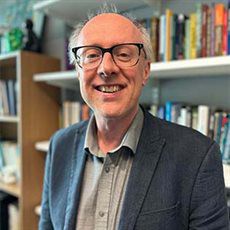
Associate Professor Myfany Turpin is an Associate Dean of Indigenous Strategy and Services at the Sydney Conservatorium of Music, University of Sydney. Her research focuses on ethnomusicology, linguistics, and ethnobiology, with a particular emphasis on Central Australian Indigenous cultures. She collaborates extensively with Indigenous communities to document and revitalize endangered languages and performance traditions. Education & Research: PhD in Musicology (2005) Specialization in Kaytetye and Warlpiri language documentation Leader of ARC-funded projects investigating dingo lexicon and traveling songs Research Interests: Turpin explores intersections between language and music, including poetic meter in Aboriginal song-poetry and biocultural knowledge embedded in ceremonial practices. She develops innovative tools like the Kaytetyemoji app to support language revitalization. Grants & Collaborations: ARC Discovery Project (2025-2028): Dingo Lingo ARC Indigenous Discovery Project (2024-2029): Recirculating Travelling Songs Modularised Cultural Heritage Archives (2022-2024) Awards: Received Honorable Mention from International Council for Traditional Music (2021) for work on Warlpiri seed ceremonies. Labs & Teams: Co-director of Sydney Southeast Asia Centre and member of Charles Perkins Centre. Collaborates with Batchelor Institute and Australian Institute of Aboriginal and Torres Strait Islander Studies.
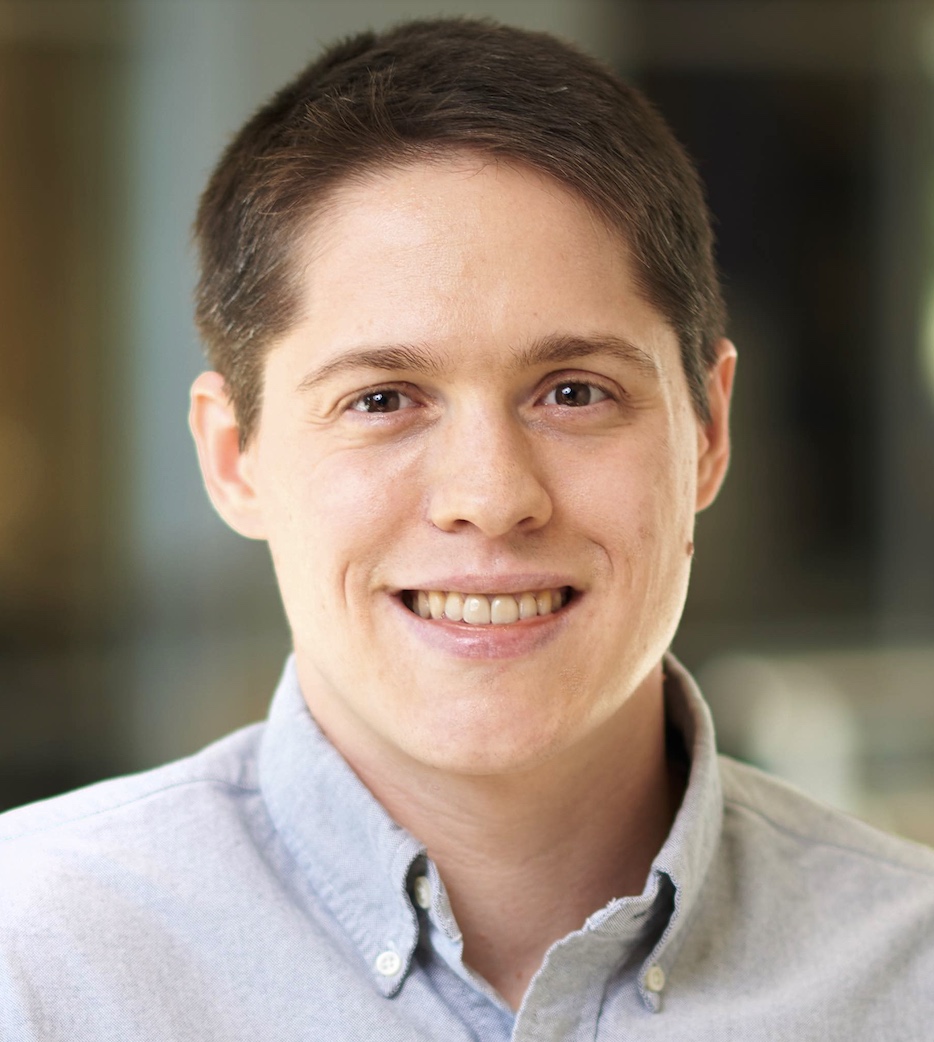
Julian Togelius is an Associate Professor at the Department of Computer Science and Engineering, Tandon School of Engineering, New York University. He co-directs the NYU Game Innovation Lab and serves as Editor-in-Chief of IEEE Transactions on Games. His research focuses on AI techniques for game design and games as testbeds for AI development, including procedural content generation, evolutionary algorithms, and player modeling. He has organized major competitions like the General Video Game AI Competition and the Mario AI Championship. Research Interests: Julian explores AI-driven game design, procedural content generation (PCG), evolutionary computation, and the intersection of games with broader AI challenges. His work spans automatic level design, opponent AI, and using games to benchmark general intelligence. He emphasizes data-driven models of player experience and integrating machine learning into game development. Organizational Activities: He has held roles including General Chair of IEEE Computational Intelligence and Games (2017), co-organizer of the General Video Game Playing Competition, and editor roles in key journals. His work also extends to music generation (MetaCompose) and data-driven game design (e.g., 'Data Adventures' from open datasets). Professional Contributions: Julian has advised numerous PhD students focusing on AI and games, published over 160 peer-reviewed works, and authored/co-authored books like Artificial Intelligence and Games (2018) and Procedural Content Generation in Games (2016). His research bridges academic rigor with practical game development, emphasizing computational creativity and interactive systems.
Kim Fallen Bailey is a Lecturer in Music Education at the Royal Irish Academy of Music (RIAM), specializing in Leaving Certificate curriculum development and Junior Musicianship. She holds a BMusEd (Hons) from Trinity College Dublin (2007) with a Commendation Award for Teaching. Her roles include designing and delivering the RIAM's 2-year Leaving Cert Music course, Easter Revision Course, Music Technology Workshop, and the Foundations preparatory program. She also directs the e-course 'Teaching Leaving Cert Music, Sets A and B.' Her professional experience spans special education (Crannog Nua Special School) and founding Ceol Draíochta music school, where she focuses on piano, theory, vocal training, and Leaving Cert grinds. Research interests include contemporary music pedagogy, curriculum design, and special needs education integration. Key presentations include analyses of Gerald Barry's work (Galway Music Residency, 2019), Leaving Cert teaching methodologies (RIAM Conference, 2014), and graphical score utilization (Post Primary Music Teachers Association, 2011). She has also presented on Irish music education systems to international delegates (Estonian Society for Music Education, 2007).
Anne Berit Emstad is a Professor of School Leadership at the Norwegian University of Science and Technology (NTNU), affiliated with the National Center for Mathematics in Education under the Faculty of Social and Educational Sciences. She is also closely connected to university schools in Trondheim. Her research focuses on school leadership, cultural schools, teacher education, and professional development, emphasizing collaboration between schools and universities. Her work spans national and international research projects, including contributions to the USPiTE project on university-school partnerships in teacher education. She has extensive experience in teacher education, principal training, and educational policy analysis. Notable publications include studies on leadership roles in school improvement, sustainable collaboration between cultural and compulsory schools, and the implementation of decentralized educational policies. Emstad’s research often involves school leaders in practical development efforts, blending theory and practice. She has authored books such as Lærende ledelse (Learning Leadership) and Samskapt kunnskap (Collaborative Knowledge), exploring professional learning communities and interdisciplinary educational strategies. Her articles frequently address themes like formative assessment, teacher agency, and the integration of entrepreneurial skills in teacher training programs. Her work highlights the importance of creating inclusive school cultures and leveraging data-driven approaches for continuous improvement. Emstad actively participates in conferences, contributes to educational policy discussions, and collaborates with international colleagues to advance leadership practices in education.
Assoc. Prof. Dr. Umut Asan is an active faculty member in the Department of Industrial Engineering at Istanbul Technical University (ITU), Faculty of Management. He holds the academic rank of Associate Professor and has been affiliated with ITU since 1999, progressing from Research Assistant to his current role. He earned his PhD from Technische Universität Berlin and holds a Master’s and Bachelor’s from ITU in Engineering Management and Industrial Engineering, respectively. PhD: Technische Universität Berlin (2003–2009) MSc: Istanbul Technical University, Engineering Management (1999–2001) BSc: Istanbul Technical University, Industrial Engineering (1995–1999) Dr. Asan's research lies at the intersection of decision science and industrial systems, with a strong emphasis on Multi-Criteria Decision Making (MCDM) , Fuzzy Cognitive Mapping , Scenario Planning , and Digital Twins . His work applies advanced modeling techniques such as Bayesian networks and fuzzy logic to solve complex problems in supply chain resilience, urban mobility, technology adoption, and organizational behavior. His recent publications (2023–2025) reveal a consistent trend toward integrating artificial intelligence and data-driven methods into decision support systems. Topics include electric vehicle adoption in urban logistics, digital twin frameworks for manufacturing, risk analysis in forestry and rail systems, and consumer behavior in digital platforms. These works demonstrate interdisciplinary applications across engineering, business, and social sciences, often using fuzzy and probabilistic models to handle uncertainty. Dr. Asan is actively involved in research leadership, having served as Vice Dean (2018–2023) and currently supervising numerous graduate theses. He is the principal investigator of funded projects, including BAP grants on qualitative cross-impact analysis and consumer cognitive models. Principal Investigator, "A New Approach to Qualitative Cross-Impact Analysis" (BAP Project, 2016–2020) Principal Investigator, "A New Approach to Consumer Causal Chain Models" (BAP Project, 2022–2024) He is a member of several international academic societies, including the International Society on MCDM, ENBIS, and EURO, reflecting his active engagement in the global operations research community. His research has been published in journals such as IEEE Access, European Journal of Forest Engineering, and Decision Science Letters, with a growing citation impact (Scopus h-index: 13). Dr. Asan advises a large cohort of graduate students, both at the Master’s and PhD levels, in areas ranging from risk modeling to digital transformation. His lab or research group focuses on decision support systems and cognitive modeling, supervising theses on FMEA, Bayesian networks, and digital twins. Future work appears to be directed toward enhancing predictive capabilities in industrial and societal systems through hybrid AI models.
Ivano Malavolta is an Associate Professor in Software Engineering at the University of Urbino , focusing on energy-efficient software, software architecture, and model-driven engineering (MDE). His research bridges robotics, mobile systems, and sustainability, emphasizing empirical methods and industrial applicability. Key Research Areas: Energy-efficient software, microservices, robotics systems, collaborative modeling, mobile application performance. Affiliations: Department of Software Engineering, University of Urbino. His recent publications highlight empirical studies on energy consumption patterns in robotics, mobile apps, and AI systems. He has contributed to frameworks like the Green Software Measurement Model (GSMM) and tools for architectural technical debt analysis. Notably, he has co-authored 15+ peer-reviewed articles in venues such as Journal of Systems and Software , Information and Software Technology , and ACM/IEEE conferences . His work often involves cross-platform comparisons (e.g., Electron vs. Web, Pandas vs. Polars) and systematic mappings of software engineering practices.
Jane Kingsley-Smith is a Professor at the University of Roehampton's School of Arts, Humanities, and Social Sciences, affiliated with the Centre for Research in Society, Culture, and Social Change. She holds a BA from Oriel College, Oxford, and a PhD from the Shakespeare Institute, Stratford-upon-Avon. Her academic work focuses on Shakespeare's enduring cultural impact through both historical analysis and contemporary adaptations. Kingsley-Smith's research examines: Shakespeare's works in historical/cultural contexts Reception history of Shakespeare's Sonnets Early modern literature and desire (Cupid iconography) Performance adaptations across media (theater, film, music) Textual editing practices and scholarly controversies Her current book project explores Shakespeare's Sonnets in performance history. Her recent publications (2022-2025) demonstrate: Sustained focus on Shakespeare's Sonnets through editorial, racial, and emotional lenses Interdisciplinary approaches combining literary analysis with book history and performance theory Investigation of textual authenticity in early modern poetry Awards & Honors: Senior Fellowship of the Higher Education Academy Supervision & Outreach: Actively mentors PhD candidates in early modern topics. Leads public engagement initiatives including Folger Shakespeare Library podcasts, educational YouTube content for the Shakespeare 2020 project, and theater collaborations. Serves as peer reviewer for major Shakespeare journals and book series.
Maziar Raein is an Associate Professor at the Oslo National Academy of the Arts (KHiO) , specializing in Graphic Design and Methodology. He holds a BA (Hons) in Fine Art and an MA in Independent Film from Central Saint Martins (CSM). Before moving to Oslo, he taught on the BA Graphics course at CSM, leading the Context programme, and founded Codex Design, a brand identity agency that worked with companies like Lastminute.com. Research Focus : Visual and spatial ability, reflective practice, typographic archives, and audience engagement in music performance. Leadership Roles : Director of KHiO's Typographic Archive and Senior Advisor in Research at CEMPE (Centre of Excellence in Music Performance Education). His publications and projects explore interdisciplinary methodologies, asemic writing, and craftsmanship. Recent work includes the Radical Interpretations research program reinterpreting musical works for percussion. Scientific Contributions : Co-developed the landmark Writing-PAD project with Julia Lockheart. Recognized by HEFCE-FDTL for advancing creative writing models in art & design.
J. Edwin Rivers is a Professor in the Department of Critical Media Practices at the University of Colorado's College of Arts and Sciences. An award-winning educator holding the lifetime title of President's Teaching Scholar, he specializes in bridging literary scholarship with digital media creation through innovative teaching and creative practice. His academic credentials include: Ph.D. from University of Oregon (1970) M.A. from University of Oregon (1968) B.A. from Davidson College (1966) Rivers' research centers on digital humanities, translation theory (including novel-to-film intermedia translation), and comparative literature, with deep expertise in Marcel Proust and Vladimir Nabokov. His creative output spans digital music composition, filmmaking, and multimedia performance, directly informing his scholarship on interdisciplinary and multimedia aspects of literary works. The author of the award-winning book "Proust and the Art of Love," he has published translations from French, German, Spanish, and Chinese. His publication trajectory reveals an evolution from traditional literary criticism toward digital pedagogy and creative media, with consistent themes exploring technology-literature intersections, cross-media translation, and digital humanities methodologies. Recent works demonstrate increasing integration of digital tools in both creative and scholarly output. Rivers' exceptional teaching has been recognized through: President's Teaching Scholar (1989) Two BFA Awards for Excellence in Teaching and Pedagogy (1982, 1995) College of Arts and Sciences Award for Technology Integration in Teaching No specific information about graduate student advising or research grants was documented in the source materials. Rivers actively creates digital art as a composer, filmmaker, and performer, though no formal lab or team structure is referenced in available records.
Professor David Cheetham serves in the Department of Theology and Religion at the University of Birmingham , holding the academic rank of Professor of Philosophical Theology since 2020. He previously served as Head of the School of Philosophy, Theology and Religion (2016-2020) and Head of Department of Theology and Religion (2012-2015). Current research focuses on theology of religions , interreligious hermeneutics , and theology and the arts . His work explores Christianity and Asian religions , theology of creation , and public theology . Recent publications examine interreligious aesthetics , postsecular theology , and theological pluralism . He has co-edited volumes on intercultural theology and scriptural reasoning . No scientific awards are listed in the provided text. As an ordained Church of England minister and professional musician, he integrates spiritual practice and musical engagement into theological discourse.
Vanessa Rutherford is a Lecturer at the School of Education, University College Cork , with a career spanning institutions such as NUI Maynooth, The Open University, and Dublin City University. Her academic journey includes a PhD, MA, and BA in History from National University of Ireland Maynooth. She actively contributes to research on Irish educational history, gender dynamics, and childhood studies. Research Interests: Her work explores the social and cultural history of childhood in Ireland , gender and power , educational history , and teacher/student identity . Methodologically, she integrates discourse analysis , historical inquiry , and quantitative research , often bridging past and present educational practices. Teaching & Supervision: She supervises PhD and MEd students on topics ranging from inclusive education to literacy development. Current supervisees include Avril Carey, Denise McSweeney, and Angela Santora. Her teaching covers modules in educational philosophy, psychology, research methods, and women’s studies. Collaborations & Projects: Vanessa has worked on projects like Changing contexts in becoming a 'good' teacher (Irish Research Council) and History of the School of Education, UCC . She collaborates with scholars such as Cara Delay (USA), E. Wesseling (Netherlands), and M. Forman-Brunell (USA). Professional Involvement: Active in associations including the Society for the Study of Nineteenth Century Ireland , The Society for the History of Children and Youth , and ESAI . She is a member of the Athena SWAN committee since 2024, advocating for gender equality in academia.
James C. Davis is an Assistant Professor at the Elmore Family School of Electrical and Computer Engineering (Purdue University). His research focuses on socio-technical approaches to software engineering , emphasizing security , correctness , and usability in software-intensive systems. He leads the Duality Lab , which publishes in top venues like ICSE , USENIX Security , and EMSE , with funding from the NSF , Google , Cisco , and Rolls Royce . PhD in Computer Science from Virginia Tech Current research themes: software supply chain security, pre-trained model engineering, and empirical studies of developer practices His recent publications (2025) analyze LLM jailbreaking , software signing (Sigstore), IoT model optimization , and deep learning reproducibility . Supported by grants from NSF OAC Core (multi-modal deep learning infrastructure) and RFE (prompt engineering education). Recognized with the ASEE Best Paper Award (2024) for trust engineering research. Current students include Paschal Amusuo (PhD candidate), Wenxin Jiang (now at Socket), and Dharun Venkatraman (Chateaubriand Fellow). Advising highlights : Guided 7 PhD/MSc theses (2022-2025) Developed CodeQL experience report (709 defects in 258 projects) Industry collaborations: Google , Microsoft Research , Qualcomm Research trends from 2022-2025 show sustained focus on: Software security (supply chains, signing, ReDoS) Model engineering (IoT optimization, naming conventions) Empirical methods (interview studies, defect analysis) Human factors (developer practices, training effectiveness)
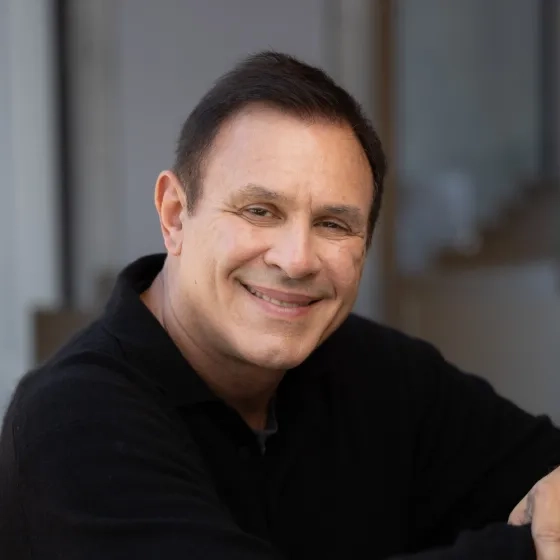
David Conte is Professor of Composition and Chair of the Composition Department at the San Francisco Conservatory of Music (SFCM), where he has taught since 1985. He is also affiliated with the European American Musical Alliance in Paris, where he served on the composition faculty from 2011-2022. In 2014, he was named Composer in Residence for Cappella SF, a professional chamber choir in San Francisco. His educational background includes: Doctor of Musical Arts (DMA) from Cornell University Master of Fine Arts (MFA) from Cornell University Bachelor of Music (BM) from Bowling Green State University David Conte's research and creative interests focus on contemporary classical composition, particularly in the areas of opera, choral music, and chamber music. His work demonstrates a deep engagement with American musical traditions while incorporating diverse influences from European classical music. He has developed a distinctive compositional voice that bridges traditional techniques with contemporary expression, particularly evident in his vocal and choral works. Conte's approach to composition pedagogy emphasizes the importance of musical memory, keyboard skills, and deep engagement with the music one loves. Analysis of Conte's compositional output reveals a consistent focus on vocal and choral music, with significant contributions to American opera through works like 'The Gift of the Magi.' His chamber music demonstrates sophisticated understanding of instrumental capabilities across various ensembles. More recently, his orchestral works like the 'Sinfonietta for Classical Orchestra' show a refined neoclassical approach. Conte's compositions often explore literary and historical themes, reflecting his broader interests in film, history, politics, and religion. His notable awards and distinctions include: Fulbright Scholarship (1976) Ralph Vaughan Williams Fellowship (1989) Aspen Music Festival Conducting Fellowship (1984) National Association of Teachers of Singing Composition Award (2016) American Guild of Organists Distinguished Composer (2024) Raymond Brock commission from the American Choral Directors Association First Prize in the NATS Composition Competition for 'American Death Ballads' (2016) As an educator, Conte has mentored over 100 composition students since 1985 at SFCM. His teaching philosophy, heavily influenced by his studies with Nadia Boulanger, emphasizes the importance of musical memory, keyboard proficiency for composers, and gradual skill development. He has secured numerous commissions from prestigious organizations including the San Francisco, Oakland, Stockton, and Dayton Symphonies, Chanticleer, and the American Guild of Organists. Conte's work has been supported by institutions like the Fulbright Program and the National Endowment for the Arts. Conte maintains active collaborations with various musical organizations, including Cappella SF where he serves as Composer in Residence. His work with librettists like Nicholas Giardini and collaborators like Todd Boekelheide demonstrates his commitment to interdisciplinary artistic projects. He continues to be an influential figure in American contemporary music through his compositions, teaching, and advocacy for new music.
Zachary Wallmark is an Associate Professor of Musicology and Area Chair of Musicology and Ethnomusicology at the University of Oregon's School of Music and Dance. His interdisciplinary research bridges musicology, cognitive science, and sound studies, with a particular focus on musical timbre and its relationship to emotion, meaning, and cultural context. Wallmark maintains a joint affiliation with the Center for Translational Neuroscience at the University of Oregon, reflecting his cross-disciplinary approach. His research interests span popular music studies, timbre analysis, music cognition, and sound studies, with particular attention to how musical timbre functions in emotional response, aesthetic judgment, and music sociology. Wallmark's work explores these themes across diverse musical contexts including American popular music, free jazz, extreme heavy metal, and traditional Japanese music. Wallmark's publications reveal a consistent focus on timbre as a critical yet undertheorized dimension of musical experience. His work spans empirical studies of timbre perception, corpus analyses of timbre semantics, interdisciplinary investigations of timbre's role in meaning-making, and theoretical explorations of timbre's relationship to cultural and social contexts. Recent publications increasingly integrate cognitive neuroscience methodologies with traditional musicological approaches. GRAMMY Museum Foundation Scientific Research Grant UO Presidential Fellowship in Humanistic Study AMS Ruth A. Solie Award Social Sciences and Humanities Research Council (SSHRC) of Canada Partnership Grant National Endowment for the Humanities (NEH) Fellowship Wallmark's research has received significant external funding from prestigious organizations including the NEH and the GRAMMY Museum Foundation. He is active in the Analysis, Creation, and Teaching of Orchestration (ACTOR) group, an international research partnership funded by the Canadian Social Sciences and Humanities Research Council. His work has been presented at major international conferences including the American Musicological Society (AMS), Society for Music Perception and Cognition (SMPC), Society for Music Theory (SMT), and Society for Ethnomusicology (SEM). Wallmark has also been invited to lecture at notable venues including the National Academy of Sciences in Washington, D.C. Beyond his academic work, he is a published composer, commercial musician, jazz bassist, and performer of the Japanese shakuhachi flute.
Andrew McCrea serves as Professor of Organ Supporting Studies and Academic Programmes at the Royal College of Music (RCM), where he teaches undergraduate and postgraduate courses including history, stylistic-techniques, and supervises student projects, lecture-recitals, and dissertations. He also holds significant positions as Deputy Chief Executive and Director of Studies at the Royal College of Organists (RCO), overseeing accreditation, educational programs, publications, and archival collections. McCrea's research focuses on organ historiography with particular expertise in British organ culture and the evolution of organs and organ playing in the Baltic region. His scholarly work demonstrates a consistent trajectory examining historical organ traditions, national stylistic developments, and the evolution of organ literature across different cultural contexts. Editor of the annual Journal of the Royal College of Organists Guest editor of the Journal of the British Institute of Organ Studies (2004, 2018) Author and co-editor of The Nordic-Baltic Organ Book (2003) Contributor to The Cambridge Companion to the Organ (1998) Contributor to Routledge's Studies in English Organ Music (2018) McCrea's academic contributions span organ historiography, performance practice, and regional organ traditions, with particular emphasis on British and Baltic organ cultures. His research demonstrates consistent engagement with historical documentation, archival materials, and the evolution of organ literature across different national contexts. His scholarly awards include the Medal of the Royal College of Organists (2023) for outstanding contribution and distinguished service to the RCO. As an organist, McCrea serves as curator-organist of St Swithun's, Worcester (housing a significant historical organ from 1795/1845), has performed internationally, and was a finalist in the Lahti International Organ Competition (1997). He continues to advise on the Gothenburg International Organ Academy archival project, bridging his scholarly and practical expertise in organ culture preservation.