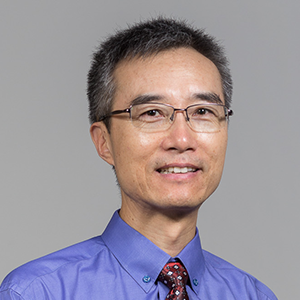
Adam Hollowell is an Adjunct Assistant Professor in the Program in Education at Duke University, where he also serves as Senior Research Associate at the Samuel DuBois Cook Center on Social Equity and Director of the Inequality Studies Minor. His teaching spans ethics, inequality studies, and history across Duke’s Kenan Institute for Ethics, Sanford School of Public Policy, and Department of History. Hollowell holds a Ph.D. from the University of Edinburgh (2009). His research focuses on inequality, higher education, public policy, and ethics, with notable work on pandemic impacts, telemedicine in education, and reproductive health access during crises. In Inequality Studies , Hollowell emphasizes understanding policies to drive social change, as highlighted in recent media coverage. His publications explore topics like student behavior shifts during the pandemic, telemedicine adoption in universities, and James Baldwin’s ethical challenges. He is a finalist for the Judith Deckers Prize (2024). Professionally, Hollowell leads projects such as Bass Connections on college contraception access and Story+ initiatives. His work bridges academia and public engagement, addressing systemic inequities through interdisciplinary approaches.
Shrikanth (Shri) Narayanan is a University Professor and holder of the Niki and Max Nikias Chair in Engineering at the University of Southern California (USC), serving as the inaugural Vice President for Presidential Initiatives. He leads the Signal Analysis and Interpretation Lab (SAIL) and holds joint appointments in Computer Science, Linguistics, Psychology, Neuroscience, Pediatrics, and Otolaryngology-Head and Neck Surgery. His research focuses on speech and audio processing, behavioral signal processing, and real-time MRI of speech production, with applications in healthcare, education, and technology. Education: B.E. in Electrical Engineering from College of Engineering, Guindy (Chennai, India, 1988); M.S., Engineer, and Ph.D. in Electrical Engineering from UCLA (1990, 1992, 1995). Research interests span computational linguistics, machine learning, and multimodal human behavior analysis. He pioneered technologies for speech biomarkers in mental health, real-time MRI of speech production, and wearable sensor systems for longitudinal health studies. His work in speech emotion recognition, forensic interviews, and clinical applications has been recognized through over 40 awards, including the IEEE Flanagan Award and ISCA Medal. He has published extensively in journals like Proceedings of the IEEE , Journal of the Acoustical Society of America , and PLOS One . Key Grants: NSF CAREER, Okawa Research, IBM Faculty, Google/Amazon awards. Labs/Teams: Signal Analysis & Interpretation Lab (SAIL), USC Information Sciences Institute (ISI), Google Visiting Faculty Researcher.
Mark Steedman is a Professor in the School of Informatics at the University of Edinburgh, where he conducts research in Artificial Intelligence, Computational Cognitive and Social Science, and Natural Language and Speech Processing. He is affiliated with the Institute for Language, Cognition and Computation (ILCC), the Centre for Speech Technology Research (CSTR), and the Human Communications Research Center (HCRC). He also holds an adjunct professorship in Computer and Information Science at the University of Pennsylvania. His research focuses on Combinatory Categorial Grammar (CCG) , computational linguistics , prosody and intonation , temporal semantics , gesture in communication , and computational music analysis . He has authored foundational books including Surface Structure and Interpretation , The Syntactic Process , and Taking Scope . The recent publications reflect a strong trend toward integrating formal grammatical frameworks like CCG with modern neural and distributional models, particularly in semantic parsing, entailment reasoning, and cognitive modeling. His work bridges symbolic and statistical approaches in NLP, often focusing on robust, wide-coverage parsing and semantic interpretation. Best Paper Award at AACL/IJCNLP 2023 for 'Smoothing Entailment Graphs with Language Models' Best Paper Award at ACL 2023 for 'Extrinsic Evaluation of Machine Translation Metrics' Influential Paper Award 2017 from IFAAMAS for 'Animated Conversation' Mark Steedman has supervised numerous PhD students and collaborated widely across institutions. He leads research in formal grammar applications to cognitive modeling, dialogue, and multimodal communication. His lab contributes to CCG software and semantic parsing tools, and he continues to be actively involved in advancing the integration of symbolic and neural AI.
Colin Raffel , currently an Associate Professor at the University of Toronto and Associate Research Director at the Vector Institute , is a leading researcher in machine learning and natural language processing . His career spans roles at Hugging Face (Faculty Researcher), Google Brain (Senior Research Scientist), and UNC Chapel Hill (Assistant Professor). Education: PhD in Electrical Engineering (Columbia), MA in Music/Science (Stanford), BA in Mathematics (Oberlin) Key affiliations: Google Brain (2016-2020), Hugging Face (2021-present), Vector Institute (2023-present) His research focuses on language model development , attention mechanisms , efficient machine learning , and music information retrieval . Recent work explores model merging , parameter-efficient fine-tuning , and data-constrained language models . Teaching : Has instructed courses at University of Toronto and UNC Chapel Hill on Neural Networks , Deep Learning , and Information Theory . Academic service includes organizing ICLR workshops and serving as Senior Area Chair for NeurIPS and EMNLP . Notable awards : NSF CAREER (2022), Caspar Bowden Award (2023), NeurIPS Outstanding Paper (2023) Key contributions : Core developer of WT5 , Git-Theta , and mir_eval software
Chris Donahue is an Assistant Professor in the Computer Science Department at Carnegie Mellon University . He also serves as a part-time Research Scientist at Google DeepMind on the Magenta team. His work focuses on leveraging generative AI to enhance human creativity, particularly in music. Education: PhD in Computer Science (UC San Diego), Postdoctoral Scholar (Stanford University) His research spans controllable generative modeling of music and audio , with a focus on real-time interactive systems. Projects like Piano Genie , Beat Sage , and Copilot Arena demonstrate his commitment to real-world deployment. His Generative Creativity Lab (G-CLef) explores AI applications beyond music, including programming and natural language. Recent publications highlight advancements in multimodal music evaluation , real-time adaptation , and AI-driven sound morphing . He co-developed Magenta RealTime , an open-weight real-time music generation model, and MusicFX DJ Mode . Scientific Awards: Best Paper Award (top 1) at NAACL Student Research Workshop 2025 Best Paper Award (top 1% of submissions) at CHI 2025 Best Paper Runner-up at ISMIR 2021 He co-advises PhD students like Wayne Chi (NDSEG Fellow) and mentors Irmak Bukey . His lab receives support from the AIxArts incubator fund at CMU .
Victor Chestopal serves as Professor of Piano and Chairman of the Keyboard Section at the Royal Conservatory of Brussels since 2020, with concurrent professorship at Italy's Accademia Perosi. A globally recognized performer, he has collaborated with orchestras including the Moscow Philharmonic and Helsinki Philharmonic, and performed at venues like Brussels' Palais des Beaux-Arts and Moscow Conservatoire. His educational background includes: Early training at Moscow's Gnessin Music School and Central Music School of the Tchaikovsky Conservatoire Master's degree from Sibelius Academy (2001) Doctor of Music from Sibelius Academy (2010) with thesis "Temporal correlation in the Goldberg Variations" Studies at Imola's Accademia Pianistica (1992-1997) and Weimar's Hochschule für Musik (1995-1997) Chestopal's research integrates performance practice with musicological analysis, focusing on structural interpretation of Baroque and Romantic repertoire. His scholarly work examines temporal relationships in canonical piano works, while his artistic output spans Early Music, Contemporary Theatre, and Jazz Education. As a multilingual poet publishing in Russian, Italian, and French, he bridges musical and literary arts through collections like "Anno" (2014) and "Poeticheskie dnevniki" (2018). His honors include: First Prize at the “Carlo Soliva” International Competition (1990) As an educator since 2007, Chestopal conducts annual masterclasses in Liège and serves on international competition juries. He actively mentors students across European conservatories while leading charity initiatives for organizations including "Save the Children" and "Mary's Meals", often performing benefit concerts for humanitarian causes.
Rebecca Herissone is Professor of Musicology at the University of Manchester and a leading scholar in early modern English music. She co-edits the peer-reviewed journal Music & Letters and serves on editorial boards for the Purcell Society, Musica Britannica, and the Complete Works of John Eccles. Her research focuses on seventeenth-century creativity, material culture, and the ontological dimensions of music notation. Key research areas: Early Modern Music, Creativity, Source Study, Notation, Reception Major awards: Diana McVeagh Prize (2015), Westrup Prize (2007) Her recent work includes digital humanities projects on music preservation and critical editions of Purcell's operas. She has pioneered interdisciplinary approaches connecting musicology with drama, art, and literature, and currently leads research on Purcell's posthumous reception in the eighteenth and nineteenth centuries. Her teaching spans music historiography, performance practices, and advanced source analysis.
Roger Giner-Sorolla is Professor of Social Psychology at the University of Kent's School of Psychology, where he has been a faculty member since 2001 after completing his PhD at New York University in 1996. He served as Editor-in-Chief of the Journal of Experimental Social Psychology from 2016-2022 and currently leads a Leverhulme Foundation grant examining moral heroism across professions. His academic journey includes a postdoctoral fellowship at the University of Virginia and has established him as a leading figure in social and moral psychology. Professor Giner-Sorolla's research focuses on the social role of emotions, particularly moral emotions including self-condemning emotions (guilt and shame) and other-condemning emotions (anger, contempt, and disgust). His work extends to intergroup apologies, dehumanization, emotionally driven prejudice, and collective moral roles, with a notable side interest in the ironic enjoyment of music and aesthetic experiences. He is a strong advocate for transparency in scientific reporting, having written extensively on improved reporting guidelines, pre-registration, and open science practices. Analysis of his recent publications reveals a consistent focus on moral psychology with expanding interdisciplinary reach. His work bridges traditional social psychology with emerging areas including cross-cultural emotion research, replication science, and historical memory. The trend shows increasing attention to methodological rigor while maintaining core interests in emotion and morality, with growing emphasis on practical applications in conflict resolution and intergroup relations. Fellow of the Association for Psychological Science Member of Rising Stars selection committee (2023-2024) Promising Scholars Award (University of Kent, 2006) Vacation Research Scholarship (Wellcome Trust, 2005) Multiple ESRC grants totaling over £400,000 European Science Foundation Workshop Award (2004) Professor Giner-Sorolla has supervised an impressive number of PhD students, with 17 doctoral candidates listed in the documentation including both current and past students. His grant portfolio demonstrates significant research impact with funding from major organizations including ESRC, Wellcome Trust, and Leverhulme Foundation. His supervision style appears to encourage students to pursue research that aligns with his core interests in moral emotions while allowing exploration of novel applications and contexts. While the documentation doesn't specify laboratory or research team structures, his extensive collaborative work suggests leadership of research groups focused on moral psychology and emotion research. His numerous international collaborations and invited workshops indicate an active research program with global reach, likely involving multiple research teams working on interconnected projects related to his core interests in moral psychology and scientific methodology.
Bernard (Ben) Arps is Professor of Indonesian and Javanese Language and Culture at Leiden University's Institute for Area Studies within the Faculty of Humanities. His research focuses on the interface of humanities and humanistic social sciences, particularly examining how language, performance, texts, and media contribute to 'worldmaking' - the processes through which people and institutions shape realities for themselves and others. Geographically centered on Southeast Asia with a core focus on Indonesia and the Malay world, Arps specializes in Java and its diasporas. His scholarly interests include religious encounters (particularly between Islam and local vernacular traditions), philological theory as applied to performance and new media, narrativity in song and audio media, and the theoretical foundations of area studies. Arps has conducted extensive fieldwork in Indonesia since 1979, totaling over four years, primarily in Central and Eastern Java regions including Surakarta, Yogyakarta, Banyuwangi, and Cilacap. His current book projects explore the Quest narrative pattern across religious traditions (focusing on Dewa Ruci), the sociopolitical formation of languages through media and performance (using Osing in Banyuwangi as a case study), and the Asian Muslim epic of Amir Hamza. Arps teaches primarily in Leiden's BA programme in South and Southeast Asian Studies, BA in International Studies, and MA programme in Asian Studies. Former chair of the Department of Languages and Cultures of Southeast Asia and Oceania (1995, 1999/2000, 2003-2006, 2008) Previously taught at School of Oriental and African Studies, University of London (1988-1993) Held visiting positions at NIAS (2001/02), ANU (2005), University of Michigan (2006/07), NUS/ARI (2011/12), UNS (2017), and IIAS (2018/19) Arps has supervised doctoral, Master's, and Bachelor's dissertations across Indonesian, Malay, Singapore, Cambodian, and Thai studies, with particular expertise in Javanese, Sundanese, Betawi, Balinese, Sasak, Mentawai, and Minangkabau cultures and languages. His work spans religion, performance, media, literature, sociolinguistics, lexicography, and education.
WANG Ye is an Associate Professor in the Department of Computer Science at the School of Computing, National University of Singapore (NUS). He holds a PhD in Information Technology from Tampere University of Technology, Finland, and has been a tenured faculty member at NUS since 2002, following his industry research role at Nokia Research Center. He is the director of the Sound and Music Computing Lab at NUS, leading cutting-edge research in AI-driven music and health technologies. PhD, Information Technology, Tampere University of Technology, Finland (2002) MSc, Telecommunications, Braunschweig University of Technology, Germany (1993) BSc, Telecommunications, South China University of Technology, China (1983) His research is centered on Sound and Music Computing for Human Health and Potential (SMC4HHP) , with a focus on eHealth, eLearning, mobile/wearable computing, and music information retrieval. His work spans AI for stroke rehabilitation, language learning through singing, singing voice synthesis, and automatic music transcription. He has pioneered systems like SLIONS (language learning via karaoke), CocoLyricist (AI co-creation for stroke recovery), and SinTechSVS (expressive singing voice synthesis). The latest articles highlight a strong trend in AI-driven music and health technologies , particularly in controllable lyric generation, singing voice synthesis, automatic pronunciation assessment, and multimodal music transcription. The research increasingly integrates large language models, explainable AI, fairness, and real-world deployment, reflecting a shift from theoretical exploration to practical, human-centered applications in healthcare and education. Dr. Wang has received numerous scientific honors, including: Best Paper Awards at ACM MM, ISMIR, IEEE ISM, and CHI First Prize, Asia Pacific Assistive, Rehabilitative, and Therapeutic Technologies Challenge (2015) Faculty Teaching Excellence Award, NUS School of Computing (2024) Top Paper Award, ACM Multimedia 2022 AI in Medicine Collaborative Grant for CocoLyricist project He has supervised over 11 PhD and 20 MComp students and is currently guiding six PhD candidates. His grants come from MOE, NRF, A*STAR, Nokia, and Smule. He has served as General Chair of ISMIR2017 and TPC Co-Chair of ICOT2017, and is on the editorial boards of IEEE Transactions on Multimedia and Journal of New Music Research. He has also developed and taught the first course on Sound and Music Computing in Singapore. Dr. Wang leads the Sound and Music Computing Lab (SMC Lab) , a multidisciplinary team exploring the synergy of music computing, AI, mobile technology, and cloud systems for health and education. The lab actively collaborates with medical institutions such as NUS Yong Loo Lin School of Medicine, Singapore General Hospital, and Harvard Medical School, and is currently working on projects in AI-supported language learning, stroke rehabilitation, and intelligent music interfaces.
Associate Professor Kiat Boon, Daniel SENG is a leading academic at the National University of Singapore (NUS), specializing in technology law and infocommunications law. He currently serves as Director of the LLM (Intellectual Property & Technology Law) program and IT Coordinator. Previously, he held roles as Director of Research at the Singapore Academy of Law (2001–2003), partner and head of technology practice at Rajah & Tann, and non-residential fellow at Stanford Law School’s Center for Legal Informatics (CodeX). His education includes a JSD and JSM from Stanford University, BCL (Oxford, Rupert Cross Prize recipient, 1994), and LLB (NUS with first-class honors). His research employs machine learning, NLP, and big data to analyze digital law challenges, particularly in copyright takedown notices and AI governance. Research interests span information technology law, empirical legal studies, quantitative research, and AI’s intersection with legal reasoning. He contributes to global legal reform via advisory roles at the World Intellectual Property Organization (WIPO), focusing on copyright exceptions, music licensing, and intermediary liability. Key awards include the 1994 Rupert Cross Prize. His work bridges law and technology through publications on digital evidence, metaverse legal frameworks, and AI’s impact on private law. He is actively involved in shaping Singapore’s legal infrastructure through government committees and academic initiatives.
Blair Hoxby is Professor of English at Stanford University's School of Humanities and Sciences, where he has taught since 2007. Previously, he served as Associate Professor of History and Literature at Harvard University (2005-2007) and Associate Professor of English at Yale University (2003-2005), where he began as Assistant Professor in 1998. His academic journey includes a Ph.D. in English from Yale University (1998), an M.Phil. in English Studies from the University of Oxford (1990), and an A.B. in English and American Literature and Language from Harvard University (1988). Hoxby's research focuses on literature and culture from 1500 to 1800, with particular emphasis on tragedy theory, Milton studies, and the intersection of literature and economics. His notable works include What Was Tragedy? Theory and the Early Modern Canon (2015) and Mammon's Music: Literature and Economics in the Age of Milton (2002). He argues that early modern tragedy differed significantly from contemporary understandings of the genre, with passions rather than deeds or character serving as the keys to early modern tragic performance. Hoxby's recent scholarly output reveals a consistent engagement with early modern theatrical practices, particularly tragedy and opera. His work demonstrates sophisticated interdisciplinary approaches, connecting literary analysis with historical context, economic theory, and performance studies. He has made significant contributions to understanding how commercial culture shaped literary production and how theatrical conventions evolved across national boundaries in Europe. Scientific Awards and Honors Internal Fellow, Stanford Humanities Center (2009-2010) Morse Fellowship, Juilliard School (2001-2002) Samuel and Ronnie Heyman Prize, Yale University (2001) John Addison Porter Prize, Yale University (1999) Rhodes Scholarship, University of Oxford (1988-1990) Hoxby has supervised numerous doctoral students and served in various administrative roles at Stanford, including Director of Undergraduate Studies (2011-2014) and Director of Graduate Admissions (2008-2011). His teaching portfolio includes courses on English poetry from the Renaissance to Romanticism, tragedy and tragic theory from Aristotle to the present, theater history, and performance theory. Currently, he teaches courses such as Court Theater from Shakespeare to Mozart and Introduction to English II: From Milton to the Romantics . Hoxby maintains active scholarly engagement through committee memberships, including the Executive Committee of the Milton Society of America (2009-2013) and service as a referee for major academic presses including Oxford University Press and the University of Pennsylvania Press.
Xavier Serra is a Full Professor at the Department of Engineering at Universitat Pompeu Fabra (UPF), Barcelona. He is the founder and director of the Music Technology Group (MTG), and leads the UPF-BMAT Chair on AI and Music. He also coordinates the Master in Sound and Music Computing and serves as President of the Phonos Foundation. His research focuses on audio signal processing, sound and music computing, and computational musicology, emphasizing open science and open innovation. Education: BSc in Biology, University of Barcelona (1981) Master in Music, Florida State University (1983) PhD in Computer Music, Stanford University (1989) Research Interests: Audio Signal Processing Data-Driven and Knowledge-Driven Methodologies Music Information Retrieval Cultural Music Analysis (e.g., Carnatic/Turkish/Andalusian Music) Music Education Technology Notable Projects: CompMusic (ERC Advanced Grant, 2010-2017): Multicultural computational music analysis Open datasets: Freesound, Saraga, FSD50K Technologies: Reactable, Vocaloid, Essentia API Recent Trends in Articles: Focus on AI-driven audio processing (neural fingerprints, generative models), cross-cultural music analysis, and explainable music difficulty estimation. Awards: ERC Advanced Grant (2010) for CompMusic Project. Labs/Teams: Director of MTG, Phonos Foundation, and UPF-BMAT Chair. Active in open-source projects and international collaborations.
Elena Maria Baralis is a Full Professor at the Department of Control and Computer Science (DAUIN) at the Polytechnic University of Turin. She serves as Pro-Rector, member of the Board of Directors (without voting rights), member of the Academic Senate (without voting rights), and coordinator of the University's Permanent Observatory for Monitoring the Academic Sector. She chairs the Control and Computer Engineering Department and previously chaired the Computer Engineering School from October 2012 to October 2018. Her research interests focus on database systems and data mining, specifically explainable AI, bias detection in data analytics, and machine learning algorithms for big data. Her work spans various application domains including predictive maintenance, Industry 4.0, and healthcare. Recent publications demonstrate her expertise in speech processing, bias mitigation, and innovative neural network architectures like Kolmogorov-Arnold Networks. Her research output shows a clear trend toward addressing fairness and explainability in AI systems while exploring novel approaches to speech and language understanding. Professor Baralis has received significant recognition including becoming a Fellow of the Academy of Sciences of Turin in 2017. She has served as Editor-in-Chief for IEEE Internet of Things Journal (2016-2019) and Knowledge and Information Systems (2014-present). She actively mentors doctoral students including Claudio Savelli (researching Machine Unlearning), Eleonora Poeta, Giuseppe Gallipoli, Alkis Koudounas, and others. Her research is supported by numerous projects including AI4CTI (Artificial Intelligence for Cyber Threat Intelligence, 2025-2028), Smart manufacturing driven by Machine Learning in Industry 4.0 (2019-2020), and I-REACT (2016-2019).
Dr. Edyta Chlebowska is an Assistant Professor at the Cyprian Norwid Research Center, John Paul II Catholic University of Lublin. Specializing in the visual art and literary legacy of Cyprian Norwid, she explores intersections between Polish Romanticism, art history, and cultural studies. Her work extends to album art analysis and interdisciplinary connections with music (e.g., Pink Floyd, Czesław Niemen). Her research focuses on Norwid's self-portraits, eschatological themes in his drawings, and comparative studies with 19th-century Warsaw painting. She reconstructs lost artworks, documents private collections (e.g., Konstancja Górska, Victor Gomulicki), and examines Norwid's reception in Florence and Odessa. Key projects include translating Studia Norwidiana and critical editing of Norwid's complete works. As editor-in-chief of multiple On Cyprian Norwid. Studies and Essays volumes and organizer of conferences like Niemen Non Stop and Colloquia Norwidiana , she bridges academic rigor with public engagement. Her publications span peer-reviewed books, journal articles, and popular science pieces, emphasizing Norwid's unpublished works and symbolic programs.