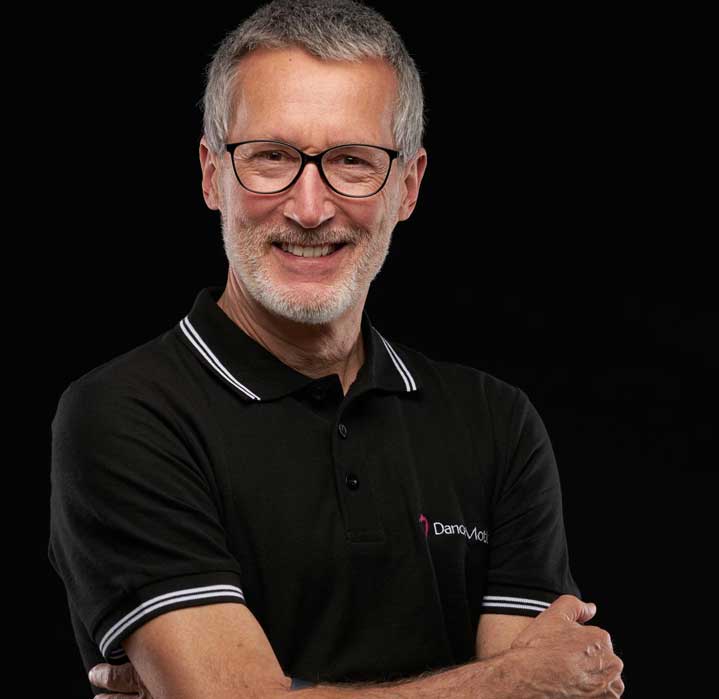
Prof. Jan Broeckx serves as a Professor of Ballet at the Ballet Academy of Hochschule für Musik und Theater München (Munich University of Music and Performing Arts). The university emphasizes interdisciplinary research connecting artistic practice and academic inquiry, focusing on areas like musicology, artificial intelligence in cultural sectors, and music psychology. Primary affiliation: Ballet Academy, HMTM Academic rank: Professor Research trends at HMTM include historical music under dictatorships, AI applications in cultural contexts, and musician medicine, though specific details about Broeckx's contributions in these areas are not provided in the available texts.
Adam Tindale is an Associate Professor of Human-Computer Interaction at OCAD University’s Faculty of Arts & Science, specializing in electronic musical instruments and innovative interaction design. He is renowned for his work on the E-Drumset, an instrument combining physical modeling, machine learning, and intuitive interfaces. His research bridges music technology, wearable systems, and immersive environments, emphasizing cross-disciplinary collaboration. Education: B.Mus. (Queen's University), M.M. in Music Technology (McGill University), Ph.D. in Interdisciplinary Studies (University of Victoria, focusing on Music, Computer Science, and Electrical Engineering). Research interests include: Design of digital musical instruments Wearable technology for performance VR audio interfaces Gesture-based interaction systems His recent work explores: Generative art through GANs (e.g., calligraphic Arabic scripts) Anisochronous rhythmic interfaces 3D-printed information embedding Key contributions include the JunctionBox toolkit for sound interfaces and frameworks like Flocking for web-based music.
Eivind Brevik is an Associate Professor in Information Systems and Head of the Department of Technology at Kristiania University of Applied Sciences. He previously served as Dean of the Faculty of Technology at Westerdal's Oslo School of Arts (2014-2017) and Acting Rector at NITH (2013-2014). His primary affiliation is with the School of Economics, Innovation and Technology (EIT), where he focuses on bridging technical systems with human-centric design principles. Education: Master of Business Economics (BI Norwegian Business School), Master of Science in Business (Organizational Psychology), Practical-Pedagogical Education (University of Oslo), and Officers Education (Royal Norwegian Navy). Research interests span creativity in technology, agile methodologies, HCI, and systems development. His work critiques industry practices such as the "Scrum Illusion" and explores usability integration within SDMs. Over 15 years of academic leadership positions reflect his dual focus on pedagogy and organizational strategy. Publications emphasize empirical studies of Norwegian IT industry practices, including a landmark 2008 survey on usability and methods, and a 2019 bibliometric analysis of NOKOBIT conference impact. No scientific awards are explicitly noted in provided materials. Grant activity and lab affiliations remain unspecified in available texts. Advising records show no listed PhD/Master's students, though his leadership roles suggest extensive mentorship in institutional contexts.
Prof. Dr. Sc. Ivana Paula Gortan-Carlin is a Full Professor and Dean of the Faculty of Education Sciences at Juraj Dobrila University in Pula, Croatia. She holds a position in the Department of Primary Education and has been active in academic leadership since 2024. Her career includes roles as Head of the Classroom Teaching Department (2017–2020) and Head of Teacher Education (2015–2017). She teaches courses in music pedagogy, early childhood education, and interdisciplinary studies. Her research focuses on music education, cultural heritage, and teacher competencies. She has led departments and projects like the Čakavian Assembly’s Music Department and contributed to UNESCO-related cultural management strategies. Education: PhD in Musicology (2012), University of Ljubljana MSc in History (2005), University of Zagreb Bachelor’s Degree in Musicology (1994), University of Ljubljana Professional Training: Event Management in Cultural Organizations (Florence) Research Interests: Music education methodologies, traditional music preservation, interdisciplinary teaching approaches, cultural policy, and teacher professional development. Her work bridges musicology with early childhood development and cultural tourism strategies. Recent Article Trends: Focus on innovative music education practices, cultural heritage management, and intercultural communication through music. Recent works explore opera performance innovations, regional music traditions, and teacher competencies in Croatia. Awards: II. Musicological Awards (Istria Nobilissima, 2001) Honors for composing/conducting work Leadership roles in Čakavian Assembly and Croatian Musicological Society Grants & Projects: Led projects on inclusive teacher education, cultural event management, and regional music documentation. Active in ERASMUS+ collaborations and cultural tourism initiatives. Labs/Teams: Coordinates the Music Education Research Group and collaborates with the Department of Cultural Management at her faculty.
Pavel Stefanov is an Associate Professor with a PhD, specializing in music education, acoustics, and sound engineering. His research focuses on integrating technology into music pedagogy, experimental acoustic techniques, and innovative approaches to music education. He has collaborated with educational institutions to develop creative pedagogical resources and explored non-traditional practices such as homemade musical instruments and DIY recording studios. His work spans acoustic analysis of musical instruments (e.g., woodwind and string instruments) and the application of artificial intelligence in sound design. He also investigates human auditory systems and their implications for sound engineering in theatre and orchestral recordings. Stefanov advocates for informal learning environments and digital content creation to enhance music literacy, particularly in Bulgarian schools. No scientific awards or grants are explicitly mentioned in the provided texts. His students and institutional affiliations remain unspecified, though his publications suggest active involvement in academic and experimental music-related fields.
FH-Prof. Markus Wintersberger is a Lecturer at the University of Applied Sciences St. Pölten (FH St. Pölten), affiliated with the Department of Media and Digital Technologies within the Institute of Creative Media/Technologies. He specializes in Extended Reality (XR), Digital Art, and Immersive Storytelling, leading projects that merge technology with performance, public art, and cultural interventions. His roles include Deputy Academic Director for the Digital Design MA program and involvement in multiple study programs such as Digital Media Technologies (MA) and Media Technology (BA). Research interests focus on experimental media, AR/VR applications, and the intersection of art with emerging technologies. Notable projects include Videocity St. Pölten , smART Data BRIDGE Krahuletz , and Lucid Dreams , which explore digital storytelling, public installations, and interdisciplinary collaboration. Wintersberger frequently participates in academic conferences (e.g., EuroVR, Kyoto Conference on Arts/Media/Culture) and collaborates with institutions like the Krahuletz Museum and the Landestheater Niederösterreich. His work emphasizes innovative teaching methods, including workshops on wearable theatre and immersive media. Key collaborations include projects with artists Andrea Nagl and institutions such as the Artificial Museum Vienna. Recent activities include the 2024 aDNA Vernetzungstreffen and guest lectures on AI in art at universities in Portugal and Austria. Wintersberger’s creative output spans performances, installations, and digital exhibitions, often addressing themes of space, technology, and human interaction. He actively engages with public audiences through festivals like the Donauinselfest and cultural venues such as the Schuberttheater Wien.
Robert England is a Professor of Computer Science at Transylvania University, specializing in areas such as computer music algorithms, operating systems, and computer science education. He holds a Ph.D. in Computer Science from The University of Tennessee (1989), an M.S. in Computer Science from the same institution (1985), and a B.A. in Mathematics from Rhodes College (1979). His work emphasizes practical, hands-on learning to help students navigate the rapidly evolving landscape of computer science, particularly in mobile app development and software module integration. England has taught courses ranging from foundational topics like Logic and Problem Solving to advanced subjects such as Netcentric Computing and Special Topics in iPad App Development. He has contributed to academic journals including the Journal of Computing Sciences in Colleges and the International Computer Music Conference proceedings, focusing on pedagogical innovations and technical advancements in operating systems and music algorithms. He has received the Bingham Teaching Award and is a member of Phi Beta Kappa. Professionally, he belongs to the ACM, CCSC, and ICMA. Beyond academia, he has worked at Norway’s Christian Michelsen Institute and rescued an orphaned dog named Buddha, whom he hand-reared.
Dr. Forrest Parker is a Lecturer at Valdosta State University, where he focuses on education policy, special education, and social-emotional learning. He can be reached at fparker@valdosta.edu or via office EC 1169. His work emphasizes practical applications of technology in education and ethical considerations in resource use. Research interests include leveraging children’s literature for SEL development, AI integration in lesson planning (e.g., Education CoPilot), and addressing behavioral challenges through music therapy. His recent studies explore Georgia education policy reforms and teacher perceptions of divisive concepts legislation. Publications highlight interdisciplinary approaches, such as combining music therapy with ADHD management and evaluating self-advocacy interventions for students with disabilities. His earlier work addressed classroom inclusion strategies and cultural practices supporting students with emotional behavioral disorders. Parker’s scholarship bridges pedagogical innovation with real-world classroom challenges, particularly in special needs education. He contributes to professional development through articles on IEP classroom ratios and ethical uses of AI tools like HatGPT.
Lamberto Coccioli is a Professor of Music and Technology at Royal Birmingham Conservatoire (RBC), part of Birmingham City University, and serves as Associate Principal. His roles include directing the EU-funded Integra project (2005–2012), co-founding the Integra Lab, and leading the £485,000 AHRC-funded 'Augmented Vocality' project. His career spans over 30 years, with a focus on live electronics, composition, and ethnomusicological fieldwork in Colombia. Education: Studied composition with Edgar Alandia and Azio Corghi at Conservatorio G. Verdi in Milan, Italy. Early career included assisting Luciano Berio (1995–1999). Research interests encompass music-technology fusion, cultural soundscapes, and interactive performance systems. Key contributions include developing the Integra Live software, exploring interdisciplinary performance practices, and advocating for sustainable live-electronics workflows. His recent work bridges AI ethics in music creation and early Irish/Old Norse vocal traditions. He has lectured globally and co-founded Integra Lab, a research center for music interaction design. Grants include leading £485k AHRC funding for historical vocal studies. His articles span AI ethics, Colombian soundscapes, and live-electronics pedagogy. Labs/Teams: Directs Integra Lab and collaborates with RBC’s Composition and Experimental Performance Cluster.
Michael John Prince is a Professor at the Department of Foreign Languages and Translation, University of Agder, specializing in interdisciplinary cultural studies. His research bridges literature, music, and visual media with a focus on American counterculture and narrative forms. Research interests include: Satire and parody in comics, music, and political discourse Graphic novels as cultural artifacts and Alan Moore's deconstruction of American identity Musical-literary intersections in Bob Dylan, Frank Zappa, and Beat Generation adaptations Dystopian narratives in contemporary media (e.g., Rick and Morty) His publications demonstrate consistent engagement with countercultural movements, particularly analyzing the Beat Generation's legacy in film and literature. Recent work (2022-2024) shows increased focus on political satire in digital media and American electoral discourse.
Professor Samantha Parsley is a distinguished academic in the School of Organisations, Systems and People at the University of Portsmouth, specializing in the emotional, sensory, and aesthetic dimensions of work and management. With over two decades of academic experience, she has held professorial positions at Cardiff University and the University of Essex, and previously served as Associate Head (Research) for the School of Organization Studies and HRM from 2018-2022. As a University of Portsmouth alumna (BA Hons Business Studies, 1st class, 1999), her career bridges academic research with practical industry applications, particularly in creative sectors. Her research interests focus on the intersection of aesthetics and organizations, examining how work can be understood as aesthetic endeavors that fulfill emotional needs through sensory experiences. She pioneered research on 'an aesthetic ethic' of work, exploring how modern workers value excitement and 'cool' experiences, and how management techniques have evolved to meet these demands. Her empirical work spans generative office design, workplace fun cultures, and the role of smell in office environments. Currently, her primary research investigates gender imbalance in digital-creative industries, particularly the electronic music sector where 90-98% of producers and audio engineers are male. Professor Parsley's research output reveals a clear trajectory from foundational work on visual research methodologies (including ESRC-funded projects from 2008-2012) toward contemporary investigations of gender representation in creative industries. Her most recent publications (2023-2025) demonstrate increasing focus on women's experiences in electronic music production, employing innovative methodologies that combine academic research with practical industry engagement. Her work consistently bridges sensory workplace studies with gender and diversity issues, creating a unique scholarly niche that connects organizational theory with creative industry practice. ESRC Research Grant recipient British Academy Research Grant recipient Leverhulme Trust Fellowship (2019-2021) Co-chair of Association of Electronic Music's Diversity and Inclusion working group Joint series editor for Palgrave Series in Business, Arts and Humanities Editor of Organizational Aesthetics journal Editor of Routledge Companion to Visual Organization As an active PhD supervisor and educator, Professor Parsley has significantly contributed to research methods training, particularly in visual methodologies. She currently leads the 'Managing Equality and Diversity at Work' module and has extensive experience teaching across employee-related business subjects. Her practical engagement with industry, particularly through the Association for Electronic Music, ensures her research directly informs diversity initiatives in the creative sector. She is currently writing a book based on her Leverhulme-funded research, scheduled for publication by Bristol University Press in 2025.
Andrea Salgian is a Professor of Computer Science and Chair of the Department of Computer Science at The College of New Jersey (TCNJ) , affiliated with the School of Science . Her research focuses on Human-Computer Interaction (HCI) , Computer Vision , and Artificial Intelligence , with a strong emphasis on interdisciplinary applications bridging STEM and Arts . Ph.D. in Computer Science , University of Rochester, 2001 M.S. in Computer Science , University of Rochester, 1998 B.S. in Computer Science , Babes-Bolyai University, 1996 Dr. Salgian’s research explores the intersection of Computer Vision and Music Technology , including work on Gesture Recognition , Conducting Animation , and Accessibility Technologies . Her recent publications highlight advancements in Sign Language Recognition and Inclusive HCI Pedagogy . She has contributed to 15+ peer-reviewed publications in conferences like ICMC , ISVC , and SIGCSE , with a focus on Music Technology , Conducting Robotics , and Interdisciplinary Curriculum Design . Her work has been supported by NSF grants and Teach Access Funding , emphasizing STEM-Arts integration . Dr. Salgian actively serves in Academic Governance , including roles on the Faculty Senate , SOSA Council , and Artificial Intelligence Task Force . She has also led Departmental Leadership as Associate Chair (2017–2023) and Chair (2023–Ongoing) .
Wang Yufei is affiliated with Xiamen University, China, holding positions across the School of Informatics, Institute of Artificial Intelligence, Center for Digital Media Computing, and School of Film. The research spans interdisciplinary domains, integrating artificial intelligence, robotics, and multimedia systems for real-world applications. Wang Yufei's research primarily focuses on artificial intelligence , computer vision , robotic interaction , and multimedia systems . Key areas include 3D scene modeling using Gaussian splatting, diffusion models for storytelling and image generation, reinforcement learning for interactive instruction, and AI applications in healthcare, agriculture, and urban planning. The work emphasizes robustness, real-time feedback, and human-centered design. The recent publications demonstrate a strong trend in deep learning applied to vision and multimodal systems , with increasing focus on interactive AI , embodied environments , and domain adaptation . Topics such as differentiable trajectory optimization, backdoor attacks in compression models, and context-aware assistance systems reflect both technical depth and societal relevance. Wang Yufei has not been mentioned in relation to any scientific awards in the provided text. No information is available regarding student advising or research grants. However, the breadth and volume of publications suggest active research leadership and likely involvement in funded projects. Research is conducted in collaboration with teams at Xiamen University, particularly within the Institute of Artificial Intelligence and the Center for Digital Media Computing, focusing on intelligent multimedia and robotic systems. The integration of AI with cultural and educational applications, such as piano instruction and heritage preservation, highlights a unique interdisciplinary lab environment.
Ian Stewart is an Assistant Professor in the Music Production and Engineering (MP&E) department at Berklee College of Music, where he teaches audio mastering and music technology. He also operates Flotown Mastering, a professional audio mastering studio he has run since 2011, and has collaborated with artists such as KRS-One and Mr. Lif. He co-developed the Basslane Pro plugin with Tone Projects in 2022 and is a recognized thought leader in hybrid learning technologies for audio education. B.S. in Music Engineering Technology, University of Miami (2007) Stewart's research and teaching focus on audio mastering, digital audio fundamentals, loudness standards (LUFS), and the integration of technology in music production. He is a passionate advocate for audio quality and has authored numerous educational articles on topics such as multiband compression, dynamic EQ, AI in mastering, and headphone-based mastering workflows. His work bridges academic instruction with real-world engineering practice, emphasizing accessibility and adaptability in non-ideal acoustic environments. His recent publications reflect a strong trend toward practical, accessible mastering techniques for modern platforms like Spotify and Apple Music, with emphasis on loudness normalization, tonal balance, and workflow efficiency. He explores both technical and aesthetic aspects of mastering, including the use of tools like Ozone, dithering, true peak limiting, and AI-assisted processing. His articles are widely used in audio education and industry training. Commercial Integrator's 40 Under 40 (2021) Stewart has contributed to the development of online mastering academies for the Audio Engineering Society (AES) and has helped pioneer hybrid learning models during the pandemic. While no formal grants are mentioned, his work in educational technology and plugin development indicates active engagement in research and innovation. He has advised on best practices for remote mastering, home studio setups, and collaborative audio workflows. He runs Flotown Mastering, offering services in music mastering, audio restoration, and forensic audio analysis. The studio emphasizes collaboration, customer service, and technical excellence. Stewart also contributes to iZotope’s educational content as an author and is active in promoting audio literacy among producers and engineers.
Dr. Adam Rasmussen is Associate Professor of Humanities and Dean of the College of Arts and Humanities at Arizona Christian University. He holds a PhD in Educational Studies from Talbot School of Theology at Biola University, an MA in Educational Ministries from Wheaton College, and a BA in History from Northwestern College. PhD in Educational Studies (Talbot School of Theology, Biola University) MA in Educational Ministries (Wheaton College) BA in History (Northwestern College) Dr. Rasmussen's research centers on the integration of faith, reason, and culture, with a focus on biblical literacy, Christian apologetics, and educational ministries. He is passionate about helping students develop a moral philosophy rooted in Christian truth and equipping them to transform culture. His work emphasizes leadership development, worldview integration, and spiritual formation in educational contexts. His recent publications and presentations reflect a strong engagement with Christian thought, particularly the legacy of Francis Schaeffer, and address topics such as worship music, servant leadership, and the role of the humanities in fostering faith and freedom. The articles span disciplines including theology, education, leadership, and cultural studies, demonstrating a consistent commitment to faith-based scholarship. Dr. Rasmussen has served as an Advanced Quality Assurance Peer Reviewer for the Association of Christian Schools International (2009–2019), is a board member of East Valley Athletes for Christ (2020–present), and volunteers in missions to Mexico and local church ministries. He has advised and led numerous educational and spiritual enrichment initiatives. His service includes: Advanced Quality Assurance Peer Reviewer, Association of Christian Schools International (2009–2019) Board Member, East Valley Athletes for Christ (2020–present) Volunteer, Missions Ministries to Mexico (2010–present) Church Volunteer in various roles (2001–present) Dr. Rasmussen is actively involved in academic and ministry communities, presenting at conferences and contributing to journals such as Christian Educator’s Journal and ACSI Leadership Matters . His work bridges scholarship, pedagogy, and practical ministry.