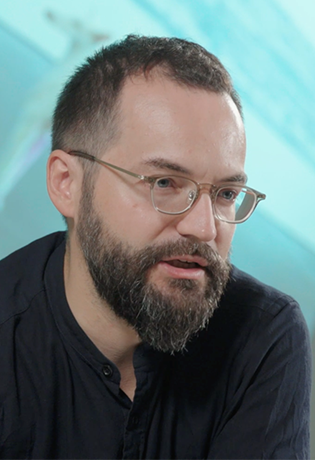
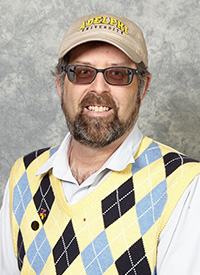
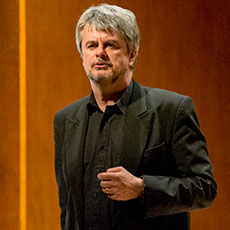
Xavier Serra is a Full Professor at the Department of Engineering at Universitat Pompeu Fabra (UPF), Barcelona. He is the founder and director of the Music Technology Group (MTG), and leads the UPF-BMAT Chair on AI and Music. He also coordinates the Master in Sound and Music Computing and serves as President of the Phonos Foundation. His research focuses on audio signal processing, sound and music computing, and computational musicology, emphasizing open science and open innovation. Education: BSc in Biology, University of Barcelona (1981) Master in Music, Florida State University (1983) PhD in Computer Music, Stanford University (1989) Research Interests: Audio Signal Processing Data-Driven and Knowledge-Driven Methodologies Music Information Retrieval Cultural Music Analysis (e.g., Carnatic/Turkish/Andalusian Music) Music Education Technology Notable Projects: CompMusic (ERC Advanced Grant, 2010-2017): Multicultural computational music analysis Open datasets: Freesound, Saraga, FSD50K Technologies: Reactable, Vocaloid, Essentia API Recent Trends in Articles: Focus on AI-driven audio processing (neural fingerprints, generative models), cross-cultural music analysis, and explainable music difficulty estimation. Awards: ERC Advanced Grant (2010) for CompMusic Project. Labs/Teams: Director of MTG, Phonos Foundation, and UPF-BMAT Chair. Active in open-source projects and international collaborations.
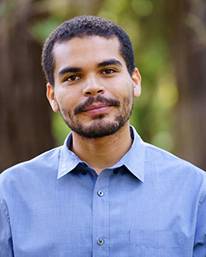
Dr. Damien Charrieras is an Associate Professor at the School of Creative Media , City University of Hong Kong, where he serves as Program Leader for the Master of Art in Creative Media and deputy program leader for the PhD in Creative Media. His work bridges cultural studies, new media theory, and the intersection of financial technologies with artistic practices through the ACIM Laboratory for Interventions in Speculative Finance . Doctoral research on digital artists' trajectories in Montreal FRQSC Postdoctoral Fellowship at McGill University Research spans game engine design , datafication of creativity , blockchain in art , and post-anthropocentric creative processes . With over HK$3.14M in grants as Principal Investigator, he explores situated digital creativity in urban contexts, critical worldbuilding pedagogy , and the mediation of technical systems in cultural production. His publications in Cities , Organized Sound , and Human Relations analyze the reconfiguration of artistic practices through software infrastructures and automation paradigms. Scientific awards include: FRQSC Postdoctoral Fellowship
Margus Pärtlas is Professor of Music Theory and Vice Rector for Academic Affairs and Research at the Estonian Academy of Music and Theatre (EAMT). He earned his Doctorate from the St. Petersburg Conservatory in 1992 with a dissertation on Eduard Tubin's symphonies. His career includes positions as Associate Professor (1993-2003), Senior Teacher (1987-1993), and Fulbright Visiting Scholar at the University of North Texas (1999-2000). Pärtlas's research focuses on music analysis methodologies , specializing in the works of Eduard Tubin and Richard Strauss. Key areas include symphonic form, tonal transformation in Romantic music, semiotic analysis of choral works, and cultural identity in exile compositions. His publications consistently explore structural innovation in 19th-20th century European music. His recent articles reflect a thematic emphasis on Estonian musical heritage , institutional development of music academies, and analytical studies of concerti/symphonies. A significant trend involves examining how composers negotiate cultural identity through structural elements. Awards & Honors: Fulbright Visiting Scholar Grant (1999) Best Music Article Award from 'Teater. Muusika. Kino' (1992) Academic Leadership: Chaired accreditation committees internationally (Latvia, Lithuania, Russia, Armenia), serves on editorial boards of Res Musica and Eduard Tubin's Complete Works, and organized major conferences including 'Eduard Tubin 100'. Doctoral Supervision: Guided 4 PhD students in music analysis and interpretation, focusing on topics like Tubin's piano sonatas, Estonian song traditions, and analytical approaches to contemporary performance.
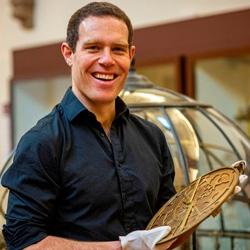
Seb Falk is a College Fellow and Research Fellow at Girton College, University of Cambridge, and a Senior Admissions Tutor. He holds academic roles including Praelector and Director of Studies for the Cambridge Foundation Year. His research focuses on medieval mathematical sciences, particularly astronomy, navigation, and the history of scientific instruments and texts. Falk earned a BA in History and Spanish from Oxford University, followed by an MPhil and PhD in History and Philosophy of Science from Cambridge. His research explores the interplay between religion, literature, and science in the Middle Ages, challenging the 'Dark Ages' narrative. Key projects include studies on late medieval astronomical tables and instruments, and a global comparative analysis of natural sciences around the year 1000. Falk has published widely, including the acclaimed book The Light Ages (2020), which was shortlisted for the Hughes Prize and awarded the Osterbrock Prize in 2025. His articles span topics like medieval astronomical practices, manuscript studies, and the cultural history of science. Falk is also a sought-after media contributor, appearing on BBC programs and podcasts, and has engaged in public outreach through lectures and museum collaborations.
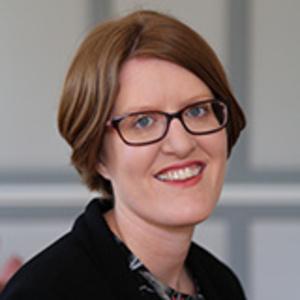
Denise Neary is a Professor and Doctoral Studies Coordinator at the Royal Irish Academy of Music (RIAM), overseeing doctoral supervision and research methods in musicology. Previously, she was Senior Lecturer at Canterbury Christ Church University, UK. She organizes international guest lectures at RIAM and actively participates in academic societies such as the Society for Musicology in Ireland (SMI) and Performance Research Ireland. Her research focuses on 17th- to 19th-century music in Ireland and Britain, particularly church music and artistic research. She has supervised numerous doctoral dissertations, including studies on Beethoven, Schubert, and Irish choral traditions. Affiliations: RIAM (current), SMI (Council Member since 2009), RILM National Committee of Ireland. Educations: Extensive academic background in musicology, with research concentrated on historical performance practices and institutional music history. Her research interests span Irish musical heritage, cathedral music in England, and the evolution of artistic research methodologies. Recent work includes exploring performance as academic practice and the role of music in 17th-century Irish parish churches. She has contributed to major publications like the Encyclopedia of Music in Ireland (2013) and presented at international conferences on topics such as ‘Artistic Research in Music’ (2018). Denise has supervised over 20 doctoral students since 2010, specializing in performance analysis of classical and contemporary works. She also serves on advisory boards for Irish Musical Studies and collaborates internationally on projects like the ‘Doctors in Performance’ conference series. Labs/Teams: Leads the Doctoral Studies Program at RIAM, fostering interdisciplinary research in musicology and performance.
Dominic Thibault is an Assistant Professor at the Faculty of Music, Université de Montréal . His research-creation explores human-machine interaction in musical contexts, focusing on embodied cognition through electroacoustic compositions, audiovisual performances, and musical software development. Co-director, Laboratoire Formes·Ondes Active member, CIRMMT (Centre for Interdisciplinary Research in Music Media and Technology) Research axis leader, Expanded Musical Practice (CIRMMT) Member, Québecor Millénium entrepreneurship committee Scientific committee member, ACFAS
Christopher Castro serves as an Assistant Professor of Composition at Chapman University's College of Performing Arts. A composer and double bassist from Brooklyn, New York, he combines academic rigor with avant-garde experimentation. Ph.D. in Composition and Theory from University of California, Davis Bachelor of Music from Juilliard School (Double Bass & Composition) His research bridges Western Art Music traditions with contemporary innovations , creating works that merge: Johannes Ockeghem's polyphonic complexity John Coltrane's spiritual intensity Modernist structural experimentation Historical reconstruction techniques Jazz-classical hybrid forms Interdisciplinary performance formats Recent compositions demonstrate trends in flexible instrumentation , text-music relationships , and genre synthesis . His output spans chamber works, orchestral pieces, and vocal compositions with equal mastery. Scientific recognition includes: 2023 Fromm Music Foundation Commission (Harvard University) Chamber Music America's 2021 Classical Commissioning Award As a new music advocate , Castro collaborates with ensembles like: Left Coast Chamber Ensemble (artistic advisory board) New Mexico Contemporary Ensemble Los Angeles Philharmonic's Upbeat Live series Lyris Quartet and Sharon Harms
Helle Hochscheid is a University Lecturer in antiquity and heritage at University College Roosevelt, a Liberal Arts & Sciences college within Utrecht University in Middelburg. She holds an affiliation with the Humanities Research Institute for History and Art History and the Department of Ancient History and Classical Civilization. Her academic roles include coordinating the Archaeology in the Classroom project and serving on the Scientific Advisory Board of the Netherlands Institute in Athens, the Editorial Board of PHAROS: Journal of the Netherlands Institute at Athens , and the Advisory Board of Theran Press. Her research expertise spans Greek archaeology, ancient history, cultural heritage, and women’s history, with a focus on craft production (particularly sculpture and musical instruments like auloi) in ancient Greek societies. She investigates social contexts of craftsmanship, including the roles of non-elite groups and women in Athenian artistic networks. Key themes include gender diversity, migration’s societal impact, and the intersection of craft labor with early knowledge economies. Hochscheid regularly collaborates with undergraduate students, co-editing volumes such as The World on Walcheren (2024). She teaches courses including Academic Internship , Greek Art & Archaeology , and Making Society in Archaeology , emphasizing interdisciplinary education and community-engaged learning. Her work bridges academic research and public heritage through projects like Archaeology in the Classroom , which introduces transferable skills via archaeology to primary school children. Her professional contributions include organizing sessions at the EAA Annual Conference (2024) and presenting on topics like women’s work in ancient Athens. She is a member of the Engendering Ancient Economies Network (EAEN) and the TEXNH research collaboration, exploring economic and social dimensions of ancient Mediterranean crafts.
Professor Stephen Broad is a musicologist and educator serving as Director of Research and Knowledge Exchange at the Royal Conservatoire of Scotland. He holds a DPhil from the University of Oxford and has extensive experience in historical musicology, music education, and policy development. His research focuses on Olivier Messiaen, 1930s French music culture, and music practice in Scotland. Broad has authored/co-authored influential reports like What’s Going On? , which informed the Scottish Youth Music Initiative, and chairs the European Platform for Artistic Research in Music (EPARM). Education: DPhil in Historical Musicology, University of Oxford (2001) MA in Music and Physics, University of Glasgow (1997) Research Interests: Historical Musicology: Messiaen’s early career, French musical traditions, and music historiography Music Education: Pedagogy in diverse contexts, policy development, and workforce training Practice-Based Research: Philosophical frameworks and interdisciplinary methodologies Awards & Roles: External Examiner at Royal Academy of Music, Royal College of Music, and others Editorial boards for Music Education Research and Practice-Based Research Journal Recipient of grants including the Scottish Government’s £1m Musical Instrument Fund Advising & Grants: Supervised over 10 doctoral projects in musicology, performance, and education Contributed to policy initiatives like Creative Scotland’s music development programs Labs/Teams: Leads the Sciences, Humanities and Arts Research Exchange (SHARE) and chairs EPARM, fostering international collaboration in artistic research.
Assoc. Prof. Dr. Sibel Polat is an Associate Professor at Kafkas University State Conservatory, Department of Turkish Folk Music, specializing in vocal pedagogy and ethnomusicology. With a PhD in Music Sciences from İnönü University and Master's degree in Musicology from Atatürk University, she has established herself as a leading scholar in Turkish traditional music education and preservation. Her research focuses on vocal training methodologies, particularly through her innovative 'Polat Vocal Exercises' series across various voice types (Soprano, Alto, Tenor, Bass), examining microtonal singing techniques within the Hicaz makam framework. She investigates cultural transmission in Turkish folk music, regional musical traditions of Eastern Anatolia, and the role of women in preserving intangible cultural heritage. Her work bridges academic research with practical performance applications. Prof. Polat's publication record demonstrates consistent scholarly output with 27 publications including journal articles, books, and conference proceedings. Her recent work includes ethnographic studies of local musicians in Kars region, analysis of Ahiska Turkish musical traditions in Erzurum, and critical examinations of vocal pedagogy practices in Turkish conservatories. Her research shows particular emphasis on practical applications for music education and cultural preservation. 2019 İKSAD Science Awards recipient Healthy Life Festival award (2013) As founder of the Kars-ı Dilbeste Community, she actively promotes regional folk music through performances and community engagement. Her work extends to cultural preservation projects, including documentation of endangered musical traditions in Sarıkamış district. She serves in leadership roles with Kars Ozanlar ve Şairler Derneği (Honorary President) and Turkish Red Crescent Kars Branch, demonstrating commitment to both academic and community service.
Dr. Deirdre Nic Mhathúna is a Professor at Dublin City University's Fiontar & Scoil na Gaeilge. Her research focuses on 18th-century Irish poetry, manuscript studies, and the works of Piaras Feiritéar. She holds leadership roles in Studia Hibernica and Chumann Merriman . She earned a BA in Irish and German from Trinity College Dublin and a PhD from University College Cork. Her research explores post-classical Irish manuscript culture, the poetry of Piaras Feiritéar, and the cultural heritage of Corca Dhuibhne. Recent work includes analyses of scribal transmission, accentual verse development, and the influence of place on literary expression. She has contributed to major publications like the Cambridge History of Irish Poetry and edited volumes such as Ar an Imeall i Lár an Domhain . Her articles span topics from Jacobitism to the Great Famine, Peig Sayers' life narratives, and the enduring legacy of Piaras Feiritéar. She frequently presents at international conferences, including the American Conference for Irish Studies and the Ó Thrácht go Twitter seminar series. No scientific awards are listed, but her editorial and collaborative roles highlight her contributions to Irish literary preservation and scholarly networks. Her work bridges historical and modern contexts, emphasizing cultural continuity and the interplay between oral tradition and written text. Her research often intersects with regional identity, religious thought, and transnational literary connections.
Courtney N. Reed is a Lecturer in Digital Technologies at Loughborough University London, where she joined in November 2023. She maintains a dual role as a visiting research fellow at the Max Planck Institute for Informatics. Her academic journey includes a BMus in Electronic Production and Design from Berklee College of Music (2016), followed by an MSc (2018) and PhD (2023) in Computer Science from Queen Mary University of London. Prior to her current position, she completed postdoctoral research at both the Max Planck Institute for Informatics and King's College London. Bachelor of Music: Electronic Production and Design, Berklee College of Music (2016) Master of Science: Computer Science, Queen Mary University of London (2018) Doctor of Philosophy: Computer Science, Queen Mary University of London (2023) Dr. Reed's research explores the entangled relationships between humans, bodies, instruments, and technology in music interaction, with particular focus on vocal electromyography (VoxEMG) and the vocalist-voice relationship. Her work incorporates feminist and post-human theories to examine sociopolitical contexts within arts technology, aiming to design for creativity while acknowledging individual, messy bodies in artistic practice. She has developed an open-source platform for vocal electromyography to investigate how biosignal feedback changes understanding and perception of the body in vocal performance. Her interdisciplinary approach bridges music technology, human-computer interaction, and embodied interaction studies. Analysis of Dr. Reed's recent publications (2023-2025) reveals a strong thematic focus on embodied interaction in music technology, with particular emphasis on vocal performance, biosignal feedback, and the philosophical underpinnings of digital instrument design. Her work consistently integrates theoretical frameworks like Karen Barad's agential realism with practical applications in digital musical instruments. Key trends include the exploration of ambiguity in data representation, the sociocultural dimensions of timbre in instrument design, and the development of novel methodologies for understanding embodied musical experiences through micro-phenomenology and ethnographic approaches. ACM SIGCHI Outstanding Dissertation Award (2024) for her thesis 'Imagining & Sensing: Understanding and Extending the Vocalist-Voice Relationship Through Biosignal Feedback' Best Newcomer Award at Loughborough University London's Community Awards Celebration (2024) Dr. Reed actively contributes to the academic community through conference organization and leadership roles. She serves as Member-at-Large on the NIME Board, previously chaired papers for NIME 2024, and co-organized the IBM SkillsBuild Sprint at Loughborough London. She has also chaired sessions at the ACM TEI Conference and co-chaired the Student Design Competition. Her collaborative work spans multiple institutions and includes significant contributions to interdisciplinary projects that bridge music, technology, and human experience. She has been instrumental in developing the senSInt research group and the RaveNET wearable network project. Dr. Reed leads the senSInt research group which focuses on sensorimotor interaction in music and performance contexts. The group develops innovative technologies including the VoxEMG platform for vocal electromyography, the Bones anti-corset for vocal performance, and the RaveNET network of wearable biosensing nodes. These projects explore the intersection of biosignals, embodied interaction, and musical expression, creating novel frameworks for understanding how technology mediates human creativity and performance. The group frequently collaborates with musicians, technologists, and theorists to develop and test these systems in real-world performance contexts.
Bettina Sandgathe Husebø is a Professor and Head of the Center for Geriatric and Nursing Home Medicine at the Department of Global Health and Community Medicine, Faculty of Medicine, University of Bergen (UiB). She also serves as Innovation Manager at IGS, UiB since 2019. Her extensive career spans clinical practice, research, and leadership roles in geriatric and palliative care. Dr. Husebø completed her medical education at the University of Bonn, Germany in 1988, followed by specialization in Anaesthesiology and Intensive Care in 1995. Her Norwegian qualifications include Medical Specialization in Palliative Medicine (2012) and Nursing Home Medicine (2014) from UiB, along with a PhD from the Faculty of Medicine Dentistry at UiB in 2008. She further enhanced her expertise with a Postgraduate Safety, Quality, Informatics and Leadership (SQIL) Program from Harvard University in 2021. Her research focuses on critical geriatric issues including pain assessment and management in dementia patients, behavioral disturbances in dementia, palliative care in nursing homes, and digital phenotyping applications for elderly care. She has pioneered work on the relationship between pain, agitation, and neuropsychiatric symptoms in dementia patients, particularly through the COSMOS trial and LIVE@Home.Path study. Her recent publications (2023-2025) demonstrate a strong emphasis on digital health solutions for dementia care, with particular focus on activity monitoring, pain assessment through technology, and community-based interventions for aging populations. Her work bridges clinical geriatrics, technology innovation, and patient-centered care models. Among her notable recognitions are the National Dementia Award by His Majesty King Harald of Norway (2022) and multiple awards for research excellence in pain management and palliative care. Her work has significantly influenced Norwegian healthcare policy regarding dementia care and end-of-life practices. As an educator, she lectures in English, German, and Norwegian on dementia, pain in dementia, innovation technologies for older adults, symptom management at end-of-life, systematic medication review, and advance care planning. She has received teaching awards including 'Teacher of the Year' from the Faculty of Medicine and Dentistry at UiB. Dr. Husebø leads the Center for Geriatric and Nursing Home Medicine (SEFAS) and has been instrumental in establishing Norway's first palliative care ward in a nursing home. Her research group focuses on translating evidence into practice to improve quality of life for elderly patients, particularly those with dementia.
Stephen M. Shore is a Clinical Associate Professor at Adelphi University's Ruth S. Ammon College of Education and Health Sciences, specializing in autism and Asperger Syndrome with expertise in educational practices, social inclusion, and successful transition to adulthood for individuals on the autism spectrum. Dr. Shore earned his Ed.D. in Education from Boston University (2008), M.A. in Music Education from Boston University (1992), and dual B.A. degrees in Music Education and Accounting and Information Systems from the University of Massachusetts at Amherst (1986). He holds professional teaching licenses in Music and Business Management for Massachusetts public schools (grades 5-12). His research focuses on multiple critical areas including successful transition to adulthood, employment opportunities, comparative approaches for treating children with autism, socially-based inclusion methods, self-advocacy development, teaching musical instruments to individuals on the spectrum, and international perspectives on autism diagnosis and treatment. His work uniquely bridges academic research with practical applications, informed by his personal experience as someone on the autism spectrum. Dr. Shore's publications demonstrate a consistent emphasis on practical applications of autism research across diverse contexts, with recurring themes in educational strategies, inclusion methodologies, and strength-based approaches that leverage individual capabilities rather than focusing on deficits. Member, Interagency Autism Coordinating Committee (2008-present) Vice President, Autism Society of America - Massachusetts Chapter (2007-present) Board Member, Autism Society of America - National (2001-2004, 2005-present) Former Board President, Asperger's Association of New England (2001-2006) As an educator, Dr. Shore teaches specialized courses including 'Diagnosis Of And Intervention In Autism,' 'Educating Students With Autism Classified At Level 1,' and 'Classroom Management,' emphasizing evidence-based practices that accommodate neurodiversity while promoting academic and social success.
Professor Andrew Kirkman holds the Peyton and Barber Chair of Music at the University of Birmingham's Department of Music. He leads the Centre for Early Music Performance and Research, directing the University Chamber Orchestra and professional ensemble The Binchois Consort. His roles include teaching Renaissance music, 1960s music studies, and supervising PhD topics ranging from post-communist Poland to late medieval music historiography. Research focuses on fifteenth-century sacred music’s cultural context, particularly the Mass Ordinary in late medieval Europe. His 2010 book The Cultural Life of the Early Polyphonic Mass and 2020 monograph on Saint-Omer’s music culture exemplify this. Recent work explores music-alabaster intersections and late-medieval liturgical practices. His recordings with The Binchois Consort earned Gramophone awards, including the 2017 'Early Music Recording of the Year.' Notable performances include Music for the Hundred Years' War (2017) and collaborations with pianist Clipper Erickson. Awards reflect both scholarly and performative excellence. Advising emphasizes late medieval/renaissance music, while grants supported research on Saint-Omer’s musical legacy. He co-founded The Binchois Consort in 1995, producing Hyperion recordings that revive rarely performed repertoires. His work bridges performance, scholarship, and interdisciplinary cultural studies.