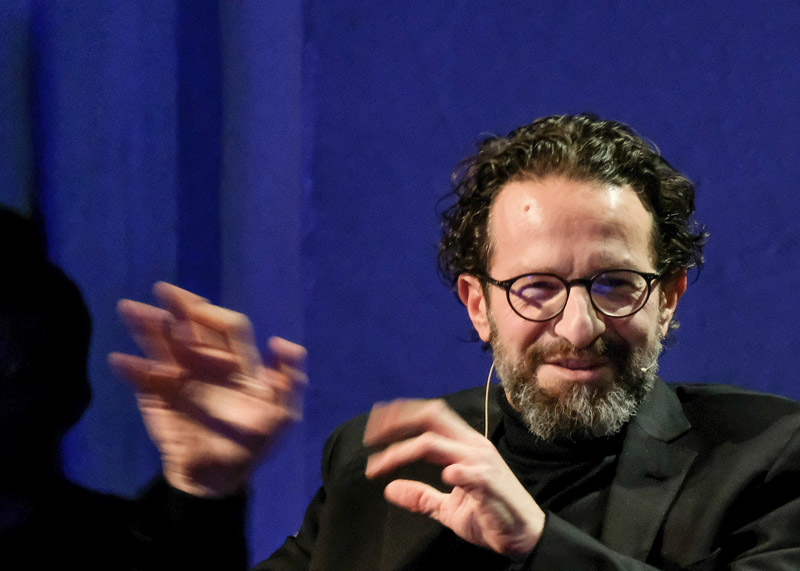
Tatjana Marković is an Austrian Academy of Sciences researcher and Adjunct Professor at the University of Music and Performing Arts Vienna, where she leads the FWF project on music historiography at the Habsburg Monarchy's southern borders (1750–1914). As editor of TheMA journal and chair of the IMS Study Group Music and Cultural Studies, she specializes in reconstructing pluricultural musical life along the Austro-Ottoman frontier. Adjunct Professor, University of Music and Performing Arts Vienna Head, FWF Discourses on Music project Editor, TheMA – Theatre, Music, Arts Chair, IMS Study Group Music and Cultural Studies Her research intertwines musicology with cultural studies, focusing on Southeast European musical traditions and their representation in Habsburg and Ottoman contexts. Key areas include diplomatic music exchanges, military border cultural dynamics, and gendered perspectives in regional music history. Recent publications address microregional musical networks, operatic diplomacy, and 19th-century battlefield commemorations through music. She contributes to international conferences on Balkan musicology and Austro-Ottoman cultural interactions, with editorial roles in multiple academic series.
Vincenzo Borghetti is an Associate Professor of Music History at the University of Verona, Italy, where he has been employed since 2008, first as a Lecturer ("ricercatore") until 2017, then promoted to his current position. He previously held teaching positions at the University of Vienna (2015-2016) and was a Lila Wallace–Reader's Digest Fellow at Villa I Tatti, Harvard's Center for Italian Renaissance Studies in Florence (2007-2008). He earned his Ph.D. from the University of Pavia-Cremona in 2001. His scholarly work centers on Renaissance polyphony and early twentieth-century opera, with particular expertise in music philology, court culture, and the intersection of music with visual arts and literature. Borghetti has made significant contributions to Rossini scholarship through his critical edition of Elisabetta regina d'Inghilterra (2016) for the Fondazione Rossini's critical edition series. Borghetti's publications appear in leading journals including Early Music History , Acta musicologica , Journal of the Alamire Foundation , and Imago Musicae . His research demonstrates consistent engagement with both historical musicology and interdisciplinary approaches connecting music to broader cultural contexts. Gabriele D'Annunzio Award (1998) for co-authored monograph Il bacio della Sfinge: D'Annunzio, Pizzetti e "Fedra" Grant from Fritz Thyssen Stiftung (2018) for organizing the International Conference "Books, Images, Objects: The Media of Secular Music in the Medieval and Early Modern Period" As an active scholar in musicology, Borghetti contributes to major reference works including the Handbuch der Musik der Renaissance , demonstrating his standing in the international academic community. His work bridges historical musicology with cultural studies, offering nuanced interpretations of musical practices within their broader social and intellectual contexts.
Stefan Hagel is a Research Fellow at the Austrian Academy of Sciences and Privatdozent at the University of Vienna, specializing in ancient Greek and Roman music. His work bridges archaeology, philology, and digital reconstruction to analyze ancient musical instruments, notation systems, and performance practices. His research focuses on: Reconstruction of auloi (double-pipes) and hydraulis (water organs) Computational analysis of instrument acoustics Cross-cultural transmission of musical technologies Ancient harmonic theory and notation decipherment He leads major projects including Ancient Music Beyond Hellenisation (ERC Advanced Grant), Digitising Aspects of Graphical Representation in Ancient Music (FWF), and the European Music Archaeology Project . Hagel has developed specialized software for instrument analysis and serves as editor for the Journal of Music Archaeology . His publications demonstrate consistent focus on technical aspects of ancient music through interdisciplinary methodologies.
Gerd Grupe serves as Professor of Ethnomusicology and Vice Rector for Research at the University of Music and Performing Arts Graz (KUG), where he has held his faculty position since 2002. His academic career spans multiple institutions including Free University Berlin, Frankfurt am Main, Hildesheim, Bayreuth, and Krems. His educational background includes doctorate in Comparative Musicology (1990, FU Berlin) with dissertation on Afro-Jamaican Kumina music, and habilitation (1996) on Shona music published as The Art of Mbira Playing (2004). His research spans sub-Saharan African music , African-American traditions , Central Javanese gamelan , and cross-cultural comparative studies , with fieldwork in Jamaica, Zimbabwe, and India. His scholarly output reveals consistent focus on traditional African musical systems (particularly Shona mbira and Jamaican Kumina), notation challenges in oral traditions , and pedagogical approaches to non-Western music . The article corpus demonstrates progression from specific case studies (Kumina, 1990s) toward broader theoretical frameworks (2000s) examining cognitive dimensions, performance practices, and cross-cultural learning methodologies. As academic leadership, he established KUG's Central Javanese Gamelan ensemble (2004) for research and teaching, and co-edits the Translingual Discourse in Ethnomusicology journal while editing Grazer Beiträge zur Ethnomusicologie . His work bridges performance practice, cognitive analysis, and cultural context with emphasis on learning through performance methodology.
Matthias Bertsch is a faculty member with expertise spanning musical acoustics, medical acoustics, and ethnomusicology. His work bridges musicology, biomedical engineering, and clinical applications. Academic leadership in structured doctoral programs Research on brass instrument mechanics and NICU sound environments Interdisciplinary focus on music-physiology and psychoacoustics Research Interests: Specializing in the acoustic properties of musical instruments, therapeutic sound applications for premature infants, and physiological analysis of brass players. His work combines empirical measurement with clinical and cultural implications. Article Trends: Publications emphasize brass instrument biomechanics , incubator sound optimization , and music's physiological effects , with recurring themes in virtual acoustics and interdisciplinary methodologies.
Mag. phil. Mag. art. Dr. phil. Stephan Hametner is a Professor at PH-OÖ (University College of Teacher Education Upper Austria) since 2014, specializing in Subject Didactics for General Music Education across elementary and secondary levels. His expertise spans Systemic-constructivist didactics Empirical research in music education Curriculum development Academic supervision Organizational development Academic background highlights include: PhD in Music Education/Pedagogy (2004, magna cum laude ) Diploma in Music Education (University of Music and Performing Arts Vienna & University of Vienna, 2000 magna cum laude ) Diploma in Rhythmics (1996 magna cum laude ) Research focuses on systemic-constructivist music pedagogy , with key contributions in Didactic frameworks for music interpretation Empirical validation of teaching methods Integration of movement and music Subject-oriented educational theory His publications analyze music's role in cognitive development and pedagogical innovation, emphasizing experiential learning. He also contributes to media education through 50 ethnomusicological radio programs (Radio Orange 94.0, 2000-2005) Interactive educational CD-ROMs Academic case studies Active in international collaborations, he serves as expert for Bern University of the Arts and contributes to the Rhythmic Expositur Biel project. Current projects include reception-aesthetic film analysis for teacher training and music identity development in educational settings.
Dr. Denis Kalkofen serves as an Associate Professor at the Institute of Computer Graphics and Vision (ICG) at Graz University of Technology, Austria. His academic journey began with a Dipl.-Ing. (2004) from the University of Magdeburg, followed by a Dr. techn. (2009) from Graz University of Technology. University of Magdeburg - Dipl.-Ing. (2004) Graz University of Technology - Dr. techn. (2009) University of Michigan, Ann Arbor - Virtual Reality Laboratory member Stanford University - Visiting Assistant Professor at Computational Imaging Laboratory (2019) University of South Australia - Visiting Researcher at Wearable Computer Laboratory (2019) Dr. Kalkofen's research centers on developing visualization, interaction, authoring, and display technologies for Virtual and Mixed Reality environments, with particular emphasis on combining computer graphics and computer vision techniques to create comprehensible and accessible VR/MR experiences. His work spans situated visualization (addressing label placement and X-ray visualization), photometric rendering (recovering lighting properties for realistic AR), and content creation automation (leveraging existing data sources for AR content). His publication trends over the past 15+ years demonstrate consistent leadership in AR/MR research, evolving from foundational work on visualization techniques to current cutting-edge research in neural rendering, neuroadaptive systems, and industrial AR applications. Recent work shows increased focus on practical industrial implementations, error management in AR assembly, and multimodal learning applications. Best paper award for 'enRoute: Dynamic path extraction from biological pathway maps' (2012) Best short paper for 'TutAR: Augmented Reality Tutorials for Hands-only Procedures' (2018) Best paper for 'Tools for Teaching Mining Students in Virtual Reality' (2020) Honorable Mention for Best Paper for 'Adaptive User-Perspective Rendering' (2017) Dr. Kalkofen leads Team Kalkofen at ICG, supervising researchers including Peter Mohr, Shohei Mori, David Mandl, and Ana Stanescu. His team has secured significant funding for projects related to AR/VR content creation, visualization techniques, and industrial applications. They maintain strong collaborations with institutions including Stanford University, University of South Australia, and University of Michigan. Team Kalkofen operates within the Institute of Computer Graphics and Vision at TU Graz, focusing on three main research thrusts: situated visualization for AR, photometric rendering for realistic MR, and automated content creation for professional AR applications. The team maintains active partnerships with industry and academic institutions worldwide, contributing to the advancement of practical AR/MR technologies.
Professor Vasileios Chatziioannou serves as Faculty Member and PhD Supervisor within the Department of Music Acoustics at the University of Music and Performing Arts Vienna. His academic leadership spans the Faculty of Music, where he guides doctoral candidates through the Structured Doctoral Program Performing Matters. His institutional role encompasses supervision across Ethnomusicology, Music in Society, and Musicology programs. His research focuses on the physics of musical instruments, with particular expertise in wind instrument aerodynamics and string-bow interaction mechanics. He employs advanced experimental techniques including particle image velocimetry (PIV) and high-speed motion capture alongside computational modeling. His work bridges theoretical acoustics with practical instrument design considerations, examining phenomena from tone hole geometry effects to friction dynamics in bowed strings. Analysis of his recent publications reveals a strong emphasis on energy-stable numerical methods for real-time simulation of musical instrument physics. His work consistently addresses the challenge of balancing computational efficiency with physical accuracy, particularly in modeling nonlinear phenomena like stick-slip friction and collision dynamics. The research trajectory shows increasing integration of experimental validation with computational models. While no specific scientific awards are documented in the provided materials, his sustained publication record in high-impact acoustics journals demonstrates significant scholarly contribution. His work regularly appears in specialized forums like the Journal of the Acoustical Society of America, particularly within special issues on musical instrument modeling. Professor Chatziioannou's supervision activities focus on computational and experimental approaches to musical instrument physics. His research program involves interdisciplinary collaboration between acousticians, instrument makers, and performers. Current projects include robotic replication of bowing techniques and 3D-printed instrument component optimization, reflecting his commitment to translating theoretical findings into practical applications for musicians and instrument designers.
Ulrich Morgenstern serves at the Institute of Ethnomusicology within mdw - University of Music and Performing Arts Vienna. His academic leadership role appears connected to doctoral programs and structured research initiatives, as evidenced by his association with the Graduate Center and the international Playing Multipart Music symposium series. Research Focus: Traditional music theory, folk instrument studies, and European multipart music traditions Projects: Wittgenstein-funded Music and Minorities Research Center (MMRC), Research Centre for European Multipart Music Publications: Extensive contributions to historical organology, folk revival discourses, and cultural politics of music Key Contributions include redefining bagpipe typologies, examining Soviet-era folklore politics, and analyzing the paradoxes of folk music preservation. His work bridges historical research with contemporary cultural debates. International Engagement manifests through symposia like CiMPo (Comparative Musicology and Performer-Oriented Research) and collaborations with institutions across Europe. The Eigenklang radio program and annual reports 2000-2025 document his long-term institutional impact.
Christos Terzis is a Postdoctoral Researcher in the Research Group 'Ancient Music' at the Austrian Academy of Sciences, Vienna, maintaining dual institutional ties with Athens, Greece through the Academy's branch office. His research integrates philological rigor with digital innovation across interconnected domains: Ancient Greek music theory (harmonics and acoustics), reconstruction of musical instruments and notation systems, Greek paleography, and textual philology. He pioneers methodologies in Digital Humanities for scholarly editions while advancing reconstructions of ancient Greek language pronunciation and vocal practices. Terzis currently directs two major initiatives: the DiAGRAM project (Digitizing Aspects of Graphical Representation in Ancient Music) and the Documentation and Interpretation of Dion's Organ, merging computational approaches with material culture studies to decode ancient musical heritage.
Gordon Safari is a Lecturer in Oratorio at Mozarteum University's Department of Vocal Studies since 2020. He holds a MMag.art and MA/MA in conducting, music theory, composition, and church music from the HMTMH Hanover. His artistic directorship of Ensemble BachWerkVokal (founded 2015) focuses on historical performance practice, yielding acclaimed albums like Jauchzet & lobet (2024) and Genug (2022), which earned Opus Klassik and German Record Critics' Award nominations. He co-founded the Salzburg Chamber Opera in 2020, producing avant-garde digital operas such as Tag 47 and Im Westen nichts Neues , and initiated the MusiKunsTheater festival. Safari regularly conducts at international festivals including Mozartwoche Salzburg, Bachfest Leipzig, and Telemann-Tage Magdeburg. He also serves as Diözesankantor for the Protestant Superintendenz Salzburg & Tirol since 2014. Research interests include Baroque repertoire revival, avant-garde music theatre, and interdisciplinary performance. His grants include the Lower Saxony Culture Prize and 2023 City of Salzburg Cultural Promotion Prize. Collaborations with the Hanover Symphony Orchestra, Prussian Chamber Orchestra, and cellist Hannah Vinzens highlight his instrumental versatility.
Friedrich Geiger is a Professor of Historical Musicology at the Hochschule für Musik und Theater München since 2020. Previously, he held the same position at the Universität Hamburg (2007–2020) and was Research Associate at Freie Universität Berlin (2003–2007). He led the Dresden Center for Contemporary Music’s research initiative on persecuted music (1997–2003). His research focuses on music history from the 19th century to present, emphasizing music in dictatorships, popular music, and geographical influences in music history. Education: Studied historical/systematic musicology and Latin philology in Munich and Hamburg, earning his doctorate in 1997. Completed Habilitation in 2003 at Hamburg University. Professional milestones include leadership roles in collaborative research on aesthetic experience and musicological historiography. Research interests explore intersections of music with political systems, cultural identity, and institutional contexts. Notable work includes studies on Wagner’s operas under Nazi ideology, comparative analysis of musical suppression under Hitler/ Stalin, and the evolving relationship between popular music and religious institutions. Publications span monographs on composers like Wladimir Vogel and Aleksandr Skrjabin, as well as anthologies reinterpreting Carl Dahlhaus’s musicological frameworks. His articles critically examine musical propaganda, intertextuality in composition, and the role of music in post-war societal reconstruction.
Wilfried Kausel is a faculty member at the University of Music and Performing Arts Vienna, associated with the Department of Music. He serves as Dean of Scientific Studies (Studiendekanat für wissenschaftliche Studien) and leads the Graduate Center. His work bridges musical acoustics and computational physics, with a focus on brass instruments and structural vibrations. Academic Rank: Professor Key Institutions: University of Music and Performing Arts Vienna Research Labs: Acoustic Laboratory, Performance Science Lab Research interests center on the physics of musical instruments, particularly: Computational modeling of brass instruments Wall vibrations and their acoustical influence Directivity patterns and power efficiency Time-resolved interferometry for vibration analysis Bore reconstruction and impedance measurements Stick-slip simulations for lip oscillators The 15 most recent publications (2002-2021) reveal expertise in: Brass instrument mechanics (walls, bells, bores) Wave propagation and coupling Electronic speckle pattern interferometry Computational simulations for acoustics Material properties in instrument design Wind instrument intonation and sensory evaluation Labs and infrastructure include: Acoustic Laboratory with anechoic chamber Performance Science Lab Slow Motion Lab Computer Wing for simulations Motion Capture and Eye Tracking networks
Stefan Hagel serves as Privatdozent and Deputy Head of the Department of Ancient Sciences at the Austrian Academy of Sciences (ÖAW), where he leads the Research Group Ancient Music. His academic appointment is formally affiliated with the University of Vienna, reflecting his dual institutional presence in Austria's scholarly ecosystem. Institution: Austrian Academy of Sciences / University of Vienna Position: Privatdozent, Deputy Department Head, Group Leader Research Focus: Ancient Music Archaeology and Digital Humanities Hagel's research bridges classical philology, archaeology, and computational methods to reconstruct ancient musical practices. His work centers on Greek and Roman music theory, instrument reconstruction (particularly lyres and auloi), and the application of digital tools to analyze ancient musical systems. His methodology combines physical reconstructions with textual analysis and software development, creating interdisciplinary pathways for understanding antiquity's sonic dimensions. Hagel frequently demonstrates his findings through international lecture-concerts, making ancient music tangible for academic and public audiences alike. His recent publications reveal a trajectory toward increasingly sophisticated technological integration, examining water organs, solmisation systems, and cross-cultural musical exchanges across the Mediterranean and Near East. Hagel's scholarship demonstrates how computational approaches can resolve longstanding questions about instrument mechanics, tuning systems, and performance practices that traditional philological methods alone cannot address. Major Projects: 'Ancient Music Beyond Hellenisation', 'DiAGRAM' (Digitising Aspects of Graphical Representation in Ancient Music) Software Development: Classical Text Editor (critical editions platform), MultiKey (keyboard utility) As an active participant in the European Music Archaeology Project, Hagel collaborates internationally to reconstruct ancient soundscapes. His work with physical instrument reconstructions provides empirical data for theoretical models, while his digital humanities initiatives create infrastructure for future research. Though not explicitly mentioned in the materials, his leadership position suggests involvement in mentoring junior researchers and securing research funding for his specialized field.
Beate Maria Pomberger is affiliated with the Department of Prehistoric and Historical Archaeology at the University of Vienna. She teaches courses such as Experimental Archaeology: Theory , Experimental Archaeology: Practical Course , and Introduction to Music Archaeology . Her research focuses on experimental archaeology methodologies and music archaeology, bridging theoretical frameworks with hands-on practical applications. She maintains an active profile on the university's website , with her research profile accessible via u:cris. Teaching: Experimental Archaeology (VO/VU) and Music Archaeology (VU) Research: Specializes in reconstructing ancient technologies and musical instruments through experimental methods No academic awards or grants are explicitly listed in the provided profile. She continues to contribute to archaeological education and research at the University of Vienna.