George Wolberg is a Professor of Computer Science at the City College of New York (CCNY), affiliated with the Computer Engineering program. His research focuses on computer graphics, image processing, 3D modeling, and multimedia surveillance, with contributions to digital image warping, feature extraction, and algorithmic art. He holds an office at North Academic Center 8/202G and can be reached at wolberg@ccny.cuny.edu. Over his career, Wolberg has explored interdisciplinary applications such as medical imaging for hypertension analysis and robotic page-turning mechanisms for musicians. His work bridges theoretical foundations with practical implementations, including contributions to 3D urban modeling and sensor fusion systems. Notable trends in his publications include advancements in 3D reconstruction techniques (e.g., RGB-D camera calibration), interactive media systems (e.g., smart picture frames), and medical imaging applications. His research also extends to educational resources like Introduction to Image Processing . No scientific awards or major grants were explicitly listed in the provided materials. While no formal advisees are documented here, his extensive publication record reflects collaborative research efforts in computer vision and graphics.
Mauricio D Martins is a cognitive neuroscientist and Group Leader at the Social, Cognitive and Affective Neuroscience Unit, University of Vienna, affiliated with Nicolas Baumard's Lab. He previously held a post-doctoral position at the Jean Nicod Institute in Paris. He holds an MD and PhD, with the latter focused on the evolution of language and hierarchical cognition. His research lies at the intersection of neuroscience, psychology, and cultural evolution, focusing on the cognitive mechanisms underlying hierarchies, recursion, and social cognition across domains such as language, music, and action. He employs fMRI, behavioral experiments, and computational text analysis of historical fiction to uncover psychological underpinnings of societal change. His work suggests that cultural artifacts, like literature, reflect underlying psychological states that may predict historical movements such as democratic revolutions. His recent publications highlight a shift toward cultural psychology and historical analysis, particularly examining prosociality in fiction and the evolution of romantic love. The majority of his empirical work investigates neural and cognitive mechanisms of hierarchical processing, with a strong emphasis on recursion as a domain-general capacity. His research is highly interdisciplinary, bridging neuroscience, linguistics, music cognition, and history. Hurford Prize (2014) - 10th International Conference on the Evolution of Language Best PhD Presentation - Science Day 2014 (Faculty of Life Sciences, University of Vienna) Martins leads a research group and collaborates extensively across Europe. He has advised or collaborated with researchers in cognitive biology, neurology, and psychology. His work is supported by access to advanced neuroimaging facilities and large-scale digitized text corpora. He is actively involved in methodological development, particularly in measuring hierarchical cognition and cultural evolution. He is part of Nicolas Baumard's research team, which investigates the psychological foundations of social norms and cooperation. His lab uses cultural artifacts as proxies for historical psychological states, pioneering the concept of 'cognitive fossils' to reconstruct changes in human cognition over time. The team combines evolutionary theory, cognitive science, and digital humanities to explore how biological and psychological constraints shape cultural variation.
Zhigang Deng is the Moores Professor of Computer Science and Director of Graduate Studies at the University of Houston's Department of Computer Science. He earned his Ph.D. in Computer Science from the University of Southern California (2006), with earlier degrees from Peking University (M.S. 2004) and Xiamen University (B.S. 1997). His research focuses on Human-Centered Computing, Computer Graphics, and Computational Surgery, with notable contributions to insect flight simulation, surgical telementoring, and AI-human collaboration in medical diagnosis. He has been funded by NSF, NIH, NASA, and industry partners like Google and EA. His work is featured in ACM TOG, IEEE TVCG, and SIGGRAPH. Awards include the ACM Distinguished Member (2021), Moores Professorship (2021), and multiple best paper awards. He directs the University of Houston's Computer Graphics and Interactive Media Lab, and serves on editorial boards for IEEE TVCG and Computer Graphics Forum. Teaching includes courses on 3D Graphics and Game Development. Current research projects include surgical simulation frameworks (HySim), farm scene modeling from satellite data, and multimodal conversation analysis in multi-party interactions.
Dr. Andreas Aristidou is an Associate Professor at the Department of Computer Science, University of Cyprus, and a Senior Research Fellow at CYENS Centre of Excellence. He leads the Graphics & Extended Reality Lab and specializes in character animation, motion capture, and digital heritage. His research integrates machine learning, generative AI, and VR/AR technologies to preserve cultural heritage and advance interactive virtual environments. Educations: PhD in Signal Processing and Communications (University of Cambridge, 2007–2010) MSc in Mobile and Personal Communications (King's College London, with honors) BSc in Informatics and Telecommunications (National and Kapodistrian University of Athens) Research Interests: Focus on character animation analysis/synthesis, motion capture techniques, cultural heritage digitization, and applications of Conformal Geometric Algebra. His work bridges computer graphics with tangible/intangible cultural preservation. Key Projects: Lead Principal Investigator for Horizon Europe-funded HAMLET (2024–2027) to democratize generative AI for cultural industries. Principal Investigator for PREMIERE (2022–2025), enhancing performing arts with AI/XR. Developed the Virtual Dance Museum and 3D Reptiles Database for cultural and ecological documentation. Awards & Grants: Received ΔΙΔΑΚΤΩΡ Fellowship (2012–2014) and NVIDIA GPU Grant (2017). Secured over €8M in funding from Horizon Europe, ERASMUS+, and Cyprus Seeds. Best Paper Award at Eurographics Workshop on Graphics and Cultural Heritage (2014). Editorial & Community Roles: Editorial board member of The Visual Computer and Heritage journals; active in SIGGRAPH, Eurographics, and ACM-SCA program committees. Served in Cyprus’s Parallel Parliament for research policy (2020–2021).
George P. Kafentzis is a Lecturer in the Computer Science Department at the University of Crete, where he teaches Physics for Engineers (CS-112), Digital Signal Processing (CS-370), and Signals and Systems (CS-215). He is a core member of the Speech Signal Processing Lab within the Multimedia Informatics Labs, focusing on advanced signal processing methodologies. His educational background includes a Ph.D. in Signal Processing and Telecommunications from MATISSE Doctoral School (University of Rennes 1) and a Ph.D. in Computer Science and Engineering from the University of Crete (2014), a Master of Science in Computer Science (2010), and a Bachelor's degree in Computer Science (2008), all from the University of Crete. Research interests span speech, audio, and biosignal processing with emphasis on sinusoidal modeling, emotion recognition from speech, deep learning applications, pathological speech analysis, and music signal processing. His work bridges theoretical signal processing with clinical and engineering applications, particularly in non-invasive vocal fold pathology detection through glottal analysis. Recent publications demonstrate a strategic pivot toward cough sound analysis for respiratory diagnostics using AI, while maintaining core expertise in adaptive sinusoidal models for speech transformations. Publication trends reveal an evolution from fundamental speech modeling (2010-2016) toward applied health informatics (2021-present), with increasing focus on real-world diagnostic systems leveraging cough acoustics. Over 50% of recent work integrates deep learning with traditional signal processing for medical applications, particularly in low-resource settings. Graduate student Scholarship - Institute of Computer Science, FO.R.T.H. (2008-2010) Undergraduate Scholarship - Institute of Computer Science, FO.R.T.H. (2007-2008) As an active industry collaborator, Kafentzis has served as Signal Processing Engineer at Hyfe AI (2022-2025) and contractor for VoiceSignals and Toshiba Research Europe. His teaching portfolio includes a widely adopted textbook Continuous and Discrete Time Signal Processing (2019), which integrates MATLAB implementations with theoretical foundations. Current research leverages his signal processing expertise in cough monitoring systems validated through multicenter clinical trials. He leads projects in the Speech Signal Processing Lab including Novel Deep Learning Architectures for Automatic Speech Recognition and Speech Emotion Recognition and Visualization Techniques, with recent work extending to Greek-language pathological speech analysis and respiratory health monitoring systems.
Pascal Gaillard is an Associate Professor at the University of Toulouse - Jean Jaurès, where he conducts research at the CLLE Lab (Cognition, Languages, Language, Ergonomics, UMR5263) in the "Language and Cognitive Processes" Team, while teaching in the Music Department at the National Higher Institute for Teaching and Education in Toulouse - Midi-Pyrénées (INSPE). His academic career spans over two decades, beginning as an Assistant Professor in Musicology at Université de Toulouse - Le Mirail from 1998 to 2000, before becoming an Associate Professor at the University of Toulouse since 2002. His educational background includes: PhD in Musicology and Auditory Perception (1996-2000) from Université de Toulouse - Le Mirail / Université de Paris - Jussieu Master (DEA) in Musicology - Ethnomusicology (1993-1994) from Université de Toulouse - Le Mirail Maîtrise in Musicology - Ethnomusicology (1989-1990) from Université de Toulouse - Le Mirail Licence in Musicology (1985-1989) from Université de Toulouse - Le Mirail Dr. Gaillard's research focuses on auditory perception and cognitive processes, particularly the categorization of sounds. His work spans multiple domains including musical timbre perception, speech perception in individuals with age-related hearing loss, environmental sound recognition, and auditory processing in deaf individuals with cochlear implants. He has pioneered studies on how humans organize their sound world through categorization, drawing on prototypical categorization theory developed by Rosch (1976). A key insight from his research is that auditory categorization is dynamic rather than fixed, varying according to listener needs, tasks, and action goals. His recent publications demonstrate a strong interdisciplinary approach, bridging music cognition, clinical audiology, and cognitive neuroscience. There's a clear trend toward applied research with clinical implications, particularly for deaf children with cochlear implants, as evidenced by multiple studies on humanoid robots for speech-language training. His work also shows increasing integration of computational approaches, including transfer learning for music preference prediction and ontology-based data management. Dr. Gaillard has secured numerous research grants from prestigious funding bodies including the French National Research Agency (ANR), Occitanie Regional Council, and ANSES. Current projects include "The hospital and its 'Beeps': evaluation of the hearing health of caregivers" (2025-2028), "SILENCE - Comparative acoustics: earth, planets and extreme environments" (2024-2026), and "Rehabilitation of age-related hearing loss: evolution of cognitive load in a 3D virtual environment - AgeHear" (2020-2024). He directs the "Cognition, Behavior and Use" facilities (CCU) which include specialized auditory booths for research. Since 2003, he has developed TCL-LabX, experimental software for conducting categorization studies. His research collaborations span international boundaries, working with labs in France, Canada, and the Netherlands, as well as industry partners in aeronautics and healthcare sectors.
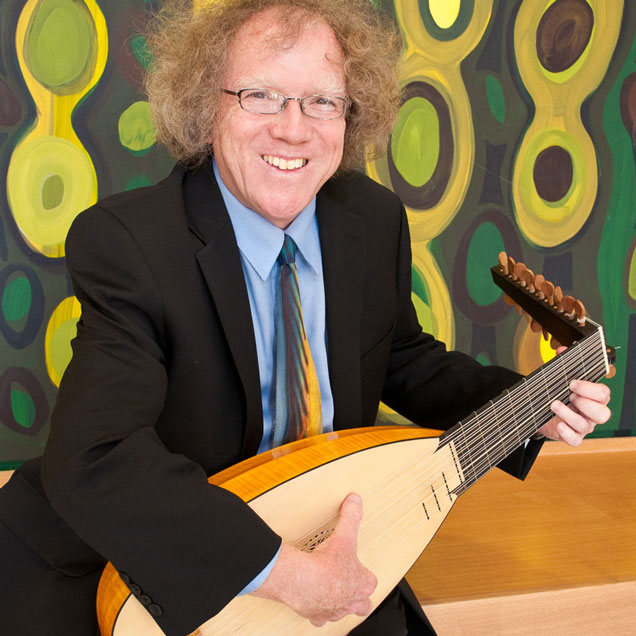
Robert Trent serves as Full Professor of Music specializing in Guitar and Renaissance Lute studies at Radford University, where he has directed the Annual International Guitar Festival for 20 years. An internationally acclaimed performer, he focuses on historical instruments including Renaissance lute and 19th-century guitars, with performances across six continents. His educational background includes: Doctor of Musical Arts (D.M.A.) from Peabody Conservatory of Music, The Johns Hopkins University Master of Arts (M.A.) from Trenton State College (now The College of New Jersey) Bachelor of Music (B.M.) from Philadelphia College of Performing Arts (now University of the Arts) Professor Trent's research centers on classical guitar performance practice, historical instrument reconstruction, and chamber music. He explores emotional depth and structural integrity in compositions through period instruments like the 10-string Scherzer guitar, as noted by the New York Times and Philadelphia Inquirer. His work bridges historical authenticity with contemporary interpretation, particularly in 19th-century repertoire. His 2024 NAXOS recording "East Meets West" features premiere works by American composers Ian Krouse and Ronald Pearl, continuing his dedication to expanding classical guitar repertoire. This output reflects his dual focus on historical performance and contemporary composition, demonstrating technical mastery across diverse stylistic periods. His awards include: Webb National Guitar Competition (First Prize) Masterworks Young Artist Competition (First Prize for all instruments) Arturo Toscanini Competition Chamber Music Prize Creative Scholar Award and Dalton Eminent Scholar Award (Radford University) Career Grants from Peabody Conservatory (twice) Faculty Development Grants from Radford University (twice) Virginia Commission for the Arts Grants (twice) As an educator, Professor Trent mentors students who become performers, educators, and administrators across the U.S. and Asia. He directs the All-Virginia Guitar Ensemble and leads the Radford University International Guitar Festival. His Duo Firenze collaborations with Pamela Swenson Trent have received multiple grants for period instrument research and performance. He maintains active scholarly engagement through contributions to "Complete Sonatas of Diabelli, Giuliani and Sor, Vol. 1" (Mel Bay), editorial work for "Soundboard Scholar", and his blog kitharamuse.blogspot.com on historical performance practice.
John Robison serves as Professor of Musicology and Early Music Ensemble director at the University of South Florida's School of Music, where he has been a faculty member since 1977. Holding a Stanford University doctorate (1975), his career bridges historical European musicology and contemporary intercultural studies with emphasis on Asian, African, and Latin American composers. His educational background: Doctorate in Musicology, Stanford University, 1975 Professor Robison's research traverses two dynamic domains: meticulous reconstruction of Medieval-Renaissance-Baroque performance practices using period instruments, and groundbreaking analysis of 20th-21st century intercultural composers. Since 1990, he has pioneered scholarship on Chinese symphonic traditions (Zhu Jianer, Wang Xilin), Indian fusion pioneers (John Mayer), and Korean women composers, examining how cultural exchange reshapes classical forms. His dual identity as scholar-performer enables unique methodological synthesis. Recent publications (2019-2022) reveal intensified focus on Asian symphonic evolution, particularly China's integration of Western forms with traditional aesthetics. His comparative studies of Zhu Jianer's symphonies and Wang Xilin's humanistic compositions demonstrate how political contexts shape musical innovation, while his John Mayer biography traces cross-continental artistic migration. These works establish frameworks for analyzing non-Western symphonic development beyond Eurocentric paradigms. His major recognitions include: USF Award for Outstanding Global Engagement (2019) USF Award for Outstanding Undergraduate Teaching (1993) With over four decades of mentorship, Professor Robison has transformed USF's curriculum through world music courses and international symposia, fostering student engagement with living traditions. His supervision blends archival research with hands-on ensemble experience, preparing students for global music careers. The Composition in Asia symposia he founded have generated sustainable academic partnerships across 15+ institutions. As director of the Early Music Ensemble, he cultivates expertise in historical performance through instruments including Renaissance recorders, Baroque oboe, lute family instruments, and viola da gamba, creating a living laboratory where theoretical scholarship meets practical artistry.
Janusz Wawrowski is a Professor at the Fryderyk Chopin University of Music in Warsaw, serving within the Faculty of Instrumental Music. Recognized as one of the most distinguished violinists of his generation, he maintains an active international performance career with appearances at premier venues including Vienna's Musikverein, London's Wigmore Hall, Hamburg's Elbphilharmonie, and Warsaw's National Philharmonic. His artistic practice centers on virtuosic violin performance across historical and contemporary repertoire, with special emphasis on reconstructing lost works (notably Różycki's Violin Concerto) and premiering new compositions by leading Polish composers. Wawrowski champions both canonical classical works and modern interpretations through his recordings and live performances. Major honors include: Fryderyk Award (2017 and 2019) Medal of Merit for Polish Culture Norwid statuette (2019) As a Warner Classics recording artist with six solo albums, his 2021 release 'Phoenix' received international nominations including ICMA and Opus Klassik. Wawrowski performs exclusively on a 1685 Antonio Stradivari violin and continues to shape contemporary violin performance practice through his innovative programming and social engagement initiatives.
Mirjana Petercol serves as an artistic lecturer at Nuremberg University of Music within the School of Music. A qualified concert soloist specializing in accordion and bandoneon performance, she maintains an active international schedule with recent performances across Germany and Croatia including Salzburg University, Schwanberg Monastery, and Istrian churches. She also provides private instruction as noted in her institutional profile. Her educational foundation includes: Master of Music in Music of the Middle Ages Graduated music teacher certification Church musician qualification Her artistic research centers on reconstructing medieval performance practices for modern free-reed instruments, with particular focus on integrating Gregorian chant traditions. This manifests in innovative projects like 'Sancta et Santissima' exploring New Testament holy women, and 'Zodiac' concert cycles that merge contemporary composition with historical symbolism. Her work with ensembles such as Gregorian Scola Frankfurt demonstrates cross-disciplinary collaboration between early music specialists and modern instrumentalists. Professor Petercol supervises students in the accordion studio at Nuremberg University of Music, with her pupils regularly featured in institutional concerts including the 'Accordion accents' series at St. Martha Church. Her pedagogical approach emphasizes historical performance practice alongside technical mastery, preparing students for diverse careers in both classical and early music performance. Current projects include the 'Homage to Hildegard' concert series exploring Hildegard von Bingen's compositions, sacred collaborations in historic churches across Germany, and international teaching engagements like the Viva Musica accordion course in Austria. Her work consistently bridges academic research with public performance in liturgical and concert settings.
Bartosz Żukowski is an Associate Professor at the Department of History of Philosophy, Faculty of Philosophy and History, University of Lodz. His academic trajectory includes significant roles such as Assistant Professor in Cognitive Science (2011-2019) and History of Philosophy (2019-2021) before assuming his current position. He holds a Habilitation in Philosophy (2020), Ph.D. (2010), and M.A. in Philosophy (2006) from the University of Lodz, supplemented by Law Studies (1998-2001). Żukowski's research explores: Theories of knowledge and existence with emphasis on epistemological idealism Early Modern British Philosophy (especially Berkeley and Burthogge) Structuralist approaches to philosophy of language Cognitive science applications in predictive mind theories Historical intersections between Platonism, Neoplatonism, and modern idealism His publications reveal a consistent focus on reconstructing overlooked epistemological frameworks in early modern philosophy, particularly examining how 17th-century thinkers prefigured Kantian concepts. Thematic clusters include sensory perception subjectivity, conceptualist metaphysics, and semiotic analyses of scientific discourse. Scientific recognitions include: Bednarowski Fellowship (Aberdeen, 2023) Rector’s Didactic/Scientific Awards (2022, 2020) National scholarships for young scientists (2014-2017) Nomination for 'First-Class Lecturer' (2018, 2022) Research leadership encompasses: Principal Investigator for NCN grant: 'Unnoticed Revolution: Richard Burthogge’s Constructivism' (2016-2019) Co-investigator in NPRH project: '17th-18th Century British Philosophy' (2020-2025) Kantian philosophy grant collaboration (2010-2013) International engagements include fellowships at Koç University (2024), University of Aberdeen (2023), and Lund University (2013), complemented by research visits to Oxford, London, Michigan, and European libraries. He actively contributes to scholarly societies including the British Society for the History of Philosophy and International Berkeley Society.
Dr. Estelle Murphy is an Assistant Professor in Music at Maynooth University, specializing in the intersection of historical musicology and contemporary popular music studies. With a PhD from University College Cork, she has held positions at UCC before joining Maynooth in 2014. Her research bridges 17th-18th century British/Irish court music (particularly odes and manuscripts) and modern heavy metal culture. Her work employs material analysis of historical sources while examining political, gendered, and cultural dimensions of music. Major projects include reconstructing William Boyce's court odes through Bodleian Library manuscripts and developing the 'Musical Court Odes' digital database. She collaborates with performing ensembles like the Irish Baroque Orchestra to revive historical works. Recent publications demonstrate methodological diversity: from Baroque violin attribution studies to analyses of female vocalists in death metal. Her research consistently reveals how musical practices construct social identities across historical periods. Major Awards: BSECS Bodleian Fellowship (2022), Charlemont Grant (2019) Affiliated Organizations: Society for Musicology in Ireland (Chief Copy Editor), Royal Musical Association, International Association for the Study of Popular Music Doctoral Supervision: Recently guided Cathal Twomey to PhD completion (2021)
Matt Baker is an Instructor at Berklee College of Music's Valencia campus, affiliated with the Contemporary Performance department. A professional double bassist and baryton specialist, he combines academic instruction with active performance across multiple genres including jazz, classical, tango, and folk music. Education includes: Graduate Performance Diploma from Royal Academy of Music (UK, 2005) Bachelor of Music from Royal Northern College of Music (UK, 2002) His research and creative interests encompass: Jazz/World Music - Focused on improvisation techniques and cross-cultural fusion Classical Performance - Specializing in double bass repertoire and chamber music Early Music Revival - As a leading baryton performer reconstructing historical works Pedagogical Development - Creating technical frameworks for instrumental mastery Performance highlights include founding the Valencia Baryton Project, recording over 50 albums across genres, and collaborating with artists like Placido Domingo and Grammy-winner Claudia Montero.
Dr. Anna Scott is a Canadian pianist-researcher and Assistant Professor at Leiden University's Academy of Creative and Performing Arts (ACPA) within the Humanities faculty. An active performer specializing in 19th-century musical performance practices, she bridges scholarly research with practical musicianship through practice-led approaches. Her research focuses on historical piano performance practices, particularly examining early recordings and their influence on contemporary interpretations of canonical classical music. Scott investigates radical alternatives to traditional performance approaches and explores the cultural-political significance of how we engage with classical music today. Her major project Romanticizing Brahms: Early Recordings and the Reconstruction of Brahmsian Identity has gained notable recognition, including being featured on BBC Radio 3's Private Passions program. Scott's recent publications and presentations reveal evolving interests in embodiment, alternative concert formats, interdisciplinary approaches connecting music with theater and peacebuilding, and the sensory dimensions of performance. Her work demonstrates increasing engagement with contemporary issues in performance practice while maintaining deep historical awareness. Inaugural Artist-in-Residence at University of Surrey (2022) Featured researcher on BBC Radio 3's Private Passions program Regular presenter at ACPA's Joint Research Days and 'In the Making' public sessions As a supervisor, Scott guides PhD candidates through practice-led research projects that integrate artistic performance with scholarly inquiry. Her students explore diverse topics including historical performance, radical alternatives to traditional concert formats, and interdisciplinary approaches to musical interpretation. The integration of performance as research methodology defines her supervisory approach, creating opportunities for students to develop both artistic and academic dimensions of their work. Scott maintains an active performance career alongside her academic work, with recordings that have been praised for their 'energy and wildness' in interpreting canonical repertoire. Her dual identity as performer and researcher exemplifies the practice-led research model central to ACPA's philosophy.
Luk Vaes is a Research Fellow at the Orpheus Research Centre and Coordinator of the docARTES doctoral program for artists at the Orpheus Institute and Royal Conservatoire (KC) in The Hague. With a doctorate from Leiden University (2009), his academic career bridges high-level performance practice with rigorous artistic research. His research focuses on artistic research methodology, piano performance practices, and extended piano techniques, with particular expertise in Mauricio Kagel's experimental music. Vaes leads the HIPEX research project investigating historical performance practices of experimental music and the 'peyotl' project developing age-appropriate extended techniques repertoire for children in collaboration with composer Hans Cafmeyer. Analysis of his recent publications reveals a consistent thread connecting historical research with practical application in performance and education. His work spans musicology, performance studies, and pedagogy, with particular emphasis on bridging the gap between scholarly research and artistic practice in contemporary music contexts. First prizes in several international piano competitions Nine international prizes for recordings of Mauricio Kagel's piano works Significant contributions to understanding extended piano techniques through both performance and scholarly research Development of innovative pedagogical approaches for teaching experimental techniques to children As coordinator of the docARTES program, Vaes mentors doctoral candidates in artistic research, emphasizing the integration of practical performance with theoretical inquiry. His supervision approach values historical context, technical precision, and innovative methodologies that respect the dual nature of artistic research. The 'peyotl' project exemplifies this integration, combining collaborative composition, classroom testing, and multimedia publication to address a gap in children's piano education. His laboratory work through the HIPEX project investigates historical performance practices of experimental music, focusing on works from the 1960s, unfinished Kagel pieces, and iconic solo instrument works. This research involves consulting composers and historical performers to develop transhistorical performance approaches that respect both historical context and contemporary performance needs.