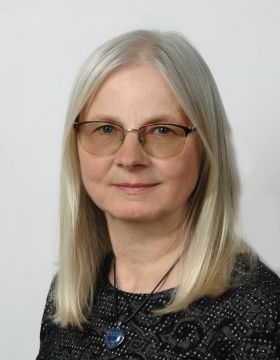
Barbara Pazur is a Professor at the Department of Choral Studies and Vocal Education, Faculty of Arts, Maria Curie-Skłodowska University. She specializes in Edwin E. Gordon's Music Learning Theory, focusing on audiation, choral improvisation, and early childhood music education. She leads the "Teoria uczenia się muzyki E.E. Gordona" scientific circle and serves as treasurer of the Lublin Division of Polish Choral Conductors' Association. Completed music education at Wrocław Music Academy (1985) Postgraduate studies in Vocal Emission and Choral Conducting Habilitated in Music Arts (Choral Conducting) at Fryderyk Chopin University (2014) Her research focuses on musical creativity development through Gordon's methodology, autism-friendly music approaches, and Polish folk/popular song adaptation for choral education. She pioneered the "Lubelski Festiwal Chórów Parafialnych" and co-developed national choral programs. Key awards include the Srebrny Krzyż Zasługi (2018), multiple Rector's Awards, and the Pro Maris Medal (2016). She has published numerous books and articles on Gordon-based pedagogy and choral arrangements.
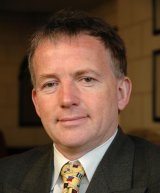
David M Howard is a Professor and Founding Head of the Department of Electronic Engineering at Royal Holloway, University of London. He holds a PhD in Human Communication from UCL and is an Emeritus Professor in Electronic Engineering. His research focuses on human speech/singing voice production, VR/AR applications in acoustics, and the Vocal Tract Organ. He has led major projects like the StoryFutures AHRC initiative. Awards include Fellowship of the Royal Academy of Engineering and Honorary Membership from the Croatian Choral Directors Association. Education: BSc (Eng) in Electronic Engineering from UCL (1977), PhD in Human Communication (1985). Former roles include Head of Department at University of York and roles in engineering institutions. Research interests span vocal tract modeling, forensic audio analysis, and choral singing development. He collaborates internationally on projects like heritage VR storytelling and data science in museums. His work contributes to UN SDG Education goals through advancing accessible technology and arts.
Dr. Alexander Plopski is an Assistant Professor at the Institute of Visual Computing, Technische Universität Graz. His research focuses on advancing augmented reality (AR) technologies, human-computer interaction (HCI), and optical display systems. He holds a PhD, M.Sc., and BSc in relevant fields. His work emphasizes perceptual optimization in AR displays, eye tracking integration, and accessibility solutions for color vision deficiencies. Key research areas include gaze-contingent AR interfaces, light field manipulation for extended reality, and multimodal interaction techniques. Notable contributions include the development of the 'guitARhero' interactive AR guitar tutorial system and studies on focal distance effects in optical see-through displays. His publications span topics from AR display calibration to gesture recognition using radar sensing. He has explored applications in industrial training, medical AR, and robotic telemanipulation. His work often bridges theoretical perceptual studies with practical system implementations, aiming to enhance user experience and accessibility in AR/VR environments.
Ajay Kapur serves as Associate Provost for Creative Technologies and Director of the Music Technology program (MTIID) at California Institute of the Arts. With an interdisciplinary background spanning computer science, electrical engineering, and music, he bridges technological innovation with artistic expression through leadership in academic programs and entrepreneurial ventures. His research centers on symbiotic human-machine interaction for artistic creation, particularly exploring computer improvisation with humans through Indian Classical music frameworks. This manifests in developing programmable mechatronic instruments, sensor-based interfaces, and AI-driven systems for musical expression. His work extends traditional techniques while creating new performance paradigms like the globally touring Machine Orchestra and KarmetiK Orchestra. Kapur's recent publications reveal evolving expertise from music robotics to blockchain applications, with significant focus on NFT systems, tokenization, and immersive environments. His scholarly output demonstrates consistent innovation at the intersection of artistic practice and emerging technologies. As an educator and entrepreneur, he has co-founded companies in edtech and AI while authoring foundational texts like Digitizing North Indian Music and Introduction to Programming for Musicians and Digital Artists . His performances at venues including LACMA, Singapore Arts Festival, and the 2010 Winter Olympics showcase practical applications of his research.
Dr Mark-Anthony Turnage CBE FRCM serves as Senior Research Fellow in Composition and RCM Research Fellow in Composition at the Royal College of Music. He is a composer of truly international stature whose orchestral and operatic music is often forthright and confrontational, unafraid to mirror the realities of modern life, yet its energy is exhilarating. With his flair for vivid titles and complete absorption of jazz elements into a contemporary classical style, Turnage produces work with strong appeal to an enquiring, often young audience while expressing deep tenderness, especially emotions associated with loss. Turnage's research interests focus on the intersection of contemporary classical music with jazz elements. His work explores: Innovative approaches to orchestral composition Jazz-classical fusion techniques Opera and theatrical music composition Music that addresses contemporary social issues Expressive techniques for conveying emotional depth Vivid musical imagery through descriptive titles An analysis of Turnage's extensive publication record reveals a consistent exploration of emotional depth and technical innovation across more than four decades. His works frequently engage with themes of loss, memory, and social commentary while maintaining a distinctive musical voice that incorporates jazz sensibilities within contemporary classical frameworks. The titles of his compositions often provide vivid imagery that guides the listener's interpretation, reflecting his belief in music's ability to communicate directly with audiences through both confrontation and tenderness. Turnage has received significant recognition for his contributions to music: Commander of the Order of the British Empire (CBE) Fellow of the Royal College of Music (FRCM) As a senior figure in composition at the Royal College of Music, Turnage contributes to the institution's research profile through his creative practice and by serving as a role model for emerging composers. His extensive body of work spanning from 1981 to the present demonstrates remarkable consistency in artistic vision while evolving with contemporary musical developments. Turnage maintains an active creative practice through his composition process, which continues to produce significant works that push the boundaries of contemporary classical music while remaining accessible to diverse audiences. His recent compositions continue to explore emotional depth and technical innovation within the contemporary classical framework.
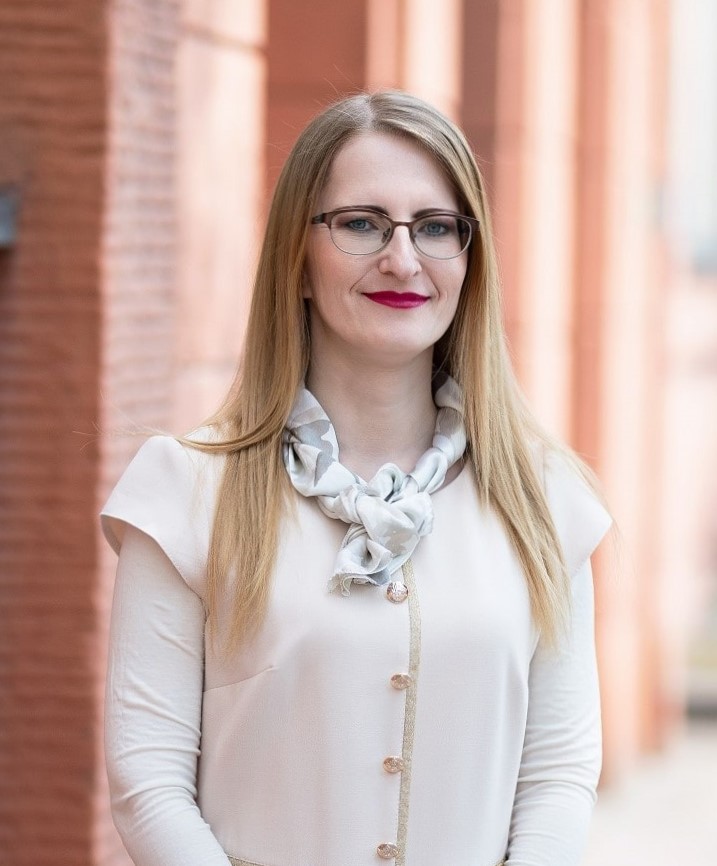
Renata Bilbokaitė is a Professor and Director of the Šiauliai Academy of Vilnius University, leading strategic initiatives in education and quality management. She holds academic appointments in the Institute of Education and oversees research in pedagogical practices, sustainable education, and STEAM integration. Bilbokaitė has extensive administrative experience, including roles as Vice-Rector and Director of Strategic Processes, and has managed EU-funded projects focusing on educational quality and international collaboration. Her work emphasizes teacher training, inclusive education, and policy reforms. She actively engages in media commentary on education challenges, teacher shortages, and youth well-being. Awards include recognition from the Lithuanian Parliament for contributions to education. Education: Music (2006), Master's in Education (2008), PhD in Social Sciences (2012), Master's in Economics (2019) Administrative Roles: Director of Vilnius University Šiauliai Academy (2020–present), Head of Quality Management (2013–2020) Key Projects: UNIQMAS (Quality Management), SOCNET (Joint Study Programs), HONOR (Public Sector Training) Research Interests: Strategic education management, STEAM pedagogy, music education, visualization in teaching, and policy-driven educational reforms. Her recent work addresses global competencies in leadership, sustainable teacher training, and crisis responses to pedagogical workforce shortages. Publications focus on educational leadership, global challenges in education, and inclusive practices. Media engagements often address national educational policy debates, emphasizing pragmatic solutions for systemic issues like teacher recruitment and youth development.
Dr. Julia Carina Böttcher is a research associate in the field of scientific reflection at ZIWIS (Zentrum für Interdisziplinäre Wissenschaftsforschung) at Friedrich-Alexander University Erlangen-Nürnberg. She holds a habilitation from Ludwig Maximilian University of Munich (2025) and is a member of the Leopoldina Center for Science Studies project group. Her work bridges the history of science, early modern history, and the interplay between natural science and politics. PhD in History of Science (University of Regensburg, 2017) Habilitation in History of Science (LMU Munich, 2025) Researcher at University of Regensburg and LMU Munich post-2017 Her research focuses on observation practices during 18th-century exploration trips, academic communities (e.g., Leopoldina Academy), and the political behavior of scholars . Key themes include elite identity formation, bodily practices, and the institutional dynamics of scientific networking. She is currently concluding her DFG-funded project on The Politics of Networking (2020–2023) and will serve as interim professor for History of Science at LMU Munich in 2025. Her 15 most recent publications (2024–2019) analyze collection practices, scientific communities, and the cultural history of expeditions. Articles span topics from 18th-century anatomical research to Enlightenment botanical enthusiasm, often emphasizing methodological innovation and institutional interplay. She is an alumna of the Young Research Fellows program at the Bavarian Academy of Sciences and Humanities and maintains active collaborations in international research networks. Her work has contributed to re-evaluating the Leopoldina Academy's role as a strategic scholarly collective in early modern Europe.
Eleonora Oreggia is a Lecturer in Electronic Music, Computing and Technology at Goldsmiths, University of London. She holds a PhD in Media & Arts Technology from Queen Mary University of London (2020), an MPhil in Cultural Studies from Goldsmiths (2013), and a Laurea (Summa Cum Laude) in Semiotics of Art, Drama, Art and Music Studies (DAMS) from the University of Bologna (2003). Her interdisciplinary work bridges science, humanities, and creative arts, focusing on electromagnetic sensing systems, expressive interaction in electronic music, and the intersection of identity with technology. Teaching roles include convening the BMus/BSc in Electronic Music, Computing and Technology, and courses like Music Computing 1, 2, and Advanced Audiovisual Processing. Her research explores invisible interfaces and electromagnetic fields as artistic tools, blending performance, installation, and live electronic music. She has exhibited globally in museums, festivals, and digital platforms, with notable projects like REBUS - Electromagnetic Interactions and Bamboo Ring Live . Key themes in her work include human-machine relations, perception of reality, and technomagical interfaces. She has collaborated with institutions such as BBC R&D, Jan van Eyck Academie, and founded Nebularosa Records to support experimental music. Her articles and books address topics like instrument design, digital creativity, and the philosophical implications of technology.
Dr Christina J Faraday FSA FRHistS is an Affiliated Lecturer in History of Art at the University of Cambridge, specializing in Tudor and Stuart visual and material culture with wider interests in Northern European art from the Middle Ages through the Renaissance. She serves as Director of Studies at Sidney Sussex, Lucy Cavendish, and Pembroke Colleges, and contributes to the Department's access and outreach programs including the Sutton Trust Summer School. BA First Class in History of Art, St John's College, Cambridge MPhil in History of Art and Architecture with Distinction PhD (AHRC-funded) on Elizabethan and Jacobean attitudes toward images Her research centers on the concept of 'liveliness' in Tudor visual culture, exploring how images and objects were perceived as vivid and realistic despite not conforming to modern notions of realism. She investigates the relationship between images, objects, literature, and music across time, with particular attention to horology in Tudor portraiture and the symbolism of timekeeping devices. Her work bridges academic scholarship and public engagement through media appearances and exhibitions. Dr Faraday's publications reveal consistent focus on Tudor visual culture, with recurring themes of materiality, presence, and the relationship between image and viewer. Her work spans book-length studies, scholarly articles in leading journals, and public-facing criticism in outlets like Apollo magazine. She demonstrates particular expertise in portrait miniatures, religious imagery post-Reformation, and the cultural significance of everyday objects. Fellow of the Society of Antiquaries (FSA) Fellow of the Royal Historical Society (FRHistS) Associate Fellow of the Higher Education Academy (AFHEA) Shortlisted for British Journalism Awards 2021 (Arts and Entertainment Category) As Director of Studies at three Cambridge colleges, Dr Faraday supervises undergraduate students across History of Art programs. She has received significant research funding including an AHRC grant for her doctoral work. Her upcoming exhibition 'Tudor Contemporary' at the Heong Gallery (2026) represents a major curatorial project bringing historical objects into dialogue with contemporary artistic responses. She also serves as Co-Director of the MSt in History of Art and Visual Culture at Madingley Hall. Dr Faraday actively participates in the Cambridge Visual Culture Seminar Series and contributes to research centers including The Ax:son Johnson Centre for the Study of Classical Architecture. Her collaborative work with contemporary artists for the 2026 exhibition represents an innovative approach to bridging historical scholarship and contemporary practice.
Dr. Vincent Hiribarren is a Reader in Modern History at the Department of History , King's College London , with expertise in African history, archival studies, and digital humanities. He has held visiting positions at UCLA and served as director of IFRA-Nigeria (University of Ibadan). Education : PhD in History (University of Leeds, 2012) Research Interests : African History, Archives, Cartography, Digital Humanities, Borno, Nigeria His research focuses on the history of Borno , colonial archiving , and historical cartography , often informed by fieldwork and interviews. He has published extensively on topics ranging from precolonial Nigerian kingdoms to postcolonial governance and colonial intelligence operations . Recent work includes the 2025 book La France au Cameroun (1945-1971) , analyzing colonial archival policies. His 15 most recent publications span African history, digital humanities, and the intersections of colonialism and cultural identity. Scientific Awards : Leverhulme Teaching Fellowship (2013) Grants and Public Engagement : He has received funding from the British Library Endangered Archives Programme for digitization projects in Madagascar and Benin. He co-edited the Africa4 blog for Libération and developed an online archive catalog for Madagascar.
David Ribeiro Lamas is a Professor of Human-Computer Interaction at Tallinn University's School of Digital Technologies, where he heads the Human-Computer Interaction group. He also serves as the chair of the Estonian chapter of ACM's SIGCHI and as an expert member of IFIP's TC13. With an extensive international career spanning the USA, UK, Portugal, Cape Verde, Mozambique, Afghanistan, and Estonia, he has developed deep expertise in designing organizations, communities, and human technologies. His educational background includes a PhD in Human Computer Interaction from Portsmouth University (1998), an MSc in Computer Science from Minho University (1994), and an Honours BSc in Informatics/Applied Mathematics from Portucalense University (1989). He also completed specialized studies in Strategic Management at the Polytechnic University of Catalunya and a postdoc in Augmented and Virtual Environments at Michigan State University. Lamas' research primarily focuses on design theory and methodologies, with recent work emphasizing trust in technology, facial recognition systems, and vibrotactile interfaces. He has pioneered academic programs including the Master in Human-Computer Interaction and the Masters in Interaction Design (run online with Cyprus University of Technology). His approach combines theoretical rigor with practical application, particularly in cross-cultural contexts. His publication record shows a strong trend toward understanding human trust in technology systems, with significant work on facial recognition, vibrotactile feedback systems, and trust frameworks. His research spans both theoretical contributions to HCI methodology and practical applications addressing real-world challenges in digital accessibility and user experience. 2025 HCI Pioneer Award from IFIP TC13 2025 Tallinn Conference Ambassador 2024 IFIP Service Award 2015 Badge of Merit from Tallinn University 2011 Best Paper Award for work on Estonia's M-Government Services 2000 Best Paper Award for research on Web navigation guidance Lamas has successfully supervised forty-eight master students, seven doctoral students, and two post-doc researchers, and currently supervises twelve doctoral students. His leadership extends to numerous research projects including COST Actions on Interactive Narrative Design and Human-Computer Interaction methodologies. He founded and leads STARTS.EE, Tallinn University's initiative promoting encounters between science, technology, and the arts. He has been instrumental in building the Estonian HCI community through seasonal courses on Experimental Interaction Design, Research Methods in HCI, and the Design of Human Technologies since 2010. His World Usability Day events bring together over 600 researchers and practitioners annually from the Baltics, Nordic countries, and beyond. Lamas has chaired major international conferences including INTERACT 2019, NordiCHI 2020, AfriCHI 2021, and ICIDIS 2021.
Dr. Ashwini Joshi is an Associate Professor and Ph.D. Program Director in the Department of Communication Sciences and Disorders at the University of Houston's College of Liberal Arts and Social Sciences. She directs the Joshi Voice Lab, which focuses on developing evidence-based assessments and treatments for voice disorders. Her research has been consistently funded by prestigious sources including the National Institutes of Health. Dr. Joshi's primary research interests center around voice and voice disorders, with specific emphasis on identifying low-cost assessment tools for voice disorders and developing evidence-based protocols for rehabilitation after vocal fold surgery for benign lesions. Her work bridges clinical practice with scientific investigation to improve voice assessment and treatment methodologies. Her recent publications demonstrate a strong trend toward investigating voice rest protocols after phonomicrosurgery, cultural considerations in voice assessment, and the development of accessible diagnostic tools. These studies frequently incorporate interdisciplinary approaches, examining connections between personality traits and voice rest adherence, cultural factors in voice evaluation, and technological solutions for voice measurement. International Student Award, American Speech-Language-Hearing Foundation (2009) Dr. Joshi serves as Principal Investigator on multiple significant research grants, including a NIH/NIDCD-funded project on Voice Rest Adherence after Phonomicrosurgery (2020-2023). She has successfully mentored numerous graduate students who have co-authored publications with her, particularly in the areas of cultural voice assessment and voice rest protocols. Her lab has established partnerships with Houston Methodist Hospital's Department of Otolaryngology. The Joshi Voice Lab, part of the Department of Communication Sciences and Disorders, is dedicated to advancing voice disorders research through developing low-cost, valid diagnostic tools and evidence-based post-surgical rehabilitation techniques for benign vocal fold lesions. The lab's current research is funded by the National Institute on Deafness and other Communication Disorders at the NIH, with the ultimate goal of improving quality of life for individuals with voice disorders.
David Hedgecoth is a Professor of Music Education and Associate Director/Chair of Undergraduate Studies at The Ohio State University's School of Music. He holds a PhD from OSU and teaches courses in brass pedagogy, instrumental methods, and qualitative research. His administrative roles include curriculum committee work and advising for Phi Mu Alpha and Collegiate NAfME. He directs the Brazilian Experience education abroad program and mentors in the Sophomore Transformational Experience Program (STEP). Education: BME and MA from Florida State University (Tallahassee), PhD in Music Education from The Ohio State University. Research focuses on charter school music programs, educational policy, teacher education, and international music education. Key interests include curriculum design in alternative schools, social impact of music education, and LGBT inclusivity. Over 20 peer-reviewed and editor-reviewed publications address topics like self-guided rehearsals, post-recession curriculum recovery, and advocacy in music education journals. Awards include National Board Certification, Fulbright Scholarship, and Teacher of the Year. Serves on boards for Chamber Music Columbus, ProMusica Chamber Orchestra, and OSU's Center for Latin American Studies advisory board. Coordinates the IMMERSE sensory concert series with WOSU Public Radio. Advising includes directing education abroad programs and mentoring graduate students. Grants and partnerships involve collaborative projects with schools, orchestras, and international institutions. Maintains active roles in both classroom innovation and large-scale educational policy analysis. Labs/Teams: Brazilian Experience Abroad Program leadership, IMMERSE sensory concert coordination, and collaborative work with WOSU Public Radio.
Xing-Dong Yang is an Associate Professor of Computer Science at Simon Fraser University (SFU) and holds an adjunct appointment as Assistant Professor at Dartmouth College. He directs the XDiscovery Lab and focuses on Human-Computer Interaction (HCI), particularly in developing interactive systems for smart everyday objects such as wearables, garments, and appliances. His research emphasizes accessibility for visually impaired users and prototyping tools for non-specialists. He earned his PhD from the University of Alberta, following degrees from the University of Manitoba and University of Alberta. Affiliations: Simon Fraser University (School of Computing Science), Dartmouth College (Adjunct) Education: PhD, Computer Science, University of Alberta MS, Computer Science, University of Alberta BS, Computer Science, University of Manitoba His research explores novel interactive systems, including tactile interfaces for education, assistive technologies for visual impairments, and innovative input methods for wearables. Key projects include MakeBronze (cultural preservation through interactive crafts), AccessibleCircuits (inclusive electronics for blind users), and systems like iWood and MicroFluID that merge materials science with HCI. His work has been recognized with awards such as the Best Paper Award at UIST'19 and multiple Honorable Mentions at CHI and UIST conferences. He advises a dynamic team of PhD and MSc students, emphasizing hands-on prototyping and industry collaborations through internships at companies like Google, Microsoft, and Apple. Yang has secured grants including an NSF CRII grant for device modulation and an NSF CSR Large grant for health-focused earpiece technology. His lab fosters interdisciplinary innovation, bridging computer science with design, engineering, and cultural studies.
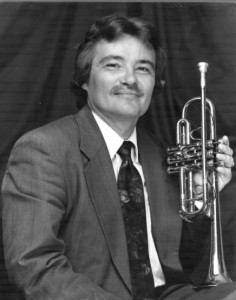
Dr. Edward S. Bach is a Professor of Trumpet and Music Performance at Brandon University, Canada. He holds a B.Mus from Brandon University and both M.Mus and DMA degrees from the University of British Columbia. His primary roles include conducting the Brandon University Brass Ensemble and Trumpet Ensemble, as well as teaching trumpet performance and pedagogy. Conducts university wind ensembles and guest-conducts high school bands Oversees the trumpet studio's performance and academic programs Runs the Master of Music in Performance and Literature for Trumpet program Research focuses on expanding brass quintet and large ensemble literature through transcriptions of classical works. Notable projects include arrangements of Schumann, Mendelssohn, and Tchaikovsky for brass ensembles. His performance career spans over 30 countries with groups like Market Street Brass and A Touch of Brass, featuring both classical and jazz repertoires. Has adjudicated major competitions including The Canadian National Music Festival and The National Trumpet Competition. Published extensively with C. Alan Publications, producing influential brass ensemble works. Active in masterclass instruction globally, including at the Moscow Conservatory and Liszt Institute in Budapest.