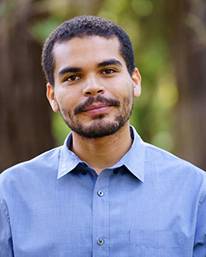
Christopher Castro serves as an Assistant Professor of Composition at Chapman University's College of Performing Arts. A composer and double bassist from Brooklyn, New York, he combines academic rigor with avant-garde experimentation. Ph.D. in Composition and Theory from University of California, Davis Bachelor of Music from Juilliard School (Double Bass & Composition) His research bridges Western Art Music traditions with contemporary innovations , creating works that merge: Johannes Ockeghem's polyphonic complexity John Coltrane's spiritual intensity Modernist structural experimentation Historical reconstruction techniques Jazz-classical hybrid forms Interdisciplinary performance formats Recent compositions demonstrate trends in flexible instrumentation , text-music relationships , and genre synthesis . His output spans chamber works, orchestral pieces, and vocal compositions with equal mastery. Scientific recognition includes: 2023 Fromm Music Foundation Commission (Harvard University) Chamber Music America's 2021 Classical Commissioning Award As a new music advocate , Castro collaborates with ensembles like: Left Coast Chamber Ensemble (artistic advisory board) New Mexico Contemporary Ensemble Los Angeles Philharmonic's Upbeat Live series Lyris Quartet and Sharon Harms
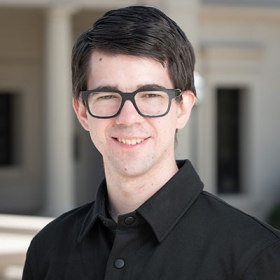
Stephen S. Hudson is an Assistant Professor of Music Theory at Occidental College. He holds a B.A. from the University of California, Davis, and a Ph.D. from Northwestern University. Appointed in 2022, he specializes in metal music studies and R&B/Soul harmony. Education: B.A., University of California, Davis; Ph.D., Northwestern University Hudson’s research focuses on embodied experiences of rhythm, timbre, and song form in metal music, as well as harmonic complexity in R&B and Soul. His work has been featured in Music Theory Spectrum , Metal Music Studies , and Current Musicology . Recent publications include articles on Drake’s harmonic loops and Meshuggah’s groove structures. He is authoring two books: Heaviness in Metal Music (Oxford University Press) and a study of Meshuggah’s riffs (Lever Press). As Vice President of the Pacific Southwest chapter of the American Musicological Society, he advocates for inclusive music theory pedagogy that extends beyond classical traditions. His teaching emphasizes tools for songwriters and producers. Hudson maintains an active interest in classical and baroque cello performance, reflecting his engagement with both historical and contemporary music practices.
Michael Rauhut is a Professor at the University of Agder where he leads the PhD specialization in popular music performance and represents subject teachers within scientific disciplines at the Department of Rhythmic Music . His academic work focuses on popular music studies and musicology, with supervisory responsibilities for master's and doctoral candidates. Rauhut's research explores the intersection of music, politics, and society, with particular emphasis on: Popular music history in socialist contexts (especially the GDR) Cultural transfer during the Cold War Blues, rock, and jazz as forms of cultural expression Youth cultures and music under authoritarian systems Church-state dynamics in musical expression His work demonstrates how music functioned as both state propaganda and vehicle for dissent. Analysis of Rauhut's publications reveals consistent focus on: Cultural mechanisms in socialist states (75% of recent works) Transnational music exchanges across the Iron Curtain Archival methodologies for reconstructing musical histories Identity formation through popular music State censorship and artistic resistance strategies His documentary filmography expands these themes into visual media. As PhD supervisor, Rauhut guides research in popular music performance and musicology. His extensive conference participation includes keynote addresses in Germany, USA, Georgia, and Ukraine, covering topics from blues reception to music's role in political revolutions.
Professor Andrew Klevan is a leading scholar in film aesthetics and close cinematic analysis, holding a professorial position at the University of Oxford's Faculty of English and serving as a Non-tutorial Fellow at St Anne's College. His work focuses on film form, performance, critical methodology, and pedagogy, advocating for detailed close analysis as a core practice in film studies. Research interests include the interplay between film medium and narrative structure, particularly exploring 'undramatic' forms that capture mundane experiences. He has authored monographs on film performance (e.g., Barbara Stanwyck studies), aesthetic evaluation frameworks, and the philosophy of film criticism. Recent work critiques theoretical approaches in film studies and develops 'ordinary language film studies' to emphasize practical criticism over abstract theory. Publications span over two decades, with notable contributions to journals like Movie , Film-Philosophy , and Aesthetic Investigations . His edited collection The Language and Style of Film Criticism (with Alex Clayton) remains influential in critical discourse. Teaching focuses on advanced film analysis and methodology. No formal academic awards are listed, though his contributions to film scholarship are widely recognized. He supervises Master’s and DPhil students in film studies, emphasizing close textual analysis and critical writing. His academic affiliations include the St Anne's College community and the broader Oxford film studies network.
Ardis Butterfield is the Marie Borroff Professor of English at Yale University, with courtesy appointments in the departments of French and Music. She specializes in medieval French and English literatures (13th–15th centuries), focusing on lyric poetry, word-music relationships, and linguistic identity. Born in Pakistan and educated in India and England, she holds degrees from Trinity College, Cambridge (PhD, M.A.) and the University of Bristol (M.A.). Her research explores medieval manuscripts as sites of intellectual and social practice, emphasizing cross-disciplinary approaches. Notable works include The Familiar Enemy: Chaucer, Language and the Nation in the Hundred Years War (2009) and Poetry and Music in Medieval France (2002). She has held Leverhulme Research Fellowships and visiting roles at institutions like the University of Virginia and All Souls College, Oxford. Education: PhD and BA, Trinity College, Cambridge M.A., University of Bristol Research interests include medieval lyric theory, Chaucerian nationalism, bilingualism, and the materiality of manuscripts. Current projects involve a new Norton edition of medieval English lyrics and a book on medieval song titled Medieval Songlines . Awards: 2010 Society for French Studies R.H. Gapper Prize Choice Outstanding Academic Title (2010) Leverhulme Fellowships (2003–04, 2008–11) Leadership roles include President of the New Chaucer Society (2016–18) and co-founder of the monograph series Oxford Studies in Medieval Literature and Culture . She sits on the Executive Board of the International Network for the Study of Lyric (INSL).
Jennifer Beavers, Ph.D. , is an Associate Professor of Music Theory at the University of Texas at San Antonio (UTSA) in the College of Liberal and Fine Arts. Her research intersects early twentieth-century music analysis, timbre/orchestration studies, and music theory pedagogy, with a focus on Maurice Ravel’s compositions and curriculum innovation. Awarded Faculty Mentor Award for Undergraduate Research (2019) Co-founder of UTSA Music Theory Club initiatives Active presenter at Society for Music Theory , American Musicological Society , and College Music Society conferences Research Themes : Analytical approaches to Ravel’s neurological decline, timbre as structural marker, flipped pedagogy, and interdisciplinary collaborations. Her publications span journals like Music Theory Online and Indiana Theory Review , emphasizing timbral transformations and pedagogical innovation. Scientific Awards : Faculty Mentor Award for Undergraduate Research (2019) Teaching Contributions : Courses include Aural Skills , Basic Skills , 20th-Century Analysis , and graduate Research Methods . Her pedagogical research addresses improvisation, pitch-matching, and AP curriculum alignment.
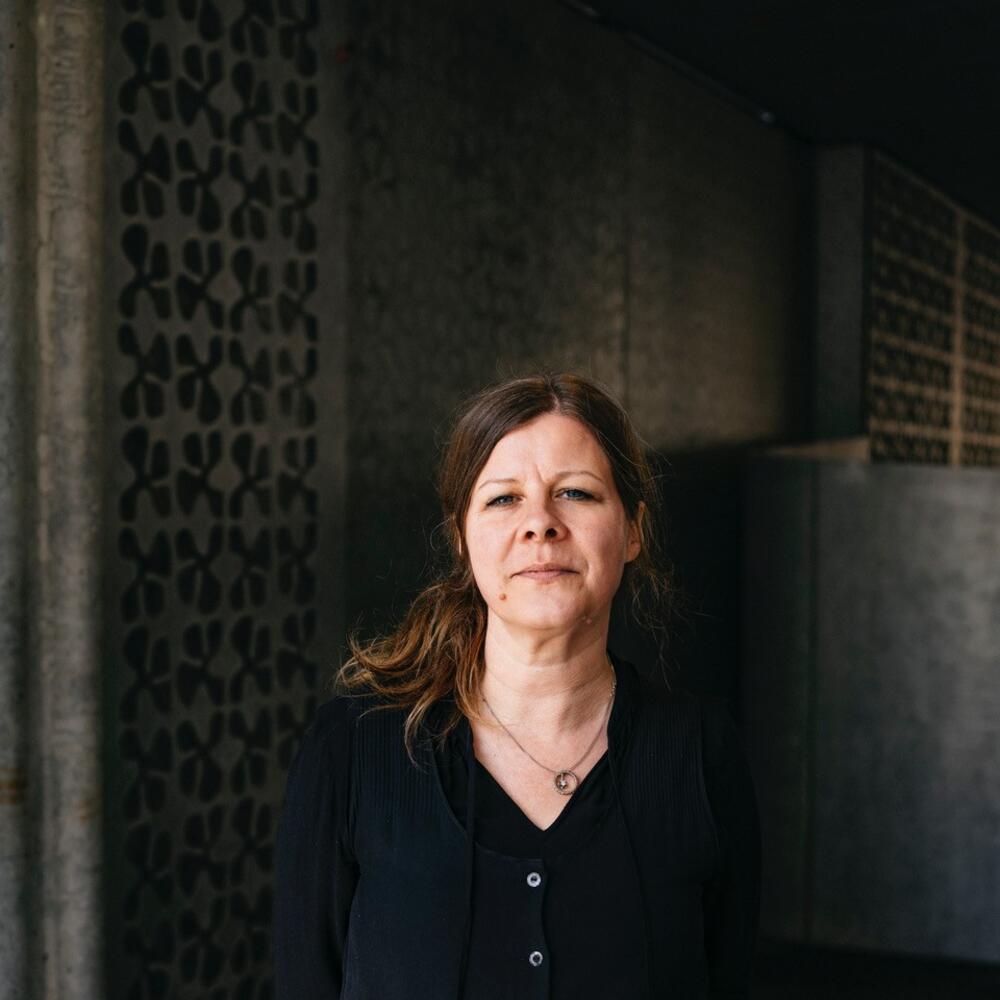
Claudia Lehmann is a University Professor of Film Art & Visual Communication at the Institute for Open Arts, Department of Scenography at Mozarteum University Salzburg. She has been a professor at Mozarteum University since 2019 and previously served as a visiting professor at the Berlin Weissensee Art Academy. As a faculty member, she contributes to the Institute management, teaches as a Teacher, and serves on the Curricular Commission. Dr. Lehmann holds a doctorate in physics (Dr. rer. nat.) with her dissertation "GAUGE COVARIANT MULTISCALE ANALYSIS OF COMPLEX SYSTEMS" published through DESY-Publications in 2004. Her academic journey reflects a unique interdisciplinary trajectory from scientific research to artistic practice. Claudia Lehmann's research interests center around the intersection of art and science, with particular focus on perception, reality, and systemic phenomena. Her work spans documentaries, feature films, music videos, art videos, installations, and performances, constantly searching for new forms and formats. She develops visual concepts, video stage sets, and unique live video performances, often in collaboration with Nicolas Stemann. Through her work, she explores diverse possibilities for new structures, especially in the form of artistic collaboration. Her recent artistic output shows a consistent trend toward interdisciplinary work that blends theater, film, and digital media. Lehmann frequently collaborates with Nicolas Stemann and Konrad Hempel, creating innovative performances that integrate video technology with traditional stagecraft. Her work often addresses social and political themes while experimenting with form and presentation. The Institute for Experimental Affairs (IXA), which she co-founded with Konrad Hempel, serves as a platform for exploring the interfaces between science and art through various projects and research initiatives. Dr. Lehmann has received several prestigious awards for her work: Samsung Smartfilm Award 2013 Shocking Shorts Award 2007 Nomination for German Documentary Film Music Prize 2013 Nomination for Studio Hamburg Young Talent Prize for Best Screenplay As an educator and researcher, Lehmann has developed numerous collaborative projects and performances that have been featured at major international festivals including the Berlin International Film Festival, Leipzig Documentary Film Festival, and various theater festivals. Her work with IXA represents a significant research initiative at the intersection of science and art. Lehmann co-founded the Institute for Experimental Affairs (IXA) with visual artist and composer Konrad Hempel. Through IXA, she conducts research and realizes projects at the interfaces between science and art. Her collaborative work spans theater productions, film projects, and interactive installations that have been presented at venues including the Schauspielhaus Zürich, Münchner Kammerspiele, Opéra Comique Paris, and various international festivals.
Ho Lok Victor Fan is a Research Professor in Film and Media Philosophy at King's College London's Department of Film Studies. He previously served as Assistant Professor at McGill University's Department of East Asian Studies (2010–2012), where he also chaired the Equity Subcommittee on Queer People. His expertise spans Chinese cinema (including Shanghai, Hong Kong, and Cantonese film histories), queer theory, Hollywood studies, and Buddhist film philosophy. His work contributes to UN Sustainable Development Goal 4 (Education) through academic research and pedagogy. Education: PhD: Film Studies, Yale University (2010) MFA: Film & TV Production, USC (1999) Bachelor of Music: University of Rochester (1996) Research Interests: Fan explores comparative world cinemas, Chinese film theory, Sino-Hollywood co-productions, queer theories, and Buddhist media philosophy. His work interrogates spatiality in Chinese cinema and the intersections between film and Buddhist thought. Recent talks include lectures on 'Karma: Cinematic Technicity-Consciousness' and 'Extraterritorial Life in Hong Kong Cinema.' Notable Works: His 2000 thesis film The Well won international acclaim. His 2022 book Cinema Illuminating Reality redefines media philosophy through Buddhist frameworks. Recent articles analyze Hong Kong's media politics and labor narratives in hybrid film-anime forms. Awards: Third Prize, Fort Lauderdale International Film Festival (2000) Grants/Advising: Supervised 8 academic works (details omitted). Active in editorial and peer-review roles for film studies journals. Engaged in interdisciplinary projects bridging media philosophy and cultural studies. Labs/Teams: Collaborates with King's College's Queer@King's initiative and global film studies networks. Research focuses on East Asian cinematic histories and transnational media dynamics.
Paul D. Miller, known professionally as DJ Spooky, That Subliminal Kid, is a Professor of Music and Mediated Art at The European Graduate School (EGS). Based in New York City, he is an experimental electronic and hip-hop musician, conceptual artist, and writer whose work spans music production, film, multimedia installations, and critical theory. He has released over a dozen albums pioneering 'illbient' and trip hop genres, authored influential books including Rhythm Science and Sound Unbound , and exhibited internationally at venues like the Venice Biennale and Andy Warhol Museum. Education: Bowdoin College: Studied philosophy and French literature; thesis on Richard Wagner's Gesamtkunstwerk as precursor to new media. Research Interests: Miller's work centers on remix culture as a postmodern methodology, exploring intersections of sound, image, and technology. His theoretical framework positions the DJ as a 'post-subjective auteur' who creates meaning through layered connections across time, culture, and media. Key projects include Rebirth of a Nation (reworking D.W. Griffith's film to address racial history) and Terra Nova (Antarctica sound recordings addressing climate change), demonstrating his focus on historical reinterpretation and environmental crisis through digital media. Publications: His 14 scholarly articles (2001-2009) analyze remix as cultural practice across domains from album art history ( The Inner Sleeve ) to Baudrillard's philosophy ( Baudrillard: A Remembrance ). The corpus reveals consistent investigation into how sampling, digital layering, and media archaeology reshape narrative, memory, and cultural identity in the information age. Awards: No scientific awards or fellowships were documented in the source text. Advising and Grants: The source text provides no information regarding students supervised, academic advising, or research grants administered by Miller. Labs and Teams: Miller operates through project-based collaborations rather than fixed labs, forming temporary collectives with institutions like the American Museum of Natural History (for Terra Nova ) and artists including Yoko Ono, Ryuichi Sakamoto, and choreographer Francesca Harper. His 'Unfinished Stories' project with Pulitzer-winning critic Margo Jefferson exemplifies his interdisciplinary approach bridging dance, music, and social commentary.
Professor Daniel Grimley (FBA) is the Head of the Humanities Division at the University of Oxford and a faculty member in the Faculty of Music . His academic leadership includes oversight of research, teaching, and equality initiatives across Oxford’s humanities disciplines. University: University of Oxford Role: Head of Humanities Division Academic Rank: Professor Grimley’s research focuses on Nordic music traditions , nationalism , and ecocriticism , exploring intersections of music, landscape, and cultural identity. His work often examines composers like Sibelius, Delius, and Vaughan Williams through ecological and philosophical lenses. Recent publications highlight themes of musical modernism , biographical analysis , and national identity . His 2025 article on Delius, Mahler, and Nietzsche bridges musicology with ecocritical theory, while his 2023 studies investigate Sibelius’s use of silence and Nielsen’s dreamlike compositions. Scientific Awards: Fellow of the British Academy (FBA) Grimley’s advocacy for music departments and his editorial contributions to volumes on Sibelius and Grieg underscore his commitment to preserving and analyzing musical heritage. He has no listed students but influences academic governance through his divisional leadership.
Brian Larkin is Professor of Anthropology at Barnard College, Columbia University, and Codirector of Columbia's Center for Comparative Media. He holds a PhD from NYU (1998) and studies media technologies through anthropological frameworks. Research examines media infrastructures in Nigeria: Religious media in Islamic and Christian contexts Nigerian film (Nollywood) circulation Urban soundscapes and loudspeaker culture Infrastructure politics and colonial legacies Authored Signal and Noise: Media, Infrastructure, and Urban Culture in Nigeria (Duke, 2008) and co-edited Media Worlds: Anthropology on New Terrain (California, 2002). Current work explores the relationship between media forms, religious transformations, and urban experience in postcolonial contexts.
Mark D. Gross is a Professor of Computer Science and Director of the ATLAS Institute at the University of Colorado Boulder, where he leads an interdisciplinary hub for creativity and invention. His academic journey began at MIT with BS and PhD degrees, followed by faculty roles at Carnegie Mellon University (2004-2013), University of Washington Seattle (1999-2004), and CU-Boulder (1990-1999, 2014-present). As co-founder of Modular Robotics Incorporated and Blank Slate Systems LLC, he bridges academia and entrepreneurship. Education: BS and PhD in Computer Science from MIT Gross’ research spans design methods, modular robotics, computational design tools, and tangible interaction. He pioneered sketch recognition software like 'The Electronic Cocktail Napkin' and explores physical computing through projects such as shape-changing interfaces, interactive construction kits, and augmented reality systems. His work integrates IoT, digital fabrication, and educational technology. Recent publications highlight innovations in AR/VR collaboration, shape-changing robotics, and interactive fabrication. Key themes include climate communication through data physicalization, AI-driven creative systems, and soft robotics for dynamic interfaces. Despite no explicit awards listed, his career demonstrates sustained impact through ACM conference leadership (Creativity and Cognition 2009, TEI 2011) and industry partnerships. Gross’ prior industry experience includes positions at Atari Cambridge Research and Logo Computer Systems. His lab at ATLAS fosters radical creativity through projects like PaperMech, DynaBlock, and WearAir, emphasizing hands-on learning and cross-disciplinary experimentation.
Dr. J. Thomas Hewitt is a Lecturer in New Testament and Christian Origins at the School of Divinity, University of Edinburgh. He holds a BS in Psychology and Music, an MDiv, an MLitt in Scripture & Theology, and a PhD in New Testament & Christian Origins. Responsibilities include editorial board membership for the Journal of Biblical Literature, and peer-review roles for the Journal for the Study of the New Testament and Journal of Theological Studies. He co-chairs the Ancient Judaism and Christianity seminar under the British New Testament Society, and is a member of the Society of Biblical Literature and Enoch Seminar. Research interests focus on New Testament interpretation, early Christian origins, and intersections between Second Temple Judaism and emerging Christian thought. His work bridges textual analysis with historical context, emphasizing formative theological developments. No specific publications are listed here, though his academic activities suggest engagement with biblical scholarship. No scientific awards are noted in the provided data. Teaching and PhD supervision form part of his role, though specific advisees are not detailed. He actively contributes to academic networks via editorial and organizational roles in biblical studies.
Anthony Gritten is Head of Undergraduate Programmes at the Royal Academy of Music in London. A distinguished scholar-performer, he completed his doctorate at Cambridge University on Stravinsky's neoclassical music under Alexander Goehr. As a Fellow of the Royal College of Organists, Gritten has given over 400 recitals across the UK, France, and Canada, establishing himself as a leading interpreter of organ repertoire. His academic journey includes positions at the University of East Anglia, the Royal Northern College of Music, and Middlesex University before his current leadership role at the Royal Academy of Music. Gritten's scholarly profile is marked by an interdisciplinary approach that bridges performance practice with philosophical inquiry. Gritten's research interests focus on the intersection of music, philosophy, and performance studies. His work explores musical gesture, the phenomenology of performance, and the philosophical dimensions of musical practice. He has made significant contributions to understanding the works of John Cage, Charles Rosen, and Stravinsky through the lens of performance philosophy. His research reveals how embodied experience shapes musical interpretation and how philosophical concepts manifest in performance practice. His scholarly output demonstrates a sustained engagement with questions of indeterminacy, distraction, and ecological awareness in musical performance. Gritten's work has helped establish Performance Philosophy as a legitimate field of academic inquiry, connecting practical musical concerns with broader philosophical questions about meaning, interpretation, and embodiment. Fellow of the Royal College of Organists Gritten has supervised numerous doctoral students in the field of performance philosophy and artistic research. His administrative leadership as Head of Undergraduate Programmes has shaped curriculum development at the Royal Academy of Music, emphasizing the integration of practical performance with theoretical and philosophical inquiry. He has been instrumental in developing research frameworks that validate practice-based research in music, contributing to the institutional recognition of artistic research as a legitimate scholarly pursuit.
Ewa Kowalska-Zając is a Professor of Musical Arts at the Academy of Music in Łódź, where she has been employed since 1989. She served as Dean of the Faculty of Composition, Music Theory, Conducting, Rhythmics, and Music Education from 2008 to 2016 and has been Head of the Department of Music Theory since 2018. A graduate of the Academy of Music in Łódź, her work focuses on avant-garde composition, string quartets, and the intersection of music and visual art. Education: Diploma in Music Theory and Composition from the Academy of Music in Łódź. Her research explores the evolution of Polish composers' approaches to genres like the string quartet, sacred music, and sonorism, with a particular emphasis on avant-garde experimentation and intermedia tendencies. She has authored several books, including Seeing Music. Notation of the Polish Contemporary Score (2019), and over 50 biographical entries in collective monographs. Her publications analyze themes such as musical archetypes, postmodern reinterpretations of traditional forms, and the impact of intermedia practices in 20th-century scores. Notable works include studies on Olivier Messiaen, Paweł Klecki, and Bogusław Schaeffer. Scientific Awards Silver Cross of Merit (2002) Gold Cross of Merit (2022) Kowalska-Zając is a member of the Polish Composers' Union and the Polish Music Society, contributing extensively to musicological discourse through her academic leadership and editorial work.