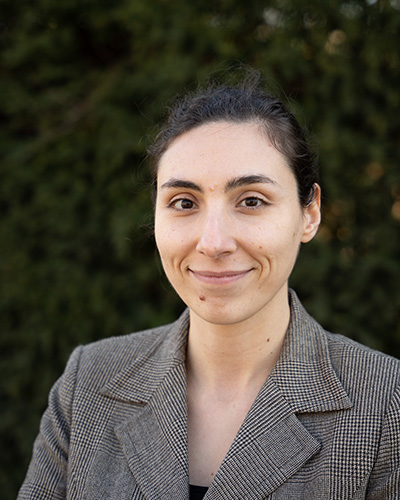
Mariya Toneva is a tenure-track faculty member at the Max Planck Institute for Software Systems , conducting groundbreaking research at the intersection of Machine Learning , Natural Language Processing , and Neuroscience . She leads the Bridging AI and Neuroscience (BrAIN) group , focusing on computational models that align AI systems with human brain processes. Her work aims to enhance both AI capabilities and neuroscience understanding through this cross-disciplinary approach. Actively recruiting postdocs, PhDs, and research interns in areas like code/text representation, brain-AI alignment, and neuroimaging data analysis Collaborator on NIH-funded projects using fMRI and neuropixel data Research Themes : Her group explores neural mechanisms of language processing, event segmentation in narratives, memory reactivation via music, and effective human-AI collaboration frameworks. Key methods include LLM analysis, cross-modal similarity metrics, and naturalistic task-based fMRI studies. Key Publications (2024-2025): Brain-tuned speech models (INTERSPEECH 2025) Cognitive event boundaries in LLMs (Behavioral Research Methods 2025) Music-induced memory reactivation (biorxiv 2024) LLM-brain alignment reasons (EMNLP 2024) Advising : Mentors PhD candidates Omer Moussa (speech processing), Camila Kolling (representational similarity), and Gabriele Merlin (LLM alignment). Collaborates with institutions like MIT, NYU, and ETH Zurich.
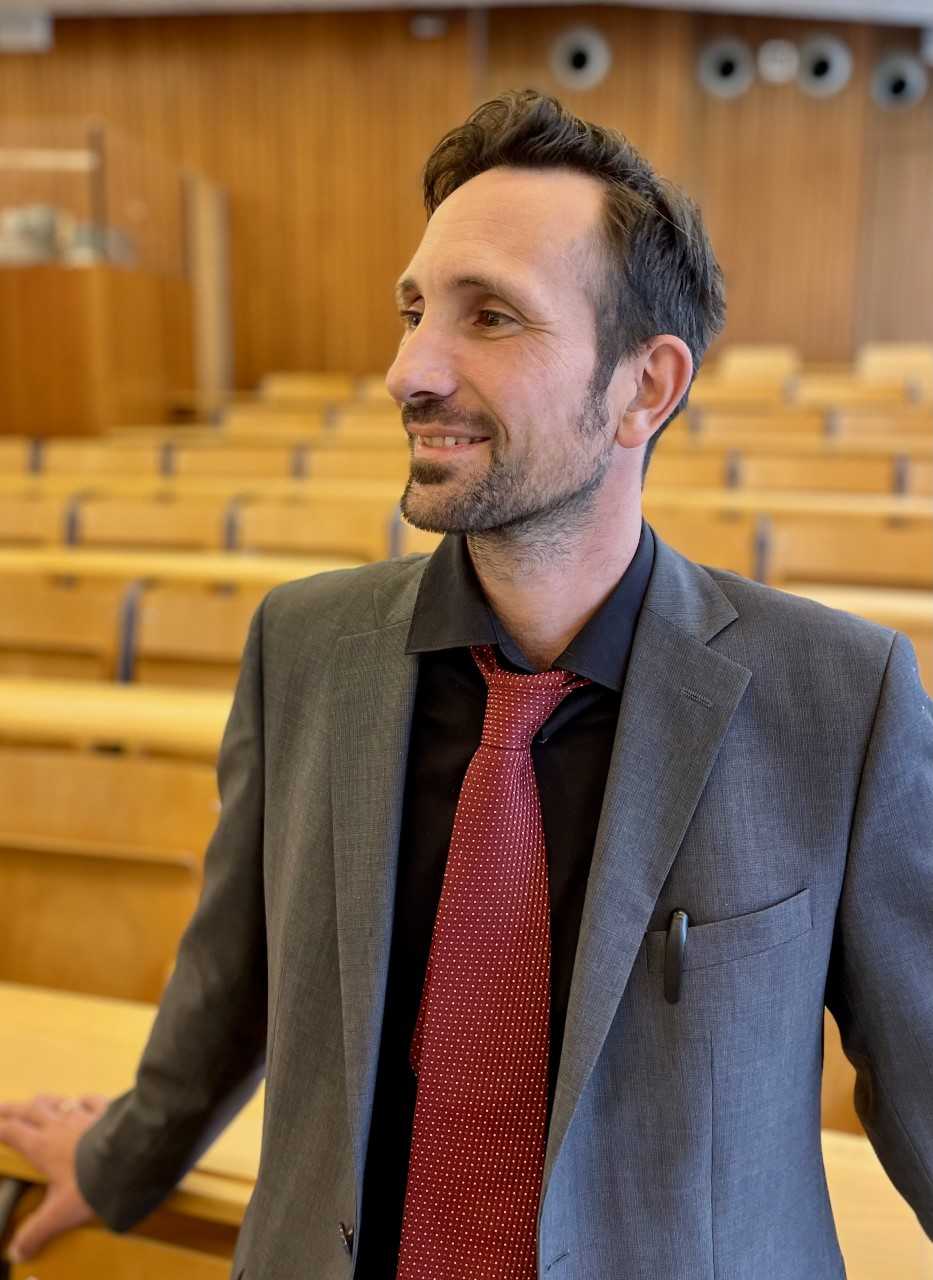
Konstantin Voigt, Professor of Musicology II , serves at the University of Würzburg within the Faculty of Philosophy and Institute of Music Research. His research spans medieval Latin song traditions, music theory, notation systems, and digital humanities applications. He also explores 20th-century composers like Arnold Schoenberg and the reception of medieval music in popular culture. Current: Chair of Musicology II, University of Würzburg (2024–) Previous: Tenure-track Professor, University of Freiburg (2020–2024) Education: PhD (Würzburg), MA (Erlangen-Nürnberg), Musicology & Art History Voigt's research bridges premodern music history with digital methodologies, focusing on: Medieval Latin song structures (9th–13th centuries) Development of musical notation and visualization Digital editions as tools for manuscript analysis Intermedial relationships in postmodern composition Stefan George’s poetry in Schoenberg’s works His recent publications analyze scribal practices in Paris 1139 manuscripts and digital approaches to monophonic music. He co-leads the Weave Lead project on French music reception in Central Europe before 1350 and contributes to the Corpus monodicum digital edition. Collaborations include PD Dr. Hana Vlhova-Wörner (Prague) and institutions like the Schola Cantorum Basiliensis.
Nick Thieberger is an Associate Professor in the School of Languages and Linguistics at the University of Melbourne, Australia. He also holds adjunct positions at the University of Sydney, University of Hawai'i, LaTrobe University, Australian National University, and the University of Tasmania. Thieberger serves as Director of PARADISEC (Pacific and Regional Archive for Digital Sources in Endangered Cultures), President of DELAMAN (Digital Endangered Languages and Musics Archives Network), and Deputy Director of the Research Unit for Indigenous Language at the University of Melbourne. He is a Fellow of the Australian Academy of the Humanities and leads multiple major research projects including Nyingarn and Modularised cultural heritage archives. Thieberger's primary research interests focus on language documentation, endangered languages, and digital archiving methodologies. His work bridges linguistics, digital humanities, and Indigenous language preservation, with particular emphasis on Pacific and Australian Indigenous languages. He has developed innovative approaches to linguistic archiving, including the creation of PARADISEC, which has become a model for digital language archives worldwide. His research spans theoretical linguistics, practical archiving solutions, and community-based language work, with significant contributions to Nafsan (South Efate) language documentation and Australian Indigenous language preservation. His recent publications demonstrate a clear trend toward integrating digital humanities with language documentation, particularly focusing on computational approaches to endangered language preservation. Thieberger's work increasingly addresses ethical considerations in linguistic archiving, community-led documentation models, and the development of platforms that give Indigenous communities control over their linguistic heritage. His research shows a progression from descriptive linguistics toward infrastructure development for language preservation, with growing emphasis on access protocols, data sovereignty, and the technical challenges of long-term digital preservation. Open Scholarship Award (2025) for PARADISEC team Digital Repository of Ireland Award for Research and Innovation (2024) DASSH award for Research Partnership and Social Impact (2021) Fellow of the Australian Academy of the Humanities (2021) Ludwig Leichhardt Jubilee Fellowship by Alexander von Humboldt Foundation (2013-2015) ARC Australian Postdoctoral award (2004-2007) QEII Fellowship (2009-2014) Future Fellowship (2014-2018) Thieberger has secured substantial grant funding throughout his career, including multiple ARC grants as Chief Investigator. He leads the ARC LIEF grant 'Nyingarn: a platform for primary sources in Australian Indigenous languages' (2021-2025) and another ARC LIEF grant for 'Modularised cultural heritage archives – future-proofing PARADISEC' (2022-2025). He also serves as Chief Investigator in the ARDC-funded 'Online Heritage Resource Manager to Describo Collections' project (2023-2024) and in the ARC Centre of Excellence for the Dynamics of Language (2014-2025). His grant portfolio reflects his dual focus on theoretical linguistic research and practical infrastructure development for language preservation. Thieberger directs PARADISEC, a pioneering digital archive for endangered language materials that has become an international model. He also leads the Nyingarn project team, which is developing a platform specifically for Australian Indigenous language materials. Through DELAMAN, he coordinates with other language archives worldwide to establish best practices for digital language preservation. His work with the Language Data Commons of Australia (LDACA) further demonstrates his commitment to building research infrastructure that serves both academic researchers and Indigenous communities.
Oliver Deussen is a Professor of Visual Computing at the University of Konstanz, recognized by the German Informatics Society (GSI) as a Fellow for his contributions to computer science. His research focuses on visualization, robotics, and environmental modeling, particularly in plant and landscape representation. He has pioneered methods in image manipulation and robotic painting, emphasizing digitalization's societal impacts. His work spans computational biology (e.g., schooling fish behavior) and AI-driven creative technologies. Research Interests: Visualization techniques, swarm behavior analysis, robotic creativity, and interdisciplinary applications of computer science. He explores how computational methods can model natural systems and enhance human-machine interaction. Awards: Fellow of the German Informatics Society (GSI) His research often bridges theory and practice, with contributions to SLAM frameworks, style transfer algorithms, and uncertainty visualization tools. Collaborations in robotics and biology reflect his commitment to applied computational research.
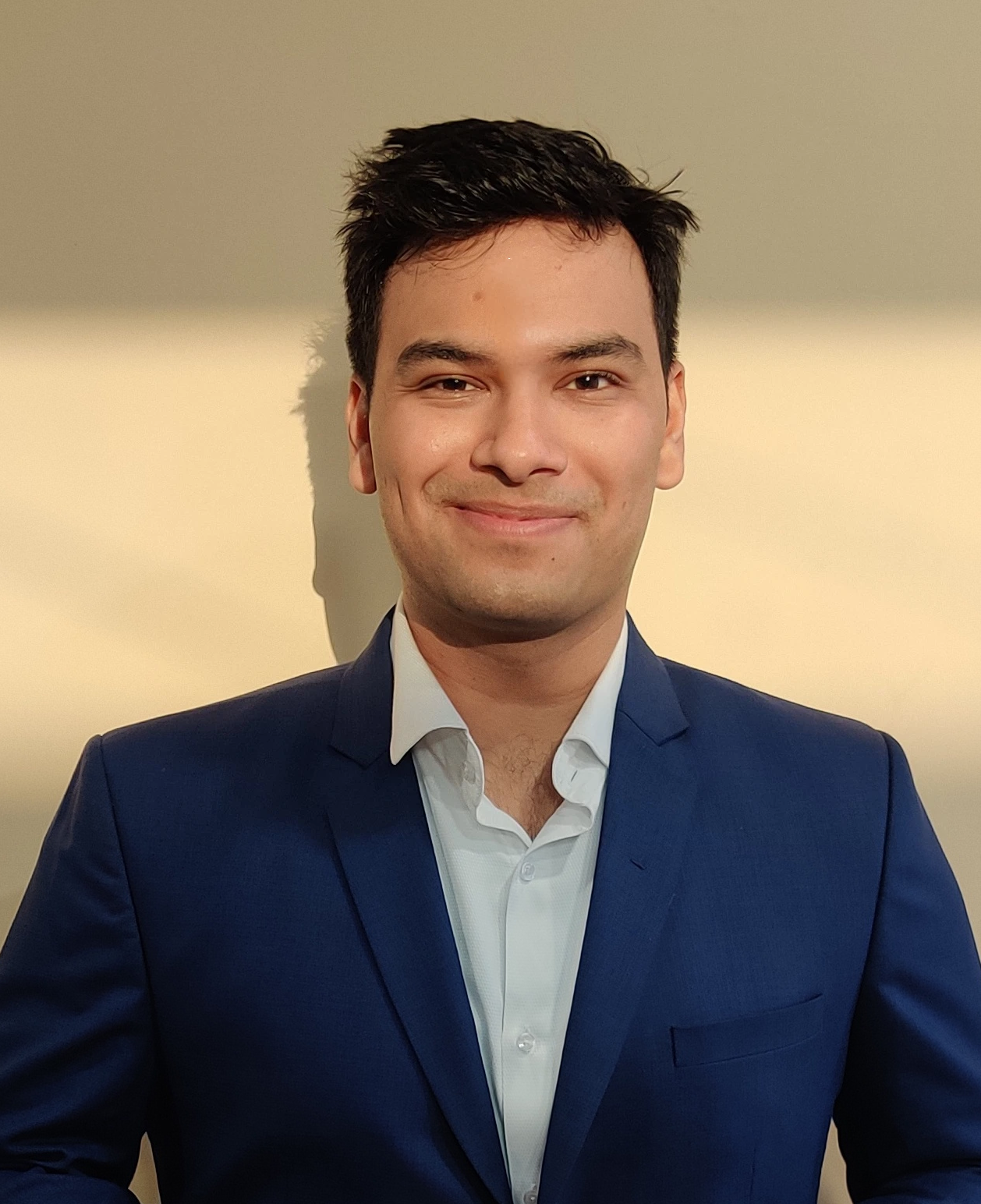
Rishabh Dabral is a Research Group Leader at the Max Planck Institute for Informatics since August 2024, leading the "3D Visual Intelligence" group. He is also affiliated with the Research Training Group on Neuro-Explicit Models of Language, Vision, and Action at Saarland University. Expertise: 3D computer vision, computer graphics, human-object interaction modeling, and motion synthesis. Leadership: Conducts cutting-edge research on 3D human performance capture and physical plausibility in motion. His research focuses on: 3D human pose estimation under gravity constraints Multi-modal gesture synthesis using neural architectures Quantum auto-encoding for 3D representations Wearable robotics informed by human behavior Temporal dynamics in human-object interaction Recent publications at top venues like SIGGRAPH , CVPR , and ICCV demonstrate his work on: Music-driven motion synthesis Egocentric motion capture systems Reactive two-person interaction models Diffusion-based gesture generation Object-aware motion prediction Wearable robotic limb design
Stefan Morent serves as Professor of Musicology with a focus on Digital Musicology and Music before 1600 at the Musicological Institute of the University of Tübingen's Faculty of Philosophy. Since October 2023, he has held the position of Pro-Dean for Studies, Teaching, and Digital Affairs. His academic career spans international research collaborations and leadership roles in major digital humanities projects. Morent earned his doctorate in 1995 from the University of Tübingen, followed by his habilitation in 2004 with the thesis "Das Mittelalter im 19. Jahrhundert. Ein Beitrag zur Kompositionsgeschichte in Frankreich." His educational background includes studies in Musicology (primary), Romance Studies, and Computer Science at Tübingen, recorder performance at Trossingen University of Music, and historical performance practice with Kees Boeke. His research spans medieval music, its performance practice and reception, Renaissance music theory, regional Southwest German music history, 19th-century French music, and Digital Musicology. Morent has pioneered work on digital encoding of neumatic notation, virtual acoustic reconstruction of medieval sacred spaces, and the study of liturgical music fragments. His interdisciplinary approach bridges musicology, computer science, and archival studies. His recent publications demonstrate a consistent focus on digital methodologies applied to medieval music sources, particularly liturgical fragments and neumatic notation. The articles reveal growing emphasis on virtual reconstruction techniques, collaborative digital tools like MEI (Music Encoding Initiative), and interdisciplinary approaches combining musicology with archaeology and computer science. Classical Music Award 'Golden Label' DFG Research Scholarship Habilitation Scholarship from Graduate School 'Ars and Scientia' Doctoral Scholarship from State Graduate Funding Baden-Württemberg Research Fellowship from Herzog August Library Wolfenbüttel Morent has supervised numerous doctoral and master's theses across disciplines, including collaborations with computer science students on digital tools for music encoding. His third-party funding includes major projects like 'Sacred Space: eHeritage and Virtual Acoustics' (ongoing), 'Digital Erschließung mittelalterlicher Musikfragmente' (DFG, 2017-2022), and multiple grants from the University of Tübingen's Zukunftskonzept. He maintains active partnerships with institutions including St. Gallen Abbey Library, Max Planck Institutes, and Swiss cultural foundations. As director of the Schola Cantorum at Tübingen's Musicological Institute and founder of the Ordo Virtutum ensemble, Morent bridges academic research and performance practice. His leadership extends to the 'Sacred Sound' research group and collaborations with the Collaborative Research Center 'Material Text Cultures.' Current projects focus on virtual acoustic reconstruction of medieval sacred spaces and digital encoding of neumatic notation systems.
Nori Jacoby is an Assistant Professor in the Department of Psychology at Cornell University and a Research Group Leader at the Max Planck Institute for Empirical Aesthetics in Frankfurt. Her research bridges cognitive science, neuroscience, and machine learning to explore how internal representations shape sensory and cognitive abilities, with a focus on universality/diversity in perception and collective behavior. Education: PhD from Hebrew University of Jerusalem (ELSC), postdocs at MIT, UC Berkeley, and Columbia University Lab: Directs the CoCoCo Lab (Cornell Computational Cognition Lab) Funding: NSF-funded postdoctoral program collaborating with UC Davis, CUNY, and Princeton Research interests include: High-dimensional perceptual spaces using adaptive sampling (e.g., Gibbs sampling with people) Cross-cultural studies of music and perception via global experiments Human-AI hybrid systems for collective creativity and decision-making Recent work explores mechanisms of cultural diversity in urban populations, neural correlates of rhythm in stroke patients, and LLM alignment with human sensory judgments. Current projects include large-scale music evolution experiments and NSF-funded studies on collective intelligence. Recruitment: Actively hiring postdocs and PhD students for interdisciplinary work.
Katrin Dennerlein is a Senior Lecturer at the Chair of Computational Philology and Modern German Literary History, Faculty of Philosophy, University of Würzburg. She specializes in digital humanities, computational philology, and emotion analysis in German literary drama. Her work bridges historical text digitization with modern algorithmic analysis, particularly through projects like Drama Corpora and Emotions in Drama. Projects: Leads the Drama Corpora initiative for digitizing cultural heritage, focusing on Hamburg Gänsemarktoper libretti (1678–1730) using OCR4all. Research Focus: Emotion analysis in German drama (1650–1815), sentiment classification with transformer models, and narratology in the context of spatial turn. Collaborations: Works with Dr. Christian Reul and the Center for Philology and Digitality, supported by DFG funding. Her recent publications emphasize emotion dynamics in historical plays, leveraging machine learning to analyze genre-specific patterns. She also contributes to methodological advancements in sentiment annotation and digital preservation of cultural memory through dramatic texts.
Johanna Devaney serves as Associate Professor of Music at Brooklyn College, City University of New York (CUNY), teaching within the Music Technology and Sonic Arts programs at the Conservatory of Music under the School of Visual, Media and Performing Arts. She holds dual appointments at the CUNY Graduate Center in both the Data Analysis and Visualization program and the PhD program in Music, reflecting her interdisciplinary expertise bridging computational methods and musical scholarship. Her academic foundation includes a PhD in music technology from McGill University (2011), an MPhil in music theory from Columbia University, and an MA in composition from York University in Toronto. Previous positions include Assistant Professor of Music Theory and Cognition at Ohio State University and postdoctoral research at UC Berkeley's Center for New Music and Audio Technologies (CNMAT). Devaney's research centers on Music Information Retrieval (MIR), with emphases on computational performance analysis, audio signal processing for music, and the cognitive/social dimensions of musical expression. She investigates how technology reveals patterns in musical performance, gender identity construction through vocal curation, and interdisciplinary applications of music encoding standards. Her work consistently integrates technical innovation with humanistic inquiry into musical meaning. Analysis of her publication record reveals a trajectory toward developing open computational frameworks like AMPACT for performance comparison, advancing methodological rigor in music corpus studies, and addressing representation gaps in audio analysis—particularly regarding gender. Her scholarship demonstrates increasing integration of machine learning with musicological frameworks while maintaining critical perspectives on technology's role in music. Her research impact is evidenced by competitive external funding: National Science Foundation EAGER grant for \"Learning with less data: Capitalizing on formal pedagogies and human performance to incorporate domain knowledge into deep learning models\" National Endowment for the Humanities Digital Humanities Level II Grant for \"Automatic Music Performance Analysis and Comparison Toolkit (AMPACT)\" Devaney actively shapes her field through editorial leadership as Co-Editor in Chief of the Journal of New Music Research, service on RILM's Commission Mixte, and program committee roles for the Society for Music Theory. She co-founded the Cognitively-Informed Music Information Retrieval (CogMIR) Workshop and North Eastern Music Information Special Interest Group (NEMISIG), significantly advancing methodological standards in MIR research. As a leader in the international MIR community, she organizes initiatives like Women in Music Information Retrieval (WiMIR) and delivers keynotes at major conferences including ISMIR. Her collaborative networks span computer science, musicology, and cognitive science departments globally, fostering interdisciplinary approaches to music technology that prioritize both technical innovation and cultural context.
Dr. Gabriele Taschetti is a musicology researcher at the University of Regensburg's Institute of Musicology within the Faculty of Philosophy, Arts, History, and Social Sciences. He currently leads the DAAD-funded project "Incomplete musical treasures at the Bischöfliche Zentralbibliothek in Regensburg," focusing on early modern musical manuscripts, and serves on the scientific committee for the complete works editions of Tomaso Cecchini and Giovanni Battista Riccio. His academic background includes a Ph.D. in Musicology from the University of Padua (2023), where his dissertation analyzed the motet anthology Symbolae diversorum musicorum (Venice, 1621). He has conducted seminars at Geneva's Haute École de Musique (2021) and Milan's Pontifical Ambrosian Institute of Sacred Music (2023). Taschetti's research centers on Renaissance and Baroque musicology, with expertise in musical patronage networks, contrafacta practices, incomplete musical works, historical music inventories, and digital analysis tools. His work frequently examines Venetian publishing traditions, sixteenth-century madrigals, and Giuseppe Tartini's legacy, bridging archival research with computational methods through projects like ITMI and CRIM. Analysis of his recent publications reveals consistent focus on Tomaso Cecchini's output, manuscript transmission in early modern Italy, and the interplay between sacred texts and musical composition. His scholarship increasingly incorporates digital humanities approaches, particularly in analyzing textual-musical relationships and reconstructing lost musical contexts. Scientific recognition includes: ICCC Japan 2019 composition award His primary research funding comes from the DAAD grant for Regensburg manuscript studies, supplemented by contributions to collaborative projects ITMI (Italian Music Treatise Index) and CRIM (Renaissance Imitation Mass Citations). Though no formal student advisement is documented, his seminar leadership at international institutions demonstrates pedagogical engagement. His work operates within international editorial collectives rather than dedicated laboratories, emphasizing cross-institutional collaboration in musicological research.
Prof. Xiangbin Teng is an Assistant Professor in the Department of Psychology at the Chinese University of Hong Kong. Previously, he was a postdoctoral researcher at the Neurocognitive and Experimental Psychology lab in Frankfurt/Berlin (2021–2022), following his PhD in Cognition and Perception from New York University and M.Sc./B.Sc. degrees from Peking University and Shanghai Jiao Tong University. His research focuses on neurocognitive mechanisms underlying auditory perception, particularly speech and music processing. Key areas include neural oscillations, temporal dynamics, and multiscale auditory encoding. He investigates how rhythmic patterns in language (e.g., ancient Chinese poetry) and music influence perceptual and neural processes. Publications highlight contributions to understanding theta/gamma band neural coding, EEG modulation spectra, and phase precession mechanisms. His work bridges computational models (e.g., recurrent neural networks) with empirical neuroscience findings. ERC Consolidator Grant (2025): Leading the "TRANSFORM" project exploring visual system development from infancy to adulthood. Grants & Collaborations: Extensive research on auditory cortex fMRI methods and cochlear implant simulations. Labs/Teams: Active in CUHK's cognitive neuroscience group and previously at the Max Planck Institutes. His current lab investigates sensory-motor interactions and predictive coding in perceptual systems.
Dr. Seung-Goo Kim is a Postdoctoral Researcher at the Max Planck Institute for Empirical Aesthetics (since 2021), working under Prof. Daniela Sammler. His career spans postdoctoral roles at Duke University, University of Cambridge, and MPI for Human Cognitive and Brain Sciences, with a PhD in Psychology from University of Leipzig (2017, summa cum laude). He holds graduate degrees in Cognitive Science and dual BA in Economics/Psychology, with early training in Musical Composition. PhD: University of Leipzig & MPI for Human Cognitive and Brain Sciences Postdoc: Duke University (USA), University of Cambridge (UK) Current affiliation: Max Planck Institute for Empirical Aesthetics, Frankfurt/Main His research focuses on the neural encoding of music and speech , particularly: shared mechanisms of musical emotion and prosody; intersubject variability in musical reward sensitivity; temporal structure processing; pitch perception correlates; and applications in clinical neuroscience. Key methodologies include MEG, fMRI, and computational modeling of auditory systems. Major scientific awards include: Johanna Quandt Young Academy Fellowship (2023) Postdoc Research Grant Award (Duke University, 2021) Summa cum laude PhD (2017) Conference Scholarship (Mariani Foundation, Italy, 2014) Best Poster Presentation Award (Korean Society of Human Brain Mapping, 2010) His work includes collaborations with leading labs in neuroaesthetics , music cognition , and clinical neuroscience , with recent publications analyzing tonal hierarchy, dissonance encoding, and myeloarchitecture of impulsivity. Current projects emphasize computational models of auditory processing and empirical aesthetics.
David Temperley is a Professor of Music Theory at the Eastman School of Music (University of Rochester), where he has been teaching since 2000, progressing from Assistant Professor to Associate Professor and finally to Professor in 2015. His academic career also includes visiting positions at the University of Pennsylvania, Ohio State University, Columbia University, and New York University. He holds a Ph.D. in Music Theory from Columbia University (1996), an M.A. in Composition from Columbia University (1992), and a B.A. in History from Swarthmore College (1985). Dr. Temperley's research spans multiple areas at the intersection of music theory, cognition, and computational modeling. His work focuses on: Music cognition and perception Computational models of musical structure Analysis of popular music, particularly rock Relationships between music and language Rhythm and meter in various musical traditions Corpus-based approaches to music analysis His research demonstrates a consistent interest in applying quantitative and computational methods to understand musical structures and processes. He has pioneered corpus studies in music theory, examining large collections of musical works to identify patterns and principles that might not be evident from individual case studies. His work often bridges theoretical music analysis with empirical cognitive science approaches. Dr. Temperley has received several prestigious awards including the Society for Music Theory Emerging Scholar Award (2003), the University of Rochester Bridging Fellowship (2009), and the University of Rochester Provost's Multidisciplinary Award (2012). These awards recognize his innovative interdisciplinary approach that connects music theory with cognitive science and computational modeling. As an educator, Dr. Temperley has taught a wide range of courses in music theory, analysis, counterpoint, and music cognition at both graduate and undergraduate levels. His teaching reflects his research interests, emphasizing both traditional theoretical approaches and contemporary empirical methods. He has supervised numerous graduate students in their research, particularly in areas combining music theory with cognitive science. Dr. Temperley is also an active composer with numerous performances of his works, including chamber music for various instrument combinations and piano compositions. His compositional work informs his theoretical research and vice versa, creating a productive dialogue between creative practice and scholarly inquiry.
Augustin Mutak is a Researcher at the Chair of Psychometrics, Department of Psychometrics at the Faculty of Humanities and Social Sciences, University of Zagreb. He previously served as a Research Assistant at Freie Universität Berlin (2021–2024). He is pursuing a doctoral degree under Prof. Dr. Steffi Pohl, focusing on psychometric model development integrating Item Response Theory and response time analysis. His research interests include mood rhythmicity, scale validation, and statistical methods using R and Stan. Education: BSc and MSc in Psychology from the University of Zagreb (2013–2018). He conducted academic work at the University of Oxford (2018) and founded the private business Psihometar (2018–2021), offering psychometric analysis services to clients like Griffith University. He developed the widely used R package cosinor2 for rhythmicity analysis (29,000+ downloads). Research Contributions: His work spans 7 peer-reviewed articles, 10 conference presentations, and workshops. Key projects include DFG-funded studies on test-taking behavior and GBA-funded psychotherapy trials. Awards include the Rector’s Award for student research (BSc). Community Engagement: President of the Association of Students of Zaprešić (2015–2018), Youth Council delegate (2017–2020), and Management Board member of Youth centre “CeZaM” (2018–2023). Active in revitalizing student associations and improving local scholarship systems.
Johannes Kepper is a Professor at Paderborn University's Musicology Seminar Detmold/Paderborn and Deputy Executive Director of the Zentrum Musik – Edition – Medien (ZenMEM) . As a digital humanist, he specializes in digital music philology with a focus on music notation encoding standards. Education: PhD in Musicology (2009, Paderborn University), Diplom in Media Studies (2007), and Magister Artium in Musicology (2005) Research Focus includes: Digital music philology Music encoding standards (MEI) Genetic editions Linked data applications Musical stylometry Humanities data modeling His work intersects musicology, computer science, and media studies. Scientific Engagement highlights: Co-founder and elected member of the MEI Board (since 2015) Editor-in-chief of MEI Guidelines (since 2010) Organized multiple international conferences including Music Encoding Conference 2024 Key Projects led: Beethoven in the House Beethovens Werkstatt Digital Music Notation Data Model