Roger Zahab is a Teaching Professor at the University of Pittsburgh, where he directs the Orchestra and Undergraduate Studies. He is also a core faculty member and co-chair of the MFA in Music Composition program at Vermont College of Fine Arts (VCFA). Zahab holds a BM in Violin Performance from the University of Akron and an MM in Violin Performance from SUNY Stony Brook, with additional mentorship in composition from Tison Street, Ursula Mamlok, and John Cage. His work spans composition, violin/viola performance, conducting, and interdisciplinary collaborations in dance, theater, and video. Research interests focus on complex musical interactions and music’s societal role. Zahab has premiered over 200 works, including editions of Julia Perry’s violin concerto and orchestral pieces like wild woods and Intarsia . His recordings, such as the 2023 album Roger Zahab – at the piano , highlight his compositional versatility. He has led ensembles like the University of Akron’s New Music Group and founded the Daedalus series. Zahab’s awards and grants include collaborations with institutions like the MacDowell Colony and the Mary Flagler Cary Trust. His academic roles emphasize mentorship in low-residency programs and contemporary music advocacy. Notable works include Magna Mysteria (2009), Shadow Rhymes (2024), and film scores like Orson Rehearsed .
Michael Aulick is a Professor of Theater at West Liberty University, located in West Liberty, WV. He is affiliated with the Department of Music and Theater within the College of Liberal and Creative Arts. His office is located in Fine Arts 114, and his postal address is CUB 152. He can be reached at 304.336.8103 or via email at maulick@westliberty.edu. His faculty profile is accessible at https://westliberty.edu/theater/faculty/ . While specific research interests are not detailed in the provided text, his academic role in Theater suggests a focus on areas such as performance studies, dramatic literature, and creative arts education. No awards, grants, or advising details are explicitly mentioned in the text. The Department of Music and Theater is part of a university committed to fostering experiential learning and creative expression, as stated in West Liberty University's mission.
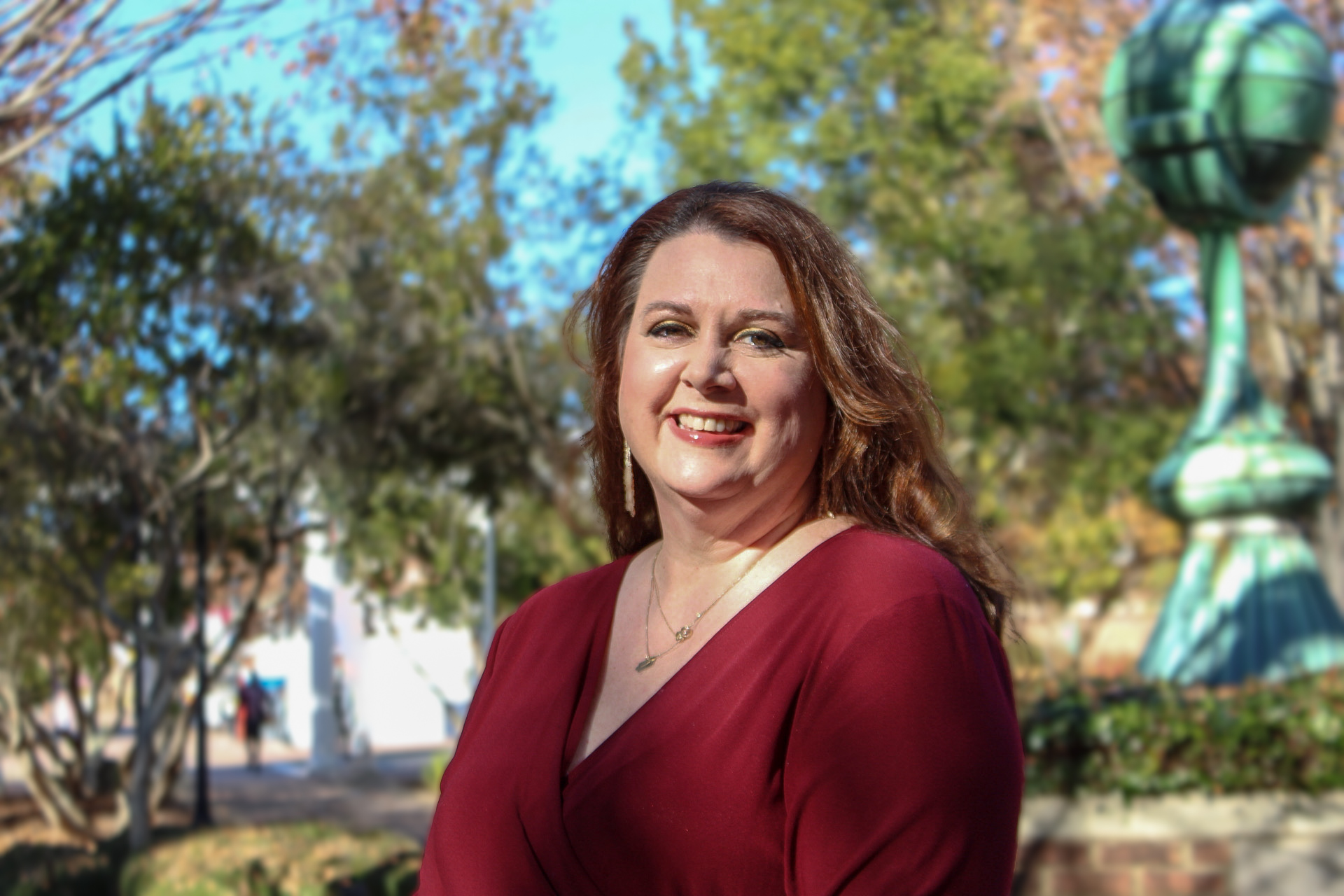
Dr. Kristen Wunderlich is Professor of Music and Area Coordinator of Voice at Winthrop University's College of Visual and Performing Arts. Holding DMA and MM degrees in Vocal Performance and Pedagogy from the University of North Texas and a BA in Music and English from Luther College, she teaches voice, diction, art song literature, and vocal pedagogy. As a dramatic soprano, Dr. Wunderlich maintains an active performance career with solo appearances with orchestras including The Orchestra of New Spain, Texas Chamber Orchestra, and Williamsport Civic Orchestra. Her operatic roles encompass Donna Elvira (Don Giovanni), Suor Angelica, Lady Billows (Albert Herring), and Charlotte (Werther). She premiered Philip Wharton's song cycle 'The Prairie Sings' in 2006. Her research focuses on training large voices and aging vocal techniques, presenting at conferences including the National NATS Conference where she received a 2014 Emerging Leaders Award. As President of the South Carolina NATS Chapter, she oversees professional development for voice teachers statewide. Her students regularly advance to regional and national competitions including Metropolitan Opera auditions.
Dr. Steven Brown is an Associate Professor in the Department of Psychology, Neuroscience & Behaviour at McMaster University, where he directs the NeuroArts Lab. His interdisciplinary research bridges neuroscience, psychology, and the arts to explore the neural foundations of artistic expression and appreciation across multiple domains. PhD Pharmacology, Columbia University (1993) MPhil Pharmacology, Columbia University (1989) MA Pharmacology, Columbia University (1987) Postdoctoral Fellow at Pasteur Institute (1996-2001), Karolinska Institute, University of Texas Health Science Center, and Simon Fraser University Dr. Brown's research focuses on the neural basis of the arts, with particular emphasis on music, dance, acting, storytelling, cinema, drawing, aesthetics, and creativity. His work combines cognitive neuroscience with arts scholarship to understand how artistic expression emerges from brain function. He has pioneered research in neuroaesthetics and the cognitive science of performance, exploring the biological foundations of artistic creation and appreciation. His methodology often incorporates neuroimaging techniques to map brain activity during artistic processes, revealing how different art forms share common neural mechanisms. His recent publications demonstrate a clear trajectory toward unifying theories of artistic expression. Dr. Brown's work increasingly examines the common neural substrates underlying music, dance, and narrative, with significant contributions to understanding musical scales from evolutionary and perceptual perspectives. His research on character portrayal has illuminated the multimodal nature of acting, showing how body, face, and voice synchronize during performance. His publications consistently move from studying individual art forms toward developing comprehensive frameworks for understanding the arts as an integrated cognitive domain. Dr. Brown teaches courses including Contemporary Problems in Psychology, The Mind as a Work of Art, and The Science of Performance. His teaching reflects his research interests, emphasizing the intersection of neuroscience and artistic expression. He has supervised numerous student research projects in the NeuroArts Lab and has secured funding for interdisciplinary projects that bridge neuroscience and the arts, collaborating with researchers across multiple departments and institutions. As director of the NeuroArts Lab, Dr. Brown leads a research team investigating the neural correlates of artistic creation and appreciation. The lab employs fMRI, behavioral experiments, and computational modeling to study how the brain processes musical, visual, and narrative arts. Current projects focus on character portrayal, musical scale perception, and the evolutionary origins of artistic expression, with implications for understanding human cognition, evolution, and potential therapeutic applications of the arts.
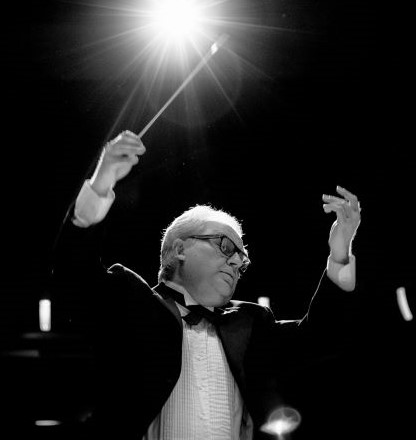
Edmond Agopian is a Professor of Violin and Conductor at the University of Calgary, as well as an Artist-in-Residence at Mount Royal Conservatory. He serves as the Director & Conductor of the Calgary Youth Orchestra and holds roles in Strings Faculty (violin). His career spans over three decades, including leadership with professional orchestras like the Kensington Sinfonia and collaborations with international ensembles such as the Canadian Chamber Orchestra, Shanghai Opera Orchestra, and Polish Baltic Philharmonic Orchestra. Additionally, he has been on the faculty of the Morningside Music Bridge International Music Festival for twenty summers, teaching in locations like Beijing, Shanghai, and Gdansk, Poland. Agopian holds a B.Mus. and M.Mus., with early studies in Romania and formal training at the Juilliard School. His professional journey includes relinquishing a position at Acadia University to focus on roles in Calgary. His research interests and artistic contributions revolve around violin performance, orchestral conducting, and the exploration of diverse musical traditions. He has pioneered arrangements that highlight Calgary’s multicultural musical landscape, blending Klezmer, Mariachi, Jazz, and Métis fiddling into his Calgary Musicscapes Band project. A notable publication is his violin method book The No Time to Practice Technique Companion , a SHAR Music Company bestseller since 2002. Agopian’s awards include the Calgary Arts Award, Alberta Centennial Medal (for service to Alberta), and the John Peter Lee Roberts Distinguished Professorship in Fine Arts. His conducting work has been praised for technical mastery and emotional depth, with reviews highlighting performances as 'triumphs of technique' and 'dramatic heartfelt playing.' He has advised students who have joined major orchestras, such as the Calgary Philharmonic Orchestra, and his pedagogical approach has been recognized through student accolades like the Rose Bowl-Calgary Performing Arts Festival. Under his direction, the Calgary Youth Orchestra has toured Europe and New Zealand, earning international acclaim for performances described as 'transcending music' and 'captivating audiences.'
Dorian Bandy is Associate Professor at McGill University's Schulich School of Music, specializing in musicology and violin performance. His research examines 17th-19th century performance practices, with monographs on Mozart's performative artistry and critical editions of Beethoven embellishments. Research integrates historical analysis with philosophical inquiry, exploring musical subjectivity, performance science, and aesthetics. Recent publications analyze vocal characterization in Mozart operas and ornamentation practices in Viennese classical repertoire. Performance activities encompass baroque violin and historical keyboards, with recordings featuring world premieres of 18th-century works. Awards include the Prix Opus for album of the year and Marjorie Weston Emerson Award for Mozart scholarship. Teaching includes graduate seminars on musical meaning, philosophy of historical performance, and Mozart reception. His laboratory develops analytical frameworks connecting notational evidence with performative interpretation.
Wes Folkerth is an Associate Professor and Director of Graduate Studies in the Department of English at McGill University’s Faculty of Arts. His research focuses on early modern literature, particularly Shakespearean drama and representations of neurodiversity and intellectual disability on stage. He holds a B.A. from California State University, Chico, and an M.A. and Ph.D. from McGill University. Education: B.A., Cal State University, Chico M.A., McGill University Ph.D., McGill University Research Interests: Folkerth explores disability studies through Shakespearean characters like fools and clowns, analyzing how early modern literature engages with neurodiversity and intellectual disability. His work also examines sound in literature, pop music’s engagement with Shakespeare, and the history of theatrical performance. He bridges historical and contemporary discourses, advocating for inclusive academic practices aligned with neurodiverse perspectives. Awards: Louis Dudek Award for Teaching Excellence (2003) Prix d’Excellence de l’Académie des Grands Montréalais (2000) Advising & Grants: Folkerth supervises graduate students in Shakespeare Studies and early modern literature, emphasizing close reading and unconventional critical approaches. While no specific grants are listed, his work intersects with McGill’s interdisciplinary initiatives in disability studies and cultural history. Labs/Teams: None explicitly mentioned, but his research collaborates with performance studies and disability studies networks.
Dr Graeme Morton is a Senior Lecturer and Director of Higher Degrees by Research in the School of Music at the University of Queensland. He is a renowned choral musician, conductor, composer, and educator. His contributions include founding The Australian Voices and conducting numerous premieres of Australian choral works. Dr Morton holds an AM for service to the arts and has received the Prime Minister's Medal and Churchill Fellowship. Qualifications: Bachelor of Arts (UQ), Bachelor of Arts (Honours) (UQ), Master's (UQ), PhD (UQ). Research interests focus on choral excellence in education, commissioning original works, and Australian choral music's cultural role. He explores conducting techniques, sacred music interpretation, and the intersection of music with spirituality. Awards include the Order of Australia (AM), Lord Mayor's Australia Day Cultural Award (2011), Prime Minister's Medal (2003), and Churchill Fellowship for studying U.S./Canadian choral leadership. Advising and grants: Supervises higher degree research students. Collaborates with organizations like the Australian War Memorial and Brisbane Chamber Choir. His work supports youth initiatives and cultural festivals. Labs/teams: Leads the Brisbane Chamber Choir and collaborates with ensembles including Queensland Symphony Orchestra and Adelaide Chamber Singers.
Professor Robert Shaughnessy is the Director of Research at the Guildhall School of Music and Drama (GSA), part of the University of Surrey. Previously, he held roles as Professor of Theatre at the University of Kent, and at Roehampton University and the University of the West of England. His research focuses on Shakespeare in performance, theatre history, and the political/cultural contexts of the arts, both historically and in contemporary settings. Teaching emphasizes practical exploration of theatre history, integrating archival work and engagement with professional practices. He has pioneered methods for teaching theatre history through company-based structures and practical approaches. His research includes monographs such as About Shakespeare (2020) and Shakespeare and the National Theatre (2018). He supervises PhD projects on topics ranging from Shakespearean performance to globalisation in theatre. As a Trustee of Flute Theatre, he supports inclusive Shakespeare productions.
Seth Wilson serves as an Adjunct Lecturer in Theatre at the School of Theatre and Music, University of Illinois Chicago, teaching THTR 101: Theatre History I – Premodern Drama and THTR 201: Theatre History II – Modern Theatre. Dr. Wilson specializes in theatre of the Atlantic world during the long eighteenth century, with particular expertise in the intersections of gender, colonialism, performance, and politics in British and American culture between 1688 and 1815. His additional research interests span analytic philosophy and dramatic theory, and 20th century Russian theatre. His scholarly publications have appeared in Theatre Annual, New England Theatre Journal, Theatre Symposium, Journal of Dramatic Theory and Criticism, and the edited volume English Theatrical Anecdotes: 1660–1800. He is currently developing a book-length study examining the complex relationship between gender, colonialism, performance, and politics in transatlantic contexts. Dr. Wilson has taught theatre history, literature, film, gender studies, and directing at multiple institutions including the University of Illinois, University of Georgia, Stephen F. Austin State University, and the Newberry Library. Beyond academic scholarship, he maintains an active professional practice as a director and dramaturg with special interest in new play development. He has worked with the Goodman Theatre's literary department and serves as manager of the literary committee at Stage Left Theatre where he is an ensemble member.
Anne Torsiglieri is a Professor and Director of the BFA Actor Training Program at the University of California, Santa Barbara (UCSB). She holds a prominent position within the Department of Theater & Dance, part of UCSB's College of Letters and Science. Her career spans prestigious stages including Broadway, national tours, and renowned Off-Broadway and regional theaters. Education includes Princeton University and the Juilliard Drama Division. Her research focuses on actor training methodologies and amplifying underrepresented narratives through initiatives like AMPLIFY. Notable awards include Garland Awards, Santa Barbara Independent Awards, and recognition at the United Solo Festival for her play A TRAIN , which explores autism through her family's experiences. Her performance highlights include roles in Top Girls , Les Misérables , and original works like Sweat and Mamma Mia! . She continues to bridge academic and professional theater through teaching, mentorship, and advocacy for inclusive storytelling.
Meryem Deniz is an Assistant Professor of German Studies at Dartmouth College, previously serving as Acting Assistant Professor at Stanford University. She earned her Ph.D. from Stanford and holds degrees from Harvard University. Her research bridges late 18th-/early 19th-century German literature with environmental humanities, migration studies, and new materialisms. She is completing a monograph titled *The Fluid Effect*, exploring Romantic-era intersections of materiality, agency, and environment through scientific and literary experiments. Her teaching spans German language proficiency and courses on environmental ethics, migration narratives, and transnationalism in literature, music, and performance arts. Her recent publications analyze Romantic-era aesthetics, classical reception (e.g., Antigone adaptations), and the acoustic dimensions of Romantic texts. She has received the 2023 GSNA Essay Prize for her work on Novalis. Deniz’s current projects include a study on Humboldt’s soundscapes and environmental thought. Her interdisciplinary approach integrates science history, classical philology, and eco-critical frameworks without explicitly mentioned labs or collaborative teams.
Eric Moe is Andrew W. Mellon Professor of Music at the University of Pittsburgh, specializing in composition and piano performance. His works, described as 'music of winning exuberance' (The New York Times), explore stylistic collisions and narratives through acoustic and electroacoustic mediums. Major compositions include operas ( The Artwork of the Future ), orchestral works ( Kick & Ride concerto), and chamber pieces integrating video and text. Honors include Guggenheim and Koussevitzky Foundation awards. Creative Work: Premieres by Pittsburgh Symphony, Boston Modern Orchestra Project, and Brentano Quartet Recordings on New Focus, Albany, and New World labels Awards: Lakond Award, American Academy of Arts and Letters Guggenheim Fellowship Pennsylvania Council on the Arts Fellowship Aaron Copland Award
Charles Peck is an Assistant Professor of Composition in the Department of Music at the University of Pittsburgh, teaching composition seminars focused on music and technology. He holds a DMA from Cornell University (2021) and has received prestigious awards including a Guggenheim Fellowship (2022) and Charles Ives Fellowship (2023). His creative research bridges: Acoustic composition exploring mechanical/electronic sound palettes Electronic works emphasizing physicality and human effort Integration of digital and acoustic sound worlds Peck's compositions demonstrate consistent innovation in instrumental writing and formal structure, with works performed by leading ensembles including Alarm Will Sound, Bergamot Quartet, and Orchestra of St. Luke's. Recent pieces explore textural complexity in solo and chamber formats while maintaining expressive clarity. His office hours are held in Room 306 of the Music Building during autumn term 2024-25.
David Yezzi is a Professor in The Writing Seminars at Johns Hopkins University, part of the Krieger School of Arts & Sciences. His work bridges poetry, literary criticism, and theater. He authored Late Romance: Anthony Hecht—A Poet’s Life (2023) and edited The Swallow Anthology of New American Poets . As an actor, he performed roles like King Lear and Hamlet’s Ghost. His verse play Schnauzer (2018) and libretto for the opera Firebird Motel showcase his creative versatility. Yezzi’s research interests emphasize 20th-century poetry, dramatic adaptation, and poetic biography. His publications span interviews, critical essays, and creative works that explore themes of memory, tragedy, and cultural history. He held a 2022 visiting fellowship at Jesus College, Oxford, and previously directed the Unterberg Poetry Center in New York. His articles reflect a focus on literary figures like Anthony Hecht, T.S. Eliot, and Louise Glück, analyzing their techniques and legacies. While no formal awards are listed, his contributions to poetry and criticism are widely recognized. He advises through his teaching and creative mentorship, though specific grant details are not documented here.