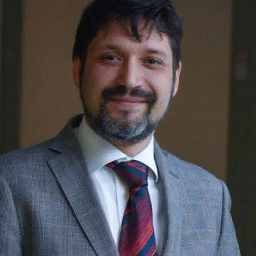
Dr. Sam Ferguson is a Senior Lecturer at the School of Computer Science, University of Technology Sydney (UTS), with a multidisciplinary background in music performance, cognitive science, and psycho-acoustics. His research explores the intersection of sound, music, and human experience through creative coding, machine learning, and interactive systems. Key Research Areas: Sound and Music Computing, Human-Computer Interaction, Creative Coding, Cognitive Science, Installation Art, and Acoustics. Current Projects: ARC Linkage project on creative coding and multiplicitous media; industry collaborations on IoT-based audiovisual systems. Recent Publications: Focus on spatial audio complexity, gestural interaction with networked sound, music emotion recognition frameworks, and robotic performance through genre-based cultural platforms. Leadership Roles: Director of Teaching & Learning Engagement; former Deputy Head of School (Teaching and Learning); active in ACM Creativity and Cognition Steering Committee. Teaching: Courses like Digital Media Studio , Prototyping Physical Interaction , and Data Processing using R within UTS's interdisciplinary Software Development Studio.
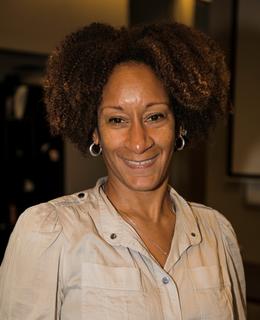
Dr. Jennifer Adams is a Professor at the University of Calgary with dual appointments in the Werklund School of Education and the Faculty of Science’s Department of Chemistry. She holds a Tier II Canada Research Chair in Creativity, Equity, and STEMM. Her work focuses on equity in STEM education, postsecondary faculty education, and transdisciplinary approaches. Dr. Adams earned her PhD in Urban Education from The Graduate Center, CUNY, and has prior roles including Associate Professor at Brooklyn College and leadership in informal science institutions like the American Museum of Natural History. Education: PhD Urban Education (2006), MS Nutrition (1996), MA Education (1995), BA (not specified) Her research emphasizes anti-deficit and justice-oriented pedagogies, with a focus on marginalized communities. Key areas include racial equity in STEM, sociocultural theory, and critical transdisciplinary methods. Dr. Adams leads the Creativity, Equity, and STEM Lab, advancing equity through community-based and arts-infused approaches. She edits academic journals such as the International Journal of Informal Science and Environmental Learning and has collaborated on projects like the Resilient Schools Consortium (RiSC). Recent publications explore belonging in STEM, anti-racist education frameworks, and transdisciplinary methodologies. Her work bridges formal and informal learning environments to address systemic inequities. Dr. Adams actively engages in policy advocacy and community partnerships to foster inclusive STEM ecosystems globally.
Mark D. Gross is a Professor of Computer Science and Director of the ATLAS Institute at the University of Colorado Boulder, where he leads an interdisciplinary hub for creativity and invention. His academic journey began at MIT with BS and PhD degrees, followed by faculty roles at Carnegie Mellon University (2004-2013), University of Washington Seattle (1999-2004), and CU-Boulder (1990-1999, 2014-present). As co-founder of Modular Robotics Incorporated and Blank Slate Systems LLC, he bridges academia and entrepreneurship. Education: BS and PhD in Computer Science from MIT Gross’ research spans design methods, modular robotics, computational design tools, and tangible interaction. He pioneered sketch recognition software like 'The Electronic Cocktail Napkin' and explores physical computing through projects such as shape-changing interfaces, interactive construction kits, and augmented reality systems. His work integrates IoT, digital fabrication, and educational technology. Recent publications highlight innovations in AR/VR collaboration, shape-changing robotics, and interactive fabrication. Key themes include climate communication through data physicalization, AI-driven creative systems, and soft robotics for dynamic interfaces. Despite no explicit awards listed, his career demonstrates sustained impact through ACM conference leadership (Creativity and Cognition 2009, TEI 2011) and industry partnerships. Gross’ prior industry experience includes positions at Atari Cambridge Research and Logo Computer Systems. His lab at ATLAS fosters radical creativity through projects like PaperMech, DynaBlock, and WearAir, emphasizing hands-on learning and cross-disciplinary experimentation.
Joshua D. Bard is an Associate Professor and Associate Head for Design Research at Carnegie Mellon University's School of Architecture. His work bridges traditional craft and cutting-edge robotics, focusing on human-machine collaboration in construction domains. He leads Archolab, an award-winning research group exploring digital fabrication methods like 'Morphfaux' (robotic plaster techniques) and 'Spring Back' (parametric steam bending). Education: M.Arch (Distinction) from University of Michigan; B.A. in Literature & Philosophy from Wheaton College. Professional affiliations include the Manufacturing Futures Institute and rob|arch. Research emphasizes reviving historical crafts through digital tools, such as augmented reality interfaces for architectural education and thermal-tuned concrete panels via robotic processes. His teaching includes generative modeling and architectural robotics labs. Awards: Architect Magazine R+D Award, Canadian Wood Council Merit Award Key Projects: Plaster ReCast AR app, Thermally Informed Robotic Concrete Panels Collaborators: Dana Cupkova, Garth Zeglin, Steven Mankouche Current courses include 62-225 Generative Modeling and 48-555 Introduction to Architectural Robotics. His work is featured in venues like the Carnegie Museum of Art and academic journals like International Journal of Architectural Computing .
Robert P. Anderson is a Professor of Biology in the Division of Science at City College of New York (CCNY), part of the City University of New York (CUNY) system. His research laboratory is located in Marshak Science Building (Room 810), with additional affiliation as a Research Associate at the American Museum of Natural History (AMNH) Mammalogy Department. As a Highly Cited Researcher (2019-2023) and AAAS Fellow (2023), he leads an interdisciplinary biogeography research program focused on modeling species niches and distributions. Dr. Anderson's research spans biodiversity modeling, biogeography, and ecology with specialization in mammals. His lab develops ecological modeling software widely applied in conservation biology, invasive species management, zoonotic disease studies, and climate change impact assessments. Key research themes include: Characterizing spatial configuration of environmental suitability for species Developing machine learning approaches (particularly Maxent) for species distribution modeling Studying climate change effects on biodiversity Conservation applications of biogeographic models Neotropical mammal systematics and ecology His work has resulted in significant software contributions including Wallace, ENMeval, and spThin, with recent publications emphasizing methodological improvements in species distribution modeling and conservation applications. The lab maintains active projects funded by NASA and the National Science Foundation, focusing on small mammals of North and South America. Scientific recognition includes: AAAS Fellow (2023) Web of Science Highly Cited Researcher (2019-2023) Blavatnik Science Scholar (New York Academy of Sciences) Most Downloaded Paper in Ecography (2023-2024) Most Cited Paper in Ecography (2023) Dr. Anderson mentors graduate students through the CUNY Graduate Center and CCNY Master's programs, with recent advisees receiving prestigious awards including the ASM Horner Award and NASA FINESST Fellowship. His lab trains students in environmental biology through interdisciplinary research combining fieldwork, morphology, climatology, remote sensing, physiology, and genetics. Current lab members include Andrew Gaier (NASA Fellow), Mariano Soley-Guardia, and Kass (lead author on highly cited Wallace v2 paper). The Anderson Lab operates from CCNY's Marshak Science Building as part of the university's biodiversity group studying ecology, evolution, and geography of life on Earth. The lab emphasizes software co-design between end-users and developers to enhance conservation utility, with recent work focusing on neighborhood approaches for range estimation and operationalizing expert knowledge in species assessments.
Daniel Halpern Jelin is an Associate Professor at Pontificia Universidad Católica de Chile. He directs the Master in Strategic Communication, the Diploma in Online Social Networks and Communications, and the Diploma in Tools for Internal Communication Management. Additionally, he leads the think tank Tren Digital and teaches courses on communication strategies in organizational contexts. He holds a Ph.D. in Communications from Rutgers University (USA), a Master's in Political Science (International Relations) from Pontificia Universidad Católica de Chile, and a Bachelor's degree in Social Information and Journalism from the same institution. His research explores the intersection of technology, communication, and society, with emphases on: Strategic communication frameworks in digital environments Social media dynamics and their societal impacts E-government adoption and public sector innovation Quantitative analysis of online behavior and organizational tech integration His recent publications (2012-2016) demonstrate cross-disciplinary work spanning communication theory, political science, educational technology, and human-computer interaction. Common themes include social media's effects on relationships, digital governance models, visualization pedagogy, and emerging technology acceptance. Notable scientific recognitions include: Fulbright Fellowship (2008-2011) Rutgers University Continuing Fellowship (2009-2011) Top Research Paper Award, Penn State (2009) Multiple travel and research grants from academic institutions He has secured research funding as Principal Investigator for projects including: Risks/opportunities of ICT in education (UC Public Policy) Social media's societal impact (FONDEDOC) Cyberbullying in Chile (VRI Initiation Grant) Senators' Twitter usage (Fulbright Summer Grant) He directs Tren Digital , a research think tank examining digital trends in organizational and social contexts.
Cristine H. Legare is a Professor of Psychology at The University of Texas at Austin, affiliated with the College of Liberal Arts. She directs the Center for Applied Cognitive Science and the Evolution, Variation, and Ontogeny of Learning Laboratory. Her work bridges cognitive science, cultural anthropology, and developmental psychology to explore how universal cognitive systems interact with cultural variability to shape learning and cultural evolution. Education: Ph.D. in Developmental Psychology from the University of Michigan (Culture and Cognition Program). Undergraduate studies at UC San Diego, double-majoring in Human Development and Cultural Studies. Research Interests: Cognitive development, cultural learning, global public health, STEM education, and the evolution of ritual behavior. Her projects span diverse populations, including studies in South Africa, Brazil, China, Vanuatu, and India. Grants & Funding: Supported by the National Science Foundation, John Templeton Foundation, and others. Her work addresses pressing issues in education and public health through interdisciplinary approaches. Recipient of the 2015 APS Janet Taylor Spence Award 2016 APA Boyd McCandless Award Labs & Initiatives: Founded the Center for Applied Cognitive Science to foster global collaborations between researchers and practitioners. Key projects include the RISE Project (healthcare rituals in India) and Thinkery Connect (museum-university partnerships). Teaching focuses on cognitive science of religion and coevolution of cognition/culture. Over 100 publications in top journals like Psychological Science and PNAS, with media coverage in NPR, Scientific American, and The Wall Street Journal.
Professor Andrew Singleton is a leading sociologist at Deakin University's School of Humanities and Social Sciences , with expertise in religion, spirituality, and social research methodologies. His career spans over two decades at Deakin, where he has held progressively senior roles since 2000. Education: PhD in Sociology from Monash University (2000) Research Interests include: Spirituality in contemporary society New Religious Movements (particularly Spiritualism) Global Christianity and secularisation Quantitative and qualitative methods Research Trends show extensive work on Australian teen spirituality, Holocaust education impacts, marine conservation policy, and historical religious studies. His 2024 article on marine protected areas revealed majority Australian support for expanding ocean protections. Scientific Awards include multiple teaching accolades, though specific prizes aren't listed in the source material. Supervision covers diverse topics like neurodivergent birthing experiences, church hurt recovery, and honor-based violence support. He has taught sociology of religion and methods courses. Grants include Australian Research Council funding for Holocaust education studies ($305k+) and spiritual wellness research ($420k+), plus DFAT Korea Foundation support ($39k).
Irving Chan Johnson is an Associate Professor in Southeast Asian Studies at the National University of Singapore. A graduate of the Southeast Asian Studies Programme (now Department) in 1996, he earned his PhD from Harvard University in 2004. His academic journey has focused on cultural dynamics of borderland communities, particularly Thai Buddhist communities in Malaysia's Kelantan state, examining how they navigate identity at the intersection of Buddhist and Muslim traditions. Dr. Johnson's research spans social anthropology, visual arts, and cultural studies with particular focus on: Social anthropology of Southeast Asia Visual arts and traditional performance Buddhist communities in borderland regions Cultural identity and marginality Traditional dance and mask traditions in Bali Thai mural painting traditions His scholarly work reveals a consistent thread examining how cultural communities maintain identity through artistic expression, religious practice, and historical narrative. Early publications focused on Malaysian-Thai borderlands, while recent work has expanded to Balinese performance traditions, particularly mask-related arts. His 2013 book The Buddha on Mecca's Verandah represents a significant contribution to understanding cultural identity formation in border regions. As an active cultural practitioner, Dr. Johnson founded Eka Suwara Santhi, Singapore's only Balinese dance group, and volunteers painting Buddhist murals at Wat Uttamayanmuni, a Thai temple in Singapore. His teaching philosophy emphasizes experiential learning, incorporating field trips to Thailand and Bali where students engage directly with cultural contexts through his specialist classes on Thai traditional art (SE3224) and traditional dance in Southeast Asia (SE2224).
Peter Wardrip is an Assistant Professor of STEAM Education at the University of Wisconsin-Madison School of Education. His research focuses on bridging informal and formal learning environments, professional learning communities, formative assessment strategies, and making/tinkering pedagogy. He holds a PhD in Learning Sciences and Policy from the University of Pittsburgh, an MS in Human Ecology, and a BS in Latin Education from UW-Madison. Education Background: PhD in Learning Sciences and Policy (University of Pittsburgh, 2014) MS in Human Ecology (Centre for Human Ecology, 2004) BS in Latin Education (University of Wisconsin-Madison, 1997) Research Interests: Peter's work emphasizes collaborative learning frameworks, educator professional development, and innovative assessment methods in makerspaces. He has developed national frameworks for museum and library makerspaces, and co-designed observation tools for maker educators. His research often explores how educators use data to inform instruction and how informal learning spaces can enhance traditional education systems. Recent Article Trends: Recent publications focus on pandemic-era educational adaptations, assessment challenges in makerspaces, and role evolution of librarians/museum educators. He has contributed to foundational texts on maker pedagogy including Handbook of Research on Educational Communications and Technology and Makeology . Awards: INSPIRE Fellow (2018-2019), Research+Practice Collaboratory Fellow (2016), DML Design Research Committee Member (2014-2015) Grants & Advising: Peter has led projects funded by the Institute of Museum and Library Services, co-authored a national framework for museum makerspaces, and advised on digital badge systems in educational settings. He actively collaborates with institutions like the Children’s Museum of Pittsburgh and Carnegie Mellon’s Learning Media Design Center. Labs/Teams: Involved with the University of Pittsburgh’s UPCLOSE research group and the MIT Teaching Systems Laboratory through his INSPIRE fellowship. His work bridges university, museum, and K-12 partnerships to create scalable educational tools and frameworks.
Brian Magerko is Professor of Digital Media in the School of Literature, Media, and Communication at Georgia Institute of Technology , where he also serves as Director of Graduate Studies for the Digital Media program and holds an adjunct appointment in the School of Interactive Computing . He directs the Expressive Machinery Lab and has led over $20 million in federally funded research at the intersection of cognition, computation, and creativity. Education Ph.D. Computer Science and Engineering, University of Michigan (2006) M.S. Computer Science and Engineering, University of Michigan (2001) B.S. Cognitive Science (minor Computer Science & Jazz Performance), Carnegie Mellon University (1999) Research Interests Dr. Magerko’s scholarship integrates cognitive science , AI , and computational media to investigate three core themes: (1) social and creative collaboration between humans and AI; (2) design of interactive narrative, music, and arts-based computational experiences; and (3) inclusive STEAM education that leverages personal expression—most notably through the widely-adopted EarSketch platform, which engages learners in computer science via music remixing and coding. Publication Trends Recent publications (2022-2025) reveal a surge in work on generative and co-creative AI systems , AI literacy frameworks , and accessible computing education . Studies span dance improvisation agents (LuminAI), inclusive design for blind and visually-impaired learners, and large-scale evaluations of creativity and learning outcomes in EarSketch classrooms across the United States. Awards & Honors Methods Paper Recognition, ACM CSCW 2022 Best Paper Award, ACM Creativity & Cognition 2021 & 2017 Ivan Allen College Researcher of the Year 2018 NCWIT Engagement Excellence Award 2017 Multiple Best Student Paper Awards (AIED 2021, ICCCI 2021) CETL Thank-a-Teacher Award 2008 Grants & Advising Dr. Magerko has served as PI or Co-PI on numerous NSF, NEA, and private foundation grants totaling more than $20 million. His projects fund interdisciplinary teams of graduate and undergraduate students, post-docs, and external collaborators, producing open-source software, museum installations, and K-12 curricula. Labs & Teams As head of the Expressive Machinery Lab , he mentors researchers creating AI partners for dance, drawing, music, and storytelling. The lab’s artifacts have been exhibited at the Smithsonian, ArtScience Museum Singapore, MoogFest, and other international venues.
Jill Thorson serves as Assistant Professor in the Department of Communication Sciences and Disorders within the College of Health and Human Services. Recognized with the 2024 Excellence in Teaching Award, she demonstrates exceptional commitment to student-centered pedagogy across undergraduate and graduate curricula, particularly in courses like Language Acquisition and Clinical Phonetics where she transforms complex concepts into accessible learning experiences through active strategies and technological integration. Her research investigates prosodic mechanisms in child language development, with emphasis on naturalistic caregiver-child interactions, autism spectrum communication patterns, and clinical assessment methodologies. She examines how pitch contours, intonation, and rhythmic patterns facilitate language acquisition in diverse populations, employing acoustic analysis of museum visits, classroom settings, and spontaneous speech to uncover links between prosody and cognitive processing. Recent publications (2020-2025) reveal consistent focus on prosodic assessment innovations, cross-linguistic autism studies, and the role of intonation in attentional guidance. Key trends include statistical learning networks, referent processing through pitch variation, and clinical applications for minimally verbal children, demonstrating her commitment to bridging theoretical linguistics with therapeutic practice. Scientific Awards: Excellence in Teaching Award, College of Health and Human Services (2024) Dr. Thorson maintains an active research laboratory mentoring undergraduate and graduate students in hands-on projects, with advisees consistently crediting her one-on-one consultations and collaborative environment for their professional development as clinicians. While specific grant details aren't provided, her extensive publication record indicates sustained research funding supporting naturalistic methodology development. Her laboratory specializes in acoustic analysis of real-world communication, conducting studies in preschool classrooms and museum settings to document prosodic patterns in typically developing children and those with autism spectrum disorders, with current work advancing assessment tools for clinical speech pathology applications.
Matthew Pelowski is an Associate Professor at the University of Vienna , affiliated with the Faculty of Psychology and the Institute for Psychology of Cognition, Emotion and Methods . He is a key member of the Cognitive Science Research Network . PhD in Information Science, Nagoya University (2011) MSc in Information Science, Nagoya University (2007) BFA in Studio Art (Oil Painting), University of Nebraska-Lincoln (2002) BJ in Advertising, University of Nebraska-Lincoln (2002) Pelowski's research bridges neuroaesthetics and cognitive neuroscience , focusing on how art impacts well-being , empathy , and social development . His work employs advanced neuroimaging techniques like fNIRS and hyperscanning to study interpersonal brain dynamics during art appreciation, while also exploring the relationship between artistic creativity and neurodegenerative diseases . Pelowski's recent publications reveal a strong focus on art's therapeutic potential , cross-cultural aesthetic differences , and temporal dynamics in art evaluation . His work has been recognized with prestigious awards including the APA Berlyne Award and the Alexander Gottlieb Baumgarten Award . American Psychological Association (APA) Berlyne Award (2020) Alexander Gottlieb Baumgarten Award (2016) Association of Media & Publishing Excel Awards Bronze Prize (2021) As Consortium Leader for projects like ARTIS (Horizon2020) and Unlocking the Muse (FWF), Pelowski drives transdisciplinary research connecting art with societal challenges and neurodegenerative disease studies . His work has been featured in over 30 media reports, demonstrating significant public engagement and societal impact.
R. Luke DuBois is an Associate Professor and Co-Chair of the Technology, Culture and Society Department at the NYU Tandon School of Engineering, where he also directs the Integrated Design & Media program and the Brooklyn Experimental Media Center. He holds a DMA in music composition from Columbia University and is a renowned artist, composer, and performer whose work explores intersections between technology, sound, and visual media. His research focuses on digital media, human-computer interaction, and emerging technologies applied to artistic expression and accessibility. Key roles include directing the SONYC initiative (addressing urban noise pollution via AI) and leading the NYU Ability Project (advancing disability studies through technology). He has collaborated with institutions like the Smithsonian and artists such as Maya Lin, and his work has been exhibited globally, including at the Sundance Film Festival and the Aspen Institute. DuBois co-developed the Jitter software suite for real-time data manipulation and performs in avant-garde groups like Bioluminescence and Fair Use. His artistic practice combines time-lapse phonography, interactive installations, and interdisciplinary projects that critique cultural ephemera while advancing accessibility in STEM and the arts. Recent contributions include browser-based tools for accessible music notation (SoundCells) and sonification techniques for calculus education. He serves on the Board of the ISSUE Project Room and has been featured in major publications like the New York Times and TED Conference talks.
Guido Perboli is a Full Professor in the Department of Management and Production Engineering (DIGEP) at the Polytechnic University of Turin, where he also serves as Logistics Coordinator and Project Coordinator for activities supporting relationships with government bodies. He is a member of the Interdepartmental Center CARS@PoliTO (Center for Automotive Research and Sustainable Mobility) and serves as Director of the ICT for City Logistics and Enterprises (ICElab@Polito) research center, which he founded in 2016. His research interests span a broad range of topics including Operations Research, Logistics, Last-mile Delivery, Sustainable Logistics, Combinatorial Optimization, Stochastic Programming, Business Development, and Lean Business methodologies. His work particularly focuses on City Logistics, Green Logistics, and the application of emerging technologies like Blockchain and AI in supply chain management. He has developed GUEST, a Lean Business methodology for innovation processes from early idea definition to implementation. Professor Perboli's recent publications demonstrate a strong focus on urban logistics, last-mile delivery optimization, blockchain applications in supply chains, and the integration of AI techniques in transportation systems. His work shows an increasing trend toward interdisciplinary research that combines optimization methods with emerging technologies to address sustainable urban mobility challenges. Professional Recognition: CASE Best Paper award from IEEE Conference on Automation Science and Engineering (2011) Effective member of INFORMS (2019-present) Effective member of EURO (1995-present) Effective member of AIRO (1995-present) Associate Editor for Journal of Applied Research and Technology (2020-present) Associate Editor for Sustainability (2018-present) Professor Perboli actively advises PhD students and has supervised numerous research projects, including EU-funded initiatives like SINFONICA, HESTER, and 5G-LOGINNOV. He serves as Scientific Director for multiple commercial research projects focused on blockchain, IoT, and AI applications in logistics. Beyond academia, he is Chief Scientific Officer of Arisk S.p.A., a fintech company specializing in business crisis prediction using AI and machine learning. His research group, ICElab@Polito, focuses on two main areas supporting urban growth: logistics and enterprises. The center collaborates with numerous companies including Amazon, DHL, and FCA, addressing real-world challenges in urban logistics and supply chain management through innovative research approaches.