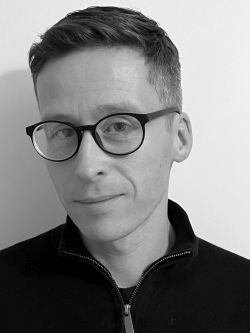
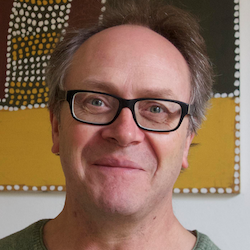
Dr. Simon O'Meara is a Professor at SOAS University of London , serving as Reader in the History of Architecture & Archaeology of the Islamic Middle East and Department Student Support and Experience Convenor. He holds a PhD from the University of Leeds (2004) in Arabic and Islamic Studies, following BA and MA degrees in Art History with a focus on visual theory. Key research areas: Islamic architecture , North African urbanism , material culture , and Islamic visual theory Specializes in analyzing how Islamic religious/legal discourses shape urban spaces and visual culture His publications include two monographs: Space and Muslim Urban Life (2007) on Fez's party walls, and The Kaʿba Orientations (2020) on Mecca's spatial symbolism. Current work examines Quranic exegesis through architectural lenses (2024) and Sufi cosmological centers (2023). PhD supervision topics include: Charlie Oubridge: The Nation in Egyptology Aydin Ozcandan: Ottoman fountains and epigraphs Contact: so20@soas.ac.uk | Office: Room 558, Russell Square: College Buildings
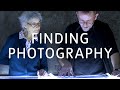
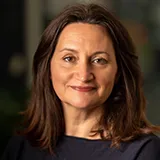
Haidy Geismar serves as Professor of Anthropology at University College London (UCL), where she is affiliated with the Department of Anthropology. She co-directs UCL's Digital Anthropology Program and is the founding director of the School for the Creative and Cultural Industries at UCL East. Geismar also serves as curator of the UCL Ethnography collections, facilitating exhibitions with community groups, students, and artists. Her institutional affiliations extend to the Tate and Victoria and Albert Museum in London, where she maintains long-term professional relationships. Geismar's research explores the intersections of intellectual and cultural property, indigenous rights, and colonial legacies with digital technologies and museum practices. Her work focuses on how digital platforms transform cultural representation, particularly in the South Pacific region including Vanuatu and New Zealand. She investigates how communities engage with digital collections, examining both the materiality of digital objects and their social implications. Her research demonstrates how indigenous knowledge systems interact with contemporary digital infrastructures to create new forms of cultural expression and preservation. Analysis of Geismar's recent publications reveals a clear trajectory toward examining the material dimensions of digital culture within museum and archival contexts. Her work increasingly addresses how digital technologies reshape cultural heritage practices while maintaining critical attention to postcolonial perspectives. There is a notable emphasis on sensory experiences in digital spaces, the politics of representation in digital collections, and the ways digital platforms enable or constrain indigenous knowledge systems. Geismar's professional recognition includes: Mellon Research Fellow at Tate (2019-2020) Fellow of the Royal Anthropological Institute Chairperson of Te Maru o Hinemihi (since January 2024) Photography Committee member of the Royal Anthropological Institute (2016-2024) While specific grant information isn't detailed in the available materials, Geismar's sustained research projects indicate successful funding acquisition. Her long-term collaborations with the Vanuatu Cultural Centre since 2000 and with Maori curators in New Zealand since 2004 suggest significant research support. Current projects like 'Finding Photography' and 'Collecting in Context' demonstrate ongoing research activity requiring funding. Geismar has created the Culture Lab at UCL East, an experimental curatorial space designed as a collections-rich environment for innovative display and research. This facility serves as a hub for her work with the School for the Creative and Cultural Industries, which brings together academic research with creative practice. The Culture Lab hosts exhibitions like 'Power!' and facilitates collaborations between university researchers, community groups, and students, creating a dynamic space for exploring the intersection of material culture and digital technologies.
Professor Steven J Reid is a leading scholar in Early Modern Scottish History and Culture at the University of Glasgow , where he has held a professorship since at least 2023. His work bridges intellectual, political, and religious history from c.1450 to c.1650, with a focus on James VI and Mary Queen of Scots . A prolific editor and author, he contributes to major academic series and institutions like the Hunterian Art Gallery. Research Interests Intellectual, political, and religious history of Scotland Jacobean Scotland and Renaissance/Reformation dynamics Latin literature and its cultural role Andrew Melville's educational reforms Key Publications The Early Life of James VI (2023) on royal minority Co-edited volume on The Afterlife of Mary Queen of Scots (2024) Studies in Neo-Latin poetry and educational history Contributions to Oxford Handbook of Calvin and Calvinism (2021) Projects & Grants Co-investigator on RSE-funded Mary Queen of Scots memorialization project AHRC support for Bridging the Continental Divide (2012-2015) Leverhulme Trust international network participant Fulbright Scholars Award at Yale Divinity School (2012) Teaching History 1A: Scotland’s Millennium Special Subject: The Reign of James VI (1578-1603) Module: The Life and Afterlife of Mary, Queen of Scots
Claire Robins serves as Professor of Museology and Art at University College London's Institute of Education, leading the Art, Design & Museology Academic Group and acting as Department Graduate Tutor for the Department of Culture, Communication and Media. Her work critically bridges art practice, museum studies, and educational theory to advance democratic engagement in cultural institutions. Education: PhD in Museum Education, University of London (2009) Master's degree in Gallery/Museum Education, University of London Bachelor's degree in Fine Art, St Martins School of Art (now University of the Arts London) Research Focus: Robins investigates the intersection of artists' practices with critical pedagogy, emphasizing progressive education and avant-gardist strategies in twentieth-century knowledge production. Her scholarship examines how contextual forces shape learning definitions in museums, with particular attention to materialities, pedagogic forms, and democratic potential within institutional frameworks. This work consistently challenges conventional museum narratives through artist-led interventions. Publication Trends: Her 15 most recent publications (2012-2025) reveal sustained exploration of museology-art education synergies, highlighting pedagogic innovation through artists' interventions, critical assessment frameworks, and democratic museum practices. Key thematic threads include narrative disruption in galleries, sustainability in art education assessment, and the transformative role of fiction in reimagining museum epistemologies. Advising & Leadership: Robins has supervised PhD/EdD students since 2010 and directed the MA Art Education, Culture and Practice program (2011-2023). She currently teaches MA modules in Museums and Galleries in Education and leads the Education and Curation component, while mentoring MA dissertations. Her leadership extends to developing gallery-based short courses with Engage. Professional Engagement: As editorial board member for Arts & Communication and Engage , and active participant in ICOM and NSEAD, Robins shapes global discourse through international keynotes (e.g., Korean Society for Education in the Arts, 2019) and curated seminars like Soft Subjects: Material Practice in Gallery Education (2024). Her review work for Routledge and Intellect Books further demonstrates scholarly stewardship.
Dr Christian Luczanits serves as the David L. Snellgrove Senior Lecturer in Tibetan and Buddhist Art at SOAS University of London, where he also acts as Department Recruitment, Admissions and Marketing Convenor. He previously held research positions at the University of Vienna, Austrian Academy of Sciences, and Lumbini International Research Institute, followed by visiting professorships at UC Berkeley , Free University Berlin, and Stanford University. Before academia, he was Senior Curator at the Rubin Museum of Art, New York. PhD in Tibetan and Buddhist Studies (University of Vienna) under the late Maurizio Taddei Specializes in early Buddhist art (1st-5th centuries) and early Tibetan Buddhist art (7th-15th centuries) Key research topics: Maitreya iconography , development of Mahāyāna and esoteric traditions, Tibetan artistic adaptation of Indian forms, and AHRC-funded monastery collections documentation in Mustang and Ladakh His recent publications analyze transcultural dynamics in Himalayan Buddhist heritage, including monastic collections, mandala symbolism, and artistic revival movements. He co-curated the Gandhara – The Buddhist Heritage of Pakistan exhibition at Bonn's Kunst- und Ausstellungshalle der Bundesrepublik Deutschland. PhD supervisees include: Udomluck Hoontrakul (Political Economy of Marginal Polities) Qianhui Lin (Bodhisattva Conceptualization in Gandhāra) Agneta Niklasson (Esoteric Buddhism in Swat-Gilgit-Kashmir sculpture) Dr Lesley S Pullen (Angkorian Divine Adornment) Kulamitra David Zukas (Rock-Cut Buddhist Monasteries)
Emma Martin is Senior Lecturer in Museology at the University of Manchester's School of Arts, Languages and Cultures, where she serves as Associate Director for Research (Impact and Knowledge Exchange). With over 25 years of professional experience including 17 years as Senior Curator for National Museums Liverpool (2003-2020), her work bridges academic research and museum practice. Her current research focuses on colonial-era Tibetan collections, contemporary museum activism, and dissident curatorial practices in exile contexts. Dr. Martin's research interests sit at the critical intersection of colonialism, Tibetan Studies, and material culture studies. She examines how colonial-era museum collections continue to shape contemporary representations of Tibet while exploring pathways for Tibetan agency in museum decision-making. Her practice-led research includes serving as curatorial advisor to the Dalai Lama Centre for Tibetan and Ancient Indian Wisdom (2024-25) and leading the development of the Tibet Museum for the Central Tibetan Administration (2017-2023). She co-convenes the international Tibetan Materiality Network, fostering cross-border collaboration on Himalayan material culture research. Her publication trends reveal a sustained focus on decolonizing museum practices through historical analysis of Tibetan material culture. Early work examined colonial collecting networks and diplomatic gift exchanges, while recent publications address contemporary issues like digital sovereignty, museum representation of diaspora communities, and dissident curatorial methodologies. Her scholarship consistently connects archival research with practical museum interventions, demonstrating how historical understanding can inform ethical contemporary practice. Fellow, Royal Asiatic Society Fellow, Higher Education Academy Dr. Martin has supervised four completed PhDs and currently mentors five doctoral students working on topics spanning South Asian, Himalayan, and Tibetan museology. Her research project "Object Lessons from Tibet and the Himalayas" involves international collaboration with institutions in Copenhagen and explores how material culture can challenge colonial narratives. Her impact work includes developing new museological approaches for representing Tibet, referenced in Wikipedia and cited by policy makers addressing cultural restitution. She leads the Tibetan Materiality Network connecting European and Asian researchers, and her current monograph "The Dissident Museum: Oppositional Curating at the Tibet Museum" (Routledge) documents innovative curatorial practices developed during the Tibet Museum project. Her external roles include curatorial advisory positions with Tibetan cultural institutions and examination duties at UCL and University of Westminster.
Erika Tan is a Reader in Contemporary Art Practice and Course Leader of MA Fine Art at Central Saint Martins, University of the Arts London. With a multidisciplinary background spanning social anthropology, archaeology, and film directing, her research-led practice investigates postcolonial narratives, transnational identities, and decolonial methodologies through moving image, archival interventions, and curatorial projects. Education includes: M.A Fine Art - Central Saint Martins (1997) B.A (Hons) Social Anthropology and Archaeology - University of Cambridge (1991) Advanced Diploma in Film & Video - Central Saint Martins (1995) Film Directing - Beijing Film Academy (1994) Her research focuses on three primary domains: postcolonial museum practices examining colonial collections and restitution; transnational material histories exploring cultural exchange and identity formation; and decolonial methodologies challenging canonical art histories through archival reexamination. Current projects include SOAS-led research on Southeast Asian restitution paradigms and AHRC-funded work on decolonizing national collections through machine learning applications. Publication trends reveal sustained engagement with archival reinterpretation, particularly through the recurring 'Forgotten Weaver' project examining Malayan craft histories. Recent works demonstrate increased focus on participatory sound installations (e.g., Sonic Soundings ) and feminist knowledge-sharing frameworks like Slideshow Party developed for Singapore Biennale 2023. Significant recognitions include: Arts Foundation Digital Arts Fellowship (1998) ACME 5-year Fire Station Residency (2001) Samsung Digital Art Plus Prize Nomination (2012) Stanley Picker Fine Art Fellowship (2018-2020) As Research Associate with UAL's Decolonising Arts Institute, she contributes to major grants including the AHRC's 'Transforming Collections' initiative. She leads the Moving Image research group and has curated geo-locational projects like Sonic Soundings across international contexts.
Professor Rachel Kerr is a leading scholar in the Department of War Studies at King’s College London, specializing in transitional justice, international criminal law, and the role of art in post-conflict reconciliation. She co-convenes the War Crimes Research Group and leads the Visual and Embodied Methodologies Network , focusing on intersectional gendered violence. Education: PhD and MA in War Studies from King’s College London; BA in International History and Politics from University of Leeds Research: Explores judicial intervention in the ICTY, Sierra Leone Court, and UK war crime allegations in Iraq; current work bridges art with peacebuilding in Bosnia, Canada, and South Africa Teaching: Courses on Conflict, Rights, and Justice; International Law and the Use of Force; War and Genocide Her AHRC-funded research project Art and Reconciliation: Conflict, Culture and Community (2016-2021) produced interdisciplinary insights into creative peacebuilding. She also leads ESRC research on visual methodologies for gendered violence studies. Awards: Elected to International Institute for Strategic Studies (2001) Elected to Royal Institute for International Affairs (2001) Recent publications analyze art’s role in Bosnian reconciliation, digital data in transitional justice, and Canada’s reconciliation processes. She supervises PhD research on topics spanning UK war crimes, post-conflict education, and atrocity prevention.
Nicola Perugini is a Senior Lecturer in International Relations at the University of Edinburgh's School of Social and Political Science. His research focuses on political violence, international law, human rights, humanitarianism, and colonialism, with a particular emphasis on Palestine and the Middle East. He co-authored influential works like *Human Shields: A History of People in the Line of Fire* and is a legal advisor to the UN Special Rapporteur on human rights in the Palestinian territories. His current projects include 'Decolonising the Civilian' and historical studies on Edinburgh University's colonial ties. Education: Not explicitly stated in the provided text. Research interests span decolonial thought, settler colonialism, and the ethics of violence. He has contributed to debates on medical lawfare in Palestine and the historical roots of civilian protection frameworks. His work critiques the intersection of law, power, and colonial legacies in armed conflicts. His articles address topics like civilian status in national liberation wars, Israel's settler-democratic reforms, and the role of humanitarian imagery. He has engaged with media and policy circles, including statements on Israeli state crimes and critiques of academic complicity in colonial systems. Awards: None explicitly listed. Grants: Funded by the Leverhulme Trust, ESRC, and EU bodies for projects on human shields, decolonizing civilians, and colonial history. Perugini collaborates with institutions globally and participates in interdisciplinary initiatives like the Middle East Research Group. His work bridges academic rigor with public engagement, addressing contemporary conflicts through a historical and decolonial lens.
Dr. Alexander Supartono is a Lecturer at the School of Arts and Creative Industries, Edinburgh Napier University. He holds a PhD in Photography History from the University of St Andrews (2015), MA in Southeast Asian Studies from Ohio University (2010), and BA in Social Philosophy from Driyarkara School of Philosophy (2001). His research focuses on colonial/postcolonial visual culture, particularly photography’s role in decolonizing art history, and collective art activism. He is a member of the Indonesian art collective Taring Padi, renowned for political banner art. As an educator, he has supervised doctoral projects on photographic memory, landscape photography, and seafaring literature. His editorial roles include advisory boards for Photographies , Southeast Asia Now , and Trans-Asia Photography Review . Awards include the Ground-Breaking Subject Matter Accolade and Scottish Overseas Research Student Awards. Recent work explores Documenta 15 controversies, colonial photographic traditions, and Southeast Asian museum practices. Key projects include Customised Postures, (De)colonising Gestures (2024) and Othering Studio Portraiture (2024), examining decolonial aesthetics and photographic legacies. He has delivered over 30 invited lectures globally on topics like Taring Padi’s political art and postcolonial archives.
Dr Eva Frojmovic is an Associate Professor at the School of Fine Art, History of Art and Cultural Studies , University of Leeds, specializing in medieval art history, Jewish-Christian relations, and museology. She serves as Director of Postgraduate Research Studies and Director of the Centre for Jewish Studies. Her research explores the intersection of Jewish studies, medieval studies, and postcolonial/gender theories, with a focus on Hebrew manuscript illumination, cross-cultural encounters, and Jewish heritage representation. She teaches courses on medieval art, constructions of Otherness, and Jewish museums. PhD, Ludwig-Maximilians-Universitaet (1993) MA, Ludwig-Maximilians-Universitaet (1988) Studied in Freiburg, Jerusalem, and Rome (1981–90) Her recent publications examine medieval manuscript cultures, interfaith artistic collaborations, and postcolonial methodologies in art history. Key themes include cultural hybridity, religious identity, and the materiality of heritage. Scientific Awards Frances Yates Postdoctoral Fellowship, Warburg Institute (1993–95) AHRC Research Network Grant: 'Postcolonising the Medieval Image' (2009–11) She has supervised doctoral research on topics ranging from Jewish representation in English painting to Holocaust memory in Germany and restitution of Jewish cultural property. Her work engages interdisciplinary approaches, bridging art history, cultural studies, and critical theory.
Dr. Yunci Cai is an Associate Professor and Director of Education at the University of Leicester’s School of Museum Studies. She joined the institution in 2018 and was promoted to Associate Professor in 2023. Her research focuses on cultural politics, museology, and Indigenous heritage in Asia, with particular attention to Malaysia and China. She holds a PhD and MA from University College London and a BSS from the National University of Singapore. Affiliations : - School of Museum Studies, University of Leicester (2018–Present) - Centre for Chinese Visual Arts, Birmingham City Institute (2023–Present) - Editorial roles at Museum and Society , Museums and Social Issues , and others Research Interests : Explores heritage instrumentalisation, Indigenous self-representation, and the intersection of museums with development, diplomacy, and geopolitics. Her work critiques Eurocentric frameworks, advocating for decolonial and community-led approaches to heritage preservation. Publications : - Staging Indigenous Heritage: Instrumentalisation, Brokerage and Representation in Malaysia (2020) - Editor of The Museum in Asia (2025) - Over 20 journal articles and book chapters on museums, heritage politics, and Indigenous rights. Grants & Awards : While no specific awards are listed, her editorial leadership and international collaborations reflect scholarly recognition. Labs/Teams : Leads research projects on Indigenous cultural documentation (e.g., Lotud creation poetry) and heritage diplomacy under China’s Belt and Road Initiative.
Professor Nicholas Thomas has been Director of the Museum of Archaeology and Anthropology at the University of Cambridge since 2006. He is a leading scholar whose work spans Oceanic art, colonial histories, and museology. He has authored or edited nearly fifty influential books and exhibition catalogues. Research Interests: Oceanic art history and material culture Colonial histories and postcolonial perspectives Museology and the history of collections Contemporary art and exhibition curation His scholarship has revived material culture studies and re-examined colonial legacies in Oceania. He has curated landmark exhibitions, including Oceania (2018–19) at the Royal Academy of Arts and Musée du quai Branly-Jacques Chirac, and Chiefs & Governors: Art and Power in Fiji at MAA. Scientific Awards: Wolfson History Prize (2012) for Islanders: the Pacific in the Age of Empire Professor Thomas is not currently listed as taking on doctoral students and no email address is provided in the text.
Jim Berryman is an Affiliate in Information Studies at the University of Glasgow's School of Humanities. His research spans art history, cultural studies, and social theory, with a focus on the intersection of art, technology, and historical narratives. He explores topics such as AI-generated art, Marxist critiques of art history, and the role of documentation in conceptual art. Berryman has conducted extensive work on Australian cultural history, including studies of national identity, colonial legacies, and the historiography of art. His research interests include the social origins of art, the ethics of cultural repatriation, and the application of digital methods to art analysis. Berryman has collaborated with institutions like the University of Melbourne on projects involving Robert Menzies’ collections and has contributed to debates around museum ethics and the representation of human remains. His interdisciplinary approach bridges art history with philosophy, sociology, and technology studies. Key Themes: AI in Art, Marxist Art Theory, Australian Cultural History, Art Documentation Publications: Over 29 peer-reviewed articles and book chapters since 2012 Collaborations: Caitlin Stone on Menzies collections, studies of Robert Hughes and Bernard Smith Berryman’s recent work examines the implications of generative AI for artistic creativity and critiques traditional historiographical frameworks. His analysis of Arnold Hauser’s theories demonstrates a commitment to reinterpreting foundational art historical narratives through contemporary lenses.
The Courtauld Institute of Art, University of LondonUnited Kingdom
Dr. Catherine Grant is a Reader in Modern and Contemporary Art and Vice-Dean for Education at The Courtauld Institute of Art. Prior to this, she worked at Goldsmiths, University of London from 2010 to 2022. Her research focuses on feminist and queer histories in contemporary art, exploring the intersections of creative writing, queer theory, psychoanalysis, and fandom methodologies. Her notable publications include A Time of One’s Own: Histories of Feminism in Contemporary Art (2022), and co-edited volumes such as Fandom as Methodology (2019) and Creative Writing and Art History (2012). She is a co-founder of the research groups “Group Work: contemporary art and feminism” and “Animating Archives,” and serves on the Advisory Board of the Women’s Art Library in London. Dr. Grant’s teaching includes the MA special option “Telling Stories: performing identities and histories in art (1970 to the present)” and supervision of PhD students researching feminist and queer art in North America and Britain. She actively engages with public discourse through podcasts, lectures, and symposiums, such as the “Experiments in Art Writing” series and the “Resisting Relations” symposium on lesbian identity and art. Her research interests emphasize the creative potential of writing art history, the archival practices of feminist communities, and the revival of second-wave feminist legacies through re-enactment and fandom methodologies. She has contributed to decolonizing art history discussions and explores the temporalities of queer feminist histories through installations like Killjoy’s Kastle.