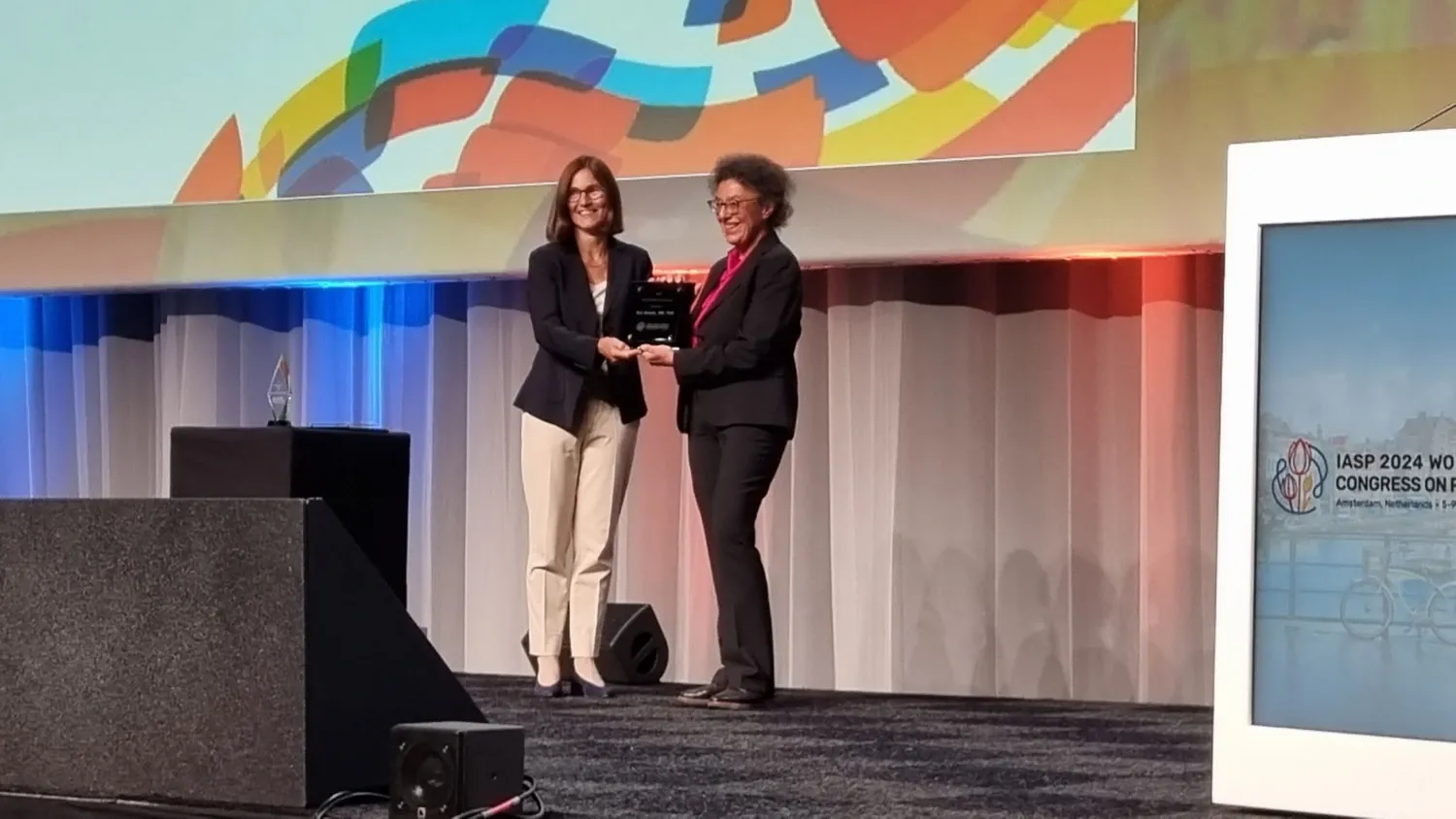
Professor Eva Kosek holds dual academic positions as Professor of Clinical Pain Research at Karolinska Institutet (since 2015) and Uppsala University (since 2020). She is affiliated with the Department of Clinical Neuroscience and leads the Mechanisms of Pain and Treatment Research Group . Her roles include senior consultant at Uppsala University Hospital's Pain Center. Education: MD from Uppsala University (1986), PhD from Karolinska Institutet (1996). Specializations: Rehabilitation Medicine (1998), Pain Relief (2001). Academic promotions: Associate Professor at Karolinska (2004), Full Professor (2015). Research Focus: Chronic pain mechanisms, neuroimmune interactions, fibromyalgia, and autoimmune pathways. Key projects include the RAFT trial (Rituximab for fibromyalgia autoantibody therapy) and the BACPAP consortium for low back pain phenotyping. She chairs IASP's Terminology Task Force, introducing the 'nociplastic pain' concept. Key Contributions: Discovered anti-satellite glial cell IgG antibodies in fibromyalgia patients, linked to symptom severity. Pioneered neuroimaging studies on pain modulation circuits. Authored over 300 publications, with recent work on cerebrospinal fluid biomarkers and lipid metabolite profiles. Awards: 2024 Roland Melzack Lecture Award from IASP. Recognized for redefining pain taxonomy and translational research. Grants: Active funding includes Swedish Research Council grants on fibromyalgia autoimmunity, environmental exposures, and neuroinflammation. Total grants exceed SEK 100M over her career. Labs/Teams: Leads a multidisciplinary team at Karolinska's Pain Research Center, collaborating internationally on translational pain studies. Active in biobanking initiatives like the Swedish Chronic Pain Biobank.
Colin Cooper is a Professor of Cancer Genetics at the Norwich Medical School, University of East Anglia. He is also a member of the Metabolic Health and Cancer Studies research groups. His work focuses on genomic evolution, tumor microbiome dynamics, and biomarker development for prostate cancer and musculoskeletal health. Cooper’s recent research explores the interplay between cancer genetics and microbial communities, emphasizing their role in prognosis and treatment outcomes. He investigates clonal evolution in tumors, mutational signatures, and non-invasive diagnostic tools like urinary extracellular vesicles. His collaborations span genomics, microbiology, and clinical applications. 2025: Causes of evolutionary divergence in prostate cancer (Genomics, Precision Medicine) 2024: Applications of urinary extracellular vesicles... (Biomarker Development, Liquid Biopsy) 2023: Caution regarding pan-cancer microbial structure (Methodological Considerations, Microbiome Analysis) In 2022, Cooper received the European Urology Oncology SoMe Award for his contributions. His work is frequently cited and has been featured in media outlets globally, highlighting his impact on cancer and aging research.
Dr. Alastair Key serves as Director of Studies in Archaeology and Official Fellow in Archaeology at Queens' College, University of Cambridge. His research bridges Paleolithic archaeology, stone tool technology, and hominin behavioral evolution through experimental and computational approaches. Director of Studies and Official Fellow at Queens' College, Cambridge Specializes in Paleolithic stone tool analysis, Acheulean technology, and hominin adaptation Conducts experimental archaeology and computational modelling to assess tool functionality Key's research focuses on Acheulean handaxe production , lithic microwear patterns , and ergonomic constraints in prehistoric tool use . He has extensively published on topics including glacial-stage hominin occupations , Oldowan toolmakers , and machine learning applications to archaeological analysis . His recent publications (2025-2023) span diverse subfields: Acheulean chronology , hominin tool use biomechanics , experimental projectile testing , and computational morphometric methods . The work often integrates multidisciplinary datasets and open-source analytical tools to address fundamental questions about human technological evolution. Current research directions include stone tool sharpness quantification , handaxe social signaling potential , and cross-species tool use comparisons through primate studies.
Dr. Andrew Best is an Assistant Professor of Biology at Massachusetts College of Liberal Arts (MCLA), specializing in biological anthropology with a focus on human physiological evolution. His primary research examines the role of sweating in human evolution, contemporary human sweat characteristics, and the metabolic limits of endurance performance. He holds a Ph.D. from the University of Massachusetts (2021), an M.A. from the University of Massachusetts (2016), an M.A. from Quinnipiac University (2006), and a B.A. from Saint Michael’s College (2004). Dr. Best teaches courses including BIOL 101: Biology Seminar for Majors , BIOL 342/343: Anatomy and Physiology , BIOL 440: Exercise Physiology , and BIOL 484: Biomechanics . His research integrates evolutionary biology, thermal physiology, and exercise science to explore how human metabolic and thermoregulatory systems have evolved to support extreme endurance activities. Key projects include studying sweat gland density variation across populations and the physiological constraints of ultra-endurance events. His publications span topics such as ultramarathon energy expenditure, strength training’s impact on endurance, and primate sweat gland evolution. He actively participates in academic conferences and collaborates with researchers globally. No scientific awards are explicitly noted in the provided materials. Dr. Best’s work reflects interdisciplinary approaches to understanding human biological adaptation, with ongoing projects likely extending into nutritional strategies for endurance athletes and comparative analyses of primate thermoregulation systems.
Stephanie E. Pierce is a Professor of Organismic and Evolutionary Biology and Alexander Agassiz Professor of Zoology at Harvard University, affiliated with the Museum of Comparative Zoology (MCZ). She serves as Curator of Vertebrate Paleontology and Interim Curator of Mammalogy at the MCZ. Her research focuses on the evolution of vertebrate musculoskeletal systems, integrating biomechanics, paleontology, and functional morphology to understand how form and function evolved in tetrapods and synapsids. Key projects include studying postural transitions in synapsids, the evolution of the mammalian vertebral column, and the functional adaptations enabling terrestrialization in early tetrapods. Dr. Pierce's work is supported by grants such as the National Science Foundation (NSF) Grant 1524523, which examines the functional evolution of the mammalian backbone. Her lab, the Stephanie Pierce Lab, collaborates widely and includes postdoctoral researchers, graduate students, and international teams. Recent work has revealed insights into the radiation of reptiles post-mass extinctions and the discovery of early South American predators. She has also been featured in podcasts and media for her contributions to paleontology and evolutionary biology. Her research spans disciplines including evolutionary biomechanics, paleohistology, and computational modeling, with a focus on major transitions in vertebrate evolution. She leads projects that bridge the gap between extant and extinct organisms to reconstruct ancestral functional traits and evolutionary trajectories.
Univ.-Prof. Dr. med. Martin A. Kriegel serves as full Professor and Department Head of the Department of Translational Rheumatology and Immunology at the Institute of Musculoskeletal Medicine, University of Münster, while maintaining an active laboratory at Yale School of Medicine. He leads the Section for Rheumatology and Clinical Immunology (SRKI) at Medical Clinic D, where his team integrates clinical care with cutting-edge microbiome research. His department operates from Röntgenstraße 21 and Von-Esmarch-Str. 54 in Münster, Germany, with extensive collaborations including the "Cells in Motion" research initiative and the CiM-IMPRS graduate program. Dr. Kriegel's research program focuses on the critical interface between host immunity and microbiota, particularly investigating how gut commensals translocate to host tissues and trigger autoimmune responses. His laboratory pioneered the discovery that specific pathobionts like Enterococcus gallinarum and certain Lactobacillus strains can translocate from the gut to mesenteric lymph nodes, liver, and other sites, driving autoimmune responses through molecular mimicry of human autoantigens. His work has established fundamental mechanisms by which microbiota influence rheumatic diseases, cutaneous autoimmunity, and cancer immunology, with particular emphasis on Ro60 autoantigen mimicry, TLR7-dependent pathways, and diet-microbiome interactions. The laboratory employs advanced techniques including gnotobiotic mouse models, humanized systems, and detailed molecular characterization of host-pathobiont interactions. Analysis of Dr. Kriegel's publication record reveals a consistent trajectory of high-impact research connecting microbiome dynamics to autoimmune pathogenesis. His most recent work (2023-2025) demonstrates increasingly sophisticated understanding of how specific bacterial strains influence disease phenotypes across multiple autoimmune conditions, with notable advances in identifying shared microbiome signatures across lupus and inflammatory bowel disease. The publications show progressive refinement from initial observations of microbial translocation to detailed mechanistic insights into tryptophan catabolism pathways, structural basis of molecular mimicry, and diet-sensitive microbial triggers. Dr. Kriegel's scientific recognition includes US Patent No. 11,058,756 B2 for compositions treating autoimmune diseases by reducing enterococcus, reflecting the translational potential of his research. His laboratory receives substantial funding, most notably a $3 million award from the Lupus Research Alliance for the TransLuMi project investigating gut pathobiont translocation in systemic lupus erythematosus. As an educator and mentor, Dr. Kriegel directs a substantial research team including multiple postdocs (Drs. Marcia Pereira, Nathalie Becker), PhD candidates (Anna Brinkhege, Carina Brune, Helen Fuhrmann), and laboratory specialists. He participates in the CiM-IMPRS graduate program and supervises medical students through the MedK program. His laboratory currently manages multiple significant research projects including: (A) intestinal wall permeability and pathobiont translocation in autoimmunity; (B) diet-environment-microbiome interactions; (C) microbiota disruption of immunological tolerance; and (D) microbiome roles in lymphoma development. The Kriegel laboratory maintains state-of-the-art facilities at both Münster and Yale, with specialized capabilities in gnotobiotic research, microbiome analysis, and immune profiling. His team collaborates with international partners including Dr. Eran Elinav at Weizmann Institute, Dr. Nissan Yissachar at Bar-Ilan University, Prof. George Tsokos at Harvard, and Prof. Ilana Brito at Cornell University. The laboratory's website (https://www.medizin.uni-muenster.de/mikrobiom/startseite/) details ongoing projects and research opportunities.
Helen Vidgen is a Professor in Public Health at the School of Public Health, Faculty of Health, Queensland University of Technology (QUT). Her research focuses on food literacy, childhood obesity prevention, and nutrition education, with significant contributions to public health policy and program implementation. She has led projects evaluating school meal programs, childhood obesity management services like PEACH™, and food literacy interventions across diverse populations. Her work emphasizes socio-ecological barriers to nutrition education, policy development, and the translation of evidence-based practices into community settings. Dr. Vidgen has authored over 100 peer-reviewed articles and edited books, including Food Literacy: Key Concepts for Health and Education (2016), which establishes foundational frameworks for food literacy research. She collaborates with government agencies, non-profits, and healthcare professionals to address systemic challenges in obesity prevention and food system reforms. Recent contributions include analyzing the role of school-provided meals in obesity prevention, evaluating father’s roles in family food practices, and advancing measurement tools like the IFLQ-19 food literacy questionnaire. Her research bridges theory and practice, informing policy initiatives on nutrition education, food regulation, and equitable health outcomes.
Mark Burnley is a Senior Lecturer in Exercise Physiology at Loughborough University, having previously held roles at the University of Kent and the University of Wolverhampton. He specializes in endurance exercise physiology, focusing on oxygen uptake kinetics, critical power, and metabolic steady states. Burnley earned his BSc in Sport Science and PhD in Exercise Physiology from the University of Brighton and holds a Postgraduate Certificate in Academic Practice. His research explores physiological thresholds in endurance performance, including VO₂ kinetics, lactate dynamics, and fatigue mechanisms. He is a member of the American College of Sports Medicine and the Physiological Society, and serves as a section editor for the European Journal of Sports Science. Key research contributions include refining methodologies for determining exercise intensity domains and challenging conventional interpretations of critical power. His work emphasizes the interplay between metabolic and neuromuscular factors in endurance performance. Burnley’s publications span topics like priming exercise effects, nitrate supplementation, and polarized training debates. Though no formal awards are listed, his extensive peer-reviewed output underscores his scholarly impact.
Thomas W. Kaminski is a Professor in the Department of Kinesiology & Applied Physiology at the University of Delaware’s College of Health Sciences. His research focuses on sensorimotor and neurocognitive aspects of musculoskeletal injuries, particularly chronic ankle instability, sport-related concussions, and repetitive head impacts in soccer. He directs the Athletic Training Research Laboratory, established in 2003, which collaborates with departments across UD, including Athletics, Physical Therapy, and Engineering. Education: PhD in Sports Medicine (University of Virginia, 1996), MS in Athletic Training (University of Arizona, 1985), BS in Sports Medicine (Marietta College, 1984). Courses taught include Evidence-Based Sports Medicine, Upper/Lower Extremity Evaluation, and Clinical Practicum. Research emphasizes injury prevention, biomechanical analysis, and rehabilitation strategies. His lab uses advanced tools like the KinCom Isokinetic Dynamometer, Bortec EMG systems, and Triax Impact Monitors. Current projects include studying neck strengthening programs for youth soccer players and blood biomarkers in concussion recovery. Grants and collaborations involve the NCAA-DoD CARE Consortium, focusing on collegiate athletes and military cadets. Lab initiatives aim to translate findings into broader health applications for physically active populations. Lab facilities include the Human Performance Lab and partnerships with UD Physicians, Student Health Services, and regional sports programs. Active research areas include concussion symptom evolution, sex-based injury differences, and the effects of sport specialization on cognitive/postural functions.
Elizabeth Brainerd is the Robert P. Brown Professor of Biology and Professor of Medical Science in the Department of Ecology and Evolutionary Biology at Brown University. She has been a leading figure in vertebrate biomechanics and evolutionary morphology since joining Brown in 2005, where she directs the Keck XROMM Core Facility. Previously, she served as Assistant Professor (1994-1999) and Associate Professor (2000-2005) at the University of Massachusetts Amherst. Her research focuses on biomechanics and evolutionary morphology, combining anatomical studies with engineering principles to understand animal movement. Brainerd is a pioneer of X-ray Reconstruction of Moving Morphology (XROMM) technology, which enables 3D visualization of skeletal movement in living animals. Her work spans diverse vertebrate groups including fish, amphibians, reptiles, birds, and mammals, with applications to feeding, breathing, and locomotion mechanics. Brainerd's research has been consistently supported by major NSF grants, including the development of microXROMM for high-resolution imaging of small animals. Her publications reveal a trajectory from foundational work on breathing mechanics to innovative applications of XROMM technology across multiple vertebrate systems, particularly in suction feeding mechanics and skeletal kinematics. Her scientific recognition includes: Fellow of the American Association for the Advancement of Science (2004) Distinguished Research Achievement Award from Brown University (2019) Fellow of the American Association for Anatomy (2020) Joseph S. Nelson Lifetime Achievement Award in Ichthyology (2021) Bidder Prize Lecture from the Society for Experimental Biology (2023) Brainerd has mentored 7 doctoral students and 5 MS students to completion, plus over 50 undergraduate researchers. She has served as President of both the International Society of Vertebrate Morphology (2016-2019) and the Society for Integrative and Comparative Biology (2019-2021). Her teaching includes undergraduate courses in Comparative Anatomy, Comparative Physiology, and Human Physiology, graduate courses in Muscle Architecture and Biomechanics, and medical education in Human Anatomy.
David Lentink is a Full Professor of Biomimetics at the University of Groningen , leading the Biomimetics Group within the Faculty of Science and Engineering. His research bridges biomechanics, aerospace engineering, and robotics, focusing on avian flight mechanics and bio-inspired aerial robotics . Previously at Stanford University, he pioneered the development of the Aerodynamic Force Platform and low-turbulence wind tunnels for animal flight studies. Education : PhD in Aerospace Engineering (Stanford), MSc in Mechanical Engineering (Delft), BSc in Mechanical Engineering (Delft). Research Interests : Understanding bird flight biomechanics to design advanced drones, studying evolutionary adaptations in flight, and developing biohybrid robots with real feathers. Scientific Awards : Dutch Academic Year Prize for the Flight Artists (2013). World Economic Forum Young Scientist under 40 (2013). Alumnus of the Young Academy of The Royal Netherlands Academy of Arts and Sciences. Labs : The Lentink Lab at Groningen’s Linnaeusborg campus integrates bird aviaries, wind tunnels, and maker spaces for bio-inspired robotics development. His team collaborates globally with institutions like Stanford, TU/e, and Sorama.
Natalie Warburton is an Associate Professor in Zoology at Murdoch University, Australia, affiliated with the Harry Butler Institute and the School of Medical, Molecular and Forensic Sciences, College of Environmental and Life Sciences. She holds a PhD in Zoology (University of Western Australia, 2004), a BSc(Hons) in Zoology (UWA, 1998), and a Graduate Diploma in Education (Murdoch University, 2002). She is also a Research Associate at the Western Australian Museum. Her research focuses on the functional morphology of marsupials, integrating anatomy, ecology, and evolution. Key interests include locomotion adaptations (digging, climbing, bounding), reproductive strategies, and the evolutionary drivers of musculoskeletal systems. Her work bridges extant and extinct species, particularly tree-kangaroos (e.g., Bohra , Congruus ) and marsupial moles. She has pioneered techniques for transferring anatomical insights from living species to fossil analysis, contributing to palaeontological reconstructions. Dr. Warburton has received awards such as the Vice Chancellor's Award for Excellence in Learning and Teaching (2015) and Senior Fellow status from Advance HE (2017). She actively engages in public science communication through podcasts (e.g., 'Aussie Wildlife Show', 'Palaeo Jam') and documentaries (e.g., ABC Catalyst's 'Megafauna'). Her research has produced over 50 peer-reviewed articles, emphasizing skeletal anatomy, muscle function, and evolutionary adaptations. Current projects explore predator escape behaviors in marsupials and the functional morphology of extinct species. She collaborates across disciplines, integrating CT scanning, biomechanics, and comparative anatomy.
Michael Nothnagel is a Professor at the University of Cologne, where he leads the Department of Statistical Genetics and Bioinformatics within the Cologne Center for Genomics (CCG). His work spans statistical genetics, genetic epidemiology, and forensic genetics, focusing on methodological development and large-scale genomic data analysis. His research interests encompass theoretical and applied statistical genetics, with emphasis on human genetic diversity, disease etiology, and forensic applications. Key areas include Y-chromosomal phylogeography, genome-wide association studies for complex diseases, development of statistical methods for variant interpretation, and forensic marker optimization. His group leverages next-generation sequencing data and specialized forensic markers to address questions in population history, disease mechanisms, and identification systems. Recent publications reveal a strong focus on computational approaches to genetic analysis, including spatial frequency interpolation for haplogroup mapping, polygenic risk score applications for behavioral traits, and advanced methods for variant classification. His work demonstrates consistent integration of statistical theory with practical applications in medical and forensic genetics, often through international collaborations like the VISAGE Consortium. Nothnagel maintains active involvement in the Cologne Center for Genomics, contributing to seminars and collaborative projects including the upcoming 34th International Genetic Epidemiology Society meeting. His research group operates at the intersection of computational biology and medicine, with particular strengths in handling complex genomic datasets and developing novel analytical frameworks for genetic epidemiology.
Liza J. Shapiro is a Professor in the Department of Anthropology at the University of Texas at Austin, affiliated with the College of Liberal Arts. Her research focuses on the functional morphology, ontogeny, and evolution of primate locomotion, employing quantitative comparative analysis of musculoskeletal systems in extant and extinct primates alongside biomechanical studies in both laboratory and field settings. Her work emphasizes the vertebral musculoskeletal system in primates and investigates quadrupedal locomotion mechanics. Recent publications explore lemur locomotor mechanics, wild primate limb kinematics, and the role of compliant substrates in augmenting leaping behavior. She has also contributed to debates on hominin locomotor evolution through fossil analysis. Shapiro teaches courses including Primate Anatomy , Biological Anthropology , and Primate Evolution , with active research programs involving collaborations with scholars like Andrew Barr and Brett Nachman. She contributes to the Academic Phylogeny of Biological Anthropology project and maintains field and laboratory research methodologies.
Delphine Périé-Curnier is a Full Professor in the Department of Mechanical Engineering at Polytechnique Montréal and Director of Graduate Studies. Her research focuses on developing quantitative MRI techniques for non-invasive characterization of living tissue mechanical properties, particularly in cardiotoxicity detection and musculoskeletal mechanobiology . She leads the Bioperformance Analysis and Innovation Laboratory (LIAB) and contributes to the Institute of Biomedical Engineering. Education: Ph.D. from Paul Sabatier University, Toulouse, France Her work bridges medical imaging , biomechanical modeling , and finite element analysis to predict disease progression through pathomechanism understanding. Key projects include exercise-induced cardiac changes in childhood cancer survivors and spinal biomechanics in scoliosis. Recent publications (2023-2024) emphasize cardiovascular MRI for childhood cancer survivorship and hemodynamic modeling in left ventricle analysis. She supervises 26 graduate students, with completed theses spanning topics like doxorubicin cardiotoxicity , knee replacement stability , and spatial cardiac MRI protocols . Teaching includes graduate courses in biomedical design , advanced biomechanics , and modeling techniques .