Christoph Witzenrath is a Professor for Premodern Slavery and Strong Asymmetrical Dependencies at the University of Bonn's Bonn Center for Dependency and Slavery Studies (BCDSS). His research spans Eurasian history, focusing on nomadic-settled relations, slave trade, and state-dependent group dynamics. Education: Ph.D. in History, King’s College, University of London (1999–2005) M.A. in History and Political Science, University of Freiburg, Humboldt University, and Free University Berlin (1991–1998) Witzenrath's work interrogates the structural gaps between premodern states and dependent populations, comparing Eurasian systems to community-oriented African models. His transdisciplinary approach integrates legal, cultural, and political frameworks, emphasizing liberation narratives and asymmetrical dependencies. Key article themes include Muscovite-Ottoman interactions, Siberian expansion, and transcultural legitimacy. His award-winning monograph Cossacks and the Russian Empire (2009) explores frontier governance and rebellion dynamics. Scientific Awards & Funding: DFG Priority Program funding (2017–2020) King’s College London research studentship (1998–2001) Leverhulme Early Career Fellowship (2007–2009) Shklar Fellowship at Harvard (2010) He has supervised 40 national/international lectures and mentored researchers like Turkana Allahverdiyeva and Stanislav Mohylnyi. As founding member of the Transottomanica project (2017–2020), he advanced mobility studies across Eurasia.
Kevin Kain is an Associate Teaching Professor in the Department of Humanities at the University of Wisconsin–Green Bay, within the College of Arts, Humanities and Social Sciences. He teaches courses such as Foundations of Western Culture I and II, Introduction to the Humanities, and The Eurasian Frontier, often in online formats. His primary research focuses on the cultural and religious history of Russia, particularly the visual, print, and spiritual cultures of Russian Orthodoxy. He specializes in the life and legacy of Patriarch Nikon, the development of the Moscow Patriarchate, and the construction of sacred spaces such as the New Jerusalem Monastery. His work bridges history, art, religion, and digital humanities. Kain’s recent publications include co-editing and contributing to the two-volume Russia's Early Modern Orthodox Patriarchate (2020–2021), along with numerous articles in journals such as Canadian-American Slavic Studies and Cahiers du monde russe . His publications reflect strong interdisciplinary trends, combining visual analysis, archival research, and cultural theory, with recurring themes in Orthodox hierotopy, monasticism, and Soviet antireligious propaganda. He has received significant recognition, including the 2021 UW-Green Bay Founders Award for Excellence in Scholarship. His research has been supported by major grants such as the European Research Council Grant "Orthodoxies and Politics," the National Endowment for the Humanities, the Kennan Institute, and the Fulbright-Hays Fellowship. 2021 UW-Green Bay Founders Award for Excellence in Scholarship Kain has advised various collaborative digital projects, including a virtual heritage installation for the Museum of Russian Icons and contributions to online exhibits at the Hillwood Estate and Moscow State University. He has not listed formal advisees, but his collaborative work suggests mentorship in digital scholarship. He is currently serving as a Researcher on a $1.45 million European Research Council project, indicating active grant leadership. He is involved in digital scholarship through collaborations with institutions such as the Museum of Russian Icons, the Hillwood Estate, and the Virtual Open Research Laboratory (VORL) at the University of Illinois. These projects focus on visualizing Russian religious culture through digital galleries and virtual exhibitions.
Maike Sach is a researcher at the Department of Eastern European History, Johannes Gutenberg University Mainz, specializing in Russian, Polish, and Baltic history. She currently leads DFG-funded projects including 'History Writing in the Mode of Invective' on Prince Andrei Kurbsky's historical work (since 2022) and previously directed research on Russian diplomacy in Poland-Lithuania (2021). Her academic career spans positions at the German Historical Institute Warsaw (2003-2009), University of Kiel (2010-2011), and Johannes Gutenberg University Mainz (2011-2012). Education: Doctorate in Eastern European History (2001, University of Kiel) on German-Russian relations Studies in Eastern European History, Medieval/Modern History, and Slavic Studies (University of Kiel) Research Focus: Dr. Sach's work centers on cultural and diplomatic history of Eastern Europe, particularly Muscovite state formation , Teutonic Order history , and cartographic representation . Her scholarship examines cross-cultural encounters, diplomatic protocols, and historical narratives through lenses of gender, exile, and identity formation. She pioneered research on Robert Vipper's contributions to Baltic historiography and Muscovy's interactions with Western courts. Publication Trends: Recent works (2020-2025) reveal intensified focus on early modern diplomatic practices, textual transmission, and historiographical methodology. Her articles analyze sovereignty crises in Polish-Lithuanian contexts, Orthodox-Catholic negotiations, and the role of exile historians in shaping national narratives, demonstrating consistent engagement with primary source interpretation and transnational history frameworks. Scientific Recognition: Monograph 'Hochmeister und Großfürst' (2002) received 12 major academic reviews Co-edited volumes on Baltic German historiography (2006) and Robert Vipper (2024) Active member of Association of Historians in Germany (VHD) and Association of Eastern European Historians (VOH) Research Leadership: Secured continuous DFG funding including the 'Socinian Correspondence' project (2018-2020) and 'Baltic History as Battleground' (2014-2016). Currently directs Kurbsky project while collaborating with Academy of Sciences and Literature Mainz and Johannes a Lasco Library. Her work bridges archival research with theoretical historiography across German, Russian, and Baltic scholarly traditions. Academic Networks: Core member of Mainz's Eastern European History department, contributing to 'Gentes trans Albiam' research network and Southeast Europe Society. Regularly participates in international conferences on medieval Baltic history and early modern diplomacy.
Jan Hennings is an Associate Professor in the Department of Historical Studies at Central European University (CEU) and a Senior Member at the Center for Eastern Mediterranean Studies. Currently on sabbatical and research leave for the 2025/26 academic year, he has established himself as a leading scholar in early modern diplomatic history with a particular focus on Russian-European encounters. His institutional affiliations include serving as Head of CEU's History Department (2021-24), co-director of the MA program in Museum Studies (a collaboration between CEU and Wien Museum), and Key Researcher in the Austrian Cluster of Excellence 'EurAsian Transformations'. His educational background includes a PhD in History from the University of Cambridge (Clare College), an MPhil in Modern European History from Cambridge, and a BA in History and German Studies from Universität Rostock. Prior to joining CEU, he held a Junior Research Fellowship at St John's College Oxford and served as a Visiting Professor and Gerda Henkel Fellow at Sabanci University in Istanbul. Hennings' research interests span early modern Europe, Muscovy and Imperial Russia, the history of diplomacy and international relations, Russian-Ottoman relations, and travel literature and cultural encounter. His work has revolutionized understanding of diplomatic practices through comparative approaches that examine ritual, ceremony, and cross-cultural communication in early modern contexts. He has made significant contributions to understanding how diplomatic practices shaped international relations between empires, particularly between Russia and its European and Ottoman neighbors. His publications reveal a consistent focus on the cultural dimensions of diplomacy, examining how ceremonial practices, gift-giving, and textual representations functioned as political tools in early modern international relations. His work bridges diplomatic history with cultural history, demonstrating how diplomatic encounters served as sites of knowledge production and cultural exchange. ESSA Book Prize 2017 for Russia and Courtly Europe Hedwig Hintze Prize 2012 (best dissertation award of German Historical Association) Fritz Theodor Epstein Prize 2012 (best dissertation award of Association of Historians of Eastern European History) Hennings has supervised numerous PhD and MA students working on diverse topics related to early modern diplomatic history across Eurasia. His editorial roles include serving as associate editor of the Jahrbücher für Geschichte Osteuropas and on the editorial board of Diplomatica: A Journal of Diplomacy and Society . His research has been supported by prestigious fellowships including at the Swedish Collegium for Advanced Study (2020-21) and as an elected member of the Young Academy at the Berlin-Brandenburg Academy of Sciences and Humanities (2016-21). As a key member of the Early Modern Studies at CEU initiative and The Early Modern Workshop, Hennings contributes to creating vibrant research communities focused on innovative approaches to early modern history. His current work on Russian-Ottoman relations at the beginning of the eighteenth century continues to push the boundaries of diplomatic history by examining cross-imperial encounters through the lens of cultural practices.
NIAYESH Ladan is a Professor at Paris Cité University (formerly Paris Diderot University – Paris 7), where she has been a faculty member since 2012, having previously served as a lecturer from 2000 to 2012. She holds a doctorate (2000) and accreditation to supervise research (2010) from the University of Montpellier 3. Her academic work centers on early modern English literature, with a focus on Shakespeare and his contemporaries, travel literature, and the cultural reception of the Ottoman and Safavid empires in Renaissance England. Education: 1990: École Normale Supérieure de Fontenay-St Cloud (3rd ex-aequo, foreigner) 1993: English Aggregation (1st as a foreigner) 2000: Doctorate, University of Montpellier 3 — Thesis: On the borders of the human: Figures of cannibalism in English Renaissance theatre 2010: Habilitation (HDR), University of Montpellier 3 — Synthesis: Strangeness and foreignness in English Renaissance theatre Research Interests: Professor Niayesh specializes in the intersections between literature, cultural identity, and cross-cultural encounters in early modern England. Her work explores how English writers represented the Muslim Orient, particularly the Ottoman and Persian empires, through genres such as drama, travel writing, and poetic theory. She investigates themes of otherness, linguistic difference, and imperial imagination, often drawing on postcolonial and comparative methodologies. Her research also extends to adaptations of Renaissance drama in contemporary media. Publication Trends: Her recent scholarly output reveals a sustained focus on the representation of Persia and the East in early modern English texts. Articles examine figures such as Spenser’s Persia, Puttenham’s Tatar girl, and early English travelers to Persepolis. She frequently engages with interdisciplinary sources, blending literary analysis with historical, geographical, and anthropological insights. Her editorial projects emphasize linguistic otherness and global Renaissance networks, reflecting a commitment to transnational early modern studies. Scientific Recognition and Editorial Roles: Co-director, Seventeenth and Eighteenth Century Studies , Manchester University Press (2020–present) Co-director, Polyglot Encounters in Early Modern Britain , Brepols (2021–present) Member, editorial board, Cahiers Élisabéthains (2002–present) Former member, editorial board, Renaissance Studies (2016–2019) Co-founder, Paris Early Modern Seminar (2016–present) Member, Hakluyt Society Council (2017–2022) Expert, HCERES (2022–present) Jury member and president, AFEA/SAES research prize (2021–present) Advising, Grants, and Leadership: She has supervised master’s and doctoral students in English literature and British intellectual history. She coordinated the Joint Degree in English and American Studies with European universities and led research axes on 'British Literature and the Orient' and 'Oriental Voices' at her laboratory. As Lead WP3 for Circle U., she advances academic chair programs in the European university alliance. She has held CNRS delegations and visiting fellowships at Oxford (Exeter College and Oxford Nizami Ganjavi Centre), supported by the ERC-TIDE program. Laboratories and Research Networks: She is actively involved in the Maison des Humanités – Paris (MHMA), where she co-leads thematic research groups. She co-founded the Paris Early Modern Seminar, fostering interdisciplinary dialogue on early modern studies. Her work is embedded in international networks focused on travel, empire, and cross-cultural exchange.
Dr Alexandra Vukovich is a Lecturer in Late Medieval History at the Department of History , King’s College London (joined 2022). A historian of the Byzantine world and Northern Eurasia (c. 400-1500 CE), her research bridges textual analysis, material culture, and historical anthropology. Education: MPhil/PhD from University of Cambridge under Professor Simon Franklin Previous Fellowships: Newnham College (Cambridge), British School at Athens, Dumbarton Oaks (Harvard), British Academy Postdoctoral Fellowship (Oxford) Editorial Role: Commissioning Editor for 'Worlds of the Slavs' series at Brill Research Focus spans state formation in early Rus/Muscovy, Byzantine imperial legacy, Mongol Empire's influence, trans-Eurasian trade networks, and politics of medieval heritage management. Her work interrogates Slavonic chronicles, medieval Greek texts, and artifact reception in modern contexts. Publication Trends (2018-2025) reveal interdisciplinary analysis of Byzantine-Rus’ interactions, political symbolism, and heritage debates. Key themes include cross-cultural legitimacy, textual/material transmission, and post-Ottoman memory. Scientific Awards British Academy Postdoctoral Fellowship Dumbarton Oaks Fellowship Newnham College Fellowship British School at Athens Fellowship Public Engagement includes media contributions to Balkan Insight and Der Spiegel on Hagia Sophia re-conversion, plus collaborative podcasts/videos with the New Critical Approaches to the Byzantine World Network (Oxford/TORCH).
Murat Yaşar is a Professor in the Department of History at the State University of New York at Oswego (SUNY Oswego). He holds a Ph.D. from the University of Toronto (2011) and teaches courses on Ottoman Empire history, Middle Eastern history, digital history, and gender studies in the Islamic world. His research focuses on Ottoman-Muscovy relations in the North Caucasus, Islamic borderlands, and minorities in the Middle East. He has received awards for teaching excellence, including the SUNY Oswego Professor Recognition Award (2016–2017) and the Certificate of Teaching Excellence (2016). Key research areas include the history of the Ottoman Empire, the Caucasus region, and digital approaches to historical analysis. His book The North Caucasus Borderland (2022) examines imperial rivalries between the Ottomans and Muscovy. Other publications analyze Ottoman-Russian relations, Circassian ethnography, and pedagogical challenges in Middle Eastern history education. His work often bridges early modern imperial dynamics with contemporary borderland studies. Yaşar has advised no listed graduate students but teaches courses such as 'Digital History: Mapping Islamic Slavery' and 'Harems, Bathhouses, and Brothels: Gender and Society in the Islamic World.' He maintains an active research agenda on Eurasian borderlands and regularly publishes in journals like Iran and the Caucasus and Acta Orientalia .
Dr. Ruth Ezra is Lecturer in Art History at the University of St Andrews, specializing in material and visual culture of early modern Northern Europe. She holds a PhD from Harvard and was a USC Society of Humanities Fellow. Research examines: artistic/scientific intersections, material reuse in sculpture workshops, and cultural biography of mica ('Muscovy glass'). Her work reconstructs creative processes through technical analysis and historical reconstruction. Publications analyze workshop waste streams, material transparency, and art-science connections. Recent books include 'Wastework: Early Modern Stories from the Cutting Room Floor' exploring material byproducts. Awards: NOMIS Fellowship at Universität Basel, Gerda Henkel Stiftung grant, and Paul Mellon Centre funding supporting archival research across Europe. She co-directs the 'Decay, Loss and Conservation' research group and has curated exhibitions on historical making techniques.
Dr. Michael Madziva serves as a Lecturer in the Department of Physiology at the University of the Witwatersrand (Wits), Johannesburg. Holding a PhD from the University of Cambridge alongside BSc and MSc qualifications, he maintains an active research program utilizing rodent and avian models to investigate physiological mechanisms across multiple systems. His academic credentials include: Bachelor of Science (BSc) Master of Science (MSc) Doctor of Philosophy (PhD) from the University of Cambridge Dr. Madziva's research spans cardiovascular physiology, molecular endocrinology, neuroimmunology, and nanomedicine. He investigates cardiac function under pharmacological interventions (e.g., metformin in heart failure models), GnRH receptor structure and signaling pathways, fever induction mechanisms in the brain, and dietary impacts on bone health and erythrocyte integrity. His nanomedicine work develops curdlan-conjugated PLGA nanoparticles for macrophage activation and drug delivery applications, demonstrating translational potential. Analysis of his publication trajectory reveals sustained focus on G protein-coupled receptor (GPCR) biology since 2000, with increasing emphasis on cardiovascular and metabolic disorders in recent years. His 2022 work on metformin's cardioprotective effects exemplifies his translational approach, while earlier studies established foundational knowledge of receptor internalization mechanisms. This progression highlights integration of molecular techniques with whole-animal physiology. No scientific awards were documented in the source material. The available information contains no details regarding graduate students supervised by Dr. Madziva or specific research grants secured for his laboratory.
Erika Monahan is an Associate Professor of History at the University of New Mexico (UNM), specializing in early modern Russian and Eurasian history. Her research focuses on Siberian trade networks, merchant cultures, and the political economy of early modern empires. She joined UNM’s History Department in 2008 and has held visiting fellowships at Harvard’s Davis Center. Monahan earned a BA from Dartmouth University (1996) and MA/PhD from Stanford University (2007). Her major publications include The Merchants of Siberia: Trade in Early Modern Eurasia (2016), which won the W. Bruce Lincoln Book Prize. Current projects include analyzing Dutch scholar Nicolaas Witsen’s representations of Eurasia and editing a revised edition of The Romanovs . She teaches courses on Rus’, Muscovy, the Russian Empire, and environmental history, with thematic strengths in frontiers, borderlands, and political economy. Research Interests: Early Modern Europe, Siberian trade, merchant cultures, environmental history, political economy of empires Key Awards: W. Bruce Lincoln Prize (2018), multiple Shoemaker Awards (UNM) Editorial Role: Book reviews editor for Canadian-American Slavic Studies Monahan’s work bridges global and local histories, examining how economic practices and cultural exchanges shaped empires. Her recent projects explore Bukharan merchant networks and the circulation of knowledge in early modern Eurasia.
Dr. Sunoh Che is an Assistant Professor in Animal & Avian Sciences at the University of Maryland's College of Agriculture and Natural Resources. She holds board certification in Veterinary Preventive Medicine and collaborates closely with poultry producers and processors to enhance animal health and product quality through data-driven strategies. Her lab focuses on poultry management extension programs addressing pre- and post-harvest processing challenges. Dr. Che earned her DVM from Chonnam National University (South Korea), followed by advanced degrees in veterinary medicine and epidemiology across Canada and Australia. Her expertise spans poultry production systems, statistical modeling, and metabolic disorders in chickens. Research interests include transcriptomic analysis of muscle myopathies (spaghetti meat, woody breast), gut microbiome differences between chicken breeds, and viral pathogen dynamics in avian species. Recent studies explore chilling methods' impacts on meat quality and bornavirus infections in waterfowl. Key Awards: Hy-Line International Genetics Award (2021), Endeavour Postgraduate Award (2010-2012) Teaching: Leads ANSC 262 – Commercial Poultry Management Lab Focus: Developing diagnostic tools and management protocols for broiler myopathies Her interdisciplinary approach bridges veterinary epidemiology with production agriculture to improve both animal welfare and industry efficiency.
Justin Willson is a Mellon Postdoctoral Fellow in Art History Leadership at the Cleveland Museum of Art and Case Western Reserve University. His research focuses on medieval art, particularly Byzantium and Russia, emphasizing premodern theories of aesthetic value and the history of interpretation. He earned his Ph.D. from Princeton University in 2021, writing a dissertation advised by Charles Barber, Beatrice Kitzinger, and Paul Bushkovitch. His work bridges archival research with theoretical frameworks, producing interdisciplinary insights into cultural production. Willson's research has been supported by prestigious institutions including the Seeger Center for Hellenic Studies, the Center for the Study of Religion, and the Mary Jaharis Center for Byzantine Art and Culture. His current projects include two books: *The Moods of Early Russian Art* (Muscow's art interpretation history) and *The Visual Culture of Late Byzantium and the Early Modern Orthodox World* (Cambridge University Press), an archival project encompassing cultural centers across the Ottoman Empire's sphere. In addition to academic work, Willson leads public engagement initiatives at the Cleveland Museum of Art, fostering collaborations between curators, artists, and local communities. Recent projects include a Judaica-focused outreach program featuring lectures, workshops, and art studies. His interdisciplinary interests extend to music composition and poetry translation, reflecting his belief in the humanities' enduring relevance. Education: Ph.D. in Art and Archaeology (Princeton University, 2021); B.A. in Philosophy and Literature (University of Georgia) Awards: Olivia Remie Constable Award (2021), Frank J. Mather Jr. Memorial Award (2019), Fulbright Grant (2018–19) Grants: Supported by Hillwood Estate, Dumbarton Oaks, and the Committee for the Study of Late Antiquity
Ladan Niayesh is a Professor of Early Modern Studies at the Université de Paris and a former Visiting Fellow at the Oxford Nizami Ganjavi Centre (2021-22). Her work focuses on 16th- and 17th-century English travels to Muscovy and Persia, analyzing intersections of race, empire, and transcultural diplomacy. Research Projects: Models of Race and Empire in Early English Accounts of Russians and Tatars (Cambridge University Press, under contract): Examines English Muscovy Company journeys during Ivan the Terrible’s reign, linking local Russian/Tatar experiences to England’s imperial ambitions. An Elizabethan Soldier in Safavid Persia (co-edited, Hakluyt Society): Edits Anthony Sherley’s diplomatic missions to Shah Abbas I, exploring Safavid-European geopolitical dynamics. Collaborations: Works with Dr. Kurosh Meshkat (British Library) and Prof. Alasdair MacDonald (University of Groningen). Her research highlights transcultural exchanges at the Ottoman Empire’s margins.
Dr. Erzsebet Strobl serves as Associate Professor in the Department of English Literatures and Cultures at the Faculty of Humanities and Social Sciences, Gáspár Károli Reformed University in Hungary. She holds a PhD in Renaissance and Baroque English Literature from Eötvös Loránd University (ELTE), where she also earned her MA in English Language and Literature. Her academic career includes previous lecturing positions at ELTE Foreign Language Continuing Education Center and Péter Pázmány Catholic University. PhD (2010): Renaissance and Baroque English Literature, ELTE MA (1993): English Language and Literature, ELTE Tour Guide Qualification (1992), ELTE Dr. Strobl specializes in English Renaissance cultural history with a particular focus on the cult of Queen Elizabeth I. Her research spans English and American studies and history, English cultural history, and Irish film. Her scholarly work demonstrates a consistent dedication to understanding how historical figures, particularly Queen Elizabeth I, were represented and mythologized in Renaissance England and how these representations continue to influence contemporary cultural productions. Her extensive publication record reveals a clear trajectory through Renaissance studies, with recent works increasingly engaging with interdisciplinary approaches that connect historical scholarship with film studies, medical history, and contemporary political discourse. The evolution of her research shows movement from textual analysis of Elizabethan literature toward broader cultural studies examining how historical narratives are constructed, maintained, and adapted across centuries. Publication of the Year (Károli Gáspár University, 2023) HUSSE Junior Book Award (Hungarian Society for the Study of English, 2025) Dr. Strobl actively participates in multiple research initiatives including the Renaissance Research Group at Pázmány Péter Catholic University. She has presented her work at numerous international conferences including the Renaissance Society of America, Tudor Symposium, and HUSSE biennial conferences. Her research has taken her to significant archives including the British Library and Shakespeare's Globe Archives in London, where she continues to develop new insights into Elizabethan cultural history and its contemporary relevance.
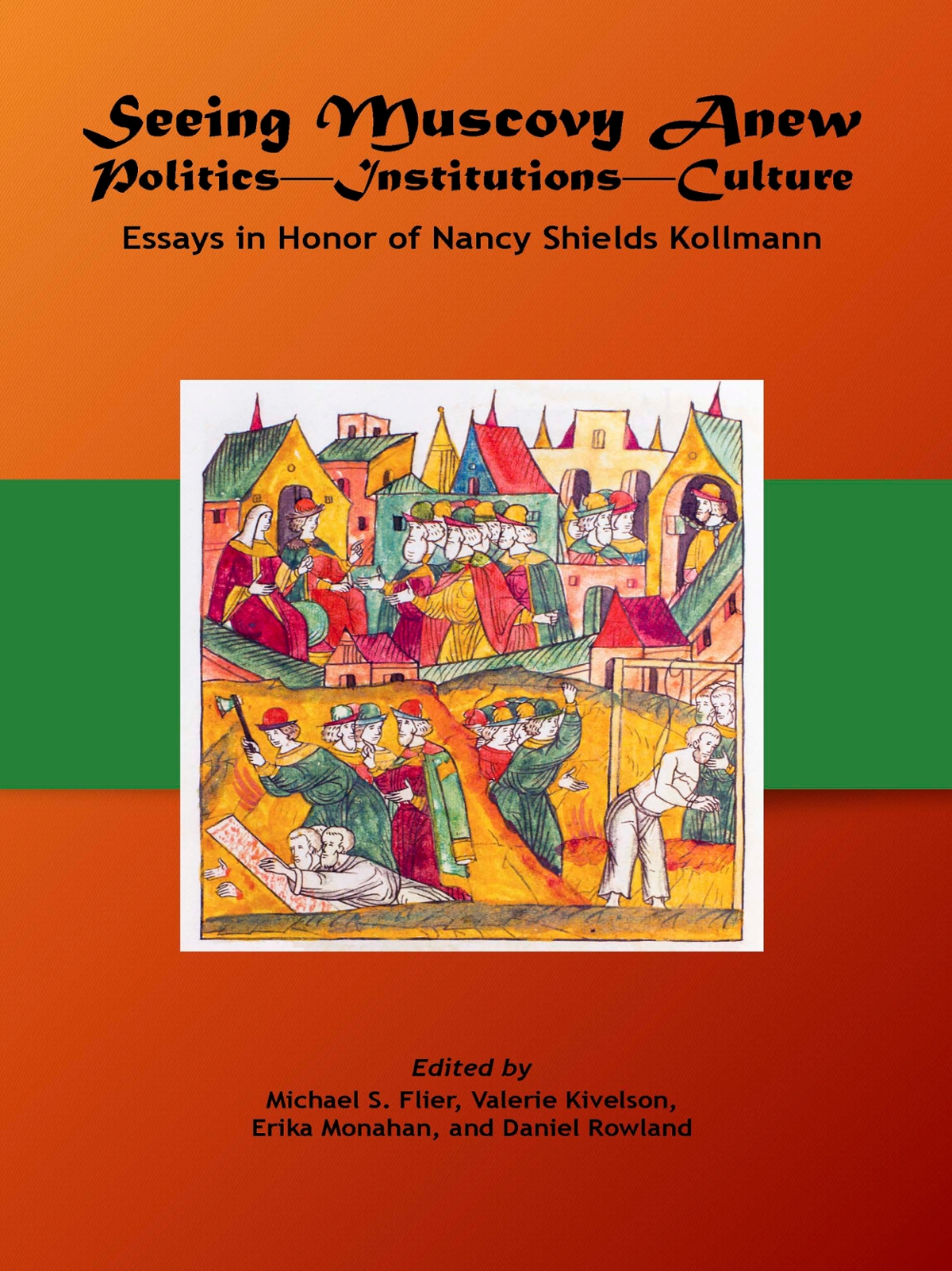
Nancy Kollmann is the William H. Bonsall Professor of History at Stanford University, where she has been a faculty member since 1982. Her research spans early modern Russian history, legal culture, and political communication through visual media. Education: Ph.D., Harvard University M.A., Harvard University B.A., Middlebury College Her work focuses on the mechanisms of social cohesion and stability in early modern autocracies, particularly through ritual, ideology, law, and controlled violence. She has extensively analyzed the intersection of political practice and social values in Russia (14th–18th centuries), including gender roles and the implementation of Catherine II’s judicial reforms. Kollmann’s recent projects examine visual representations of Russia in early modern European engravings and maps. These studies reveal nuanced portrayals beyond the cliché of 'despotism,' highlighting tensions between artistic tropes and eyewitness accounts. Her scholarship emphasizes comparative frameworks to challenge exceptionalist narratives about Russian history. She has authored major works on legal culture, including By Honor Bound (1999) and Crime and Punishment in Early Modern Russia (2012), and co-edited the Festschrift Seeing Muscovy Anew (2017). Her current research explores Catherine II’s judicial reforms in non-Russian provinces and the political use of icons/frescoes in Russia.