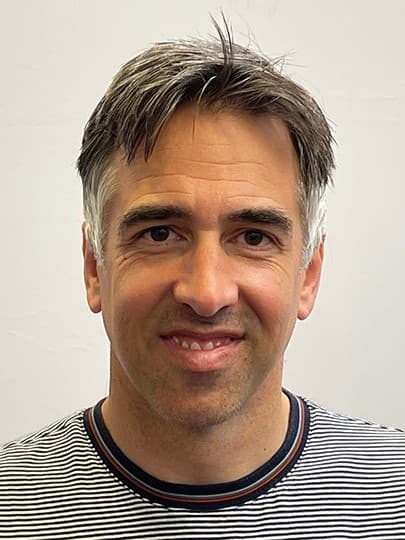
Sam Allen is a Senior Lecturer in Sports Biomechanics at Loughborough University's School of Sport, Exercise, and Health Sciences. He is affiliated with the National Centre for Sport and Exercise Medicine (NCSEM) and specializes in biomechanical research related to sports performance and injury prevention. His academic journey includes a BSc from the University of Birmingham (2000), an MSc from Loughborough (2004), and a PhD in triple jump simulation (2009). Education: BSc Sport and Exercise Sciences, University of Birmingham, 2000 MSc Sports Biomechanics, Loughborough University, 2004 PhD in Computer Simulation of Triple Jump, Loughborough University, 2009 Research focuses on biomechanics of running, sprinting, and jumping, with an emphasis on injury mechanisms, muscle morphology, and performance optimization. Notable areas include sex differences in biomechanics, hamstring injury prevention, and neuromechanical adaptations during exercise. Publications highlight advanced topics like machine learning for injury prediction, force-velocity relationships in sprinting, and biomechanical modeling of prosthetic limbs. His work bridges theoretical simulations and practical athletic performance improvements. No scientific awards are explicitly mentioned. Advising and grants sections remain unreported in the provided text. He is associated with the Lifestyle for Health and Wellbeing and Sport Performance research groups. Labs/teams: Active contributor to NCSEM and biomechanics research teams at Loughborough University.
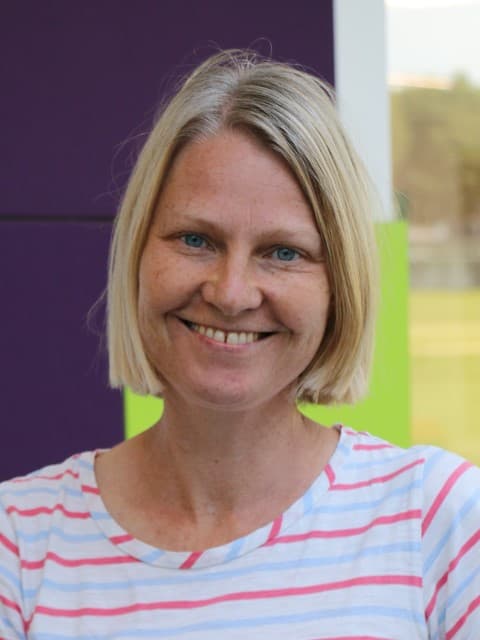
Nicolette (Lettie) Bishop is a Professor of Exercise Immunology at Loughborough University. Her research focuses on the effects of exercise on immunity, inflammation, and infection risk across populations, including individuals with chronic conditions and elite athletes. She has secured over £2.5 million in grant funding and is a core investigator in the £11.6 million Leicester Biomedical Research Centre. With over 100 peer-reviewed publications, she co-authored the International Society of Exercise and Immunology Consensus Statements in 2013 and 2017. Dr. Bishop chairs the UK Society for Exercise Immunology and previously served as Associate Editor for Medicine and Science in Sports and Exercise . Education: BSc, PhD from the University of Birmingham (PhD thesis: Nutritional Influences on Immune Response to Exercise under Prof. Mike Gleeson) Research Interests: Exercise immunology, inflammation modulation, chronic disease management via physical activity, and translational research in sports medicine. Her work emphasizes exercise as a therapeutic tool in kidney transplantation, inflammatory arthritis, and post-COVID rehabilitation. Grants & Awards: Funding from Heart Research UK, National Ankylosing Spondylitis Society, and Yakult Honsha. Collaborates with the English Institute of Sport on performance health projects. Recognized for editorial contributions and leadership in exercise immunology societies. Labs & Teams: National Centre for Sport and Exercise Medicine (NCSEM), Leicester Biomedical Research Centre (Lifestyle Theme), and interdisciplinary collaborations in chronic disease rehabilitation.
Geoffrey Handsfield is an Assistant Professor at the University of North Carolina at Chapel Hill, holding appointments in the Department of Orthopaedics and the Lampe Joint Department of Biomedical Engineering. His work integrates advanced medical imaging, computational modeling, and mechanical experimentation to improve clinical orthopaedic medicine and understand musculoskeletal form and function. Educated at East Carolina University (B.S. Physics, Summa Cum Laude with Mathematics Minor), the University of Virginia (Ph.D., Biomedical Engineering), and as a Whitaker Postdoctoral Scholar at the University of Auckland, his research focuses on musculoskeletal MRI, computational modeling of muscle-tendon interactions, and pediatric cerebral palsy rehabilitation. Education: Ph.D., Biomedical Engineering, University of Virginia, 2014 Postdoctoral Fellowship, Auckland Bioengineering Institute, 2014–2016 (Whitaker Scholar) B.S., Physics (Summa Cum Laude), Mathematics Minor, East Carolina University, 2008 Research Interests: Dr. Handsfield’s lab pioneers techniques like ultra-high contrast MRI and 3D ultrasound to study muscle-fascia interactions, tendon mechanics, and pediatric cerebral palsy. Key areas include: Image-based computational models for personalized musculoskeletal analysis Muscle architecture and regeneration in children and athletes Biomechanical interventions for cerebral palsy rehabilitation Non-invasive muscle profiling for clinical decision-making Awards: Aotearoa Early Career Research Fellow, Robertson Foundation Early Career Research Award, Australia-New Zealand Orthopaedic Research Society Whitaker Postdoctoral Scholar Academic All-American in Swimming & Diving (2007–2008) Advising & Grants: While specific grant details are not listed, his lab’s focus on pediatric cerebral palsy and musculoskeletal modeling suggests involvement in NIH-funded or foundation-sponsored research. No formal advisees are listed in the provided data. Labs & Teams: His interdisciplinary lab collaborates with clinicians and engineers to translate imaging and modeling innovations into clinical practice, focusing on tools like the dSIR MRI sequence and high-dimensional muscle clustering for athlete and pediatric populations.
Olivier Girard is a Professor at the School of Human Sciences, The University of Western Australia. His research focuses on neuromuscular fatigue, hypoxia, altitude training, heat stress, and sports performance in team/racket sports. He has secured over $980,000 in research grants as lead investigator and co-investigator, including studies on badminton, soccer, and tennis. His work contributes to UN Sustainable Development Goals related to health and well-being. Education: PhD in Human Movement Sciences from Université de Montpellier (2006). Research interests include physiological adaptations in extreme environments, caffeine effects on performance, and biomechanics of sprinting/asymmetry. Recent articles explore caffeine supplementation, altitude training for team sports, and heat acclimation strategies. Grants include studies on ischemic preconditioning in badminton (2017), altitude training protocols (2014), and heat stress in team sports (2017). Awards include the European College of Sport Science Fellowship (2017). Editorial roles include Frontiers in Sports and Active Living (Editor-in-Chief) and Journal of Science and Medicine in Sport. Key projects involve quantifying thermal strain in badminton (2022–2023) and evaluating caffeine’s impact on cycling sprints. His research bridges physiology, biomechanics, and applied sports science to optimize athlete performance and health.
Dr. Mathijs Hofmijster is an Assistant Professor affiliated with the Faculty of Behavioural and Movement Sciences, Physiology Department at Vrije Universiteit Amsterdam, as well as the Amsterdam Movement Sciences (AMS) and the Institute for Brain and Behavior Amsterdam (IBBA). His research focuses on biomechanics and physiology in sports performance, particularly in rowing and cycling. Key areas include power output measurement, neuromuscular adaptations, and training optimization. He teaches courses such as 'Moving Matters in Health' and supervises graduate research in elite athlete performance. Research Interests: Rowing biomechanics and power output analysis Neuromuscular fatigue and training adaptations Para-cycling performance and adapted physical activity Instrumentation for sports performance monitoring Recent work highlights include a 2024 scoping review on elite para-cycling performance and advancements in blade force measurement techniques (2019). His articles explore topics ranging from muscle morphology in Olympic rowers (2018) to real-time feedback systems improving training compliance (2017). He has supervised one PhD thesis and maintains active collaborations in sports science, contributing to UN Sustainable Development Goals related to health and well-being.
Melissa Hooijmans is an Assistant Professor at the Vrije Universiteit Amsterdam, affiliated with the Faculty of Behavioural and Movement Sciences and the Physiology department. She also holds a position in the AMS - Ageing & Vitality research group. Her research focuses on advancing MRI techniques for studying muscular dystrophies, skeletal muscle biology, and sports-related injuries. Key areas include diffusion tensor imaging, magnetic resonance imaging applications, and muscle fiber analysis. Her work integrates clinical and biomechanical perspectives, with recent studies on Becker muscular dystrophy, hamstring injury recovery, and exercise physiology. She actively contributes to interdisciplinary collaborations and has published extensively in peer-reviewed journals like NMR in Biomedicine and the Journal of Magnetic Resonance Imaging. Dr. Hooijmans teaches advanced courses such as Master Research Projects and Functional Anatomy, emphasizing hands-on research training for graduate students. She leads initiatives in compositional and functional MRI methodologies, aiming to improve diagnostic precision and therapeutic strategies for muscle-related disorders.
Dag Linnarsson is a Professor of Physiology at Karolinska Institutet, Department of Physiology and Pharmacology, where he has held the position since 1986 and transitioned to Senior Professor in 2009. His research primarily focuses on environmental physiology, with an emphasis on the human body's response to extreme conditions such as microgravity, hypergravity, and spaceflight. He leads the Environmental Physiology Research Group and the Lars Karlsson team, investigating topics like pulmonary function in astronauts, musculoskeletal countermeasures during space missions, and the effects of artificial gravity. His work spans studies on bed rest as a spaceflight analog, lung diffusing capacity, and nitric oxide dynamics under varying environmental pressures. Recent research includes assessing pulmonary nitric oxide levels in astronauts during long-term space missions and exploring the physiological impacts of lunar dust exposure. Linnarsson has also contributed to standardizing bed rest protocols for spaceflight research and evaluating centrifugation as a countermeasure for muscle and bone loss. He maintains affiliations with Karolinska Institutet’s C3 Fysiologi och farmakologi team and collaborates on interdisciplinary projects addressing space medicine challenges. While no formal student listings or awards are explicitly mentioned, his extensive publication record highlights contributions to respiratory physiology, cardiovascular adaptation, and musculoskeletal health in extreme environments.
Antonio Dello Iacono is an Associate Professor (Reader) in Strength and Conditioning at the University of the West of Scotland's Division of Sport, Exercise, and Health within the School of Health and Life Sciences. With 20 years of combined experience in elite sport practice, teaching, and research, his work focuses on elite performance conditioning, training load monitoring, and technology integration in sports. He leads the Sports Performance Interest Group, coordinating industry-collaborative applied research projects. His research aims to develop personalized exercise prescription models to enhance individualized training outcomes, reduce overtraining risks, and improve health outcomes. Education & Positions Scientific Associate at University of Split (since 2017) Research Focus His primary research goals involve transitioning from rigid exercise protocols to personalized approaches tailored to individual abilities and stressors. Key areas include autoregulation methods in resistance training and interdisciplinary research integration. He contributes to UN Sustainable Development Goals related to health and well-being. Collaborations & Activities Peer reviewer for Frontiers in Physiology (2022) Invited speaker at ECSS conferences (2018–2021) Media engagements include discussions on mental training's physical benefits and collaborative partnerships Lab/Teams Leads the Sports Performance Interest Group, fostering applied research with industry partners.
Michał Krzysztofik is a Professor at the Academy of Physical Education in Katowice, specializing in sports science and exercise physiology. He holds a Master's degree (2014), PhD in Physical Culture Sciences (2018), and a post-doctoral habilitation in Medical and Health Sciences (2022). His research focuses on resistance training strategies, post-activation performance enhancement (PAPE), eccentric training, and blood flow restriction techniques. He collaborates with national sports associations like the Polish Athletic Association and Handball Association, providing scientific support to elite athletes. Notable awards include the Silesian Science Award (2021) and a Ministry of Education Scholarship (2022). Research interests emphasize optimizing athletic performance through biomechanical and physiological interventions. Key areas include sprint mechanics, muscle-tendon stiffness modulation, and training protocols for combat sports. His work integrates practical applications with elite athletes in volleyball, soccer, and track & field. Over 50 peer-reviewed articles since 2021 explore topics like PAPE repeatability, plyometric-isometric combinations, and sprint performance optimization. Personal athletic achievements include Vice-Champion of Poland in Bodybuilding (2017) and Wielkopolska Champion in Bodybuilding (2017). His studies often employ crossover trials and randomized controlled designs to evaluate acute and chronic adaptations in trained populations.
Dr. Babar Jamil is a Lecturer in Electrical Engineering at the University of York's School of Physics, Engineering and Technology. His expertise spans robotics, sensors, control engineering, and mechanism design. He holds a Ph.D. from Hanyang University (South Korea) and conducted postdoctoral research at Sungkyunkwan University, where he also served as a Research Professor. His current research focuses on safe human-robot collaboration systems, novel control algorithms for robotic systems, and smart structures through sensor integration. Education: Ph.D. in Electrical and Electronic Engineering, Hanyang University, South Korea Postdoctoral Researcher, Sungkyunkwan University, South Korea Research Interests: Developing hybrid robotic manipulators combining soft and rigid actuation Designing proprioceptive sensors for extreme environments Advances in pneumatic artificial muscles and soft actuators Integration of machine learning in robotics control systems Publications: Recent work emphasizes soft robotics actuators, sensor design, and human-robot interface innovations. Key themes include energy-efficient actuation, sensorized robotic fingers, and pumpless pneumatic systems. Labs/Teams: Leads robotics research at York, focusing on collaborative robotics and sensor-actuator integration. Maintains an active research group through his UoY Robotics website .
Professor Stephen Bird is a renowned performance scientist and strength and conditioning expert at the University of Southern Queensland (USQ), leading the School of Health and Medical Sciences. He holds the title of Professor (Sport and Exercise Science) and directs the High-Performance Sport program. His roles include Editor-in-Chief of the International Journal of Strength and Conditioning and advisor to organizations like the Australian Strength and Conditioning Association. Education: BHumMov(ExSc), BHumMov(Hons), and PhD from Charles Sturt University. Research Focus: Strength and conditioning methodologies, nutritional supplementation, athlete recovery, and technology-driven performance optimization. Key Projects: '2 WIN 2032' student-athlete empowerment initiative, NBA sleep health studies, and blood flow restriction (BFR) training for muscle/bone health in space travel. Affiliations: Institute for Resilient Regions (IRR), National Health and Medical Research Council (NHMRC) peer review, and collaborations with Flinders University, University of Gloucestershire. Research interests span elite athlete performance (basketball, rugby, hockey), female athlete health, and applications of pupillometry and wearable tech for fatigue monitoring. Awards include the prestigious ESSA Medal (2006) and Life Membership (Western Region Academy of Sport). Teaching includes courses on strength training, sports nutrition, and athlete workload monitoring. He has supervised over 20 doctoral and master’s students, contributing to >40 research outputs annually. Grants include a $832k Quantum wearable sensor project (2024) and $240k AI-driven motion capture initiative. His work bridges academia and elite sport, advising teams like the Brisbane Bullets (NBL) and GB Women’s Basketball. Recent trends in publications emphasize NBA performance metrics, sleep science, and interdisciplinary solutions for athlete resilience.
Prof. Dr. Katrijn KLINGELS is a Senior Lecturer at the Faculty of Rehabilitation Sciences , Hasselt University , Belgium. Her work centers on Motivational Control , Developmental Neuroscience , and Pediatric Rehabilitation , with a focus on neurodevelopmental disorders like Cerebral Palsy and Developmental Coordination Disorder . Supervision of 11 ongoing doctorates, including studies on balance control heterogeneity , intensive balance training , and somatosensory deficits in children with motor disorders. Leadership roles in the OMT Bachelor ReKi program and the Examination Board for Rehabilitation Sciences. Her research integrates brain imaging , neuromechanics , and functional assessments to understand motor impairments and design targeted therapies. Current projects include CO-OP interventions for autism , ICP-Move implementation for intellectual disabilities, and muscle fatigue studies in cerebral palsy. She teaches courses like Evidence-Based Clinical Reasoning and Advanced Pediatric Rehabilitation .
Professor Mustafa Özdal of Gaziantep University 's Faculty of Sports Sciences is a leading researcher in Sports Physiology and Training Science . His work bridges Exercise Physiology with Biomechanics , focusing on how Cerebral Lateralization , Respiratory Muscle Training , and Training Protocols influence athletic performance and health metrics. Doctorate : 2012-2015, Ondokuz Mayıs University, Institute of Health Sciences, Physical Education and Sports Master's : 2010-2012, Gaziantep University, Institute of Health Sciences Bachelor's : 2002-2006, Gaziantep University, School of Physical Education and Sports, Department of Physical Education and Sports Teaching His research explores Neuroscience applications in sports (cerebral lateralization effects), Respiratory Physiology (impact of inspiratory training), and Biomechanics (balance, reaction time, muscle strength). Recent studies investigate core training in swimming, psychological resilience in basketball referees, and digital game addiction correlations. His 89+ peer-reviewed articles (2016-2025) and 126 conference presentations demonstrate sustained output in international journals (European Journal of Physical Education and Sport Science, Annals of Applied Sport Science) and cross-disciplinary research connecting movement science with respiratory health . Key collaborations include researchers like Mehmet Vural , Zarife Pancar , and Murat Bilgiç .
Dr. Bai Ziqian is an Assistant Professor in the School of Automation and Intelligent Manufacturing at Southern University of Science and Technology (SUSTech) in Shenzhen, China. Recognized as a Pujiang Scholar and Shenzhen Pengcheng Peacock Talent, she has established herself as a leading researcher at the intersection of wearable technology, textile engineering, and human-computer interaction. Her work bridges technical innovation with practical design applications, focusing on user-centered solutions that enhance human experience through technology integration. Dr. Bai's educational background includes: PhD in Smart Wearable Product Design (2011-2015), Hong Kong Polytechnic University MA in Fashion and Textile Design (2005-2006), Hong Kong Polytechnic University BA in Fashion Design and Engineering (2001-2005), South China Agricultural University Her research spans wearable technology, tangible interactive interfaces, IoTs, ergonomics, functional garments, wearables for healthcare, material innovation, smart home applications, and user-centered design. Dr. Bai has pioneered work in smart wearable fabrics and sensing mechanisms based on flexible materials, with a particular focus on human-computer interaction theory and practice. She has established a research team that has mastered key technologies in smart fabrics, interactive textiles, physiological signal monitoring, and human-computer interaction systems. Her approach consistently emphasizes user-centered design principles, ensuring that technological innovations serve practical human needs while maintaining aesthetic appeal. Dr. Bai's publication record demonstrates a clear evolution from foundational work in photonic textiles toward increasingly sophisticated wearable healthcare and human-computer interaction systems. Her recent publications focus on advanced sensor technologies, energy harvesting for wearables, and sophisticated data analysis for human motion and physiological monitoring. The interdisciplinary nature of her work is evident in publications spanning materials science, biomedical engineering, textile technology, and design methodology, with papers appearing in high-impact journals including Advanced Functional Materials (IF: 19.5), ACS Sensors (IF: 8.9), and Computers in Industry (IF: 10). Dr. Bai has received numerous prestigious awards that highlight both the technical and artistic dimensions of her work: 2024 German Red Dot Design Award for Best Design 2013 Neo-Neon, permanent collection at China Silk Museum (State grade 1 museum) 2019 Finalist, ThermoBlanket, TechStyle for Social Good International Competition 2017 1st Prize Teaching Award, Donghua University 2017 China National Textile and Apparel Council Teaching Award Multiple Service Learning Awards from Hong Kong Polytechnic University She has successfully secured research funding from prestigious sources including the National Natural Science Foundation of China and Guangdong Province's General Project. Her projects include a collaborative effort with the Guangdong Provincial Department of Education and Li Ning Company on a 'flexible wearable lower limb functional electrical stimulation system.' Dr. Bai has extensive teaching experience across multiple institutions and has guided student teams to success in national competitions. She currently leads the Human-Computer Interaction Design Laboratory (HCID) at SUSTech, which focuses on advanced design, engineering, and technology research at the intersection of disciplines, training the next generation of interdisciplinary designers and engineers.
Mark Latash is a Professor in the Department of Kinesiology at Penn State University , with affiliations to the Center for Interdisciplinary Mathematics , Center for Neural Engineering , and Penn State Neuroscience Institute . His work focuses on motor control theories , neural mechanisms of movement , and biomarker development for Parkinson's disease . Active in motor synergies research using the uncontrolled manifold hypothesis Key projects include early biomarkers for Parkinson's disease funded by NIH institutes Recent research emphasizes finger force coordination , lower extremity control , and force production stability in aging and neurological populations. Collaborations span neurology , neurosurgery , and computational sciences . His scientific contributions include over 500 publications and a Scopus h-index of 76. Current projects investigate performance-stabilizing synergies in both healthy and diseased populations.