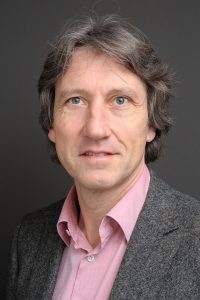
Carl E. Carlson is the Class of 1962 Professor of Physics at the College of William & Mary in Virginia. He holds a B.A. and Ph.D. from Columbia University (1965 and 1968, respectively). His research focuses on theoretical particle and nuclear physics, including the proton radius problem, low-energy tests of new physics, hadronic effects in atomic physics, and two-photon physics. Recent courses include Quantum Field Theory II, Classical Electricity and Magnetism II, and General Physics. He has been recognized with the Thomas Ashley Graves Award for Sustained Excellence in Teaching (1994) and the Alumni Fellows Award (1978). His recent work explores topics like twisted photon interactions, lattice QCD corrections, and proton structure corrections to atomic spectroscopy. He has held sabbaticals at institutions like the Helsinki Institute for Physics and the Helmholtz Institute Mainz.
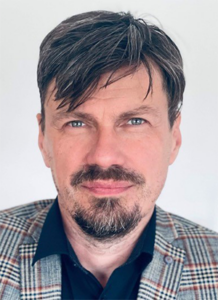
Prof. Hartmut Wittig is a Full Professor at the Institute of Nuclear Physics, Johannes Gutenberg University Mainz since 2005. He leads the Cluster of Excellence PRISMA+ (Precision Physics, Fundamental Interactions and Structure of Matter). His research focuses on Lattice QCD, hadron structure, and precision calculations of the muon's anomalous magnetic moment. Wittig holds a PhD from the University of Hamburg (1992) and habilitation in theoretical physics (1998). He has held positions at the University of Southampton (1992–1995), DESY-Zeuthen (1995–1996), and the University of Oxford (1996–2000 as PPARC Advanced Fellow). His research interests include lattice QCD applications to hadron spectroscopy, muon g−2, and precision electroweak observables. Notable achievements include pioneering work on the hadronic vacuum polarization contribution to the muon’s magnetic moment and advancing machine learning techniques in lattice calculations. He has advised over 20 PhD students, many focusing on lattice QCD and precision physics. Awards include CERN Scientific Associate (1999/2000) and a teaching award from Mainz University (2013). Wittig’s lab contributes to global initiatives like the FLAG (Flavour Lattice Averaging Group) and collaborates on projects such as the Muon g−2 experiment. His work bridges theoretical calculations with experimental precision demands in particle physics.
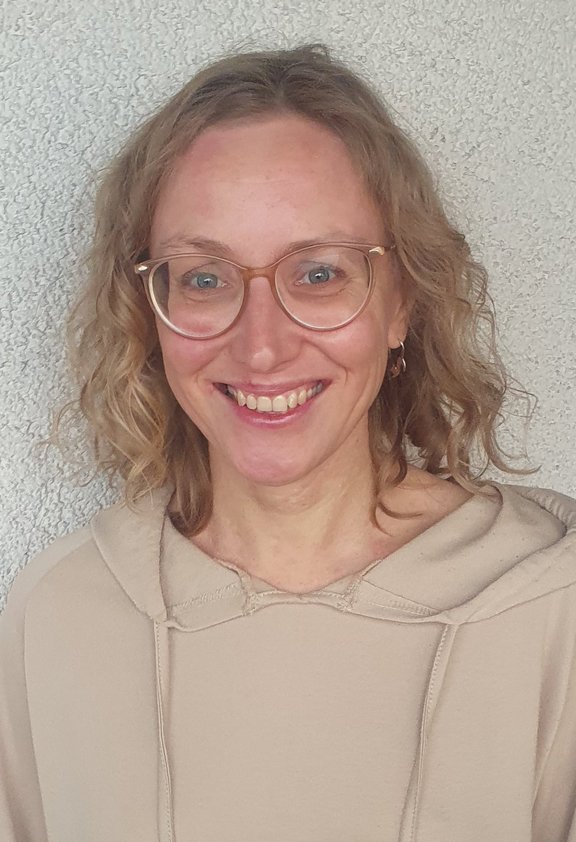
Dr. Vladimir Pascalutsa is a Staff Scientist at the Institute of Nuclear Physics, Johannes Gutenberg-Universität Mainz, Germany. He holds a PhD in Theoretical Physics from Utrecht University (1998) and has held positions at NIKHEF (Netherlands), Flinders University (Australia), Ohio University (USA), and the European Centre for Theoretical Studies in Nuclear Physics (ECT*, Italy). His research focuses on QCD, hadron structure, dispersion relations, chiral perturbation theory, and light-by-light scattering effects in precision experiments like muon g-2. He has advised PhD students Nadia Krupina and Franziska Hagelstein. His work includes contributions to lattice QCD calculations, muonic hydrogen spectroscopy, and theoretical frameworks for nuclear structure. Key roles include: Staff Scientist, University of Mainz (2008–present) Assistant Professor, ECT* Trento (2006–2008) Research Associate Professor, College of William and Mary (2003–2006) Research Interests: QCD and hadron structure Dispersion relations and sum rules Chiral effective field theories Lattice QCD applications Muon hydrogen precision measurements Publications emphasize advancements in muon g-2 calculations, hyperfine splitting in hydrogen-like atoms, and nuclear structure effects in QED. His 2024 textbook 'Causality Rules' formalizes dispersion theory concepts.
Natalia S. Oreshkina is a researcher at the Max Planck Institute for Nuclear Physics (MPIK) in Heidelberg, Germany, with a focus on atomic and nuclear physics. She holds a Habilitation and Venia Legendi from Heidelberg University (2019) and a PhD from Saint-Petersburg State University (2008). Her research interests include heavy muonic atoms, relativistic atomic structure, QED effects, nuclear deformation in ions, and precision spectroscopy. She has been a PostDoc at MPIK since 2011 and previously held postdoctoral and fellow positions at Saint-Petersburg State University. Education: Habilitation in Physics, Heidelberg University (2019) PhD in Physics, Saint-Petersburg State University (2008) M.Sc. in Physics, Saint-Petersburg State University (2004) B.Sc. in Physics, Saint-Petersburg State University (2001) Research Interests: Spectra of heavy muonic atoms, variation of fundamental constants, relativistic atomic structure, electron correlation and QED effects, nuclear deformation in highly charged ions, time-dependent dynamics in laser fields, hyperfine splitting, g-factors, and kaonic atoms. Publications & Talks: Oreshkina has authored/co-authored over 50 peer-reviewed articles, including recent work on muonic atom spectroscopy, nuclear radii determinations, and QED corrections in unstable vacuum. She frequently presents at international conferences and workshops, such as the 45th EAS Meeting (2025) and the REHE Conference (2024), focusing on exotic atoms and precision measurements. Labs & Collaborations: She collaborates with teams at MPIK, the University of Groningen, and other institutions on projects involving trapped ions, laser spectroscopy, and nuclear physics. Her work contributes to experiments like the ALPHATRAP and collaborations on muonic X-ray measurements.
Prof. Anna Soter is a distinguished physicist specializing in atomic and particle physics, with a focus on precision measurements and fundamental interactions. Her research explores advanced spectroscopy techniques and quantum mechanical systems. Affiliation : Not explicitly stated Academic Role : Professor Her work includes experimental studies on muonic hydrogen and cold muonium beams, contributing to understanding atomic structure and gravity experiments. Recent publications highlight her expertise in laser spectroscopy and quantum physics. Scientific Contributions : Laser spectroscopy of exotic atoms Cold muonium beam development Precision tests of quantum electrodynamics
Dr. Trevor J. Stocki is a Researcher at the Radiation Protection Bureau of Health Canada, specializing in environmental radioactivity and nuclear nonproliferation. His work integrates machine learning, muon physics, and Monte Carlo techniques to address global radiation safety challenges. He collaborates with international bodies like the IAEA and contributes to the Canadian CRIPT team for cosmic ray inspection technologies. Education: B.Sc. (Honours Physics, University of Alberta, 1991); Ph.D. (Physics, University of British Columbia, early 2000s). Postdoctoral research at Simon Fraser University focused on laser trapping of radioactive atoms. Research Interests: Machine learning applications for distinguishing nuclear explosion signatures from anthropogenic radioxenon sources Muon tomography and detection of special materials via muonic X-ray spectroscopy Environmental modeling of radioactive plumes using Monte Carlo simulations Development of flash ADC systems for high-purity germanium detectors in muon projects Recent projects include leading an IAEA working group on controlled nuclear releases and developing algorithms for cosmic ray inspection systems. He actively seeks M.Sc. students to advance muon-based detection technologies. Collaborations: Canadian CRIPT team, TRIUMF, and global CTBT monitoring networks.
Dr Luke Antwis is a Researcher in the Ion Beam Processing group at the University of Surrey. His work spans advanced ion beam techniques for quantum computing, nuclear physics, and photovoltaic applications. He supervises postgraduate researchers and contributes to the development of ion beam technologies at the Surrey Ion Beam Centre. BSc (Hons), PhD in Physics Member of the Institute of Physics (MInstP) Member of the Institution of Engineering and Technology (MIET) His research focuses on isotopically pure silicon layers for quantum computers, muonic x-ray spectroscopy for nuclear charge radii measurements, and ion beam optimization for photovoltaic materials. Technical challenges addressed include ultra-low energy implantation contamination, vacuum system design, and semiconductor heterojunction characterization. The article trends highlight his interdisciplinary work bridging nuclear physics (muonic spectroscopy) and semiconductor engineering (black silicon emitters). He emphasizes precision in ion beam targeting and vacuum integrity solutions for analytical equipment. Dr Antwis supervises postgraduate researchers like J. Bird (decelerated ion beams) and M. Ludlow (single ion implantation capabilities). He is affiliated with the Surrey Ion Beam Centre, advancing ion beam analysis and processing for academic and industrial applications.
Dr. Savely Karshenboim is a Researcher at the Max Planck Institute of Quantum Optics in Garching, Germany, working within the Laser Spectroscopy division. His research focuses on high-precision theoretical calculations in quantum electrodynamics, particularly in the context of fundamental constants and atomic spectroscopy. His primary research interests include: Quantum Electrodynamics : Performing high-order calculations for atomic energy levels and transition frequencies. Precision Spectroscopy : Providing theoretical support for high-precision measurements in atomic systems. Fundamental Constants : Determining values of fundamental constants through atomic physics. Muonic Atoms : Studying energy levels in muonic systems to test quantum electrodynamics. Metrology : Contributing to the redefinition of SI units based on fundamental constants. Analysis of his recent publications (2019-2025) reveals a strong emphasis on the Lamb shift in hydrogen and muonic atoms, with significant contributions to higher-order quantum electrodynamic corrections (up to three-loop level). His work also addresses the proton charge radius puzzle and the development of optical clock standards. Dr. Karshenboim is part of the Laser Spectroscopy division at the Max Planck Institute, which conducts cutting-edge research in precision laser spectroscopy and its applications to fundamental physics.
Andreas Knecht is a Researcher at the Paul Scherrer Institute (PSI) in Switzerland, affiliated with the Laboratory for Particle Physics and the Muon Physics group. His work focuses on muon-induced spectroscopy, nuclear structure analysis, and beamline engineering. His research spans muonic x-ray spectroscopy , charge radius measurements , and high-intensity muon beam optimization . Key methodologies include laser spectroscopy , target fabrication , and non-destructive elemental analysis . He contributes to infrastructure projects like HIMB (High-Intensity Muon Beams) and IMPACT upgrades. Recent publications highlight advancements in two-dimensional muon beam compression , superconducting magnet design , and precision detection systems for experiments like Mu3e and MONUMENT. His work intersects experimental particle physics , atomic physics , and applied material science . At PSI, he collaborates on non-destructive testing applications for cultural heritage (e.g., late antique fibula analysis) and energy storage diagnostics via Muon-Induced X-ray Emission (MIXE). His technical expertise includes molecular plating , SiPM cryogenics , and beam monitoring detectors .
Prof. Sonia Bacca is a Professor of Theoretical Nuclear Physics at Johannes Gutenberg University Mainz (Germany), serving as Deputy Director of the Mainz Institute for Theoretical Physics and Senior Scientist at PRISMA. Her research focuses on understanding nuclear structure and dynamics, bridging experimental observations with fundamental theory. She holds a doctorate from 2005 and previously worked as a research associate at TRIUMF (Canada). Education: 1996: Abitur (High School Diploma) 2001: University Degree 2005: Doctorate in Physics Research Interests: Prof. Bacca explores atomic nuclei properties, electromagnetic responses, and neutrino interactions using advanced theoretical frameworks like coupled-cluster theory and ab initio methods. Her work aims to connect nuclear structure with particle physics and astrophysical processes, such as element formation in stars. Awards & Roles: Fellow of the American Physical Society (APS) Equal Opportunities Officer at FB08 (Faculty of Physics) Participant in the 'Women in Science' exhibition Advising & Grants: Leads a research group and contributes to interdisciplinary projects. Her grants include a Discovery Grant (Canada) and engagement in the PRISMA cluster. She actively promotes gender equality and mentors early-career scientists. Labs/Teams: Involved with the Mainz Institute for Theoretical Physics and PRISMA+, focusing on nuclear structure and neutrino physics collaborations.
Dr. Jochen Schmitt serves as a Senior Scientist within the Climate and Environmental Physics (CEP) research group at the University of Bern, Switzerland. His expertise lies in paleoclimatology, specifically extracting and interpreting atmospheric greenhouse gas records from ice cores to unravel Earth's climate system across glacial-interglacial cycles spanning hundreds of thousands of years. His research spans advanced analytical techniques for ice core gas analysis, reconstruction of past CO 2 , CH 4 , and N 2 O concentrations, biogeochemical feedbacks in carbon-nitrogen cycles, and abrupt climate transitions. Key contributions include refining cosmogenic 14 C production rates, quantifying ocean heat content over 700,000 years, and challenging established carbon storage models in northern peatlands through isotopic evidence. Analysis of Dr. Schmitt's 2020-2022 publications reveals dominant methodological innovation in ice sublimation devices and laser spectrometry alongside critical findings on methane dynamics during deglaciations, terrestrial-marine N 2 O partitioning, and millennial-scale CO 2 variability. His work consistently integrates high-resolution ice core data with biogeochemical modeling to constrain past carbon cycle behavior under varying climate states. As a core member of the CEP group, Dr. Schmitt actively collaborates on major Antarctic projects (Taylor Glacier, Skytrain Ice Rise) and Greenland ice core initiatives, providing essential paleoclimate constraints for modern climate model validation and future projection scenarios.
Jorge Machado is an Assistant Professor at Universidade Nova de Lisboa . His research focuses on atomic physics , quantum electrodynamics (QED) , and muonics spectroscopy . He specializes in precision measurements of atomic parameters using advanced detection systems like superconducting tunnel junctions and X-ray spectroscopy techniques. His work bridges experimental and theoretical physics, addressing fundamental questions in QED testing and nuclear astrophysics. Key research areas include: Muonics systems : Studying light nuclei and heavy ions via muonic atoms (e.g., BeEST experiment) X-ray spectroscopy : Developing methods for elemental analysis in biological and material sciences Detector design : Innovating systems for high-precision measurements and neutron detection (e.g., NeuLAND detector at FAIR) His recent work emphasizes reference-free measurements of atomic transitions and formalin fixation impact on tissue elemental composition. He collaborates on international projects like the R3B experiment at FAIR and maintains the Lisbon Atomic Database (LISA) . Publications highlight contributions to QED testing in extreme fields , nuclear astrophysics , and precision muonics techniques . His experimental setups often involve laser spectroscopy, particle accelerators, and advanced data acquisition systems.
Prof. Dr. Randolf Pohl is a Research Group Leader at the Max Planck Institute of Quantum Optics in Garching, Germany, leading the ERC-funded group on 'Muonic Atoms'. His work combines advanced laser spectroscopy with precision measurements in exotic atomic systems to investigate fundamental nuclear and atomic properties. Research Interests: His primary research lies at the intersection of atomic, nuclear, and particle physics, focusing on muonic atoms — where an electron is replaced by a heavier muon. This enables ultra-precise measurements of nuclear charge and magnetization radii, particularly in hydrogen, deuterium, helium, lithium, and beryllium systems. His groundbreaking work on the proton radius using muonic hydrogen revealed a significant discrepancy with previous measurements — the 'Proton Radius Puzzle' — which became a Nature cover story in 2010. Subsequent work on the deuteron confirmed the trend and was published in Science . Research Trends: His recent publications emphasize high-precision Lamb shift and hyperfine structure measurements in muonic systems, pushing the boundaries of bound-state quantum electrodynamics (QED), refining the Rydberg constant, and testing few-nucleon nuclear models. Experiments involve Penning traps, ion traps, laser systems, and particle accelerators, indicating a strong experimental and interdisciplinary approach. Scientific Awards: ERC Research Group Leader (implied by ERC funding) Advising and Grants: Prof. Pohl actively supervises students and offers PhD, Master’s, and Bachelor’s thesis opportunities. His group is supported by an ERC grant, indicating significant competitive funding. He mentors students in experimental atomic physics, laser spectroscopy, and fundamental physics research. Labs and Teams: He leads the 'AG Pohl' (Pohl Research Group) at MPQ, focusing on laser spectroscopy of light exotic systems. The team conducts experiments on muonic atoms and ions, operates laser systems, and collaborates on accelerator-based projects. They present regularly at DPG (German Physical Society) conferences and maintain a strong presence in the precision measurement community.
Eric Hessels is a Full Professor in the Department of Physics and Astronomy at York University. His research focuses on high-precision laser spectroscopy of atoms, experimental tests of Quantum Electrodynamics (QED), and studies of antimatter such as antihydrogen. He leads efforts to measure the proton radius using atomic hydrogen and aims to resolve discrepancies observed in muonic hydrogen experiments. Hessels is also involved in trapping antihydrogen atoms to study antimatter properties and determining the fine structure constant through helium spectroscopy. His work often employs advanced laser cooling and trapping techniques, contributing to fundamental physics questions like potential new bosons or higher-dimensional gravity. He holds a position as Distinguished Research Professor and is part of York University's Physics and Astronomy Graduate Program. Research areas include atomic, molecular, and optical physics, with experimental approaches combining computational, theoretical, and experimental methodologies. His contributions span precision measurements in hydrogen and helium, antimatter trapping systems, and matrix-isolation studies of molecules like BaF for electron EDM searches. Hessels collaborates internationally on projects like the Antihydrogen Trap (ATRAP) and has developed specialized traps for neutral antimatter. Notable projects involve ultrahigh-precision helium fine structure measurements using frequency-offset separated oscillatory fields, which refine determinations of the fine structure constant. His group also investigates optical forces on molecules and systematic effects in precision spectroscopy. Hessels' work bridges atomic physics with particle physics, seeking insights into fundamental symmetries and constants of nature.
AG Pohl is a research group focused on laser physics, ultra-cold atoms and ions, vacuum systems, electronics, and precision spectroscopy of muonic systems. The group actively engages in both research and teaching, offering projects for mini-researchers, bachelor and master students, as well as PhD candidates. Research interests center on high-precision laser spectroscopy of (muonic) systems, with applications in quantum optics, atomic physics, and experimental physics. The group emphasizes interdisciplinary work combining physics, engineering, and advanced instrumentation. Teaching activities include experimental physics courses (e.g., Ex-5a WS 21/22, Ex-5a WS 22/23) and photonics lectures (SoSe 23: Photonics). The group is open to new students and researchers, advertising ongoing projects in vacuum systems, precision spectroscopy, and laser physics. Recent activities include participation in the DPG Frühjahrstagung 2022 and DPG Frühjahrstagung 2023 , indicating active involvement in the German Physical Society (Deutsche Physikalische Gesellschaft, DPG) conferences.