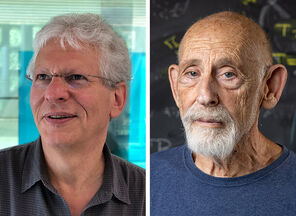
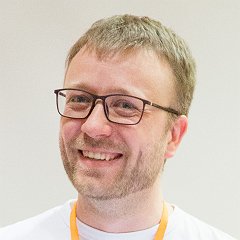
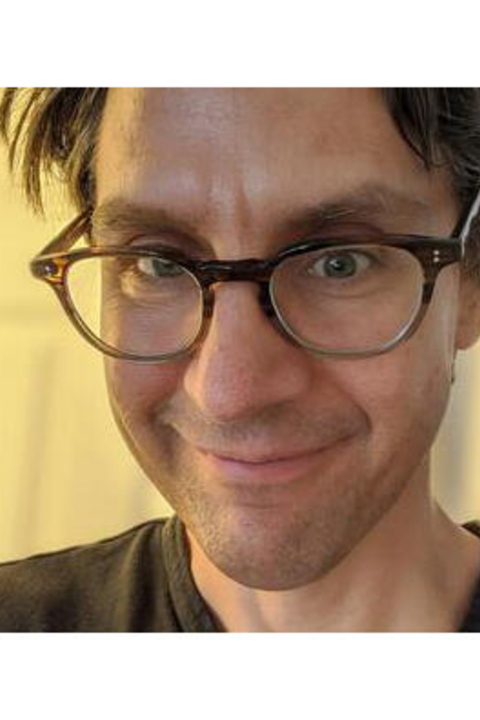
Stephen Shenker is the Richard Herschel Weiland Professor of Physics at Stanford University, where he has been a faculty member since 1998. He previously served as a professor at Rutgers University (1989-1998) and as an Assistant to Full Professor at the University of Chicago (1981-1989). Shenker also directed the Stanford Institute for Theoretical Physics from 1998 to 2009. Shenker's research focuses on quantum gravity, particularly string theory and M theory, with emphasis on nonperturbative aspects. His work has significantly advanced our understanding of gauge theories, conformal field theory, matrix models of string theory, D-branes, and the connection between quantum gravity and quantum chaos. He has made foundational contributions to the field of string theory, including the discovery of Matrix Theory, which provides a nonperturbative definition of String/M theory. His recent publications demonstrate a consistent focus on eternal inflation, the string theory landscape, de Sitter space, and holographic principles, reflecting his ongoing investigation into the deepest questions of theoretical physics and cosmology. Shenker's work often intersects with that of Leonard Susskind, with whom he shares the 2023 Dirac Medal. Member, National Academy of Sciences (2015) Lars Onsager Prize, American Physical Society (2010) Dean's Award for Distinguished Achievements in Teaching, Stanford University (2007) Fellow, American Academy of Arts and Sciences (2006) Fellow, American Physical Society (2003) Fellow, MacArthur Foundation (1987) Shenker has advised numerous doctoral students and postdoctoral researchers at Stanford, contributing significantly to the education of the next generation of theoretical physicists. His teaching excellence has been recognized with multiple awards, including Stanford's Dean's Award for Distinguished Achievements in Teaching.
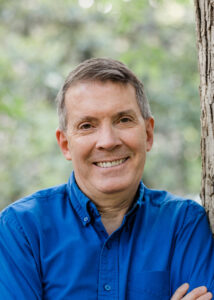
Patrick J. Curran is a Professor in the Department of Psychology at the University of North Carolina, affiliated with the L.L. Thurstone Psychometric Laboratory and the Quantitude initiative. His research focuses on quantitative methodologies, particularly longitudinal data analysis and structural equation modeling, applied to developmental psychopathology and adolescent substance use. He collaborates on statistical education through YouTube tutorials, a blog (Help Desk), and workshops, alongside a podcast with Greg Hancock. His work bridges methodological innovation with substantive research in psychology and public health. Key contributions include advancing latent curve models with structured residuals, integrative data analysis techniques, and the dissemination of statistical tools. His research spans disciplines such as developmental psychology, clinical psychology, and epidemiology, addressing topics like alcohol use trajectories, chronic depression mechanisms, and pandemic-related disparities in healthcare workers’ mental health. Lab Affiliations: L.L. Thurstone Psychometric Lab, Quantitude Collaborations: Dan Bauer (statistical education), Greg Hancock (podcast), and interdisciplinary teams in public health and clinical research His publications emphasize methodological rigor and practical application, often addressing gaps in longitudinal data analysis and measurement equivalence. Notable work includes the latent curve model with structured residuals (LCM-SR) and integrative data harmonization strategies for prevention science.
Jeffrey Sanford Russell is a Professor of Philosophy at the University of Southern California's School of Philosophy, where he also serves as Director of Graduate Studies. He holds a PhD from New York University (2011). His research focuses on decision theory, ethics, formal epistemology, metaphysics, and the philosophy of religion and mathematics. Russell teaches courses on topics like probability, rational choice, and the limits of logic, emphasizing interdisciplinary approaches blending philosophy with mathematics, psychology, and economics. His work explores foundational questions in ethics, such as infinite value aggregation paradoxes, and decision theory, including stochastic dominance and self-locating evidence in cosmology. He has contributed to debates on multiverse hypotheses, moral hedging, and the structure of possible worlds. Russell’s publications appear in top journals like Noûs , Philosophical Review , and Philosophy and Phenomenological Research . His recent research addresses moral and epistemic challenges in infinite scenarios, such as infinite ethics and fanaticism in decision-making. He also investigates the intersection of metaphysics and formal logic, including composition principles and qualitative grounds for non-qualitative facts. Russell’s work bridges abstract philosophical inquiry with practical implications, such as ethical dilemmas in collective action and the epistemology of divine hiddenness.
Alex Kale is an Assistant Professor of Computer Science at the University of Chicago and a core member of the Data Science Institute. His research focuses on data visualization and human-computer interaction, emphasizing tools that explicitly represent users' cognitive processes during data analysis. He leads the Data Cognition Lab, exploring software for uncertainty visualization, causal inference, and decision-making support. Kale holds a PhD in Information Science from the University of Washington (2022), an MSc from UW (2020), and a BSc in Psychology with minors in Music and Philosophy (2015). Affiliations: University of Chicago, Data Science Institute, Data Cognition Lab Education: PhD, UW (2022); MSc, UW (2020); BSc, UW (2015) Research interests include human-computer interaction, statistical reasoning interfaces, and systems for managing large-scale data. He has developed tools like MetaExplorer for meta-analysis and EVM for exploratory visual modeling. Key awards include the Best Paper Honorable Mention at CHI 2023 and VIS 2021, and the Best Paper Award at VIS 2020. His work bridges visualization design, decision theory, and cognitive science, with applications in participatory budgeting, causal inference, and reproducible research. Courses taught include Visualization for Data Science and Statistical Rethinking.
Vinay Lal is Professor of History and Asian American Studies at the University of California, Los Angeles (UCLA), where he has been teaching since Fall 1993. He holds a joint appointment in the Department of History and the Asian American Studies Department. Born in Delhi and raised across multiple countries including India, Indonesia, Japan, and the United States, Lal brings a global perspective to his scholarship and teaching. His educational journey began at Johns Hopkins University, where he earned both his B.A. (1982) and M.A. (1982) from the Humanities Center with concentrations in literature, history, and philosophy. He then studied film in Australia and India on a Thomas J. Watson Fellowship before pursuing his Ph.D. at the University of Chicago's Department of South Asian Languages and Civilizations, which he completed with Distinction in 1992. His dissertation, 'Committees of Inquiry and Discourses of 'Law and Order' in Twentieth-Century British India', received the Marc Galler Award for the best dissertation in the Division of the Humanities at the University of Chicago. Lal's research spans an extraordinary breadth of intellectual interests, with primary focus on Indian history, historiography, public and popular culture in India, the Indian diaspora, colonialism, human rights, American politics, the architecture of nonviolence, Gandhi studies, and the global politics of knowledge systems. His work consistently challenges conventional disciplinary boundaries, engaging with topics ranging from the politics of religion and ethnicity in South Asia to the moral and political thought of Mohandas Gandhi, from the partition of India to the intersection of history and popular cinema. His scholarship reflects a deep commitment to decolonizing knowledge systems and exploring alternative epistemologies from the Global South. His publications reveal a scholar deeply engaged with both historical analysis and contemporary political issues. The 15 most recent articles demonstrate his consistent focus on South Asian politics, historical memory, nonviolence, and the politics of knowledge. His writing spans academic journals, major newspapers, and public intellectual platforms, with a distinctive voice that bridges scholarly rigor and public accessibility. His work on Gandhi, colonialism, and contemporary Indian politics forms a particularly strong thread throughout his recent publications. Fellow of the World Academy of Art and Science (elected February 2000) William R. Kenan Fellow, Society of Fellows in the Humanities, Columbia University (1992-93) Senior Fellowship from the American Institute of Indian Studies National Endowment for the Humanities Fellowship for University Teachers Fellowship from the Society for the Promotion of Science/Japan Area Studies Center Listed among the '101 Most Dangerous Professors in America' in David Horowitz's book Fulbright-Nehru Fellowship for Academic and Professional Excellence Fellow at the Stellenbosch Institute for Advanced Study (STIAS), South Africa (2024) Oxford University Press India Academic (Humanities) Delegate (2022-2028) As a dedicated mentor, Lal has supervised numerous PhD students who have gone on to prominent academic careers at institutions including CSU-Sacramento, UNC-Charlotte, O.P. Jindal University, UC Irvine, and the University of Pittsburgh. His teaching portfolio at UCLA is exceptionally broad, encompassing undergraduate courses on Indian Civilization, British India, contemporary South Asia, and world history, along with graduate seminars on Indian politics and religion, historiography of modern India, nationalism and colonialism, Indian cinema, and postcolonial theory. His lecture courses are available in their entirety on his academic YouTube channel, which has garnered over 3 million views and 36,000 subscribers. Lal has also served as University of California's Director of the Education Abroad Program in India and as Professor of History at the University of Delhi during 2010-11. Lal is a founding member of the Backwaters Collective on Metaphysics and Politics (2010-2020), which met annually in Kerala, and was associated with Multiversity, a group of scholars focused on decolonizing Western knowledge systems. His current work includes a four-book project titled 'The Genocide and Hope Quartet: Studies in the Architecture of Oppression and the Redemptive Possibilities of Nonviolence', examining Dandi, Auschwitz, Hiroshima, and Robben Island. He maintains an active public intellectual presence through his blog 'LAL SALAAM' and his academic YouTube channel, making scholarly content accessible to wider audiences.
Dr. Martin A. Hubbe is a Professor and the Buckman Distinguished Scientist in the Department of Forest Biomaterials at North Carolina State University . With expertise in chemical additives for paper machinery and colloidal chemistry, his work bridges industrial applications with sustainability principles. Education M.S. in Paper Chemistry from the Institute of Paper Chemistry Ph.D. in Colloidal Chemistry from Clarkson University Dr. Hubbe's research focuses on mechanistic aspects of paper production , including dewatering processes, charged characteristics of cellulosic materials, and the development of dry strength additives. His recent work emphasizes biomass valorization and green chemistry for sustainable packaging solutions, lignin self-assembly mechanisms, and environmental remediation technologies. Scientific Contributions TAPPI Division Award for service Founding co-editor of the peer-reviewed journal BioResources Dr. Hubbe has secured over $400,000 in grants from agencies like USDA , NSF , and United Soybean Board , including the Multiverse of Biomass grant focusing on entrepreneurship in bio-based materials. His research spans topics such as soy protein-based additives for papermaking, electrokinetic behavior of polyelectrolytes , and ethical dimensions of sustainability .
Professor Adrian Kent is a leading academic in quantum physics at the University of Cambridge , affiliated with the Department of Applied Mathematics and Theoretical Physics (DAMTP) and the Centre for Quantum Information and Foundations . He holds a Fellowship at Wolfson College , serves as Director of Studies in Mathematics at Darwin College , and has visiting positions at the Perimeter Institute for Theoretical Physics and Institute for Quantum Computing in Waterloo, Ontario. Research Focus: Quantum foundations, quantum information theory, quantum cryptography, quantum reality problem, decoherence, and postquantum theories. Key Contributions: Barrett-Hardy-Kent protocol, no-summoning theorem, critiques of many-worlds interpretations, and experimental implementations of relativistic quantum bit commitment. His recent publications emphasize quantum gravity , relativistic quantum protocols , quantum non-locality , and tests of quantum theory . The 15 most recent articles explore topics like postquantum theories of gravity, quantum reality via decoherence, quantum tokens, and symmetry breaking in quantum systems. Despite his interdisciplinary work, no specific scientific awards are highlighted in the provided texts. Former Students: Matthias Doerrzapf (St. John's College), Jim McElwaine (Durham University), Jonathan Barrett (University of Oxford), Roger Colbeck (University of York), Damian Pitalua-Garcia (Brussels/Paris), Emily Adlam (2018 graduate). Patents: 4 U.S. patents related to quantum cryptography and tagging systems.
Michael J. Larson is a Professor of Psychology in the College of Family, Home, and Social Sciences at Brigham Young University (BYU), where he directs the Clinical Cognitive Neuroscience and Neuropsychology (CCNN) Lab. His research integrates neuropsychology and cognitive neuroscience methodologies to investigate cognitive control mechanisms in healthy individuals and cognitive dysfunction following traumatic brain injury (TBI). He employs advanced techniques including event-related potentials (ERPs) and functional magnetic resonance imaging (fMRI) to examine neural correlates of cognitive processes. Dr. Larson's research program has four primary aims: (1) Investigating behavioral and neural reflections of cognitive control using ERP/fMRI; (2) Understanding lifespan developmental trajectories of cognitive control in neurologic insult or psychopathology (TBI, autism, depression); (3) Examining cognitive control's role in exercise and food-related behaviors including obesity; (4) Determining psychometric properties of biological measures for clinical application. His work spans traumatic brain injury recovery, exercise cognition, food inhibitory control, and psychopathology-neurocognition interactions. His publication trends reveal strong focus on methodological rigor in psychophysiology, with recent articles emphasizing ERP reliability across paradigms, preregistration practices, and multiverse analysis approaches. Key research domains include TBI rehabilitation (particularly via photobiomodulation and HRV biofeedback), sex differences in concussion mechanisms through the LIMBIC MATARS Consortium, and neural markers of food-related inhibitory control. Editor-in-Chief, International Journal of Psychophysiology (2016-Present) Top-Cited Scholar for Scientific Field (2019) Martin B. Hickman Innovation in Teaching Award (2018) University Young Scholar Award (2015) College Outstanding Young Alumnus, University of Florida (2014) Dr. Larson mentors students through the BYU Chapter of the Association of Neuropsychology Students and Trainees (ANST) and collaborates extensively with Dr. Tricia Merkely, Dr. Derin Cobia, and Dr. Shawn Gale on clinical neuropsychology training. His lab emphasizes rigorous methodology and psychometric validation, contributing significantly to standards in electrophysiological research through editorial leadership and methodological publications.
Stefan Marr is a faculty member at the University of Kent, United Kingdom, focusing on Concurrent Programming , Language Implementation , and Virtual Machines . His research spans projects like optimizing interpreters, improving concurrency models, and enhancing profiling tools for dynamic languages. Projects : Royal Society Industry Fellowship (FastStart), EPSRC-funded CaMELot, Oracle Labs-funded Automatic Superinstructions. Collaborations : With students and researchers across institutions, including Shopify, Vrije Universiteit Brussel, and Johannes Kepler University Linz. His recent work emphasizes profiling reliability for Java, interpreter performance , and tooling for complex concurrent systems . Projects like SOM (Simple Object Machine) and its variants (SOM++, TruffleSOM, PySOM) highlight his commitment to language implementation research and education. Scientific Awards include fellowships and grants from the Royal Society, EPSRC, and Oracle Labs. His contributions to conferences as program committee member , steering committee , and workshop organizer further underscore his academic leadership.
Andrea Perunović is a Research Fellow at the Institute for Philosophy and Social Theory, University of Belgrade, specializing in the intersection of philosophy, psychoanalytic theory, and contemporary francophone thought. Her work critically examines trust, political jouissance, and subjectivity within global philosophical discourse. Her academic trajectory includes doctoral studies at the European Graduate School (Saas-Fee, Switzerland) and a PhD in Philosophy from the University of Paris 8 (Saint-Denis, France) under François Noudelmann. Her dissertation, Archéologie de la confiance: prolégomènes d'une pensée défiante (Archaeology of trust: prolegomena of a distrustful thought), established foundational work on trust as a philosophical-psychoanalytic construct. Perunović's research synthesizes Lacanian psychoanalysis, Derridean deconstruction, and Žižekian political theory to analyze mistrust in Balkan contexts, cinematic emancipation, and post-truth subjectivity. Her recent publications reveal a methodological shift from ontological investigations of trust toward applied analyses of political emotion and institutional critique, with recurring engagement of French philosophical traditions. The Institute for Philosophy and Social Theory provides her academic home within a network of specialized laboratories including the Digital Society Lab (DigiLab) and Laboratory for Social Critique (CriticLab), fostering interdisciplinary collaboration on social theory and critical philosophy.
Joseph Darowski is an Assistant Professor in the Department of English at Brigham Young University, affiliated with the College of Humanities. His academic work bridges literary analysis and cultural studies, with a focus on American popular media. Research Interests: Dr. Darowski specializes in American popular culture, particularly comic books, television, and film. His scholarship explores how media reflects and shapes societal issues such as race, gender, identity, and class. He has made significant contributions to the study of superhero narratives, situating them within broader historical and cultural contexts. Publication Trends: His body of work reveals a sustained engagement with cultural history through long-running television series and superhero comics. He examines how shows like Cheers , Frasier , and Survivor , as well as franchises like X-Men and Superman , serve as mirrors to American values across decades. His edited essay collections, particularly the Ages of Superheroes series, demonstrate interdisciplinary rigor and thematic breadth. Teaching and Service: He teaches courses in English, likely covering topics in media, literature, and cultural studies. While no formal advising or grant information is provided, his extensive publication record suggests active scholarly engagement.
Paul Kockelman is a Professor of Anthropology at Yale University, specializing in linguistic anthropology, semiotics, and environmental studies. He holds undergraduate degrees in mathematics and physics, an MS in physics, and a PhD in anthropology from the University of Chicago. His research focuses on the intersection of human agency, environmental degradation, and computational systems, with extensive fieldwork among Q’eqchi’-Maya communities in Guatemala. He served as editor of the Journal of Linguistic Anthropology (2016–2018) and is the author of numerous books and essays. Key research areas include the pragmatics of possible worlds, the semiotic dynamics of machine learning, and the ontological coupling between humans and algorithmic models. His work bridges cultural theory, science studies, and linguistic analysis, often employing mathematical models to explore meaning-making processes. His publications span books like Last Words: Large Language Models and the AI Apocalypse (2024) and A Mathematical Model of Meaning (forthcoming MIT Press), alongside foundational works in linguistic anthropology. His articles address topics from Mayan grammatical structures to the epistemic implications of AI. Grants include an EPA-funded dissertation on commons management. He maintains a website at www.envorganism.org .
Dr. Roberto Fumagalli is a Senior Lecturer in Political Economy and Philosophy at King’s College London, where he also serves as Senior Tutor for the Department of Political Economy. He holds a Research Associate position at the London School of Economics (LSE) and is a Visiting Scholar at the University of Pennsylvania’s Behavioral Ethics Lab. His academic journey includes a PhD in Philosophy from LSE (2011), with a focus on neuroeconomics, and prior roles as Junior Professor at the University of Bayreuth and Lecturer at King’s College London since 2017. His interdisciplinary research bridges philosophy, economics, and decision sciences, with specialties in philosophy of economics, moral/political philosophy, and bioethics. He has published in top journals like Philosophical Studies and Economics and Philosophy , and received teaching awards including the 2017 Teaching Excellence Prize (Bayreuth) and multiple nominations for King’s Education Awards. His recent work addresses topics like precautionary policies, welfare economics, and public health ethics. He directed King’s PPE Program (2018–2020) and MA Public Policy Program (2021–2023), emphasizing interdisciplinary education and international student recruitment. Current research projects are funded by the Arts and Humanities Research Council and the John Templeton Foundation, exploring themes such as market economies and environmental ideals.
Andrei Linde is a Russian-American theoretical physicist and the Harald Trap Friis Professor of Physics at Stanford University. He is renowned for pioneering the inflationary universe theory, eternal inflation, and the inflationary multiverse. He holds affiliations with the Lebedev Physical Institute, CERN, and Stanford University. His research focuses on cosmic inflation, quantum cosmology, and the implications of string theory for the multiverse. His work explores cosmological phase transitions, reheating, and the fractal structure of the multiverse. Linde's contributions are highlighted by numerous awards, including the Kavli Prize (2014), Breakthrough Prize in Fundamental Physics (2012), Gruber Prize (2004), Dirac Medal (2002), and Gamow Prize (2018). He is a member of the National Academy of Sciences and the American Academy of Arts and Sciences. Education: B.S. from Moscow State University (1975), PhD from Lebedev Physical Institute (1975) Positions: Professor at Stanford University; CERN researcher (1989–present) Collaborations: Worked with Alan Guth, Paul Steinhardt, Alexei Starobinsky, and Renata Kallosh
Hao Hong is an Associate Professor of Philosophy and CLAS-Honors Preceptor at the University of Maine, jointly appointed by the Philosophy Department and the Honors College. He holds a PhD in Philosophy from Indiana University (2018), with minors in History and Philosophy of Science, and prior degrees from Peking University. His primary research focuses on metaphysics, particularly metaphysical anti-realism, truthmaking, and comparative metaphysics across philosophical traditions. He actively engages with analytic philosophy, modern European philosophy, and classical Chinese philosophy like the Daodejing and Laozi. Teaching responsibilities include core philosophy courses (e.g., Metaphysics, Classical Chinese Philosophy) and Honors College preceptorials. His experimental approach to philosophy challenges traditional boundaries, blending Daoist and punk influences in his methodologies. Recent research explores Xuanxue (魏晋玄学) ontology, the metaphysics of Dao, and pedagogical innovations in honors education. Notable publications include works on truthmaking theories, comparative philosophy of language, and metaphysical explanation. Teaching and research interests emphasize interdisciplinary dialogue between Eastern and Western traditions, as seen in his courses on Chinese philosophy and metaphysics. He has presented widely on topics ranging from Daoist nonaction to honors curriculum design, advocating for pedagogy that fosters student-driven scholarship and human flourishing.