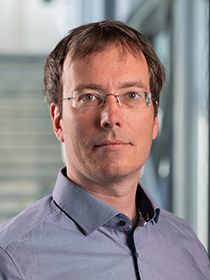
Martin Geroldinger is a researcher at the Research Program of Biomedical Data Science at Paracelsus Medical University. His work focuses on statistical methodologies for clinical trials in rare diseases, particularly Epidermolysis Bullosa, and biomedical data science applications. Key roles: Co-author in clinical trials, contributor to AI-based diagnostic pathways, organizer of biomedical data science colloquia Research interests: He specializes in optimizing clinical trial designs for rare genetic disorders, analyzing count and binary data in cross-over studies, and leveraging machine learning for medical research. His work addresses challenges in patient burden reduction and outcome measurement. Projects: Active in AI-driven medical knowledge extraction, 'long COVID' diagnostic pathways, and statistical approaches for rare epilepsies. Collaborates with Prof. Zimmermann and Dr. Thiel on rare disease trials. Activities: Organized the 2nd Biomedical Data Science Colloquium (2024), presented on statistical inference for rare disease trials (2022)
Dr. Georg Mayr is an Associate Professor in the Department of Atmospheric and Cryospheric Sciences (ACINN) at the University of Innsbruck. His research focuses on atmospheric dynamics, lightning prediction, foehn wind patterns, and climate modeling. He leads projects such as LightningPredict and Profcast , addressing environmental risks like upward lightning at wind turbines and atmospheric deserts' impact on extreme weather events. Mayr's work integrates machine learning and statistical methods for probabilistic forecasting, including lightning processes and thunderstorm environments. He has co-authored over 50 peer-reviewed articles since 2016, emphasizing interdisciplinary approaches to climate and meteorological challenges. His team collaborates on tools like foehnix for scalable diagnostics and Cholesky-based regression models for multivariate data analysis. Key contributions include long-term foehn wind reconstructions, spatial lightning climatologies, and risk assessments for tall structures. Mayr's research supports practical applications in renewable energy safety and airport low-visibility forecasts. His lab, ACINN, fosters collaboration across atmospheric science and cryospheric studies.
Jeremy Oakley is Professor of Statistics and Head of the School of Mathematical and Physical Sciences at the University of Sheffield. His work spans Bayesian statistics, uncertainty quantification for complex computer models, expert elicitation of probability distributions, and health-economic applications. Research Interests Bayesian statistics and inference Uncertainty quantification (UQ) for computer models Expert elicitation of probability distributions Health-economic modelling He co-developed the Sheffield Elicitation Framework (SHELF) , a widely-used set of protocols and software tools for structured expert judgement. Teaching & Supervision Professor Oakley teaches undergraduate and postgraduate statistics modules and supervises PhD students within SoMaS and in collaboration with other departments, focusing on UQ and expert-elicitation topics. Contact Email: j.oakley@sheffield.ac.uk
Gerald Adam Zwettler is a researcher at the University of Applied Sciences Upper Austria (FH Hagenberg) with a focus on digital transformation in Information and Communication Technology (ICT). His work spans machine learning applications in non-destructive testing, human-robot interaction, and sensor data classification. Active in projects like FLARE (Human-Centered AI for NDT), MARIE (Mobile Robotic Assistance), and MOVE (Orthosis Modeling) Collaborates internationally on railway infrastructure analysis and medical imaging Research interests include deep learning , medical image processing , IoT sensor analysis , and AI-driven customization of orthopedic devices . Recent work explores edge computing for low-energy IoT systems and multimodal interaction frameworks for office robots. Publications emphasize applied AI in technical domains, with methodological contributions to presegmentation techniques , Levenshtein distance optimization , and human-centered robotics . Project roles include principal investigator in knowledge databases for industrial plastic manufacturing.
PD Dr. Thomas Rusch serves as Deputy Head of the Competence Center for Empirical Research Methods at the Vienna University of Economics and Business (WU Vienna), where he provides statistical consultation and supports faculty and graduate students in applying appropriate statistical methodologies. He has also taught at Harvard University (2019-2021) and FH Technikum, delivering courses in applied statistics, data analysis, computational statistics, and related fields. His educational background includes: Habilitation ("Venia Docendi") in Statistics, Vienna University of Economics and Business (2021) Doctoral studies in Social and Economic Sciences, majoring in Statistics, Vienna University of Economics and Business (2012) Master's degree in Statistics, University of Vienna (2010) Graduated with a degree in Psychology, University of Vienna (2008) Bachelor's degree in Statistics, University of Vienna (2007) Dr. Rusch's research focuses on improving various aspects of modern data analysis, with particular emphasis on discrete data analysis, data mining and statistical learning, exploratory data analysis and visualization, multivariate statistics, natural language processing, and psychometrics. His work bridges statistical methodology with applications in social and behavioral sciences, especially business research and youth mental health. He is particularly known for his contributions to multidimensional scaling, clustering algorithms, and psychometric modeling. His recent publications demonstrate a strong trend toward developing and applying advanced statistical methods to solve real-world problems. His work spans computational statistics, with a focus on R programming implementations, categorical data analysis, and applications in clinical psychology and business analytics. Many of his recent papers address challenges in data visualization, model stability, and the application of machine learning techniques to social science data. His scientific achievements have been recognized with multiple WU Awards for Outstanding Research Achievements (2017, 2018, 2019, 2021, 2022). As a statistical consultant, Dr. Rusch has advised numerous faculty members and graduate students on research methodology and data analysis. He has also been active in developing statistical software, particularly R packages for data analysis and visualization. His collaborative work extends to international projects, including research on youth mental health interventions in Kenya. He is actively involved in organizing academic events, such as the Vienna Workshop on Data and Model Visualisation, and serves as a reviewer for prominent journals in computational statistics.
Ulrike Bechtold is a researcher at the Faculty of Life Sciences, Department of Evolutionary Anthropology. Her work spans human ecology, stressors, institutional care, and anthropogenic effects on biodiversity. Current Research: Focuses on Active Assisted Living (AAL) adoption barriers and modeling human-biodiversity interactions. Collaborations: Works with colleagues like M. Fieder, N. Stauder, and H. Wilfing on interdisciplinary projects. Her publications highlight trends in: Gerontechnology (2022-2024) Ecological modeling (2012-2024) Human-environment interactions (2006-2024)
Dr. Matthias Raddant is a researcher at the University for Continuing Education Krems, affiliated with the Department for Knowledge and Communication Management, and a resident scientist at the Complexity Science Hub in Vienna. He holds a PhD in quantitative economics from Kiel University. Previously, he served as an assistant professor at Kiel University and a post-doctoral researcher at the Kiel Institute for the World Economy. His research focuses on financial risk, asset pricing models, corporate governance, economic networks, and sustainability. He has explored topics such as interdependencies in financial markets, corporate board dynamics, and the application of network theory to economic systems. His work bridges econophysics and traditional financial economics, emphasizing systemic risk and interconnectedness. Key publications include analyses of global financial market interconnectedness, corporate board networks, and the use of trade data for mineral resource flow studies. He is an associate editor for SN Business and Economics and contributes to policy advice on sustainability and financial systems. Labs/Teams: Platform for Sustainable Development (Krems), Complexity Science Hub Vienna.
Johanna Genest Nešlehová is a Professor at the Institute for Statistics and Mathematics at Vienna University of Economics and Business. She previously served as Assistant Professor at McGill University (2009-2020) and holds a PhD in Mathematics from Carl von Ossietzky University of Oldenburg. Her research spans statistics, probability theory, and financial mathematics with focus areas including multivariate analysis, dependence modeling, copulas, and statistical methods for financial applications. She serves as editor for the Canadian Journal of Statistics and Statistics and Risk Modeling. Research publications demonstrate focus on multivariate statistical methods, dependence modeling, and applications in financial mathematics. Recent work includes stochastic decomposition methods, causal inference techniques, and rank-based estimation. Carrie M. Derick Award for Graduate Supervision and Teaching CRM-SSC Prize
Tomas Masak is an Assistant Professor at the Department of Statistics and Mathematics, Vienna University of Economics and Business (WU). He holds a PhD in Mathematics from EPFL Lausanne (2018–2022) and an MSc in Mathematical Statistics from Charles University. His academic roles include Bernoulli Instructor at EPFL (2022–2024) and Research and Teaching Assistant at Technical University of Munich (2017–2018). Education Mathematics PhD, EPFL Lausanne (2018–2022) Mathematical Statistics MSc, Charles University (completed 2017) His research focuses on functional data analysis, covariance estimation, and statistical computing. Recent work includes the Functional Graphical Lasso and methods for sparsely observed random surfaces. Publications span journals like the Annals of Statistics , Journal of the American Statistical Association , and Biometrika , emphasizing open-access venues. Keywords across his work include functional analysis, covariance modeling, and high-dimensional statistics. He actively participates in scientific lectures and peer review, serving as a reviewer for the Annals of Statistics and Journal of Machine Learning Research in 2024. His collaborations span Europe and focus on data science applications.
Maath Musleh is a Researcher and PhD candidate at the Vienna University of Technology (TU Wien), affiliated with the Faculty of Informatics and the Department of Computer Graphics. His academic roles include serving as a University Assistant and teaching courses such as Methods for Data Generation and Analytics in Medicine and Information Visualization . He holds a BSc and MSc, with his Master’s thesis focusing on industrial multivariate time series analysis. Research interests center on Visual Analytics , Medical Visualization , and Uncertainty Visualization , with applications in healthcare, manufacturing, and agriculture. His work emphasizes explainable AI, user confidence measurement, and decision-support systems. Notable contributions include the TrustME model for explainable guidance and the ConAn framework for quantifying user confidence in uncertain analysis scenarios. Key achievements include the Best Short Paper Award at VINCI 2021 for industrial time-series visualization research. His ongoing PhD, supervised by Prof. Renata Raidou, explores Guided Visual Analytics for Decision-Making under Uncertainty . He collaborates on projects like Agritology , a multilingual decision-support system for farmers, and has developed dashboards for industrial and medical data analysis. Maath’s interdisciplinary approach integrates visualization, machine learning, and human-centered design to address challenges in complex decision-making environments.
Johanna Schmidt is a Lecturer at the Vienna University of Technology (TU Wien) and the Head of the Visual Analytics Research Group at VRVis Zentrum für Virtual Reality und Visualisierung Forschungs-GmbH. She holds a PhD in data visualization from TU Wien (2016) and has extensive experience in project management and industry collaboration. Her primary research focuses on visual analytics for large datasets, particularly time-series data from industrial and energy sectors, as well as immersive analytics for decision support. She leads the Visual Analytics group at VRVis, a COMET research center, and has contributed to projects such as ArtVis, GuidedVA, and KnoVA. Her work integrates human perception studies with visualization techniques to enhance data interpretation. She has been recognized as the FEMtech Expert of the Month (2021) for promoting women in technology. Her academic roles include teaching at TU Wien and the Salzburg University of Applied Sciences. Key research interests span data visualization literacy, exploratory data analysis, and the application of visual methods in healthcare and energy sectors. Notable collaborations include developing tools like Visplore for industrial data analysis and advancing immersive analytics for hydropower turbine lifecycle predictions. Her work bridges academia and industry, emphasizing practical solutions for complex data challenges.
Stefan Bruckner is Professor of Visualization at the University of Bergen, specializing in biomedical visualization, volume rendering, and visual data exploration. His work develops novel techniques for analyzing complex scientific datasets across meteorology, medicine, and materials science. Dr. Bruckner's research group develops interactive visual analytics tools for weather forecasting, medical diagnostics, and ensemble data analysis. His methodological innovations include GPU-accelerated rendering, visual parameter exploration, and uncertainty visualization. He received the 2011 Eurographics Young Researcher Award for contributions to illustrative visualization. Professional service includes program committee roles for IEEE VIS, Eurographics, and ECRTS conferences. His pedagogical contributions span visualization, computer graphics, and programming languages at institutions including École normale supérieure and École polytechnique.
Markus Bögl is a researcher at TU Wien's Institute of Visual Computing and Human-Centered Technology, part of the Faculty of Informatics. His work focuses on visual analytics, time series analysis, and data visualization. He leads projects like the Austrian Science Fund (FWF)-supported 'Visual Interactive Space-Time Segmentation' (2025–2028) and has contributed to the 'VISSECT' and 'ArtVis' initiatives. Bögl teaches courses in information visualization, visual computing, and medical informatics. Education: PhD in Visual Analytics of Time Series (TU Wien, 2020), BSc in Informatics Research: Specializes in time series segmentation, uncertainty visualization, and interactive parameter selection for blind source separation. His work bridges statistical methods with visual analytics for multivariate and temporal data. Key projects include developing TBSSvis for temporal blind source separation and advancing visual analytics for model selection and outlier detection in time series. His publications span IEEE journals and conferences like VIS and EuroVis, emphasizing practical tools for data exploration and decision support.
Angeliki Grammatikaki is a University Assistant and PhD Student at Vienna University of Technology (TU Wien), affiliated with the Visualization Group since at least 2024. Her research focuses on illustrative terrain visualization , digital 3D mapping , and environmental data visualization . Research interests include: Automated 3D modeling of natural landmarks Human perception in geographic visualizations Scientific visualization for environmental monitoring Level-of-detail strategies in cartographic rendering Recent publications analyze tree representation in 3D maps (2025) and precipitation-water level correlations (2024), combining procedural modeling techniques with empirical user studies. She uses generative algorithms for terrain visualization and investigates factors affecting scene recognizability in digital cartography. Contact: angeliki.grammatikaki@tuwien.ac.at | Office: Favoritenstrasse 9 (Room HD0505)
Martin Ilcik is a Researcher at the Department of Computer Graphics within the Faculty of Informatics at Vienna University of Technology (TU Wien). His work focuses on procedural modeling, shape grammars, and related computer graphics techniques. He serves as a Scientist in the Rendering and Modeling workgroup and has been actively involved in research projects since 2008, including GameWorld, PAMINA, Wohnen 4.0, AgroEco, and currently Room Imageer and GreenFDT projects. Ilcik's research interests prominently feature procedural modeling techniques, with specializations in shape grammars, layout generation, semantic modeling, 3D reconstruction, and music generation. His work bridges computer science with practical applications in architecture, urban planning, and creative arts. He has made significant contributions to layer-based procedural design of building facades and collaborative modeling systems. His publication record spans from 2007 to 2024, with a strong focus on procedural modeling techniques. The research trajectory shows evolution from flow visualization to sophisticated procedural modeling systems, with increasing emphasis on shape grammars, collaborative design, and applications in architecture and music generation. His work demonstrates consistent innovation in making procedural modeling more intuitive and accessible. VC CultTech Hackathon winner category 'Vienna State Opera challenge' (2017) INiTS Award 2016 Ilcik has supervised student research, including Lukas Eibensteiner's 2021 Diploma Thesis on polyphonic music composition with grammars. He has been instrumental in organizing the Central European Seminar on Computer Graphics (CESCG) since 2008, which has grown into an important annual event for undergraduate students in computer graphics, vision, and visual computing across Central Europe. His community work includes creating educational resources and organizing EXPO events and Academy Videos through CESCG. He leads research in the Rendering and Modeling workgroup at TU Wien's Computer Graphics department, focusing on developing innovative procedural modeling techniques with applications in architecture, urban planning, and creative domains. His current projects (Room Imageer and GreenFDT) continue his longstanding interest in practical applications of procedural modeling techniques.