
Florence d'Alché-Buc is a Professor at Télécom Paris (Institut Polytechnique de Paris), holding an Isaac Newton Institute Simons Chair (2025) and leading the Data Science and Artificial Intelligence for Digitalized Industry & Services (DSAI) Chair. She heads the Image, Data, and Signal Department and is part of the Signal, Statistics, and Learning (S2A) team at the LTCI laboratory. Her research focuses on machine learning, bioinformatics, and industrial applications, emphasizing kernel methods, structured prediction, and reliable AI. Education: Previously a professor at Université d’Evry and deputy director of the IBISC lab. Co-director of the Paris-Saclay Data Science Master and creator of specialized AI programs (e.g., Certificate of Specialized Studies in AI). Research highlights include contributions to operator-valued kernel methods, graph prediction, and frugal AI. She actively collaborates with institutions like Inria, École Polytechnique, and industry partners (Airbus, Engie, etc.). Notable roles: Scientific director of Digicosme Labex, Ellis Fellow, and board member of IVADO (Montreal). Her recent work addresses AI explainability, robustness, and sustainability, including projects on interpretable networks and energy-efficient models.
جستجوی استاد راهنمای دانشگاهی
برای مسیر پژوهشیتان، استاد راهنما، استاد دانشگاه و پژوهشگر مناسب را پیدا کنید و با آنها ارتباط بگیرید.
نمایش ۱-۱۵ از ۲۳ استاد راهنما
اطلاعات پروفایلها از صفحات عمومی دانشگاهها گرفته شده و ممکن است بهروز نباشد.
Marie Kratz is a Full Professor at ESSEC Business School (Cergy, France), affiliated with the CREAR - Center of Research in Econo-finance and Actuarial Sciences on Risk . Her work bridges theoretical and applied domains in extreme value theory , heavy-tailed distributions , and risk management , with applications in finance, cybersecurity, and neuroscience. Research Focus : Extreme value theory, risk concentration, cyber risk modeling, Gaussian random fields, and pro-cyclicality in financial risk measures. Collaborations : Active collaborations with Michel Dacorogna, Marcel Bräutigam, and Sibsankar Singha on cyber risk and financial applications. Methodologies : Development of the Normex method for aggregated heavy-tailed risks, hybrid Gaussian-Pareto models, and near-explosive random coefficient autoregressive models. Awards and Recognition : No specific awards mentioned in the text.
Pascal Valletمشاهده پروفایل
دانشیار
Pascal Vallet is an Associate Professor at University of Bordeaux, affiliated with IMS Bordeaux (Integration Laboratory from Material to System) where he conducts research in the Signal and Image Processing group and Spectral team. His work focuses on theoretical and applied aspects of statistical signal processing with emphasis on high-dimensional data analysis. Vallet's research interests center on statistical signal processing methodologies, particularly in high-dimensional settings. His work addresses fundamental problems in covariance matrix analysis, spectral coherence, and change detection within Gaussian models. He develops theoretical frameworks for analyzing complex signals with applications in areas such as SAR imaging and multivariate time series analysis. His approach combines rigorous mathematical statistics with practical signal processing applications, focusing on scenarios where dimensionality challenges traditional statistical methods. Analysis of Vallet's recent publications reveals a consistent research trajectory focused on high-dimensional statistical signal processing. His work primarily addresses covariance structure analysis in Gaussian low-rank models, with applications to SAR imaging and multivariate time series. The publications demonstrate increasing sophistication in handling high-dimensional asymptotic regimes where both sample size and dimensionality grow large. His research shows strong theoretical foundations combined with practical validation through synthetic and real-world data experiments, particularly in radar imaging applications. Vallet maintains active research collaborations with several colleagues including Rémi Beisson, Audrey Giremus, Guillaume Ginolhac, and Philippe Loubaton, as evidenced by his co-authored publications across multiple years. His research contributes to advancing theoretical understanding of statistical signal processing in high-dimensional settings while maintaining relevance to practical applications in remote sensing and signal analysis.
Julyan Arbelمشاهده پروفایل
پژوهشگر
Julyan Arbel is an Associate Researcher (chargé de recherche) at Inria Grenoble in the Statify team and a member of Laboratoire Jean Kuntzmann at Université Grenoble Alpes. He holds a PhD in Applied Mathematics from Université Paris-Dauphine and graduated from École Polytechnique and ENSAE. He defended his Habilitation à Diriger des Recherches (HDR) in 2019. Research Interests His work spans Bayesian Statistics (approximations, computation, nonparametrics, extreme value theory, objective Bayes) and Bayesian Machine Learning (Bayesian neural networks, variational inference), with applications in environmental science and neuroscience. Key focus areas include: Statistical methods for ecological modeling and species distributions Integration of biotic interactions in predictive frameworks Bayesian approaches to machine learning challenges Publications Overview Recent articles (2022-2025) demonstrate a strong focus on statistical ecology, including species distribution modeling, biotic interactions, community ecology, and biodiversity conservation. Methodological innovations center on joint species distribution models and Bayesian computational techniques applied to environmental datasets. Academic Service Associate Editor: Statistics and Computing (2025–present) Associate Editor: Bayesian Analysis (2019–present) Associate Editor: Australian and New Zealand Journal of Statistics (2019–present) Associate Editor: Statistics & Probability Letters (2019–present) Associate Editor: Statistical Methods & Applications (2024–present) Former Associate Editor: Computational Statistics & Data Analysis (2020–2023) Students Supervised PhD students: Giovanni Poggiato Daria Bystrova Minh Tri Lê Théo Moins Teams Statify Research Team, Inria Grenoble Laboratoire Jean Kuntzmann, Université Grenoble Alpes
ZGHAL Mouradمشاهده پروفایل
پژوهشگر
ZGHAL Mourad is a Researcher-Lecturer at CESI LINEACT, holding an HDR (2008) from Sup’Com, Carthage University and a PhD in Electrical Engineering (2000) from University Tunis Manar. He specializes in Optimization, IoT, Sensors, and Smart Healthy Cities , with a strong focus on Photonic Crystal Fibers and Nonlinear Optics . Education: HDR in Engineering (2008), Sup’Com, Carthage University PhD in Electrical Engineering (2000), University Tunis Manar Engineering Degree in Telecommunications (1995), Sup’Com, Carthage University Research Interests: Mourad’s work bridges IoT sensor networks with optical communication systems . He pioneers mid-infrared supercontinuum generation in chalcogenide fibers and explores optical mode multiplexing for high-speed communications. His recent work integrates federated learning for intrusion detection in smart grids and optimizes photovoltaic energy systems for building decarbonization . Publications Trends: His 2023–2025 work emphasizes AI-driven energy management , cybersecurity for IoT , and federated learning frameworks . Earlier contributions (2016–2019) focused on nonlinear optical effects in photonic fibers and high-bit-rate networks . Awards: Elected Vice-Präsident of the International Commission for Optics Fellow Optica (ex OSA) and SPIE Associate scientist at ICTP (UNESCO Category 1 Institute) Advising & Grants: Supervised 9 PhD students (e.g., Z. MONLA’s work on BIM/VR in building maintenance). Active member of the LINEACT Scientific Council and CTI Commission des Titres d’Ingénieurs. Labs & Teams: Leads the Engineering and Numerical Tools research team at CESI LINEACT. Collaborates with IMT Télécom SudParis as an Adjunct Professor.
- Optimization
- IoT
- Sensors
- +۳ مورد دیگر
Pierre ALQUIER is a Professor at ESSEC Business School (Singapore) since 2023, specializing in statistical learning and machine learning. Previously, he held professorships at ENSAE Paris (2014–2019) and the University of Dublin (2012–2014). He earned his PhD in Mathematical Statistics from Pierre and Marie Curie University in 2006, with a focus on advanced statistical methodologies. His research centers on Bayesian methods, PAC-Bayes bounds, high-dimensional data analysis, and robust estimation, with applications in quantum computing and time series. He has authored over 60 peer-reviewed articles, including influential works on kernel mean embeddings and meta-learning. Alquier has received the 2019 Best Paper Award at the Asian Conference on Machine Learning. He actively contributes to academic leadership, serving as an associate editor for leading journals like the Journal of Machine Learning Research and organizing international workshops. His educational contributions include co-supervising multiple doctoral theses on topics like robust Bayesian inference and non-negative matrix factorization. Education: PhD in Mathematical Statistics (2006), Pierre and Marie Curie University MSc in Probability Theory and Statistics (2003), Pierre and Marie Curie University Diploma in Statistician-Economist (2003), ENSAE Research Focus: Machine learning theory, PAC-Bayes bounds, Bayesian computation, high-dimensional statistics, quantum tomography, and time series forecasting. Grants & Activities: Member of key academic societies (IMS, SFdS), reviewer for top conferences (NeurIPS, ICML), and organizer of workshops on approximate Bayesian inference and high-dimensional data analysis. His recent work emphasizes robust regression, meta-learning, and the theoretical foundations of deep learning, often addressing challenges in dependent data and model misspecification. He has developed R packages like regMMD for robust statistical estimation.
François Bachocمشاهده پروفایل
استادیار
François Bachoc is an Assistant Professor at the Toulouse Mathematics Institute and the University Paul Sabatier, where he has held a tenured position since 2015. He is a Junior Member of the Institut universitaire de France (IUF) (2024–2029). His research focuses on Statistics, Machine Learning, and Gaussian Processes , with applications in industrial and interdisciplinary domains. He earned his Ph.D. in Statistics from the CEA and Université Paris VII (2013), followed by a postdoctoral position at the University of Vienna (2013–2015). He completed a Habilitation (HDR) at University Paul Sabatier in 2018. His work emphasizes uncertainty quantification, Bayesian methods, and optimal design of experiments. Bachoc leads several funded projects, including the ANR Project GAP (€205k) and the AI Chair UQPhysAI (€350k). He teaches courses on asymptotic statistics, machine learning, and Gaussian processes at the graduate level. His contributions span theoretical advancements and practical applications in coastal flood modeling, sensitivity analysis, and computational statistics.
Peggy Cenac-Guesdon is a Lecturer-Researcher at the University of Burgundy, affiliated with the Institute of Mathematics of Burgundy (IMB) and the UFR Sciences and Technology. Her research focuses on probability theory, stochastic processes, and their applications to biological sequence analysis. Education: PhD in Applied Mathematics (2006, Université Paul Sabatier Toulouse III), HDR (Habilitation à Diriger des Recherches). Research Interests: Cenac's work spans variable-length Markov chains, persistent random walks, and stochastic algorithms for analyzing multidimensional data. She applies these methods to biological sequences via Chaos Game Representation (CGR), enabling novel pattern detection and taxonomic classification. Her theoretical contributions include central limit theorems for martingales and optimization techniques for risk indicators. Key Publications: Recent papers address multidimensional persistent random walks, variable-length memory chains, and stochastic algorithms for geometric medians in Hilbert spaces. These works intersect probability theory, dynamical systems, and computational biology. Projects: She developed the MyCGR library in Objective-Caml for DNA sequence analysis using CGR, linking algorithmic design with statistical modeling. Her collaborations span mathematics, computer science, and actuarial risk modeling.
- Statistics
- Probability
- Random Walks
- +۳ مورد دیگر
Frédéric Pichon is a Full Professor at Artois University's Laboratory of Computer Engineering and Automation of Artois (LGI2A), part of the Faculty of Applied Sciences in Béthune, France. He holds a Ph.D. in Information and Communication Systems (2009) and an H.D.R. (2018) from Artois University. His research focuses on uncertain reasoning, information fusion (particularly belief functions theory), and machine learning applications in decision-making under uncertainty. Education: B.Eng. (Hons) in Computer Networks and Distributed Systems, Edinburgh Napier University, 2003 M.Sc. in Information Technology, Aalborg University Esbjerg, 2005 Ph.D., University of Technology of Compiègne, 2009 H.D.R., Artois University, 2018 Research Interests: Belief functions theory and applications Optimization under severe uncertainty Machine learning with uncertain data Information fusion for decision support Articles Trends: Recent work emphasizes belief function-based solutions for optimization problems (e.g., shortest path, vehicle routing) and deep learning integration with uncertainty quantification. Early-career contributions include foundational work on Dempster-Shafer theory and conflict analysis. Awards: Notable recognitions include the IJAR Early Career Researcher Award (2022), multiple best paper awards at LFA and BELIEF conferences, and distinctions for student research supervision. Advising & Grants: Supervised 9 PhD students (3 in progress). Active in organizing international conferences (BELIEF, LFA) and editorial roles (Area Editor for International Journal of Approximate Reasoning). Research spans theoretical advancements and applied projects in logistics, image processing, and simulation. Labs/Teams: Core member of LGI2A, collaborating with institutions like Heudiasyc and IBISC labs on uncertainty modeling and fusion systems.
Cristina Butucea is a Full Professor of Statistics at ENSAE, Institut Polytechnique de Paris (IP Paris), and a Permanent Member of CREST (Center for Research in Economics and Statistics). She specializes in nonparametric and high-dimensional mathematical statistics, with research interests spanning inverse problems, quantum statistics, privacy of data, and machine learning. Her academic career includes faculty positions at several prestigious French institutions including Université Paris-Est Marne-la-Vallée and Université des Sciences et Technologies de Lille. Her educational background includes a post-doc at Humboldt University, Berlin (1998-1999), followed by an Assistant Professor position at Université Paris Nanterre (1999-2007). She was promoted to Professor at Université des Sciences et Technologies de Lille 1 (2007-2010), then at Université Paris-Est Marne-la-Vallée (2010-2016), and currently holds her position at ENSAE, IP Paris (2016-present). Professor Butucea's research focuses on theoretical statistics with applications in modern data science challenges. Her work on differential privacy has established fundamental limits and optimal procedures for statistical estimation under privacy constraints. She has made significant contributions to quantum statistics, particularly in quantum state estimation. Her research on high-dimensional statistics addresses variable selection, sparse structures, and nonparametric estimation in complex settings. She has also contributed to the theory of inverse problems and the analysis of locally stationary processes. Her recent publications demonstrate a strong focus on the intersection of statistics with privacy concerns, quantum information, and high-dimensional data analysis. She has published in top statistical journals including Annals of Statistics, Bernoulli, and Electronic Journal of Statistics. Her work often addresses fundamental questions about optimal rates of convergence, phase transitions in estimation problems, and the theoretical limits of statistical procedures under various constraints. Nominated IMS Fellow in 2019 CO-organizer of the Seminar of Statistics CREST-CMAP Associate Editor of ALEA (Latin American Journal of Probability and Mathematical Statistics) Organizer of several conferences in mathematical statistics and machine learning (Fréjus 2018, Luminy 2019, 2020, Oberwolfach 2021) Professor Butucea has received multiple research grants including ANR HIDITSA (2017-2021), ANR SPADRO (2013-2017), and ANR DIONISOS (2012-2016). She was the Principal Investigator of an ANR project on "Statistics for quantum physics" (2007-2008). She has also been awarded research stays at CIRM Luminy and MFO Oberwolfach. She is actively involved in the academic community as a member of the IMS (Institute of Mathematical Statistics) and the Bernoulli Society. She is also a member of the Institut des Actuaires as an Actuary ISUP.
Sylvie Viguier-Pla is a Lecturer at the University of Perpignan via Domitia , affiliated with the LAMPS Multidisciplinary Modeling and Simulation Laboratory and the Statistics and Probability Team (ESP) at the Toulouse Institute of Mathematics . Her research focuses on high-dimensional statistics, mathematical modeling of fluid mechanics, and spectral analysis of stationary processes. Specializes in frequency domain dimension reduction for multidimensional data Develops Wishart distribution characterizations via quadratic forms Applies spectral analysis to thermal field modeling and acoustic emission signals

Laurent Decreusefondمشاهده پروفایل
استاد پژوهش
Laurent Decreusefond is a Research Professor in Probability at the Department of Computer Science and Networks (INFRES), Networks, Mobility and Services (RMS) at Telecom Paris (part of Institut Polytechnique de Paris). He is affiliated with the Information Processing and Communication Laboratory (LTCI) and the Data, Intelligence and Graphs (DIG) team. His work bridges probability theory, stochastic geometry, and wireless network modeling. Research areas: Stochastic Geometry, Malliavin Calculus, Stein's Method, Wireless Sensor Networks, Determinantal Processes, and Extreme Value Theory. Recent articles focus on Stein's method applications, functional limit theorems, and wireless network optimization using stochastic models.
Hassan Maatouk is a Lecturer at the University of Perpignan, affiliated with the UFR SEE (Science, Economics, and Engineering) faculty, specifically within the MATH-INFO Department. He is a member of the LAMPS (Multidisciplinary Modeling and Simulation Laboratory) where he conducts research in applied mathematics and statistics. His primary research interests include: Data Science and Statistical Learning Nonparametric and Bayesian Statistics High-dimensional Statistical Modeling Computational Statistics and Gaussian Processes MCMC Methods and Uncertainty Quantification Dr. Maatouk's research focuses on non-parametric statistics and high-dimensional modeling with structured constraints such as monotonicity, bounds, and convexity. His work aims to improve prediction models based on Gaussian processes and quantify uncertainties in simulations, with applications spanning econometrics, microbiology, chemistry, and industrial contexts. His recent publications demonstrate a strong emphasis on constrained Gaussian processes, truncated multivariate normal distributions, and scalable Bayesian methods for large datasets, with increasing citation impact (65 citations in 2025 alone). His scholarly impact is evidenced by 362 total citations and an h-index of 8. His most influential works include 'Gaussian process emulators for computer experiments with inequality constraints' (123 citations) and 'Kriging of financial term-structures' (70 citations). Dr. Maatouk collaborates with researchers across France including Xavier Bay from École des Mines de Saint-Étienne, Areski Cousin from the University of Strasbourg, and Yann Richet from IRSN. His interdisciplinary approach extends to materials science as shown by his co-authored work on ZnO nanoparticles' antibacterial properties.
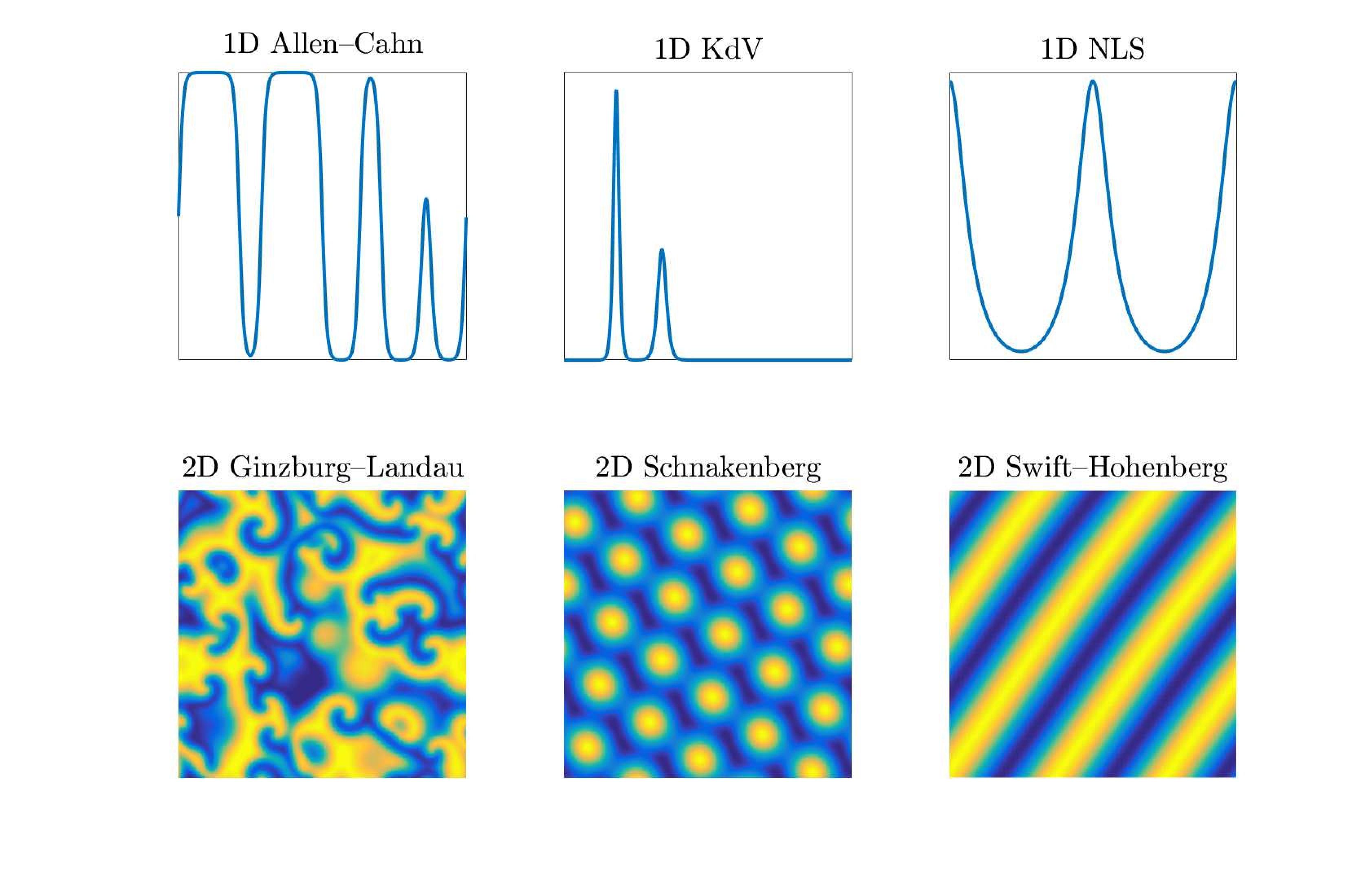
Hadrien Montanelli is a Researcher in applied mathematics at Inria with the IDEFIX team and a Lecturer at École Polytechnique . His work bridges numerical methods, scientific machine learning, and approximation theory, with applications in wave propagation, cell polarization modeling, and quantum computing theory. His research explores: Numerical solutions for stiff PDEs and nonlocal operators Deep ReLU networks' ability to overcome dimensionality challenges Computer-assisted proofs for PDE existence Quantum logic gates and Schrödinger equation implementation Pattern formation on spheres with applications in developmental biology Recent publications focus on SciML (Scientific Machine Learning), nonlocal calculus on spheres, and advanced numerical methods for inverse problems. Collaborations include prominent researchers like Houssem Haddar , Qiang Du , and Stanislav Shvartsman .
Mikolaj Kasprzakمشاهده پروفایل
استادیار
Mikolaj Kasprzak is an Assistant Professor at ESSEC Business School, specializing in mathematical statistics and applied probability. He holds a DPhil (PhD) in Statistics from the University of Oxford, following a Master’s degree in Mathematics, Operational Research, Statistics, and Economics from the University of Warwick. His career includes postdoctoral research at the University of Luxembourg and a Marie Skłodowska-Curie Individual Fellowship (2021–2023), with research stints at MIT and UCL. He joined ESSEC in 2024 as part of the Information Systems, Data Analytics, and Operations department. Research Interests: Mikolaj focuses on rigorously quantifying the accuracy of approximations in applied probability, statistics, and machine learning. His work involves developing mathematical tools to bound distances between probability distributions, with applications in Stein’s method, U-statistics, and stochastic processes. He emphasizes theoretical foundations while addressing real-world challenges in statistical inference and computational methods. Key Contributions: His research spans functional central limit theorems, kernel Stein discrepancies, and validated variational inference. Recent work includes advancements in goodness-of-fit tests for high-dimensional measures and error bounds for Bayesian posterior approximations. Awards: Marie Skłodowska-Curie Fellowship (2021), New Researcher Travel Award (2019), EUTOPIA Young Leaders Academy Fellowship (2024). Grants: Junior Chair of Excellence in Data Analytics (CY Initiative, 2024). Academic Roles: He also holds the Chaired Professorship in Data Science at ESSEC (2024–2028). His research has been published in top journals like Bernoulli , Annals of Applied Probability , and Probability Theory and Related Fields .