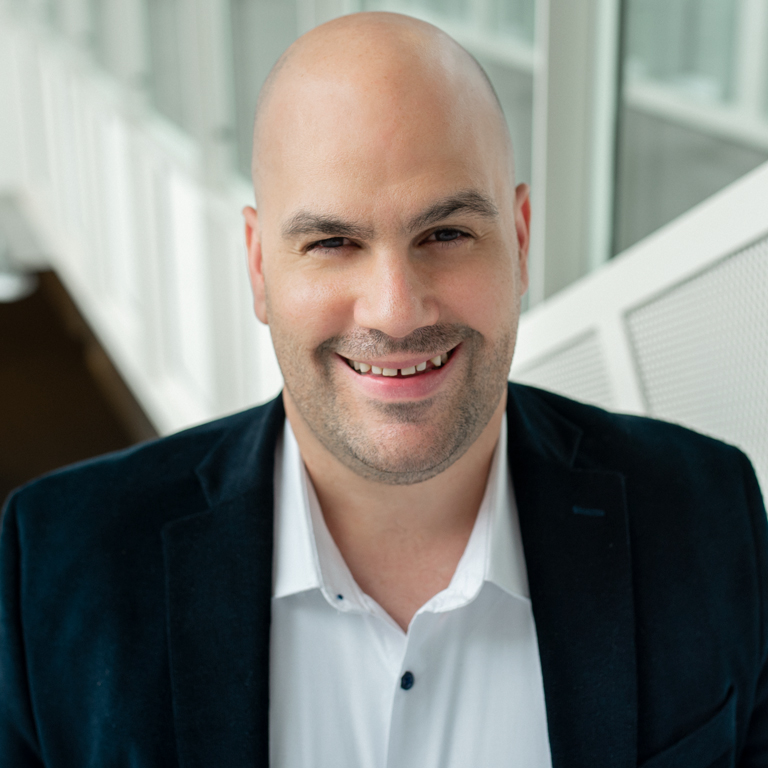
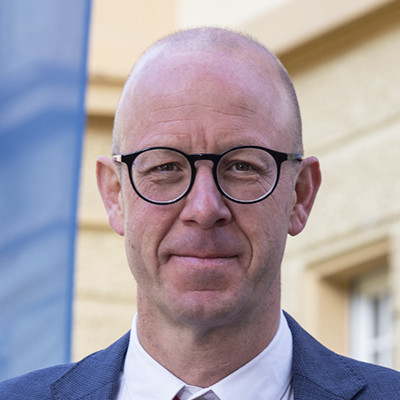
Dr. Piotr Dragon is an Assistant Professor at the Department of Social Psychology, Institute of Psychology, Jagiellonian University , and a member of the Centre for Social Cognitive Studies in Kraków. He holds dual degrees in Psychology (2010) and Sociology (2011) from Jagiellonian University, with a doctorate in Psychology (2015).
Anthony Sanford is an Assistant Professor in the Department of Finance at HEC Montréal. He holds a PhD in Economics from the University of Washington, an MSc in Finance from Seattle University, and a BComm in Finance and Economics from Concordia University. His research focuses on forecasting asset returns using options, portfolio construction methodologies, and understanding firm responses to uncertainty. He collaborates with the Machine Learning in Finance (Fin-ML) CREATE program. Teaching responsibilities include Macro Asset Pricing (PhD), Financial Econometrics (MSc), and Portfolio Management (BBA) at HEC Montréal, alongside prior teaching roles at the University of Maryland and University of Washington in courses like Macroeconomics, Microeconomics, and Computational Finance. His research spans asset pricing, behavioral finance, and econometric modeling. Recent work examines gender dynamics in board changes' market reactions, compares analyst forecasts with option-derived predictions, and explores volatility jumps via Twitter sentiment analysis. His portfolio optimization studies emphasize forward-looking risk metrics and ESG integration. He has advised 2 master's theses and 6 supervised projects on topics such as board gender diversity impacts, robust estimator distortions, climate risk interactions, and neural network portfolio strategies. No scientific awards explicitly listed, though his work has been published in journals like the Journal of Finance and Journal of Corporate Finance. His academic activities include research on R&D capital complementarity effects on corporate investment and methodological contributions to state price density estimation through multivariate Markov chains.
Peter Massopust is a Privatdozent at the Technical University of Munich (TUM), where he is affiliated with the School of Computation, Information and Technology and the Department of Mathematics. His research spans multiple areas of mathematical analysis with a focus on fractal geometry, wavelet theory, and approximation methods. His educational background includes: Habilitation in 2011 from Technical University of Munich Ph.D. in Applied Mathematics from Georgia Institute of Technology (1986) MS in Mathematics from Georgia Institute of Technology (1985) MS in Physics from Georgia Institute of Technology (1981) Dr. Massopust's research interests primarily focus on Wavelets and Frames, Harmonic and Functional Analysis, Fractal Geometry and Fractal Interpolation Theory, and Splines and Approximation Theory. His work bridges theoretical mathematics with practical applications in signal processing, image analysis, and computational methods. His approach often combines classical mathematical techniques with innovative fractal-based methods to solve complex problems in approximation theory and functional analysis. His research has significantly contributed to the development of fractal interpolation functions, complex splines, and wavelet theory, with applications spanning from pure mathematics to engineering problems. His publication record demonstrates a consistent focus on fractal-based mathematical methods, with recent work expanding into quaternionic analysis, complex B-splines, and applications in signal processing. His research shows a clear trajectory from foundational work in fractal geometry to increasingly sophisticated applications in multidimensional signal analysis and computational mathematics. His scientific achievements have been recognized through several prestigious awards: Fulbright Scholarship (1980-1981) GIAN (Global Initiative for Academic Network) Award from the Republic of India (2016, 2017) Dr. Massopust has secured substantial research funding from various national and international sources, including the German Research Foundation (DFG), Bayerische Forschungsallianz, VolkswagenStiftung, and collaborations with Sandia National Laboratories and the National Science Foundation. His research program has consistently focused on advancing mathematical methods for signal and image processing, with particular emphasis on fractal-based approaches and wavelet theory. He has also been instrumental in fostering international collaborations, particularly through the EuroTech network and with institutions in Australia and India. Among his notable contributions is the GHM (Geronimo-Hardin-Massopust) Scaling Vector and DGHM (Donovan-Geronimo-Hardin-Massopust) Multiwavelet, developed at the Georgia Tech Research Institute in 1995. This work has had significant impact in the field of wavelet analysis and its applications.
Claudia Teutschbein is a Senior Lecturer/Associate Professor in Hydrology at Uppsala University's Department of Earth Sciences, where she leads research in the Program for Air, Water and Landscape Sciences. She also serves as a researcher at Uppsala University's Conflicting Objectives Research Nexus (UUniCORN). With over 15 years of teaching and research experience, she has established herself as a leading expert in hydrological processes in changing climates. Her educational background includes: 2022: Docent in Hydrology, Uppsala University 2013: Ph.D. in Physical Geography, Stockholm University, Sweden 2010: Ph.Lic. in Physical Geography, Stockholm University, Sweden 2008: M.Sc. in Soil Science, SLU Uppsala, Sweden 2006: B.Sc. in Water Management, TU Dresden, Germany Dr. Teutschbein's research spans interdisciplinary hydrology with a focus on understanding hydrological processes in changing climates and their connections to meteorological, topographic, and anthropogenic drivers. Her work addresses critical issues of water quantity (including floods and droughts) and water quality across various spatial and temporal scales, with attention to socio-economic consequences. She employs advanced hydrological modeling techniques to assess climate change impacts and develops solutions for sustainable water resource management. Her recent publications demonstrate a strong focus on drought risk assessment, water-energy-food-ecosystem nexus approaches, and hydroclimatic modeling in Nordic and global contexts. She has made significant contributions to understanding drought propagation in high-latitude catchments, stakeholder perceptions of drought hazards, and the integration of data-driven approaches in nexus modeling. Her CAMELS-SE dataset has become an important resource for hydrological research and education across Sweden. Dr. Teutschbein leads and contributes to numerous research projects addressing critical water challenges: 2025-2028: REACTION: Navigating the Risks of Hydroclimatic Extremes for Freshwater Ecosystem Services in Forest Landscapes (PI) 2023-2026: PredPeat: Predicting the effects of peatland rewetting on water retention and water quality (co-applicant, WP-lead) 2022-2026: SWEFE-NEXT: the Swedish Water-Energy-Food-Ecosystem Nexus and its response to hydroclimatic EXTreme events (PI) 2021-2025: NEXOGENESIS: Facilitating the next generation of water-related policies using AI and reinforcement learning (co-applicant, WP lead) 2019-2023: Impacts of recent El-Niño Southern Oscillation (ENSO) on the Water-Food-Energy Nexus in South Asia (PI) Her research bridges academic inquiry with practical applications for sustainable water management, with particular emphasis on climate change adaptation strategies and integrated resource management approaches.
Sarah Goodwin is an academic affiliated with Monash University in Australia, specializing in data visualization, immersive analytics, and human-computer interaction. She holds a PhD in Visualisation for Household Energy Analysis from City University London (2015). Her research focuses on developing innovative visualization techniques for complex data, particularly in energy systems, healthcare, and geographic information. Key contributions include the Australian Cancer Atlas project (2024), which addressed geostatistical uncertainty visualization, and work on mixed-reality technologies embedding human values (2025). She collaborates extensively with researchers like Tim Dwyer and leads the Data Visualisation and Immersive Analytics Research Lab at Monash. Her publications span journals like IEEE Transactions on Visualization and Computer Graphics and conferences such as CHI and IEEE VAST. Research highlights include gaze analytics tools (VETA), tangible immersive systems (Uplift), and energy consumption visualization frameworks.
Isak Samsten is a Senior Lecturer at Stockholm University's Department of Computer and Systems Sciences (DSV), specializing in data science and machine learning. He leads research in temporal machine learning, counterfactual explanations, and interdisciplinary applications in healthcare and environmental science. His work includes developing the wildboar Python module for time series analysis. Current research projects focus on AI for insurance fraud detection and environmental remediation. Samsten is affiliated with the Data Science Research Group, which bridges algorithmic innovation with practical decision-making. He holds an ORCID identifier (0000-0002-3056-6801) and is active in publishing influential papers on topics like time series classification, ESG performance prediction, and clinical decision support systems. Education: Unspecified in text (assumed doctoral degree given academic rank) Affiliations: DSV, Stockholm University; Data Science Research Group Research Interests: Time series analysis, interpretable machine learning, healthcare informatics, environmental sustainability metrics, and AI ethics. Key contributions include shapelet-based classification methods (e.g., Castor algorithm) and counterfactual explanation frameworks (e.g., Glacier system). Grants & Awards: None explicitly listed in provided text. Labs/Teams: Leads the Data Science Research Group, collaborating on projects like AI to detect unclear insurance claims and Toxicity guided inverse design of materials .
Dr. Narcisa Pricope is Professor of Geography and Geospatial Science in the Department of Geosciences at Mississippi State University (MSU) and concurrently serves as Associate Vice President for Research in MSU’s Office of Research and Economic Development. Previously, she spent a decade at the University of North Carolina Wilmington (UNCW) where she founded and directed multiple high-profile programs, including the NSF-funded Coastal UAS Observatory and the USGIF-accredited Geospatial Intelligence certificate. Education PhD in Geography (minor Environmental Engineering), University of Florida, 2011 MSc in Geosciences, Western Kentucky University, 2006 BA in Geography and English, Babeș-Bolyai University, Cluj-Napoca, Romania, 2004 Research Interests Dr. Pricope is a land-systems scientist who integrates geospatial modelling, remote sensing, and unoccupied aerial systems (UAS) to investigate complex socio-ecological interactions at the food-water-energy nexus. Her work emphasizes understanding environmental variability and human vulnerability to land degradation, drought, and climate change, with a strong commitment to community-engaged research across dryland regions in eastern and southern Africa, Peru, Nepal, and coastal/inland North America. Key methodological thrusts include: Advanced machine-learning and geostatistical analytics Multi-scale remote sensing (satellite, airborne, UAS) Topobathymetric LiDAR for coastal and inland water management GeoAI and geospatial intelligence capacity building Research Trends from Recent Publications Across more than 50 peer-reviewed articles, Dr. Pricope’s recent work demonstrates a pronounced focus on global drying trends, precision mapping of coastal and inland ecosystems, and the deployment of machine-learning techniques to tackle environmental challenges such as salinity intrusion, vegetation classification, and heavy-metal contamination. A strong policy-oriented thread is evident, with several 2024–2025 publications calling for urgent adaptive solutions to aridification and integrating climate policy with disaster planning. Scientific Awards 2022 UNCW Graduate Faculty Mentor Award 2022 Discere Aude Mentorship Award 2021 UNCW College of Arts and Sciences Research Award Grants & Strategic Initiatives Dr. Pricope has secured funding from NSF, NASA, NOAA Sea Grant, USAID, World Bank, Global Environment Facility, NCDOT and NGA, among others. At MSU she leads strategic initiatives in climate resilience, GeoAI programming, and university-wide research support. Laboratories & Teams She previously directed the NSF-funded UNCW Coastal UAS Observatory and oversaw the FAA Collegiate Training Initiative in UAS, positioning UNCW as a national hub for geospatial intelligence education and research. At MSU, she continues to foster interdisciplinary collaboration across geosciences, engineering, and social sciences.
Jennifer Field is a Professor in the Environmental and Molecular Toxicology Department at Oregon State University’s College of Agricultural Sciences. Her research focuses on the development and application of quantitative analytical methods for organic micropollutants and their transformation products in natural/engineered systems, with pioneering work on PFAS occurrence and behavior. She has served as Executive and Associate Editor for Environmental Science & Technology (2008–2023). Her work addresses PFAS in groundwater, wastewater, landfills, and specialized materials. Notable contributions include PFAS fingerprinting, landfill gas characterization, and biomimetic chromatography for bioaccumulation assessment. Education: Ph.D. in Geochemistry from Colorado School of Mines. Current projects involve forensic source allocation of PFAS, PFAS behavior in engineered systems, and thermal degradation studies. Awards include the 2023 Agilent Thought Leader Award for PFAS research. Collaborations with Drs. Patrick Reardon and Gerrad Jones leverage advanced statistical and analytical methods. Research interests span PFAS toxicity, environmental fate, and remediation. Her lab employs LC/GC-HRMS and NMR for PFAS analysis. Key grants include multiple SERDP projects (e.g., ER-4250, ER-1375) addressing PFAS behavior, forensics, and mitigation strategies. Publications emphasize PFAS in environmental matrices, ecotoxicity, and analytical method development. The lab’s recent work highlights PFAS enrichment in surface microlayers, vapor-phase emissions from materials, and developmental toxicity in zebrafish.
Roberto Ghiselli Ricci is a Full Professor at Ca' Foscari University of Venice, affiliated with the Department of Environmental Sciences, Informatics and Statistics. His academic career includes extensive teaching and research in mathematical statistics and probability, with a focus on copula theory, aggregation functions, and econometric applications. He currently teaches courses such as Calculus, Linear Algebra, and Mathematics for Environmental Sciences. His research explores advanced topics in probability theory, including copula properties, fixed-point theorems, and axiomatic characterizations of mobility measures. Recent publications highlight contributions to fuzzy set theory, optimization penalties, and financial securities modeling. His work bridges mathematical rigor with practical applications in economics and environmental policy analysis. Publications trends emphasize interdisciplinary approaches, with notable contributions to Fuzzy Sets and Systems , International Journal of Game Theory , and Social Choice and Welfare . He actively participates in academic activities through courses, research collaborations, and advisory roles within his department.
Angelo Mazza is a Full Professor of Demography at the Department of Economics and Business, University of Catania, Italy. His research focuses on spatial demography, migrations, mortality, and the application of computational statistical methods, including GIS and spatial analysis. Mazza earned his Ph.D. from the University of Catania in 2000 and a cum laude degree in Economics and Business in 1997. His work spans several key areas: analyzing residential segregation patterns of immigrants using spatial statistics, developing R packages for statistical modeling (e.g., flexCWM, DBKGrad), and investigating migration dynamics in urban contexts such as Catania and Naples. Recent studies include exploring vaccination sentiment on social media and fine-scale spatial data modeling of migrant settlements in Europe. Mazza's contributions to statistical methodologies, including bias correction in demographic indices and cluster-weighted models, have been published in top journals like Journal of Statistical Software and Spatial Demography . His interdisciplinary research bridges demography, economics, and computer science, with applications in public health and urban policy. Education : Ph.D., University of Catania, 2000 Laurea cum laude in Economics and Business, 1997 Key Research Themes : Spatial demography and GIS applications Migrant settlement patterns and segregation Statistical modeling of demographic data Public health and vaccination trends Notable Contributions : Developed R packages: KernSmoothIRT, DBKGrad, SDD, flexCWM, ContaminatedMixt Leading studies on segregation bias correction and cluster-weighted modeling
George Chen is an Assistant Professor of Information Systems at Carnegie Mellon University's Heinz College and an affiliated faculty member of the Machine Learning Department. His research focuses on machine learning applications in healthcare and developing countries, particularly in time series analysis and forecasting. He holds a PhD in Electrical Engineering and Computer Science from MIT, where he received the George Sprowls Award for his thesis on nonparametric methods. He also advises the AgriTech startup CoolCrop, providing farmers in India with market forecasts and cold storage solutions. Education: PhD, Electrical Engineering and Computer Science, MIT (2015) SM, Electrical Engineering and Computer Science, MIT (2012) BS, Electrical Engineering and Computer Sciences & Engineering Mathematics and Statistics, UC Berkeley (2010) Research: Chen develops nonparametric machine learning methods for healthcare (e.g., predicting patient outcomes) and agricultural forecasting (e.g., crop pricing for farmers). His work emphasizes interpretable models and statistical guarantees. He recently authored a monograph on deep learning for survival analysis and co-organized the 2023 AAAI Survival Analysis Symposium. Awards: NSF Fellowship, NDSEG Fellowship, Siebel Scholarship (PhD) MIT Goodwin Medal (2015, top teaching award) George Sprowls Award for Best Computer Science Thesis (MIT) Teaching: Teaches courses on unstructured data analytics at CMU, including graduate-level machine learning and time series analysis. Previously taught at MIT and UC Berkeley, winning teaching awards at both institutions. Professional Service: Area chair for ICML, NeurIPS, and MLHC (2025). Active in organizing conferences and workshops related to survival analysis and healthcare ML. Labs/Teams: Leads research collaborations in healthcare analytics and developing-world technology through the Heinz College and CMU's Machine Learning Department.
Professor Vincent Wade is a prominent academic and co-founder of the ADAPT SFI Research Centre, holding the Professorial Chair of Computer Science (established 1990) and a Personal Chair in Artificial Intelligence at Trinity College Dublin's School of Computer Science and Statistics. He co-directs the DREAL Centre for Research Training and leads ADAPT, a globally recognized centre for digital media technology and AI research. His work spans intelligent systems, personalisation, machine learning, and ethical AI applications in healthcare and education. Research interests include AI-driven personalisation, multimodal interaction, knowledge graphs, and ethical considerations in digital technologies. He has published over 350 peer-reviewed papers, earned the prestigious Provost Innovation Award (2018), and holds patents in personalisation technologies. He co-founded EmpowerTheUser, a TCD spin-out focused on simulation-based learning analytics. Major Achievements: 2018 Provost Innovation Award (Trinity College Dublin) 2010 European Language Label Award Fellow of Trinity College Dublin Over 350 scientific publications Key Contributions: Developed the ADELE corpus for social conversation analysis Pioneered cross-site personalisation frameworks Advanced adaptive e-learning systems through platforms like Slicepedia and AMASE His research bridges technical innovation with societal impact, addressing challenges in healthcare, education, and digital ethics.
Steve E. Rigdon is a Professor in the Department of Epidemiology and Biostatistics at the College for Public Health and Social Justice, Saint Louis University. His expertise lies in statistical inference, biosurveillance, and reliability modeling. Education: Ph.D. in Statistics, University of Missouri-Columbia M.A., University of Missouri-St. Louis B.A., University of Missouri-St. Louis Dr. Rigdon's research focuses on biosurveillance , election prediction models , quality engineering , and survival analysis . He has made significant contributions to the statistical modeling of repairable systems and optical experimental design. His work bridges theoretical statistics with real-world public health and engineering applications. His publications appear in top-tier journals including Technometrics , Journal of Quality Technology , and Quality Engineering . He is also the author of influential textbooks such as Calculus (8th and 9th editions) and Statistical Methods for the Reliability of Repairable Systems . His election prediction models were featured in the Wall Street Journal and local media in 2008. Research Funding: National Science Foundation (NSF) grant for research on optical experimental design, in collaboration with Arizona State University. Dr. Rigdon teaches Bayesian Statistics and the Capstone in Biostatistics , mentoring students in advanced statistical applications. He is active in research dissemination through platforms like ResearchGate. His office is located at Wool Center, Second Floor, Room 276H, 3545 Lindell Blvd., St. Louis, MO 63103.
David Strütt is a Swiss mathematician affiliated with École Polytechnique Fédérale de Lausanne (EPFL) as a Part-Time Lecturer in the Mathematics Section (SMA-GE) and Teaching Support roles. He has been active in academic and teaching support since 2008. Bachelor (2012) and Master (2013) in Mathematics from EPFL Doctorate (2018) under Prof. B. Dacorogna at EPFL Post-Doc (2018-2019) at EPFL Current roles: Teaching Support for Analysis courses and Communication Officer for MATH His research focuses on differential equations, vector analysis, and nonlinear mathematical problems. He has contributed to educational materials in analysis and holds a self-proclaimed Swiss record for binary adder construction using dominoes. 2018 publication in Differential and Integral Equations 2024 submitted work on tensor equations He coordinates teaching assistants for analysis courses and is involved in educational outreach through the Propedeutic Centre at EPFL.
Alex Weissensteiner is a Full Professor of Quantitative Finance and Rector at the Free University of Bozen-Bolzano (unibz). He previously held academic positions at Leopold Franzens University in Innsbruck, the University of Liechtenstein, and served as Professor of Financial Engineering at the Technical University of Denmark from 2013–2015. At unibz, he held leadership roles including Director of the Bachelor's Degree in Economics and Management (2015–2020) and Pro-Rector for Studies (2020–2024) before becoming Rector in 2024. His research focuses on Life-cycle asset allocation Parameter uncertainty in financial models Scenario generation for investment decisions Asset-liability management Market microstructure dynamics Information economics in financial markets Recent publications emphasize portfolio optimization under uncertainty, option-implied risk analysis, and agricultural risk management. His work combines theoretical finance with empirical validation, often applying quantitative methods to banking, insurance, and pension systems. Scientific recognition includes EU grants for "Understanding Pensions in Europe" (2016) and "Understanding Saving in Europe" (2019) Regular contributions to leading journals like Journal of Banking & Finance and Quantitative Finance Invited presentations at major finance conferences (Jackson Hole, AFA, DGF) As Rector, he maintains active research collaborations with scholars including Mogens Steffensen (University of Copenhagen), N. Branger, T. Dangl, and L. Garlappi. He serves on the editorial board of Risks journal and has consulted for provincial education policy bodies.