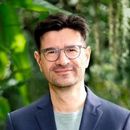
Ulisse Gomarasca is a doctoral researcher at the Max Planck Institute for Biogeochemistry's Department Biogeochemical Integration, affiliated with the International Max Planck Research School for Global Biogeochemical Cycles (IMPRS-gBGC). He works within the Global Diagnostic Modelling group and Ecosystem Function from Earth Observation project team, focusing on understanding ecosystem functioning through eddy covariance fluxes and biodiversity links. Education: Master's in Ecology and Biodiversity from University of Innsbruck Research: Spatiotemporal dynamics of ecosystem functioning, Sun-Induced Chlorophyll Fluorescence, drought legacy effects on productivity Methodologies: Remote sensing integration with eddy covariance networks, biodiversity-ecosystem function analysis His publications address terrestrial ecosystem responses to climate extremes, scaling of plant traits to ecosystem level, and development of remote sensing tools like the Biodiversity Observing System Simulation Experiment (BOSSE). This work combines satellite observations with ground-based flux measurements to understand global biogeochemical patterns. Contact: ugomar@bgc-jena.mpg.de
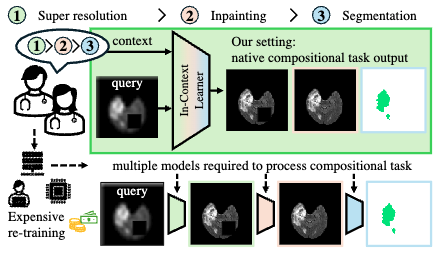
Prof. Dr. Erik Rodner is a faculty member at the University of Applied Sciences Berlin (HTW Berlin), where he serves as a Professor for Machine Learning and Data Science. He also contributes to the School of Engineering Sciences - Technology and Life. His research spans computer vision, machine learning, and biomedical applications, with a focus on learning with limited data, robust visual recognition models, and medical image analysis. He has developed innovative methods for medical diagnostics, industrial classification, and anomaly detection. Recent publications (2025-2016) highlight his expertise in visual in-context learning, semi-weakly segmentation, and active learning frameworks. He has collaborated with institutions such as ZEISS Group, Friedrich Schiller University Jena, and UC Berkeley. Scientific Awards: Award for Excellent Teaching (2023)
Max Fathi is a Professor of Mathematics at Université Paris Cité, affiliated with the Laboratoire Jacques-Louis Lions (LJLL) and Laboratoire de Probabilités, Statistique et Modélisation (LPSM). He concurrently holds a part-time teaching position at the Department of Mathematics and Applications (DMA) at École Normale Supérieure (ENS). Since 2023, he has been a member of the Institut Universitaire de France (IUF), a prestigious national research fellowship in France. He completed his PhD in 2013 at Université Pierre et Marie Curie under Cédric Villani, followed by a postdoctoral position at the University of California, Berkeley with Lawrence C. Evans and Fraydoun Rezakhanlou. Previously, he was a CNRS researcher at the Institut de Mathématiques de Toulouse before joining Université Paris Cité. His habilitation thesis (2019) focuses on optimal transport applications in analysis and probability. Fathi's research centers on optimal transport theory, particularly its applications to analysis, probability, and statistical physics. Key topics include interacting particle systems, functional inequalities (e.g., Poincaré, log-Sobolev), high-dimensional phenomena, Ricci curvature in discrete/continuous spaces, Stein's method, concentration of measure, and numerical methods for stochastic dynamics. His work is supported by the ANR project 'Conviviality.' He has delivered courses on functional analysis at ENS and participated in summer schools, including an MSRI course on functional inequalities and localization techniques. His teaching materials include lecture notes on optimal transport and stochastic processes. His contributions have been recognized through awards such as the IUF membership. Notable research collaborations include work with Thomas Courtade, Matthias Erbar, and Gabriel Stoltz on topics ranging from stability estimates of inequalities to hypocoercivity and numerical analysis of stochastic systems.
Prof. Dr. Steffi Pohl holds the Chair of Methods and Evaluation/Quality Assurance at the Faculty of Education and Psychology, Freie Universität Berlin since 2019. Previously, she was a Junior Professor (2013-2019) and researcher at institutions including Friedrich-Schiller University Jena and University of Bamberg. She earned her PhD in Psychometrics from Friedrich-Schiller University Jena (2010) and holds a Diplom in Psychology (2004) from Freie Universität Berlin. Her research focuses on advanced statistical methods in educational and psychological testing, including response time modeling, missing data mechanisms, and causal inference in assessment. She has pioneered work on test engagement detection via response patterns and log数据分析. Awards include the 2020 Psychometric Society Early Career Award and 2011 Gustav A. Lienert Dissertation Prize. Pohl serves on editorial boards of Psychometrika , Journal of Educational and Behavioral Statistics , and Zeitschrift für Psychologie . She chairs the Berlin School of Mind and Brain faculty and holds governance roles in academic senates. Her research projects include the National Educational Panel Study (NEPS) and collaborations on test design innovations. Current teaching includes advanced courses in empirical research methods, multivariate statistics, and educational measurement. She actively develops methodologies for analyzing log数据 from digital testing platforms and improving assessment reliability in large-scale studies.
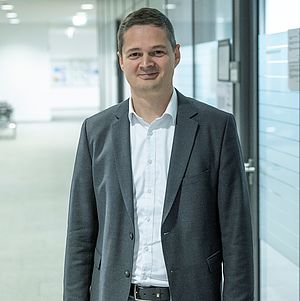
Christoph Heinzl is a Professor of Cognitive Sensor Systems at the University of Passau since September 2022. He leads the Knowledge-based Image Processing research group at the Fraunhofer Development Center X-ray Technology (EZRT) . His academic background includes a PhD in Informatics and a Habilitation in 2022 , both from TU Wien . Research Focus: Scientific visualization, visual analytics, immersive analytics, virtual/augmented reality, machine learning, and X-ray computed tomography (XCT). Key Trends: Development of novel visualization techniques for complex volumetric data (e.g., dynamic volume lines, visual coherence frameworks), parameter space analysis, and cross-virtuality collaboration tools. Applications: Aerospace component inspection, defect analysis in composites (CFRP, GFRP), porosity quantification, and 4DCT time-series exploration.
Miguel Mahecha is Professor of Environmental Data Science and Remote Sensing at the University of Leipzig, where he serves as Institute Head of the Institute for Earth System Science and Remote Sensing. He is also affiliated with the Remote Sensing Centre for Earth System Research, a collaboration between Leipzig University and the Helmholtz Centre for Environmental Research (UFZ). Mahecha is a member of the German Centre for Integrative Biodiversity Research (iDiv) and serves as Principal Investigator in the Centre for Scalable Data Analytics and Artificial Intelligence. Additionally, he is a Fellow of the European Laboratory for Learning and Intelligent Systems and co-spokesperson for the National Research Data Infrastructure for Earth System Sciences (NFDI4Earth). Full Professor for Modelling Approaches in Remote Sensing, University of Leipzig (since 03/2020) Research Group Leader: Empirical Inference in the Earth System, Max Planck Institute for Biogeochemistry, Jena (12/2012 - 03/2020) PostDoc, Max Planck Institute for Biogeochemistry, Jena (10/2009 - 11/2012) PhD in Environmental Sciences, ETH Zürich (06/2006 - 09/2009) Diploma in Geoecology, Bayreuth University (10/2000 - 04/2006) Mahecha's research focuses on understanding ecosystem responses to climate extremes and human-environment relationships during these events. He investigates macro-ecological dynamics and ecosystem functioning using data-driven methods and high-dimensional Earth observations. A key contribution is his co-development of the Earth System Data Cube concept, which integrates empirical methods with theoretical understanding to analyze complex Earth system interactions. His work spans biogeography, ecosystem functioning, and advanced data science methodologies for environmental monitoring. His recent publications demonstrate a strong emphasis on analyzing compound climate extremes, particularly heatwaves and droughts, and their impacts on ecosystems. Mahecha has pioneered methods using Earth System Data Cubes to integrate diverse environmental datasets, enabling novel insights into biosphere-atmosphere interactions. His research increasingly incorporates artificial intelligence and machine learning approaches to understand spatiotemporal patterns in ecological systems, with applications in real-time forest monitoring and biodiversity assessment. Fellow of the European Laboratory for Learning and Intelligent Systems Co-spokesperson for NFDI4Earth (National Research Data Infrastructure for Earth System Sciences) Mahecha leads multiple significant research projects including Digital Forest (real-time forest monitoring), NFDI4BioDiversity, and XAIDA (extreme events: AI for Detection and Attribution). His work receives funding from diverse sources including EU, DFG, and Stiftungen Inland. He collaborates extensively with the German Centre for Integrative Biodiversity Research (iDiv) and the Centre for Scalable Data Analytics and Artificial Intelligence. His research group, Earth System Data Science (ESDS), focuses on developing methods to extract valuable information from long-term environmental observations to understand coupled Earth system dynamics. At the Remote Sensing Centre for Earth System Research, Mahecha's ESDS group investigates how ecosystem functions respond to climate extremes, societal vulnerability to environmental hazards, and nonlinear interactions in coupled Earth systems. The group leverages citizen science data, remote sensing observations, and advanced computational methods to address pressing environmental questions.
Núria Agell Jané is a Full Professor at ESADE Business School , Universitat Ramon Llull, specializing in Artificial Intelligence and Decision-Making Systems. She leads the JUICE (Judgements and Decisions in the Market Place) research group and the ESADE D3 - Institute for Data-Driven Decisions . Doctorate in Applied Mathematics (Qualitative Reasoning Modelling), UPC-BarcelonaTech Bachelor's in Mathematics, University of Barcelona Her research focuses on Artificial Intelligence , Decision-Making Systems , and Fuzzy Logic , with applications in Business, Marketing, and Sustainability. Recent publications emphasize Hesitant Fuzzy Linguistic Term Sets , Consensus Modeling , and AI in Sustainable Development . She coordinates multiple publicly and privately funded projects applying AI to Business and Marketing challenges. As PhD Programme Director (2005-2013) and current Department Director of Operations, Innovation and Data Sciences , she has shaped academic and research strategies at ESADE. Her work spans collaborations with institutions like LAAS-CNRS (France) and University of Edinburgh Business School , with over 40 journal publications and 50 conference contributions. She has directly supervised 11 PhD students in AI and Decision Sciences.
Enno Mammen is a Professor of Mathematical Statistics at Heidelberg University, leading the Institute for Applied Mathematics. His career includes roles as Chair for Mathematical Statistics at Heidelberg (2014–present), Chair for Statistics at the University of Mannheim (2003–2014), and various academic positions since 1986. He holds a PhD (1983) and habilitation (1992) from Heidelberg University. Research interests focus on nonparametric statistics, bootstrap methods, additive models, high-dimensional data, and statistical theory. Key contributions include foundational work on the wild bootstrap, penalized nonparametric estimators, and nonparametric diffusion models. He has authored over 150 papers in top journals like the Annals of Statistics and Biometrika. Current research spans Hawkes processes, neural network statistics, and non-Euclidean data analysis. He has supervised 12 PhD students since 2010, with many progressing to academic roles. Awards include the Heinz Maier Leibnitz Prize (1989) and IMS Fellowship (1998). Active in editorial roles for journals like the Annals of Statistics and Bernoulli. Major funding includes leadership of the DFG-funded Research Training Group 'Statistical Modeling of Complex Systems' (2013–2022) and collaborations with Russian institutions on stochastic differential equations.
Paul J. Kennedy is a Professor at the University of Technology Sydney's Centre for Artificial Intelligence. He holds a PhD from the same institution (1999). His research focuses on machine learning applications in healthcare, bioinformatics, medical imaging, and data mining. Key areas include developing algorithms for genomic data analysis, healthcare pathway modeling, and edge-cloud frameworks for omics data. Education: PhD in Artificial Intelligence (1999, UTS). Research interests span machine learning, health informatics, and data compression. Notable work includes studies on administrative health records, lung nodule detection, and virtual reality-based cancer cohort analysis. He has co-authored over 100 publications across journals like BMC Bioinformatics, IEEE Transactions, and Artificial Intelligence in Medicine. Advising: Collaborates extensively with students/researchers but no explicit student list provided. Grants and labs: Active in interdisciplinary projects involving medical and computational teams, though specific grants are not detailed here.
Pramita Bagchi is an Assistant Professor in the Department of Biostatistics & Bioinformatics at The George Washington University (GWU), affiliated with the Milken School of Public Health. She holds a Ph.D. in Statistics from the University of Michigan and completed a postdoctoral fellowship at Ruhr Universitat Bochum in Germany. Her research focuses on developing statistical methodologies for analyzing dependent data, particularly in high-dimensional and functional contexts such as time series, spatial data, and functional observations. Education: Ph.D. in Statistics, University of Michigan, Ann Arbor Postdoctoral Research, Department of Mathematics, Ruhr Universitat Bochum Research Interests: Functional Data Analysis Spatiotemporal Modeling High-Dimensional Data Non-Parametric Inference Healthcare Applications Methodological Development for Biomedical Data Publications span statistical theory (e.g., functional time series analysis) and applied health research (e.g., heart transplant biomarkers, acculturation effects in immigrant health). Recent work emphasizes methodological innovations for complex data structures, blending theoretical rigor with real-world applications in cardiology and epidemiology. Grants & Collaborations: NSF Grant: "Empirical Frequency Band Analysis for Functional Time Series" (2022–2025) INOVA Hospital Grant: "Clinical Data Analytics in Cardiac Transplantation" (2020–2023) Teaching includes advanced courses like Mathematical Statistics I (STAT 872), reflecting her expertise in statistical theory and methodology.
Lionel Truquet is a Lecturer-Researcher in Statistics and Director of Research at ENSAI (École Nationale de la Statistique et de l'Analyse de l'Information). His research focuses on advanced statistical methodologies, including time series analysis, Markov chains, and ecological data modeling. He has contributed to multivariate autoregressive binary models, compact space time series models, and nonstationary count processes. Research Interests: His work emphasizes statistical theory applied to dependent data, with a strong focus on ecological applications. Key areas include ergodic properties of Markov chains, mixing properties of time series, and modeling presence-absence data. His methods address challenges in high-dimensional and nonstationary environments. Publications: Recent work includes influential contributions such as the TJALLING C. KOOPMANS ECONOMETRIC THEORY PRIZE-winning paper on iterations of dependent random maps. His publications span top journals like Bernoulli, the Annals of Applied Probability, and the Journal of Time Series Analysis, reflecting his expertise in both theoretical and applied statistics. Teaching: He teaches advanced courses such as Asymptotic Statistics and Dependence at the M2 level, reflecting his commitment to training future statisticians in cutting-edge methodologies.
Prof. Dr. Julia Rieck is a Full Professor of Business Administration at the University of Hildesheim , leading the Department of Business Administration and Operations Research within the Faculty of Mathematics, Natural Sciences, Economics and Computer Science. As Dean of the Faculty , she oversees academic programs, quality management, and research initiatives. Her roles include academic advising for the Business Information Systems (B.Sc./M.Sc.) programs and active participation in examination boards and quality committees. Education: PhD in Political Science (Dr. rer. pol.) with summa cum laude (2008), Habilitation at Clausthal University of Technology (2014), and studies in Business Mathematics (Diploma, University of Hamburg, 2003) and Mathematics (Georg-August-University Göttingen, 2000). Research: Focuses on Operations Research , Supply Chain Management , Project Planning , and Logistics . Her work integrates mathematical modeling , machine learning , and real-world applications , particularly in disaster response , dynamic transportation , and sustainable e-commerce . Projects: Leads third-party funded initiatives like "IT für die sorgende Gesellschaft" (AI in healthcare/social sectors) and contributes to the HULLS real-lab (AI in aging societies). Collaborates with regional companies (e.g., Youco, ADITUS) and institutions (HAWK, University of Hannover). Teaching: Emphasizes practical application through case studies, industry partnerships, and the IT-Speed Dating event for student-company connections. Her courses cover project resource planning , logistics , and digital transformation . Labs & Teams: Active in the Institute of Business Administration & Business Information Systems , contributing to the KET Kompetenzwerkstatt (entrepreneurship support) and interdisciplinary teams in AI and sustainability research.
Markus Lange-Hegermann serves as Professor of Mathematics and Data Science at Ostwestfalen-Lippe University of Applied Sciences (TH OWL) since 2018 and holds a board position at the Institute for Industrial Information Technology (inIT). His career bridges academic research and industrial applications, with expertise in translating machine learning theory into practical engineering solutions for automation and manufacturing sectors. His educational foundation includes a Diplom (Master equivalent) in Computer Mathematics from RWTH Aachen University (2004-2008) followed by a Dr. rer. nat. (PhD equivalent) in algorithmic differential algebra (2008-2014). Prior to academia, he gained industry experience at FEV GmbH as an R&D engineer (2014-2017) and P3 automotive GmbH as a Data Science Consultant (2017-2018). Lange-Hegermann's research centers on probabilistic machine learning with distinctive emphasis on physics-informed approaches. He develops Gaussian process methodologies that incorporate differential equations to model time dependencies, uncertainties, and physical constraints in industrial systems. His work enables robust data-based modeling and optimization for cyber-physical systems, with applications spanning predictive maintenance, process control, and quality assurance in manufacturing. Analysis of his 15 most recent publications (2024-2025) reveals consistent innovation in physics-integrated machine learning, particularly using Gaussian processes to solve partial differential equations and optimal control problems. The research demonstrates strong industrial applicability across domains including medical imaging, material science, automotive engineering, and brewing processes, with recurring themes of anomaly detection in time-series data and uncertainty-aware decision making. His scientific contributions have earned significant recognition: Forschungspreis TH OWL (2024) Top reviewer award at NeurIPS (2023) Outstanding reviewer award at NeurIPS (2021) Best poster award at Bosch AI CON (2019) Borchers Plakette for outstanding dissertation (2014) Springorum Denkmünze for outstanding diploma (2009) As chairman of the Data Science study program and vice chairman of undergraduate examination boards, Lange-Hegermann actively shapes academic curricula while supervising graduate theses. His governance roles include serving on professorship search committees at multiple institutions and contributing to examination regulations. He maintains active research funding through collaborations with industrial partners and reviews proposals for initiatives like It's OWL and 3IA Côte d’Azur. Lange-Hegermann leads the Mathematics and Data Sciences research group within inIT, fostering collaboration between theoretical machine learning and industrial automation. He co-founded AICOmmunityOWL and the Informatics Europe working group on Data Analysis and Reporting, while organizing machine learning reading groups and data science hackathons to bridge academic research with industrial problem-solving.
Claire Vernade is a Group Leader at the University of Tübingen in the Cluster of Excellence Machine Learning for Science. She leads an active research group focused on theoretical aspects of sequential decision making, with particular expertise in bandit problems and reinforcement learning theory. Her work bridges theoretical foundations with practical applications in scientific discovery. Her research interests span sequential decision making, bandit problems, theoretical Reinforcement Learning, Learning Theory, and principled learning algorithms. She has made significant contributions to understanding non-stationary environments, lifelong learning frameworks, and the theoretical foundations of bandit algorithms. Her work on "Eigengame: PCA as a Nash Equilibrium" received an Outstanding Paper Award at ICLR 2021. Dr. Vernade has been awarded prestigious grants including an Emmy Noether award (2022) for her FoLiReL project and an ERC Starting Grant (2024) for her ConSequentIAL project. Her current ERC project explores the role of Reinforcement Learning in developing Continual Learning agents, with applications to scientific domains like drug discovery and micro-chemistry. Emmy Noether award under the AI Initiative call (2022) ERC Starting Grant (2024) Outstanding Paper Award at ICLR 2021 She currently supervises three PhD students and actively recruits postdocs and PhD candidates through the IMPRS-IS and ELLIS doctoral programs. Her group collaborates extensively with the broader machine learning community, organizing workshops like FoRLaC at ICML 2024 and serving as co-chairs for tutorials at major conferences. Dr. Vernade is also deeply committed to diversity and inclusion in machine learning, co-leading initiatives like Women in Learning Theory and Tübingen Women in Machine Learning.
Oliver Deussen is a Professor of Visual Computing at the University of Konstanz, recognized by the German Informatics Society (GSI) as a Fellow for his contributions to computer science. His research focuses on visualization, robotics, and environmental modeling, particularly in plant and landscape representation. He has pioneered methods in image manipulation and robotic painting, emphasizing digitalization's societal impacts. His work spans computational biology (e.g., schooling fish behavior) and AI-driven creative technologies. Research Interests: Visualization techniques, swarm behavior analysis, robotic creativity, and interdisciplinary applications of computer science. He explores how computational methods can model natural systems and enhance human-machine interaction. Awards: Fellow of the German Informatics Society (GSI) His research often bridges theory and practice, with contributions to SLAM frameworks, style transfer algorithms, and uncertainty visualization tools. Collaborations in robotics and biology reflect his commitment to applied computational research.