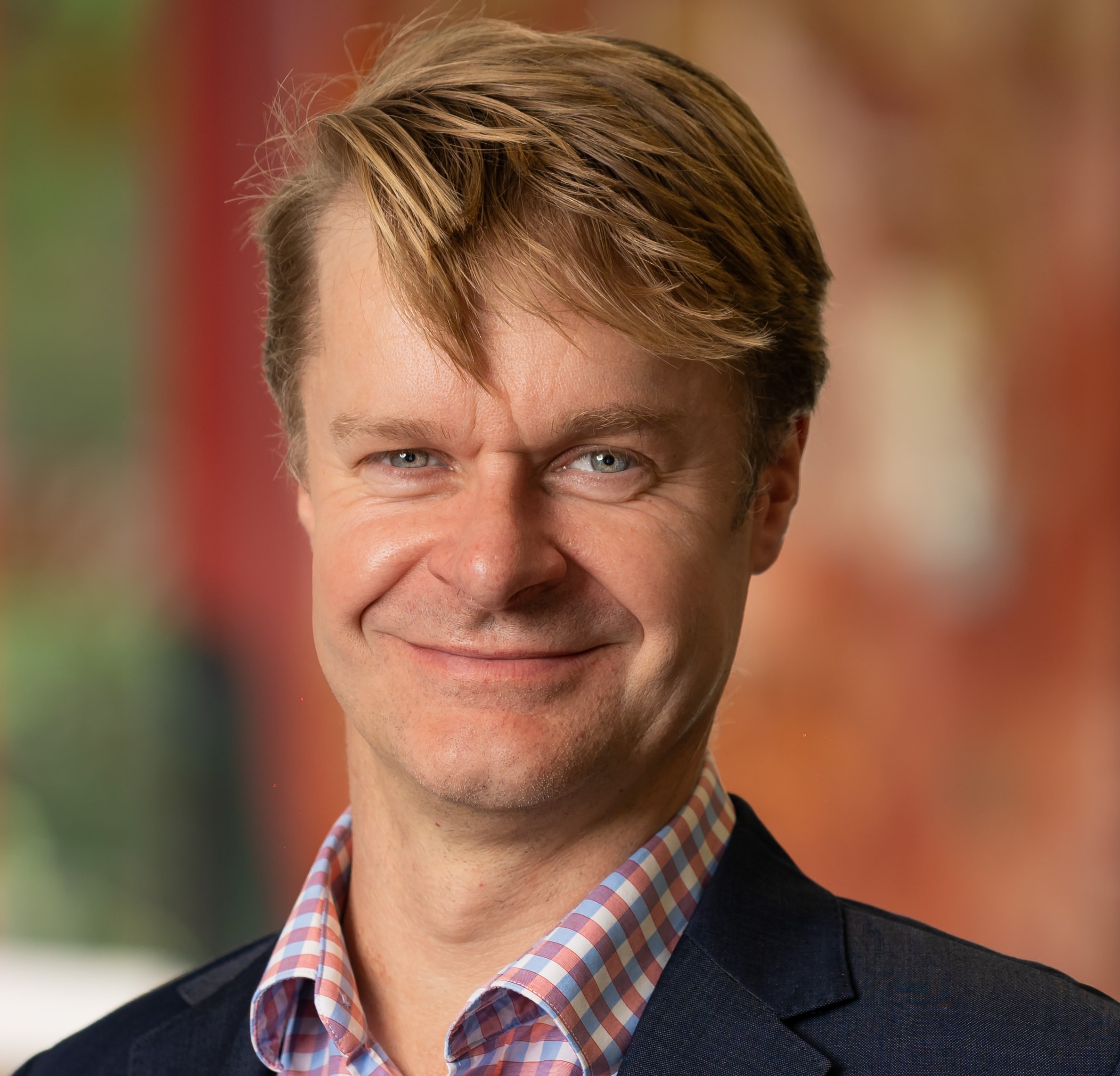
Dr. Jakub Stoklosa is a Senior Lecturer at the School of Mathematics & Statistics, University of New South Wales. He holds a PhD in Applied Statistics (2012) and a BSc (Hons) in Science (2007) from The University of Melbourne. PhD in Applied Statistics, The University of Melbourne (2012) BSc (Hons) in Science, The University of Melbourne (2007) His research focuses include: Analysis of capture-recapture data Estimation of animal abundance Measurement error modeling Model selection for multivariate data Non-parametric smoothing Recent publications emphasize statistical applications in ecology, biodiversity, and environmental science, with methodological contributions to error-in-variables regression and zero-truncated models. Scientific awards: 2018 Australian Museum Eureka Prize top 3 finalist (Burramys Genetic Rescue Team) NSW Office of Environment and Heritage Eureka Prize for Environmental Research (2018) Grants: ARC Discovery Project Grant DP210101923 (2021–2023) for "Innovative statistical methods for analysing high-dimensional counts" with D.I. Warton
Boris Beranger is a Senior Lecturer in Statistics and Data Science at the School of Mathematics and Statistics, UNSW Sydney . He is also a member of the UNSW Data Science Hub (uDASH) and previously served as an Associate Investigator at the ARC Centre of Excellence for Mathematical and Statistical Frontiers (ACEMS) . His research spans theoretical and applied statistics, focusing on Extreme Value Theory (environmental, financial, and insurance applications) and Symbolic Data Analysis (complex/non-standard data structures). Education: PhD in Statistics (Université Pierre and Marie Curie & UNSW, 2016), MSc in Mathematics (Université Pierre and Marie Curie, 2011) Research Trends are evident in: High-dimensional extremal dependence modeling (ExtremalDep package) Spatial extremes and max-stable processes Symbolic/histogram/interval-valued data analysis Composite likelihood and aggregated data methods Tail density estimation via kernel methods Scientific Awards & Grants include: J.B. Douglas Award for Postgraduate Excellence (2014) Multiple ARC ACEMS Research Support Schemes Discovery Project DP220103269 ($405,000) for modeling real-world extremes Supervision covers PhD, Masters, and Honours students in areas like Symbolic Data Analysis, Spatial Extremes, and Statistical Computing. He also co-organized workshops and served as Vice-President (2025-26) of the Statistical Society of Australia's NSW Branch.
Dr. Atefeh Zamani is a Lecturer at the School of Mathematics and Statistics , University of New South Wales (UNSW), Sydney. She holds a Master of Data Science from the University of Melbourne (2023) and a Ph.D. in Mathematical Statistics from Shiraz University, Iran (2011). Her academic career spans institutions across Australia and Iran, with research contributions in time series and functional data analysis. Education: Ph.D., Mathematical Statistics (Probability Theory), Shiraz University (2011) M.Sc., Mathematical Statistics, Shiraz University (2005) B.Sc., Mathematical Statistics, Shiraz University (2003) Master of Data Science, University of Melbourne (2023) Her research interests include: Time Series Analysis Functional Data Analysis Statistical Inference for complex processes Data Science applications in health and environmental studies The articles highlight her expertise in: Functional autoregressive models and their seasonal extensions Integer-valued time series and their innovations Portmanteau tests for model diagnostics Covariance operator convergence in periodic processes Machine learning applications for health risk prediction Stress-strength reliability analysis Teaching includes courses like MATH5845 Time Series, MATH5855 Multivariate Analysis, and ZZSC5806 Regression Analysis for Data Scientists. She supervises Master’s projects in time series and data science, including outlier detection and Bayesian spectral analysis. Contact: Email: atefeh.zamani@unsw.edu.au Location: Room 2071, Anita B. Lawrence Centre, UNSW Sydney
Dr. Kassel Hingee is a Postdoctoral Fellow at the Research School of Finance, Actuarial Studies & Statistics, The Australian National University. His research focuses on statistical methods for constrained multivariate data, particularly compositional data, with applications in ecology, environmental science, and spatial statistics. He holds a PhD in Statistics, an MPhil in Applied Mathematics, and a PhB in Science. His work emphasizes statistical software development, including the R package 'lacunaritycovariance', which analyzes fractal summaries from spatial maps. Research interests span statistical methods on Riemannian manifolds, environmental statistics, and applications of automatic differentiation. His collaborations involve topics like land cover analysis, biodiversity monitoring, and invasive species impact assessment. He has contributed to studies on farm dam management, endangered ecoregions, and honeybee population dynamics. No scientific awards are explicitly mentioned in the provided texts. His advisory roles and grants are not detailed, but his work includes collaborations with researchers in ecology and land management. He is affiliated with teams focused on software development for statistical analysis and environmental monitoring.
Prof. Dianne Cook is a Professor of Business Analytics at Monash University's Department of Econometrics and Business Statistics, affiliated with Impact Labs. A Fellow of the American Statistical Association and Editor of the Journal of Computational and Graphical Statistics, her research focuses on data visualization, exploratory data analysis, and statistical graphics. Her work bridges statistical inference and visualization, leveraging crowd-sourcing and eye-tracking to validate visual discoveries. Major contributions include software tools like ggobi and cranvas, and methodologies like the 'tour' for high-dimensional data exploration. Current projects include spatio-temporal bushfire visualization and Melbourne pedestrian data analysis. Key collaborations span physics data visualization and multidimensional analysis. Awards include ASA Fellowship. Projects include Accessibility Enhancements for the R Journal and Multivariate Spatio-Temporal Visualization for bushfire risk. Teaching and advising emphasize open-source software and reproducible research. She leads RiskLab projects on econometrics and explores applications in climate change, education, and health. Her work contributes to UN SDGs like Sustainable Cities (Goal 11) and Quality Education (Goal 4).
Soojin Roh is Assistant Lecturer in Mathematics at Monash University specializing in statistical methods for geophysical applications. Her research develops ensemble Kalman filtering techniques for improved weather prediction. Key contributions include multivariate localization approaches that enhance filter stability in high-dimensional systems and robust quality control frameworks for observational data. These methods address critical challenges in climate modeling and atmospheric science. Research consistently bridges statistical theory with environmental applications, particularly in improving model accuracy through advanced data assimilation techniques.
Gregory Hancock is an Associate Professor - Research in the School of Engineering (Earth Sciences) at the University of Newcastle, Australia. With over two decades of academic experience, he specializes in geomorphology, environmental modeling, and mine site rehabilitation. His research has significant implications for sustainable land management and post-mining landscape restoration, with extensive publication record and substantial research funding from both government and industry sources. PhD, University of Newcastle Bachelor of Science (Honours), University of Newcastle Dr. Hancock's research spans three primary areas: mine and disturbed landscape rehabilitation, applied and theoretical geomorphology, and environmental modeling. His work focuses on understanding erosion processes, landscape evolution, and developing computer-based models to predict long-term geomorphic stability of rehabilitated landscapes. He has made significant contributions to the field of landscape evolution modeling, particularly through the application of the SIBERIA model to assess post-mining landforms. His research integrates field measurements with computer simulations to address practical environmental management challenges, with applications spanning from mine rehabilitation to soil carbon dynamics and erosion control. Dr. Hancock's publication record demonstrates consistent productivity and increasing international collaboration. His recent work shows an expanding scope from pure geomorphology to broader environmental systems, particularly in soil organic carbon dynamics and erosion processes. The research shows strong practical applications, especially in mine rehabilitation projects, with notable collaborations on European projects like LIFE RIBERMINE. His work increasingly integrates multiple disciplines including hydrology, soil science, and carbon cycling, reflecting a holistic approach to environmental systems. ARC Discovery grants for carbon, nutrient and sediment dynamics ARC Linkage grants AINSE Grants for cosmogenic nuclide measurement Research consultancies with mining companies (XStrata Copper, Rio Tinto, Western Mining Corporation) Appointed Associate Editor for Journal of Geophysical Research-Earth Surface Appointed as an International Expert by the IAEA Dr. Hancock supervises honours, Masters, and PhD students in geomorphology and environmental modeling topics. His grant history is extensive, including leadership of the National Airborne Field Experiment (NAFE) and multiple projects related to mine site rehabilitation and erosion prediction. He has coordinated undergraduate courses and served on various university committees. His research demonstrates strong industry engagement, with numerous consultancies for mining companies to address practical environmental challenges at mine sites across Australia. Dr. Hancock has been involved with the Centre of Environmental Dynamics (COED) at the University of Newcastle. His research often involves interdisciplinary teams combining geomorphologists, soil scientists, hydrologists, and environmental engineers. He has collaborated extensively with international researchers, particularly through his work as Associate Editor for the Journal of Geophysical Research-Earth Surface. His recent work on the LIFE RIBERMINE project demonstrates his leadership in applying geomorphological principles to mine closure challenges across international contexts.
Catherine Forbes is a Professor and Deputy Head of the Department of Econometrics and Business Statistics (EBS) at Monash University, where she also serves as Director of Education. She holds an adjunct professorship at Sunway University, Malaysia, and is an Associate Editor of Applied Stochastic Models in Business and Industry . Her research focuses on Bayesian statistics, econometrics, and computational methods for analyzing financial risks and complex time series. She has led multiple research grants, including ARC and NHMRC-funded projects, and contributed to policy reforms, such as the Victorian Children, Youth and Families Act 2005. Her research interests span Bayesian modeling, financial econometrics, robust statistical methods, and nonparametric techniques. She has supervised 20 PhD students and 20 Honours projects, emphasizing mentorship in statistical methodologies. Notable collaborations include work with the Centre of Excellence in Child and Family Welfare on predictive analytics for youth outcomes. Dr. Forbes has led over 20 research projects, including grants focused on Bayesian empirical likelihood, financial risk dynamics, and health care analysis. Her recent work includes advancements in cross-validation methods and familial inference techniques, with applications in housing affordability and mental health linkages.
Professor David I Warton is a leading ecological statistician at the School of Mathematics and Statistics , University of New South Wales (UNSW). He leads the Eco-Stats research group , which has secured over $9M in Australian Research Council (ARC) funding and focuses on developing model-based statistical methodologies to address ecological questions. Education: PhD in Ecological Statistics (Macquarie, 2003), MA in Mathematical Statistics (Sydney, 1999), BSc (Hons) in Ecology and Pure Mathematics (Sydney, 1997) His research spans allometry , multivariate abundance analysis , species distribution modelling , and error-in-variables regression , with applications ranging from biodiversity conservation to medical studies. His recent publications emphasize AI-driven ecological data analysis , phylogenetic GLMMs , and efficient algorithm development . Scientific Awards: ARC College of Experts (2025-27), Highly Cited Researcher (2019-22), Fellow of the Royal Society of NSW (2020), Christopher Heyde Medal (2014) He supervises PhD students working on machine learning for fish classification, spatio-temporal species distribution models, and latent variable approaches in ecology. As academic lead of Stats Central , he promotes statistical collaboration across disciplines, and serves as Associate Editor for leading journals.
Samuel Clark is an Associate Professor in Animal Genetics at the University of New England , affiliated with the School of Environmental and Rural Science and the Faculty of Science, Agriculture, Business and Law . His work focuses on leveraging genomic technologies to enhance livestock breeding programs. Research Interests : Dr. Clark's research spans genetic resilience in sheep , genomic selection in beef cattle , and environmental sensitivity in livestock . He investigates how genetic variation interacts with environmental factors to optimize traits like meat quality, feed efficiency, and methane emissions. Publication Trends : Recent articles emphasize genomic prediction accuracy , genotype-environment interactions , and microbial profiling for health traits . His work includes large-scale studies on Angus and Hanwoo cattle and sheep resilience metrics , often integrating bioinformatics and statistical models. Collaborative Efforts : Dr. Clark contributes to initiatives like the Southern Multi-Breed Resource Population , which addresses complex phenotypes for genomic selection, and explores the impact of reproductive technologies on breeding programs .
Quan Vu is a Postdoctoral Fellow in Statistics at the Australian National University (ANU), specifically within the Research School of Finance, Actuarial Studies & Statistics. His research focuses on advancing statistical methodologies for spatial and spatio-temporal data, with applications in environmental and ecological contexts. Key areas of interest include Gaussian processes, basis function models, and neural networks for regression, prediction, and uncertainty quantification. His work addresses challenges in modeling complex dependencies in data, such as clustered, spatial, and spatio-temporal structures, and translates these methods into real-world solutions through collaborations with domain experts. Recent research trends emphasize nonstationary covariance modeling, compositional warpings for large datasets, and gradient-enhanced surrogate models for intractable likelihoods. Quan has contributed to high-impact journals such as Methods in Ecology and Evolution and the Journal of the American Statistical Association , with notable applications in species distribution modeling and environmental data analysis. He is actively involved in supervising research students and remains engaged in the statistical community through discussions on methodological advancements.
Professor Matt Wand is a Distinguished Professor of Statistics at the University of Technology Sydney (UTS), affiliated with the School of Mathematical and Physical Sciences and the Statistics and Data Science Group. His academic career includes appointments at Harvard University, Rice University, Texas A&M University, the University of New South Wales, and the University of Wollongong. He is a Fellow of the Australian Academy of Science, American Statistical Association, Institute of Mathematical Statistics, and Australian Mathematical Society. Research Interests: Statistical Methodology for Multivariate Data Fast Approximate Inference, Variational Bayes, and Expectation Propagation Generalized Linear Mixed Models, Semiparametric Regression, and Streaming Data Analysis Statistical Computing, R Software Development, and CRAN Contributions Awards and Honors: Moran Medal (1997) and Hannan Medal (2013) from the Australian Academy of Science UTS Chancellor’s Medal for Exceptional Research (2013) Pitman Medal (2013) from the Statistical Society of Australia Funded Research: Principal investigator on multiple Australian Research Council grants, including projects on variational approximations, semiparametric regression, and statistical computing. Key contributions include the ACEMS Centre of Excellence and R packages like glmmEP and densEstBayes . Professional Service: Leadership roles in statistical societies, editorial work, and mentorship. Active in promoting open-source statistical tools and reproducible research.
Dr. Ty Stanford is a Research Fellow and Research Degree Supervisor at UniSA Allied Health & Human Performance, focusing on advanced statistical methodologies for health behavior research. His work pioneers compositional data analysis techniques to understand 24-hour activity cycles encompassing physical activity, sedentary behavior, and sleep. Current projects include biomechanical studies of movement variability and machine learning approaches to medical device safety monitoring. Research contributions include: Novel statistical frameworks for analyzing time-use data Pediatric obesity prevention through activity optimization Clinical informatics for surgical outcome prediction Dr. Stanford's methodological innovations enable more nuanced understanding of how daily activity patterns influence chronic disease risk across the lifespan.
Ryan Ip is a researcher affiliated with Charles Sturt University's Computing, Mathematics and Engineering School, contributing to the Data Science and Engineering Research Unit, DaMRG (Data Mining Research Group), and the Imaging and Sensing Research Group. He holds a PhD in Statistics (2015) and a Bachelor of Science in Risk Management Science from The University of Hong Kong (2010). His research focuses on spatial statistics, risk analysis, agricultural sustainability, and machine learning applications. Key areas include geostatistical modeling of environmental data, resilience in agricultural systems, and decision-making frameworks under uncertainty. Collaborative projects span climate-smart agriculture, pandemic modeling, and cybersecurity in agrotech. Notable achievements include grants for modeling pandemic interventions and agricultural data governance frameworks. He has published widely in environmental science, statistics, and data mining, with recent work addressing regenerative agriculture and resilient community planning. Education : PhD in Statistics, The University of Hong Kong (2011–2015) Bachelor of Science (Risk Management Science & Finance), The University of Hong Kong (2007–2010) Grants/Awards : DSRU Summer Scholarship (2021) Covid-19 firewall strategy modeling grants (2020) Labs/Teams : Data Mining Research Group (DaMRG) Imaging and Sensing Research Group His interdisciplinary work bridges statistical methodologies with real-world challenges in agriculture, health, and infrastructure, emphasizing data-driven decision frameworks.
Nicholas James is an Associate Lecturer at the Faculty of Science, University of Sydney. His research focuses on applying statistical and data science methods to public health challenges, particularly in analyzing pandemic dynamics and multivariate time series. His work bridges epidemiology, computational modeling, and healthcare analytics. Research interests include epidemiological modeling, mortality analysis, and anomaly detection in public health data. He has published on topics such as pandemic impact studies and statistical methodologies for change point analysis. His publications demonstrate a focus on leveraging advanced statistical techniques to address real-world public health crises. No scientific awards or grants are explicitly mentioned. No advising roles or students are listed in the provided information.