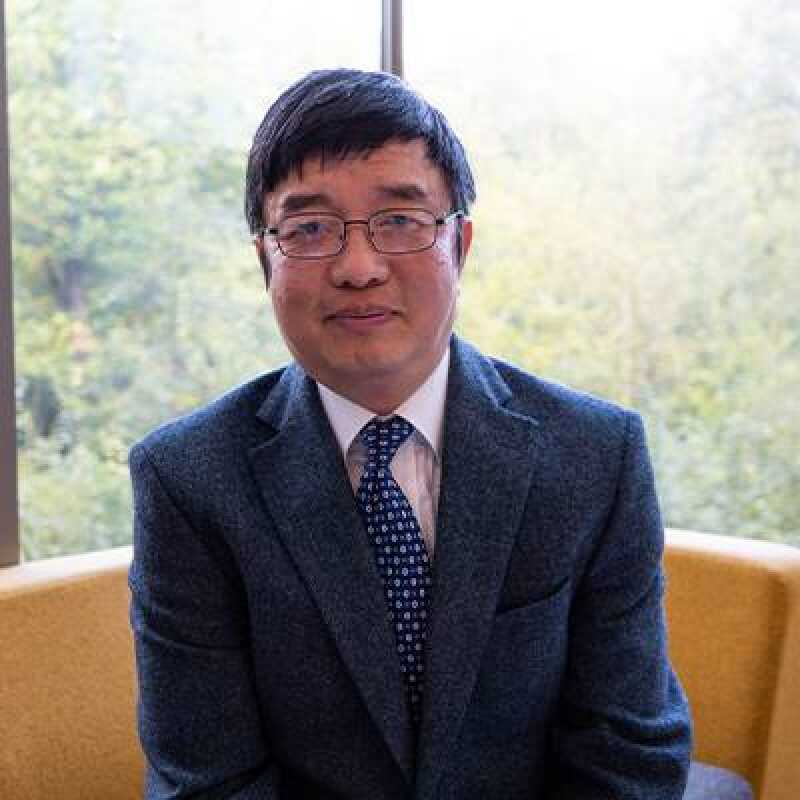
Professor Shaomin Wu is a faculty member at the University of Kent's Kent Business School, where he holds the academic rank of Professor of Business/Applied Statistics. He earned an MSc and PhD in applied statistics and has extensive industry experience, including a five-and-a-half-year stint at a global manufacturer in Shanghai before moving to the UK in 2001. He has held roles as a postdoctoral researcher and lecturer before joining Cranfield University and later the University of Kent. His research focuses on recurrent event data analysis, machine learning, and reliability mathematics, with funding from the EPSRC and ESRC. His research projects include managing risk in warranty servicing policies, smart data analytics for local government, and sustainable supply chain demand forecasting. He teaches modules such as risk analysis, reliability engineering, and machine learning. Currently supervising PhD students in time series forecasting, explainable AI, and recurrent event data analysis, he also serves as a co-chair of international conferences, editorial board member, and external examiner for doctoral degrees. Notably, he ranks among the top 2% of global scientists by Stanford University. His work integrates machine learning with business analytics, resilience engineering, and environmental sustainability. Key contributions include IoT-driven resilience methodologies for smart grids and unmanned systems, as well as frameworks for corporate carbon disclosure and maintenance optimization under uncertainty.
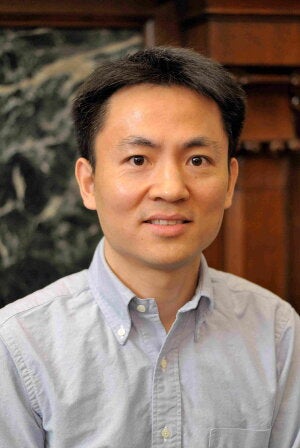
Yuguo Chen is a Professor in the Department of Statistics at the University of Illinois at Urbana-Champaign (UIUC), serving as Interim Department Chair and Director of the Illinois Statistics Office. He holds affiliations with the Department of Computer Science, Information Trust Institute, Coordinated Science Lab, and Illinois Informatics Institute. Chen earned his PhD in Statistics from Stanford University (2001) and a B.S. in Mathematics from the University of Science and Technology of China (1997). His research focuses on Monte Carlo methods, network data analysis, state space models, bioinformatics, and Bayesian inference. Key interests include scalable network estimation, community detection, and applications in public health, education, and computational biology. Recent work highlights include advancements in dynamic network modeling, Bayesian latent class models for cognitive diagnosis, and statistical methods for analyzing multi-layer networks. His contributions have been recognized through awards such as the American Statistical Association Fellowship (2018) and the Charles Edison Lectureship (2018). Editorial Roles: Associate Editor of Journal of the American Statistical Association , Journal of Computational and Graphical Statistics , and Journal of Algebraic Statistics . Grants & Consulting: Directs the Illinois Statistics Office, providing interdisciplinary research support. Active in collaborative projects involving healthcare, education, and computational infrastructure. Labs & Teams: Leads initiatives at the Coordinated Science Lab and Information Trust Institute, integrating statistical methods with cybersecurity and data-driven decision-making.
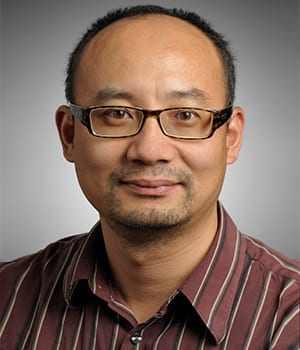
Dr. Liqiang Ni is an Associate Professor in the Department of Statistics and Data Science at the University of Central Florida (UCF). He is affiliated with the College of Sciences and holds office in TC2 Room 205. His research focuses on multivariate analysis, dimension reduction techniques, regression analysis, data mining methodologies, and bioinformatics applications. Education: Ph.D. in Statistics, 2003 – University of Minnesota B.S. in Computational Mathematics, 1996 – Fudan University Research Interests: Dr. Ni's work bridges theoretical statistics and applied data science, with emphasis on developing novel methodologies for high-dimensional data analysis. His contributions span statistical modeling in bioinformatics, optimization in regression frameworks, and scalable algorithms for modern data mining challenges. Awards & Grants: No specific awards or grants are listed in the provided information. Advising & Mentorship: No advisee名单 is explicitly mentioned here, though his role as faculty suggests involvement in mentoring students in statistics and data science. Labs & Teams: No specific lab affiliations or research teams are detailed in the text.
Jo Wood is Professor of Visual Analytics in the Department of Computer Science at City, University of London, where she has been employed since January 14, 2000. Her work bridges computer science, geographic information science, and human-computer interaction, focusing on innovative methods for visualizing complex spatial and behavioral data. Her research interests center on visual analytics , information visualization , and geovisualization , with applications in transportation, public health, crisis response, and citizen science. She investigates how interactive visual interfaces can support exploratory data analysis, decision-making, and storytelling, particularly through small multiples, faceted views, and sketch-based rendering techniques. The trends in her recent publications reflect a consistent focus on user-centered design , spatial data abstraction , and interactive exploration of multivariate datasets. Her work often integrates real-world behavioral data such as GPS tracks, cycling patterns, and crowd-sourced information to build meaningful visual narratives and support analytical reasoning. Throughout her career, Jo Wood has contributed significantly to the advancement of visual analytics through high-impact publications in top-tier venues such as IEEE Transactions on Visualization and Computer Graphics and Computer Graphics Forum. Her collaborations with researchers like Jason Dykes and Aidan Slingsby highlight her role in a vibrant research community. She has supervised numerous research projects and mentored students in visualization and geospatial analytics, though specific names are not listed in the provided text. Her work has been supported by various research grants, particularly in domains involving urban mobility, energy modeling, and crisis informatics, though grant details are not specified here. Jo Wood has also contributed to the design of visual analytics systems for applications including disease spread modeling, bicycle-hire scheme monitoring, and persuasive technology for health and leisure, demonstrating a strong commitment to impactful, interdisciplinary research.
Prof. Dr. Rudi Zagst is a Professor of Mathematical Finance at the Technical University of Munich (TUM), where he serves as Head of the Department of Mathematical Finance within the TUM School of Computation, Information and Technology. He has held this position since 2001 and is actively involved in teaching, research, and academic leadership. In 2003, he was appointed as a second member of the Faculty of Economics, and since 2004, he has served as Deputy Chairman of the joint elite degree program 'Finance & Information Management' of the University of Augsburg and TUM. Prof. Zagst earned his doctorate in business mathematics from the University of Ulm, where he later completed his habilitation in 2000. His academic journey began with a professional career at HypoVereinsbank AG, where he served as Head of Product Development in Institutional Investment Management before becoming Managing Director of RiskLab GmbH in 1997. His research focuses primarily on financial engineering, risk management, and asset management, with particular emphasis on portfolio optimization, mathematical finance, and quantitative risk management. His work bridges theoretical finance with practical applications, often incorporating advanced mathematical techniques to solve complex financial problems. Recent publications demonstrate his continued interest in GARCH models, portfolio optimization under various constraints, and the application of machine learning techniques to financial problems. Analysis of his recent publications (2024-2025) reveals a strong focus on portfolio optimization under complex market conditions, particularly using GARCH models to capture volatility dynamics. His work increasingly incorporates machine learning techniques (as seen in the credit spread analysis paper) while maintaining rigorous mathematical foundations. Many papers explore the intersection of theoretical finance with practical investment strategies, reflecting his commitment to bridging academic research with real-world financial applications. Professor of the Year 2007 (awarded by Unicum Profession magazine) Prof. Zagst has supervised numerous bachelor's, master's, and doctoral theses through TUM's Finance and Actuarial Science research group. His collaborative work with industry partners through the TUM CAIR Labs and RiskFactory demonstrates strong connections between academic research and practical financial applications. He has received research funding through various industry partnerships with major financial institutions including Allianz, Munich Re, and ERGO Group AG. Prof. Zagst leads the Research Group Finance and Actuarial Science at TUM, which includes Professors Matthias Scherer, Aleksey Min, and Christoph Knochenhauer. The group maintains strong industry connections through the TUM CAIR Labs initiative, collaborating with over 25 financial institutions including Allianz, Munich Re, Deloitte, PwC, and KPMG. Their RiskFactory laboratory serves as a bridge between academic research and practical financial risk management applications in the industry.
Francis Bach is a Professor and researcher at INRIA, leading the SIERRA project-team since 2011, which is part of the Computer Science Department at Ecole Normale Supérieure (ENS) within PSL Research University. His work bridges CNRS, ENS, and INRIA as a joint research effort. Elected to the French Academy of Sciences in 2020, he currently runs the ERC project SEQUOIA following his previous ERC project SIERRA (2009-2014). His research spans statistical machine learning with focus on optimization, sparse methods, kernel-based learning, neural networks, graphical models, and signal processing. Bach completed his Ph.D. in Computer Science at U.C. Berkeley under Professor Michael Jordan, followed by work at Ecole des Mines de Paris and the WILLOW project-team at INRIA/ENS/CNRS (2007-2010). His recent book "Learning Theory from First Principles" was published by MIT Press in December 2024. Bach's publication record shows consistent high-impact contributions across machine learning theory and applications, with recent work focusing on conformal prediction, diffusion models, optimization theory, and learning theory foundations. His research demonstrates strong connections between theoretical guarantees and practical algorithms, with applications spanning generative modeling, robust optimization, and statistical inference. Elected to French Academy of Sciences (2020) ERC project SIERRA (2009-2014) ERC project SEQUOIA (current) Author of "Learning Theory from First Principles" (MIT Press, 2024) Bach actively mentors numerous PhD students and postdocs, with many alumni now holding faculty positions at institutions like EPFL, Ecole Polytechnique, University of Washington, and University of Montreal. His teaching includes advanced courses on learning theory at ENS's Master's programs. He regularly presents tutorials at major conferences including COLT, NeurIPS, and ICML, demonstrating his leadership in the theoretical machine learning community.
Pekka Marttinen is a tenured Associate Professor of Machine Learning at Aalto University, Department of Computer Science, and leads the Machine Learning for Health (Aalto-ML4H) group within the Helsinki Institute for Information Technology HIIT. Education: M.Sc. in Applied Mathematics, University of Helsinki (2004) Ph.D. in Statistics, University of Helsinki (2008) Title of Docent in Information and Computer Science, Aalto University (2015) Research Focus: His methodological work spans large language models, reinforcement learning, deep learning, probabilistic machine learning, and causal inference . These techniques are applied to critical domains of healthcare, bioinformatics, statistical genetics, epidemiology, and personalized medicine . The group develops novel algorithms, theoretical guarantees, and open-source software that enable data-driven discovery and decision-making in medicine and biology. Publication Trends: Across 2022-2024 the lab has concentrated on (i) rigorous causal reasoning over temporal clinical data, (ii) principled uncertainty quantification in LLMs, (iii) representation learning for neural network comparison, and (iv) translational projects that turn raw EHRs into actionable clinical insights. Earlier work integrated high-dimensional genomics with metabolomics and mapped evolutionary forces in bacterial pathogens. Scientific Awards & Recognition: While no specific awards are listed, his sustained publication record in top-tier venues (NeurIPS, ICML, AISTATS, Nature Genetics, PLOS CB) and his role as responsible professor of the Machine-Learning, Data-Science and AI major signify significant peer recognition. Advising & Grants: Prof. Marttinen currently mentors 8 PhD students as primary supervisor and an additional 7 PhD students as co-supervisor. He has already graduated 8 PhDs since 2014. The group is supported through competitive funding including the Finnish Center for Artificial Intelligence (FCAI) doctoral program. Labs & Teams: He directs the Machine Learning for Health (Aalto-ML4H) research group, comprising postdocs Hans Moen, Ti John, Alexander Nikitin, Negar Safinianaini, Linli Zhang, Zhiyuan Li, and the above-mentioned PhD cohort.
Professor Donald Robertson is a faculty member at the University of Cambridge , holding the position of Professor of Economics and Director of Graduate Studies and PhD Programme within the Faculty of Economics . He is affiliated with Pembroke College and contributes to econometric research and graduate education. Research Interests : His work focuses on Econometrics , Applied Macroeconomics , and Financial Economics , with methodological expertise in Time Series Analysis , Panel Data Analysis , and Predictive Modeling . His publications address topics like cross-sectional dependence, unit root testing, and instrumental variable estimation. Teaching : He instructs modules such as Introduction to Probability and Statistics , Time Series Methods , and MPhil Prep Course - Statistics . Publications : Recent contributions include work on R² bounds for predictive models, factor residuals in panel data, and fiscal fatigue in debt ratios, reflecting his focus on econometric theory and macroeconomic applications. Contact : Email dr10011@cam.ac.uk or phone +44(0)1223 335270. Office hours by email appointment in Room 70.
Professor Tolga Akçura is a distinguished faculty member at Özyeğin University's Faculty of Business, Department of Business Administration. With over 25 years of academic experience, he has developed and taught courses on marketing strategy, marketing analytics, and marketing research at prestigious institutions including Carnegie Mellon University, Purdue University, and Long Island University. At Özyeğin University, he teaches Marketing Strategy, Integrated Marketing Communication Strategies, Innovation, Business Model Development, and Advanced Topics in Marketing for undergraduate, graduate, and executive students. Professor Akçura holds a B.Sc. in Industrial Engineering from Boğaziçi University (1990), an MA in Business Administration from Boğaziçi University (1996), an MBA from Carnegie Mellon University (1998), and a Ph.D. in Quantitative Marketing from Carnegie Mellon University (2000). Before joining academia, he worked for Procter & Gamble across multiple European locations including Brussels, London, Manchester, and Istanbul. His research focuses on the intersection of Information Technology and Marketing, Brand Valuation, Consumer Learning Behavior, Structural Choice Models, Brand Equity dynamics, and Competitive Pricing Strategies. Professor Akçura has made significant contributions to marketing science through his extensive publication record in top-tier journals. His recent scholarly work demonstrates a strong trend toward digital marketing, AI applications in marketing analytics, healthcare marketing, and the strategic implications of data-driven decision making. His publications span from foundational work on brand equity to cutting-edge research on patient-generated health data and deep learning applications in campaign participation prediction. William W. Cooper Award (awarded twice for publications in Management Science and Marketing Science) Professor Akçura has successfully bridged academic research with practical business applications through his role as founder of eBrandValue A.Ş. and as a Y-Combinator alum (YCW15). He is an active member of professional organizations including the Institute for Operations Research and Management Science, American Marketing Association, and Direct Marketing Institute. His industry experience complements his academic work, providing students with valuable real-world insights into marketing strategy and implementation.
Dr. Karim El-Basyouny is a Killam Laureate Professor and City of Edmonton Urban Traffic Safety Research Chair at the University of Alberta's Faculty of Engineering, where he serves as Associate Dean (Research Infrastructure and Innovation) in the Civil and Environmental Engineering Department. A licensed Professional Engineer in Alberta, he holds advanced degrees in Transportation Engineering from the University of British Columbia and has dedicated his career to advancing road safety through data-driven management frameworks. His academic credentials include: Doctor of Philosophy, Civil Engineering, University of British Columbia, 2011 Engineering Management Sub-specialization, Civil Engineering, University of British Columbia, 2010 Master of Applied Science, Civil Engineering, University of British Columbia, 2006 Bachelor's degree (ABET Equivalent), Civil & Environmental Engineering, United Arab Emirates University, 2003 El-Basyouny's research pioneers the integration of remote sensing, machine learning, and statistical modeling to enhance transportation safety. His work develops automated tools for infrastructure digitization, collision prediction, and speed management, treating safety as a systemic product requiring management frameworks. Key contributions include LiDAR-based road feature extraction, network-level safety evaluations, and frameworks for vision-zero outcomes that address both human-driven and autonomous vehicle contexts. His recent publications demonstrate a cohesive research trajectory centered on leveraging point cloud data and computational intelligence for safety management. Over 15 major publications since 2021 focus on automated infrastructure assessment (light pole detection, clear zone mapping, vertical clearance evaluation), weather-impact modeling, and enforcement resource optimization. This body of work bridges transportation engineering with computer vision and operations research to create scalable safety solutions. His scientific contributions have been recognized with prestigious honors including: 2024 Killam Annual Professorship Award 2024 Road Safety Achievement Award from TAC 2023 Donald Stanley Award for environmental engineering 2022 Faculty of Engineering Graduate Teaching Award 2021 Daniel B. Fambro Student Paper Award As an academic leader, El-Basyouny actively mentors graduate students and secures significant research funding through his endowed chair position. He currently recruits fully-funded PhD and postdoctoral candidates specializing in remote sensing applications, machine learning, and geomatics for road digitization projects. His research group collaborates with national safety committees and municipal agencies to translate findings into policy, while he serves on editorial boards for Transportation Research Record and Analytic Methods in Accident Research. The research group operates at the intersection of transportation engineering and computational science, developing automated frameworks that merge sensor technologies with data processing tools. Current projects focus on semantic segmentation of 3D point clouds, safety implications of infrastructure digitization, and machine learning applications for road feature extraction in both urban and rural environments.
Joseph Roso is an Assistant Professor of Sociology at Ambrose University, specializing in the practices and political activities of religious congregations and leaders. His work examines how religious institutions adapt to 21st-century challenges, including technological integration and political polarization. Roso holds a PhD from Duke University, where he also completed his MA, and a BA from Vanderbilt University, all in Sociology. He teaches courses on quantitative methods, multivariate statistics, and sociological principles. His research focuses on congregational adaptation, clergy activism, and the intersection of religion and politics. Education: PhD in Sociology, Duke University MA in Sociology, Duke University BA in Sociology, Vanderbilt University Roso's research interests center on religious organizations' responses to societal changes, including technology adoption (e.g., streaming services pre-pandemic), political polarization impacts, and clergy-lay dynamics. His recent studies highlight tensions between religious leaders and their congregants on political issues, as well as institutional disaffiliation trends in denominations like the United Methodist Church. His articles analyze topics ranging from evangelical rhetoric on immigration to clergy political activism, leveraging data from the National Survey of Religious Leaders. He has contributed to debates on congregational technological readiness and worship practice evolution. Labs/Teams: Collaborates with projects like the National Congregations Study and National Survey of Religious Leaders, emphasizing large-scale survey methodologies to map religious institutional trends.
Anita Hubley is a Professor at the University of British Columbia's Faculty of Education, Department of Educational and Counselling Psychology, and Special Education (ECPS). She serves as MERM Program Coordinator and directs the Adult Development and Psychometrics Lab. Her work focuses on psychometric test development/validation and quality of life research across adult populations. Education: Ph.D. in Psychology (Human Assessment specialization), Carleton University (1995) M.A. in Psychology (Lifespan Development and Aging), University of Victoria (1991) Pre-doctoral training at Geriatric Assessment Unit (Ottawa) and Neuropsychological Assessment Unit (Ottawa) Her research integrates psychometric theory with practical applications in aging populations, homeless/vulnerably housed individuals, and neuropsychological assessment tools. Key contributions include developing the Memory Test for Older Adults (MTOA), Hubley Depression Scale for Older Adults (HDS-OA), Quality of Life in Homeless and Hard-to-House Individuals (QoLHHI), and Subjective Age Identity Scale (SAIS). Scientific Awards: Killam Teaching Prize (2017) Distinguished Reviewer, Buros Institute of Mental Measurements (2013) She has taught graduate courses in Psychological Assessment, Measurement Principles, Scale Development, and Applied Neuropsychology, emphasizing ethical testing practices and response process research. Her lab's work on test adaptation for marginalized populations has informed international measurement standards.
Vikas Singh is a Professor in the Department of Biostatistics at the University of Wisconsin-Madison, with appointments in Computer Sciences and Statistics. He also serves as a part-time Faculty Researcher at Google DeepMind. His research focuses on image analysis, machine learning, and medical imaging applications, particularly in neuroimaging and Alzheimer's disease studies. Singh holds a Ph.D. in Computer Science from SUNY Buffalo and has taught courses such as BMI/CS 767 (Medical Image Analysis) and CS 766 (Computer Vision). Affiliations: UW Computer Vision Group, Wisconsin Alzheimer's Disease Research Center (W-ADRC), Machine Learning@UW. Research: Develops algorithms for medical image analysis, including tools for neuroimaging and longitudinal biomarker studies. Grants: Collaborates on grants related to Alzheimer's progression modeling and imaging techniques. His work emphasizes interdisciplinary applications, bridging statistics, geometry, and optimization to solve real-world problems in healthcare and engineering.
Dr. Kaibo Liu is the Grainger STAR Professor in the Department of Industrial and Systems Engineering at the University of Wisconsin-Madison and serves as Associate Director of the UW-Madison IoT Systems Research Center. He earned his B.S. from the Hong Kong University of Science and Technology (2009), and M.S. and Ph.D. from Georgia Tech (2011/2013). His research focuses on system informatics, big data analytics, and data fusion for process modeling, monitoring, and decision-making. He has been funded by NSF, ONR, DOE, and industry partners. Notable awards include the 2024 Hromi Medal (ASQ), 2021 IISE Technical Innovation Award, and multiple early-career recognitions. Recent work emphasizes real-time cyber-physical security, reinforcement learning for data streams, and Bayesian methods for prognosis. He edits IEEE Transactions on Automation Science and Engineering and IISE Transactions on Data Science.
Naisyin Wang is a Professor of Statistics at the University of Michigan, where she has been since 2009. Previously, she served as a faculty member in Statistics and Toxicology at Texas A&M University from 1992. She holds a Ph.D. in Statistics from Cornell University (1992), an M.A. in Statistics from Ohio State University (1987), and a B.S. in Mathematics from National Tsing-Hua University, Taiwan (1986). Her research focuses on longitudinal and functional data analysis, measurement error models, semiparametric methods, and applications in biological and medical fields, particularly genomics and metabolomics. Key contributions include methodologies for handling missing data, mixed effects models, and clustering techniques. Education: Ph.D. in Statistics, Cornell University (1992) M.A. in Statistics, Ohio State University (1987) B.S. in Mathematics, National Tsing-Hua University (1986) Dr. Wang’s honors include the College of Science Distinguished Alumni Award (2012), the Distinguished Achievement Award in Research (2003), and fellowships from the AAAS, ASA, and IMS. She has held leadership roles, including Co-editor of Statistica Sinica (2011–2014) and President of the International Chinese Statistical Association (2010). Her teaching includes courses such as Applied Statistics (STATS 500), Linear Models (STATS 600), and Special Topics in Applied Statistics (STATS 700). She has advised numerous students and contributed to research on cancer genomics, dietary interventions, and statistical methodology.