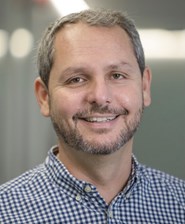
Apostolos Theos is an Associate Professor at Umeå University's Department of Community Medicine and Rehabilitation , where he serves as Head of the Sports Medicine Section. He is also affiliated with the Umeå School of Sport Sciences as Director of its Sport Science Division. PhD in Molecular Exercise Physiology (University of Athens, 2012) Deputy Head of Department since 2022 Director of Studies role His research focuses on: Hormonal and metabolic responses to exercise in children Development of test batteries for athlete performance prediction Muscle physiology and training adaptations Key research trends from his publications include: Pediatric physiological adaptations to resistance training Individualized performance prediction models in alpine skiing Exercise interventions for chronic disease populations Cross-transfer effects of resistance exercise Molecular mechanisms of exercise-induced tissue remodeling Current projects include Hip and groin problems in elite ice hockey players (2024-2029).
Alejandro Kuratomi is an Assistant Professor in Data Science at the Department of Computer and Systems Sciences (DSV), Faculty of Social Sciences, Stockholm University. His academic journey includes a Ph.D. in Machine Learning (2024), M.Sc. in Engineering Design: Mechatronics (2019), and dual B.Sc. degrees in Industrial and Mechanical Engineering (2014). Ph.D., Machine Learning – DSV, Stockholm University M.Sc., Mechatronics – KTH Royal Institute of Technology B.Sc., Industrial Engineering – Universidad de Los Andes B.Sc., Mechanical Engineering – Universidad de Los Andes Kuratomi’s research focuses on Machine Learning Interpretability , Algorithmic Fairness , and Multivariate Time Series Classification , with applications in GNSS error estimation and healthcare decision-making. He develops interpretable models like CRITS and ORANGE to address technical and ethical challenges in AI. His recent work explores Transformer/LLM interpretability , mechanistic explanations , and integer-justified counterfactuals . While no awards or students are mentioned, his publications highlight interdisciplinary efforts combining computer science, ethics, and engineering.
Taras Bodnar is a Professor at the Department of Management and Engineering, Linköping University. His research focuses on high-dimensional statistical methodologies with applications in finance, portfolio optimization, and econometrics. He specializes in developing and analyzing advanced statistical models for asset allocation, risk management, and multivariate meta-analysis. Bodnar's work often involves Bayesian methods, shrinkage estimation techniques, and copula modeling to address challenges in financial data analysis. His recent contributions include the HDShOP package for portfolio selection and advancements in nonlinear shrinkage tests for large-dimensional covariance matrices. His research bridges theoretical statistics with practical financial applications, addressing issues such as dark uncertainty and efficient frontier estimation in high-dimensional settings. Key research interests include: High-Dimensional Portfolio Optimization Bayesian Analysis in Financial Contexts Covariance Matrix Estimation and Testing Uncertainty Quantification in Multivariate Analyses Statistical Software Development for Finance Recent publications (2024-2025) emphasize methodological innovations in portfolio selection, copula modeling, and robust statistical inference. His work has implications for both academic theory and practical investment strategies, particularly in managing large and complex financial datasets.
Charlotta Turner is a Professor at the Centre for Analysis and Synthesis , Lund University , and serves as Vice Dean of the Faculty of Science . Her research focuses on analytical chemistry for sustainable development , particularly the use of green solvents such as supercritical carbon dioxide and subcritical water in extraction and separation methods. UN Sustainable Development Goals (SDGs) contributor Manager of High Pressure Fluid Facility and Mass Spectrometry Infrastructure Principal Investigator (PI) for projects like Miljövänlig superkritisk process för växtoljor and Quantitative fingerprinting of chemical contaminants in pollinating insects Her work addresses sustainable extraction of valuable substances from food, forest, agricultural, and marine industries . Recent publications highlight advancements in phlorotannin characterization , berry bioactives , and lignin molecular weight analysis . She has supervised 12 research projects and leads teams in KILU/CAS infrastructure . Turner has received multiple awards, including the Svante Arrhenius Award (2017) and Herbert Dutton Award (2015) .
Hyunjoo Kim Karlsson is a researcher at the Department of Economics and Statistics, School of Business and Economics, Linnaeus University. Her work focuses on statistics and finance, particularly in high-dimensional data analysis, wavelet decomposition, and machine learning applications. Doctoral thesis: Dynamics of macroeconomic and financial variables in different time horizons (2012), Jönköping International Business School. Her research spans shrinkage estimators, outlier detection, time series modeling, and multivariate analysis under multicollinearity. Recently, she has expanded into statistical learning and mixed data sampling (MIDAS) for economic nowcasting. Key publication trends include oil price impacts on economies, exchange rate dynamics, and nonlinear financial modeling using wavelet methods and machine learning. She collaborates with researchers like Krister Månsson and R. Scott Hacker. Hyunjoo is part of the Deterministic and Stochastic Modelling group within Linnaeus University's Data Intensive Sciences and Applications (DISA) center, contributing to interdisciplinary sustainable co-creation projects.
Jakob Bergman serves as Senior Lecturer, Associate Professor, and Director of Studies at Lund University's Department of Statistics. His academic profile demonstrates significant expertise in compositional data analysis, where he studies vectors of proportions (compositions) that arise across diverse fields including geochemistry, household economics, and political science. His research focuses on developing innovative statistical methodologies, particularly his compositional loess method for smoothing compositional time series data. Bergman maintains active interdisciplinary collaborations with archaeologists like Mikael Larsson (on cereal grain analysis and early farming practices) and philosophers like Martin Jönsson (on post-hoc interventions and gender bias in research funding systems). Bergman's scholarly output reveals strong interdisciplinary trends, with recent publications bridging statistics with archaeology, political science, and philosophy. His work consistently addresses practical methodological challenges while maintaining theoretical rigor, particularly in analyzing party shares over time and archaeological specimen compositions. As an educator, Bergman teaches theoretical and applied statistics across undergraduate, advanced, and PhD programs, with special emphasis on sampling/survey research and regression analysis. His outreach extends to providing statistical expertise to numerous NGOs, authorities, and companies. His research contributes to UN Sustainable Development Goals related to quality education and gender equality. Bergman has led significant projects including 'Post-hoc Interventions' at Pufendorf IAS and 'Manure matters' investigating early farming practices through nitrogen analysis of archaeological crop assemblages.
Hamed Sabahno serves as a Senior Lecturer in the Department of Statistics at Lund University, Sweden. His academic profile is centered on advanced statistical methodologies with applications in engineering and quality control systems. His research spans statistical process control , speckle pattern analysis , and multivariate monitoring systems . Key focus areas include adaptive control charts, measurement error correction, and image-based displacement measurement techniques. His work bridges theoretical statistics with practical industrial applications, particularly in non-destructive testing and quality engineering. Recent publications demonstrate strong emphasis on Real-time process monitoring using optical methods Multivariate regression profile control Statistical refinement in speckle-based measurements Adaptive parameter systems for quality assurance His fingerprint analysis confirms dominance in Control Charts (100%) and Measurement Error (55%) research domains. Professional engagement includes ORCID registration (0000-0002-5618-887X) and active publication in high-impact journals including Scientific Reports and Quality and Reliability Engineering International . His research has attracted attention from 5 Mendeley readers and coverage in 1 news outlet.
Roles and Affiliations: Alexander Herbertsson is a Senior Lecturer in Statistics and Quantitative Finance at the University of Gothenburg, affiliated with the CFF-Centre for Finance. He is based in the Department of Economics with Statistics, located at Vasagatan 1, Gothenburg. His work focuses on financial risk management, credit risk modeling, and quantitative finance methodologies. Education: Ph.D. in Economics: Quantitative Finance (2007), University of Gothenburg Licentiate of Engineering in Industrial Mathematics (2005), Chalmers University of Technology M.Sc. in Engineering Physics (Applied Mathematics specialty) (2001), Chalmers University of Technology Research Interests: Herbertsson's research emphasizes applied financial mathematics and statistical methods in finance. Key areas include credit risk modeling (default contagion, systemic risks), financial engineering, and the development of dynamic models for portfolio credit risk. His work often integrates Markov chain models, phase-type distributions, and stochastic processes to analyze dependency structures and pricing of credit derivatives. Recent studies explore saddlepoint approximations for portfolio risk analysis and risk management under exogenous shocks. Teaching: He teaches advanced courses in credit risk modeling, quantitative finance, and applied probability theory, emphasizing practical applications in risk management and financial markets. Grants and Labs: While specific grants are not detailed in the text, his affiliation with the CFF-Centre for Finance suggests involvement in collaborative financial research projects. His work often addresses real-world applications of theoretical models in systemic risk and portfolio hedging.
Zhenxia Liu is an Associate Professor in the Department of Mathematics at Linköping University, Sweden, affiliated with the Division of Applied Mathematics (TIMA). Her work contributes to theoretical and applied probability, with a focus on stochastic processes and statistical modeling. Her research interests lie at the intersection of mathematical statistics and probability theory. Key areas include large deviations , longest runs in Markov chains , and Monte Carlo methods . These topics are central to understanding rare events, sequential dependencies, and numerical estimation techniques in complex systems. The recent publications demonstrate a consistent focus on probabilistic analysis of dependent structures, particularly through Markov models. Her work combines theoretical rigor with applications in computational statistics, showing trends toward improving bounds and simulation efficiency in stochastic modeling. Mathematical Statistics Probability Theory Large Deviations Markov Chains Monte Carlo Methods Computational Mathematics Zhenxia Liu has actively contributed to high-quality journals such as Statistics and Probability Letters , Results in Applied Mathematics , and Probability and Mathematical Statistics . While no formal advising or grant information is available in the provided text, her collaborative publications suggest engagement in research networks within applied mathematics. She is part of the research environment in Applied Mathematics at Linköping University, which focuses on computational mathematics, optimization, and mathematical modeling across science and engineering disciplines.
Xiangfeng Yang is an Associate Professor and Docent in the Department of Mathematics at Linköping University, Sweden, affiliated with the Division of Applied Mathematics (TIMA). His work bridges theoretical probability and applied mathematical modeling, with a strong emphasis on large deviations theory and stochastic processes. His research interests include: Large Deviations Theory Random Matrices and Sample Covariance Matrices Stochastic Bridges (Bernstein and Markov) Longest Runs, Gaps, and Extremal Eigenvalues Hidden Markov and Reciprocal Processes Modern Multivariate Statistical Analysis Xiangfeng Yang's recent publications (2015–2024) reflect a consistent and deep engagement with probabilistic asymptotics and extreme behavior in stochastic systems. His work spans theoretical foundations in probability, applications in random matrix theory, and modeling in financial and environmental contexts. A notable trend is his focus on large deviation principles across diverse settings—ranging from eigenvalues of random matrices to gaps in Poisson processes and runs in Markov chains. He frequently collaborates with PhD students, indicating an active supervisory role. His scientific contributions are published in reputable journals such as Journal of Applied Probability , Stochastic Processes and their Applications , and Theory of Probability and Mathematical Statistics . While no explicit awards are listed, the quality and volume of his output suggest recognition within the mathematical community. Xiangfeng Yang has supervised several PhD students to completion, including Joseph Okello Omwonylee, Denise Uwamariya, and Stefane Saize, with research topics closely aligned with his expertise in large deviations and stochastic modeling. His research likely involves collaboration within the Applied Mathematics division, though no specific lab or team name is mentioned. He continues to contribute actively to modern theoretical and applied probability.
Karolina Eriksson is a Postdoctoral Fellow (currently on leave) at Umeå University's Department of Ecology, Environment and Geoscience and affiliated with the Umeå Marine Sciences Centre (UMF). Her research focuses on modeling cyanobacterial blooms and nutrient dynamics in the Northern Baltic Sea, emphasizing sustainable development and climate change preparedness. Her research interests span: Marine and microbial ecology of the Baltic Sea Climate change impacts on water quality (e.g., brownification) Pathogen dynamics linked to land use practices Eutrophication modeling and mitigation Public health implications of aquatic microbial shifts Recent publications (2022-2024) reveal a strong emphasis on land-sea connectivity, particularly how upstream forestry/agriculture influences downstream Legionella prevalence through humic substances and iron dynamics. Her work integrates multivariate statistics with ecological modeling to address cyanobacterial expansion into northern waters under changing nutrient regimes. Dr. Eriksson actively contributes to major research initiatives: "When will eutrophication problems hit the Bothnian Bay?" (2025-2026) "Large-scale regulation of food web processes" (2024-2027) "Nutrients and eutrophication in the Gulf of Bothnia" (2022-2024) "Aquatic environments at risk of pathogenic bacteria" (2018-2023) She collaborates within the EcoChange and Umeå Marine Ecology research groups, leveraging UMF's infrastructure to study climate-driven ecosystem changes while aligning with UN Sustainable Development Goals 6 (Clean Water), 13 (Climate Action), and 14 (Life Below Water).
Fan Yang Wallentin is a Professor in Statistics at Uppsala University, Sweden, where she works in the Department of Statistics. She serves as the Coordinator for International Exchange Programs and has been responsible for the statistical consultant service at the department since 2009. Her academic career is deeply rooted at Uppsala University, where she earned her PhD in Statistics in 1997. Her educational background includes: PhD in Statistics from Uppsala University (1997) Professor Wallentin's research primarily focuses on structural equation modeling and multivariate statistical analysis, with particular applications in social and behavioral sciences. Her work bridges theoretical statistical advancements with practical applications across diverse fields including public health, psychology, economics, and education. She has made significant contributions to psychometrics, particularly in the development and validation of measurement instruments used in healthcare and education settings. Her methodology work addresses specification issues, robustness properties, and computational aspects of statistical models. Her publication record demonstrates an evolving research trajectory that has recently incorporated pressing global issues such as the statistical analysis of the COVID-19 pandemic, while maintaining her core expertise in structural equation modeling and related methodologies. Her work often involves cross-disciplinary collaborations, reflecting the broad applicability of her statistical expertise across healthcare, energy policy, and development economics. Among her notable recognitions: Arnberg Prize from the Swedish Royal Academy of Sciences (2000) for her PhD thesis "Non-linear structural equation models: Simulation studies of the Kenny-Judd model" Professor Wallentin has extensive experience providing statistical consultation to researchers in social and behavioral sciences. Her role as Coordinator for International Exchange Programs suggests active engagement in global academic networks. Her research has been applied in diverse contexts including pandemic response analysis, women's empowerment through microfinance, healthcare quality assessment, and educational statistics, demonstrating the versatility and impact of her methodological contributions.
Alessandro Oneto is an Associate Professor at the Università di Trento since April 2023, after serving as a tenure-track Assistant Professor (Ricercatore RTD-b) since April 2020. Prior to this, he held postdoctoral positions at Inria Sophia Antipolis Méditerranée (France, 2016-2018) Universitat Politècnica de Catalunya (Spain, 2018-2019) OvGU Magdeburg (Germany, 2019-2020) . Education Ph.D. in Mathematics, Stockholm University (2016), thesis: Waring-type problems for polynomials in algebraic geometry , supervised by Boris Shapiro and Enrico Carlini . Research focus Commutative Algebra Algebraic Geometry Tensor Decompositions Algebraic Statistical Models . Recent publications highlight advancements in tensor decomposition loci, secant varieties, polynomial strength, and geometric conditions for tensor ranks. His work bridges algebraic geometry and applied mathematics, addressing problems in tensor analysis and computational algebra. Scientific Awards Alexander von Humboldt Postdoctoral Fellowship (2019-2020) . Labs & Networks Co-founder of the TensorDec Laboratory (2020-present) at the University of Trento, focusing on tensor decompositions and training students. Member of the INABAG Network (Italian Network for Applied and Birational Algebraic Geometry), organizing conferences and collaborative activities. .
Tatjana Pavlenko is a Professor in Statistics at Uppsala University, affiliated with the Department of Statistics. Her research bridges mathematical statistics, probability theory, and computational methods, focusing on high-dimensional data analysis in biomedical and machine learning contexts. Key research areas include: High-dimensional statistical inference and Bayesian graph structure learning Sparse signal detection and adaptive thresholding methods Statistical machine learning with applications to biomedical datasets Her recent publications demonstrate expertise in: Bayesian model averaging and junction tree sampling Asymptotic theory for high-dimensional classifiers Testing independence and covariance structures L2-type statistics and empirical process theory She supervises PhD students working on: High-dimensional causal inference in media Bayesian graphical models Sparse classification algorithms Currently active in Uppsala University's AI4Research initiative, Pavlenko develops adaptive data-driven procedures for statistical learning problems with complex sparsity patterns.
Sebastian Hönel is a postdoctoral researcher at Linnaeus University, affiliated with the Faculty of Technology and the Department of Computer Science and Media Technology. He is an active member of the Data Intensive Software Technologies and Applications (DISTA) research group and currently serves as a co-Principal Investigator in the project "In-line visual inspection using unsupervised learning" focused on manufacturing defect detection using machine learning techniques. Hönel completed his Doctoral Thesis in 2023 titled "Quantifying Process Quality: The Role of Effective Organizational Learning in Software Evolution" and earned his Licentiate Thesis in 2020 on "Efficient Automatic Change Detection in Software Maintenance and Evolutionary Processes," both from Linnaeus University. His educational background demonstrates a strong foundation in software engineering and data analysis. Hönel's research spans software engineering, machine learning, and data science. Initially focusing on applying Machine Learning and Deep Learning to software evolutionary processes and organizational learning, his current work emphasizes unsupervised and zero/few-shot learning techniques for industrial anomaly detection. He has particular expertise in Deep Density Estimation (especially Normalizing Flows) and Representation Learning, with applications in manufacturing quality assessment and software maintenance. His research interests include anomaly detection methodologies, architectural innovations in autoencoders, and methodological considerations for evaluation metrics in machine learning applications. An analysis of his publication record reveals a consistent focus on bridging software engineering with advanced machine learning techniques. His most recent work shows a strategic shift toward industrial applications of unsupervised learning, particularly in manufacturing defect detection, while maintaining his foundational work in software metrics and quality assessment. The publications demonstrate progression from theoretical software metrics to practical applications of deep learning in quality inspection systems. Hönel actively contributes to academic education by teaching (Deep) Machine Learning courses (4DV652, 4DV660, 4DV661) and previously served as a teaching assistant for agile product development courses (1DV508, 4DV611). His role as co-PI on the visual inspection project indicates successful research funding and leadership capabilities. While specific grant details aren't provided in the available information, his position suggests ongoing research support. As part of the DISTA research group, Hönel collaborates extensively with colleagues including Ericsson, Löwe, and Wingkvist on projects that combine software engineering with advanced data analysis techniques. His work environment supports interdisciplinary research at the intersection of computer science, software engineering, and machine learning applications, with particular emphasis on practical implementations in both software development contexts and manufacturing quality control systems.