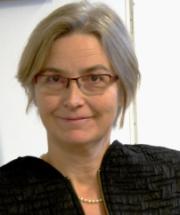
Lisa Wallander is a Senior Lecturer and Associate Professor at the School of Social Work, Lund University. Her research focuses on professional judgments, sociology of professions, and knowledge use in social work, with methodological expertise in the factorial survey approach. Research interests include: Professional decision-making in social work Factorial survey methodology Knowledge utilization in practice Intimate partner violence risk assessment Key research outputs highlight applications of factorial surveys in social work education and systematic analyses of violence perpetration risk factors. She has led projects funded by the Swedish Research Council and Forte, emphasizing evidence-based practice and professional reasoning.
Elinor Ytterstad is an Associate Professor in the Department of Mathematics and Statistics at UiT The Arctic University of Norway. She actively contributes to the Complex Systems Modeling (CoSMo) and Statistics and Data Analysis research groups, focusing on interdisciplinary statistical applications. Her research centers on biostatistics and epidemiology, with expertise in survival analysis, statistical modeling of health outcomes, and public health applications. Key areas include widowhood mortality dynamics, dietary patterns and metabolic syndrome relationships, occupational health hazards (particularly noise and hand-arm vibration exposure), and substance use disorder comorbidities. She employs advanced statistical techniques to analyze large population datasets from Norwegian and Australian cohorts, aiming to uncover causal relationships and predictive factors for health outcomes. Analysis of her recent publications reveals consistent application of frailty models and multivariate analysis to critical health issues. Major trends include bereavement mortality studies utilizing Norwegian population data, dietary pattern analyses across demographic strata in the Tromsø Study, and occupational exposure assessments in Australian workforce surveys. Her work frequently bridges statistical methodology with practical public health interventions, demonstrating particular strength in translating complex models into actionable health insights. Dr. Ytterstad maintains active involvement in statistical education through workshops like the 2018 R Commander session, supporting computational statistics adoption among researchers.
Marco Del Giudice is an Associate Professor in the Department of Life Sciences at the University of Trieste, Italy, where he conducts interdisciplinary research at the intersection of evolutionary biology, psychology, and development. His work spans multiple domains including personality psychology, developmental psychopathology, attachment theory, and sex differences research. Dr. Del Giudice's research interests focus on the evolution of personality, motivation, and self-regulation, with particular emphasis on attachment styles, evolutionary psychopathology, sex differences in behavior and cognition, middle childhood development, stress mechanisms in development, and developmental plasticity. His approach is characterized by theoretical synthesis and integrative frameworks, including the Adaptive Calibration Model (ACM) of stress responsivity, evolutionary-developmental models of attachment, and a general motivational architecture for personality. More recently, he has expanded into evolutionary immunology. His extensive publication record demonstrates consistent scholarly contributions across multiple disciplines, with recent work focusing on methodological innovations in statistics, evolutionary emotion theory, and critical analyses of research practices in sex differences research. His articles reveal a strong emphasis on theoretical integration, methodological rigor, and challenging conventional wisdom in psychological science. Early Career Award of the Human Behavior and Evolution Society (HBES), 2016 Dr. Del Giudice's work has established him as a leading scholar in evolutionary approaches to psychology, with significant contributions to understanding how evolutionary principles illuminate human behavior, development, and psychopathology. His interdisciplinary approach bridges biological and psychological perspectives while maintaining methodological sophistication.
Dr. Antonio Piolanti is a post-doctoral researcher at the Unit of Health Psychology , Alpen-Adria-Universität Klagenfurt, Austria. His work focuses on mental health promotion and violence prevention , particularly addressing sexual violence , gender-based violence , and adolescent well-being . Conducts systematic reviews and meta-analyses on global mental health issues Develops family-focused interventions for emotional health in conflict-affected populations Collaborates with Heather M. Foran's Lab on multicountry trials Research interests span psychosocial support interventions , trauma assessment , and clinimetric evaluation in primary care settings. His publications analyze violence prevention programs, childhood trauma questionnaires, and post-conflict identity formation. Recent work includes FLOURISH Phase 2 (2025) for adolescent mental health in low-income countries and a global meta-analysis (2025) on child sexual violence prevalence. Earlier studies explored trauma in Rwandan and Cambodian genocide contexts, hypertension stress associations, and bipolar disorder-creativity links.
James Allen Fain is a Professor at UMass Chan Medical School in the Tan Chingfen Graduate School of Nursing. With a distinguished career spanning several decades, Dr. Fain has established himself as a leading expert in diabetes care and education, with significant contributions to nursing research and practice. Dr. Fain's educational background includes: PhD in Educational Administration from University of Connecticut School of Education, Storrs, CT MSN in Nursing from University of Alabama School of Nursing, Birmingham, AL BSN in Nursing from University of Rhode Island College of Nursing, Kingston, RI Dr. Fain's research focuses on diabetes care and education , with particular expertise in psychometric evaluation of instruments, risk reduction activities in type 2 diabetes, and quantitative methodologies/multivariate analyses. His work bridges clinical practice and academic research, emphasizing evidence-based approaches to diabetes management and education. He has been instrumental in developing national standards for diabetes self-management education and has contributed extensively to understanding the psychosocial aspects of diabetes care. Analysis of Dr. Fain's recent publications (2021-2024) reveals continued focus on diabetes education methodology, with increasing attention to qualitative research approaches, systematic literature reviews, and the strategic direction of diabetes education as a profession. His work spans clinical practice, educational theory, and healthcare policy, demonstrating a comprehensive approach to improving diabetes outcomes through education and research. Dr. Fain has received significant recognition for his contributions to the field, including: Fellow of the American Academy of Nursing (FAAN) Board Certified - Advanced Diabetes Management (BC-ADM) Throughout his career, Dr. Fain has been deeply involved in mentoring future nursing scholars and practitioners. His leadership roles in professional organizations, particularly with the Association of Diabetes Care & Education Specialists (ADCES), have shaped diabetes education standards and practices nationwide. He has served as editor and contributor to key publications in the field, helping to establish evidence-based guidelines that inform clinical practice. Dr. Fain's work is closely associated with diabetes education initiatives and research programs focused on improving patient outcomes through structured education and support. His contributions have helped establish the evidence base for diabetes self-management education and have influenced healthcare policy related to diabetes care.
Assoc. Prof. Dr. İbrahim Yaşar GÖK is an Associate Professor at the Faculty of Economics and Administrative Sciences , serving within the Department of Banking and Finance . His research portfolio integrates sports economics, sustainable finance, financial law, and market micro-structure, and he teaches a wide spectrum of courses including Banking Law, Energy Finance, Sports Finance and Economics, and International Financial Markets. His educational background is multidisciplinary: he holds an associate degree in Justice from Anadolu University, bachelor’s degrees in Business Administration and Law from Anadolu and Gazi Universities respectively, master’s degrees in Business Administration and Econometrics from Suleyman Demirel University, a master’s in Private Law from Akdeniz University, and a PhD in Business Administration from Suleyman Demirel University. Research interests revolve around: Sports finance and economics, exploring payroll efficiency and financial fair-play impacts on sporting success. Corporate sustainability and ESG investing, analysing the performance of sustainability indices and the market reaction to ESG inclusion. Banking and financial law, particularly regulations affecting Turkish financial markets. Exchange-rate volatility and central-bank intervention mechanisms such as the Reserve Options Mechanism. High-frequency event studies on the effects of macro-news and terrorism shocks on Turkish equity and derivatives markets. Over the last decade his work has appeared in journals such as Physica A , Social Responsibility Journal , Financial Studies and numerous Turkish-indexed outlets, reflecting a consistent focus on volatility spill-overs, hedging effectiveness, and the interplay between sustainability metrics and financial performance. He has supervised master’s theses on working university students’ financial conditions and on banks’ inclusion in sustainability indices, and he has served as editor for several international book projects including Handbook of Research on Global Aspects of Sustainable Finance in Times of Crises .
Xia Shen is a Senior Research Specialist at the Karolinska Institutet , working within the Department of Medical Epidemiology and Biostatistics . She is part of Yudi Pawitan's research group, focusing on statistical and bioinformatics analyses of high-throughput molecular data. PhD in Statistical Genetics (2012), Uppsala University MSc in Applied Statistics (2008), Dalarna University BSc in Statistics and Actuarial Science (2007), Renmin University of China Her research spans statistical genetics , computational biology , and bioinformatics , with particular emphasis on genetic correlation estimation, pleiotropy analysis, and omics data modeling. She has developed multiple R packages including TGCA (Total Genetic Contribution Analysis) and HDL (High-Definition Likelihood) for advanced genetic analyses. Key scientific contributions include: 2021 Nature Communications paper on improved phenotypic correlation estimation from GWAS data 2020 Nature Genetics work on genetic correlation methodology 2020 Nature Human Behaviour study on neuro-related protein genetics 2019 Frontiers in Genetics analysis of CCR5Δ32 pleiotropy She has previously held positions at the Karolinska Institutet and Sun Yat-sen University , and maintains active collaborations in polygenic risk score development and multi-trait GWAS analysis.
David Paydarfar, M.D. serves as Professor and inaugural Chair of Neurology at Dell Medical School, The University of Texas at Austin, while directing the Mulva Clinic for the Neurosciences. Previously, he held leadership roles at University of Massachusetts Medical School and Harvard-affiliated Wyss Institute, establishing a career bridging clinical neurology and biomedical engineering to transform neurological care through technology innovation. Education: B.S. in Physics (summa cum laude), Duke University M.D., University of North Carolina at Chapel Hill Neurology Residency, Harvard Medical School / Massachusetts General Hospital Research Focus: Dr. Paydarfar's dual research programs pioneer predictive health monitoring through biosensors and signal-processing algorithms, while investigating neural oscillator mechanisms in apnea, epilepsy, and circadian disorders. His work integrates physiology, engineering, and data science to forecast adverse health trajectories—extending beyond reactive systems to enable preemptive interventions using digital twin technology and population-scale analytics. Publication Trends: Recent work (2023-2025) reveals accelerating integration of multi-ancestry genomics with digital health solutions, particularly in Alzheimer's disease risk prediction and stroke transport optimization. His team consistently bridges fundamental oscillator physiology with clinical applications, increasingly leveraging digital twins for cardiovascular and neurological precision medicine while addressing health disparities through ancestry-specific analyses. Scientific Recognition: Bevan Visiting Professor, University of Canterbury (2008) Dunaway Burnham Visiting Scholar, Dartmouth (2007, 2012) David A. Chad Teaching Award, UMass Medical School (2015) Fellow, American Neurological Association Member, Alpha Omega Alpha Honorary Society National Central University Visiting Professorship (2012) Research Support: Continuously funded by major federal agencies including NIH and NSF, alongside the Clayton Foundation for Research, supporting translational work from basic neural oscillator studies to clinical biosensor deployment. His grants consistently emphasize engineering-informed clinical solutions with demonstrated impact on predictive health monitoring and neurological disorder management. Collaborative Infrastructure: Leads the Physiological Laboratories at Dell Med, fostering interdisciplinary teams of neurologists, engineers, and data scientists through the Mulva Clinic for the Neurosciences. His collaborations extend to Harvard's Wyss Institute and national consortia focused on digital health validation and neurodegenerative disease genomics.
Beth Little is a researcher at Newcastle University specializing in neuroscience and psychiatry. Her work focuses on neuroimaging, brain morphology, and cognitive dysfunction in mood disorders. Research Interests: Cortical morphometry, normative modeling of brain abnormalities, cognitive hierarchies in mood disorders, and neurodegenerative disease mechanisms Key Collaborations: Professor Yujiang Wang, Dr Peter Gallagher, Professor John-Paul Taylor, and Professor Andrew Blamire Recent studies include Brain MoNoCle for cortical abnormality detection, IDEAS database for epilepsy surgery, and neurocognitive analyses of bipolar disorder. Her work integrates multimodal neuroimaging with machine learning.
Peter WG Tennant is an Associate Professor of Health Data Science at the University of Leeds and a Fellow of the Alan Turing Institute for Data Science and Artificial Intelligence . He leads the Causal Inference Interest Group and Introduction to Causal Inference Course for Health and Social Scientists at the Alan Turing Institute. His research focuses on adapting and translating contemporary causal inference methods into health and social sciences, with particular emphasis on epidemiology , biostatistics , maternal and child health , and nutritional research . He has developed significant methodological contributions in directed acyclic graphs (DAGs) , compositional data analysis , and observational data interpretation . His 15 most recent publications demonstrate expertise in causal inference methodology, nutritional epidemiology, and health data science. Key themes include analyses of compositional data, causal diagram interpretation, and methodological challenges in observational research. Scientific Awards and Recognition Highest Scoring Abstract (Shortlisted), Society for Social Medicine 66th Annual Scientific Meeting (2022) Best Poster Presentation (Winner), Society for Epidemiologic Research 2022 Meeting (2022) Rising Star Award (Nominated), Society for Perinatal and Pediatric Epidemiology (2020) THE Innovative Teaching Award (Nominated), Times Higher Education Awards (2019) Best Blogger (Shortlisted), Mind Media Awards (2014) As an academic leader, he has supervised numerous PhD and Master's students in health data science and epidemiology. His teaching includes module leadership positions for advanced epidemiology and causal inference courses at the University of Leeds. He maintains active engagement with media and public through podcasts, YouTube presentations, and social media , with over 16k Twitter followers and multiple public speaking engagements, including stand-up comedy performances about academic life.
Erik Brücken is a University Lecturer and Docent at the Department of Physics, University of Helsinki. He actively participates in the Doctoral Programme in Materials Research and Nanosciences, as well as the Doctoral Programme in Particle Physics and Universe Sciences. His research spans high-energy physics, experimental particle physics, and detector development. Primary affiliation: Department of Physics, University of Helsinki Supervisory roles in two doctoral programs Active in CMS and ALICE collaborations Research Interests: Brücken's work focuses on experimental particle physics at colliders like the LHC, particularly in detector optimization and data analysis. His projects include the ALICE Time Projection Chamber Upgrade and multispectral photon-counting for medical imaging. Current research examines B meson decays, Higgs boson properties, and jet substructure in heavy-ion collisions. Recent Publications: His 2025 contributions include analyses of B0 meson decays, Higgs self-coupling constraints, top quark production cross-sections, and jet substructure studies in nuclear collisions. Projects: He leads a 2024-2027 European particle physics infrastructure project (TOTEM) and participates in collaborations related to detector development and beam characterization. Past projects include CMS Tracker upgrades and CDF experiments spanning 2002-2017. Academic Activities: Brücken organizes and presents at international conferences like the European Researcher's Night and Euroschool on Exotic Beams. He serves as a doctoral thesis committee member and contributes to peer review processes.
Spyros Balafas is a researcher affiliated with the Faculty of Medical Sciences/UMCG and Faculty of Science and Engineering at the University of Groningen . His work spans interdisciplinary domains including Pharmacoepidemiology , Pharmacogenetics , Pharmaceutical Economics , and Pharmacotherapy , with additional contributions to Sleep Medicine , Psychiatry , and Network Analysis . His research focuses on: Developing predictive models for healthcare logistics and environmental impact assessments Analyzing vaccine effectiveness through systematic reviews and meta-analyses Exploring spectral dynamics in sleep disorders using EEG data Investigating symptom networks in adolescent mental health Advancing nonparametric Item Response Theory (IRT) through software development ( Mudfold package) Recent publications highlight his engagement with machine learning , public health , and environmental science , particularly in pharmaceutical emissions and healthcare policy. He contributes to methodological innovations in meta-analysis , statistical modeling , and transdiagnostic approaches to mental health. Labs/Teams : Real World Studies in PharmacoEpidemiology, Genetics, Economics, and Therapy (PEGET) group
Francesco D'Errico serves as a Research Director at CNRS (French National Center for Scientific Research) affiliated with the University of Bordeaux through UMR PACEA (De la Préhistoire à l'Actuel: Culture, Environnement et Anthropologie). His extensive research career spans several decades with significant contributions to paleoanthropology and prehistoric archaeology. Specialization Diploma in Prehistoric Archaeology (University of Pisa, Italy) Doctoral Thesis, National Museum of Natural History (Paris, 1989) HDR (University of Bordeaux 1, 2003) D'Errico's research focuses on the cognitive evolution of fossil hominins and early modern humans through the analysis of symbolic representations, technical behaviors, and relationships with the environment. His groundbreaking work has challenged the long-accepted model of a symbolic revolution corresponding to the arrival of anatomically modern humans in Europe 40,000 years ago, demonstrating that elaborate bone ornaments, engravings, pigments, and tools were already in use in Africa at least 80,000 years ago. His research falls primarily within PACEA Theme 2 (Archaeology of Death, Rites, and Symbols), addressing fundamental questions about the emergence of modern human behaviors across different continents. Analysis of D'Errico's recent publications reveals consistent focus on symbolic cognition, material culture analysis, and human cognitive evolution across multiple continents. His work spans from early hominin bone technology in Africa to Upper Paleolithic ornamentation in Europe, with increasing integration of neuroimaging and interdisciplinary approaches to understand cognitive evolution. The trend shows growing attention to methodological innovation, particularly through spatial statistics, multivariate analyses, and neuroarchaeological approaches that bridge archaeological evidence with cognitive science. Coordinator of the LABEX CUMILA Consolidation Project (2020-2021) Coordinator of the CNRS PRIME 80 NEUROBEADS Project (2019-2022) CO-PI ERC Synergy Grant QUANTA (2021-2027) Leader of the HUMAN PAST Project (2021-2028) D'Errico leads major international research collaborations and coordinates the PACEA Theme 2 research group focused on the archaeology of death, rites, and symbols. His laboratory work integrates archaeological fieldwork with experimental approaches, neuroimaging studies, and material science analyses to investigate the cognitive foundations of early human symbolic behavior. The research environment he directs brings together archaeologists, anthropologists, neuroscientists, and material scientists to address fundamental questions about human cognitive evolution.
Javier de la Fuente is a Research Scientist in the Department of Psychology at the University of Texas at Austin, College of Liberal Arts. His work focuses on aging epidemiology, integrating genetics, epidemiology, and lifespan psychology to study cognitive decline and dementia. He holds a PhD from Universidad Autónoma de Madrid (summa cum laude, 2019), where he contributed to the EU-funded ATHLOS project on health trajectories. Postdoctoral training expanded his expertise to genomic methods for multivariate analyses of cognitive function and aging-related traits. Research interests include genetic determinants of cognitive aging, Alzheimer’s disease, and the interplay of non-cognitive skills with academic achievement. He collaborates with the WHO’s Information, Evidence, and Research Department and has published extensively on topics like genomic SEM, genetic architecture of skeletal forms, and mental health correlations. His work emphasizes multivariate statistical approaches and large-scale genomic studies. Key contributions include developing the Healthy Ageing Scale for global aging studies and advancing methodologies for estimating brain atrophy via MRI. His articles span cognitive neuroscience, genetic epidemiology, and public health, reflecting a multidisciplinary approach to understanding human aging and resilience.
Mikaela Bloomberg is a Senior Research Fellow in Social Epidemiology and Social Statistics at the Department of Epidemiology and Public Health, University College London (UCL). She is affiliated with the English Longitudinal Study of Ageing (ELSA) research team, focusing on social and behavioral factors influencing health and wellbeing in later life. Her work integrates life course perspectives with longitudinal data to examine inequalities in cognitive ageing, dementia risk, and other ageing-related outcomes. Education background includes a PhD in Epidemiology from UCL (2022), an MSc in Epidemiology from the London School of Hygiene & Tropical Medicine (2019), and a BSc in Computational Biology from Cornell University (2018). Her research aligns with UN Sustainable Development Goals 3 (Good Health and Well-Being) and 5 (Gender Equality). Research interests emphasize understanding how demographic, socioeconomic, and social factors shape health trajectories in older adults. Key areas include cognitive decline, physiological ageing disparities, mobility barriers, and the joint effects of physical activity/sleep on cognition. She has contributed to cross-national studies comparing health outcomes across income levels and sexes. Her publications from 2023-2025 highlight trends in studying sex differences in ageing processes, environmental influences on cognition, and pandemic impacts on health behaviors. Collaborations involve large-scale cohort studies like Whitehall II and ELSA, focusing on frailty, mobility, and functional limitations in ageing populations. While no specific grants or advising roles are detailed, her work consistently addresses health equity through longitudinal analyses. She contributes to UCL's Institute of Epidemiology & Health as a postgraduate teaching assistant.