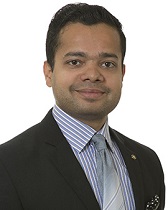
Stefan Van Aelst is a Professor at the Department of Mathematics, KU Leuven, and heads the Statistics and Data Science unit. He is actively involved in research on robust statistical methods for complex and high-dimensional data. Affiliation: Faculty of Science, KU Leuven Research: Robust statistics, functional data, fuzzy data, and applications in chemometrics and bioinformatics Teaching: Advanced Statistical Methods, Robust Statistics, Statistical Data Analysis His recent publications focus on robust dispersion estimation, sparse logistic regression, functional data analysis, and multilinear PCA. Collaborations include researchers like Rousseeuw, Zamar, and Verdonck. He contributes to software development, including the MATLAB library LIBRA and R packages like robustbase and cellWise , and participates in organizing seminars and conferences.
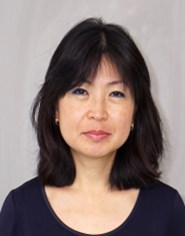
Nada Sissouno is a Professor of Mathematics and Didactics of Mathematics at the Faculty of Electrical Engineering, Media and Informatics at Amberg-Weiden University of Applied Sciences since November 2023. She also serves as Vice Dean and Co-head of the Competence Center Grundlagen (CCG). Additionally, she maintains a position as a guest researcher at the Research Group: Applied and Numerical Analysis and Optimization and Data Analysis at the Technical University of Munich (TUM). Her educational background includes a Doctorate in Mathematics (Dr. rer. nat.) from TU Darmstadt (2007-2011) and a Diplom in Mathematics with a minor in psychology from TU Darmstadt (2000-2007). She has completed further education as a Diversity Manager in 2021 and holds certificates in teaching in higher education from the Bavarian Universities (2014-2016). Professor Sissouno's research focuses on mathematical methods in signal and image processing, data science, dynamical systems, numerical simulation, and approximation theory. Her work particularly emphasizes spline functions on domains, wavelets and frames, and evidence-based development of teaching methodologies. Her recent publications demonstrate strong expertise in mathematical imaging, phase retrieval problems, and approximation theory, with applications spanning ptychographic imaging, variational inpainting methods, and structural sparsity in multiple measurements. Her collaborative research bridges theoretical mathematics with practical applications in signal processing and image analysis, with a particular focus on developing robust numerical algorithms for complex data analysis problems. She has published in prestigious journals including Advances in Computational Mathematics, Journal of Fourier Analysis and Applications, IEEE Transactions on Signal Processing, and Inverse Problems. Referentin für Talentmanagement & Diversity at TUM (2022-2023) Deputy spokesperson of Research Associates' Council of the TUM (2019-2023) Gender equality officer of Department of Mathematics (2019-2022) Professor Sissouno teaches mathematics courses for engineering and computer science students, with a focus on making mathematical concepts accessible and relevant to practical applications. She has been involved in teacher training and the evidence-based development of teaching methodologies, demonstrating her commitment to both research excellence and educational innovation.
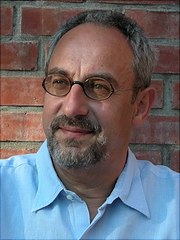
Arvind Krishna is an Assistant Professor of Instruction in the Department of Statistics and Data Science at Northwestern University’s Weinberg College of Arts & Sciences. He serves as the advisor for Data Science Majors and Minors. His teaching philosophy centers on student motivation, engagement, and feedback, employing modern examples and active learning methods both inside and outside the classroom. He holds a PhD from Georgia Institute of Technology (2021). Research Interests : Applying data science to real-world problems, with a current focus on education. His work bridges statistical methodologies and practical challenges in educational technology and pedagogical innovation. Recent Research Contributions : Recent publications span adaptive materials design optimization, robust experimental modeling, and novel clustering techniques. His work integrates statistical rigor with interdisciplinary applications in acoustics and materials science. Affiliations : Office located at 2010 Sheridan Rd, Room 208. Contact via krish@northwestern.edu or visit his departmental website.
Natalya Pya Arnqvist is an Associate Professor in Mathematical Statistics at Umeå University, Sweden. She is affiliated with the Department of Mathematics and Mathematical Statistics and has active roles in research groups focused on Functional Data Analysis, Semiparametric Regression, and Statistical Learning for Spatio-Temporal Data. Her career includes prior positions at Nazarbayev University (2015-2020), University of Bath (2011-2015), and KIMEP University (2000-2005). Education : PhD in Statistics (University of Bath, UK, 2007-2010), CSc in Physical and Mathematical Sciences (Institute for Mathematics, Kazakhstan, 2000-2005). Her research centers on statistical regression modelling and functional data analysis , with significant contributions to shape constrained additive models (SCAMs) and model-based functional clustering . She has developed R packages such as scam , fdaMocca , and nilde for these methodologies. Recent publications highlight applications in applied demography , defect detection , and nonlinear state space modeling , reflecting her focus on bridging statistical theory with industrial and ecological challenges. She teaches undergraduate and graduate courses in probability, regression, and statistical learning.
Vanesa Guerrero Lozano is an Associate Professor in the Department of Statistics at Universidad Carlos III de Madrid, affiliated with the Flores de Lemus Institute and the UC3M-Santander Big Data Institute. Her work bridges mathematical optimization, statistical modeling, and data science, with applications across disciplines including biomedicine, fluid mechanics, and sustainable development. Her research focuses on developing advanced statistical methodologies using mathematical optimization. Key interests include shape-constrained regression, P-splines smoothing, sparse modeling, clustering of categorical data, and interpretable machine learning. She applies these techniques to complex datasets in turbulence modeling, biological age imputation, and pandemic forecasting. The recent publications reveal a strong trend in integrating optimization techniques with statistical learning, particularly in nonparametric and semiparametric models. There is a consistent emphasis on interpretability, robustness, and scalability, especially for high-dimensional and dynamic datasets. Applications span from fluid dynamics to public health, demonstrating interdisciplinary impact. Scientific Awards and Recognition: Ayuda adicional within the Juan de la Cierva Incorporación Program (2020), awarded by the State Research Agency (AEI) Research Leadership and Advising: She has served as principal investigator on multiple competitive research projects funded by national and regional agencies, including the State Research Agency (AEI), the Jacques Hadamard Mathematical Foundation, and the Community of Madrid. Her projects cover topics such as constrained additive models, machine learning for sustainable fishing, turbulence control, and ADHD diagnosis using data science. She has supervised at least one doctoral thesis on constrained smoothing models, indicating active mentorship in methodological statistics and optimization. Laboratories and Research Groups: She is a member of the Energy Analytics research group and conducts her work within the UC3M-Santander Big Data Institute, which supports interdisciplinary data science research. Her affiliation with the Flores de Lemus Institute further underscores her engagement with advanced statistical and computational methodologies.
Dr. Hannes Matuschek is a Researcher in the Department of Applied Mathematics at the University of Potsdam, Germany, with office space 2.09.1.24 and contact email hannes.matuschek@uni-potsdam.de. He actively participates in the institute's academic events including working group seminars and colloquia. Research Interests: His work spans Statistics, Applied Mathematics, Systems Biology, and Biomechanics. Key contributions include statistical methodology for linear mixed models (addressing Type I error/power tradeoffs and interaction effects), smoothing spline ANOVA for eye movement analysis in reading, stochastic modeling of gene regulatory networks, and vector field manipulations on spherical domains. His research bridges theoretical frameworks with applications in cognitive science, systems biology, and fraud detection. Publication Trends: His 12 publications (2012-2019) reveal a trajectory from computational systems biology (stochastic biochemical kinetics tools like iNA) toward statistical methodology development. Early work focused on noise approximation in gene networks, evolving into eye-tracking analysis and vector field mathematics, demonstrating consistent integration of advanced statistics with domain-specific challenges across biological and cognitive sciences. Scientific Awards: No awards were mentioned in the provided materials. Advising and Grants: No information was provided regarding student supervision, grant funding, or research collaborations. Labs and Teams: He operates within the Applied Mathematics research group at the University of Potsdam, contributing to seminars and events in analysis and interdisciplinary applications as evidenced by his institutional presence.
Prof. Dr. Alois Kneip is a leading academic at the Department of Economics , University of Bonn, with affiliations to the Institute for Finance & Statistics and the Hausdorff Center for Mathematics . His research focuses on advanced statistical methodologies, particularly in Functional Data Analysis , Aggregation Theory , and Nonparametric Statistics . His work spans interdisciplinary applications, including econometric modeling, growth curve analysis, and high-dimensional regression. Key contributions include developing frameworks for Malmquist indices , DEA efficiency scores , and functional principal component analysis . Recent publications emphasize spatial regression, parameter cascading, and reconstruction of fragmented functional data. Alois Kneip’s research has been published in top-tier journals such as the Journal of the American Statistical Association , Annals of Statistics , and Econometric Theory . His methodological innovations bridge theoretical statistics with practical problems in economics, finance, and biomedical data analysis. He actively contributes to teaching and academic leadership at the University of Bonn.
Dr. Jakub Stoklosa is a Senior Lecturer at the School of Mathematics & Statistics, University of New South Wales. He holds a PhD in Applied Statistics (2012) and a BSc (Hons) in Science (2007) from The University of Melbourne. PhD in Applied Statistics, The University of Melbourne (2012) BSc (Hons) in Science, The University of Melbourne (2007) His research focuses include: Analysis of capture-recapture data Estimation of animal abundance Measurement error modeling Model selection for multivariate data Non-parametric smoothing Recent publications emphasize statistical applications in ecology, biodiversity, and environmental science, with methodological contributions to error-in-variables regression and zero-truncated models. Scientific awards: 2018 Australian Museum Eureka Prize top 3 finalist (Burramys Genetic Rescue Team) NSW Office of Environment and Heritage Eureka Prize for Environmental Research (2018) Grants: ARC Discovery Project Grant DP210101923 (2021–2023) for "Innovative statistical methods for analysing high-dimensional counts" with D.I. Warton
Gerlind Plonka is a Professor of Applied Mathematics at the University of Göttingen, specifically within the Institute for Numerical and Applied Mathematics (NAM). Her research focuses on Numerical Fourier Analysis Wavelet Theory Regularization and Nonlinear Diffusion Methods Fast Algorithms and Numerical Stability Signal and Image Processing Applications Her recent publications emphasize structured subsampling in Fourier domains, Prony-type methods for exponential sum recovery, and deep learning integration in medical imaging. She supervises active PhD candidates including Benjamin Kocurov, Anahita Riahi, Yannick Nicola Riebe, and Janina Schmidt, with a legacy of advising over 50 graduates across diverse topics like Sparse FFT Algorithms Phase Retrieval Constraints Wavelet-Based Image Compression Nonlinear Diffusion Filters High-Dimensional Data Approximation
Ryszard Kozera holds the position of Adjunct Associate Professor in the Department of Computer Science and Software Engineering at The University of Western Australia (UWA). He is affiliated with the School of Physics, Maths and Computing. His research focuses on computational mathematics, machine learning, and applied computer vision. Key research interests include spline interpolation, trajectory estimation, neural networks, and their applications in microbiology and hardware optimization. He has contributed to projects like 'Smoothness in geometry and computer vision' funded by ARC Small Grants. Recent work explores machine learning applications in soil microorganism identification and Apple Silicon performance analysis. Collaborations span international conferences such as ICCS and ESM.
Prof. Dr. Hans Joachim Oberle is a retired professor in the Department of Mathematics at the University of Hamburg, affiliated with the Applied Mathematics (AM) division. His academic career included significant contributions to optimal control theory, calculus of variations, and numerical analysis. He authored influential textbooks such as 'Mathematik für Ingenieure' and developed numerical methods for solving optimal control problems, notably the BNDSCO software package. His research emphasizes practical applications in aerospace engineering, climate modeling, and robotics, with a focus on trajectory optimization, fuel efficiency, and spline interpolation techniques. Key affiliations: Faculty of Mathematics, Computer Science & Natural Sciences Research focus areas: Optimal control, numerical methods, mathematical modeling Software contributions: BNDSCO for boundary value problems His work bridges theoretical mathematics with engineering challenges, including aeroassisted orbital transfers and CO₂ emission reduction models. Over his career, he supervised numerous student theses on topics ranging from robot arm control to anti-angiogenic cancer therapy optimization. Despite retirement, his educational materials and computational tools remain widely used in academic and industrial settings.
Marek Skowron is an academic researcher at the Faculty of Information and Communication Technology, Wrocław University of Science and Technology, specializing in optimal periodic control and evolutionary algorithms. He is affiliated with the Department of Control Systems and Mechatronics. Research Interests: His work focuses on optimizing periodic control systems with inventory and energy constraints, applying evolutionary algorithms to find globally optimal solutions for complex industrial processes. Special emphasis is placed on stability analysis and multifrequency control approaches. Publication Trends: His research spans from 2004 to 2016, demonstrating consistent application of evolutionary computation to control system optimization, particularly in industrial and chemical engineering contexts. Key themes include constraint handling, cycle stability, and multiobjective optimization frameworks. Contact: Email: marek.skowron@pwr.edu.pl Office: C-3, room 217 Hours: Thursdays 19:00-21:00, Fridays 19:00-21:00
GuanNan Wang is an Associate Professor in the Department of Mathematics at the College of William & Mary, where he teaches courses in probability, mathematical statistics, and data science. He holds a Ph.D. in Statistics from the University of Georgia (2015), and also earned two M.Sc. degrees in Computer Science and Statistics from the same institution. Ph.D., Statistics, University of Georgia, 2015 M.Sc., Computer Science, University of Georgia, 2015 M.Sc., Statistics, University of Georgia, 2010 His research focuses on statistical learning, large-scale data analysis, non- and semi-parametric statistics, spatial data analysis, and functional data modeling . He develops advanced statistical methodologies with applications in public health, environmental science, and data science. His work often involves spline-based estimation, varying coefficient models, and spatiotemporal modeling. The recent publications highlight a strong trend toward applied statistical modeling in epidemiology , particularly in the context of the COVID-19 pandemic. His research integrates anomaly detection, data fusion, and real-time forecasting, as demonstrated by his contributions to the COVID-19 Dashboard . The publications collectively emphasize nonparametric and semiparametric methods, spatial statistics, and robust inference. His scientific contributions include work published in top-tier journals such as Journal of the American Statistical Association , Biometrics , Statistica Sinica , and Journal of Nonparametric Statistics . Wang actively contributes to data-driven public health initiatives, advising on statistical modeling and leading efforts in infectious disease forecasting. He has not received any explicitly mentioned awards or fellowships. He leads a research group focused on spatiotemporal modeling and has developed tools for real-time risk analysis of infectious diseases. His lab is involved in the integration and analysis of multi-source public health data.
Minggen Lu is a Professor in the Environmental Sciences & Health at the University of Nevada, Reno , where he serves as Graduate Director of Health Analytics and Biostatistics. His research bridges statistical methodology and public health/biomedical applications, with a focus on semiparametric regression, panel count data, and survival analysis. Education: Ph.D. in Biostatistics (University of Iowa), Ph.D. in Mathematics (Northeastern University) Lu’s work integrates statistical innovation with collaborations in clinician medicine, nursing, opioid overdose prevention, and adolescent health. Recent publications highlight applications in HPV vaccination , ACEs (Adverse Childhood Experiences) , HIV interventions , and healthcare disparities . His methodological contributions include penalized splines and quasi-likelihood estimation for complex data structures. Article trends reflect dual expertise in biostatistical methods (interval-censored models, zero-inflated regression) and applied public health research (HIV prevention, cancer screening, youth assets). Collaborative projects often address cultural barriers in healthcare access for Chinese and Latino populations. While no explicit scientific awards are listed, his extensive co-authorship network indicates active interdisciplinary collaboration . Affiliations span health informatics , emergency medicine , and epidemiology . Recent work examines COVID-19 hospitalization risks and opioid overdose interventions in Nevada’s emergency departments. Lu’s teams include researchers in biostatistics , public health , and clinical medicine , particularly in studies involving longitudinal cohort designs and health behavior modeling . His Google Scholar profile confirms ongoing contributions to statistical literature and health sciences.
Angela Carollo is a Researcher at the Max Planck Institute for Demographic Research (MPIDR) in Rostock, Germany, affiliated with the Laboratory of Fertility and Well-Being. Her work focuses on developing advanced statistical methodologies for demographic analysis, particularly in survival and event-history models with multiple time scales. Her research interests span demography, statistics, and population health, with emphasis on: Survival analysis and competing risks modeling Event-history frameworks with multidimensional time Fertility dynamics and family transitions Mortality patterns and health outcomes Statistical software development for demographic applications Carollo's publication record demonstrates consistent innovation in handling complex demographic data structures. Her recent work shows strong trends toward interdisciplinary collaboration (spanning statistics, gerontology, and public health) and methodological rigor in modeling time-dependent phenomena. Key contributions include the TwoTimeScales R package and novel approaches to hazard smoothing across multiple temporal dimensions, applied to critical demographic questions like partnership transitions and mortality prediction. No scientific awards were documented in the source material. Her collaborative research involves extensive work with international teams across Europe, though no formal student advising or grant management details were provided. Current projects include dissertation work on "Multiple Time Scales in Survival and Event-History Models" within the Laboratory of Fertility and Well-Being. Carollo operates within MPIDR's Laboratory of Fertility and Well-Being, which investigates how demographic processes like fertility and partnership transitions interact with individual well-being across the life course, leveraging advanced statistical techniques for population-level insights.