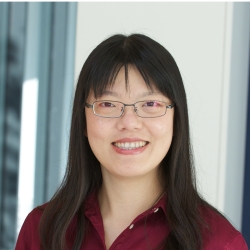
Nicholaus Johnson is a Research Associate in the Environmental Health Sciences department at Yale School of Public Health . His work focuses on evaluating environmental exposures from unconventional oil and gas development, groundwater contamination, and associated health impacts. Contact: nicholaus.johnson@yale.edu . Key research areas: Environmental Health, Water Quality, Shale Gas Impacts Methodologies: Spatial Epidemiology, Exposure Assessment, Machine Learning Health outcomes analyzed: Birth Defects, Childhood Leukemia, HPV Vaccination Rates
Ville Hautamäki is an Associate Professor at the University of Eastern Finland's School of Computing, Department of Computer Science. His research focuses on data science, statistical inference, and deep learning with applications in autonomous agents, bioinformatics, and speech technology. He teaches courses such as Probabilistic Inference for Data Science and Bayesian Inference, and regularly contributes to summer schools on machine learning. His research group, Applied Statistics and Statistical Machine Learning, addresses challenges in speaker verification, speech processing, and biomedical data analysis. Recent works include advancements in robust speaker recognition under noisy conditions, deepfake detection, and end-to-end autonomous driving systems. Collaborations span diverse domains including healthcare, cybersecurity, and robotics. Publications highlight contributions to multi-task learning frameworks, imitation learning policies, and generative models for single-cell data. His work emphasizes cross-disciplinary approaches, blending theoretical machine learning with practical applications in real-world scenarios.
Eugenio Aprea is an Associate Professor of Food Chemistry at the University of Trento, affiliated with the Department of Cellular, Computational and Integrative Biology (CIBIO) and the Agriculture, Food, and Environment Center-C3A. He holds a PhD in Natural Sciences (Gas-Phase Ion Physics) from the University of Innsbruck and a Bachelor's in Food Science and Technology from the University of Naples 'Federico II'. His research focuses on food chemistry, volatile compounds, sensory perception, analytical chemistry, and data analysis. Key areas include studying aroma release in foods (e.g., olive oil, hazelnuts), optimizing food processing techniques, and reducing food waste through advanced analytical methods like GC-IMS and PTR-ToF-MS. Academically, Aprea teaches courses on food chemistry and microbiology for culinary training programs and has contributed to projects like the EU-funded SISTERS initiative targeting food loss reduction. He actively serves on editorial boards of journals such as *Frontiers in Nutrition and Food Science*, *Molecules*, and *Beverages*, emphasizing his role in advancing food science communication. His work bridges fundamental research and applied solutions, including developing sustainable feed from agricultural by-products and assessing consumer acceptance of novel foods (e.g., insect-based proteins). Collaborations with industry and institutions ensure practical applications of his findings, particularly in improving food quality and safety.
Simo Puntanen is a Professor of Statistics at the Department of Mathematics and Statistics, University of Tampere, Finland. His research focuses on linear models, covariance structures, and statistical theory, with significant contributions to Best Linear Unbiased Estimation (BLUE) and multivariate analysis. He has been actively involved in editorial boards (e.g., Indian Statistical Institute Series) and peer review for journals, ensuring academic rigor in statistical literature. Key professional activities include organizing conferences (e.g., International Conference on Trends in Linear Statistical Inference), delivering keynote lectures (e.g., C.R. Rao's Centenary), and participating in international research collaborations (e.g., Poznan University of Life Sciences visits). His work bridges theoretical advancements with practical applications in data confidentiality and encryption. Dr. Puntanen has authored/co-authored over 250 publications, including books, articles, and commissioned reports. His research emphasizes covariance matrix properties and BLUE preservation under model changes, reflecting a deep engagement with foundational statistical problems. Labs/Teams: Collaborates extensively with global researchers in linear models and multivariate statistics, fostering interdisciplinary networks through conference organizing and editorial roles.
Sébastien MONNET is a Professor at the University of Savoie Mont Blanc since 2016, affiliated with Polytech Annecy-Chambéry and the LISTIC laboratory (deputy director). Previously, he was an Associate Professor at Sorbonne University (2007–2016) and held roles at Inria. His HDR (2015) focuses on data replication in large-scale distributed systems. Education: PhD and HDR in Computer Science Research Interests: Focuses on distributed systems, fault tolerance, data replication protocols, cloud computing, and simulation methodologies. Recent work includes federated learning energy estimation, semantic integration in smart systems, and optimization of distributed architectures. Key Projects: ANR RainbowFS (2016–2020): Geo-replicated database optimization AAP USMB DEDICATED (2019–2020): Distributed AI and smart home systems ARMADA (2013–2015): Chile-France collaboration on cloud reliability Advising & Grants: Supervised 12+ PhD/Master students Co-PI in CNRS-Araucaria (2015–2017) and Maimonide (2014–2015) projects Labs/Teams: Deputy director of LISTIC, leading the ReGaRD theme (Resilient and Adaptive Distributed Systems).
Christos Pappas is a Professor at the Department of Food Science and Technology at the Agricultural University of Athens (AUA). His academic focus spans analytical chemistry, food chemistry, and agricultural biochemistry, with a strong emphasis on food authenticity, quality assurance, and natural product research. He teaches courses such as Instrumental Chemical Analysis, Natural Products Chemistry, and Organic Chemistry, integrating theoretical concepts with practical laboratory skills. Research Programs : Chemical characterization of Greek agricultural products (e.g., olive oil, pistachios, saffron) Development of innovative analytical techniques for food fraud detection Edible film technology using natural polymers Sustainable practices in olive cultivation and winemaking His research interests include spectroscopic methods (FTIR, GC-MS, Raman), multivariate analysis for food authentication, and optimization of agricultural processes. He has led projects funded by national and European grants, such as the aflatoxin management initiative in pistachios (€284k budget, 2023–2025). His work frequently addresses high-value Greek exports like honey and olive oil, ensuring product authenticity through cutting-edge analytical tools. Publications span over 30 years, with recent focus on: Food authentication via spectroscopic techniques Edible packaging materials Nutrient management in olive cultivation Phenolic compound analysis in honey and wine No formal awards are listed, though his contributions reflect sustained excellence in food science. He coordinates interdisciplinary teams and collaborates with industry partners to advance food technology and agricultural sustainability.
Dr. Yi-chieh Chen is a Senior Lecturer in Chemical and Process Engineering at the University of Strathclyde, leading the Measurement and Analytics Team. He holds a PhD from the University of Manchester (2008) and a BSc from National Tsing Hua University (2002). His research focuses on spectroscopic techniques, particularly Raman and surface-enhanced Raman spectroscopy, applied to nanostructure materials for optical sensing. Current projects include developing UV-vis-NIR spectroscopy platforms for process analysis and biomedical diagnostics. Key interests: Process monitoring, optical sensors, nanomaterials Leadership: Measurement and Analytics Team, Strathclyde Recent work involves pharmaceutical drying monitoring via spatially offset Raman spectroscopy and AI-driven particle characterization. He has secured funding for projects like the KTP-ScotBio initiative and plastic bale quality assessment. Awards include the 2014 Converge Challenge Prize. Active collaborations span chemical engineering, data science, and environmental protection sectors. Supervises PhD projects on pharmaceutical suspension modeling and spectroscopic instrumentation.
Prof. Claudia Czado is a Professor of Applied Mathematical Statistics at the Technical University of Munich (TUM), affiliated with the TUM School of Computation, Information and Technology. Her research focuses on statistical methodology, particularly vine copula models, applied to finance, insurance, engineering, and environmental sciences. She earned her Ph.D. in Operations Research from Cornell University and has held academic positions at York University (Canada) before joining TUM in 1998. Education: She studied at the University of Göttingen and received her doctorate from Cornell University in 1989. Her career includes roles as Assistant and Associate Professor at York University before becoming a full Professor at TUM. Research Interests: Her work centers on modeling complex dependencies using vine copulas, Bayesian inference, risk management, and applications in diverse fields like climate science and engineering. Notable contributions include the textbook Analyzing Dependent Data with Vine Copulas (2019). Awards: Recipient of the Fulbright Travel Grant (2001), Mathematical Sciences Institute Fellowship (1986–1987), and other fellowships from Cornell University. Advising & Grants: Supervised numerous theses (over 50 listed), contributing to academic mentorship. Active in collaborative projects with industry and international researchers. Labs/Teams: Co-founder of the "Global Challenges for Women in Math Science" program at TUM, promoting gender equality in STEM.
Prof. Fabio Presaghi is an Associate Professor of Psychology at Sapienza University of Rome, affiliated with the Department of Psychology of Developmental and Socialization Processes. He holds roles such as Editor-in-Chief of Psychology Hub , Vice-President of the Master's Program in Psychology of Communication and Marketing, and Academic Director of International Mobility for the same program. His research focuses on advanced statistical methods (e.g., SEM, multilevel modeling, meta-analysis) applied to developmental, clinical, and social psychology. Key interests include self-injury measurement, alexithymia in youth, and the psychosocial impact of digital technology addiction. Presaghi has led projects funded by grants such as the 2008 initiative for adapting the Children's Somatization Inventory. His work spans studies on emotion regulation, moral development, and the effects of mindfulness interventions on adolescents. Current projects include developing non-clinical and clinical self-injury assessment tools for publication in Psychiatry Research and European Psychiatry . He teaches courses like Statistical Research Methods for medical students and Multivariate Analysis Techniques for psychology students, using online platforms like Moodle and Google Classroom. His institutional roles include serving on the Ethical Committee for Transdisciplinary Research and the Quality Board of the Psychology of Communication and Marketing program.
Heleen Slagter is a Full Professor of Cognitive Neuroscience at Vrije Universiteit Amsterdam (VU Amsterdam), Director of the Institute Brain and Behavior Amsterdam (iBBA), and co-Head of the Department of Cognitive Psychology. She earned her PhD in Cognitive Neuroscience from the University of Amsterdam (2005) and completed a postdoc at the University of Wisconsin-Madison, USA, before establishing her own lab in Amsterdam. Her research investigates the neural mechanisms underlying attention, perception, and neuroplasticity, with a focus on how mental training (e.g., meditation) influences cognitive functions. Key roles include: Director of iBBA and co-Head of Cognitive Psychology at VU Amsterdam Former President of the Dutch Society for Brain and Cognition (NVP) (2018–2022) Associate Editor of Journal of Cognitive Neuroscience (2020–present) Research interests span cognitive neuroscience, attention, meditation's effects on the brain, and plasticity of neural mechanisms. Her work has been recognized with prestigious grants, including an ERC Starting Grant (2015), ERC Consolidator Grant (2020), and VIDI grant (2010), along with the Early Career Award from the Society for Psychophysiological Research (2014). Her lab, the Cognition and Plasticity Lab, explores topics such as conscious perception, distractor inhibition, and the impact of meditation on predictive processing. Supervised PhD theses include studies on neural oscillations and attentional mechanisms. She teaches courses in cognitive neuroscience and supervises research projects in cognitive science.
Ruth Sanderson is a Statistician at the Institute of Biological, Environmental, and Rural Sciences (IBERS) at Aberystwyth University, UK. With over two decades of research output from 2001-2025, she specializes in applying advanced statistical methods to agricultural and environmental sciences, particularly focusing on grassland ecosystems, soil science, and climate change impacts. Her research profile shows deep expertise in agricultural statistics with particular emphasis on Lolium perenne (100%), soil science (82%), Lolium species (76%), Trifolium pratense (54%), silage production (46%), and nutrient management (40%). She has developed specialized statistical methodologies for analyzing complex agricultural data, including in vitro gas production, near-infrared spectroscopy, and climate-temperature relationships. Dr. Sanderson's recent work (2023-2025) demonstrates continued innovation in several critical areas: climate change impacts on species ranges, grassland systems for flood mitigation, nitrogen use efficiency in forage grasses, and optimizing protein preservation during silage production. Her statistical expertise bridges theoretical methodology with practical agricultural applications. She has made significant contributions to reducing reliance on imported protein feed within ruminant supply chains, addressing food security challenges while promoting environmental sustainability. Her research aligns with multiple UN Sustainable Development Goals related to sustainable agriculture, climate action, and responsible resource management. Dr. Sanderson maintains an active collaborative network with researchers including M.S. Dhanoa, J.L. Ellis, C.D. Powell, S. López, and agricultural scientists like C.L. Marley and R. Fychan. Her methodological contributions continue to advance statistical approaches tailored specifically for agricultural research challenges.
Emilia Dunca is an Associate Professor at the University of Petroșani, holding a PhD and serving as Department Manager in the Department of Environmental Engineering and Geology within the Faculty of Mining. Her work focuses on environmental remediation, mining waste management, and sustainable land use in post-industrial regions like the Jiu Valley. She has conducted extensive research on phytoremediation strategies for heavy metal-contaminated soils, soil formation processes on mining waste dumps, and energy poverty in Romania. Her interdisciplinary approach integrates geoecology, environmental engineering, and policy analysis to address complex environmental challenges. Her educational background includes advanced training in pedology, ecological rehabilitation, and geoenvironmental systems. Notable projects include the Living Lab initiative for soil health restoration, risk assessments for mine tailings, and European-funded studies on coal transition scenarios for the Jiu Valley microregion. She has contributed to curriculum development in environmental engineering through lab manuals and e-learning initiatives. Key research themes include: heavy metal mobility and toxicity in mine tailings, biochar applications for degraded soils, ecological succession on mining waste sites, and socio-economic dimensions of energy poverty. Her work often involves experimental methodologies (e.g., Pearson correlation modeling) and collaboration with local communities for sustainable development solutions.
Maria do Rosário Domingos Laureano is an Assistant Professor at ISCTE - University Institute of Lisbon, affiliated with the Department of Social and Business Sciences. She serves as an Integrated Researcher at ISTAR-Iscte (Research Center in Information Sciences, Technologies and Architecture), leading the Computational Modeling of Systems group. Her academic qualifications include a PhD in Quantitative Methods (ISCTE-IUL, 2009), a Master's in Applied Mathematics (Higher Technical Institute-UTL, 2002), and a Bachelor's in Mathematics (Faculty of Sciences-UL, 1990). Her research explores dynamical systems , mathematical optimization , and complex networks , with applications ranging from chaos synchronization in physics to biomathematical modeling of physiological processes. She employs cohomological methods, nonlinear differential equations, and multicriteria decision analysis across interdisciplinary domains including neuroscience, cybersecurity, and architectural sustainability. Laureano's publications emphasize chaos theory, cohomology in dynamical systems, and real-world complexity. Recent works investigate Lie group cocycles, Anosov systems, and biological signal dynamics, reflecting a consistent focus on theoretical rigor coupled with applied interdisciplinary modeling. Her 2025 research advances synchronization frameworks for chaotic systems and re-examines foundational celestial mechanics problems. She actively mentors graduate students, including doctoral research on molecular dynamics and water coherence phenomena. Her teaching portfolio includes core courses such as Mathematical Optimization , Computational Intelligence , and Multivariable Calculus across engineering and applied mathematics programs.
Dr. Philipp Breitfeld is a researcher at the University Medical Center Hamburg-Eppendorf (UKE), affiliated with the Clinic and Polyclinic for Anaesthesiology. His work focuses on integrating medical informatics and clinical research to enhance perioperative care. Research Interests: Personalized perioperative procedures, digitalization of airway management techniques, emergency medicine, echocardiography-guided interventions, and secure data infrastructures (Trusted Research Environments). Key Projects: Leads the VENTURE project (BMBF) for establishing Horizon Europe collaborations in perioperative medicine. His publications emphasize ultrasound applications, machine learning for video classification, and FAIR data management frameworks. Recent work includes the VIDIAC classification for difficult intubation and NICCI finger sensor validation for neurosurgical patients.
Miriam Andrejiová is an Associate Professor at the Department of Applied Mathematics and Informatics, Faculty of Mechanical Engineering, Technical University of Košice. Her academic career spans over two decades, with expertise in teaching theory and applied mathematical/statistical methods. PhD in Physics Teaching Theory (2004) Habilitation in Earth Resources Acquisition and Processing (2020) Academic affiliation: Technical University of Košice (since 2000) Andrejiová's research focuses on teaching theory and the application of mathematical and statistical methods in engineering contexts. She has contributed extensively to industrial engineering problems, particularly in conveyor belt mechanics and materials science. Her publications highlight statistical modeling of conveyor belt failure analysis using logistic regression and Naive-Bayes methods, with a strong emphasis on impact loading and rubber composite behavior. These works demonstrate interdisciplinary collaboration between mathematics and mechanical engineering. She supervises numerous students and has participated in multiple research projects, including VEGA, KEGA, APVV, and ITMS initiatives, focusing on mathematical modeling, materials science, and educational innovation.