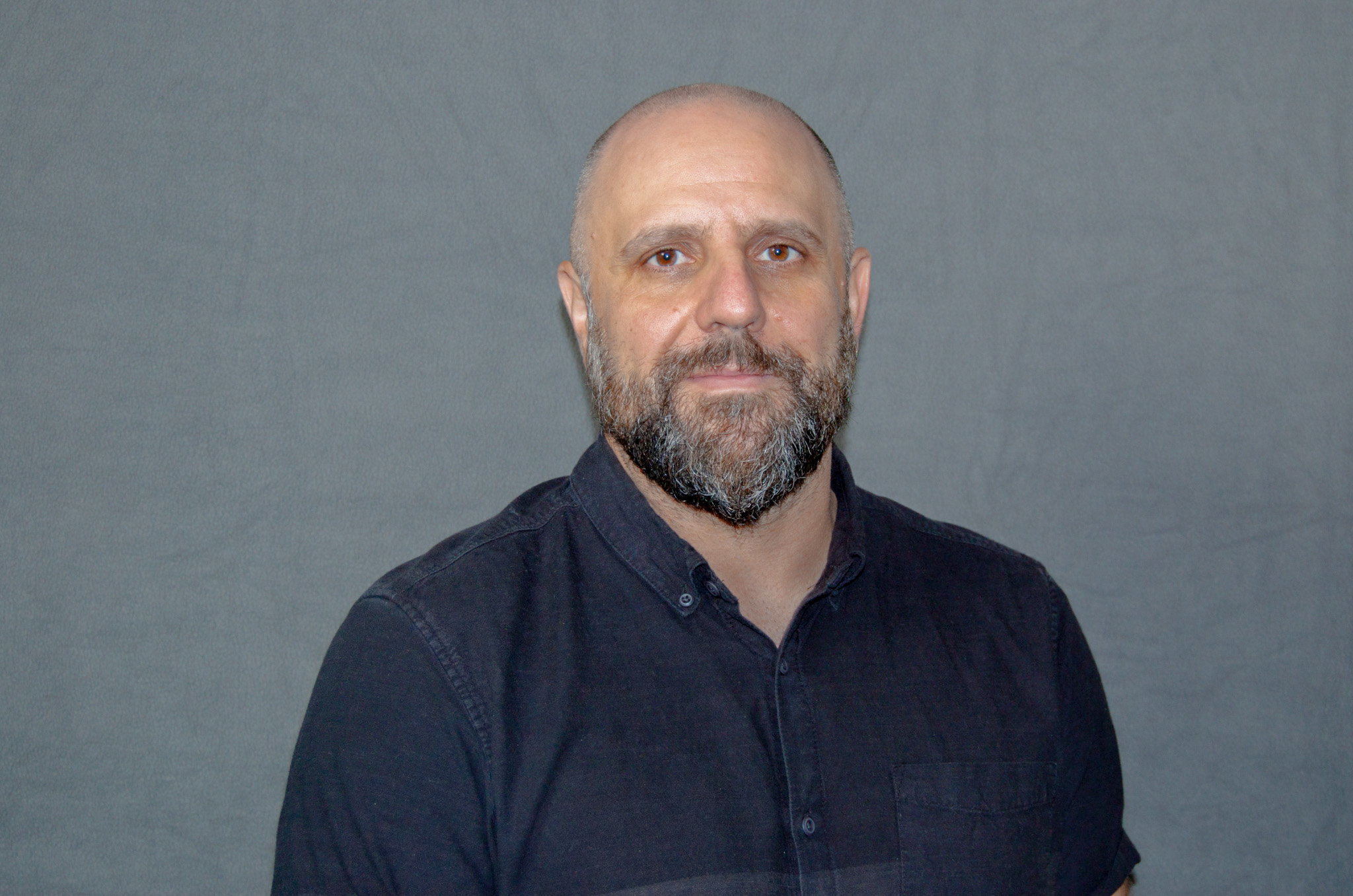
Stefano Castruccio is a Notre Dame Collegiate Associate Professor at the University of Notre Dame, specializing in environmental statistics and spatio-temporal modeling since joining in 2017. His research bridges statistical methodology with critical environmental applications including renewable energy assessment and air pollution impact analysis. His educational background includes: Ph.D. in Statistics from the University of Chicago (2013) M.S. in Mathematical Engineering from Politecnico di Milano, Italy (2007) B.S. in Mathematical Engineering from Politecnico di Milano, Italy (2005) Prof. Castruccio's research centers on developing computationally efficient spatio-temporal models for environmental systems, with major contributions in wind energy resource assessment and climate modeling. His methodological innovations integrate physics-informed machine learning with traditional statistical frameworks to address challenges in high-resolution data analysis and uncertainty quantification. His recent publications (2018-2025) reveal a strategic evolution toward deep learning integration for wind modeling and physics-constrained statistical frameworks, significantly advancing computational approaches for renewable energy forecasting and environmental risk assessment. His scientific recognition includes: Elected fellow of the American Statistical Association Elected member of the International Statistical Institute 2024 Gordon Bell Prize for Climate Modelling 2023 TIES President's invited lecture 2021 TIES Abdel El-Shaarawi Early Investigator Award 2020 Early Investigator Award from ASA Section on Statistics and the Environment Research funding includes major grants from NSF, NASA, and KAUST, most recently a $240,000 NSF CDS&E-MSS award for physics-informed forecasting of high-resolution spatio-temporal data. He maintains active international collaborations with Politecnico di Milano and KAUST through his research group's GitHub repository. His team focuses on open-source development of statistical tools for environmental applications, with ongoing projects in turbulent boundary layer modeling and high-resolution wind energy forecasting.