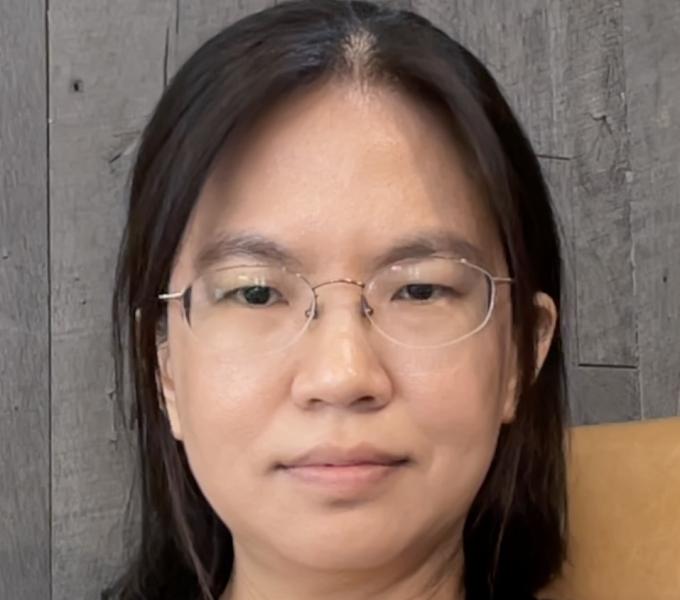
James C Thompson is a Professor of Psychology at George Mason University, directing the Perception & Action Neuroscience Group. His research investigates neural mechanisms of human movement perception using fMRI and EEG, with applications in surveillance and developmental disorders. Research spans biological motion processing, social cognition, and adolescent neurodevelopment. Key themes include emotion regulation, substance use predictors, and neural representations of social identity. Publications demonstrate a consistent focus on striatal activation patterns and sex differences in reward processing. Advises doctoral students on topics ranging from social decision-making to neurocognitive modeling. Supervised dissertations include work on gait synchronization and identity representation.
Lu Ting is a Professor at the Department of Mathematics within the Courant Institute of Mathematical Sciences, New York University. Their research integrates mathematical statistics and biostatistics with applications in oncology, environmental health, and precision medicine. Key focuses include molecular pathway analysis in glioma, biomarker development for drug resistance, and statistical methods in translational research. Research interests span mathematical modeling of cancer therapies, environmental exposure impacts on human health, and optimization algorithms. Notable projects include longitudinal studies on World Trade Center (WTC) exposure effects and sphericity testing in high-dimensional covariance matrices. Publications from 2015–2024 reflect interdisciplinary work combining mathematical rigor with biomedical challenges, particularly in cancer treatment optimization and environmental health surveillance. No scientific awards or grants are explicitly documented in the provided text.
Esten Høyland Leonardsen is a Postdoctoral Fellow in the Department of Psychology at the University of Oslo, specializing in cognitive and clinical neuroscience. His academic background includes a BSc and MSc in Informatics (Programming and Networks) from UiO (2014 and 2016, respectively). His research focuses on applying artificial intelligence, machine learning, and neuroimaging techniques to study brain aging, Alzheimer’s disease, and psychiatric disorders. He collaborates with the Center for Lifespan Changes in Brain and Cognition. Education: MSc in Informatics (Programming and Networks), University of Oslo (2016) BSc in Informatics (Programming and Networks), University of Oslo (2014) Research Interests: Esten’s work bridges AI, neuroscience, and clinical applications. Key areas include machine learning for neuroimaging analysis, brain age prediction, Alzheimer’s genetics, and the intersection of computational methods with mental health. His recent studies emphasize explainable AI in dementia diagnosis and the role of immune dysfunction in psychiatric disorders. Publications: Recent work highlights trends in AI-driven neuroimaging, genetic influences on brain aging, and translational research linking computational models to clinical outcomes. For example, he has explored vaccine hesitancy via mixed methods and applied small CNNs for Alzheimer’s classification. Awards: No scientific awards explicitly mentioned in the text. Advising/Grants: Collaborates on projects involving brain imaging, genetics, and computational modeling. No specific grants or advisees listed. Labs/Teams: Active in the Center for Lifespan Changes in Brain and Cognition, leveraging interdisciplinary approaches to study neurodevelopment and aging.
Christen Mirth is an Associate Professor at the School of Biological Sciences, Monash University. She holds formal academic positions including Group Leader at the Gulbenkian Institute for Molecular Medicine (2010–2015), Research Specialist at Howard Hughes Medical Institute (2008–2010), and Postdoctoral Research Associate at the University of Washington (2003–2008). Her research focuses on developmental plasticity, nutrition, and evolutionary biology, particularly in Drosophila models. Key interests include body size regulation, nutritional geometry, and the interplay between environmental stressors and life history traits. Her work contributes to UN Sustainable Development Goals related to health, sustainability, and environmental protection. Notable achievements include receiving the Genetics Society of Australasia Ross Crozier Medal (2019). Mirth leads and collaborates on projects such as 'Many ways to die: unveiling the hidden diversity in ageing' and 'Fitness and evolutionary consequences of developmental plasticity.' She actively engages in editorial roles, including serving on the editorial board of Insect Biochemistry and Molecular Biology since 2015. Her research outputs emphasize nutritional and thermal stress responses, developmental timing, and metabolic adaptations. Recent studies highlight cross-protective effects of amino acid restriction, evolutionary metabolic rate dynamics, and sex-specific aging mechanisms. These findings bridge basic biology with ecological and clinical implications.
Dr. Saonli Basu is a Professor in the Division of Biostatistics & Health Data Science at the University of Minnesota School of Public Health. She serves as Founding Director of the Genomic Data Commons and Co-Director of the Analytics Core at the Masonic Institute for the Developing Brain. Education: PhD in Statistics (University of Washington), MStat (Indian Statistical Institute), BS in Statistics (Presidency College) Her research focuses on developing statistical methodologies for genetic mapping of complex traits, particularly rare variant association and gene-environment interaction modeling. She specializes in computational statistics, nonparametric inference, and statistical genetics applications for diseases like Alzheimer's, type 2 diabetes, and substance abuse. Recent publications show trends in SNP heritability analysis , admixed population genetics , longitudinal pregnancy studies , and multi-variant association tests . Key collaborative projects include cerebral small vessel disease genomics and B. pertussis vaccination outcome prediction models. Scientific honors include: Chair, ASA Genomics and Genetics Section (2020) Fellow, American Statistical Association (2017) NIH BMRD study section member (2017-2021) Young Investigator, International Indian Statistical Association (2016) She has taught graduate-level courses in human genetics statistics and probability models for over 15 years. Current research receives NIH/NIDA R01 and NIDDK R21 grants, with co-investigator roles in epidemiology and psychology-led R01 projects.
Michelle Shardell is a Professor in the Department of Epidemiology and Public Health at the University of Maryland. She serves as Vice Chair of Research and Director of the Division of Biostatistics and Bioinformatics, with additional appointments as Co-Director of the Biostatistics and Informatics Core in the UMB's Claude D. Pepper Older Americans Independence Center (UM-OAIC). Her research integrates biostatistical methodology with aging and dementia studies, focusing on structural models, survival bias, unmeasured confounding, and machine learning applications in harmonized data. Education: B.S. in Mathematics from the University of Florida M.S. in Biostatistics from the University of Michigan School of Public Health Ph.D. in Biostatistics from Johns Hopkins University Bloomberg School of Public Health Her research spans aging-related functional decline, biomarker threshold validation (e.g., vitamin D in PROVIDO), and statistical methods for proxy reporting, missing data, and time-to-event analysis. She has contributed to microbiome harmonization standards (STORMS checklist) and -omics data integration in aging studies. Her 15 most recent publications highlight advancements in multivariate modeling for dual cognitive-physical decline (2023), phenotypic aging metrics (2022), sex-specific vitamin D thresholds (2021), microbiome reporting guidelines (2021), and longitudinal causal inference techniques (2018, 2016, 2015). Earlier works address proxy reporting bias, ICU infection control, and semiparametric modeling. Scientific Awards: 2006 Outstanding Teaching Award (University of Maryland) 2017 Fellow, Gerontological Society of America 2020 Strategic Initiatives Award (ASA Biometrics Section) 2024 Fellow, American Statistical Association She leads NIH/NIA-funded grants including R01 AG079854 (Biomarkers of Aging in Alzheimer’s and Disability), R01 AG048069 (Kidney Markers in Dementia and Disability), and RF1 NS128360 (Biomarkers of Aging). She also co-directs the Biostatistics and Informatics Core for the Pepper Center (P30 AG028747) and collaborates on FNIH Biomarkers Consortium projects.
G. Allan Johnson is the Charles E. Putman University Distinguished Professor of Radiology at Duke University, with concurrent appointments in Physics (Trinity College of Arts & Sciences) and Biomedical Engineering (Pratt School of Engineering). He serves as Director of the Duke Center for In Vivo Microscopy , an NIH/NIBIB national Biomedical Technology Resource Center focused on developing preclinical imaging technologies and applying them to critical biomedical questions. Ph.D. in Radiology from Duke University (1974) Current leadership in preclinical MRI and connectomics His research spans high-resolution magnetic resonance imaging , diffusion MRI , and structural connectomics , with applications to neurodegenerative diseases , brain development , and biomedical engineering . Recent work includes creating multicontrast MR atlases for rodent brains and pioneering ex vivo MRI-histology fusion techniques . Selected publications reveal expertise in diffusion tensor imaging , tractography , and multimodal imaging workflows for both preclinical and clinical applications . Grants include leadership in projects funded by the CHDI Foundation (Huntington's disease), University of Pittsburgh (connectome atlases), and University of Tennessee Health Science Center (Alzheimer's imaging genetics). Scientific recognition includes NIH/NIBIB Resource Center Leadership Charles E. Putman University Distinguished Professorship His team at the Duke Center for In Vivo Microscopy develops multiparametric imaging platforms , 4D cardiac micro-CT atlases , and quantitative susceptibility mapping methods for applications ranging from neurotoxicology to plant root imaging .
Dr. Francesco Paolo Casale serves as Principal Investigator in Machine Learning in Biomedicine at the Helmholtz Munich Institute AI for Health, part of Helmholtz Zentrum München and affiliated with Ludwig-Maximilians-Universität München's Biomedical Center. His research develops machine learning and statistical tools to analyze genetic cohorts with deep molecular and phenotypic data, addressing fundamental biomedical questions about disease mechanisms and progression. His academic foundation includes: PhD in Statistical Genetics from University of Cambridge & EMBL-EBI (2012-2016) M.Sc. in Physics of Complex Systems from Università di Napoli Federico II (2009-2012) B.Sc. in Physics from Università di Napoli Federico II (2009) Casale's research integrates machine learning, statistical inference, and systems genetics to develop scalable tools for genetic association studies, deep learning models for imaging genetics, and computational methods examining gene-environment interactions. His work emphasizes model robustness and interpretability while investigating molecular and cellular traits associated with disease severity. Current projects focus on rare variant analysis, aberrant gene expression prediction, and longitudinal omics data integration. His publication record shows a clear progression from foundational statistical genetics methods toward increasingly sophisticated integration of machine learning with multi-omics data. Recent work emphasizes practical biomedical applications including disease risk prediction through Mendelian randomization frameworks, advanced single-cell analysis techniques, and histopathology image classification. The research demonstrates consistent methodology development focused on scalability for large datasets while maintaining biological interpretability. Key recognitions include: Highly Recognized article in PloS Genetics Research Prize (2018) Microsoft Research New England Postdoctoral Fellowship (2017) EMBL studentship (2012) Honors for MSc and BSc degrees from Università di Napoli Federico II Throughout his career at Microsoft Research, Insitro, and Helmholtz Munich, Casale has led research teams developing computational approaches at the intersection of human genetics and machine learning. His work contributes to landmark projects including the 1000 Genomes Project and Blueprint initiative, with conference presentations at major venues including NeurIPS, ASHG, and EASL. Current grant support likely stems from Helmholtz Association funding mechanisms and collaborative biomedical research programs. He directs the Systems Genetics and Machine Learning Research team at Helmholtz Munich, which operates within the Biomedical Center ecosystem of LMU Munich. The team focuses on leveraging large-scale genetic datasets with machine learning to understand disease biology, with particular emphasis on target identification and characterization for therapeutic development. Current research directions include multi-timepoint omics analysis, disease subtyping, and developing interpretable models for clinical translation.
Max Hinne is an assistant professor at the Department of Artificial Intelligence, Radboud University, Nijmegen, The Netherlands, where he leads the Uncertainty in Complex Systems research group. His work bridges artificial intelligence, neuroscience, and statistics through advanced Bayesian methodologies. Dr. Hinne's research focuses on Bayesian modeling of brain networks using neuroimaging data. His primary interests include: Bayesian nonparametric models, particularly Gaussian processes Structural and functional brain connectivity analysis Predictive modeling of neural systems Causal inference frameworks Uncertainty quantification in complex systems Development of computational tools for neuroscience His approach emphasizes how probabilistic methods can address uncertainty in complex biological systems while providing interpretable models of brain function. Analysis of Dr. Hinne's publication trajectory reveals a consistent focus on Bayesian methods applied to increasingly diverse domains. Starting with foundational work in brain connectomics, his research has expanded to include applications in developmental psychology, medical genetics, and educational technology. His most recent work demonstrates sophisticated integration of nonparametric Bayesian methods with domain-specific challenges, particularly in handling uncertainty in complex, high-dimensional data across multiple scientific fields. Dr. Hinne actively mentors students and invites master's thesis projects focused on Bayesian nonparametric methods for neuroimaging data. He has developed several software tools including the Bayesian Connectomics Toolbox (BaCon), latent space modeling code, and GP CaKe for causal inference. His research group maintains strong connections with the Donders Institute for Brain, Cognition and Behaviour, facilitating interdisciplinary collaborations between statisticians, neuroscientists, and domain experts.
Assoc. Prof. Dr. Serdar GENÇ is a faculty member at Ahi Evran University, Faculty of Agriculture, Department of Agricultural Biotechnology since 2015. He holds a PhD and Master's in Animal Science from Namık Kemal University and a Bachelor's in Animal Production from Ankara University. His career spans roles such as Department Vice Head and Bologna Coordinator. PhD : Animal Science, Namık Kemal University (2014) MSc : Animal Science, Namık Kemal University (2010) BSc : Animal Production, Ankara University (2006) GENÇ's research focuses on biometrics, genetics, and statistical modeling in livestock , particularly Holstein cattle, Simmental cattle, and Anatolian buffalo. He explores genetic parameter estimation, lactation curve analysis, and environmental impacts on dairy productivity. His most recent work includes comparisons of statistical models for milk yield prediction, genetic characterization of donkey populations, and applications of automatic linear modeling in agricultural data. He has led projects on genomic selection, DNA banking for local breeds, and socio-economic studies of regional agricultural products. Notable awards include the TÜBİTAK Publication Encouragement Award (2018, 2009) . He has advised over 5 Master's theses on topics like milk yield in Simmental cattle and morphometric studies in donkeys. GENÇ is actively involved in academic conferences, editorial boards, and projects related to animal genetic resource conservation , with a strong focus on data-driven approaches to livestock improvement.
Seyoung Kim is an Associate Professor in the Department of Epidemiology at the University of Pittsburgh School of Public Health. She holds a PhD in Computer Science from University of California, Irvine (2007), preceded by a BS in Computer Engineering from Seoul National University (2001), and completed postdoctoral training at Carnegie Mellon University (2010). Her methodological research focuses on statistical machine learning for systems genomics, with applications to gene network reconstruction, eQTL mapping, and longitudinal data analysis. Education : BS in Computer Engineering, Seoul National University (2001) PhD in Computer Science, University of California, Irvine (2007) Postdoctoral Fellow in Computer Science and Machine Learning, Carnegie Mellon University (2010) Her lab develops computational tools for analyzing complex genomic datasets, including methods for: Learning gene networks under SNP perturbations Allele-specific expression quantification via kallisto extensions Integrating multi-omics data with scalable algorithms Doubly mixed-effects Gaussian process regression for spatio-temporal modeling Joint covariance estimation in high-dimensional biological datasets Recent work demonstrates methodological advancements in handling dependencies among samples and features in genomic studies. She teaches EPIDEM 2186 Introduction to R Programming within the epidemiology curriculum.
Leah Johnson is an Associate Professor in the Department of Statistics at Virginia Polytechnic Institute and State University (Virginia Tech), within the College of Science. Her research focuses on the intersection of statistics, biology, and mathematics, particularly in understanding how individual variability in populations influences broader ecological and epidemiological patterns. Education: Ph.D. in Applied Mathematics and Statistics and Physics, University of California Santa Cruz (2006), Dissertation: Mathematical Modeling of Cholera M.S. in Physics, University of California Santa Cruz (2003) B.S. with Honors in Physics, The College of William and Mary (2001) Research Interests: Dr. Johnson’s work centers on infectious disease epidemiology, vector-borne disease dynamics, and the impact of climate change. She employs Bayesian statistical methods and mechanistic models to study how environmental drivers, population structure, and individual behaviors shape disease transmission and persistence. Key areas include malaria, dengue, and amphibian pathogens. Recent Article Trends: Her publications emphasize the role of temperature and humidity in vector performance, the development of databases for vector traits, and ecological forecasting under climate change. Studies highlight the importance of integrating empirical data with theoretical models to address public health challenges. Awards and Honors: Early Career Fellow, Mathematical Biosciences Institute (2013) Finalist, Kings College Junior Research Fellowship (2008) College Research Associate, University of Cambridge (2006–2009) Grants and Funding: Principal Investigator: Vector Behavior in Transmission Ecology (VectorBiTE) (NIH-NSF-USDA, 2015–2020) Co-PI: Effects of Temperature on Vector-Borne Disease Transmission (NSF-NIH-USDA, 2015–2020) Labs and Teams: She leads the QED Lab, which explores quantitative methods for ecological and epidemiological systems. The lab collaborates on global initiatives like the VectorByte platform for vector trait data and climate-driven disease forecasting.
Peggy Wehner is a doctoral researcher at the Institute of General Psychology, Department of Psychology, Faculty of Science, Dresden University of Technology. Her work integrates empirical process measures and computational modeling to study cognitive sub-processes in intertemporal and probabilistic decision-making. M.Sc. Psychology: Cognitive Affective Neuroscience (2020), TU Dresden B.Sc. Psychology (2017), TU Dresden Her research focuses on executive functions in self-structured environments, exploring how cognitive flexibility and processing strategies influence decision-making. She has developed educational tools for statistics and cognitive modeling, and her publications span topics like task interruption management, social creativity, and phenotyping methodologies. Professional roles include tutoring 'Data Analysis with R' (2020–present) and 'Advanced Statistical Methods' (2018–2020), with prior experience as a student assistant and research assistant in the Chair of Psychological Research Methods and Cognitive Modeling at TU Dresden.
Sylvia Villeneuve is an Associate Professor in the Department of Psychiatry at McGill University and holds the Canada Research Chair in Early Detection of Alzheimer’s Disease (Tier 2). She leads the Multimodal imaging of the aging brain lab at the Douglas Research Centre, affiliated with the Aging, Cognition, and Alzheimer’s Disease theme-based group. Her research focuses on using MRI and PET neuroimaging to identify cerebral markers for early Alzheimer’s disease detection, study disease mechanisms, and assess risk/protective factors like vascular health and nutrition. Education: PhD from Université de Montréal (2011), followed by postdoctoral fellowships at UC Berkeley (2011–2014) and Northwestern University (2014–2015). She joined McGill in 2015 and is a member of the Ordre des Psychologues du Québec. Research Interests : Alzheimer’s early detection, multimodal neuroimaging (MRI/PET), biomarker development, vascular-cognitive interactions, and preclinical disease progression. Her lab integrates structural/functional imaging, amyloid/tau PET, neuropsychological testing, and vascular assessments to track disease trajectories. Key Achievements : Over 40 peer-reviewed publications, including high-impact studies in Brain and JAMA Neurology . Recognized with awards such as the Human Amyloid Imaging Young Investigator Award (2014) and CIHR Brain Star Award (2012). Leads the PREVENT-AD Cohort and recent grants include Weston funding for sleep-Alzheimer’s links (2024). Team : Supervises graduate students Alexa Pichet Binette and Jacob Vogel. Collaborates on initiatives like the Stop-AD Centre (FRQ-funded) and SCARF2 biomarker studies.
Dr. James S. Adelman is an Associate Professor in the Department of Biological Sciences at the University of Memphis. His research focuses on the intersection of disease ecology, immunology, and animal behavior, particularly in wild songbirds. He investigates individual variation in immune and behavioral responses to infection and how this variation shapes pathogen transmission and evolution. Dr. Adelman received his B.S. in Biology from Duke University and his Ph.D. in Ecology and Evolutionary Biology from Princeton University. He completed his postdoctoral training in Biological Sciences at Virginia Tech. His research program integrates techniques from immunology, eco-physiology, and animal behavior to address fundamental questions at the interface of physiology and ecology. He is particularly interested in understanding why individuals vary in their responses to infection and how this variation affects disease dynamics at the population level. His work often focuses on house finches and their interactions with Mycoplasma gallisepticum , a bacterial pathogen that causes conjunctivitis in these birds. Dr. Adelman's publications reveal a strong focus on disease tolerance mechanisms, host-pathogen interactions, and the ecological and evolutionary implications of individual variation in disease responses. His recent work has examined how inflammation affects disease tolerance in songbirds, how disease affects foraging decisions, and how pathogen virulence relates to transmission dynamics. Disease Ecology Ecological Immunology and Physiology Animal Behavior Dr. Adelman has mentored numerous graduate and undergraduate students, many of whom are co-authors on his publications. His research has been supported by funding from the National Science Foundation including grant IOS-1054675, as well as funding from the Virginia Agricultural Experiment Station and the Hatch Program of the National Institute of Food and Agriculture.