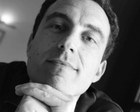
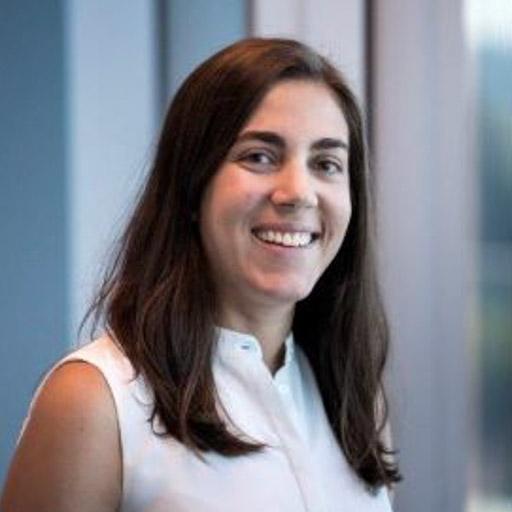
Marco Del Giudice is an Associate Professor at the Department of Life Sciences, University of Trieste, Italy, and holds a Research Associate Professor position at the Department of Psychology, University of New Mexico. He obtained his PhD in 2007 from the University of Turin. His research focuses on evolutionary psychology, developmental plasticity, and the evolution of personality and sex differences. He has received the Early Career Award from the Human Behavior and Evolution Society (2016). Education: PhD in Psychology, University of Turin, 2007. Research interests include the evolution of human behavior and development, particularly in areas such as personality, sex differences, and psychopathology. He explores topics like the biology of middle childhood, stress responsivity, and the application of evolutionary frameworks to mental health classification. Early Career Award, Human Behavior and Evolution Society (2016) No specific advising students or grants are detailed in the provided texts, though his research activities likely involve collaborative grants and mentorship. His work is conducted within the Department of Life Sciences at the University of Trieste and in collaboration with international teams, focusing on interdisciplinary projects in evolutionary and developmental psychology.
Professor Jennifer Wadsworth is a Professor in Statistics at the School of Mathematical Sciences, Lancaster University . Her research spans extreme value theory, copulas, spatial statistics, and environmental statistics, focusing on likelihood-based and nonparametric inference methods. Projects include Exploring and exploiting new representations for multivariate extremes (2023-2026) and STORi: Multivariate Extremes for Nuclear Regulation (2019-2023). Current PhD supervision interests: multivariate and spatial extremes, aiming to develop realistic models by relaxing assumptions. Research groups: Extreme Value Theory, STOR-i Centre for Doctoral Training. Her recent work, such as Modeling of spatial extremes in environmental data science (2025), highlights the need to move beyond max-stable processes for more accurate spatial extreme modeling. She supervises PhD students including Ryan Campbell, Kristina Grolmusova, and Lydia Kakampakou at Lancaster University.
Ulisse Gomarasca is a doctoral researcher at the Max Planck Institute for Biogeochemistry's Department Biogeochemical Integration, affiliated with the International Max Planck Research School for Global Biogeochemical Cycles (IMPRS-gBGC). He works within the Global Diagnostic Modelling group and Ecosystem Function from Earth Observation project team, focusing on understanding ecosystem functioning through eddy covariance fluxes and biodiversity links. Education: Master's in Ecology and Biodiversity from University of Innsbruck Research: Spatiotemporal dynamics of ecosystem functioning, Sun-Induced Chlorophyll Fluorescence, drought legacy effects on productivity Methodologies: Remote sensing integration with eddy covariance networks, biodiversity-ecosystem function analysis His publications address terrestrial ecosystem responses to climate extremes, scaling of plant traits to ecosystem level, and development of remote sensing tools like the Biodiversity Observing System Simulation Experiment (BOSSE). This work combines satellite observations with ground-based flux measurements to understand global biogeochemical patterns. Contact: ugomar@bgc-jena.mpg.de
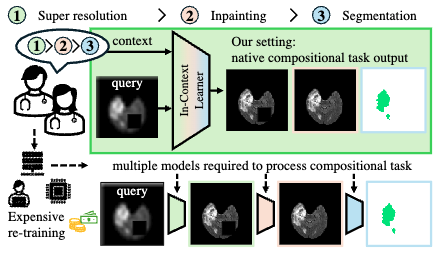
Prof. Dr. Erik Rodner is a faculty member at the University of Applied Sciences Berlin (HTW Berlin), where he serves as a Professor for Machine Learning and Data Science. He also contributes to the School of Engineering Sciences - Technology and Life. His research spans computer vision, machine learning, and biomedical applications, with a focus on learning with limited data, robust visual recognition models, and medical image analysis. He has developed innovative methods for medical diagnostics, industrial classification, and anomaly detection. Recent publications (2025-2016) highlight his expertise in visual in-context learning, semi-weakly segmentation, and active learning frameworks. He has collaborated with institutions such as ZEISS Group, Friedrich Schiller University Jena, and UC Berkeley. Scientific Awards: Award for Excellent Teaching (2023)
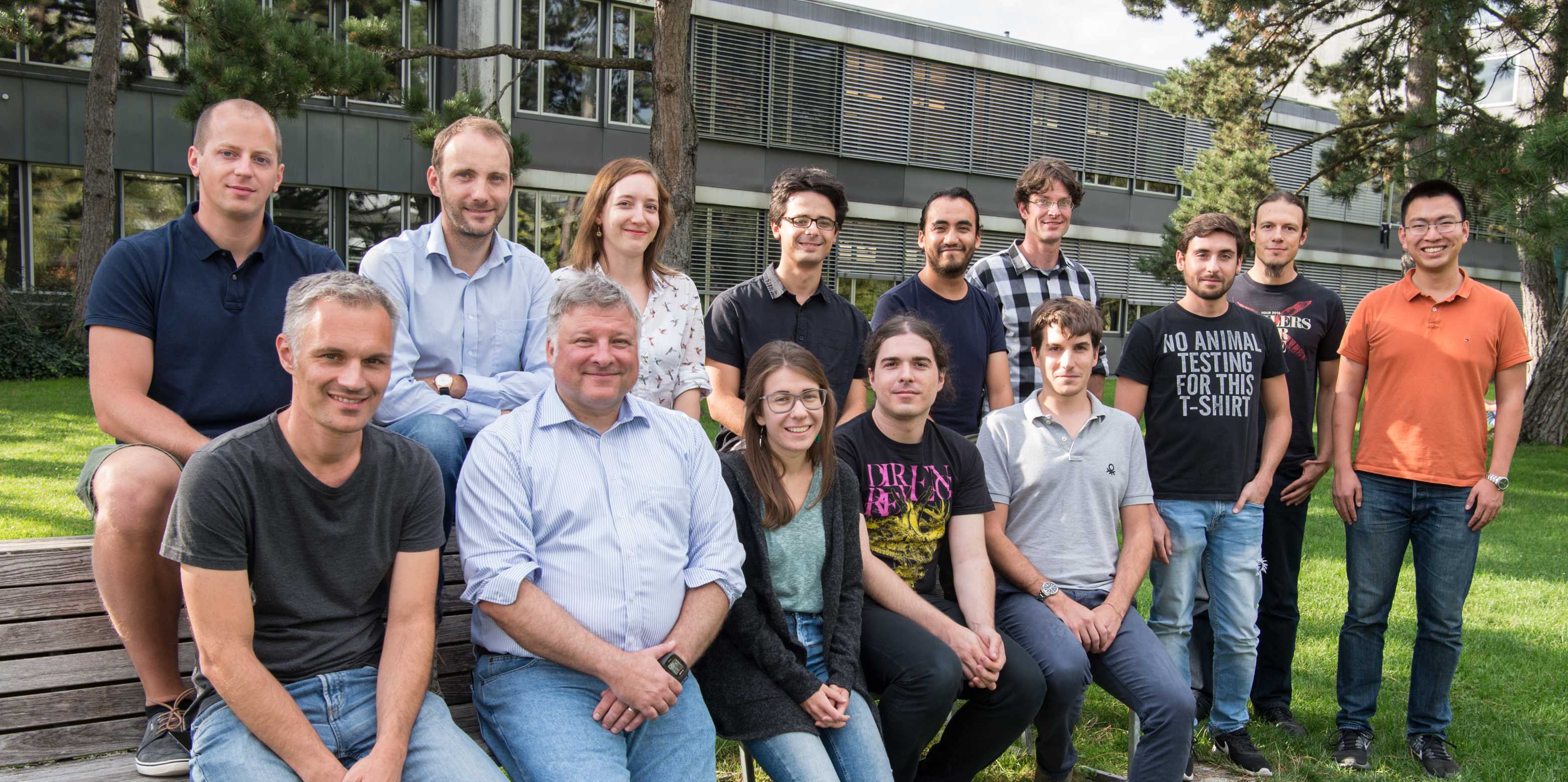
Prof. Rainer Wallny is a Full Professor of Physics at ETH Zurich and Head of the Institute for Particle Physics and Astrophysics. His research focuses on high-energy particle physics, particularly through the CMS experiment at the Large Hadron Collider (LHC), emphasizing Higgs boson studies and detector upgrades. He leads projects on Higgs boson characterization in photon and b-quark final states, as well as CMS pixel detector upgrades for Phase-2. His group also explores future collider technologies and contributes to teaching at all academic levels. Education: Studied Physics at Universities of Tübingen, Washington (M.Sc., 1994), and Heidelberg (Diplom, 1996) PhD in Physics from University of Zurich CERN Research Fellow (2001–2003) Faculty at UCLA (2003–2010), promoted to Full Professor in 2010 Joined ETH Zurich as Full Professor in 2010 Research Interests: Higgs boson properties and decay channels Supersymmetry searches in CMS data Detector development for CMS (pixel trackers, diamond sensors) Phase-2 LHC upgrade technologies Experimental particle physics at high-luminosity colliders Grants and Advising: Supervised over 20 PhD students since 2010 Leadership roles in CMS collaboration and detector R&D initiatives Active in curriculum design for physics education at ETH Labs & Teams: Wallny Group at ETH Zurich Institute for Particle Physics and Astrophysics (D-PHYS) Collaborations with CERN and global CMS teams
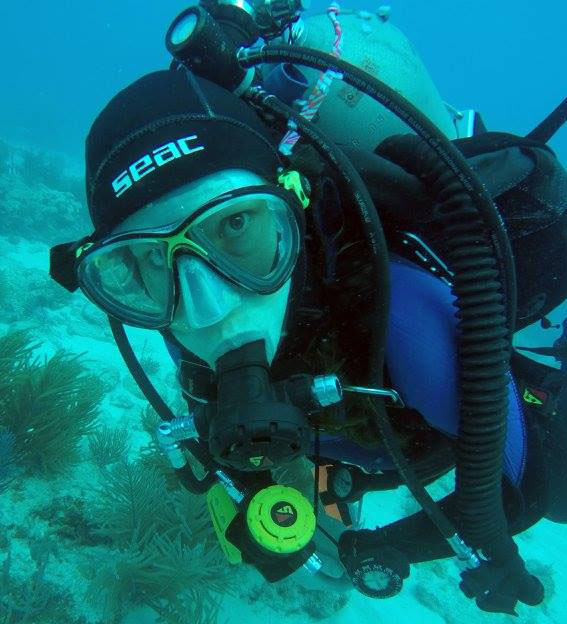
Dr. Patricia Spellman is an Assistant Professor in the School of Geosciences at the University of South Florida, specializing in karst hydrogeology, island hydrology, and hydrological modeling. She holds a Ph.D. in Civil Engineering from Michigan Technological University and leads multiple state-funded projects on aquifer systems. Research expertise encompasses karst vadose zone dynamics, surface-groundwater interactions in carbonate landscapes, and sustainable water management in island environments. Current projects focus on Floridan Aquifer nitrates, Bahamian blue hole systems, and agricultural impacts on water quality. Publications demonstrate consistent focus on karst hydrology innovations, with recent work advancing spectral analysis techniques for vadose zone characterization and multivariate statistical approaches for contamination tracking. Fieldwork spans Florida, Alaska, and Bahamian archipelago. Grants & Projects: Florida DEP Springs Monitoring ($142k) Suwannee River WMD Projects ($67k) NSF RAPID Storm Response ($25k) Florida Fish & Wildlife Isotope Analysis ($22k) Teaching includes Environmental Hydrology and Numerical Modeling courses. Advises 8 graduate students on topics ranging from San Salvador Island hydrology to agricultural impacts on water chemistry. Extensive field methodology expertise including cave diving and sensor deployment.
Andre Marquand is an active researcher in neuroscience, psychiatric disorders, and neuroimaging, with a strong focus on machine learning applications for clinical data analysis. His work spans autism, major depressive disorder, schizophrenia, and neurodegenerative diseases like Alzheimer’s. Research Interests: Neuroscience, neuroimaging, normative modeling, autism, psychosis, computational psychiatry, and brain network analysis. Projects: Co-Investigator in 11 finished projects, including biomarker development for ADHD, psychosis recovery, and Alzheimer’s disease. Recent Publications highlight trends in leveraging multimodal neuroimaging, extreme value statistics, and digital phenotyping to dissect heterogeneity in psychiatric and neurological conditions. His studies often employ normative modeling to personalize brain disorder trajectories. Collaborations: Long-term partnerships with institutions like King’s College London and MRC units, alongside experts in psychiatry and neuroimaging. Supervised Work: Mentored 3 projects, though student names are not explicitly listed.
Miguel Mahecha is Professor of Environmental Data Science and Remote Sensing at the University of Leipzig, where he serves as Institute Head of the Institute for Earth System Science and Remote Sensing. He is also affiliated with the Remote Sensing Centre for Earth System Research, a collaboration between Leipzig University and the Helmholtz Centre for Environmental Research (UFZ). Mahecha is a member of the German Centre for Integrative Biodiversity Research (iDiv) and serves as Principal Investigator in the Centre for Scalable Data Analytics and Artificial Intelligence. Additionally, he is a Fellow of the European Laboratory for Learning and Intelligent Systems and co-spokesperson for the National Research Data Infrastructure for Earth System Sciences (NFDI4Earth). Full Professor for Modelling Approaches in Remote Sensing, University of Leipzig (since 03/2020) Research Group Leader: Empirical Inference in the Earth System, Max Planck Institute for Biogeochemistry, Jena (12/2012 - 03/2020) PostDoc, Max Planck Institute for Biogeochemistry, Jena (10/2009 - 11/2012) PhD in Environmental Sciences, ETH Zürich (06/2006 - 09/2009) Diploma in Geoecology, Bayreuth University (10/2000 - 04/2006) Mahecha's research focuses on understanding ecosystem responses to climate extremes and human-environment relationships during these events. He investigates macro-ecological dynamics and ecosystem functioning using data-driven methods and high-dimensional Earth observations. A key contribution is his co-development of the Earth System Data Cube concept, which integrates empirical methods with theoretical understanding to analyze complex Earth system interactions. His work spans biogeography, ecosystem functioning, and advanced data science methodologies for environmental monitoring. His recent publications demonstrate a strong emphasis on analyzing compound climate extremes, particularly heatwaves and droughts, and their impacts on ecosystems. Mahecha has pioneered methods using Earth System Data Cubes to integrate diverse environmental datasets, enabling novel insights into biosphere-atmosphere interactions. His research increasingly incorporates artificial intelligence and machine learning approaches to understand spatiotemporal patterns in ecological systems, with applications in real-time forest monitoring and biodiversity assessment. Fellow of the European Laboratory for Learning and Intelligent Systems Co-spokesperson for NFDI4Earth (National Research Data Infrastructure for Earth System Sciences) Mahecha leads multiple significant research projects including Digital Forest (real-time forest monitoring), NFDI4BioDiversity, and XAIDA (extreme events: AI for Detection and Attribution). His work receives funding from diverse sources including EU, DFG, and Stiftungen Inland. He collaborates extensively with the German Centre for Integrative Biodiversity Research (iDiv) and the Centre for Scalable Data Analytics and Artificial Intelligence. His research group, Earth System Data Science (ESDS), focuses on developing methods to extract valuable information from long-term environmental observations to understand coupled Earth system dynamics. At the Remote Sensing Centre for Earth System Research, Mahecha's ESDS group investigates how ecosystem functions respond to climate extremes, societal vulnerability to environmental hazards, and nonlinear interactions in coupled Earth systems. The group leverages citizen science data, remote sensing observations, and advanced computational methods to address pressing environmental questions.
Professor Jae Kyung Woo is a distinguished academic in the School of Risk and Actuarial Studies at the UNSW Business School, University of New South Wales. She holds multiple prestigious professional designations including Fellow of the Institute of Actuaries of Australia (FIAA), Fellow of the Society of Actuaries (FSA), and Chartered Enterprise Risk Analyst (CERA). Her educational background includes MMath and Ph.D. degrees from the Department of Statistics and Actuarial Science at the University of Waterloo. She has held academic positions at Columbia University as Assistant Professor in the Department of Statistics (2011-2012), and at the University of Hong Kong as Assistant Professor in the Department of Statistics and Actuarial Science (2012-2017) before joining UNSW in July 2017. Research interests focus on risk theory, reliability theory, aggregate claim analysis, queueing theory, and dependence modelling Editorial Board member for ASTIN Bulletin (2021-present), European Actuarial Journal (2025-present), Probability in the Engineering and Information Sciences (2018-present), and Risks (2020-present) Principal investigator for ARC Discovery Projects (2020-2023) and Casualty Actuarial Society grants (2018-2020) Her research output includes 35 journal articles, 1 book, 1 thesis/dissertation, and 1 other publication, with recent work emphasizing shock models for correlated large losses, credibility theory under dependency structures, and advanced dependence modeling techniques in insurance contexts. Her work bridges theoretical stochastic analysis with practical applications in insurance and risk management. Fellow of the Institute of Actuaries of Australia (FIAA), since May 2018 Fellow of the Society of Actuaries (FSA), since Oct 2013 Chartered Enterprise Risk Analyst (CERA), since Jan 2012 Fellow Member of Actuarial Society of Hong Kong (ASHK), since Dec 2018 Professor Woo has secured significant research funding including an ARC Discovery Project grant of AUD 334,000 (2020-2023) for developing shock model-based frameworks for correlated large losses, and a Casualty Actuarial Society grant of USD 20,000 (2018-2020) for credibility theory research under general dependency structures. She served as Nominated Accreditation Actuary at UNSW until 2024.
Giuseppe Cavaliere is a Full Professor of Econometrics at the University of Bologna (since 2006) and a Distinguished Research Professor at Exeter Business School. He holds affiliations with the University of Copenhagen and Aarhus University. His research focuses on time series econometrics, financial econometrics, statistical inference, and empirical macroeconomics. He serves as co-editor of the Journal of Econometrics and associate editor of the Journal of Time Series Analysis. Key roles include being an Elected Fellow of the International Association for Applied Econometrics (IAAE), Fellow of the Journal of Econometrics, and Research Fellow of the Granger Centre for Time Series Econometrics. He previously served as President of the Italian Econometric Association (SIdE). His publications appear in top journals like Econometrica, Annals of Statistics, and Journal of Econometrics. Current research emphasizes bootstrap inference, cointegration, and volatility modeling in nonstationary environments. His work addresses challenges in econometric theory, financial data analysis, and macroeconomic policy evaluation. Awards and recognitions highlight his contributions to econometric methodology and its applications in finance and macroeconomics. His advisory and editorial roles reflect his influence in shaping the field's theoretical and practical advancements.
Arijit Chakrabarty is a Professor at the Theoretical Statistics and Mathematics Unit of the Indian Statistical Institute, Kolkata, India. His research focuses on random matrix theory, heavy-tailed distributions, large deviations, and long-range dependence. He can be reached via email at arijit.isi@gmail.com. Research Interests: Random matrix theory, Heavy-tailed distributions, Large deviations, Long-range dependence, Spectral analysis, Stochastic processes Publications Trends: His 15 most recent articles span random matrix theory, large deviations, Gaussian processes, and free probability. Key topics include eigenvalue analysis in random graphs, excursion lengths in Gaussian processes, and clustering of extremes in memory regimes. Lecture Notes: He has produced educational materials on Measure Theoretic Probability, Martingale Theory, and Probability Theory, partially in collaboration with Arup Bose and Rajat Hazra. These notes are accessible online and reflect his teaching contributions.
Rebecca Dziedzic is an Assistant Professor in the Department of Building, Civil, and Environmental Engineering at Concordia University. Her research focuses on asset management, water system sustainability, and infrastructure resilience. She holds a PhD in Civil and Environmental Engineering from the University of Toronto. Dr. Dziedzic's work integrates machine learning, data science, and policy analysis to address challenges in urban infrastructure systems. Her research explores topics such as water distribution network optimization, climate change adaptation in infrastructure, and circular economy strategies for construction. Recent projects include predicting water main breaks using multivariate models, developing frameworks for energy-efficient pump operation, and assessing carbon footprints in industrial facilities. Dr. Dziedzic supervises graduate students in Civil Engineering (MASc/PhD) and maintains an active research group through the UrbanLinks initiative. Her work has been published in over 30 peer-reviewed articles, with a strong focus on smart city technologies, disaster risk reduction, and sustainable infrastructure design.
Farzad Sabzikar is an Associate Professor in the Department of Statistics at Iowa State University, specializing in stochastic processes, fractional models, and optimization algorithms. He integrates mathematical theory with applications in machine learning and time series analysis. Education: PhD in Statistics (Michigan State University, 2014), MS in Mathematics (Sharif University, 2009), BS in Mathematics (Isfahan University of Technology, 2006) His research bridges fractional calculus and statistical modeling, focusing on tempered processes and their applications in turbulence analysis, geophysical flows, and high-frequency data. He employs wavelet methods and asymptotic theory to study heavy-tailed phenomena and long-range dependencies. Recent publications emphasize tempered fractional Brownian motion, stable noise modeling, and functional data analysis. Key trends include transient anomalous diffusion, machine learning for cognitive decline classification, and optimized signal processing techniques. Scientific Awards: None listed His work has implications for machine learning, geophysics, and astrophysics, though no formal advising, grant, or lab affiliations are detailed in available sources.
Gee Lee is an Associate Professor in the Department of Statistics & Probability and the Department of Mathematics at Michigan State University. His work bridges actuarial science with advanced statistical and machine learning methodologies, focusing on practical applications for insurance risk modeling. PhD, University of Wisconsin-Madison Associate (ASA), Society of Actuaries His research centers on insurance loss modeling for rate-making and loss reserving, multivariate insurance coverage optimization, dependence structure analysis, and integrating machine learning into actuarial frameworks. Current projects include deep neural networks for claim prediction, unstructured data analysis, and multivariate coverage optimization. Recent publications highlight trends in crop insurance modeling (2025), regularization techniques (2024), multivariate risk retention strategies (2023), textual data analysis (2022), copula regression (2022), and reinsurance game theory (2022). Earlier works explore shrinkage methods, word embeddings, longitudinal claims, healthcare data, and deductible ratemaking. Gee Lee supervises MS and PhD students in actuarial science. Former advisees include Leonard Korreshi (2024), Qiaozhen Qian (2023), and Scott Manski (2020, co-advised). He also supports undergraduate research through MSU’s REU program and directed study courses.
Johanna Sörensen is an Associate Senior Lecturer at the Division of Water Resources Engineering within Lund University's Faculty of Engineering (LTH) . She specializes in urban hydrological processes , particularly during extreme precipitation , and advocates for blue-green infrastructure (NBS, SUDS) to enhance climate change adaptation and reduce flood risks . Her work bridges technical performance of water systems with urban planning reforms for sustainable solutions. Research Focus : Urban hydrology, blue-green infrastructure, stormwater management Teaching : Advanced Hydrology, Sustainability, Pipe System Engineering Her research involves Artificial Neural Networks for hydrological modeling, decision support indicators for water planning, and fieldwork in Malmö . She collaborates with Swedish Environmental Protection Agency and companies on leakage minimization in water distribution systems. Recent projects include StormMan (governance for sustainable stormwater) and RörANN (smart pipe monitoring). Scientific Awards: The New Generation Prize by Swedish Association for Water (2018) Supervision: Regularly supervises 2–3 Master's thesis projects with industry partners. Network: Active in EU projects and collaborations across Scandinavia, Brazil, and Eastern Africa .