Nancy Margaret Reid is a University Professor of Statistical Sciences at the University of Toronto, holding the Canada Research Chair in Statistical Theory and Applications. She has served as Scientific Director of the Canadian Statistical Sciences Institute (2015–2019) and led the Department of Statistical Sciences as Chair (1997–2002). Her research focuses on theoretical statistics, particularly likelihood inference and foundational aspects of statistical methodology. Reid earned her PhD from Stanford University (1979) under Rupert G. Miller, with Brad Efron and Vernon Johns on her committee. Reid's accolades include Fellowships from the Royal Society, Royal Society of Canada, and National Academy of Sciences, as well as the Guy Medal in Gold (2022) and David R. Cox Award (2023). She has authored influential books like *Theory of the Design of Experiments* and contributed to courses on mathematical statistics and likelihood inference. Active in academic service, she teaches graduate-level courses and has advised numerous students and postdocs in theoretical and applied statistical research.
S. Yaser Samadi is an Associate Professor in the Department of Mathematics at the School of Mathematical and Statistical Sciences, Southern Illinois University Carbondale. He holds a Ph.D. in Statistics from the University of Georgia (2014) and maintains an active research program in advanced statistical methodologies. Education: Ph.D. in Statistics, University of Georgia, 2014 Research Interests: Dr. Samadi specializes in multivariate time series analysis, high-dimensional statistical inference, and tensor data analysis. His work addresses critical challenges in big data, symbolic data, and dimension reduction for time series through Bayesian analysis and sequential methods for dependent and independent data, yielding robust models for complex data structures. Publication Trends: His recent publications (2014-2023) emphasize time series analysis, dimension reduction, and innovative approaches for interval-valued and matrix-valued data. Key contributions include envelope models for vector autoregression, copula-based count data modeling, and sequential analysis techniques, bridging theoretical statistics with econometrics and data science applications. Scientific Awards: Outstanding Teacher of the Year, School of Mathematical and Statistical Sciences (2021) Advising: Dr. Samadi has mentored four Ph.D. students to completion: Rukayya Ibrahim (Assistant Professor, Penn State Harrisburg), Wiranthe Herath (Assistant Professor, Drake University), Tharindu De Alwis (Postdoctoral Fellow, WPI), and Hadi Safari Katesari (Teaching Assistant Professor, Stevens Institute of Technology). His Master's students Samira Zaroudi (CUNY) and Reginald Ziedzor (Amplify) have also achieved notable career placements.
Scientia Professor Robert Kohn is a distinguished academic at the University of New South Wales, holding a position in the School of Economics within the UNSW Business School. With a career spanning several decades, Professor Kohn has established himself as a leading expert in statistical methodology and econometric modeling. His research has significantly contributed to Bayesian statistics and computational methods for complex data analysis. Professor Kohn's research focuses on advanced statistical methodologies including Bayesian methodology, variable selection and model averaging, nonparametric regression models, time series modeling, multivariate Gaussian and non-Gaussian regression, and Markov chain Monte Carlo simulation algorithms. His work bridges theoretical statistics with practical applications across economics, finance, and cognitive science. His research demonstrates a consistent trajectory toward developing more efficient computational methods for complex statistical models, with recent work emphasizing variational Bayesian methods, particle filtering techniques, and applications to time series analysis. Analysis of his recent publications (2022-2025) reveals a strong focus on advancing computational statistical methods, particularly in Bayesian inference for complex models. His work shows increasing integration of machine learning techniques with traditional statistical methods, especially in handling high-dimensional data and complex time series structures. Professor Kohn has made significant contributions to variational inference methods, particle-based computational techniques, and applications to financial time series and cognitive modeling. Professor Kohn has maintained an exceptionally productive research career with continuous publication output since the 1970s, demonstrating remarkable longevity and adaptability in his research focus as statistical methodologies have evolved. His work shows strong international collaboration, particularly with researchers in Australia, the United States, and Europe, reflecting his standing in the global statistical community.
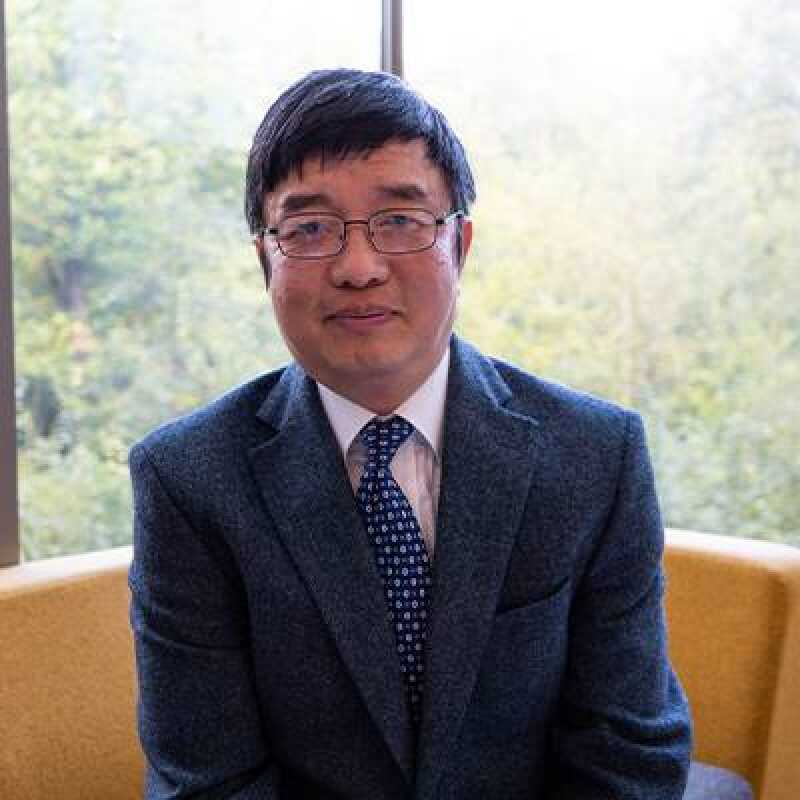
Professor Shaomin Wu is a faculty member at the University of Kent's Kent Business School, where he holds the academic rank of Professor of Business/Applied Statistics. He earned an MSc and PhD in applied statistics and has extensive industry experience, including a five-and-a-half-year stint at a global manufacturer in Shanghai before moving to the UK in 2001. He has held roles as a postdoctoral researcher and lecturer before joining Cranfield University and later the University of Kent. His research focuses on recurrent event data analysis, machine learning, and reliability mathematics, with funding from the EPSRC and ESRC. His research projects include managing risk in warranty servicing policies, smart data analytics for local government, and sustainable supply chain demand forecasting. He teaches modules such as risk analysis, reliability engineering, and machine learning. Currently supervising PhD students in time series forecasting, explainable AI, and recurrent event data analysis, he also serves as a co-chair of international conferences, editorial board member, and external examiner for doctoral degrees. Notably, he ranks among the top 2% of global scientists by Stanford University. His work integrates machine learning with business analytics, resilience engineering, and environmental sustainability. Key contributions include IoT-driven resilience methodologies for smart grids and unmanned systems, as well as frameworks for corporate carbon disclosure and maintenance optimization under uncertainty.
Dan Kowal is an Associate Professor in the Department of Statistics and Data Science at Cornell University, joining in 2024. His research focuses on Bayesian models for large/dependent data, mixed data modeling, and interpretable uncertainty quantification. Key areas include public health, environmental justice, epidemiology, and economics. He holds a PhD from Cornell University (2017) and previously served as an Assistant Professor at Rice University. Awards include the Blackwell-Rosenbluth Award (2021), Army Research Office Young Investigator Award (2020), and Lindley Prize Honorable Mention (2024). Notable grants include NSF funding for adaptive dependent data models (2022–2025) and Army Research Office support for Bayesian prediction methods (2020–2022). His work addresses racial inequities in statistical modeling and has been published in top journals like JASA and Bayesian Analysis. He advises multiple PhD students and develops R packages (e.g., SeBR, countSTAR) for Bayesian regression and data synthesis. Teaching roles include Bayesian Statistics at both undergraduate and graduate levels.
Halina Frydman is a Professor in the Department of Statistics and Operations Research at the Leonard N. Stern School of Business, New York University, where she has been a faculty member since 1978. Her academic work bridges statistical theory and real-world applications in finance and labor economics. Institution: New York University School: Leonard N. Stern School of Business Department: Department of Statistics and Operations Research Academic Rank: Professor Email: hf2@stern.nyu.edu Education: Ph.D. in Mathematical Statistics, Columbia University, 1978 M.A. in Mathematical Statistics, Columbia University, 1974 B.S. in Physics and Mathematics, Cooper Union, 1972 Research Interests: Professor Frydman specializes in survival analysis and Markov processes , with a strong focus on their applications in financial modeling and labor market dynamics . Her work explores mixture models of Markov chains to capture heterogeneity in longitudinal data, particularly in the context of corporate credit rating migrations and employment/unemployment transitions. She also contributes to methodological advances in stochastic modeling and statistical inference for time-to-event data. Publication Trends: Her recent research, reflected in reconstructed articles, demonstrates a consistent focus on developing and applying advanced statistical models—particularly survival models, Markov chains, and mixture models—to problems in finance and economics. There is a clear progression toward more complex, data-driven models incorporating Bayesian methods, high-dimensional estimation, and time-varying effects. Scientific Awards: No awards explicitly mentioned in the source text. Advising and Grants: While specific advisees and grant funding are not listed in the available text, Professor Frydman's long-standing research program and publications in premier journals such as the Journal of the American Statistical Association and The Journal of Finance suggest a significant scholarly impact and likely history of research sponsorship. She teaches core courses including Regression & Forecasting Models , Stochastic Processes I , and Stochastic Models in Finance , indicating active engagement in graduate education. Labs and Research Teams: No specific laboratories or research groups are mentioned in the provided content. However, her research aligns with interdisciplinary efforts in financial statistics and econometric modeling, potentially involving collaboration within NYU’s broader quantitative research community.
Sandra Paterlini is a Full Professor in the Department of Economics and Management at the University of Trento, Italy. She holds academic roles including Co-Chair of the ERCIM Working Group on Optimization Heuristics and Vice-Chair of the IEEE Task Force on Portfolio Optimization. Her career includes visiting positions at institutions such as the University of Minnesota and Ludwig-Maximilians-Universität München. She earned a PhD in Computational Methods for Financial and Economic Decisions from the University of Bergamo, an MSc in Financial Mathematics from the University of Warwick, and a Laurea in Economics from the University of Modena and Reggio E. Her research focuses on quantitative finance, risk management, portfolio optimization, and network analysis, with applications to ESG, systemic risk, and financial stability. Key research contributions include methodologies for sparse graphical modeling, systemic risk analysis, and ESG scoring frameworks. She has received multiple awards for research excellence and serves on editorial boards of journals like Computational Statistics & Data Analysis and Frontiers in Applied Mathematics and Statistics . Her work bridges academia and policy, with contributions to the European Central Bank’s Financial Stability Directorate and involvement in global conferences on computational finance and econometrics.
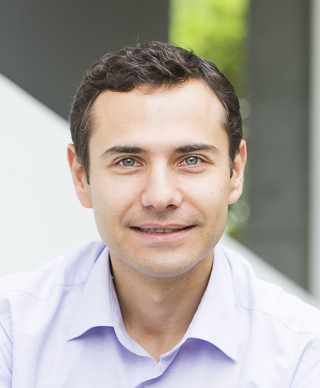
Professor Valentyn Panchenko is a leading academic in Economics at the UNSW Business School, specializing in advanced econometric methodologies and financial modeling. Holding a PhD from the University of Amsterdam and an MPhil from the Tinbergen Institute, his research bridges theoretical econometrics with real-world financial applications, emphasizing big data analysis, network structures, and dependence modeling in economic systems. His expertise spans financial econometrics, time series analysis, non-parametric statistics, and agent-based economic simulations. He focuses on Granger causality, model evaluation, structural economic modeling, and bounded rationality with heterogeneous agents. His work has secured significant grants including ARC Discovery Projects and DECRA fellowships, enabling cutting-edge research on market dynamics and economic interactions. Professor Panchenko's publications appear in top-tier journals like the Journal of Econometric Theory, AEJ: Micro, Journal of Economic Dynamics & Control, and Journal of Banking & Finance. His methodological contributions include novel approaches to copula-based forecasting, nonlinear causality testing, and evolutionary learning models in strategic economic environments. While specific student advising details aren't provided, his research leadership demonstrates sustained impact across econometric theory, financial markets, and experimental economics.
Karen Bandeen-Roche is a Professor and the Hurley-Dorrier Professor and Chair of the Department of Biostatistics at the Johns Hopkins Bloomberg School of Public Health, with joint affiliations in the School of Medicine and the School of Nursing. She is a leading expert in biostatistical methodology, particularly in latent variable models, longitudinal analysis, and multivariate survival methods applied to aging and gerontology. Her research focuses on developing statistical models for unobservable processes such as frailty, resilience, and functional status in older adults. She has made significant contributions to the measurement of aging-related constructs and has extensive collaborative work in ophthalmology and neurology. Her methodological work includes mixture models, measurement error correction, and latent class modeling. The recent publications highlight a strong trend in gerontological biostatistics, with a focus on frailty, dementia risk, resilience, and multisystem physiological responses in aging. Her work integrates complex data from observational cohorts and clinical studies, often employing innovative latent variable frameworks to address measurement challenges in health outcomes. Scientific Awards and Honors: Marvin Zelen Leadership Award in Statistical Science (2016) Fellow of the American Statistical Association (2001) Brookdale National Fellow (1997) Golden Apple Award for Excellence in Teaching (2010) Garland Clay Award (1999) Chair, NIH BMRD Study Section (2006–2008) President, Eastern North American Region, International Biometric Society (2011–2013) Executive Board, International Biometric Society (2015–2022) Board of Directors, National Institute of Statistical Sciences (2020–2023) Karen Bandeen-Roche has been deeply involved in advising and training the next generation of researchers. She co-directs a training program in Biostatistics and Epidemiology of Aging and has received multiple teaching and mentoring awards. She has served on numerous academic committees, including appointments and promotions, faculty senate, and ethics committees at Johns Hopkins. Her grants and collaborative research span aging, dementia, ophthalmology, and cardiovascular health, often supported by NIH and other federal agencies. She leads the Center on Aging and Health and is actively involved in interdisciplinary research initiatives that bridge biostatistics, medicine, and public health. Her lab and research team focus on developing and applying advanced statistical methods to understand the biological and social determinants of healthy aging.
Natalia Nolde is a Professor in the Department of Statistics at the University of British Columbia, Faculty of Science. Her research focuses on multivariate extreme value theory , probabilistic modeling , and applications in quantitative risk management across finance, insurance, hydrology, and geosciences. Her work explores non-classical approaches to multivariate extremes, particularly through limit set geometry and asymptotic dependence structures , offering novel insights into tail dependence and risk assessment. Recent publications highlight her expertise in copula-based risk modeling , financial stress testing , and geohazard prediction . Current students include: Daniel Hadley Jonathan O.K. Agyeman
Prof. Melanie Schienle is a Professor and Chair of Statistical Methods and Econometrics at the Department of Economics and Management, Karlsruhe Institute of Technology (KIT). She also holds a professorship in the Department of Mathematics at KIT since 2021. Her expertise spans statistical methods, econometrics, financial risk analysis, and forecasting. She leads the HKMetrics Network and the RespiNow Hub for respiratory disease forecasting. She serves as a Senior Fellow at the Rimini Center for Economic Analysis (RCEA), a steering committee member of the German Economic Association, and a member of the University Research Council at KIT. Education: Ph.D. (Dr. rer. pol.) in Economics from Mannheim University (2008), summa cum laude; Diploma in Mathematics (University of Karlsruhe, 2003) with a minor in theoretical physics. She has held academic positions at Leibniz University Hannover (2012–2015) and Humboldt University of Berlin (2008–2012). Research interests focus on financial networks, systemic risk, time series analysis, and machine learning applications in economics. She co-leads projects on nowcasting and forecasting, including collaborative efforts during the pandemic to predict hospitalizations. Her work integrates advanced statistical techniques with real-world policy implications. Prof. Schienle is an Associate Editor for the International Journal of Forecasting and Journal of Time Series Analysis . She has authored over 50 peer-reviewed publications and contributed to high-impact journals like Nature Communications and Journal of Business & Economic Statistics . She leads the Institute of Statistics at KIT and chairs the MathSEE initiative for interdisciplinary mathematical applications.
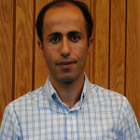
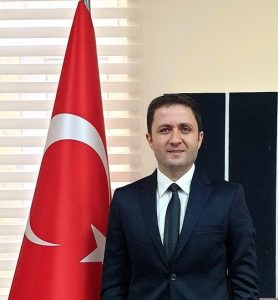
Dr. Veysel Gümüş is an Associate Professor at Harran University's Faculty of Engineering, Department of Civil Engineering, where he has been since 2014. His research focuses on turbulence modeling, computational fluid dynamics, hydrological drought analysis, and time-series trend analysis. Licence (2003), Master's (2006), and Doctorate (2014) in Civil Engineering from Harran and Çukurova Universities. His research interests span hydrological drought , computational fluid dynamics , climate trend analysis , and GIS applications in hydrology . His recent work emphasizes drought risk assessment, wind speed trends, and fluid flow simulations using AI techniques. Publications since 2023 highlight his expertise in Mann-Kendall tests , copula-based drought analysis , and CMIP6 climate projections across Turkey and Morocco. He has supervised over 15 graduate theses and served as an editor/hakem for 10+ journals, including ASCE and Theoretical and Applied Climatology.
Professor Jennifer Wadsworth is a Professor in Statistics at the School of Mathematical Sciences, Lancaster University . Her research spans extreme value theory, copulas, spatial statistics, and environmental statistics, focusing on likelihood-based and nonparametric inference methods. Projects include Exploring and exploiting new representations for multivariate extremes (2023-2026) and STORi: Multivariate Extremes for Nuclear Regulation (2019-2023). Current PhD supervision interests: multivariate and spatial extremes, aiming to develop realistic models by relaxing assumptions. Research groups: Extreme Value Theory, STOR-i Centre for Doctoral Training. Her recent work, such as Modeling of spatial extremes in environmental data science (2025), highlights the need to move beyond max-stable processes for more accurate spatial extreme modeling. She supervises PhD students including Ryan Campbell, Kristina Grolmusova, and Lydia Kakampakou at Lancaster University.
Professor Jae Kyung Woo is a distinguished academic in the School of Risk and Actuarial Studies at the UNSW Business School, University of New South Wales. She holds multiple prestigious professional designations including Fellow of the Institute of Actuaries of Australia (FIAA), Fellow of the Society of Actuaries (FSA), and Chartered Enterprise Risk Analyst (CERA). Her educational background includes MMath and Ph.D. degrees from the Department of Statistics and Actuarial Science at the University of Waterloo. She has held academic positions at Columbia University as Assistant Professor in the Department of Statistics (2011-2012), and at the University of Hong Kong as Assistant Professor in the Department of Statistics and Actuarial Science (2012-2017) before joining UNSW in July 2017. Research interests focus on risk theory, reliability theory, aggregate claim analysis, queueing theory, and dependence modelling Editorial Board member for ASTIN Bulletin (2021-present), European Actuarial Journal (2025-present), Probability in the Engineering and Information Sciences (2018-present), and Risks (2020-present) Principal investigator for ARC Discovery Projects (2020-2023) and Casualty Actuarial Society grants (2018-2020) Her research output includes 35 journal articles, 1 book, 1 thesis/dissertation, and 1 other publication, with recent work emphasizing shock models for correlated large losses, credibility theory under dependency structures, and advanced dependence modeling techniques in insurance contexts. Her work bridges theoretical stochastic analysis with practical applications in insurance and risk management. Fellow of the Institute of Actuaries of Australia (FIAA), since May 2018 Fellow of the Society of Actuaries (FSA), since Oct 2013 Chartered Enterprise Risk Analyst (CERA), since Jan 2012 Fellow Member of Actuarial Society of Hong Kong (ASHK), since Dec 2018 Professor Woo has secured significant research funding including an ARC Discovery Project grant of AUD 334,000 (2020-2023) for developing shock model-based frameworks for correlated large losses, and a Casualty Actuarial Society grant of USD 20,000 (2018-2020) for credibility theory research under general dependency structures. She served as Nominated Accreditation Actuary at UNSW until 2024.
Enno Mammen is a Professor of Mathematical Statistics at Heidelberg University, leading the Institute for Applied Mathematics. His career includes roles as Chair for Mathematical Statistics at Heidelberg (2014–present), Chair for Statistics at the University of Mannheim (2003–2014), and various academic positions since 1986. He holds a PhD (1983) and habilitation (1992) from Heidelberg University. Research interests focus on nonparametric statistics, bootstrap methods, additive models, high-dimensional data, and statistical theory. Key contributions include foundational work on the wild bootstrap, penalized nonparametric estimators, and nonparametric diffusion models. He has authored over 150 papers in top journals like the Annals of Statistics and Biometrika. Current research spans Hawkes processes, neural network statistics, and non-Euclidean data analysis. He has supervised 12 PhD students since 2010, with many progressing to academic roles. Awards include the Heinz Maier Leibnitz Prize (1989) and IMS Fellowship (1998). Active in editorial roles for journals like the Annals of Statistics and Bernoulli. Major funding includes leadership of the DFG-funded Research Training Group 'Statistical Modeling of Complex Systems' (2013–2022) and collaborations with Russian institutions on stochastic differential equations.