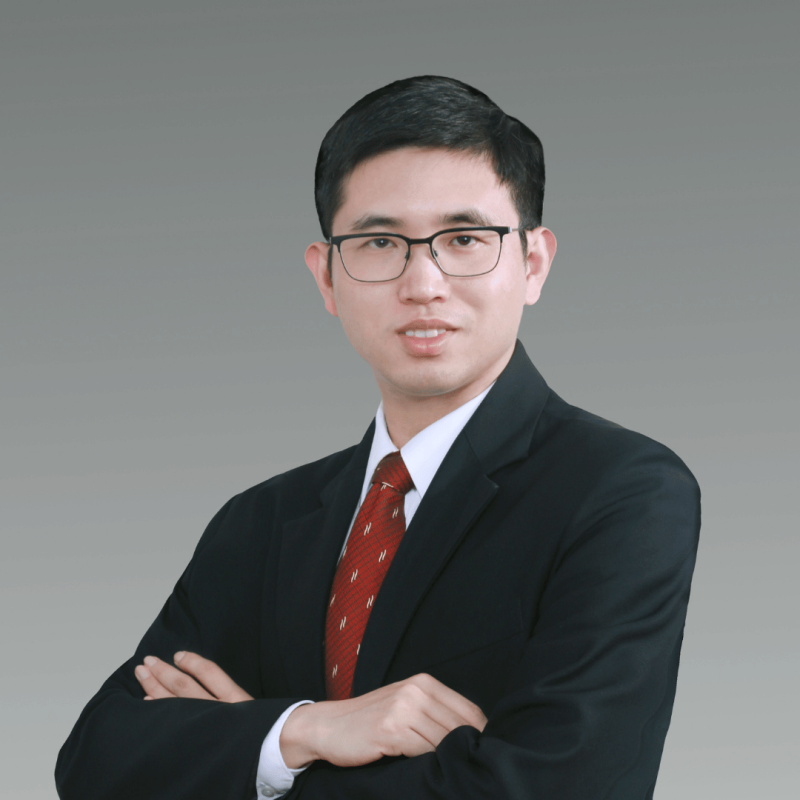
David E. Hardt is the Ralph E. and Eloise F. Cross Professor of Mechanical Engineering at the Massachusetts Institute of Technology (MIT), with a career spanning over four decades. His work focuses on manufacturing process control, large scale additive manufacturing, and smart manufacturing systems. Affiliated with the Department of Mechanical Engineering and a founding member of the Engineering Systems Division, Prof. Hardt has pioneered advancements in welding automation, sheet metal forming, and polymer micro-embossing. Ph.D., MIT (1978) M.Eng., MIT (1974) B.Eng., Lafayette College (1972) His research bridges system dynamics and control theory with industrial applications. Early contributions included multivariable control in gas metal arc welding (GMAW) and in-process sensing for aerospace-grade sheet forming. Current work addresses scalable additive manufacturing for low-cost housing using recycled materials and statistical control of roll-to-roll systems for microfluidic device production. Publications span biomechanical modeling, adaptive control theory, and nano-tooling design. Scientific recognitions include: ASME Fellow (2012) ASME Hideo Hanafusa Outstanding Investigator Award (2020) SME College of Fellows (2020) Prof. Hardt has mentored over 221 graduate theses and co-led the development of MIT’s Master of Engineering in Manufacturing program and EdX MicroMasters in Principles of Manufacturing. He directs research at the MIT Laboratory for Manufacturing and Productivity and serves on technical advisory boards for startups like Digital Alloys and Industrial ML.
Theodora Kourti is an Adjunct Associate Professor in the Department of Chemical Engineering at McMaster University , with a focus on multivariate statistical process control and industrial applications. Her career spans over three decades, blending academic research with practical implementations in pharmaceutical and chemical manufacturing.
Benedikt Faupel is a Professor at the Saarland University of Applied Sciences , specifically within the College of Engineering and the Department of Electrical Engineering . He serves as the Deputy Head of Electrical Engineering , Head of the Process Automation Laboratory R 7007 , and Head of the Control Technology Laboratory R 5102/5103 . His academic activities include being the ECTS Officer for Electrical Engineering and a Member of the Admissions Committee for Master's in Electrical Engineering . Research Focus : Process automation, control engineering, laser welding processes, non-destructive testing using thermography, and quality assurance in manufacturing. Teaching Roles : Winter semester courses in System Theory, Control Engineering, Process Automation, and PLC; Summer semester courses in System Theory, Quality Management, Automation Technology, and project work. Collaborations : Active partnerships with UdS (Saarland University), Prof. Bähre (Manufacturing Technology), and Prof. Seelecke (Unconventional Actuators). Funded Projects : EFRE-funded initiatives like ProPULS and ProFORM, BMBF's IngenieurNachwuchs program, and industry collaborations with TÜV Nord, DeVeTec, and Voit France. Contact : benedikt.faupel@htwsaar.de | Phone: +49 (0)681 58 67 - 261
Stine Borgen Lund serves as Assistant Professor in the Department of Public Health and Nursing at the Norwegian University of Science and Technology's Faculty of Medicine and Health Sciences. Her clinical office is located at Øya helsehus in Trondheim, with direct contact through university email and dual Norwegian phone lines. Her research focuses on critical intersections of nursing practice, trauma care, and geriatric vulnerability. Primary expertise spans intensive care nursing , traumatic brain injury management , and elder abuse prevention in nursing homes . Recent work employs constructivist grounded theory and qualitative methodologies to expose systemic neglect mechanisms among Norwegian nursing home staff, while earlier research analyzed physiological variables in moderate TBI patients through CENTER-TBI consortium collaborations. Publication trends reveal a strategic pivot from neurotrauma clinical studies (2011-2017) toward geriatric ethics investigations (2022-2024). Her 15 most recent works demonstrate methodological consistency in qualitative health research while shifting focus from ICU survival resilience to institutionalized elder neglect. Key journals include BMC Geriatrics, Healthcare, and Journal of Clinical Nursing. Lund actively disseminates findings through international academic channels including the Judith D. Tamkin International Symposium on Elder Abuse (2022) and 11th International Gerontological Congress (2022), where she presented on Norwegian nursing home staff perspectives regarding neglect rationalization. Teaching responsibilities include intensive care nursing courses SYT3530, SYT3537, SYT3535, and SYT3536 at NTNU, emphasizing clinical competency development and shared responsibility frameworks in critical care settings. Her 2016 textbook Sykepleie ved sykdommer og skader i sentralnervesystemet remains a foundational resource in Norwegian nursing education.
Wolfgang Birk is a Professor of Automatic Control at Luleå University of Technology (LTU), affiliated with the Division of Signals and Systems within the Department of Computer Science, Electrical and Space Engineering. Currently, he is on leave of absence to support his spin-off company Predge in an intense growth phase, while maintaining his academic affiliation with LTU. Professor Birk received his MSc in Electrical Engineering from Universität des Saarlandes in Germany in 1997, followed by PhD studies at Luleå University of Technology where he earned his PhD in Automatic Control in 2002. His academic journey includes professional experience at Volvo Car Corporation (2002-2006) before returning to LTU in 2006. He was promoted to Associate Professor in 2012 and to Full Professor in 2015. From 2013-2016, he served as Director of Third Cycle Studies, and from 2017-2019, he was a member of the LTU board. Professor Birk's research focuses on the boundary between control theory and practical industrial applications. His primary research interests include structural properties of multivariable and complex systems, control structure selection and interaction in multivariable systems, multivariable and decentralized control, estimation and prediction of system behavior (particularly for condition monitoring and maintenance), and modeling and simulation of complex dynamic systems. His work spans several application domains including process control in industries, transport systems (particularly railway), and energy systems (renewables, district heating and cooling, data centers, and buildings). His recent publications reveal a strong trend toward practical applications of control theory in industrial settings, with particular emphasis on Zero Defect Manufacturing, district energy networks, predictive maintenance, and digital twin technologies. His work demonstrates a consistent focus on bridging theoretical control concepts with real-world implementation challenges across multiple industries. Professor Birk has received notable recognition for his work: Henry Ford Technology Award for the development of Volvo Cars Driver Alert (2007) The Donald Julius Groen Prize 2007 for the journal article "A Driver-Distraction-Based Lane Keeping Assistance System" As an academic supervisor, Professor Birk has guided numerous doctoral students to completion, including Miguel Castaño (2012), Ulf Andersson (2013), Roland Hostettler (2014), Dennis Kleyko (2018), Ali Khadim (2018), and Johan Simonsson (2024). He has also supervised postdoctoral fellows including Maryam Razi, Martin Haller, Roland Hostettler, Miguel Castaño, and Khalid Atta. His research has been supported by various funding sources including H2020 Framework Program, ERA-Net SES, VINNOVA, and the Swedish Energy Agency, with projects focusing on areas such as AI-augmented cooling systems, flexible energy system integration, and efficient wood drying. Professor Birk is actively involved in both academic and commercial applications of control theory, having co-founded SafeCont AB during his PhD studies and later starting SafeMobility (now Sentient+) in 2009. His current focus on Predge represents the continued translation of academic research into practical industrial solutions.
Michael A. Brown is an Assistant Professor in the Department of Chemistry at The University of Memphis, where he joined in 2019 as a Research Scientist and was promoted to Assistant Professor in 2021. He holds a B.S. (2003) and Ph.D. (2008) in Chemistry from the same institution, with prior experience at SUNY Brockport and Foundation Instruments, Inc. Dr. Brown's educational background includes: B.S. in Chemistry, The University of Memphis, 2003 Ph.D. in Analytical Chemistry, The University of Memphis, 2008 His research centers on forensic chemistry and analytical instrumentation development, with primary focus on multivariate modeling for post-mortem interval determination from skeletal remains, advanced fingerprint and residue analysis techniques, and low-cost automated systems for environmental and water testing using 3D printing and microcontrollers. His work bridges forensic applications with accessible laboratory technology. Recent publications (2023) demonstrate a cohesive trend toward democratizing analytical chemistry through three papers on low-cost automated titration and pipetting systems, while his 2018 forensic study established citrate as a biomarker for post-mortem interval estimation. Dr. Brown has successfully managed three major external research grants from NIJ/DOJ, USDA, and NIEHS. He maintains active collaborations with SUNY Brockport, UT Knoxville, and departmental colleagues Drs. Emmert and Simone on instrumentation projects, while mentoring graduate students in the Chemistry Department. He leads the Brown Forensic Research Lab, which drives interdisciplinary work in bone analysis, fingerprint chemistry, and environmental monitoring systems through academic-industry partnerships.
Attila Imre KATONA is a Senior Research Fellow and Data Scientist at IBM, with a concurrent affiliation at the University of Pannonia in the Department of Quantitative Methods under the Doctoral School of Management and Organizational Sciences. His work bridges statistical process control, machine learning, and European R&D program analysis, focusing on measurement uncertainty and risk-based methodologies. Education : PhD in Management Sciences (University of Pannonia, 2019), Graduate logistics manager (2012), Graduate technical manager (2008). Research Interests include: Addressing measurement uncertainty in statistical process control Analysis of student preferences using gravity and logit models Risk-based optimization of industrial control systems Email : katona.attila@gtk.uni-pannon.hu | Consultation Hours : Tuesday 10:30-11:30 (email pre-negotiation required).
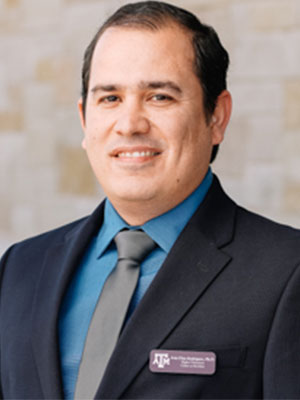
Iván Díaz-Rodríguez is an Instructional Associate Professor in the Multidisciplinary Engineering department at Texas A&M University. He holds a Ph.D. in Electrical Engineering from Texas A&M University (2017), an M.S. in Electronics Engineering (2009), and a B.S. in Mechanical Engineering from Universidad Autónoma de Tamaulipas (2009). Education: Ph.D., Electrical Engineering, Texas A&M University – 2017 M.S., Electronics Engineering, Universidad Autónoma de Tamaulipas – 2009 B.S., Mechanical Engineering, Universidad Autónoma de Tamaulipas – 2009 His research focuses on classical control system design methodologies, particularly in PID control , robust control , and multivariable control . He specializes in controller synthesis using frequency response data and applying these techniques to renewable energy systems. His work emphasizes bridging theoretical advancements with practical implementations, as evidenced by publications on stability margin optimization and tuning strategies for Ziegler-Nichols plants. Scientific Awards: 2015 Dissertation Fellowship, Texas A&M University 2010 Ph.D. Scholarship, CONACYT, México
Prof. Dr.-Ing. Abderrahim Krini is a Professor of Applied Electronics and Functional Safety at the Technische Hochschule Ostwestfalen-Lippe (Faculty 5 – Electrical Engineering and Computer Science). With over 11 years of leadership experience in functional safety and reliability engineering within the international automotive supply industry, he bridges industrial practice and academic research. Prior to joining TH OWL in 2025, he held senior roles in development and quality management at Robert Bosch GmbH in Milan, focusing on safety-critical electromechanical steering systems for global automotive manufacturers. Education: Studied Information and Electrical Engineering (with specialization in Safety Engineering) at the University of Kassel PhD in Electrical Engineering (cooperation with Robert Bosch GmbH), focusing on multivariate safety and reliability indicators in automotive control units His research and teaching emphasize the practical application of functional safety standards (e.g., ISO 26262) and reliability engineering in automotive systems. He has supervised numerous bachelor’s, master’s, and doctoral theses in collaboration with industry partners, merging theoretical and applied perspectives. As an author and co-author of international publications and technical books, he advocates for research that translates scientific findings into engineering solutions. His career reflects a unique synergy between academic rigor and industrial leadership in safety-critical technologies.
Dr. Alona Zharova is a Postdoctoral Researcher at the Chair of Information Systems, Humboldt University of Berlin , and holds an Honorary Research Associate position at the University of Oxford's Environmental Change Institute. She received her Ph.D. in Statistics and Econometrics from Berlin's School of Business and Economics. Research Highlights: AI-driven energy efficiency systems Explainable multi-agent recommendation technologies Behavioral nudging for climate change mitigation Smart home/city energy management frameworks Academic performance evaluation methodologies International research collaborations (Australia, Singapore, UK, Cuba) Scientific Recognition: Joachim Herz Stiftung Transfer Fellowship (2025) Berlin University Alliance Strategic Partnership Grants Add-on Fellow, Interdisciplinary Economics (2023-2025) DAAD International Connections Grant (2023) Erasmus Mundus Exchange Fellow (2013-2014) Leadership & Service: Coordinated DFG-funded CRC and IRTG applications Supervisor of bachelor/master theses since 2020 Scientific committee member for major conferences Advisor to German-Cuban business incubator Volunteer support for Ukrainian researchers in Berlin
Victor Medina-Olivares is a Lecturer in Business Analytics at the University of Edinburgh Business School , specializing in probabilistic machine learning, Bayesian analysis, and predictive modeling with applications in finance, credit risk assessment, and quantitative marketing. His methodological focus includes causal inference, spatial statistics, and survival analysis. Education: PhD in Statistics (University of Edinburgh), MSc in Statistics and Operational Research (University of Edinburgh), Industrial Engineer (Chile), BSc in Physics (Chile) His research bridges statistical innovation with real-world challenges, particularly in financial systems and consumer behavior. Recent work explores spatio-temporal modeling, neural networks for survival data, and open banking applications. Teaching spans programming in Python/R/Stan, Bayesian analysis, and causal inference across Germany, the UK, and Chile. Professional experience includes predictive risk modeling at Chile's Financial Market Commission and consultancy for financial institutions. He actively mentors PhD students and participates in international conferences like the International Conference on Digital Transformation (2024 keynote), ISBA World Meeting (2024 speaker), and Credit Scoring and Credit Control (2023 speaker).
Jose A. Ramos is a Professor in the Engineering Department at Nova Southeastern University's College of Computing & Engineering. He holds a Ph.D. and is affiliated with the Engineering department within the College of Computing & Engineering. Research Areas: Control systems, mechatronics, system identification, signal processing, stochastic processes, multivariate statistics, optimization theory.
Huaiyang Zhong is an Assistant Professor in the Department of Industrial and Systems Engineering at Virginia Tech's College of Engineering. His research focuses on data analytics, optimization, and empirical operations management with applications in healthcare policy and public systems. He holds a Ph.D. and M.S. in Management Science and Engineering from Stanford University, and a B.S. in Industrial Engineering from National University of Singapore. His research interests include decision analysis under uncertainty, healthcare operations optimization, and policy modeling for disease elimination. Notable projects include hepatitis C elimination strategies in Moldova, Rwanda, and China, vaccine rollout impact analysis on public transportation, and innovative payment models for asymptomatic disease management. His work bridges operations research and healthcare economics, often involving cost-effectiveness analyses and policy simulations. Zhong has published in top journals like Operations Research and Medical Decision Making, with recent work focusing on global health interventions and pandemic-related transportation demand modeling. His awards include the INFORMS Decision Analysis Society runner-up paper (2019) and the Syngenta Crop Challenge award (2016). He serves on multiple editorial review boards and has given invited talks at institutions like Harvard, Queen’s University, and Fudan University. His teaching experience includes advanced courses on optimization, stochastic processes, and policy analysis at Virginia Tech and Stanford University. Current grants support work on pain assessment for aging populations and integrated care for cognitive impairment.
Frederick W. Faltin is a Professor of Practice in the Department of Statistics at Virginia Tech's College of Science , serving as Director of Corporate Partnerships for the Academy of Data Science . His roles include bridging academic research with industry applications through collaborative projects and educational initiatives. Education: S.B. in Mathematics, Massachusetts Institute of Technology M.S. in Operations Research and Mathematical Statistics, Cornell University Research Interests: Focuses on process monitoring and control , manufacturing/service process improvement , and risk management . Specializes in statistical methodologies for quality assurance, including control charts, algorithmic process optimization, and failure mode analysis. Extends his expertise into healthcare analytics and software testing frameworks. Publications & Contributions: Authored/co-edited influential works like Statistical Methods in Healthcare (2012) and Encyclopedia of Statistics in Quality & Productivity (2007). Recent research explores statistical engineering paradigms and defect rate paradoxes in supplier-customer dynamics. Awards & Recognition: Fellow, American Statistical Association (ASA) Shewell Prize, American Society for Quality (ASQ) Teaching & Outreach: Instructs CMDA 4864 (Senior Capstone in Data Analytics) and STAT 4214 (Advanced Regression Methods) . Leads corporate partnerships to integrate industry needs into academic curricula. Office located at 312 Data and Decision Sciences, Blacksburg, VA. Labs & Teams: Engaged in Virginia Tech's Academy of Data Science, fostering cross-disciplinary collaborations between academia and enterprise sectors.
Salvador Garcia Munoz serves as a Visiting Professor in the Department of Chemical Engineering at Imperial College London's Faculty of Engineering. His expertise spans pharmaceutical engineering, process analytics, and chemometrics, with a strong focus on applying multivariate data analysis methods to chemical and pharmaceutical processes. Education: PhD in Chemical Engineering from McMaster University, Canada MS in Chemical Engineering from Monterrey Tech, Mexico BS in Chemical and Computer Systems Engineering from Monterrey Tech, Mexico Professor Garcia Munoz specializes in multivariate data analytics for process understanding and control, particularly in pharmaceutical manufacturing. His work bridges the gap between theoretical chemical engineering principles and practical industrial applications. He has developed expertise in Principal Components Analysis (PCA), Partial Least Squares (PLS), process monitoring, and optimization techniques. His research focuses on creating data-driven models for complex systems where data is abundant, correlated, and noisy, with direct applications in continuous manufacturing, quality by design, and real-time release testing in the pharmaceutical industry. His publication record demonstrates a strong trend toward integrating advanced statistical methods with chemical engineering principles to solve pharmaceutical manufacturing challenges. The majority of his recent work focuses on process analytics, model-based design, and optimization for pharmaceutical processes, with particular emphasis on continuous manufacturing, design space definition, and quality control. His articles reveal expertise in applying chemometrics to pharmaceutical unit operations including granulation, dissolution, and powder flow systems. Professor Garcia Munoz actively contributes to the academic community through teaching specialized courses on process analytics and multivariate methods. He is also a key contributor to open-source scientific software, notably as one of the authors of KIPET (Kinetic Parameter Estimation Toolkit), which is used for parameter estimation in chemical reaction systems. His work with PYOMO (Python-based Optimization Modeling Objects) demonstrates his commitment to developing accessible computational tools for the engineering community. His research group collaborates extensively with industry partners, particularly in the pharmaceutical sector, to develop practical solutions for manufacturing challenges. The focus on real-world applications is evident in his publications, which often include case studies using data from actual industrial processes. His work bridges the gap between academic research and industrial implementation, making significant contributions to the advancement of pharmaceutical manufacturing technologies.