Robert Swinney is the Senior Associate Dean for Executive MBA and Quantitative Management Programs and a Professor of Operations Management at Duke University's Fuqua School of Business. He specializes in strategic supply chain operations, consumer behavior dynamics, and platform management. His research explores sustainability, risk mitigation, and ethical practices within complex supply networks. Education: Bachelor of Science in Astronomy, California Institute of Technology PhD in Operations Management, Wharton School, University of Pennsylvania Prior Role: Associate Professor at Stanford University Graduate School of Business Research Interests: His work addresses operational implications of consumer behavior, start-up and platform operations, supply chain resilience, and ethical sourcing strategies. He emphasizes practical applications in healthcare, food delivery systems, and digital content platforms. Editorial Contributions: Currently serves as Department Editor at Manufacturing & Service Operations Management , with prior roles at Management Science and Production & Operations Management . Advising & Grants: No specific grants or advising roles explicitly listed in provided text.
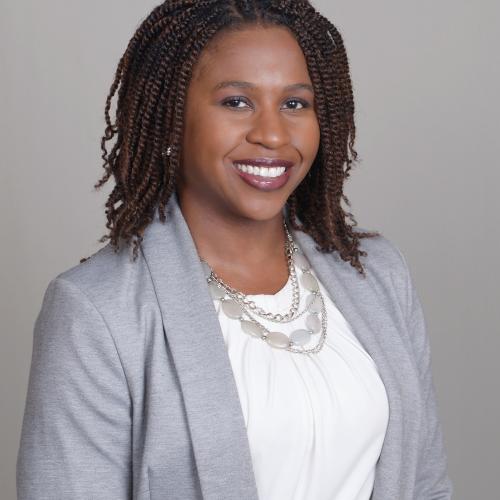
Celeste Malone, PhD, is an Associate Professor and Coordinator of the School Psychology Program at Howard University's School of Education. She holds a PhD in School Psychology from Temple University and postdoctoral training from Johns Hopkins University. Her research focuses on multicultural competence in school psychology, diversification of the profession, and culturally responsive practices. She leads the Multicultural School Psychology Research Group (MSPRG), developing tools like the School Psychology Multicultural Competence Scale. Dr. Malone has held leadership roles in NASP (2022–2023 President, first Black woman in the role) and APA, advocating for equity. She received presidential awards from NASP, APA Division 16, and others. Education: Brown University (BA Psychology), Johns Hopkins (MS Counseling), Temple University (PhD School Psychology) Research interests include bridging research-practice gaps, addressing microaggressions, and improving mental health access for marginalized youth. Notable contributions include frameworks for MTSS (Multi-Tiered Support Systems) in anti-racist schooling and pandemic-era advocacy for educational equity. Key awards: 2024 Outstanding Article Award (School Psychology Review), Jean Baker Mid-Career Service Award (APA) Her work emphasizes social justice through leadership development, policy advocacy, and anti-oppressive training. Current projects explore faculty diversity recruitment, LGBTQ+ competency in training, and liberatory mentoring practices.
Laura Pendergast serves as an Associate Professor at Temple University's College of Education and Human Development, where she teaches graduate courses including Tests and Measurements (EPSY 5529) and Clinical Supervision Seminar in School Psychology (SPSY 9687). Her academic work centers on advancing equity in psychological and educational assessment through rigorous psychometric methodologies. Her research program focuses on evaluating cross-cultural equivalence of social, emotional, and behavioral constructs using multivariate statistics, with particular emphasis on applications in school psychology and international contexts. She investigates how measurement science can improve decision-making processes in educational settings, especially in low-resource environments where assessment tools require cultural validation. Analysis of her 15 most recent publications (2018-2024) reveals consistent themes in validating cognitive and behavioral assessment instruments across diverse populations, with significant contributions to understanding environmental impacts on child development through the MAL-ED international study. Her work demonstrates methodological expertise in measurement invariance testing and scale development for global applications. Dr. Pendergast's research has secured substantial funding from major organizations: Society for the Study of School Psychology Institute for Education Sciences Spencer Foundation Foundation for the National Institutes of Health Bill and Melinda Gates Foundation Her laboratory work involves large-scale international collaborations examining child development trajectories, with particular focus on cognitive assessment validity in low- and middle-income countries. Current projects investigate the interplay between environmental factors, nutritional status, and neurodevelopmental outcomes using sophisticated psychometric modeling techniques.
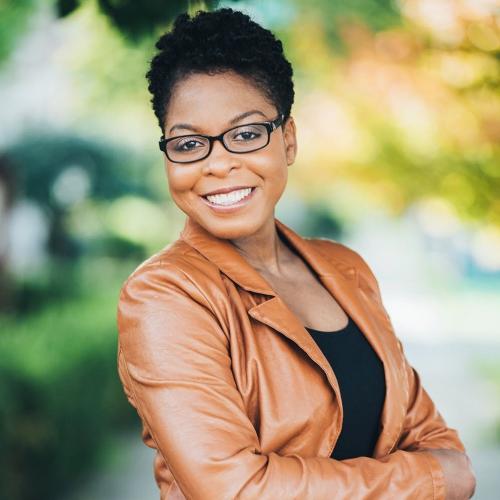
Dr. Shanter H. Alexander is an Assistant Professor in the School Psychology program at Howard University, an historically Black university in Washington, DC. She holds a PhD in School Psychology from Andrews University (2020), an Ed.S. in Educational Psychology (2012), and an MA in School Psychology (2009), all from Andrews University. Her research focuses on the intersectionality of race and neurodevelopmental disability, particularly within the Black/African American autism community. She is nationally certified as a school psychologist and autism specialist. Professional Affiliations: She serves as Co-Chair of NASP's Professional Position Statements Committee, an Executive Board member of the Trainers of School Psychology (TSP), and a faculty member of the Children’s National Hospital Leadership in Neurodevelopmental Disorders Program. She is also an invited member of the Washington DC Autism Collaborative. Her consultancy work through Neuro-Inclusion Specialists focuses on creating inclusive environments for individuals with disabilities in faith-based organizations, communities, and corporations. She collaborates with schools to design multitiered academic and behavioral support systems and psycho-educational assessment services.
Gérard Berry (born December 25, 1948) is a distinguished French computer scientist currently serving as Professor at the Collège de France, holding the permanent chair Algorithmes, machines et langages (Algorithms, Machines, and Languages) since 2012. He previously held the Informatique et sciences numériques chair (2009-2010) and the Technological Innovation Liliane Bettencourt chair (2007-2008) at the same institution. Before joining Collège de France full-time, he served as Director of Research at INRIA Sophia Antipolis (2009-2012) and at École des Mines de Paris (1977-2001). His research spans over 30 years in three main fields: lambda calculus and functional programming, parallel and real-time programming languages, and design automation for synchronous digital circuits. He is particularly renowned for developing the Esterel programming language. His work bridges theoretical computer science with practical industrial applications. Berry's research has evolved to include current work in Hop and HipHop for Web programming, formal verification of compilers, and languages for computer music. His publications demonstrate consistent contributions to programming language theory, formal methods, and their applications in hardware and software systems. Gold Medal of CNRS (2014) Chevalier de l'Ordre de la Légion d'Honneur (2012) Member of French Academy of Sciences (2002) Member of Academia Europaea (1993) Monpetit Prize of Académie des sciences (1990) Berry has advised 17 PhD students and reviewed numerous theses. His industrial experience includes serving as Chief Scientist Officer of Esterel Technologies (2000-2009), where he directed the implementation of the Esterel v7 compiler. He has also held significant leadership roles including President of the Scientific Council of IRCAM and membership on the Scientific Council of the National Education. His teaching at Collège de France has covered topics ranging from the foundations of computation to the societal impact of digital technology, with courses including The Informatics of Time and Events and Proving Programs: Why? When? How? His laboratory work has focused on developing practical applications of theoretical computer science concepts.
Dr. Emily DeFouw is an Assistant Professor in the School Psychology Program at the University of Southern Mississippi. She earned her Ph.D. and MEd in School Psychology from the University of Massachusetts-Boston and completed a predoctoral internship in pediatric psychology at the University of Nebraska Medical Center. Education: Ph.D. and MEd in School Psychology (University of Massachusetts-Boston) Her research focuses on academic interventions, particularly in mathematics, within a Response-to-Intervention (RtI) framework, and she explores implementation strategies like school-based consultation and treatment intensity. Her work emphasizes Applied Behavior Analysis and Multi-Tiered Systems of Support (MTSS) to improve outcomes for racially and ethnically minoritized youth. Recent publications highlight trends in intervention delivery (video modeling, emailed prompts), MTSS and consultation models (cost-effectiveness, teacher collaboration), and behavioral strategies (behavior-specific praise, treatment fidelity). Her 2025 research centers on preschool education technology, while 2024 studies examine alternative school settings and consultation efficacy. Professional Affiliations: National Association of School Psychologists (NASP), American Psychological Association (APA)
Sharon Ware, Ph.D., is an Associate Professor and Director of the Special Education Literacy Intern program (M.A.) at the University of Saint Joseph. She joined USJ in 2016. Her academic background includes a Ph.D. in Special Education from the University of Connecticut, an Ed.M. from Harvard University, an MBA from the University of Arizona, and a B.A. from Boston College. Dr. Ware’s research focuses on literacy development across the PK-12 spectrum, particularly for learners with diverse needs. Her work emphasizes vocabulary instruction, bilingual education, and multitiered systems of support. She has published extensively in journals like The Elementary School Journal and Exceptional Children , exploring topics such as vocabulary intervention efficacy, bilingual learners' language acquisition, and gifted education equity. Her articles highlight trends in early literacy interventions, the role of teacher-student interactions in vocabulary development, and strategies to address educational disparities. Dr. Ware’s contributions bridge theory and practice, aiming to improve outcomes for students with learning challenges and English language learners.
Mark Samudre is an Assistant Professor of Special Education at the University of Kentucky, affiliated with the Department of Early Childhood, Special Education, and Counselor Education within the College of Education. He previously served as faculty at the University of South Carolina (2019-2023) and completed his doctoral studies at the University of Kentucky (2015-2019). His primary research focuses on training and coaching frameworks to enhance teacher implementation of behavioral supports, particularly targeting general education teachers. Dr. Samudre teaches courses in classroom management, applied behavior analysis, co-teaching, and instructional strategies for students with high-incidence disabilities. His research emphasizes resource-efficient coaching interventions and professional development frameworks to improve fidelity of behavioral interventions. Notable areas include targeted behavioral supports, multitiered systems of support, and evidence-based practices for inclusive education. Recent Trends in Publications: His work spans meta-analyses of teacher training effectiveness, explorations of implementation drivers for behavioral supports, and innovations in video-based interventions for students with disabilities. Recent studies investigate group contingency designs, peer coaching efficacy, and virtual instruction strategies. Dr. Samudre has no listed scientific awards but maintains an active research agenda focused on bridging gaps between training frameworks and classroom implementation. His work addresses practical challenges in special education through rigorous empirical studies and evidence-based methodologies.
Dr. Stacy-Ann A. January serves as Associate Professor in the School Psychology program at the University of South Florida's College of Education and Co-Director of the nationally recognized Institute for School-Community Partnerships, Integrated Services, and Child Mental Health and Educational Policy. Her leadership advances research, technical assistance, and evidence-based policy implementation through school-community-family collaborations. Her educational credentials include: Ph.D. in School Psychology, University of Georgia (2014) M.A. in School Psychology, University of Georgia (2011) B.A., University of Richmond (2006) Pre-doctoral Internship, Cypress-Fairbanks ISD (2013-2014) IES Postdoctoral Fellowship, University of Nebraska-Lincoln (2014-2016) Dr. January's research employs ecological problem-solving frameworks to develop academic interventions within multitiered systems of supports, strengthen family-school-community partnerships, and implement community-centered approaches for improving child outcomes. Her work emphasizes equity-centered practices for students with emotional/behavioral disorders and evidence-based policy translation. Analysis of her 2022 publications reveals consistent focus on validity of screening instruments, structural analysis of behavioral metrics, and context-specific interventions for vulnerable populations. Key trends include rural education adaptations, dyslexia identification protocols, and equity-centered MTSS implementation across diverse school settings. Her distinguished honors include: Lightner Witmer Award, APA Division 16 (2021) USF Outstanding Research Achievement Award (2025) Early Career Achievement Award, APA (2017) Multiple editorial awards from School Psychology Review Fellowship, Texas Center for Health Disparities (2017-2018) As Faculty Advisor to SPSA and Orientation Coordinator, Dr. January mentors emerging scholars while securing $13M+ in research funding through projects including: Equity-Centered MTSS for Academics (USF, 2022-2023) Parental Involvement in Education (IES, 2019-2022) Dyslexia Identification Collaboration (USC, 2017-2018) The Institute for School-Community Partnerships operates as her primary research hub, developing technical assistance frameworks and evidence-based tools adopted by state/federal education agencies to implement policy reforms and improve student mental health outcomes.
Jennifer Grisham, Ed.D., is a Professor in the Interdisciplinary Early Childhood Education program at the University of Kentucky and serves as the Faculty Director of the Early Childhood Laboratory School. She specializes in assessment, instructional design, and inclusive education practices for young children, particularly those with disabilities. Dr. Grisham has authored/co-authored multiple books on blended practices in early childhood education, including Blended Practices in Early Childhood Education (2017, 2005) and Blended Assessment Practices in Early Childhood Education (2022, 2011). She has directed numerous state and federal grants focused on personnel preparation, program evaluation, and inclusive education models. Her research interests include authentic assessment, tiered instruction, and inclusion strategies, with a focus on early childhood settings. Dr. Grisham has published extensively in peer-reviewed journals, addressing topics such as teacher training, data collection in inclusive classrooms, and international education initiatives. She is President of the Early Intervention Management and Research Group, contributing to the development of the Assessment, Evaluation, and Programming System (AEPS) , a widely used assessment tool for young children. Dr. Grisham co-founded the Hope for Tomorrow children’s home and preschool program in Guatemala City and leads annual education abroad programs for University of Kentucky students. She has also worked internationally to promote inclusive practices for young children with disabilities.
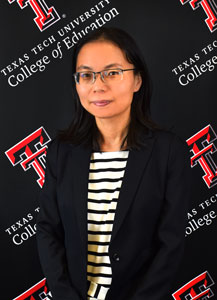
Joy Wang is an Assistant Professor in the Department of Educational Psychology, Leadership, & Counseling at Texas Tech University's College of Education. As a licensed specialist in school psychology and psychologist, her research focuses on supporting students' behavioral, academic, and emotional well-being through relational frameworks. Her work aims to develop school-based prevention programs and interventions that address systemic challenges in youth development. Education includes: PhD in School Psychology from University of South Florida (2017) MS in Clinical Psychology from University of Macau (2012) BS in Biological Science from China Agricultural University (2008) Her research specializes in peer/teacher influences on youth well-being, adverse childhood experiences, Parent-Child Interaction Therapy (PCIT) applications in schools, and support for high-achieving students with academic stress. She maintains active investigations into measurement development for intervention studies and relational approaches to student support systems. Recent publications demonstrate strong trends in adolescent development research, particularly concerning trauma-informed interventions, COVID-19 educational impacts, and psychometric validation of assessment tools. Her work consistently integrates cultural considerations, especially in Chinese educational contexts. No major scientific awards are documented in available materials. Dr. Wang directs research on educational interventions and advises graduate students, though no specific advisee names are listed. She contributes to federal and state grant initiatives, including principal residency partnerships across Texas. Laboratory affiliations include the educational psychology research group at Texas Tech University, focusing on school-based mental health services and multi-tiered support systems.
Melissa Fogarty is a Clinical Associate Professor and Associate Department Head in the Department of Educational Psychology at Texas A&M University's College of Education and Human Development. Her work focuses on special education, reading comprehension, and evidence-based interventions. She coordinates the undergraduate special education program and leads research on literacy interventions for students with disabilities. Her research interests include technology-mediated learning, reading comprehension strategies for at-risk students, and teacher preparation frameworks. She has co-led multiple federally funded projects, including the Project Connect-IT series focused on developing text-integration interventions for middle schoolers and a Texas Higher Education initiative supporting Spanish-speaking families of children with autism. Dr. Fogarty's recent publications analyze phonemic awareness instruction, technology-delivered interventions, and peer dynamics for students with disabilities. She teaches courses such as SPED302 Instructional Design for Students with Disabilities and SPED621 Overview of Exceptional Students . Her grants include roles as Co-PI on US Department of Education IES-funded projects since 2010. Notable contributions include developing frameworks for multitiered teacher preparation systems and exploring the efficacy of interventions targeting vocabulary and comprehension deficits. She emphasizes applying research findings to real-world educational challenges, particularly during disruptions like the pandemic.
Dr. Chris Brien is a part-time Grant-Funded Researcher (B) at the School of Agriculture, Food and Wine, University of Adelaide, affiliated with The Plant Accelerator within the Australian Plant Phenomics Network. He holds an adjunct position at the University of South Australia until 2024. His expertise spans experimental design, mixed models, and agricultural statistics, with a focus on multitiered experiments and high-throughput phenotyping. Brien earned a B.Ag.Sc. (Biometry) from the University of Sydney (1972), an M.Ag.Sc., and later conducted PhD research at the University of Adelaide. His career includes roles at CSIRO, Roseworthy Agricultural College, and the University of South Australia, where he was a Senior Lecturer in Statistics. His research interests include longitudinal experiments, sugarcane breeding, and sustainable agricultural practices. He co-authored a seminal paper on 'Multiple Randomizations' for the Royal Statistical Society (2006). Brien maintains R packages (dae, asremlPlus, growthPheno) for statistical analysis in agriculture. His work integrates advanced phenotyping techniques with genetic and environmental data to enhance crop resilience under stress conditions. Collaborations include the Plant Accelerator, focusing on high-throughput phenotyping for crop improvement. His contributions highlight the application of statistical rigor to experimental design, with implications for precision agriculture and climate-resilient crops.
Collin Shepley is an Associate Professor in the Department of Early Childhood, Special Education, and Counselor Education at the University of Kentucky, affiliated with the Interdisciplinary Early Childhood Education program. He has seven years of experience in public schools as a paraprofessional, home-based service provider, and preschool special education teacher, focusing on children with social-communication delays and challenging behavior. He also served as a clinical supervisor at the University of Georgia’s Severe Behavior and Skill Acquisition Clinic, overseeing service provision and program development for individuals with severe behavior and young children with autism. His teaching portfolio includes courses on child development, preschool lesson planning, assessment of young children, and special education methodologies. Dr. Shepley’s research prioritizes evidence-based interventions for children with disabilities, emphasizing practical teacher/caregiver training, tiered support systems in early childhood, and advancing research methodologies in line with the Open Science movement. His work often explores feasible practices for educators and caregivers, including progress monitoring tools, behavior analytic service delivery quality, and systematic reviews of interventions. He actively advocates for data transparency and rigorous methodological standards in educational research. His articles (2021–2025) focus on topics such as progress monitoring efficacy, single-case research rigor, naturalistic interventions’ impact on family quality of life, and multitiered support systems in early childhood settings. He emphasizes translating research into actionable strategies for educators and families.
Dr. Tracy Arámbula Turner is an Associate Professor in the Higher Education and Student Affairs Administration (HESA) graduate program within the Department of Education at the University of Vermont's College of Education and Social Services. She teaches P-16 American Educational (In)Equality in the undergraduate Honors College and Higher Education Law and Social Justice and Inclusion in Higher Education at the graduate level. Dr. Arámbula Turner earned her Ph.D. in Higher Education Leadership from The University of Texas at Austin, an M.Ed. in Elementary Education from Boston College, and a B.A. in Sociology from the University of Illinois. Her academic journey reflects her commitment to understanding educational systems from multiple perspectives. As a qualitative P-16 educational access and completion scholar, Dr. Arámbula Turner's research explores the systems, structures, policies, and cultural contexts that preclude or promote achievement for first-generation, low-income, and BIPOC students. Her work spans educational equity, college access for underrepresented populations, restorative practices in schools, and the experiences of Latino students in higher education. Her research is deeply informed by her lived experiences as a former elementary school teacher, student affairs practitioner and administrator, and legislative policy analyst. Her scholarly work demonstrates a clear trajectory toward understanding and addressing systemic barriers in education, with recent publications focusing on restorative practices implementation, college access for Latino men, and the intersection of race and gender in higher education research. Her articles consistently address issues of equity, access, and justice across the P-16 educational spectrum. Joan Mulholland Freedom Rider Award, Mosaic Center, University of Vermont (2025) Jackie M. Gribbons Award for Extraordinary Service, University of Vermont (2023) Graduate Student Senate Excellence in Teaching Award, University of Vermont (2023) NASPA Latinx/a/o Knowledge Community Mena Valdez Outstanding Faculty Award (2021) NASPA Region I Outstanding Contribution to Literature and/or Research Award (2020) Dr. Arámbula Turner is actively engaged in service to the academic community, serving on the editorial boards of the Review of Educational Research and the Journal of Higher Education. She is a member of the Association for the Study of Higher Education, the American Association of Hispanics in Higher Education, and the American Educational Research Association. Her approach to faculty work integrates research, teaching, and service with a commitment to educational justice.