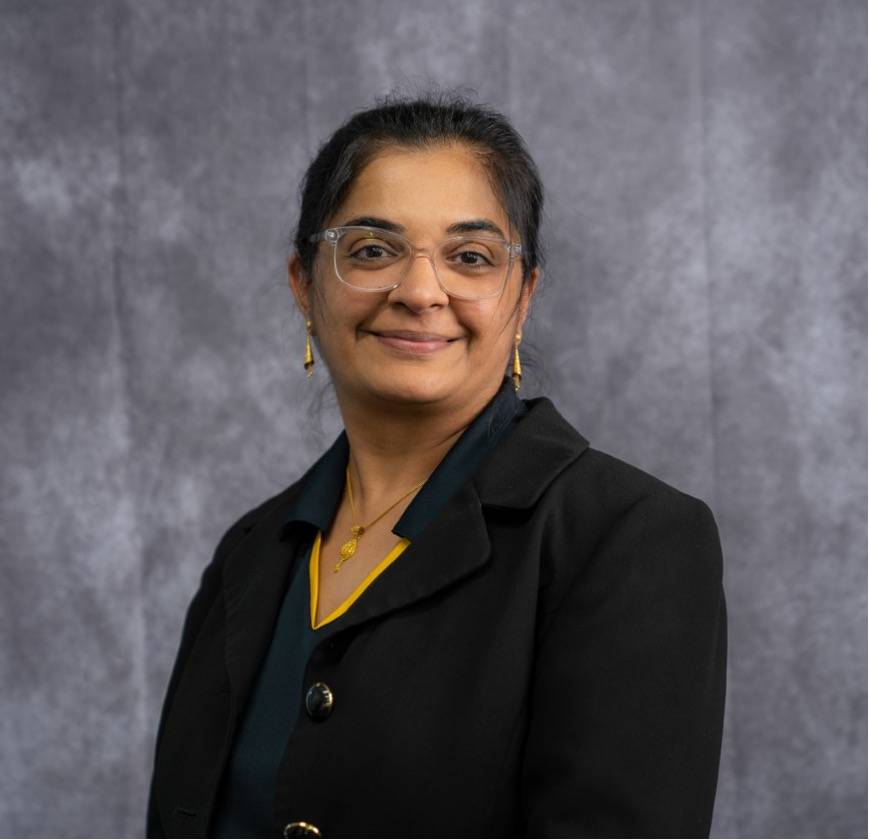
Dr. Parminder Juneja is a Professor in the Department of Construction Management at Kennesaw State University, with expertise in evidence-based healthier facilities, indoor soundscapes, and natural lighting optimization. His interdisciplinary research integrates BIM with decision-theory frameworks to address lifecycle challenges in educational, healthcare, and corporate environments. PhD in Integrated Facility Management (Georgia Tech, 2010) M.Tech in Building Science and Construction Management (IIT Delhi, 2000) B.Arch in Architecture (Chandigarh College, 1996) His work spans acoustic analysis in schools, economic-behavioral decision modeling, and promoting zero-accident culture in construction. Funded projects include Soundscapes in Elementary Classrooms (2016) and Financial Simulation for Construction Students (2017). Notable presentations at Indoor Air 2016 and Construction Research Congress highlight his global impact. Dr. Juneja advocates systems thinking and data-driven decision-making, addressing limitations of online education through empirical research. Collaborations with institutions like UNCC and Georgia Tech underscore his commitment to advancing facility management and human-centric design.
CHEN Yen-Tsang is an Assistant Professor at Neoma Business School , specializing in Information Systems, Supply Chain Management, and Decision Support . He earned his PhD in Business Administration from FGV EAESP in 2015 after a decade-long career as an engineer and project manager at firms like Alstom and Metro of Rio de Janeiro. Currently, he leads the MSc Management de Projet program at Neoma's Paris campus and teaches Operations Management, Purchasing, and Operations Research . Education : PhD in Business Administration (FGV EAESP, 2015), Mechanical Engineering background His research focuses on behavioral operations , resilient supply chains , and project management , employing controlled experiments , discrete choice analysis , and surveys . Recent work examines cross-national supply chain resilience , dynamic control systems , and ethical challenges in purchasing , with publications in IJOPM , JCLP , and conferences like POMS and EUROMA . Recent article trends reveal a focus on sustainability , resilience in global supply chains , and behavioral impacts in operations . Notable collaborations include studies on structural complexity validation and forecasting biases . Chen integrates experimental methods and cross-cultural analysis in his work, addressing multitasking inefficiencies , collaboration risks , and management control systems . He contributes to experimental pedagogy through Neoma's Experimental Lab and participates in international research partnerships like VISTA AR and BluePrint Intao .
Steven Trawley is an Adjunct Senior Research Fellow in the Chronic Disease & Ageing research group at Monash University, where he contributes behavioral research insights to clinical studies on diabetes care. With a PhD in Psychology from the University of Sussex, UK, his work bridges cognitive psychology and medical technology assessment. His research centers on human behavior in everyday contexts, with a strong focus on aging, multitasking, and driving safety. Over the past decade, he has specialized in diabetes care, examining how individuals perceive and use treatment technologies. His work is particularly focused on improving safety for drivers with diabetes through better glucose monitoring and automated insulin delivery systems. Recent publications (2024–2025) highlight his contributions to clinical trials of automated insulin delivery (AID), glucose patterns during driving, and psychometric validation of behavioral tools like the MAD scale. His research spans diabetes technology, aging, and road safety, often involving large-scale collaborations such as the JDRF Closed-Loop Research Group. Steven Trawley is actively engaged in national health research through his role as a Research Steering Committee Member at Diabetes Australia since June 2025. His work supports UN Sustainable Development Goals related to health and well-being. He has published extensively, with 47 research outputs including articles, reviews, and book chapters. While no students or specific grants are mentioned, his leadership in trials and committees indicates advisory and collaborative roles. His research is frequently shared on social media and covered in news outlets, reflecting public and academic impact.
Professor Anatoli Colicev holds a PhD in Decision Sciences and Statistics and currently serves as a Professor with academic affiliations at Bocconi University, University of Liverpool Management School (ULMS), and Nazarbayev University. He specializes in quantitative modeling with a focus on marketing, finance, and strategic management intersections. As a former PhD Program in Marketing curriculum coordinator at Bocconi (2020–2022), he demonstrates strong academic leadership. He is actively involved in editorial roles as Associate Editor of the International Journal of Research in Marketing (2022–present) and serves on editorial review boards for high-impact journals like Journal of Marketing and Journal of Marketing Research . His research spans Marketing-Finance Interface, Social Media Marketing, blockchain technology applications in brands, ESG rating impacts, and strategic multi-project work dynamics. He has published in top-tier journals including Journal of Marketing Research , Strategic Management Journal , and International Economic Review . Teaching experience includes courses at executive, MBA, Master's, and undergraduate levels, with notable achievements like the Bocconi Excellence in Advanced Teaching 2019 award and student wins in the Henkel Innovation Challenge 2019. Professional service includes roles in hiring committees (e.g., University of Liverpool Management School since 2022), academic senate membership, and thesis supervision across institutions (32 theses total). His work integrates empirical data from companies like Metro AG and YouGov Group, employing advanced methods such as time-series econometrics and multilevel modeling.
C.S. (Sebastian) Pfeil is an Assistant Professor at the University of Groningen , affiliated with the Faculty of Economics and Business and the Department of Economics, Econometrics & Finance . His research focuses on Corporate Finance, Corporate Governance, Macro Finance, and Financial Regulation. He holds a Ph.D. and has published extensively in top-tier journals. Key research interests include managerial incentives, financial regulation design, and the implications of extreme financial frictions in macroeconomic systems. His work bridges theoretical models with practical policy applications, particularly in banking and financial markets. Selected publications span topics from securitization practices in financial institutions (2013) to dynamic agency models addressing reward structures (2010). His 2021 Journal of Financial Economics paper on managerial multitasking and investment incentives highlights recurring themes in his work: aligning incentives between managers and stakeholders under uncertainty. No awards or grants explicitly listed in provided materials Acts as advisor but no student names documented here Contact: c.s.pfeil@rug.nl
René Weber is a Professor in the Department of Communication at the University of California, Santa Barbara (UCSB), and Director of the Media Neuroscience Lab. He holds a Ph.D. in Psychology from TU Berlin and an M.D. in Psychiatry and Cognitive Neuroscience from RWTH Aachen. His research integrates neuroscience methods with communication theory to study how media narratives influence cognition and emotion, with a focus on moral conflict, persuasion, flow experiences, and attention disorders like ADHD. He has pioneered the use of fMRI to investigate media effects, including video game violence, anti-drug PSAs, and narrative engagement. Key areas of research include media-multitasking’s impact on attention, computational analysis of moral narratives, and neural mechanisms underlying attitude change. His work has been supported by grants from U.S. and German scientific foundations, private philanthropies, and industry collaborations. He is a Fellow of the International Communication Association. His lab employs advanced techniques such as EEG, fMRI, and network neuroscience to explore topics like cortical synchronization during storytelling, the neural basis of moral judgments, and the effects of digital media on adolescent brain development. Recent projects include analyzing moral language in global news using crowd-sourced dictionaries and investigating mindful social media use as a tool to reduce conspiracy beliefs. Education: Ph.D. (Dr.rer.nat.) in Psychology, TU Berlin M.D. (Dr.rer.medic.) in Psychiatry & Cognitive Neuroscience, RWTH Aachen Awards/Honors: Fellow of the International Communication Association Grants & Funding: National Science Foundation (U.S.) German Research Foundation (DFG) Private Philanthropies & Industry Contracts Labs/Teams: Media Neuroscience Lab at UCSB His research output spans over 120 journal articles, book chapters, and four books, emphasizing interdisciplinary approaches at the intersection of communication, neuroscience, and computational methods.
Kasia Kostyrka-Allchorne is a Research Fellow at King’s College London’s Department of Child & Adolescent Psychiatry, part of the School of Academic Psychiatry within the Institute of Psychiatry, Psychology & Neuroscience. She joined in 2017 after completing a PhD in developmental psychology at the University of Essex. She leads the OPTIMA programme and manages the SPARKLE Trial, focusing on digital interventions for parenting and adolescent mental health. Education: PhD in Developmental Psychology, University of Essex Research Focus: Her work centers on digital tools for parenting support, mechanisms linking psychopathology to digital engagement, and future-oriented thinking in adolescents. Current projects include developing mobile apps like Parent Positive for ADHD management (OPTIMA), evaluating lockdown impacts on child behavior (SPARKLE Trial), and studying decision-making processes in adolescents. Projects: Examining multitasking in adolescents (Ongoing) Future-oriented thinking and mental health links (Ongoing) Parent Positive app clinical optimization (PPP Study) Children’s task-switching development (Ongoing) Grants/Advising: Manages complex projects involving schools, mental health services, and stakeholders. No specific grants listed. Labs/Teams: Member of the Experimental Psychopathology and Neuro-Development (ExPAND) Group, dedicated to neuro-developmental disorders and lifespan mental health.
James Danckert is a Professor in the Department of Psychology at the University of Waterloo, where he also serves as the Cognitive Neuroscience Area Head. He is cross-appointed to the Research Institute in Aging and leads the Danckert Attention and Action Group (Danckert Lab). His research spans cognitive neuroscience with particular focus on understanding the mechanisms and brain states that give rise to boredom and mental model updating. Dr. Danckert earned his BA from Melbourne University (Australia), followed by his MA and PhD from La Trobe University (Australia). His academic journey has positioned him as a leading expert in cognitive neuroscience with a specific emphasis on boredom psychology and attention mechanisms. His primary research interests include the cognitive and neural mechanisms of boredom, particularly in individuals with traumatic brain injuries, and mental model updating in relation to neglect syndrome. Danckert's work explores boredom through behavioral tasks like foraging, sustained attention tasks, and executive control tasks, utilizing neuroimaging techniques such as fMRI and tDCS. His mental model updating research involves working with stroke patients (with access to a database of over 800 patients), fMRI, and computational modeling. Analysis of Dr. Danckert's most recent publications reveals a continued focus on boredom and mental model updating, with increasing interdisciplinary approaches incorporating computational modeling, AI, and genetic perspectives. His work bridges cognitive psychology, neuroscience, and clinical applications, with particular emphasis on how boredom relates to attention, agency, and decision-making processes. Dr. Danckert has received significant recognition for his work, including: Former Canada Research Chair (Tier II) in Cognitive Neuroscience Recipient of the 40 Under 40 Award from the Region of Waterloo As a mentor, Dr. Danckert supervises graduate students in the Psychology Department at Waterloo, teaching advanced courses such as Psych 783: Neuroimaging and Cognition. His research is supported by prestigious funding sources including the Natural Sciences and Engineering Research Council (NSERC) and the Canada Foundation for Innovation (CFI). The Danckert Lab maintains a comprehensive research program with two main streams: boredom research and mental model updating. The lab utilizes diverse methodologies including behavioral testing, neuroimaging, computational modeling, and collaborations with experts in evolutionary genetics. The lab's work has significant implications for understanding cognitive processes in both healthy individuals and those with neurological conditions.
Andreas Sonderegger is a Lecturer at the Department of Psychology , University of Fribourg , and group leader of the Human Factors Lab . His research focuses on Human-Computer Interaction , Usability Engineering , and User Experience (UX) , with particular emphasis on: Web accessibility for diverse user groups Neurofeedback systems for cognitive enhancement Human factors in automated driving Cross-cultural usability testing Physiological computing for user state assessment His recent publications analyze: Neurofeedback applications for tinnitus treatment Human-AI decision-making comparisons Physiological indicators in automated driving Usability of no-code robotics programming He has contributed to journals such as: Computers in Human Behavior Scientific Reports Ergonomics International Journal of Human Computer Studies
Mine İMREN is a Lecturer in the Department of Psychology at Ahi Evran University’s Faculty of Arts and Sciences , where she has been employed since 2023. She also serves as the Head of Department at Kırşehir Ahi Evran University from 2024 onwards. Her teaching portfolio includes undergraduate courses such as Learning Psychology, General Psychology I, Introduction to Psychology, and Cognitive Psychology. PhD in Psychology (Uludağ University, 2021) Master’s in Psychology (Uludağ University, 2015) BSc in Psychology (Uludağ University, 2012) Her research focuses on Cognitive Psychology , Experimental Psychology , and Biopsychology , with particular emphasis on the cognitive effects of media multitasking, working memory, and sustained attention. She also explores how technology and media influence identity construction and psychological development. Publications from 2018 to 2020 reflect her interdisciplinary work bridging cognitive neuroscience , human-computer interaction , and media psychology . Key themes include task-switching efficiency , attention allocation , and technology’s impact on executive functions , alongside explorations of media-driven body image discourses in social psychology. As principal investigator, she led two major projects: ‘Determining Anxiety Levels Toward AI Technologies Among Academics’ (2025–2026, supported by Higher Education Institutions) and ‘Effects of Multitasking on Cognitive Control’ (2019–2020, TÜBA/TÜBİTAK supported). She is a member of the Turkish Psychological Association since 2020.
Dr. Alice Hall serves as a Professor in the Department of Communication and Media within the College of Arts and Sciences at the University of Missouri-St. Louis. She teaches foundational and advanced courses including Introduction to Mass Communication, Seminar in Mass Communication, and Introduction to Broadcasting and Digital Media, shaping student understanding of media theory and practice. Education: Ph.D., University of Pennsylvania M.A., University of Pennsylvania B.A., Trinity University Research Focus: Dr. Hall's scholarship investigates the psychological mechanisms through which audiences interpret and are influenced by entertainment media narratives. Her work centers on perception of reality in both fictional and reality-based content, narrative transportation into stories, and parasocial relationships with media characters. She examines how individual differences—including personality traits, gender, and race—shape media engagement and effects, with significant contributions to understanding audience responses to superhero franchises, reality television, and digital storytelling formats. Publication Trends: Analysis of Dr. Hall's recent work reveals sustained exploration of audience-media interaction dynamics across evolving media landscapes. Her research consistently bridges communication theory and psychological science, with increasing attention to demographic variables in media consumption and the cognitive-emotional processes underlying narrative engagement. The publication record demonstrates methodological diversity while maintaining focus on core questions about how media stories shape audience perceptions of reality.
Daniel Jorge Viegas Gonçalves is a Full Professor at the Department of Computer Science and Engineering, Instituto Superior Técnico (School of Engineering, University of Lisboa), and a researcher at INESC-ID. His primary research areas include Information Visualization, Human-Computer Interaction, Gamification, and Accessibility. University: University of Lisboa School: School of Engineering Department: Computer Science and Engineering Department Academic Rank: Full Professor Research Interests focus on applying Information Visualization to Personal Information Management, Gamification in education and agile systems, and enhancing accessibility for users with disabilities. He explores how personality traits (e.g., conscientiousness) affect visualization preferences and decision-making. Recent Articles highlight trends in immersive visualization for civil engineering, incidental/ambient data display, gamified learning platforms, and machine learning applications in healthcare. His work bridges cognitive psychology with technical visualization challenges. Scientific Awards : Best Paper Award at ICGI2021 for 'Evaluating Transitions for Streaming Big Data' Students include PhD graduate Gabriel Barata (Suma Cum Laude) and ongoing advisees like Amir Hossein Nabizadeh and João Moreira . He has mentored research on gamification, visualization, and accessibility. Labs & Teams : Affiliated with INESC-ID's Intelligent Multimodal Interfaces and Visualization Group, advancing projects like LIFE Format (lifelogging data) and PAELife (gesture interaction for seniors).
José Enrique del Moral García is a Researcher in the Faculty of Education specializing in Physical Education and Sport at an institution in Castile and León, Spain. He is an active member of the GIADES research group (Research in physical activity, sport, and health), a Consolidated Research Unit of the regional government focusing on evidence-based health promotion through physical activity. His academic foundation includes a PhD from the University of Jaén (2010) with the thesis "Physical Activity and Body Composition in Andalusian Schoolchildren Aged 13-16. Analysis of Quality of Life and Motivations for Participating in Physical and Sports Activities," supervised by Dr. Emilio J. Martínez López. This research established his focus on youth health behaviors and motivational dynamics in physical activity contexts. His scholarly work centers on the psychological dimensions of physical education, particularly motivation drivers in school settings and their interplay with healthy lifestyle factors. He investigates critical contemporary issues including the relationship between physical activity and bullying/cyberbullying, Mediterranean diet adherence in adolescents, and digital media's impact on youth well-being. His research consistently bridges theoretical frameworks with practical educational applications, emphasizing school-based interventions for promoting holistic adolescent development. Analysis of his 2023-2025 publications reveals a sophisticated interdisciplinary approach integrating sports psychology, public health, and educational theory. His work demonstrates growing emphasis on digital behavior-physical activity interactions, with systematic reviews establishing causal pathways between screen time, physical inactivity, and social problems like bullying. The Mediterranean diet emerges as a recurring protective factor in his studies, examined through gender-specific and age-stratified lenses. As a core contributor to the GIADES research group, he participates in collaborative projects translating scientific findings into classroom practices. His methodological repertoire spans quantitative surveys, experimental interventions, and systematic reviews, with consistent focus on actionable outcomes for educators and policymakers seeking to enhance youth health through physical education.
Professor Hisao Ishibuchi is Chair Professor of Computer Science and Engineering at Southern University of Science and Technology (SUSTech) in Shenzhen, China, a role he has held since April 2017. Previously, he spent nearly three decades at Osaka Prefecture University, progressing from Research Associate (1987-1993) to Assistant Professor (1993), Associate Professor (1994-1999), and full Professor (1999-2017). He is an IEEE Fellow , served as Vice-President of the IEEE Computational Intelligence Society (2010-2013) , and is currently President of the Japan Society for Evolutionary Computation (2016-2018) . He is Editor-in-Chief of IEEE Computational Intelligence Magazine (2014-2019) and the Journal of the Japan EC Society (2014-2018). Education: Ph.D. in Engineering, Osaka Prefecture University, 1992 M.S. in Engineering, Kyoto University, 1987 B.S. in Engineering, Kyoto University, 1985 Research Focus: Professor Ishibuchi is internationally recognised as a pioneer of computational intelligence , with seminal contributions to evolutionary multi-objective optimisation , evolutionary machine learning , fuzzy systems , neural networks , and hybrid intelligent systems . He introduced the first multi-objective memetic algorithm and early methods for multi-objective fuzzy rule-based classifier design that balance accuracy and interpretability. Publications & Impact: With over 100 journal papers in top-tier venues such as IEEE Transactions on Evolutionary Computation and nearly 500 conference papers, his work has attracted more than 24 000 Google-Scholar citations and an h-index of 68. His recent articles concentrate on many-objective optimisation, fuzzy machine learning, and transfer learning techniques. Honours & Awards: IEEE Computational Intelligence Society Fuzzy Systems Pioneer Award 2019 IEEE Fellow 2014 JSPS Prize 2007 (Japan’s most prestigious mid-career award) Multiple Best Paper Awards from GECCO, FUZZ-IEEE, SCIS & ISIS, WAC, ACIIDS, HIS-NCEI, and others Teaching & Mentoring: At SUSTech he teaches Advanced Algorithms and Advanced Optimization Algorithms , covering greedy algorithms, hyper-heuristics, memetic algorithms, multi-objective optimisation, and performance assessment. His research group actively recruits post-doctoral fellows and research assistants in evolutionary computation, fuzzy systems, and neural networks. Labs & Teams: He leads the Computational Intelligence Research Group at SUSTech, maintaining active collaboration networks across Asia, Europe, and North America, and supervising several post-doctoral researchers and graduate students working on next-generation intelligent systems.
Jacob Fisher is an Assistant Professor in the Department of Communication at Michigan State University. His research focuses on the intersection of digital technology, attention, and decision-making, utilizing functional neuroimaging, behavioral measures, and computational modeling. Additional work explores moral messaging, ADHD, and media multitasking. University: Michigan State University Department: Department of Communication Email: jtf@msu.edu Research Interests: Dr. Fisher investigates how digital contexts influence attention and goal pursuit, with a focus on moral messaging, cognitive load effects, and network neuroscience applications. His work has explored ADHD, media multitasking, and moral foundations theory in relation to political ideology and cinematic narratives. Selected Scientific Awards: Research Chair, Communication and Social Cognition Division, National Communication Association Contact Information: 404 Wilson Rd, Room 467 Communication Arts and Sciences Building Michigan State University East Lansing, MI 48824